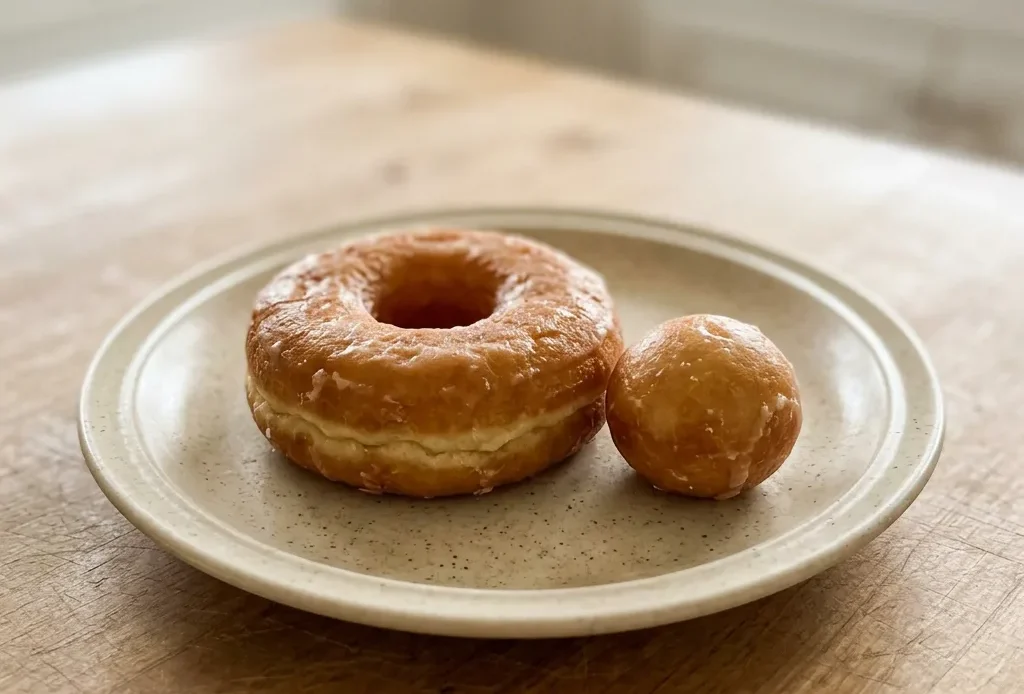
These raised donuts recipe delivers the airy, tender crumb you expect from a bakery case, but the margin for error is surprisingly narrow: the dough must stay soft and slightly tacky after kneading, or the texture turns dense. That softness is the signal that enough moisture remains to steam into pockets during frying. Over-flouring is the most common mistake, and it’s easy to avoid once you feel the dough’s right consistency.
Mix instant yeast directly into dry flour
Instant yeast goes straight into the flour with sugar and nutmeg, no proofing in water needed. The warm milk, around 110°F, wakes it up fast. You skip the usual 10-minute wait for foam, and the first rise still wraps up in about an hour.
The milk temperature matters: too cool and the yeast lags, too hot and you kill it. The dough will nearly triple in that time, a sign the yeast is active and happy.
Keep the dough soft and slightly tacky
After kneading, the dough should feel soft and barely stick to your fingers. That tackiness is moisture that will steam into air pockets during frying.
If you dust on too much flour, you dry the dough out, and the result is dense, heavy donuts. A properly soft dough, on the other hand, puffs up light. You can feel the difference when you pat it: it should be pliable, not stiff.
Two rises build a fluffy interior and even color
The first bulk rise develops the dough’s structure, you’ll see it nearly triple. Then, after shaping, the second rise makes the donuts puffy and ready to float.
If you skip that second rest, the donuts will be denser and may brown unevenly because they sink lower in the oil. When they’re properly proofed after shaping, they bob on the surface and cook evenly all around.
Nutmeg and jam give these donuts their character
A teaspoon of nutmeg adds a warm, aromatic note that complements the yeasty dough without shouting. It’s optional, but it’s what makes these taste like classic cake-shop donuts. The strawberry jam filling, if you use it, offers a bright fruit contrast that cuts through the richness.
You can leave it out or swap for another flavor, but the combination of spiced dough and sweet-tart jam is what defines these donuts.
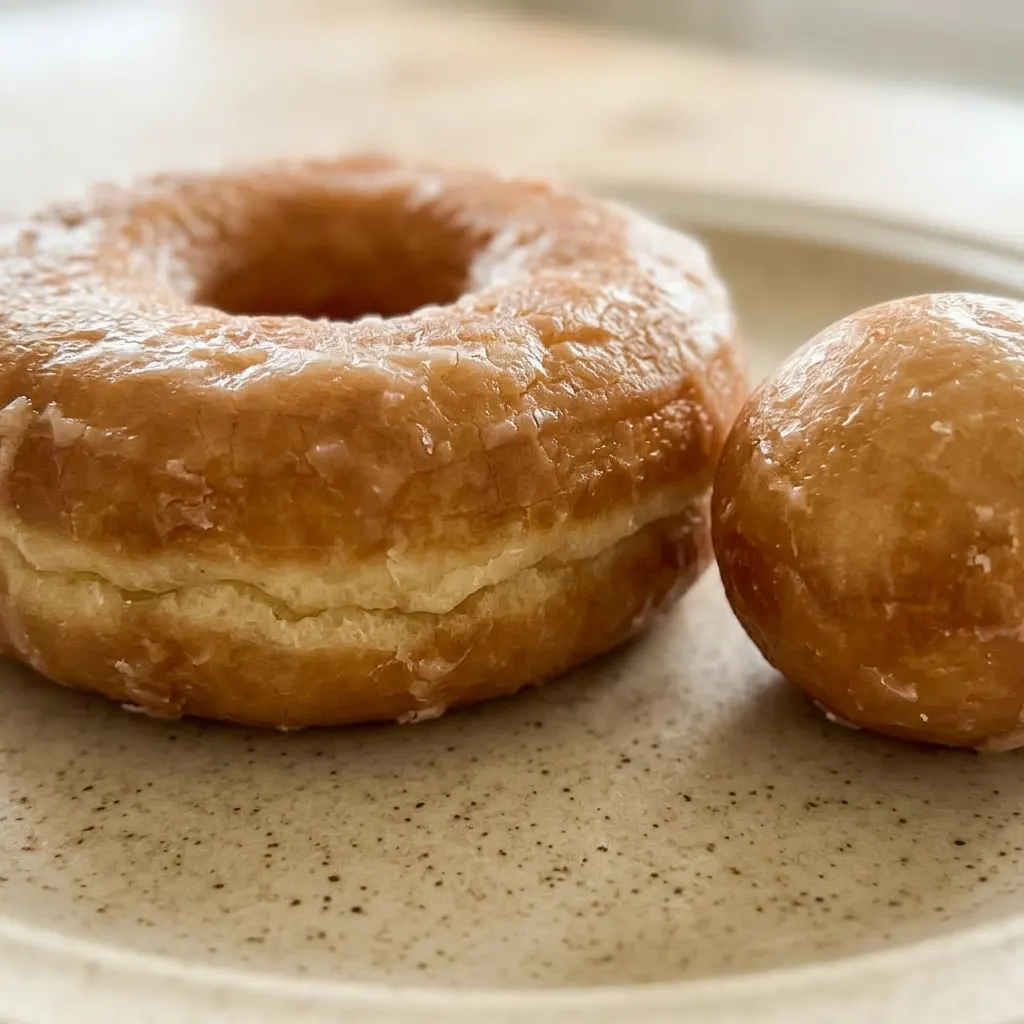
Prep: 15 min · Cook: 10 min · Total: 1 hr 35 min · Servings: 15 · Calories: 150 kcal
What to look for in these donut ingredients
Instant yeast: Use instant (not active dry). It mixes straight into the flour without proofing and gives a fast, reliable rise.
Warm milk: Heat milk to around 110°F. Too cool slows the yeast; too hot kills it. The dough nearly triples in an hour if it’s right.
Nutmeg: Freshly grated nutmeg is more aromatic than pre-ground. It’s optional but adds a classic donut shop flavor.
All-purpose flour: Standard all-purpose is fine. The recipe needs 3 cups plus an extra 1/2 cup for kneading. Don’t use bread flour.
Oil for deep frying: Use a neutral oil with a high smoke point, like vegetable or canola. It won’t impart flavor and heats evenly to 375°F.
Mix the dough and watch the first rise
Combine dry ingredients
Whisk the yeast, sugar, and nutmeg into 2 cups of flour. Sifting keeps lumps out; the yeast is already distributed evenly.
Add wet ingredients
Pour warm milk, melted butter, and eggs into the well. Stir until a sticky batter forms, no dry flour visible. The batter should be soft and loose.
Incorporate remaining flour
Gradually mix in the reserved cup of flour. The dough will come together into a shaggy mass that cleans the bowl’s sides. Stop adding flour when it’s just combined.
Knead until soft and tacky
Turn out onto a floured surface and knead for 5 minutes. Dust lightly only when needed; the dough should remain soft and barely stick to your palm. Over-flouring makes dense donuts.
First rise until nearly tripled
Place in a greased bowl, grease the top, cover, and let rise for 1 hour. The dough should nearly triple, a clear sign the yeast is active. If it barely doubles, your milk was too cool.
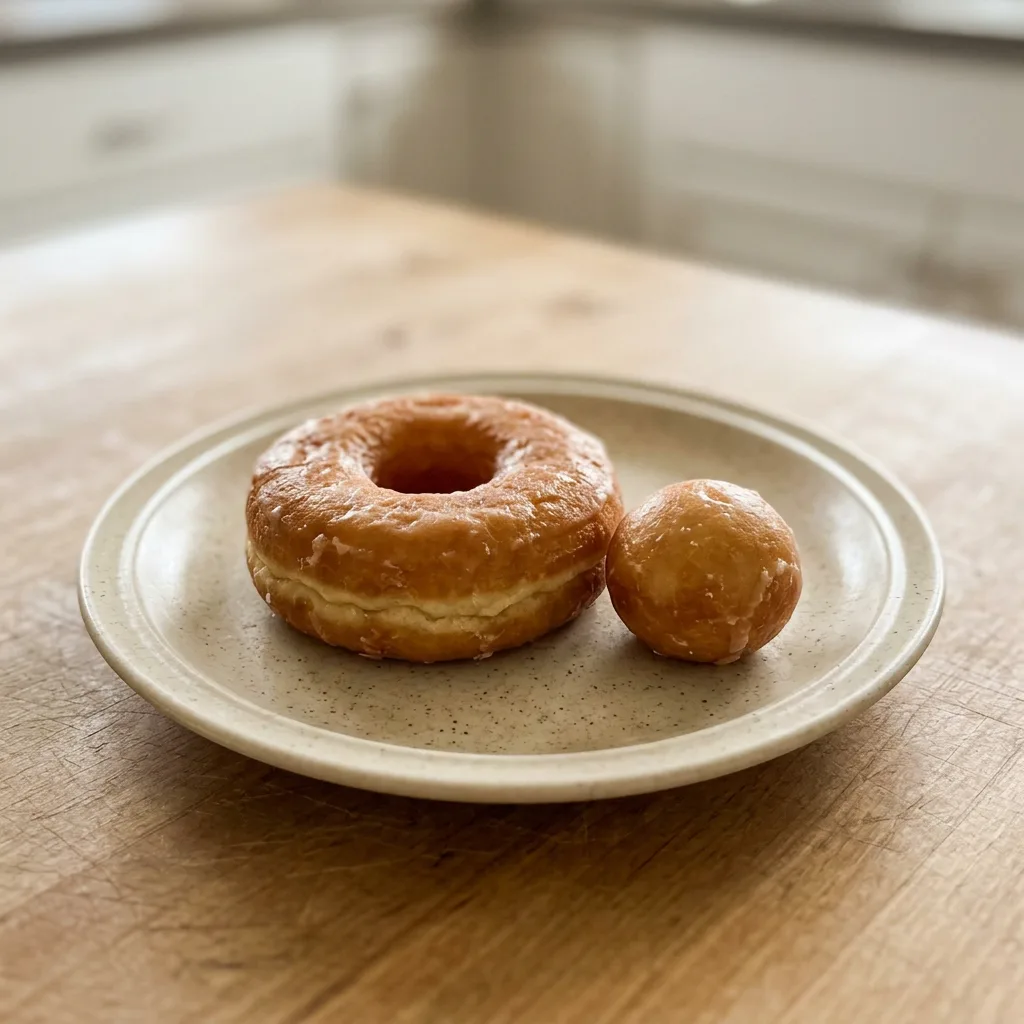
Easy Yeast Raised Donuts
Ingredients
Method
Sift most flour:
Sift 2 cups (240g) of the flour into a large mixing bowl; reserve the remaining 1 cup (120g) plus 1/2 cup (60g) for later use.Mix dry ingredients:
Combine the yeast, sugar, and nutmeg with the flour and stir thoroughly.Form batter well:
Form a well in the center, then pour in the warm milk, melted butter, and eggs. Mix until a soft, sticky batter forms.Incorporate reserved flour:
Slowly incorporate the reserved 1 cup (120g) of flour, mixing until a soft dough comes together.Knead soft dough:
Turn the dough onto a floured surface and knead for roughly 5 minutes, dusting with a little of the reserved flour as necessary. Do not over-flour; the dough should remain soft and slightly tacky.First rise dough:
Put the dough into a large greased bowl, grease its top to prevent skin formation, cover, and let it rise for 1 hour until nearly tripled in volume.Roll and cut donuts:
Deflate the dough by punching it down. Transfer to the work surface and roll it out to about 1/2-inch (1.3 cm) thickness. Cut into round donut shapes; optionally, cut out the centers to make donut holes.Second rise donuts:
Arrange the donuts on a large tray or board, cover with a clean kitchen towel, and let them rise for 10 to 20 minutes until puffy and nearly doubled in size.Deep-fry donuts:
Heat oil to 375°F (190°C) and deep-fry the donuts until golden brown, turning once halfway through.Drain and finish:
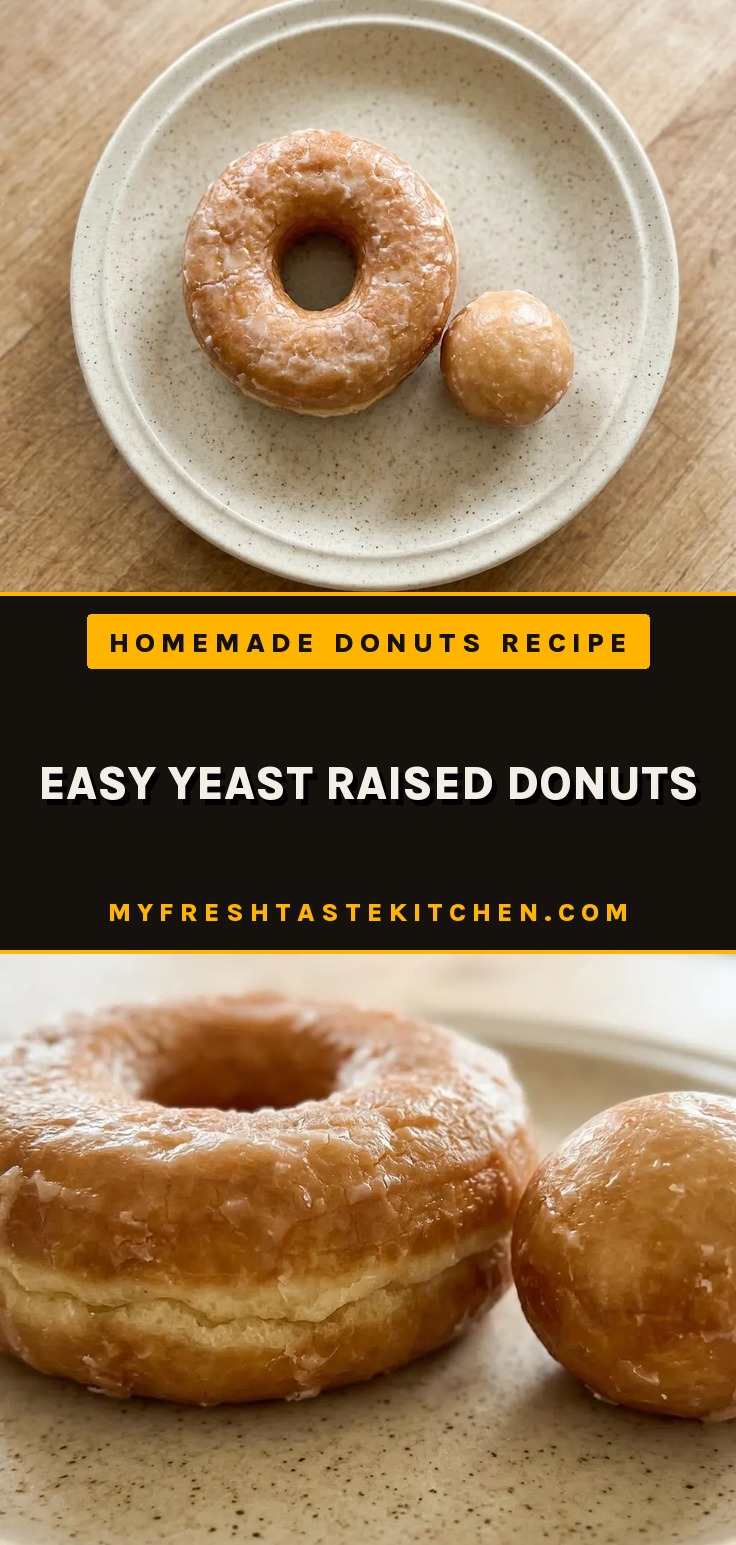
Remove the donuts from the oil and drain on paper towels or a cooling rack. Optionally fill with strawberry jam, glaze, dust with sugar, or serve plain.
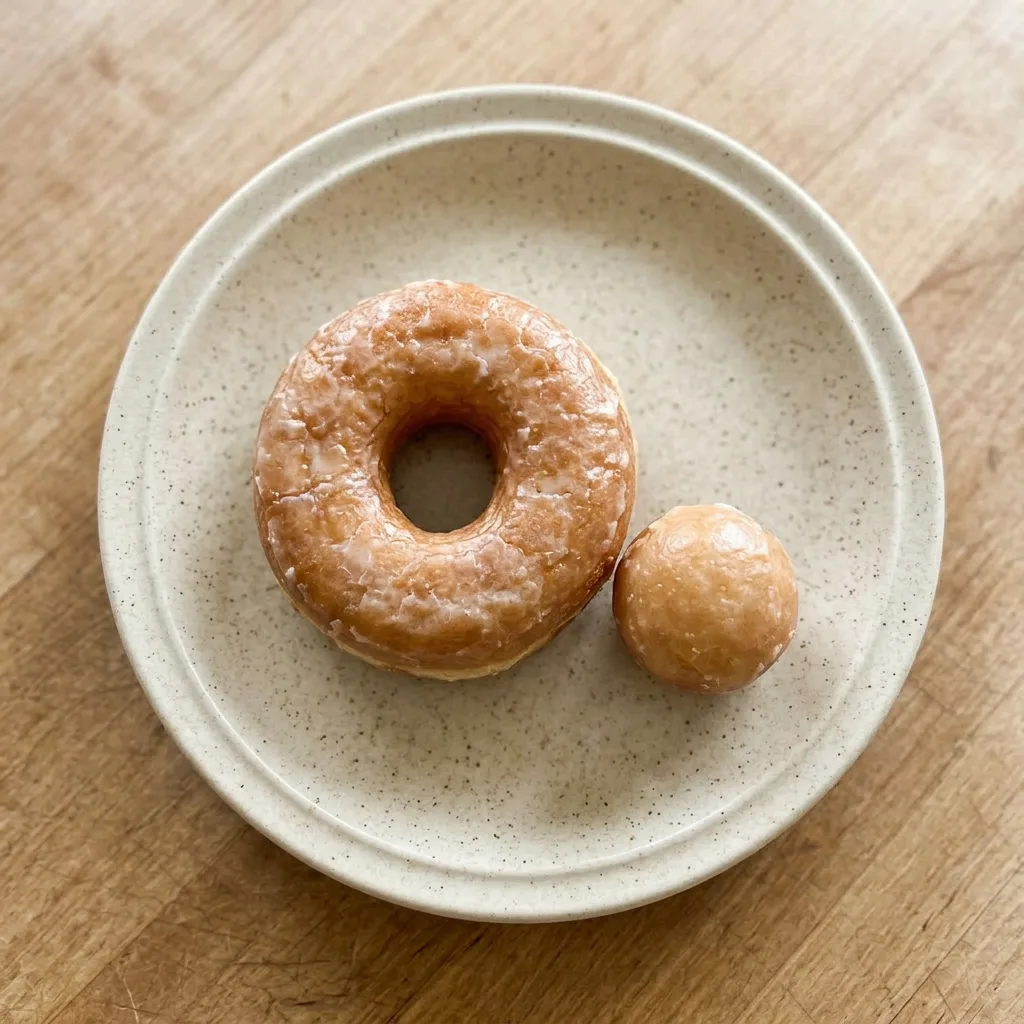
Storage and Serving
Unfilled donuts keep best: store them in an airtight container at room temperature for up to 2 days. After that, the exterior softens and the interior dries out. To refresh, warm in a 350°F oven for 3 to 4 minutes.
Do not refrigerate unfilled donuts; the fridge accelerates staling. Filled donuts are best eaten the same day. The jam seeps into the crumb and softens it, so by day two the texture turns soggy.
If you must store filled donuts, keep them in the fridge in a single layer, but accept they won’t be as good. For longer storage, freeze unfried shaped donuts after the second rise. Place them on a tray, freeze solid, then transfer to a freezer bag.
Fry directly from frozen, adding 1 to 2 minutes to the cook time. Glaze or sugar donuts right before serving; any coating will dissolve into the crust within a few hours. Serve donuts warm for the best contrast between a crisp shell and a tender interior.
Swapping the flavor pair: nutmeg and strawberry jam
Nutmeg (1 tsp): Cinnamon or cardamom, same amount. Cinnamon makes the dough taste more like a classic glazed donut; cardamom adds a floral, slightly citrusy note. Both work because the spice is a background flavor, not structural.
Strawberry jam (optional, for filling): Raspberry, apricot, or any fruit jam of similar consistency. The jam is just a filling, any jam with a thick, spreadable texture will hold up inside the donut. Thinner jams may leak out during frying or make the donut soggy.
Instant yeast: Do not substitute. Active dry yeast requires proofing in water first, which changes the liquid balance and timing. This recipe is built for instant yeast’s direct mixing method.
If you try active dry, the dough may not rise properly or the texture will be off. Stick with instant.
All-purpose flour: Do not substitute bread or whole wheat flour. Bread flour makes donuts tough; whole wheat makes them dense and changes the hydration. All-purpose gives the right balance of tenderness and structure for deep-frying.
Using another flour type will alter the crumb and rise.
Tips
- Use a clip-on thermometer to monitor oil temperature continuously; if the oil drops below 360°F, the donuts absorb excess fat and become greasy.
- Fry only 2-3 donuts at a time to avoid crowding, which lowers the oil temperature and leads to uneven browning.
Frequently Asked Questions
Can I make the dough the night before and fry the donuts the next day?
You can, but the texture will suffer. The recipe is designed for a same-day 1-hour first rise; refrigerating the dough overnight slows the yeast and over-ferments it, producing a sour tang and denser crumb. If you must, shape the donuts after the first rise, refrigerate them on a tray, then let them come to room temperature and do the second rise before frying.
But the article’s storage section recommends freezing shaped, proofed donuts instead, fry from frozen, adding 1 to 2 minutes, which preserves the light texture better.
Why did my donuts turn out greasy or dense?
Greasy donuts usually mean the oil wasn’t hot enough, aim for 375°F so the crust sets quickly and seals out oil. If they’re dense, the dough likely got over-floured during kneading or rose too little. You want it soft and slightly tacky after kneading; dust only when it sticks, not to make it dry.
Also, don’t skip the second 10 to 20 minute rise after shaping, that puff is what makes them float and fry evenly.
How do I know when the oil is hot enough without a thermometer?
Drop a small cube of bread into the oil. If it bubbles vigorously and turns golden brown in about 60 seconds, the oil is near 375°F. A scrap of dough works too: it should sizzle immediately and rise to the surface.
If the bread sinks and browns slowly, the oil is too cool; if it browns in under 30 seconds, it’s too hot.
