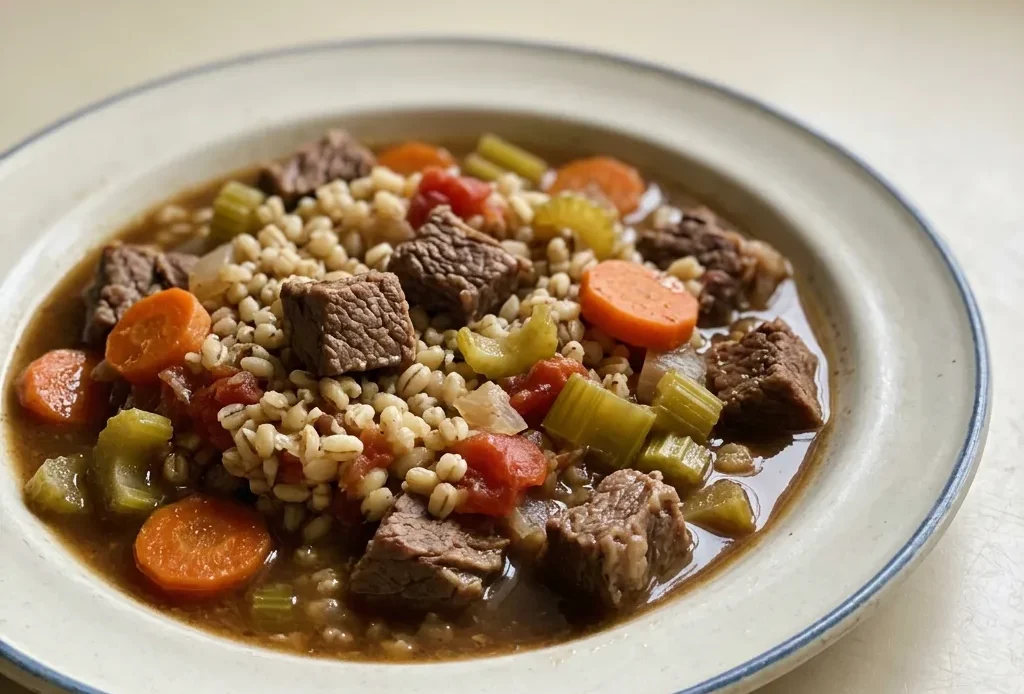
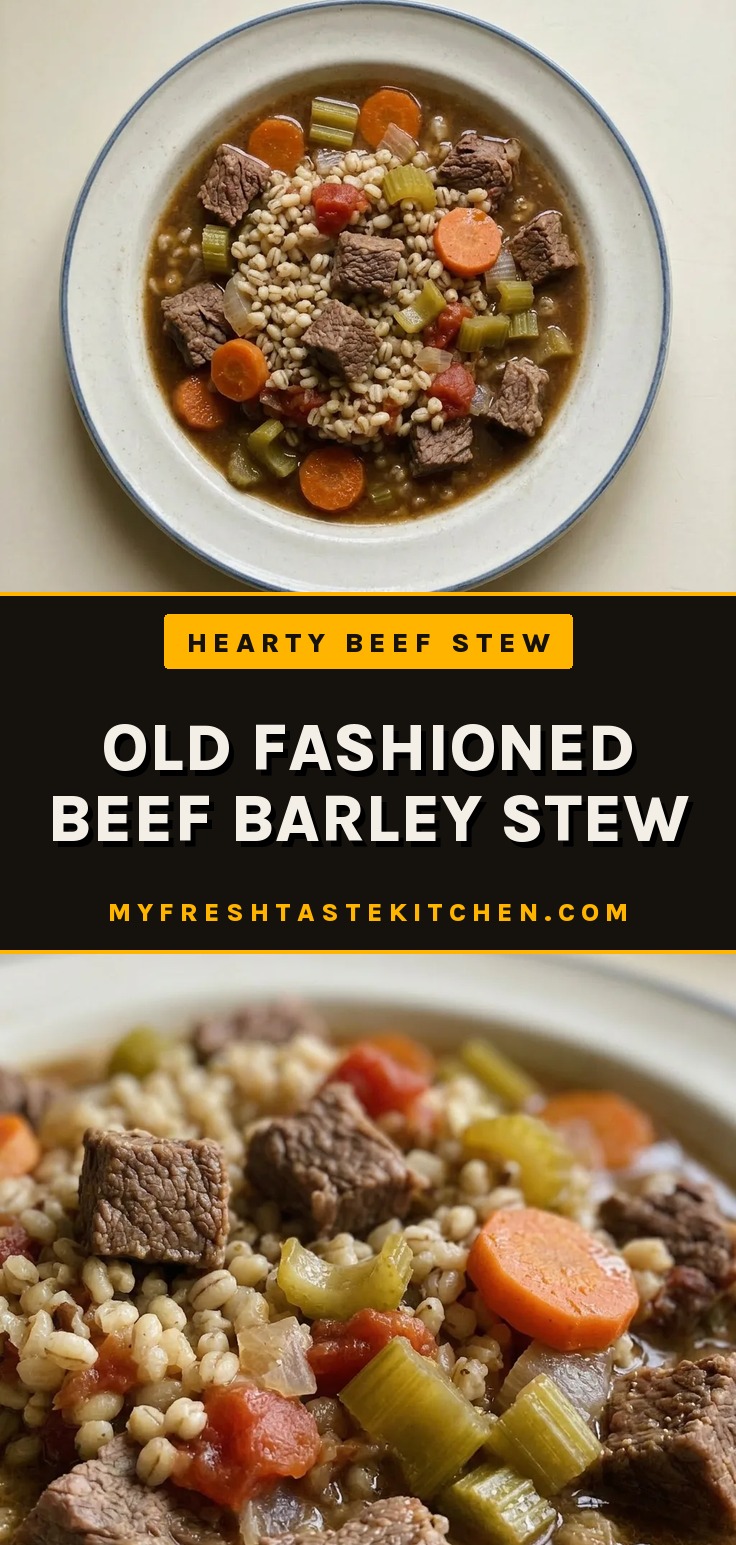
The broth is deep brown, just thick enough to cling to the barley, with a glossy sheen from the rendered beef fat. A splash of red wine cuts through the richness, keeping each spoonful bright. This beef and barley stew tastes like it simmered all day, but the real work happens in the first twenty minutes: browning the beef in batches, sweating the vegetables, scraping up the fond.
That’s where the flavor lives, and the rest is just a gentle simmer until the meat and grains soften. It’s forgiving, barley can go from chewy to plump without turning to paste if you taste at the right moment, and leftovers only get better.
Browning in Batches for Deep Flavor
Crowding the pot is the fastest way to turn a sear into a steam. When beef cubes sit too close, they release moisture and the pan temperature drops. Instead of browning, they gray and toughen.
Working in batches keeps the heat high, so each cube develops a dark crust. That crust is pure flavor, it’s what creates the fond stuck to the pot bottom.
That fond becomes the backbone of your broth once you deglaze. A single batch of beef might save five minutes, but it costs you the deep, savory notes that make this stew taste slow-cooked.
Take the extra step, and every spoonful rewards you.
Barley: Hulled vs. Pearl
The barley you pick changes the stew’s timeline and mouthfeel. Hulled barley still has its bran, so it takes longer, up to an hour and a half, to soften. It stays chewy, almost nutty, even after cooking.
Pearl barley is polished, bran removed, so it cooks faster, about an hour, and ends up tender and plump. Both work here, but instant barley doesn’t: it goes mushy before the beef is done. For a hearty beef stew that’s got texture, stick with hulled or pearl.
Let the clock guide you: taste after an hour, and keep simmering until the grains are tender but not blown out.
Why Red Wine Belongs in This Stew
Red wine does two things you can taste. First, it deglazes the pot, lifting those browned bits off the bottom and into the liquid. Those bits carry roasted, meaty flavor that water alone can’t capture.
Second, the wine’s acidity cuts through the richness of the beef and barley. It brightens the broth without making it sour, so the stew tastes balanced, not heavy. If you don’t have wine open, tomato paste works as a swap, it brings acidity and color, though it lacks the wine’s fruity depth.
One glass of a dry red like Merlot or Cabernet is all it takes to make this simple beef stew taste complex.
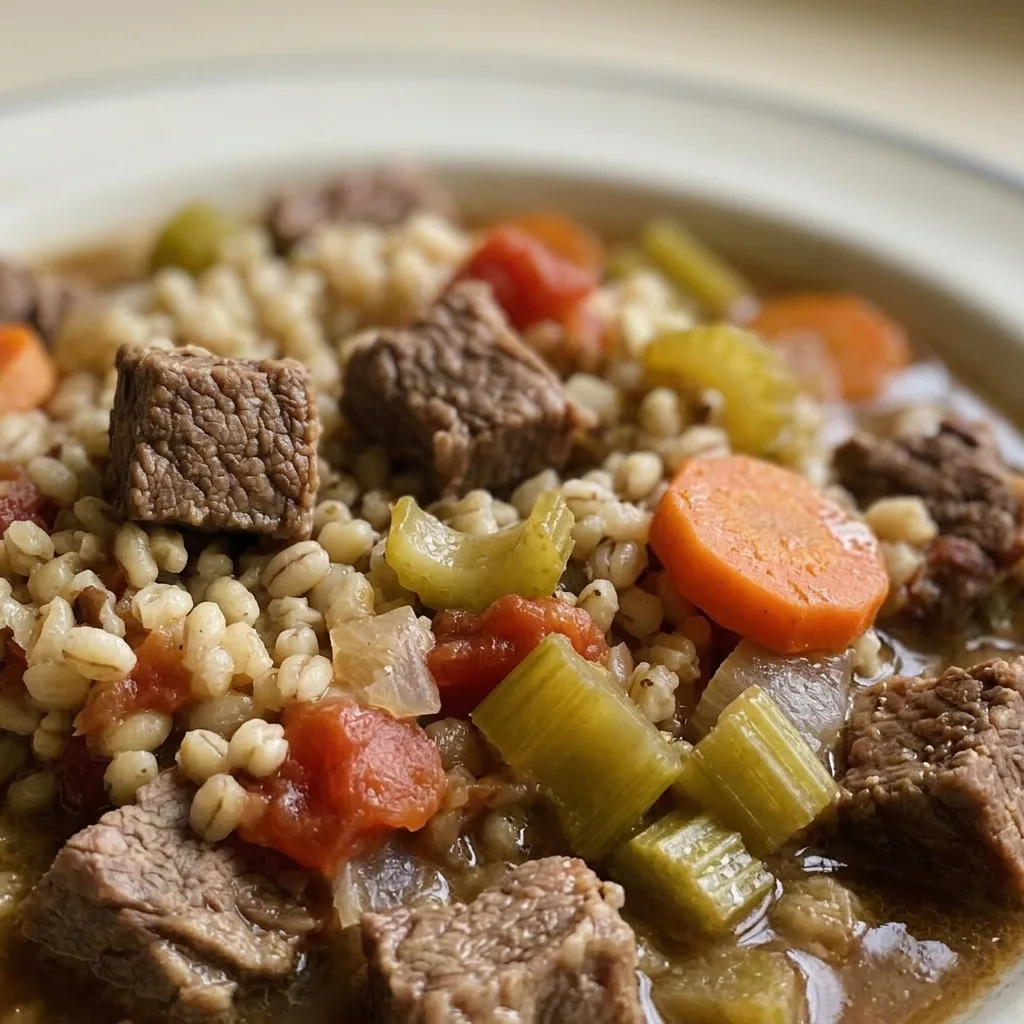
Prep: 15 min · Cook: 1 hr 30 min · Total: 1 hr 45 min · Servings: 12 · Calories: 210 kcal
Ingredients to Look For
Beef: Buy a chuck roast or brisket. Cubes should be no larger than 3/4 inch.
Barley: Use hulled or pearl barley. Instant barley turns mushy before the beef cooks.
Red wine: A dry red like Merlot or Cabernet. It deglazes the fond and balances richness.
Fresh herbs: Thyme and rosemary are best. If using dried, halve the amount called for fresh.
How to Build a Rich Beef Barley Stew, Step by Step
Sear the beef in batches
Pat the beef dry, moisture is the enemy of browning. In a single layer, sear cubes until deep brown on at least two sides, about 2 minutes per side. If you see steam rising instead of sizzle, you’ve crowded the pot.
Sweat the aromatics until fragrant
After removing the beef, cook onions, carrots, and celery until they soften and the onion turns translucent, roughly 4 to 5 minutes. The fond on the pot bottom should be dark but not burnt. Stir in garlic for one minute more.
Deglaze with red wine
Pour in the wine and scrape up every browned bit with a wooden spoon. Let it bubble until reduced by half, about 2 minutes.
The liquid should smell fruity and savory, not harshly alcoholic. The pot bottom will look clean.
Simmer until beef and barley are tender
Return beef to pot, add tomatoes, broth, barley, bay leaves, and herbs. Bring to a boil, then drop to a gentle simmer.
5 hours. Taste barley and beef after 60 minutes, pearl barley will be done sooner, hulled later. The broth should be rich and slightly thickened.
Finish and adjust seasoning
Remove bay leaves and herb stems. Taste the broth, it should be savory with a hint of wine acidity. Add salt and pepper if needed.
A few dashes of Worcestershire sauce deepen the beefy flavor without shouting. Garnish with fresh parsley.
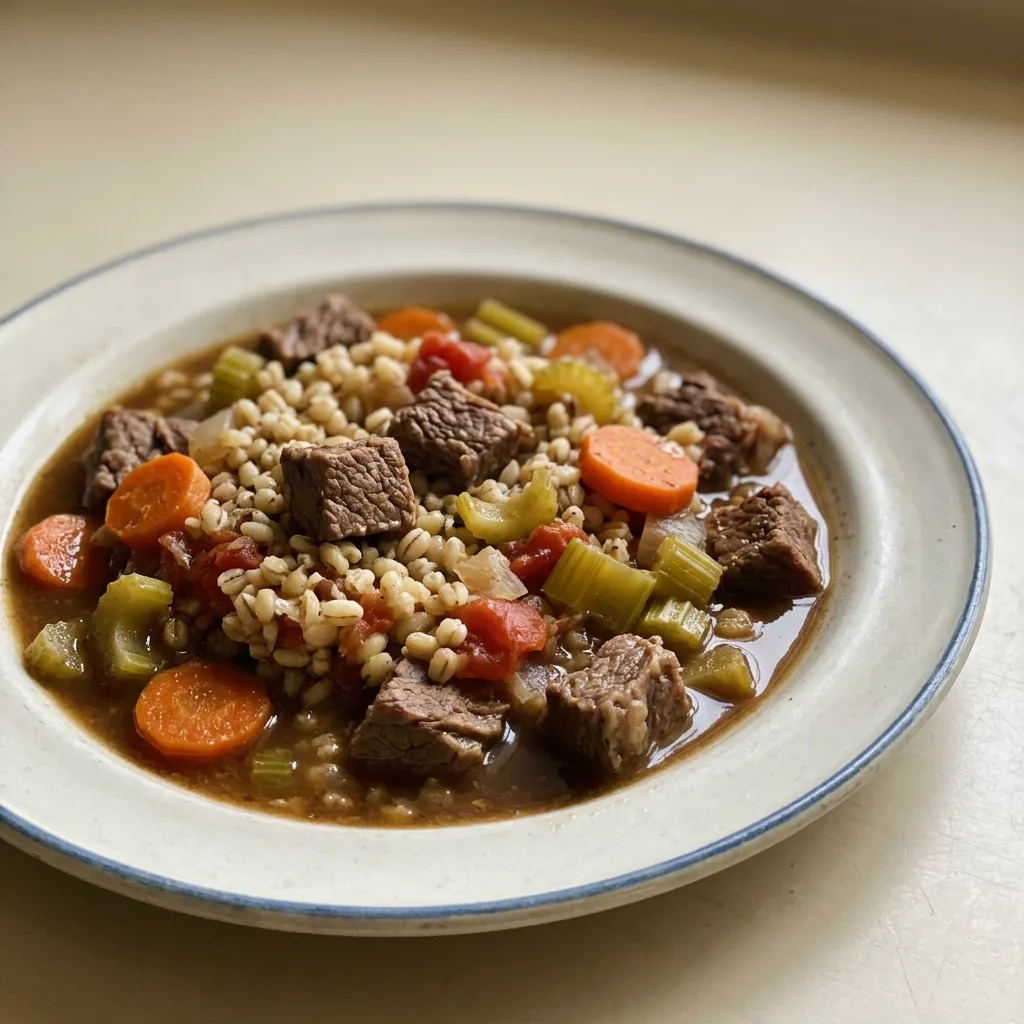
Old Fashioned Beef Barley Stew
Ingredients
Method
Season Beef Cubes:
Dry the beef cubes with paper towels, then season with salt and pepper.Sear Beef in Batches:
Heat olive oil in a large pot over medium-high heat. Working in batches to prevent overcrowding, sear the beef on all sides until browned. Transfer the beef to a plate and set aside.Sauté Vegetables and Garlic:
If needed, add additional oil to the pot. Sauté the onions, carrots, and celery until they soften, roughly 4-5 minutes. Stir in the garlic and cook for another minute.Deglaze with Red Wine:
Pour in the red wine to deglaze the pot, scraping up the browned bits from the bottom. Continue heating until the wine reduces by half.Add Remaining Ingredients:
Return the beef to the pot. Add the diced tomatoes, beef broth, barley, bay leaves, and fresh herbs (or dried). Season with salt and pepper.Simmer Until Tender:
Bring to a boil, then lower the heat to a simmer. Cover and cook for about 1 to 1.5 hours (shorter for pearl barley, longer for hulled barley), until the beef and barley are tender.Adjust Seasoning and Serve:
Taste and adjust seasoning. Remove the bay leaves and herb sprigs. Serve hot, garnished with fresh parsley. Add a few dashes of Worcestershire sauce if desired.
Notes
Swapping Into This Beef Barley Stew Without Losing the Point
Red wine: Tomato paste (3 ounces) plus 1/2 cup water or broth. You lose the wine’s fruity notes, but the tomato paste provides acidity to deglaze the fond and brighten the broth. The stew will be a shade less complex, still satisfying.
Use the same amount as the recipe calls for wine (1/2 cup), then thin with liquid if needed.
Barley: Farro or brown rice. Both hold up to long simmering.
Farro stays chewy like hulled barley; brown rice softens more like pearl. Instant barley going soggy, skip it.
Use the same volume (1 cup).
Fresh herbs (thyme/rosemary): Dried herbs (1/2 teaspoon each). Dried herbs are more concentrated. Add them with the broth so they rehydrate and release flavor.
The final broth will be less bright than with fresh, but still savory. Start with half the fresh amount and adjust after tasting.
Beef broth: Vegetable broth or mushroom broth (for gluten-free, check labels). The broth’s role is moisture and savory base. Vegetable broth is lighter; mushroom broth adds earthy depth.
Either works, though the stew won’t taste as beefy. Use the same volume (6, 8 cups).
Storage and Serving
This stew thickens as it sits. Barley absorbs liquid overnight, so leftovers will be more like a hearty chili than a soup.
That’s expected, not a problem. To restore the original consistency, stir in extra beef broth or water when reheating, a quarter cup at a time, until it looks right.
Store in an airtight container in the fridge for up to 4 days. The beef stays tender, but the barley will continue to soften; after day 2, it’s noticeably plumper. Freeze for up to 3 months.
Thaw overnight in the fridge. Reheat gently on the stovetop, adding broth as needed.
For best texture, serve within an hour of cooking. Garnish with fresh parsley and a splash of Worcestershire sauce just before serving, not during storage.
Tips
- Use a heavy-bottomed pot, like a Dutch oven, to maintain steady heat during searing and simmering; it prevents scorching and promotes even cooking.
- If using pearl barley, reduce the broth to 6 cups initially; pearl barley absorbs less liquid than hulled, and you can always add more later to adjust consistency.
Frequently Asked Questions
Can I make this stew ahead of time? Does it reheat well?
Yes, this stew gets better after a day. The barley absorbs liquid overnight, so leftovers turn thicker, almost like chili. To bring back the original soupy consistency, stir in extra beef broth or water when reheating, a quarter cup at a time.
It keeps in the fridge up to 4 days. The beef stays tender, but the barley continues softening; after day 2 it’s noticeably plumper.
Why is my barley mushy? How do I avoid that?
Mushy barley usually means you used instant barley or simmered too long. Instant barley softens too fast and blows out before the beef is done.
Stick with hulled or pearl barley. 5 hours. Start tasting after 60 minutes and pull the pot as soon as the barley is tender but still holds its shape.
Is this stew supposed to be thick or soupy? How do I adjust consistency?
Right after cooking, it’s a hearty soup, brothy enough to ladle. As it sits, barley absorbs liquid and it thickens into a stew. If you want it soupy, add more broth at the start (up to 8 cups).
For a thicker result, use 6 cups and simmer uncovered for the last 15 minutes to reduce. Adjust at the end: stir in extra broth to thin, or let it simmer a few minutes without the lid to thicken.
