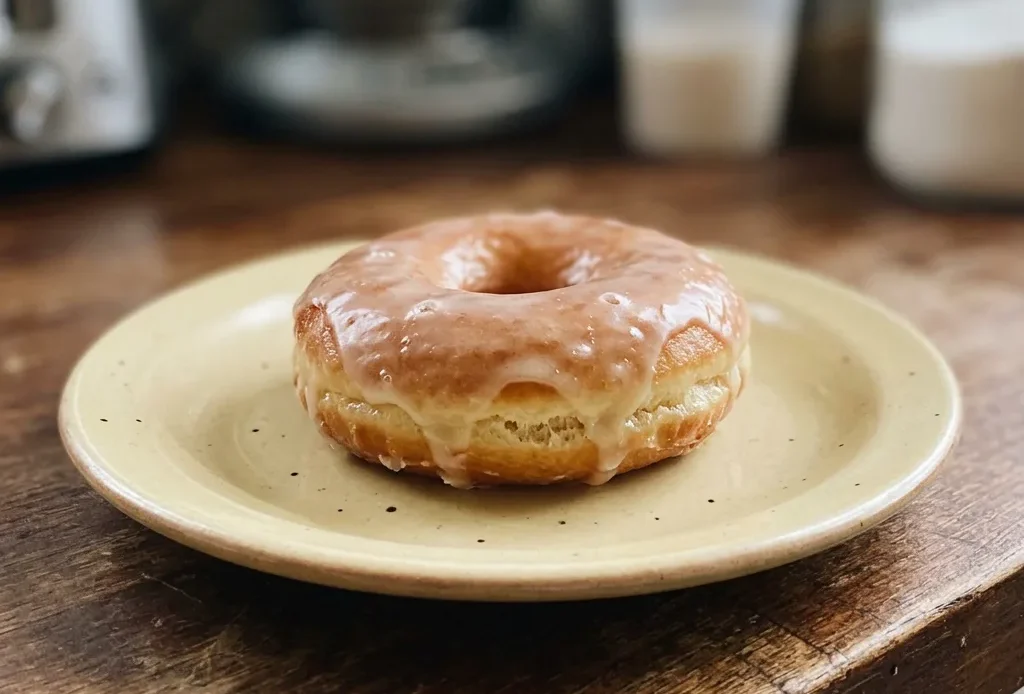
These aren’t the tender, yeasted donuts from the bakery case. Glazed sourdough donuts have a mild tang that cuts through the sweet glaze, and a resilient crumb that bounces back when you bite.
The long, cool fermentation does the heavy lifting, building structure and complexity without extra yeast. Getting the texture right hinges on your starter’s activity and how thoroughly you knead, neither is hard to gauge once you know what to look for.
The dough should feel silky, not sticky, and the donuts should puff noticeably before you bake or fry them. Choose your cooking method based on whether you want a soft, cake-like interior or a crisp, brown shell.
Either way, the tangy-sweet contrast is unmistakable.
Tang from the Starter
Sourdough starter gives these donuts a gentle tang and a lighter crumb than commercial yeast can. The natural leavening comes from the wild yeast and bacteria in your starter, which also add complexity. A long 8- to 10-hour fermentation develops gluten and flavor without any added yeast.
The starter’s hydration, here 100%, affects the dough’s wetness; more hydration means a softer, airier donut. You’ll taste the difference in the final bite: a subtle sourness that balances the sweet glaze, and a texture that’s both tender and resilient.
Building the Gluten Network
A light, fluffy donut depends on well-developed gluten. With the dough hook on medium speed, I set a timer and knead for the full 12 minutes until the dough is smooth and elastic, which gives the donuts that light, airy crumb. If you prefer hands-on work, stretch and folds work too: after the initial rest, stretch the dough from one side, fold it over, then repeat from each side a few times.
That 30-minute rest before kneading lets the flour hydrate, making the dough easier to work with. You’ll feel the dough go from shaggy to silky, and when it cleans the bowl, you’re done.
The Overnight Rise
A slow, cool rise is where the magic happens. At 70°F, the dough ferments steadily over 8 to 10 hours without over-proofing.
You’ll see it double in volume and become puffy and airy, a sign that the wild yeast is active and the bacteria are producing acids. This long rest deepens the sourdough flavor and strengthens the structure so the donuts hold their shape when cut and fried.
The overnight schedule also fits neatly into your day: mix before bed, shape in the morning.
Fry or Bake, Your Call
Baking these donuts gives a cake-like, tender crumb with a soft golden crust. Frying in coconut oil at 350°F produces a crisp, brown exterior and a soft inside.
Each method is a valid choice. For frying, monitor the oil temperature closely; if it drops, the donuts absorb too much grease.
You’ll know they’re done when they’re deep golden and float. Baked donuts take 13 to 15 minutes in a 350°F oven, test with a skewer: it should come out clean. Pick based on what texture you crave.
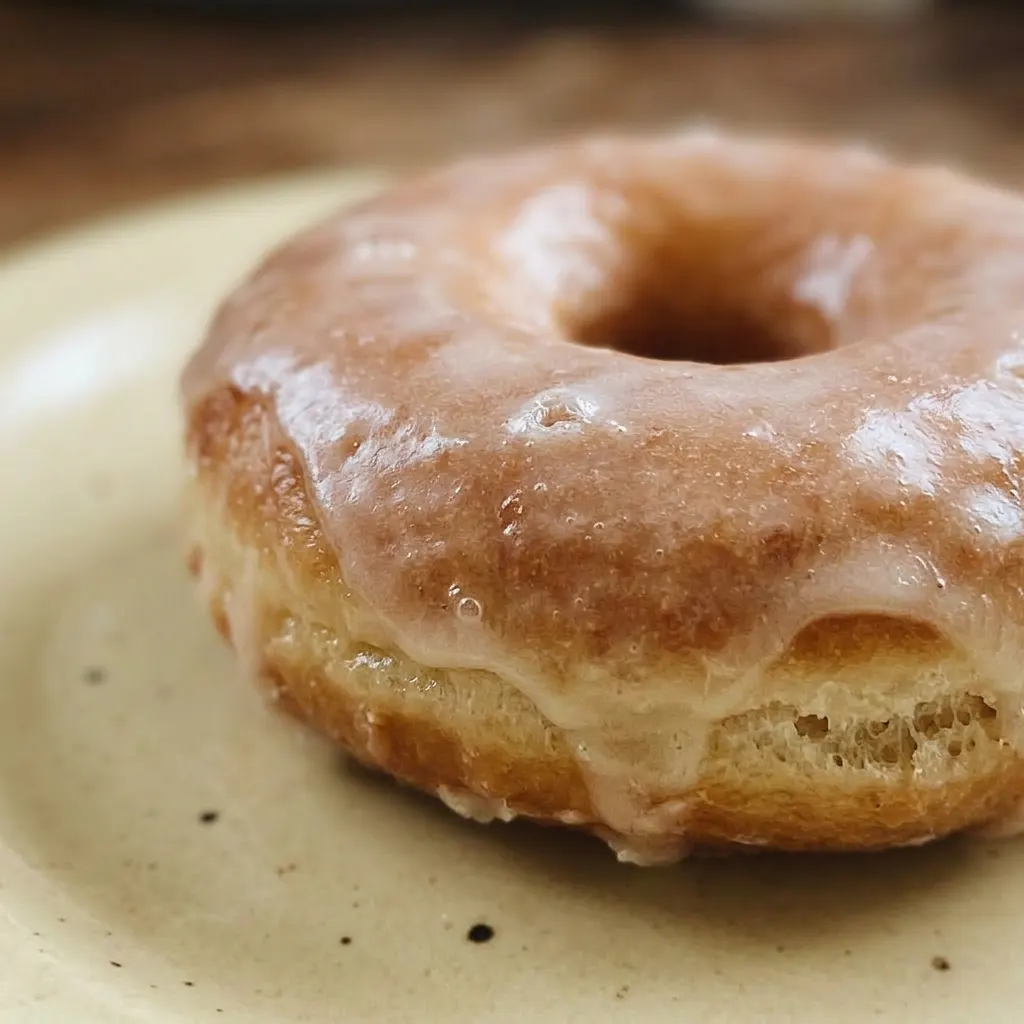
Prep: 30 min · Cook: 15 min · Total: 10 hr 45 min · Servings: 12
Key Ingredients for Sourdough Donuts
Sourdough starter: Use 100% hydration starter that’s bubbly and just past its peak for the best rise and tang.
Bread flour: Organic bread flour gives the dough enough protein for a chewy, airy crumb.
Coconut oil: Unrefined coconut oil adds a mild tropical scent; keep it between 345 to 355°F for frying.
Powdered sugar: Sift before whisking to avoid lumps in the glaze; it sets smooth and glossy.
Making the Dough
Mix the wet ingredients
Stir the starter into the milk until no streaks remain; the mixture should look milky and slightly bubbly.
Add remaining wet ingredients
Whisk in the egg, sugar, melted butter, and vanilla until the sugar dissolves and the mixture is uniform.
Incorporate dry ingredients
Sift the flour and salt over the wet mix, then stir until just combined. Lumps are fine here; they’ll smooth out during kneading.
Rest the dough
Cover with a damp cloth and let rest for 30 minutes. This autolyse hydrates the flour, making the dough easier to knead later.
Knead until smooth
Knead on medium speed for 12 minutes. The dough should pull away from the bowl and feel silky and elastic when you stop.
First rise overnight
Cover and let rise at 70°F for 8 to 10 hours. Look for the dough to double and become puffy with a few bubbles on the surface.
Roll and cut
Roll dough to 1/2-inch thick on a floured surface. If it springs back, let it relax 10 minutes. Cut rounds with a 2 3/4-inch cutter.
Shape the holes
Pierce each donut with a chopstick and spin to enlarge the hole to 1 inch. Alternatively, use your fingers to stretch the hole.
Second rise
Place donuts 2 inches apart on parchment, cover with a damp cloth, and let rise at room temperature for about 2 hours until puffed by 50%.
Bake or fry
For baking, bake at 350°F for 13 to 15 minutes until golden and a skewer comes clean. For frying, heat 1 inch of coconut oil to 350°F and fry 1 minute per side until deep golden.
Glaze and set
Whisk milk and powdered sugar until smooth. Dip cooled donuts into the glaze, then let set glazed side up on a rack for 10 minutes.

Glazed Sourdough Donuts
Ingredients
Method
Combine starter with milk:
In a large bowl, combine the sourdough starter with milk, whisking until the starter is completely incorporated.Mix wet ingredients:
Mix in the egg, sugar, melted butter, and vanilla, stirring until uniform.Sift and mix dry ingredients:
Sift the flour and salt into the bowl, then mix until the batter is smooth and free of lumps.Rest dough 30 minutes:
Cover the dough with a damp cloth and allow it to rest for 30 minutes.Knead dough 12 minutes:
Using a stand mixer fitted with a dough hook, knead on medium speed for 12 minutes until the dough cleans the sides. Alternatively, develop gluten through stretch and folds.Bulk rise overnight:
Cover the bowl with a damp cloth and let the dough rise at 70°F (20°C) for 8-10 hours, or overnight, until doubled and airy.Roll dough 1/2 inch:
Transfer the dough to a well-floured surface and roll to a thickness of 1/2 inch. If the dough resists, let it relax for 10 minutes before continuing.Cut donut shapes:
Cut out donuts using a 2 3/4-inch biscuit cutter. Collect the scraps, rest them for 30 minutes, then re-roll and cut additional donuts.Form donut holes:
Make a hole in the center of each donut by piercing with a chopstick or skewer and spinning to enlarge to 1 inch. Alternatively, use your fingers to form the hole.Proof donuts 2 hours:
Arrange the donuts 2 inches apart on a parchment-lined surface, cover with a damp cloth, and let rise at room temperature for about 2 hours until increased by 50%.Bake donuts 13-15 minutes:
Preheat the oven to 350°F (175°C). Move the parchment with donuts onto a baking sheet and bake on the center rack for 13-15 minutes.Fry donuts golden brown:
In a deep-sided frying pan, heat 1 inch of coconut oil over medium heat to 350°F (175°C). Fry donuts in batches for 1 minute per side until golden brown. Drain on paper towels.
Whisk glaze ingredients:
In a small bowl, whisk together the milk and powdered sugar until smooth and pourable.Glaze and set donuts:
Let the donuts cool for a few minutes, then dip one side into the glaze. Set glazed side up on a rack and allow to set for 10 minutes before serving.
Storage and Serving
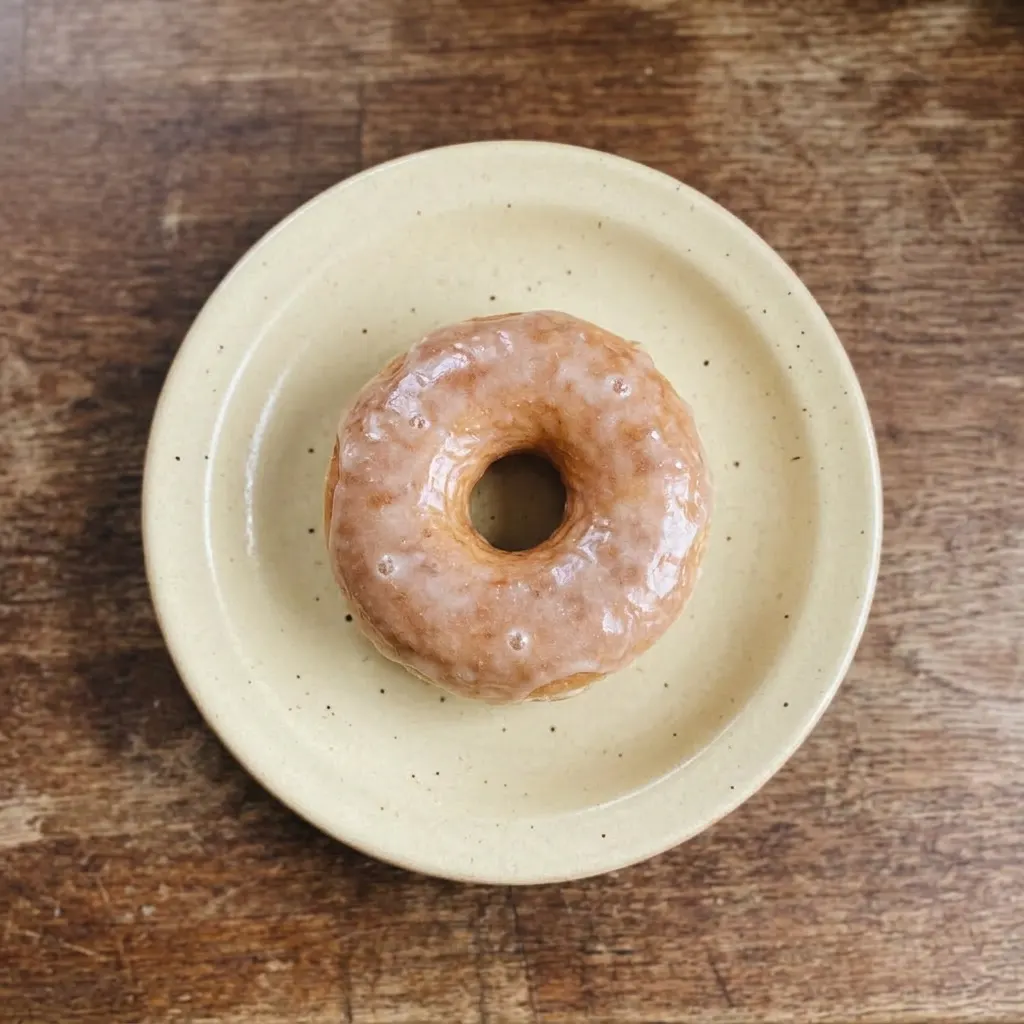
Serve these donuts within 4 hours of glazing for the best texture. The glaze stays glossy and the crumb remains tender. After that, the glaze softens into the donut and the exterior loses its slight crust.
Store leftover glazed donuts in a single layer in an airtight container at room temperature for up to 1 day. Do not refrigerate; the cold dries them out.
For longer storage, freeze unglazed donuts. Cool them completely after frying or baking, then freeze in a single layer on a baking sheet.
Once solid, transfer to a zip-top bag. They keep for up to 1 month. To serve, thaw at room temperature, then refresh in a 350°F oven for 5 minutes.
Let cool slightly before glazing and eating right away. The glaze does not freeze well; always glaze after reheating.
Swapping for What You Have on Hand
Bread flour: All-purpose flour, same weight. Donuts will be less chewy and more tender-crumbed. The lower protein means less gluten development, so the baked version may not puff as high.
Raw cane sugar: Granulated white sugar, same amount. You lose the faint molasses notes that cane sugar adds; the donuts are still sweet but less complex in flavor.
Coconut oil for frying: Neutral oil like canola or vegetable, same quantity. No coconut aroma at all. The donuts fry the same, crisp and golden, but the flavor profile shifts to purely sweet.
Whole milk: 2% or skim milk, same amount. The glaze will be less rich and may set slightly thinner. The dough will be a bit leaner, but still workable.
Tips
- For the poke test, use a floured finger to avoid sticking; the indentation should spring back slowly, leaving a small dimple. If it springs back immediately, the dough needs more time.
- When frying, maintain the oil temperature at 350°F by frying in small batches; overcrowding drops the temperature, leading to greasy donuts.
Frequently Asked Questions
Can I make the dough ahead and refrigerate it?
Yes, you can. After the first rise, punch down the dough, wrap it tightly, and refrigerate for up to 24 hours.
When you’re ready, let it come to room temperature and proceed with rolling and cutting. The cold will slow fermentation, so the second rise may take a bit longer, look for the donuts to puff by 50% before baking or frying.
Why did my donuts turn out dense instead of fluffy?
Most likely the dough didn’t develop enough gluten during kneading. The recipe calls for 12 minutes on medium speed until the dough is smooth and elastic, if you stop sooner, the crumb will be tight.
Also check your starter: it should be bubbly and just past its peak; a sluggish starter won’t inflate the dough properly. Finally, ensure the second rise goes the full 2 hours until the donuts have increased by 50%.
How do I know when the donuts are fully cooked?
For baked donuts, a skewer inserted into the center should come out clean after 13 to 15 minutes at 350°F. For fried donuts, they’re done when deep golden brown on each side after about 1 minute per side; they’ll float and feel light when lifted from the oil. The interior should be set but still tender, not doughy.
What’s the difference between these sourdough donuts and classic yeast donuts?
Sourdough donuts have a subtle tang from the natural fermentation, while yeast donuts taste neutral and sweet. The texture here is also slightly lighter and airier thanks to the long, cool rise that develops gluten without adding commercial yeast. You’ll notice the crumb is more resilient, bouncy rather than cakey, and the flavor has more depth.
