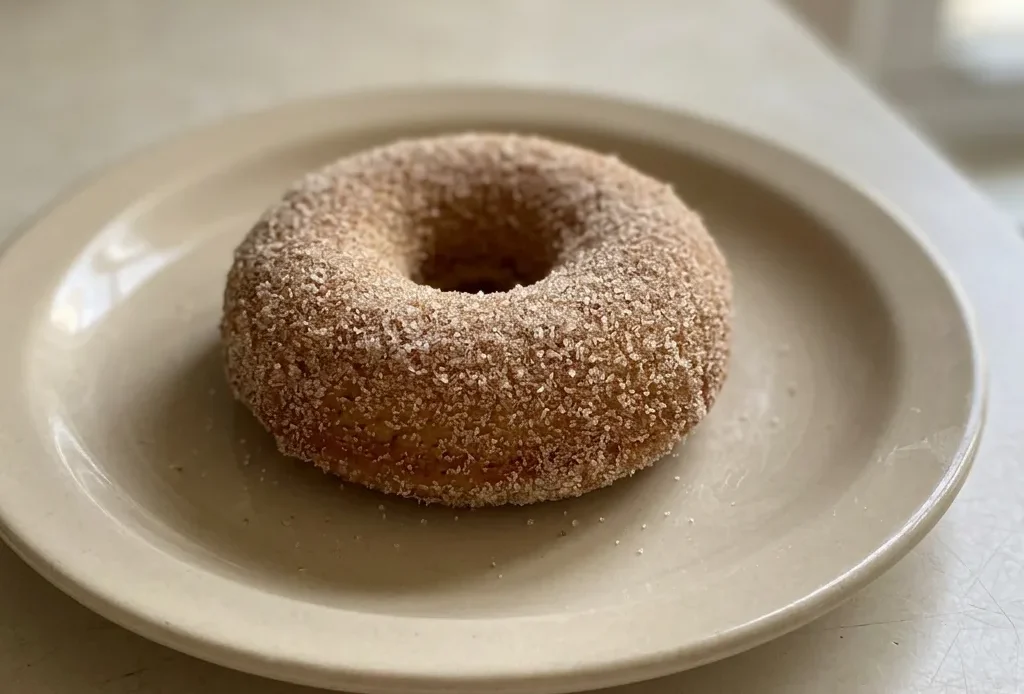
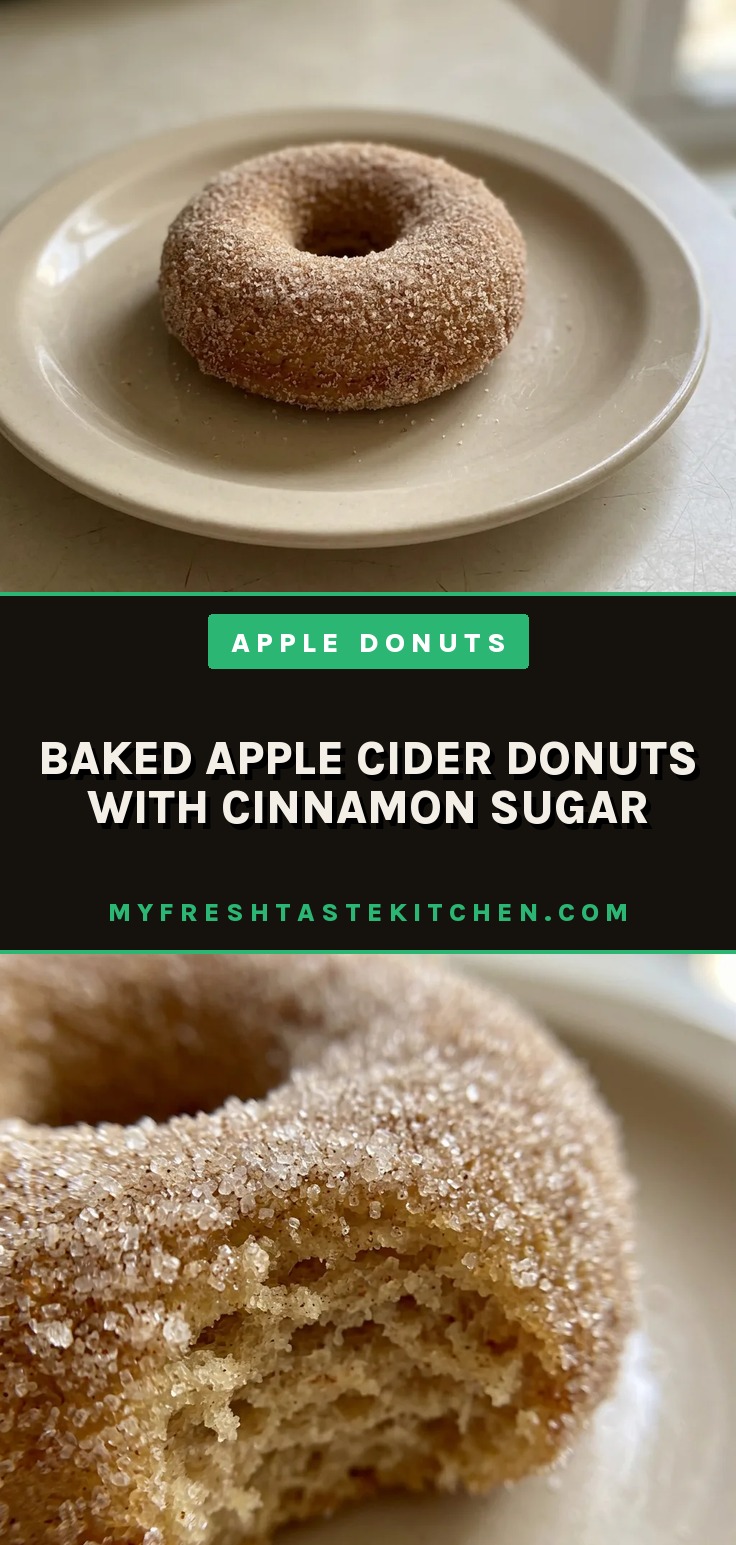
These aren’t the greasy, deep-fried rings from the orchard stand. Baked apple cider donuts with cinnamon sugar are tender, cakey, and built for a home kitchen without a vat of oil.
The trick isn’t the baking itself, it’s reducing the cider down to a concentrated syrup so the apple flavor hits hard without waterlogging the crumb. That single step makes the difference between a donut that tastes faintly of apple and one that tastes like autumn in every bite.
The rest is about handling the batter gently and getting the timing right on the coating. “
Concentrated cider, better donuts
Boiling down apple cider does more than just intensify the apple flavor. It also reduces the water content, which is key for a baked donut’s texture. Too much liquid in the batter leads to a dense, soggy crumb that steam-bakes rather than rises properly.
By reducing the cider to a syrup, you add concentrated apple taste without throwing off the moisture balance. The reduced cider must cool to room temperature before mixing; hot liquid would partially cook the eggs or melt the butter, changing how the batter sets.
When you use recipes using apple cider, this reduction step is what separates a light, apple-packed donut from a heavy one.
Why cake flour gives a tender crumb
Cake flour has a lower protein content than all-purpose, which means less gluten forms when you mix the batter. Less gluten translates directly into a softer, more delicate bite, exactly what you want in a baked donut. All-purpose flour works, but the crumb will be noticeably denser and less tender.
Proper measuring matters, too: spoon the flour into your measuring cup and sweep off the excess. Scooping directly packs the flour, adding extra protein and throwing off the ratio.
That extra bit of flour can make the donuts tough. For baked donuts recipe success, cake flour is the simplest way to guarantee that light, almost cakey texture.
Piping batter for even donuts
Spooning batter into donut wells leads to uneven fill levels and often traps air pockets. Piping solves both problems: you control exactly how much goes in each well, and the batter flows in without folding in extra air. The result is consistent donut shapes and a uniform rise.
A zip-top bag with the corner snipped off works as a makeshift piping bag, quick to fill and easy to handle. You get clean, even rings without having to spread or smooth the batter. For oven baked donuts recipes, this technique also keeps you from overworking the batter, which would develop gluten and toughen the crumb.
The donuts come out looking like they came from a bakery, not a pan.
Getting that cinnamon sugar crunch
The topping sticks because the donuts are brushed with melted butter while still warm. Warmth keeps the butter liquid, so it soaks into the surface just enough to act as glue for the spiced sugar.
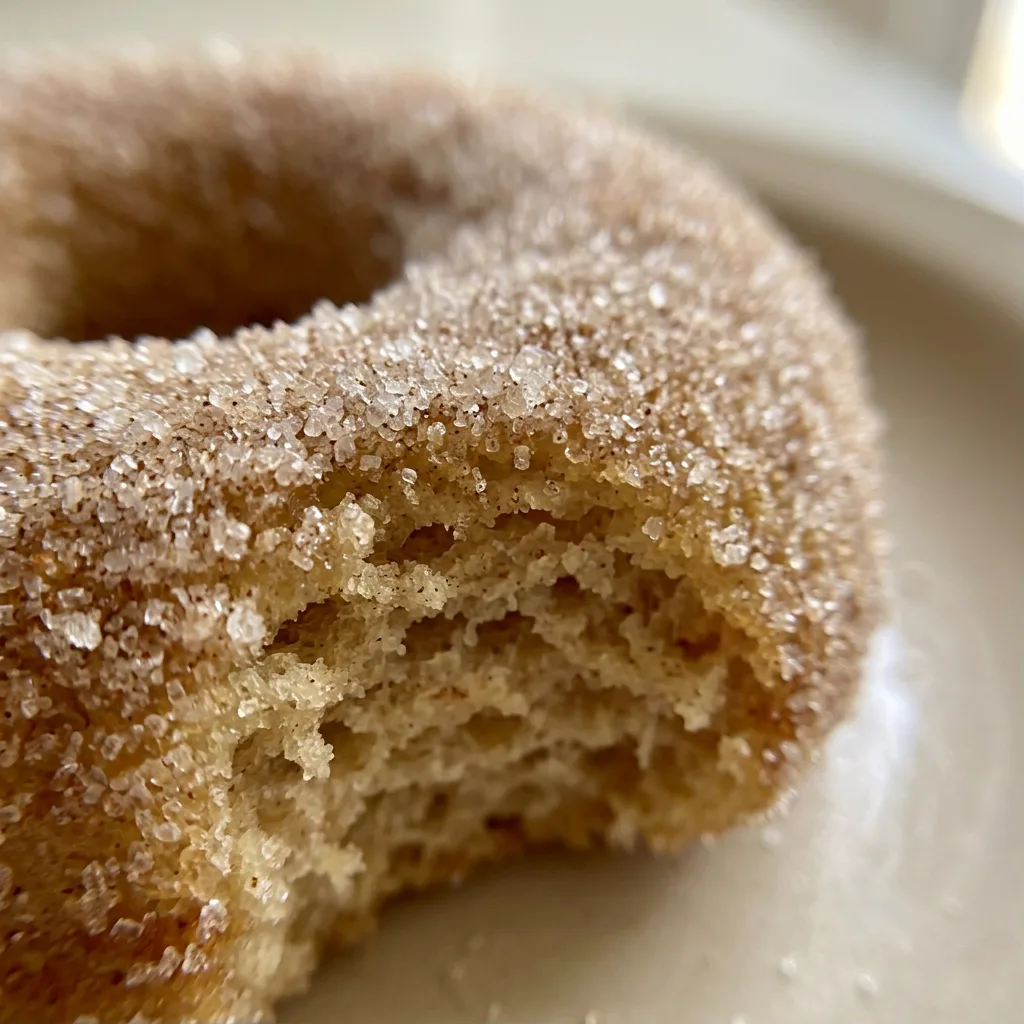
Rolling each donut in the sugar mix while the butter is still wet gives an even, crunchy coating. That crackly layer contrasts with the soft, tender crumb inside. If you wait until the donuts cool, the butter won’t penetrate as well, and the sugar slides off.
For apple donuts, the combination of warm spice and crisp sugar against the apple-flavored cake is what makes them memorable.
Prep: 30 min · Cook: 10 min · Total: 40 min · Servings: 12 · Calories: 230 kcal
Ingredient Notes
Apple cider: Boil 2/3 cup down to 1/3 cup; this concentrates flavor and reduces water so the donuts stay light.
Cake flour: Lower protein than all-purpose; spoon and sweep to measure for a tender, not tough, crumb.
Unsalted butter: Melt and cool fully before mixing; hot butter can cook the eggs and change the batter’s texture.
Brown sugar: Pack it firmly when measuring; it adds moisture and a deeper flavor than granulated alone.
I tried folding by hand one batch and using a mixer another; the mixer batch turned out tough and flat every time.
How to make baked apple cider donuts from scratch
Reduce the cider
Boil 2/3 cup apple cider in a small saucepan, then simmer until it measures 1/3 cup, about 15 to 18 minutes. The cider turns syrupy and dark, don’t rush this step.
Mix dry ingredients
Whisk cake flour, baking powder, baking soda, salt, cinnamon, and nutmeg in a bowl. Lumps in the flour are fine; whisking aerates the mix for a lighter crumb.
Combine wet ingredients
In another bowl, whisk eggs, both sugars, vanilla, and the melted butter until smooth. Stir in the cooled cider. If the batter looks curdled, the cider wasn’t cool enough, let it sit a minute.
Fold batter together
Pour dry ingredients into wet and fold with a silicone spatula just until no flour streaks remain. Overmixing develops gluten and makes tough donuts; a few lumps are okay.
Pipe into pans
Transfer batter to a zip-top bag, snip a 3/4-inch corner, and pipe into greased donut wells, filling each just over halfway. The batter flows smoothly; stop before it reaches the center hole.
Bake until firm
Bake at 350°F for 9 to 11 minutes. The donuts spring back when pressed gently, and the edges pull away from the pan. A toothpick inserted should come out clean.
Cool and coat
Flip donuts onto a wire rack and let cool 2 minutes. Brush warm donuts with melted butter, then roll in cinnamon-sugar. The butter soaks in quickly, so coat each one right away.
Baked Apple Cider Donuts with Cinnamon Sugar
Ingredients
Donuts
- 2/3 cup apple cider
- 2 cups cake flour (or all-purpose flour, measured by spoon and sweep (see note))
- 1 tsp baking powder
- 1/2 tsp baking soda
- 1/2 tsp table salt
- 1/2 tsp cinnamon
- 1/4 tsp nutmeg
- 3 tbsp unsalted butter (melted and cooled)
- 2 large eggs
- 1 tsp vanilla extract
- 1/2 cup packed brown sugar
- 1/4 cup granulated sugar
Topping
- 3 tbsp unsalted butter (melted and cooled)
- 1/2 cup granulated sugar
- 1/2 tsp cinnamon
- 1/4 tsp nutmeg
Instructions
Donuts
Reduce apple cider:
Heat the apple cider to a boil, then reduce to medium and let it simmer until it reduces to 1/3 cup, roughly 15-18 minutes. Take off heat and allow to reach room temperature.Preheat and butter pans:
Set oven to 350F. Butter two 6-well donut pans.Whisk dry ingredients:
Combine all dry ingredients in a bowl and whisk.Mix wet ingredients with cider:
In a separate bowl, whisk together all wet ingredients. Add the cooled cider and mix in.Fold dry into wet:
Pour the dry mixture into the wet. Use a silicone spatula to fold together with a few quick motions.Fill piping bag:
Transfer batter to a large zip-top bag, pushing it to the bottom. Squeeze out air, seal, then cut about a 3/4 inch tip from one lower corner.Pipe batter into pans:
Pipe batter into the donut wells, filling each slightly over halfway.Bake donuts:
Bake for 9-11 minutes until the donuts feel firm when touched.Cool donuts on rack:
Flip donuts onto a wire rack to cool while preparing the topping.
Topping
Prepare cinnamon sugar:
Melt the butter. In a bowl big enough for a donut, stir together the sugar, cinnamon, and nutmeg.Coat donuts with butter and sugar:
Brush melted butter onto a donut, then roll it in the sugar mixture, pressing lightly so it sticks. Do the same for all donuts.
Storage and Serving
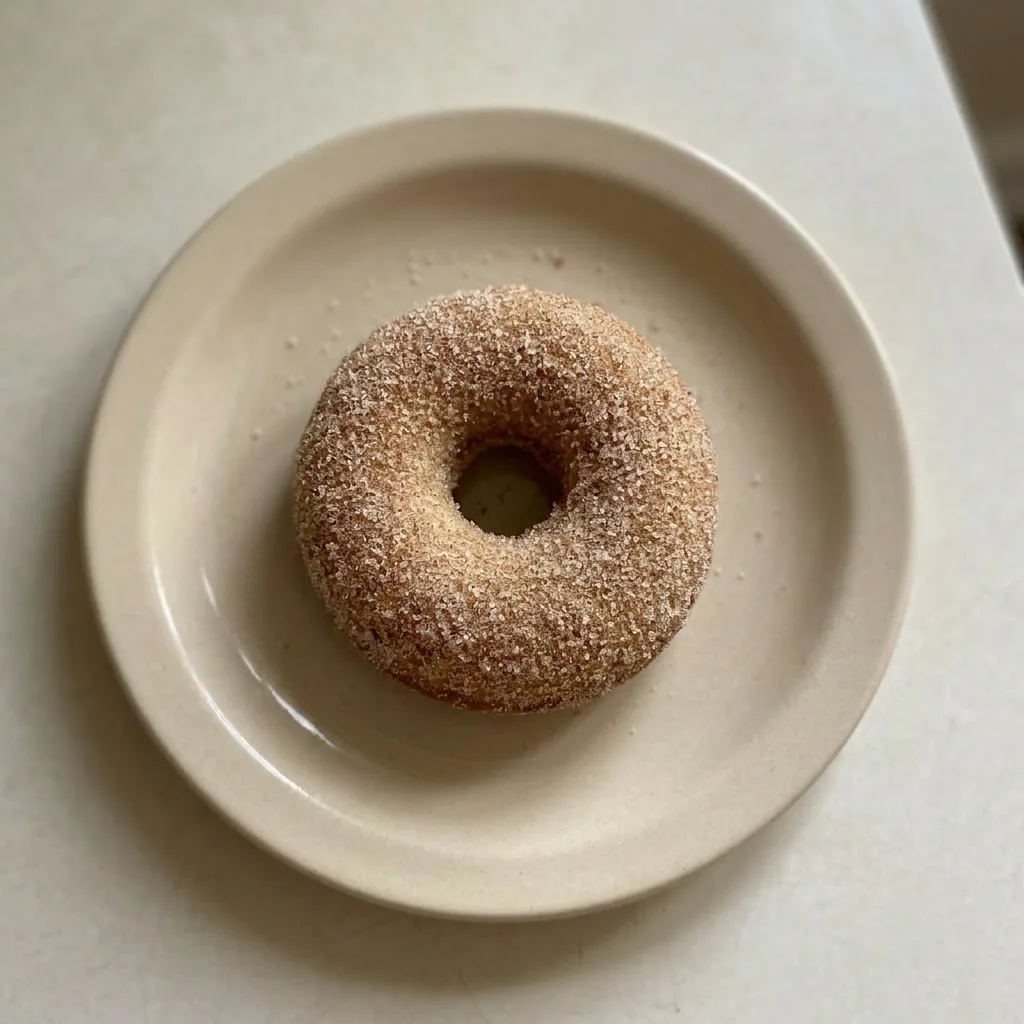
These donuts are best the day they’re made, when the exterior stays crunchy and the crumb is soft. If you have leftovers, store them in an airtight container at room temperature for up to 2 days. The cinnamon sugar topping will soften as the donuts sit, so to restore some crunch, reheat in a 300°F oven for 3 to 5 minutes.
Do not microwave; it makes the texture rubbery. For longer storage, freeze the uncoated baked donuts in a freezer bag for up to 1 month. Thaw at room temperature, then brush with melted butter and coat with the cinnamon sugar mixture just before serving.
The butter and sugar topping does not freeze well; apply it fresh for the best texture. If you plan to serve these over a few days, coat only what you’ll eat immediately and store the rest uncoated, then finish them as needed. The serving window for the best texture is within 4 hours of coating.
What you can swap in these donuts, and what to leave alone
Apple cider: Apple juice, reduced to 1/3 cup as directed. Apple juice is sweeter and less tart. The donuts will taste one-note sweet.
Cut the granulated sugar by 1 tablespoon to compensate. The reduction still concentrates flavor, but you lose the tangy edge that makes cider donuts interesting.
Cake flour: All-purpose flour, measured by spoon and sweep. The donuts come out denser and less tender.
Cake flour’s low protein keeps the crumb delicate; all-purpose builds more gluten. Accept the trade-off if you must, but don’t scoop the flour, that makes them tough.
Unsalted butter: Salted butter, reduce salt in batter to 1/4 teaspoon. Works fine.
The topping butter stays as is, the salt won’t hurt. Just don’t skip cooling the melted butter; hot butter curdles the eggs.
Brown sugar: Light brown sugar for dark. Light brown sugar has less molasses, so the donuts are slightly less moist and the flavor milder.
Dark brown works too, but it’ll make the crumb a shade darker and the taste more caramel-like. Either way, pack it firmly when measuring.
Tips
- When piping, keep the bag tip submerged in the batter as you circle the well; lifting the bag mid-way creates air gaps that cause misshapen donuts.
Frequently Asked Questions
Can I make these donuts ahead of time?
Yes, but only partially. The baked donuts can be frozen uncoated for up to 1 month; thaw at room temperature, then brush with melted butter and coat in cinnamon sugar just before serving. The coating doesn’t freeze well, so coat only what you’ll eat within 4 hours for the best crunch.
Leftover coated donuts soften quickly; reheat in a 300°F oven for 3 to 5 minutes to restore some texture.
Why did my donuts turn out dense?
Most likely the batter was overmixed or the flour was scooped directly, packing too much into the cup. Overmixing develops gluten, and packed flour throws off the ratio, both leading to a heavy crumb. Another possibility: the reduced cider wasn’t cooled to room temperature before mixing, which can partially cook the eggs and deflate the batter.
How do I know when the donuts are done baking?
They should spring back when pressed gently in the center, and the edges will pull away from the pan. A toothpick inserted comes out clean. The bake time is short, 9 to 11 minutes, so start checking at 9 minutes to avoid overbaking, which dries them out.
What is the difference between baked and fried donuts?
Baked donuts rely on chemical leaveners for rise and have a tender, cake-like crumb with a soft exterior. Fried donuts develop a crispier, oil-rich crust and a lighter, airier interior due to the hot oil’s rapid expansion. Baked donuts are less greasy and easier to make at home, but they won’t have the same crackly shell or porous texture as a fried yeast donut.