
Most egg muffins turn into rubbery pucks or crumbly scrambled-egg bits. These cottage cheese egg muffins walk the line between the two, tender enough to hold together, light enough to feel like you’re eating something airy, not a sponge. The trick is the curds themselves: they release steam as they bake, creating tiny pockets that keep the texture from getting dense.
Full-fat cottage cheese matters here; low-fat makes them dry and curdles the wrong way. A scant two tablespoons of flour gives just enough structure without weighing them down.
Cottage cheese for moisture and lift
Cottage cheese does two jobs here. First, it packs in moisture, those little curds release steam as they heat, so the muffins stay tender instead of turning into rubbery egg pucks. Second, the curds create tiny pockets of air throughout the batter, giving each muffin a light, fluffy crumb.
Full-fat cottage cheese is the way to go: the extra fat adds richness and helps the structure hold together during baking. You can see how the batter looks lumpy before it goes in, but after baking, those lumps become soft spots of creaminess.
A touch of flour and baking powder
Two tablespoons of flour might not seem like much, but it’s enough to bind the eggs and cheese into a cohesive muffin that doesn’t fall apart. Without it, you’d have scrambled-egg crumbles.
The baking powder adds a subtle lift, those tiny bubbles expand in the oven, making the tops dome slightly and the interior airy, not dense. Too much flour would weigh them down into hockey pucks; this lean amount keeps the texture light while still giving the eggs something to hold onto.
Baking in a muffin tin at 350°F
A muffin tin shapes each portion evenly, so every muffin bakes at the same rate. 350°F is a gentle heat, hot enough to set the eggs and brown the tops, but not so fierce that the edges overcook before the center firms up.
You’ll see the tops turn a light golden brown and feel a slight spring when pressed. The result is a tender interior with a thin, browned crust that peels away from the pan cleanly.
Why a 10-minute rest before unmolding
Fresh from the oven, these muffins are fragile. Letting them sit in the pan for 10 to 15 minutes lets them firm up as they cool slightly. During that rest, steam continues escaping from the interior, if you unmold too soon, they’ll crumble.
The set time also loosens the edges from the pan, so each muffin slides out with its shape intact, not stuck or broken. You’ll feel the difference: a cooled muffin holds together firmly, ready to eat or pack.

Prep: 10 min · Cook: 33 min · Total: 43 min · Servings: 6 · Calories: 110 kcal
What to look for at the store
full-fat cottage cheese: Full fat is key; low fat makes them dry and curdles.
jumbo eggs: Jumbo eggs give the right liquid to structure ratio.
shredded cheddar cheese: Pre shredded has anti caking agents; grate your own for best melt.
finely chopped scallions: Use only the white and light green parts; dark greens get bitter.
all-purpose flour: Two tablespoons, not more; too much turns them dense.
gluten-free baking powder if needed: Only if you swapped flour for gluten free; regular needs no powder.
I’ve seen so many people beat the batter into submission, winding up with rubbery pucks. I did it myself the first time.
How to make cottage cheese egg muffins
Prep the pan
Butter each cup well, don’t skimp. If you see the butter bead up or slide off, wipe and re-coat. Sticking is the failure here, and a bare spot means torn muffins.
Whisk the base
Beat the eggs until they’re one uniform yellow; no streaks of white. Then add the cottage cheese, cheddar, scallions, salt, and pepper. Whisk until the curds are evenly distributed, you’ll see them suspended throughout.
Fold in the dry ingredients
Sift the flour and baking powder over the batter, then fold gently with a whisk. Stop as soon as the flour disappears, overmixing deflates the airy structure. A few small lumps are fine; smooth batter means you’ve gone too far.
Fill and bake
Divide the batter among the cups, each should be about three-quarters full. Bake on the center rack. At 30 minutes, check: the tops should be golden brown and puffed, and a toothpick inserted in the center comes out clean.
If the center still jiggles, give it up to 3 more minutes.
Rest before unmolding
Let the muffins sit in the pan for 10 to 15 minutes. You’ll see steam rising as they cool; the edges will pull away from the pan. If you try to lift one now, it should hold its shape without crumbling.
If it breaks, it needed more time.

Cottage Cheese Egg Muffins
Ingredients
- 1 cup + 1/2 tbsp full-fat cottage cheese
- 6 jumbo eggs
- 1/2 cup shredded cheddar cheese
- 4 tablespoons finely chopped scallions
- 2 tablespoons all-purpose flour (30g)
- 1/2 teaspoon gluten-free baking powder if needed
- 1/3 teaspoon fine sea salt plus pepper to taste
Instructions
Preheat oven and grease tin:
Set oven to 350°F (180°C/160°C fan/gas mark 4). Coat a 6-cup muffin tin with about 1 tsp butter or cooking spray; set aside.Beat eggs:
In a large bowl, beat the eggs until uniform.Mix wet ingredients:
Add cottage cheese, cheddar, scallions, salt, and pepper; whisk until fully blended.Fold in dry ingredients:
Sift flour and baking powder over the batter, then fold gently with a whisk until no dry streaks remain.Fill muffin cups:
Divide batter evenly among the muffin cups.Bake and cool:
Bake on the center rack for 30-33 minutes. Cool in the pan for 10-15 minutes before unmolding.
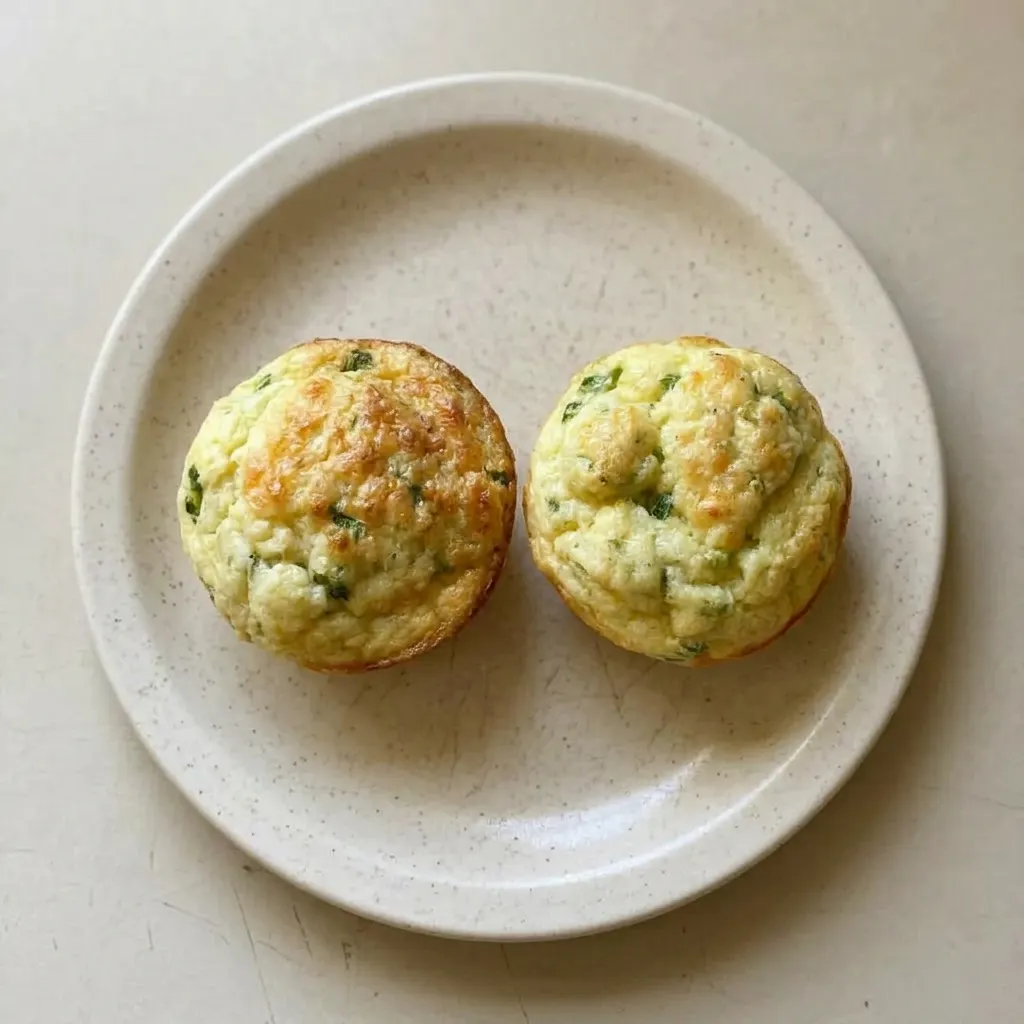
What you can swap (and what you shouldn’t) in cottage cheese egg muffins
full-fat cottage cheese: Low-fat or nonfat cottage cheese. Low-fat cottage cheese has more water and less fat; it will make the muffins wetter and less tender. The curds may also break down more, reducing the airy pockets.
Stick with full fat for the best texture.
shredded cheddar cheese: Any shredded cheese (mozzarella, pepper jack, gouda). Flavor changes, obviously. Meltability matters: hard cheeses like Parmesan won’t melt as smoothly, so shred finely.
Avoid pre-shredded if you can, the anti-caking agents can make the muffins slightly grainy.
all-purpose flour: Gluten-free all-purpose flour blend. Swap 1:1 by weight (2 tbsp). You’ll need the gluten-free baking powder listed in the recipe to mimic the lift.
The texture will be a bit more delicate, handle muffins gently when unmolding.
scallions: Chives, finely chopped leek (white part), or a pinch of onion powder. Chives are a direct swap (same amount).
Leeks add a milder onion flavor, use only the white part and chop fine. Onion powder works if you’re out of fresh: start with 1/4 teaspoon, taste the raw batter for balance.
Storage and Reheating
These muffins are best eaten within 30 minutes of baking, when the tops are still crisp and the interior is tender and moist. Leftovers should be cooled completely, then stored in an airtight container in the fridge for up to 4 days.
The texture will soften over time as moisture from the eggs and cheese redistributes. To reheat, wrap each muffin in a damp paper towel and microwave for 20 to 30 seconds.
The steam from the towel restores some of the original tenderness without making the edges rubbery. You can also reheat them in a 350°F oven for 5 minutes on a baking sheet if you prefer a firmer crust. Freezing is not recommended; the cottage cheese curds break down during thawing, leaving a watery, grainy texture.
If you must freeze, do so before baking: assemble the batter, pour into muffin cups, freeze solid, then transfer to a freezer bag. Bake from frozen, adding 5 to 7 minutes to the cook time.
But for the best texture, make them fresh and eat them within a few days.
Tips
- Let the cottage cheese sit out for 20 minutes before mixing; cold curds clump together and resist blending evenly, leading to pockets of dry curd in the baked muffin.
- When folding the flour and baking powder, use a whisk in a figure-eight motion to distribute the dry ingredients without deflating the eggs; a spatula tends to overmix and knock out air.

Frequently Asked Questions
Can I make these ahead of time and reheat them?
Yes, but the texture will soften as they sit. Cool completely, store in the fridge for up to 4 days, then reheat wrapped in a damp paper towel in the microwave for 20 to 30 seconds. Oven reheating at 350°F for 5 minutes gives a firmer crust.
Freezing is not recommended, the cottage cheese curds break down into a watery, grainy mess.
Why did my muffins turn out rubbery?
Overbaking is the most likely culprit, eggs set firm and then start squeezing out moisture, turning tough. Check at 30 minutes; if the center jiggles at all, give it up to 3 more minutes, but no longer. Another cause: using low-fat cottage cheese, which has less fat and more water, can lead to a drier, rubbery texture as the extra water evaporates.
How do I know when they are fully baked?
The tops should be golden brown and puffed, and a toothpick inserted in the center comes out clean. The center should not jiggle when you gently shake the pan. At 30 minutes, check, if the tops are pale or the center still wobbles, bake up to 3 more minutes.
What’s the difference between these and regular egg muffins?
Regular egg muffins are often just beaten eggs with add-ins, which can turn out dense or rubbery. Here, cottage cheese adds moisture and creates tiny air pockets for a light, fluffy crumb, and the two tablespoons of flour bind everything into a cohesive muffin that doesn’t crumble like scrambled eggs.