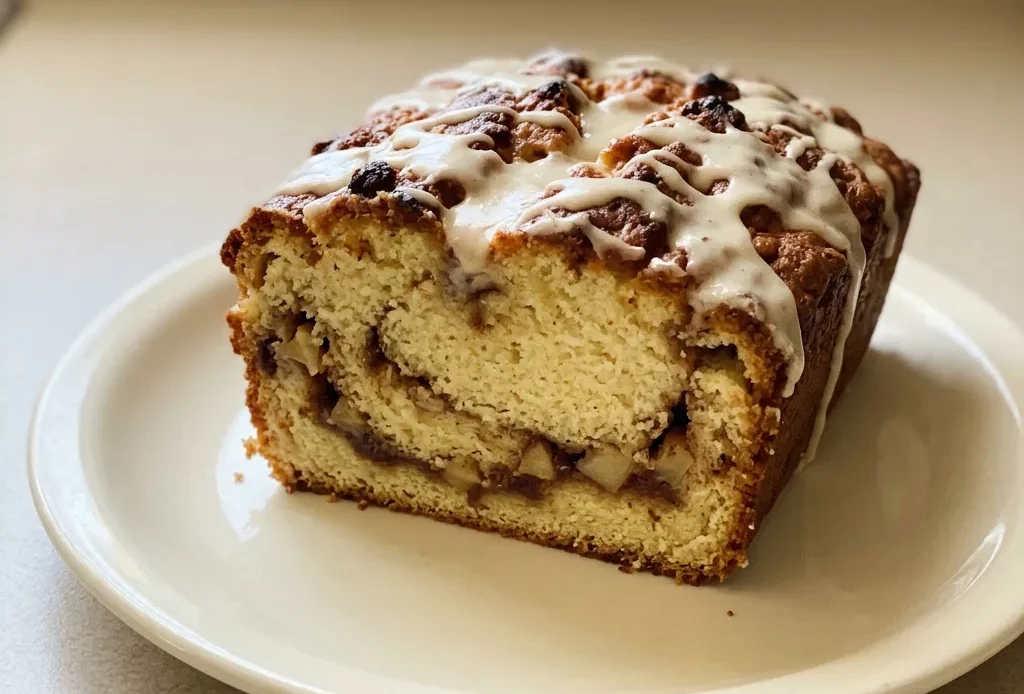
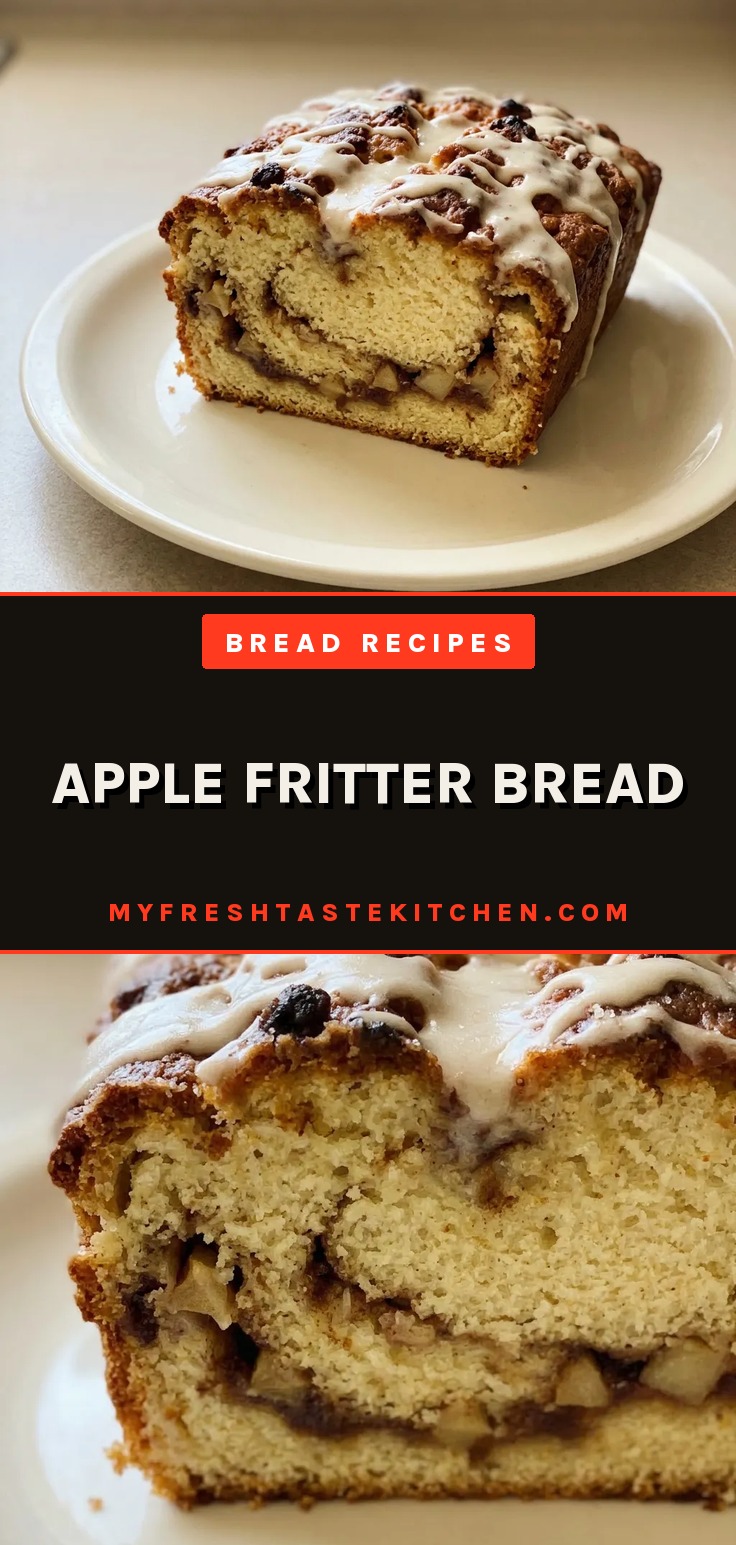
This isn’t a quickbread where apples get stirred into the batter and sink. This is a layered loaf that builds caramelized cinnamon-sugar pockets and tender fruit suspended throughout, so every slice has a fritter’s messy, sticky appeal. The apple butter does the heavy lifting, concentrated flavor without extra moisture, and the glaze sets to a thin, glossy crust that mimics the fried version’s sugary coating.
That means you get the essence of a classic apple fritter bread without the oil, but you do have to treat the layers with a light hand: press down just enough to level, not compress. The payoff is a crumb that’s fine, even, and packed with apple in every bite.
Why layer batter, apples, and cinnamon-sugar?
Layering does two things you can see in the finished bread. First, it keeps the apple pieces suspended throughout the loaf instead of sinking to the bottom.
Second, the cinnamon-sugar between layers melts into a caramelized swirl as it bakes, giving you pockets of concentrated sweetness. Pressing down gently after each layer evens out the surface so the next layer spreads uniformly.
Without that light press, you’d get air pockets or uneven baking.
How does apple butter boost flavor without making the batter wet?
Apple butter is essentially apples cooked down until concentrated, so it packs a lot of apple taste into a small volume. It coats the chopped apples evenly, adding natural sweetness and a slight tang. Unlike fresh apples, it doesn’t release extra liquid during baking, which means the bread stays tender rather than soggy.
You’ll taste a deeper apple note in every bite.
Why does the temperature of butter and eggs matter?
Butter at room temperature creams properly with sugar, trapping air that gives the bread lift. If the butter is too cold, it won’t aerate; too warm, it loses structure.
Eggs straight from the fridge can shock the batter, causing it to curdle and separate. When both are at the same even temperature, they emulsify into a smooth, uniform batter.
The result is a fine, even crumb without dense patches.
What does the glaze do for the bread?
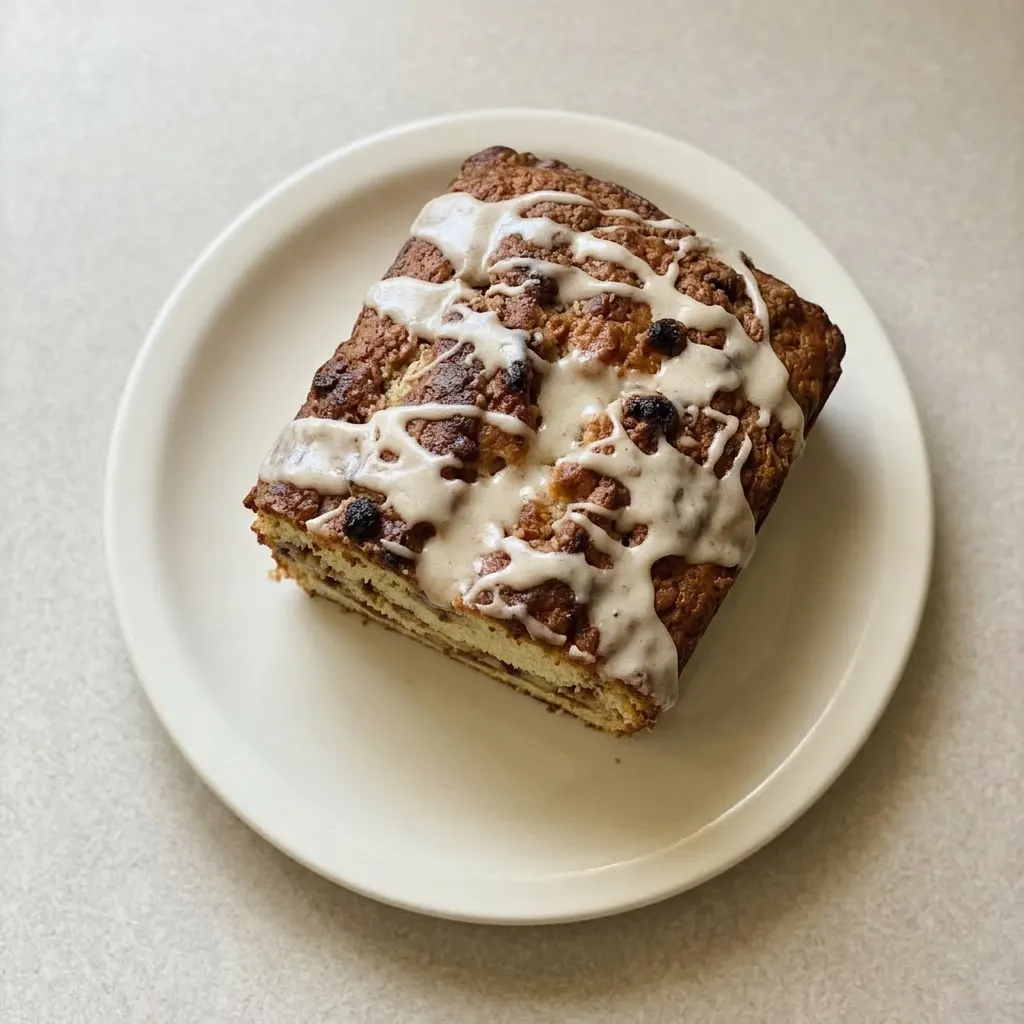
The glaze adds a thin, shiny crust that mimics the sugary coating on a fried fritter. Drizzling it while the bread is still warm lets a little soak into the surface, softening the top just enough to contrast with the tender crumb.
You collect the drips on the parchment and re-drizzle to get an even coat without pools. The glaze also dials up the sweetness, balancing any tartness from the apples.
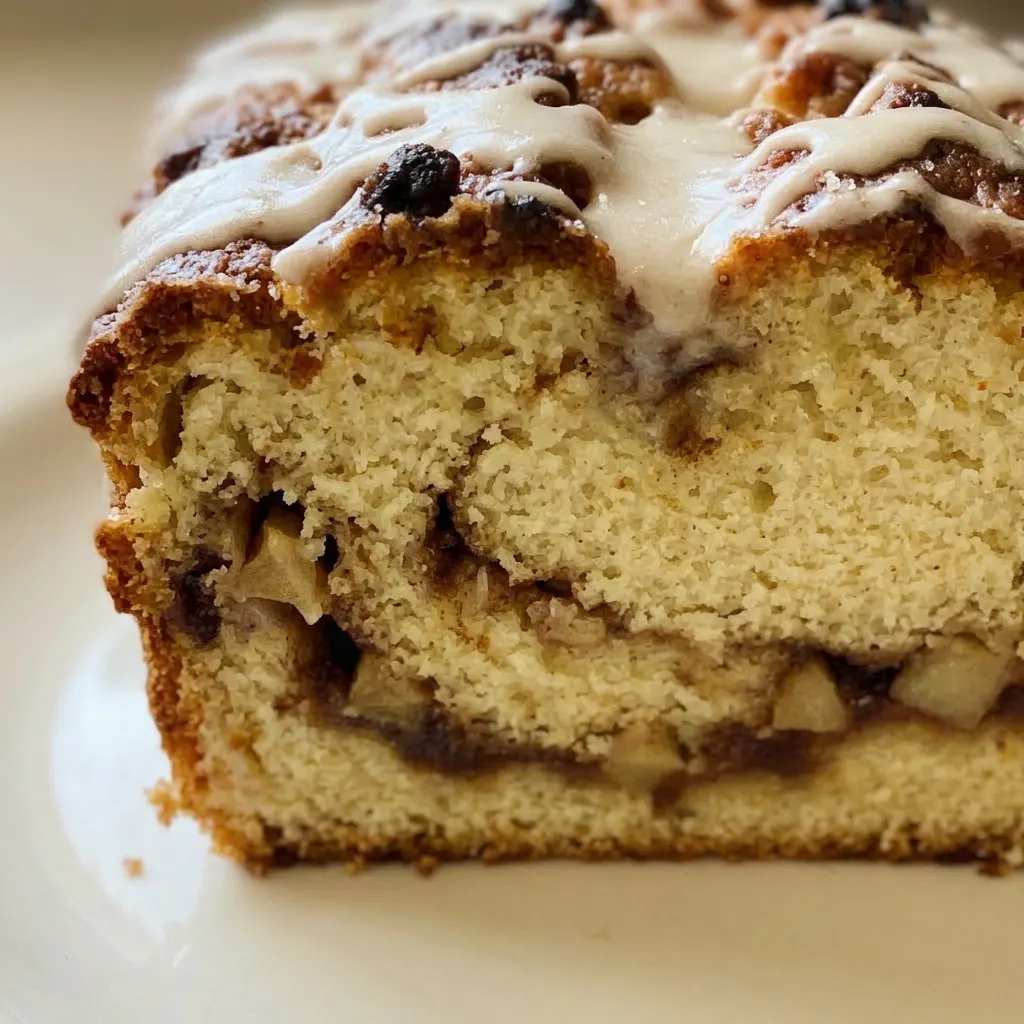
Prep: 15 min · Cook: 1 hr · Total: 1 hr 45 min · Servings: 12 · Calories: 260 kcal
What to look for in the apple fritter bread ingredients
apples: Use a firm tart apple like Granny Smith; it holds shape during baking and balances the sweetness.
apple butter: Buy unsweetened apple butter; it adds concentrated apple flavor without extra sugar or moisture.
butter: Use unsalted butter so you control the salt; let it soften at room temperature for even creaming.
eggs: Pull eggs from the fridge an hour before; cold eggs can cause the batter to curdle and separate.
brown sugar: Use light or dark brown sugar; dark gives a deeper molasses flavor in the cinnamon-sugar layers.
Most people ruin this by skipping the pressing step, then the apples sink and the sugar burns, leaving a sad, soggy mess.
Building the apple fritter bread, layer by layer
Cream butter and sugar
Beat softened butter and granulated sugar until pale and fluffy, about 3 minutes. You’ll see the mixture lighten in color and become airy, that’s the trapped air that lifts the crumb.
Add eggs one at a time
Beat in each egg fully before adding the next. The batter should look smooth and glossy, not curdled. If it starts to separate, the eggs were too cold, warm the bowl briefly.
Fold in dry ingredients and milk
Add flour mixture and milk alternately, starting and ending with flour. Fold just until no streaks remain; overmixing makes the bread tough. The batter will be thick but scoopable.
Prepare apple mixture
Toss diced apples with cinnamon, sugar, and apple butter. The apple butter coats the pieces without extra liquid, you’ll see a glossy sheen. Tart apples hold shape better; sweet ones soften more.
Layer batter, apples, and cinnamon-sugar
Spread half the batter in a greased loaf pan. Top with half the apples, then half the cinnamon-sugar. Press down gently so the next layer adheres.
Repeat with remaining batter, apples, and sugar.
Bake until golden and set
Bake at 350°F for 50 to 60 minutes. The top should be deep golden brown and a toothpick inserted in the center should come out clean or with a few moist crumbs, no wet batter.
Cool and glaze
Cool in the pan on a rack for 30 minutes. Whisk powdered sugar with milk until smooth and pourable. Drizzle over warm bread; the glaze will set into a thin, shiny crust.
Collect drips and re-drizzle for even coverage.
Apple Fritter Bread
Ingredients
Cinnamon-Sugar Mixture
- 1/3 cup brown sugar 73g
- 1 tsp. cinnamon
Batter
- 2/3 cup granulated sugar 133g
- 1/2 cup butter 113g, softened at room temperature
- 2 eggs room temperature
- 1 and 1/2 tsp. vanilla extract
- 1 and 1/2 cups all-purpose flour 188g
- 2 tsp. baking powder
- 1/2 cup milk 120ml
Apple Mixture
- 2 apples peeled and chopped
- 1 tsp. cinnamon
- 2 tbsp. granulated sugar 25g
- 2 tbsp. apple butter 32g
Assembly and Glaze
- 1 cup powdered sugar 120g
- 1 to 2 Tablespoons milk 15-30ml
Instructions
Cinnamon-Sugar Mixture
Mix Cinnamon Sugar:
Mix 1/3 cup brown sugar and 1 tsp cinnamon in a small bowl; reserve.
Batter
Cream Butter and Sugar:
Cream 1/2 cup softened butter with 2/3 cup granulated sugar in a large bowl until pale and fluffy.Beat in Eggs and Vanilla:
Beat in eggs one by one, fully incorporating each. Add 1 1/2 tsp vanilla and stir.Whisk Flour and Baking Powder:
Whisk 1 1/2 cups flour and 2 tsp baking powder in a small bowl. Gradually add to the butter mixture, then fold in 1/2 cup milk until smooth.
Apple Mixture
Toss Apples with Spices:
Toss chopped apples with 1 tsp cinnamon, 2 tbsp granulated sugar, and 2 tbsp apple butter in a small bowl.
Assembly and Glaze
Layer First Half of Batter:
Transfer half the batter to a greased loaf pan. Layer half the apple mixture, then half the cinnamon-sugar; press down gently.Add Remaining Batter and Apples:
Spread remaining batter on top, then the rest of the apples, then the rest of the cinnamon-sugar; press lightly.Bake Until Golden:
Bake at 350°F (175°C) for 50-60 minutes, until a toothpick inserted in center comes out clean.Cool on Rack:
Let cool on a wire rack for 30 minutes.Whisk Glaze:
For the glaze, whisk 1 cup powdered sugar with 1 tbsp milk, adding up to 1 tbsp more milk until desired consistency.Drizzle Glaze Over Cake:
Set parchment under the rack. Drizzle glaze over the cooled cake; collect drips and drizzle again.
What to swap (and what to skip) in apple fritter bread
apple butter: Unsweetened applesauce plus a pinch of cinnamon. Applesauce is thinner, so the apple mixture will be wetter.
Drain the applesauce slightly before using, or the bread may take an extra 5 to 10 minutes to bake and come out a little denser. The apple flavor will be milder.
all-purpose flour: Gluten-free 1-to-1 flour blend. Expect a slightly grittier crumb and less rise. The bread may dome less and feel more tender-crumbly.
Measure by weight (188g) for best results; do not use a single grain flour like almond or coconut, they lack structure.
butter: Vegan butter sticks (like Miyoko’s or Earth Balance). Vegan butter creams similarly but may make the crumb a tad softer.
Use the same softened weight (113g). Do not use spreadable tub margarine, too much water, batter will be greasy and flat.
brown sugar in cinnamon-sugar mixture: Do not swap. Brown sugar is what melts into the caramelized swirl.
White sugar won’t give that sticky, deep sweetness; the layers will just be crunchy sugar spots. Keep it as written for the signature fritter effect.
Storage and Serving
For the best texture, serve the bread within a few hours of glazing, while the glaze is crisp and the crumb is tender. Store leftovers tightly wrapped at room temperature for up to 3 days; the glaze will soften but the bread stays moist. For longer storage, refrigerate for up to 5 days.
Let refrigerated slices come to room temperature before serving to restore some softness. The bread freezes well for up to 1 month if wrapped tightly in plastic and foil.
Thaw at room temperature still wrapped to avoid condensation. If you plan to glaze after freezing, freeze the unglazed bread, then glaze after thawing for the best appearance.
Tips
- Toss the chopped apples with a squeeze of lemon juice to prevent browning and add a subtle tang that brightens the apple flavor.
- Use a serrated knife to slice the cooled bread; the glaze can stick to a straight blade and tear the crumb.
Frequently Asked Questions
Can I make this bread ahead of time?
Yes, you can bake it a day ahead. Cool completely, then wrap tightly and store at room temperature. Glaze after thawing if freezing, or glaze the day you serve for the crispest crust.
Why did my bread sink in the middle?
Most likely the batter was overmixed or the oven door opened too early. Overmixing develops gluten, which traps steam that collapses. Check your oven temperature with an oven thermometer, if it runs low, the structure sets too slowly.
How is this different from regular apple bread or apple fritters?
It has the layered cinnamon-sugar swirl and apple butter coating of a fritter, but bakes as a loaf instead of frying. The glaze mimics the fritter’s sugary coating, while regular apple bread usually has apples mixed straight into the batter without layered caramelization.
Can I use a different type of apple?
Yes, but firm tart apples like Granny Smith hold their shape best. Sweeter varieties like Fuji or Gala will soften more and make the crumb a bit moister, still works, just different texture.
How should I store leftovers and how long do they last?
Store tightly wrapped at room temperature for up to 3 days; the glaze softens but the bread stays moist. Refrigerate for up to 5 days, and let slices come to room temperature before serving. Freeze unglazed for up to 1 month, then glaze after thawing.