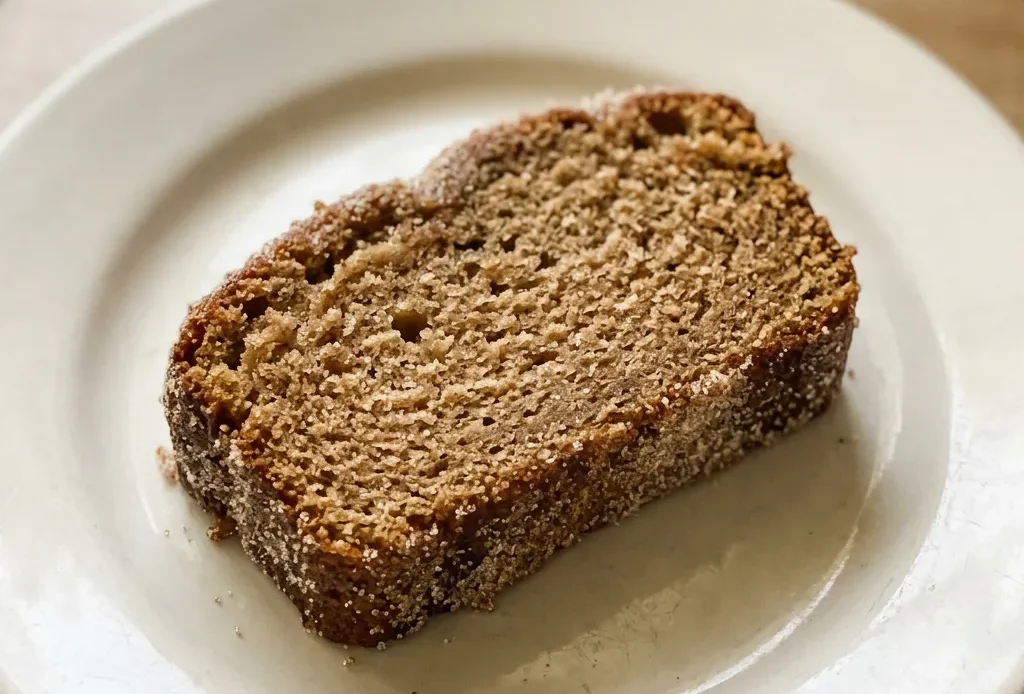
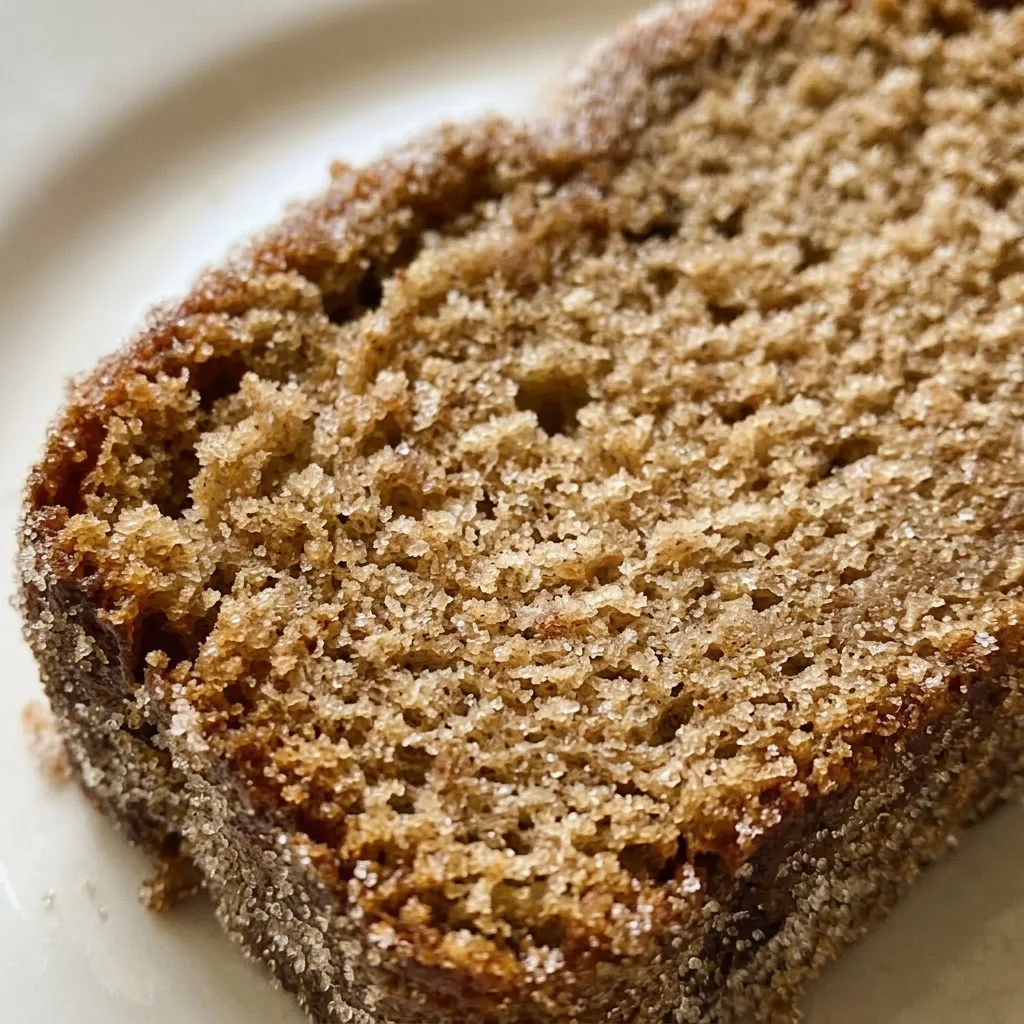
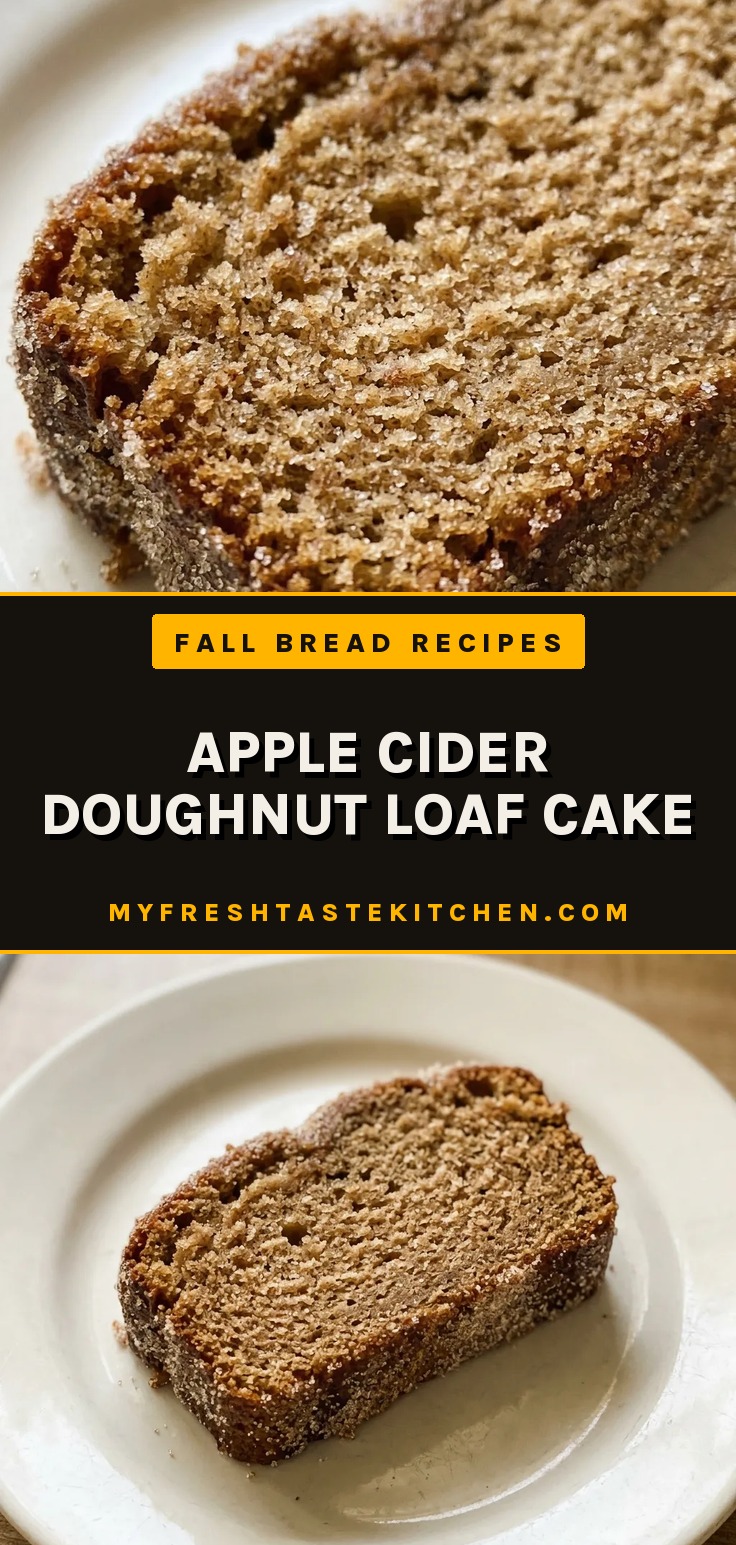
The trick to this apple cider doughnut loaf cake is reducing the cider until it’s almost syrupy, skip that step and you’ll have a bland, wet loaf. The real payoff comes after baking: brushing the warm cake with butter and rolling it in cinnamon sugar gives a shell that crackles when you slice. It’s the kind of detail that separates a good fall cake from one that actually tastes like a doughnut, just in loaf form.
This apple cider doughnut loaf cake keeps that tender, moist crumb you want from a loaf, not the dry ring of a stale old-fashioned.
I brushed the melted butter onto a still-warm cake, and the sugar just slid right off in clumps, leaving a sticky, patchy mess.
Why reduce the apple cider?
Boiling 1 cup of cider down to 1/2 cup concentrates its flavor. The result is a deeper, more pronounced apple taste that carries through the loaf without watering down the batter. Straight cider adds too much liquid for a cake this sturdy, and you’d end up with a muted apple flavor.
Reduction gives you intensity without throwing off the batter’s moisture balance. You’ll smell the difference as it reduces, the sweet-tart aroma gets sharper.
How do sour cream and cornstarch keep this loaf tender?
Sour cream brings moisture and enough acidity to react with the baking soda, so the crumb rises soft and even. Cornstarch dilutes the flour’s gluten-forming potential; a little swap means a tighter, more delicate structure.
Together they yield a loaf that’s moist but not heavy, with a fine crumb that doesn’t dry out overnight. The sour cream also rounds out the cider’s tang without making the cake taste creamy.
Why coat the cake after baking?
Brushing the warm cake with melted butter lets the cinnamon sugar stick in a crunchy layer that mimics a doughnut’s coating. Do it while the cake is still slightly warm, and the butter soaks in just enough to hold the sugar without making the crust soggy. Now I always wait until the cake is completely cool before brushing with butter and coating with cinnamon sugar, so the sugar stays crisp and clings evenly.
The contrast between the soft, moist interior and the gritty-sweet shell is the whole point.
Prep: 20 min · Cook: 55 min · Total: 1 hr 15 min · Servings: 10 · Calories: 310 kcal
Ingredient Notes for Apple Cider Loaf
apple cider: Use fresh, unfiltered cider, not apple juice. It boils down to a syrupy concentrate that packs real apple punch.
sour cream: Full fat sour cream gives the best moisture and tenderness. Low fat will work but the crumb will be less tender.
brown sugar: Light brown sugar keeps the loaf moist and adds a mild molasses note. Dark brown will make it deeper and wetter.
freshly grated nutmeg: Pre ground nutmeg is fine but freshly grated gives a floral, warm spice that fades less in baking.
How to make the batter so it bakes up tender, not tough
Reduce the cider first
Boil 1 cup of cider down to 1/2 cup. You’ll see it thicken slightly and smell a sharp, concentrated apple aroma. Stop there; further reduction risks a syrupy mess that won’t blend evenly.
Whisk wet ingredients together
Whisk the reduced cider, sour cream, and vanilla until smooth. The sour cream should disappear into the liquid, no streaks. If it seizes, the cider is too hot; let it cool a minute more.
Beat eggs and sugar until frothy
Beat eggs with brown sugar until the mixture is pale, thick, and falls in a ribbon from the whisk. This takes 2 to 3 minutes. Underbeaten batter yields a dense, squat loaf.
Stream in melted butter slowly
With mixer running, pour the cooled melted butter in a thin stream. If you dump it all at once, the batter separates and you’ll see a greasy slick on top. Stop when fully incorporated.
Fold dry ingredients in three additions
Add the flour mixture in three parts, alternating with the cider mixture, starting and ending with flour. Stir just until no streaks of flour remain; a few lumps are fine. Overmixing makes the cake tough.
Bake until a toothpick comes clean
Bake at 325°F for about 55 minutes. The top should be golden brown and spring back when pressed. A toothpick inserted in the center should come out with a few moist crumbs, not wet batter.
Cool before coating
Let the cake cool in the pan for 10 minutes, then lift it out and cool another 5 minutes on a rack. If you coat it while too hot, the butter soaks in and the sugar dissolves into a sticky mess.
Brush with butter, then coat with cinnamon sugar
Brush the top and sides of the warm cake with melted butter. Then roll the cake in the cinnamon sugar mixture, pressing gently so it adheres. The sugar should form a gritty, crunchy shell, not a wet paste.
Apple Cider Doughnut Loaf Cake
Ingredients
Apple Cider Bread
- 1 cup apple cider 240 ml
- 1/2 cup sour cream 120 ml
- 2 tsp vanilla extract 10 ml
- 1/2 cup unsalted butter 113 g, melted
- 2 large eggs at room temperature
- 3/4 cup brown sugar 150 g, lightly packed
- 1 1/4 cups plus 2 Tbsp all purpose flour 175 g
- 2 Tbsp cornstarch 16 g
- 1 1/4 tsp baking powder 5 g
- 1/2 tsp baking soda 2 g
- 1/2 tsp salt 3 g
- 1/2 tsp cinnamon 1 g
- 1/4 tsp freshly grated nutmeg 0.5 g, more to taste
Cinnamon Sugar Coating
- 3 Tbsp unsalted butter 42 g, melted
- 1/4 cup granulated sugar 50 g
- 1/2 tsp cinnamon 1 g
Instructions
Apple Cider Bread
Preheat oven and prep pan:
Set oven to 325°F (165°C). Mist a 9×5-inch loaf pan with spray and line with parchment paper for easier removal after baking (optional).Reduce apple cider:
In a small saucepan, bring the apple cider to a boil. Let it boil roughly 10 minutes until it reduces to 1/2 cup (120 ml).Mix cider with sour cream:
Transfer the reduced cider to a small bowl; allow it to cool a bit. Whisk in the sour cream and vanilla extract.Melt butter:
In the same saucepan, melt the butter. Set aside to cool a little.Beat eggs and brown sugar:
Using a stand mixer or a whisk, beat the eggs and brown sugar together until the mixture is smooth and frothy.Stream in melted butter:
With the mixer on low speed (or while whisking by hand), slowly stream in the melted butter until fully incorporated.Whisk dry ingredients:
In another bowl, whisk the flour, cornstarch, baking powder, baking soda, salt, cinnamon, and nutmeg until uniform.Alternate dry and wet mixtures:
Add the dry blend to the egg mixture in three parts, alternating with the cider-sour cream mixture, starting and ending with dry ingredients. Stir just until combined; avoid overmixing.Bake loaf:
Pour the batter into the prepared pan. Bake for about 55 minutes, or until a toothpick inserted in the center emerges clean. Note: a slightly smaller pan may extend the baking time.Cool and remove from pan:
Let the pan rest on a wire rack for 10 minutes. Then lift the cake out using the parchment sling and let it cool for another 5 minutes.Coat with cinnamon sugar:
For the coating: combine granulated sugar and cinnamon. Brush the cake’s exterior with melted butter, then generously coat with the cinnamon sugar. Apply to the top first, then each side. For sides, cup the sugar in your hand and press it against the cake; repeat until well covered.
Cinnamon Sugar Coating
Store until serving:
Wait to slice until ready to serve. Store at room temperature, loosely wrapped in foil.
Swap the sour cream, but not the cider
sour cream: Plain whole-milk yogurt or full-fat buttermilk. Use the same volume (1/2 cup).
Both deliver similar moisture and acidity, so the loaf stays tender and rises evenly. Low-fat versions thin the batter and make the crumb drier.
all purpose flour: Gluten-free 1-to-1 baking flour (with xanthan gum). Start with the same 1 1/4 cups plus 2 Tbsp (175 g).
The crumb will be slightly more tender and a bit crumblier, but it holds together if you don’t overmix. Without xanthan gum, the loaf falls apart.
butter: Vegan butter (block-style, at least 80% fat). Use the same weight (113 g for the batter, 42 g for the coating). Melt and cool just like dairy butter.
The cake will be slightly less tender and the coating may not stick as firmly, but it works. Avoid spreadable tubs, they add too much water.
eggs: Flax eggs (2 Tbsp ground flax + 6 Tbsp water, let sit 10 min). The cake will be denser and less springy, with a slightly gummy texture if overbaked.
The flax adds a faint nutty taste that pairs fine with the apple spice. Don’t expect the same lift.
Tips
- Use a wide saucepan to reduce the cider. A wider surface area speeds evaporation and gives you more control to stop at exactly 1/2 cup, reducing the risk of burning as the liquid thickens.
Storage and Serving
Serve the cake within 2 hours of coating for the crunchiest sugar crust. The cinnamon sugar coating softens as it sits, absorbing moisture from the cake.
If you prefer that crackly shell, coat only what you’ll eat immediately and store the uncoated cake. To store leftovers, wrap the cake loosely in foil and keep at room temperature for up to 3 days.
The crumb stays moist, but the coating will be tacky after day one. For a quick refresh, brush a slice with a little melted butter and dip in fresh cinnamon sugar.
This cake does not freeze well; the texture turns gummy upon thawing. If you must freeze, freeze the uncoated cake tightly wrapped in plastic and foil for up to 2 months, then thaw at room temperature and coat fresh before serving.
Frequently Asked Questions
Can I make this cake ahead of time?
Yes, but coat it just before serving. The uncoated loaf keeps at room temperature, loosely wrapped in foil, for up to 3 days. The cinnamon sugar coating softens within a few hours, so wait to brush and coat until you’re ready to serve.
If you need to prep further ahead, freeze the uncoated cake for up to 2 months, then thaw and coat fresh.
Why did my cake sink in the middle?
Most likely the batter was overmixed, which toughened the gluten and weakened the structure. Stir just until no streaks of flour remain, a few lumps are fine.
Another cause: underbaking. The center should pass the toothpick test cleanly at 55 minutes; if the oven runs cool, a slightly smaller pan may need extra time.
How is this different from a regular apple cider doughnut?
This loaf has a tender, moist crumb from sour cream and cornstarch, while a doughnut is fried and airy. The reduced cider gives a deeper apple flavor without the extra liquid. The cinnamon sugar coating mimics a doughnut’s crunchy shell, but the interior is a soft, cake-like texture that stays moist for days.
Can I use a different pan size?
Yes, but adjust bake time. A 9×5-inch loaf pan gives the expected shape and bake time of 55 minutes.
A smaller pan, like 8×4-inch, will need several extra minutes, check with a toothpick. A 9-inch round pan bakes faster, around 35 to 40 minutes. Avoid a pan much larger, or the loaf will be shallow and dry quickly.