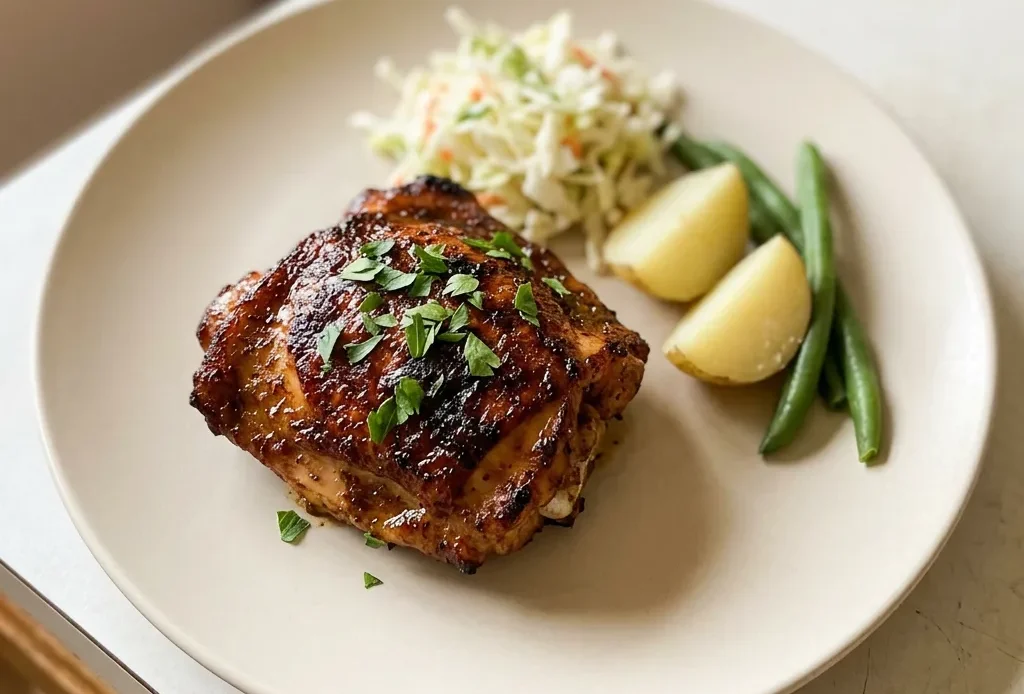
The hardest part of smoking chicken thighs isn’t the temperature management or the wood choice, it’s resisting the urge to peek. Every time you lift that lid, you lose heat and let the smoke roll out, and the reward for keeping it shut is skin that actually crisps and meat that pulls apart like it was braised. This smoked chicken thighs recipe is built around letting the smoker do the work, and the best thing you can do is step back.
Dark meat delivers juicy results
Bone-in, skin-on chicken thighs are the best cut for smoking because dark meat has enough fat to stay moist over a long cook. The fat renders slowly, basting the meat from within so it never dries out.
The skin acts as a barrier, trapping moisture while it crisps from the smoke heat. And the bone conducts heat evenly, helping the thigh cook through without a raw center. You taste the difference: the meat stays succulent, not stringy.
For chicken thighs recipes, this cut consistently outperforms lean chicken breasts.
A dry rub creates a savory bark
A balanced dry rub forms a crust that caramelizes during smoking, giving each bite a smoky, spiced crunch. Paprika provides color and mild sweetness; brown sugar aids browning and adds a hint of caramel. Garlic and onion powders layer savory depth.
Cayenne adds optional heat that fades into the background. This crust locks in moisture while the smoke adheres to the sticky surface.
For bbq chicken recipes, the rub is what sets homemade apart from store-bought.
Low and slow tenderizes the meat
Smoking at 225 to 250°F breaks down collagen in the thighs into gelatin, making the meat tender and juicy. The low heat renders fat gradually, so the meat stays moist instead of drying out.
You want the internal temperature to reach 175 to 185°F, above the USDA safe minimum of 165°F, because at that point the connective tissue has fully softened. The result is meat that pulls apart easily but still holds its shape. Cook too fast and you get tough, dry thighs.
Wood choice shapes the smoke flavor
The wood you use directly affects how the chicken tastes. Hickory gives a strong, bacon-like smokiness that stands up to dark meat, ideal if you want a bold flavor.
Applewood and cherry add a milder, fruity sweetness that complements the rub without overwhelming the chicken. Pecan burns clean and adds a nutty, subtle smoke that lets the meat’s natural richness come through. For smoked chicken, mild woods let the poultry flavor shine; stronger woods work well for chicken thighs recipes that include a sweet rub.
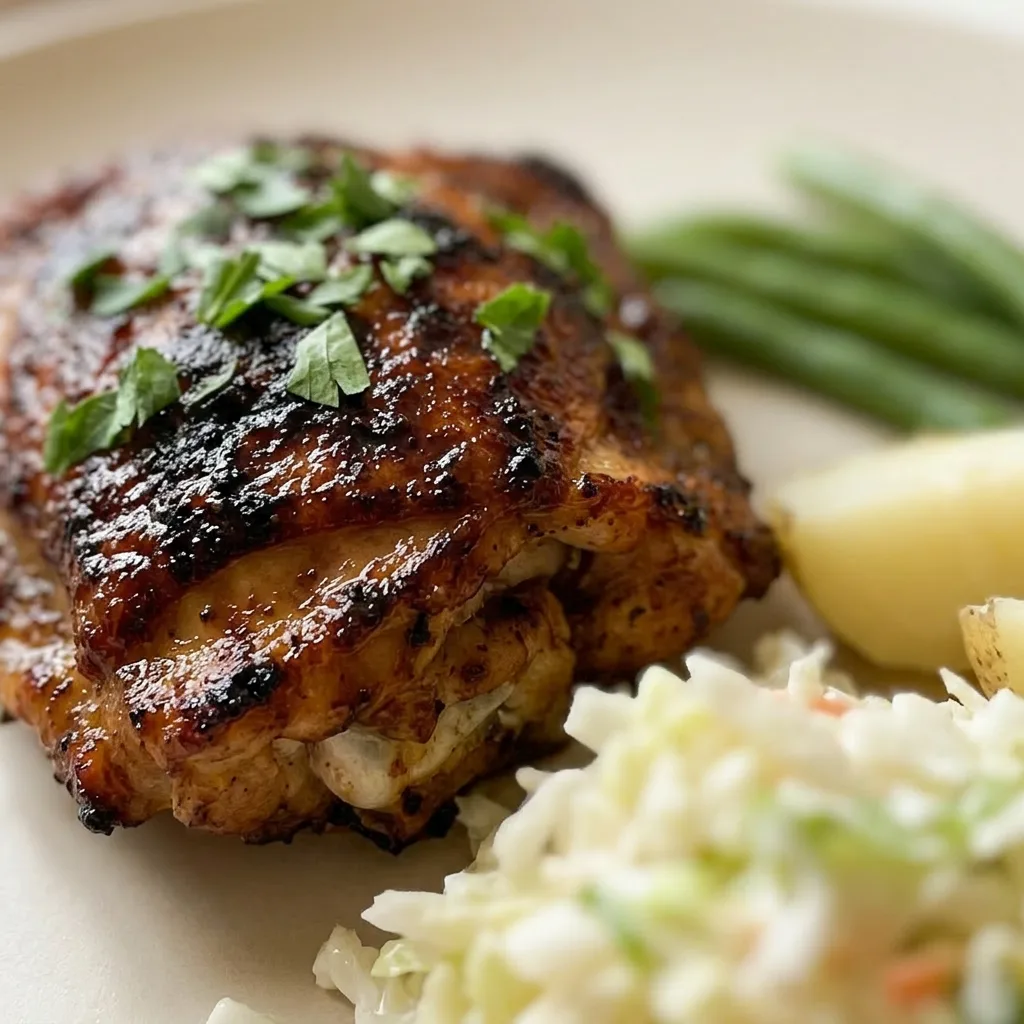
Prep: 15 min · Cook: 2 hr · Total: 2 hr 25 min · Servings: 6 · Calories: 300 kcal
What to look for in each ingredient
Bone-in, skin-on chicken thighs: Buy thighs with the skin still attached; it crisps during smoking and keeps the meat moist.
Paprika (sweet or smoked): Smoked paprika adds extra smoke flavor; sweet paprika gives color without extra heat.
Brown sugar: Use light brown sugar for milder sweetness; dark brown sugar makes the bark darker and richer.
Wood chips or pellets: Choose a mild fruitwood like apple or cherry to let the chicken flavor come through.
Olive oil, lemon juice, soy sauce (optional marinade): If marinating, use regular soy sauce not low-sodium; the salt helps the rub stick.
How to smoke chicken thighs step by step
Fire it up
Start your smoker and bring it to 225 to 250°F. If using charcoal, let the coals ash over in a chimney before dumping them in. You want thin, blue smoke, not thick, white smoke, which tastes bitter.
Dry the chicken
Pat the chicken thighs completely dry with paper towels. Any moisture on the surface will steam instead of crisp, leaving the skin rubbery. You should feel the skin tacky, not wet.
Season under and over
Apply the dry rub liberally to both sides. Gently lift the skin and rub seasoning directly onto the meat, this is where flavor penetrates. The skin should look evenly coated, with no bare patches.
Load the smoker
Place the thighs skin-side up on greased grates, spacing them an inch apart. Crowding traps steam and softens the skin. You want hot air to circulate freely around each piece.
Add smoke wood
Toss a handful of soaked wood chips onto the coals or into the smoker box. When the smoke first rolls out, it should smell sweet and woody, not acrid. If it stings your eyes, you have too much.
Maintain the temperature
Adjust vents to keep the smoker steady at 225 to 250°F. A temperature spike above 275°F will toughen the meat. Check every 30 minutes; if it drops, add fuel and open dampers slightly.
Cook until tender, not just safe
Smoke until the internal temperature reaches 175 to 185°F in the thickest part. At 165°F the meat is safe but still chewy; at 180°F the collagen breaks down and the meat starts to pull apart. Probe it, the thermometer should slide in with little resistance.
Rest before serving
Let the chicken rest 5 to 10 minutes after pulling it from the smoker. If you cut too soon, juices run out onto the board and the meat dries. After resting, the surface should feel firm but the meat yields easily to a fork.
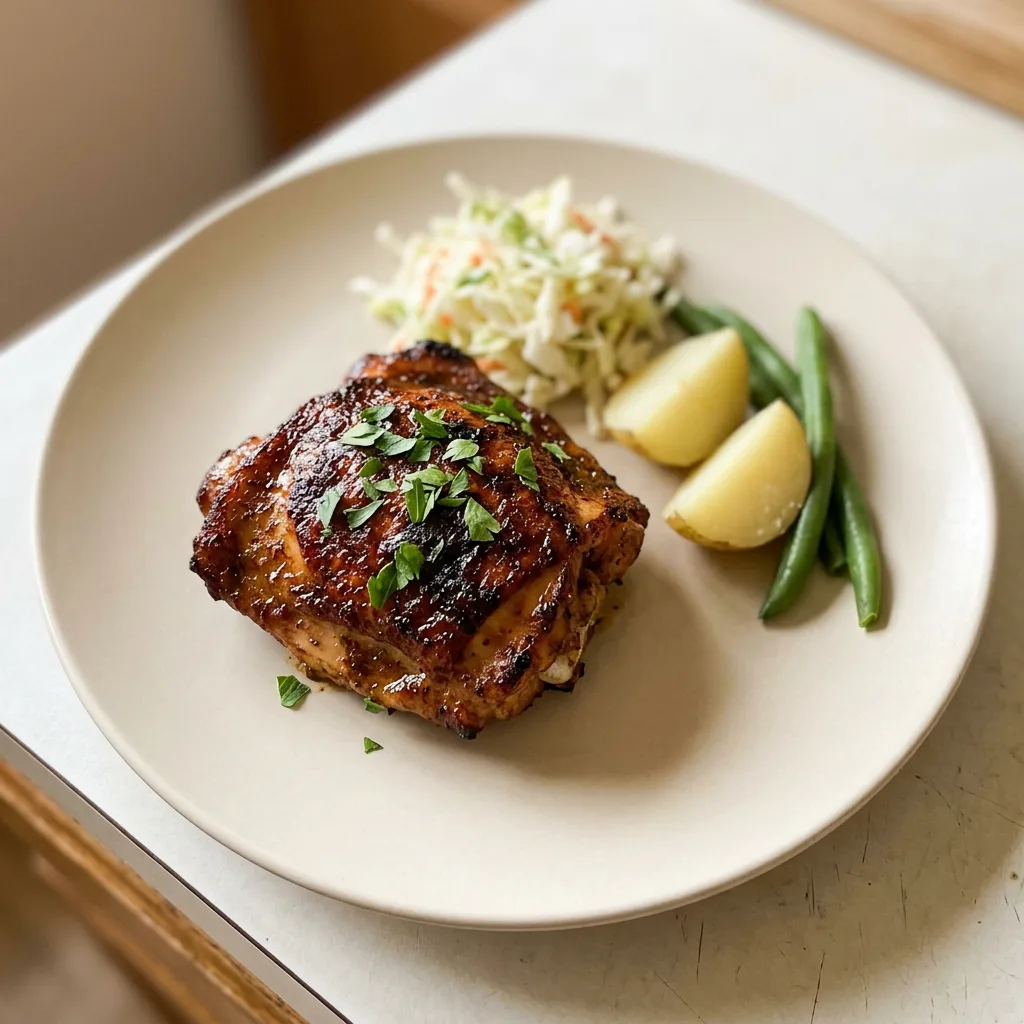
Smoked Chicken Thighs Recipe
Ingredients
Method
Select Fuel Type:
Select your fuel: fill the smoker with charcoal, wood pellets, or wood chunks per your smoker’s requirements. For a charcoal model, ignite the charcoal in a chimney starter so it is fully lit before transferring.Preheat Smoker:
Heat the smoker to 225-250°F (107-121°C). Let it come up to temperature while you get the chicken ready.Dry Chicken Thighs:
Take the chicken thighs out of the packaging or marinade; blot them dry with paper towels to eliminate extra moisture, which helps the rub stick and the skin get crispy.Apply Dry Rub:
Apply the dry rub liberally to both sides of the chicken thighs. If they were marinated, add a light sprinkle of rub to boost the taste. Carefully slide your fingers between the skin and meat (without ripping) and work seasoning onto the meat beneath.Arrange on Grates:
When the smoker reaches 225-250°F (120°C), lightly grease the grates or spritz them with cooking spray to avoid sticking. Set the chicken thighs skin-side up on the grates, with spaces between them for good airflow.Add Smoke Wood:
Place wood chunks or chips onto the hot coals or into the smoker box; for pellet smokers, make sure the hopper is full. Close the lid.Regulate Temperature:
Regulate the smoker’s temperature by adjusting the vents or dampers to control oxygen flow. Check the fuel from time to time and add more charcoal or wood if needed.Monitor Internal Temp:
Track the internal temperature: smoking usually takes 2-3 hours. Insert a meat thermometer into the thickest part of the thigh (stay away from the bone). The USDA safe minimum is 165°F (75°C); for juicier dark meat, cook to 175-185°F (79-85°C).Glaze with Sauce:
Optional: For a glossy, caramelized coating, paint BBQ sauce or glaze onto the chicken thighs 10-15 minutes before taking them off the smoker.Crisp Skin:
Optional: For extra-crispy skin, put the chicken under a broiler or on a hot grill for a minute or two after smoking, watching closely to prevent scorching.Rest the Chicken:
Let the chicken rest for 5-10 minutes after it hits the target internal temperature so the juices redistribute.Garnish and Serve:
Place on a serving platter; decorate with freshly chopped parsley, chives, or green onions.
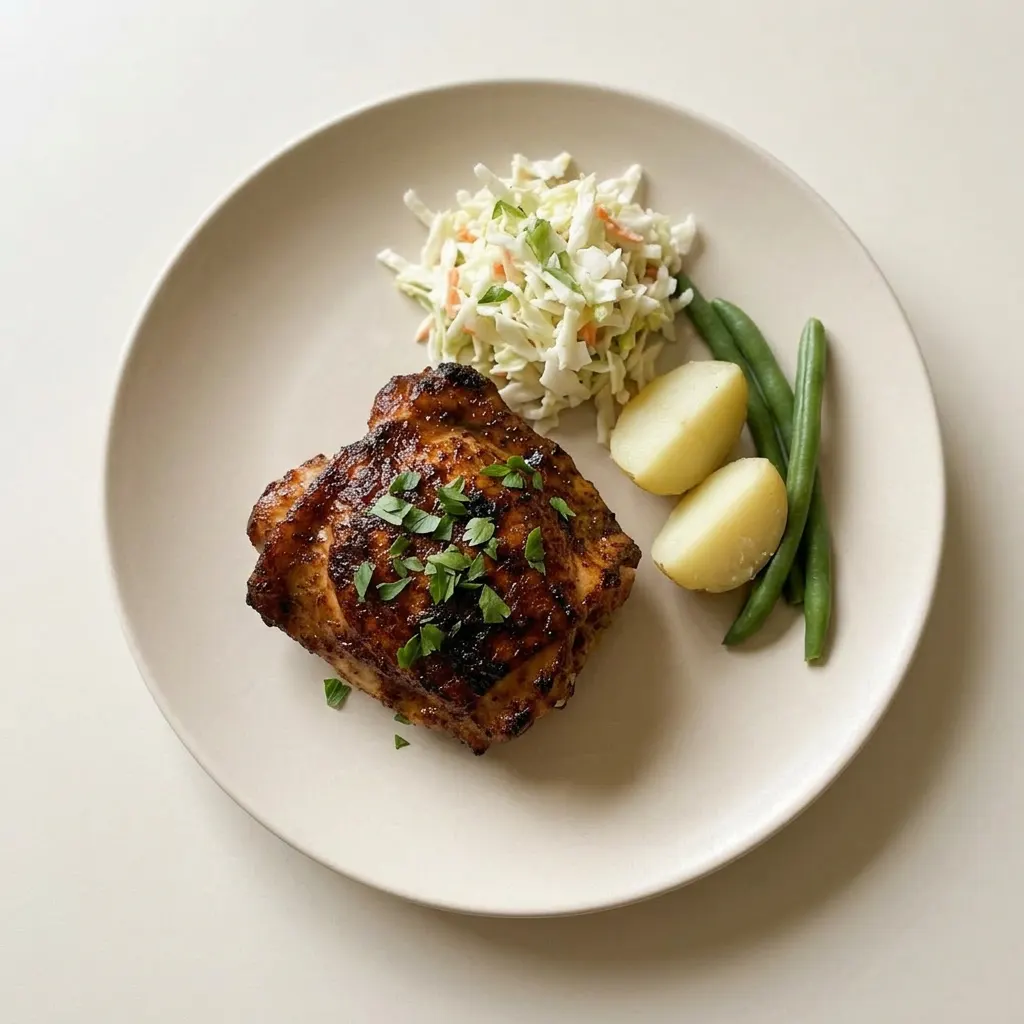
Storage and Serving
Smoked chicken thighs are best eaten within an hour of resting, while the skin is still crisp and the meat is at its juiciest. Leftovers should be cooled to room temperature, then stored in an airtight container in the fridge for up to 4 days. The skin will soften over time, but the meat stays moist due to the fat content.
To reheat, place thighs on a baking sheet in a 350°F oven for 10 to 15 minutes, which restores some skin crispness. Avoid microwaving, as it makes the skin rubbery. For longer storage, freeze the thighs in a single layer on a baking sheet, then transfer to a freezer bag for up to 3 months.
Thaw overnight in the fridge and reheat in the oven. If you sauced the thighs before smoking, the glaze may become sticky when reheated, but the flavor remains. Serve leftovers cold on salads or sandwiches, or warm with a fresh side.
Tips
- Remove the chicken from the fridge 20 minutes before seasoning. Cold meat causes the smoker temperature to drop sharply, prolonging the cook and making the skin less crisp.
- If the smoker runs hot (above 250°F), use a water pan placed under the grates. The water absorbs excess heat and adds humidity, preventing the skin from drying out before the meat is done.
What to swap and what to leave alone in this chicken thigh rub
Paprika: Chipotle powder for a smokier, spicier rub. Chipotle powder adds heat and a deeper smoke flavor. Start with half the amount (1 tablespoon) and increase to taste; too much can overpower the chicken.
Brown sugar: Coconut sugar or maple sugar. Coconut sugar caramelizes similarly but gives a less sweet, more earthy bark. Use the same volume, but note the crust may be slightly less sticky.
Soy sauce (optional marinade): Tamari or coconut aminos for gluten-free. Tamari is a direct swap by volume. Coconut aminos are thinner and sweeter; use 1.5 times the amount but expect a milder, less savory marinade.
Salt: Do not skip or reduce. Salt is essential for moisture retention in the meat.
Reducing it leads to drier, less flavorful thighs. If you must lower sodium, use half the salt plus 1 teaspoon of potassium chloride salt substitute, but expect a slight metallic edge.

Frequently Asked Questions
Can I smoke chicken thighs without a smoker?
Yes, you can simulate smoking on a charcoal grill using the indirect heat method. Bank the coals to one side, place a pan of water under the grate on the other side, and add soaked wood chips directly on the coals. Keep the lid on and the vents adjusted to hold 225 to 250°F, the same target as the recipe.
Without a smoker, you lose some temperature stability, so check the grill every 20 minutes to avoid spikes above 275°F.
How do I get crispy skin on smoked chicken thighs?
The skin crisps best when you start with thoroughly dried chicken, pat it until tacky, not wet. Smoke at 225 to 250°F, but for extra crunch, finish under a broiler or on a hot grill for 1 to 2 minutes post-smoke, watching closely to avoid burning. The recipe’s optional broiler step works because direct high heat renders the last moisture from the skin without overcooking the meat.
Can I make smoked chicken thighs ahead of time and reheat?
Yes, but the skin will soften during storage. Cool the thighs to room temperature, then refrigerate in an airtight container for up to 4 days.
To reheat, place them on a baking sheet in a 350°F oven for 10 to 15 minutes, this restores some crispness. Avoid microwaving, which turns the skin rubbery. For longer storage, freeze up to 3 months and thaw overnight in the fridge before oven reheating.
What’s the difference between smoking and grilling chicken thighs?
Smoking uses low heat (225 to 250°F) for 2 to 3 hours to gently render fat and break down collagen, yielding tender, pull-apart meat with a deep smoke flavor. Grilling sears over high direct heat in minutes, giving a charred exterior but often drier meat, especially with skin-on thighs. The recipe’s low-and-slow approach targets an internal temp of 175 to 185°F; grilling typically stops at 165°F, leaving the meat chewier.
