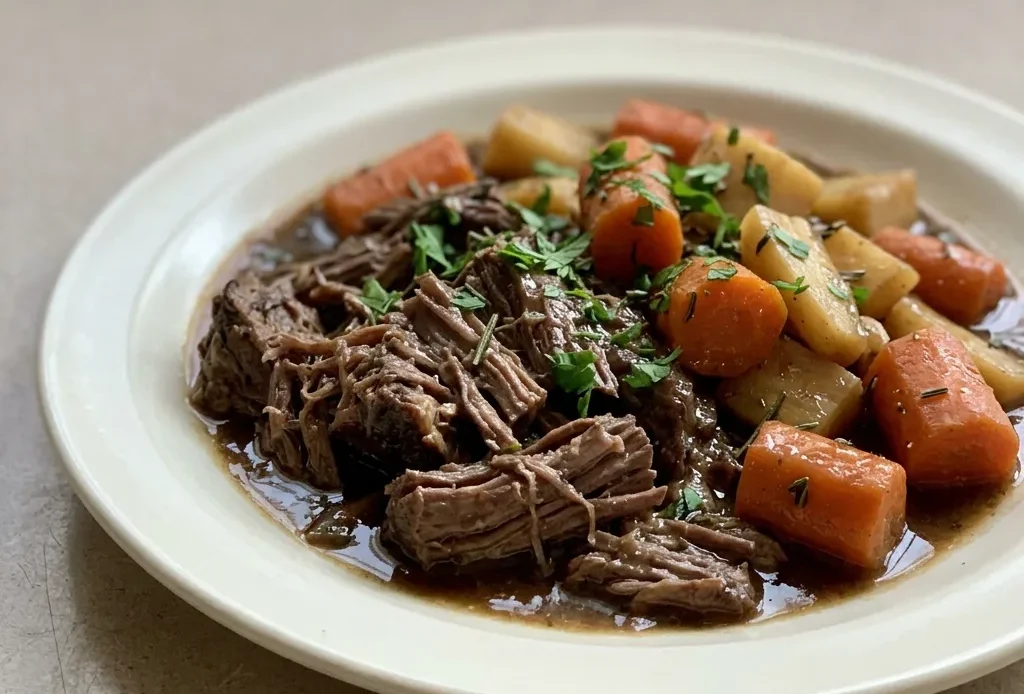
A slow cooker pot roast that delivers fork-tender beef and a deeply savory broth is already a win, but the real trick is the sauce. Most recipes end with a watery jus that tastes fine but looks sad.
This one finishes with arrowroot, stirred in during the last hour, turning that thin liquid into a silky, glossy sauce that clings to the meat. No floury taste, no lumpy gravy, just a clean, elegant finish.
The rest is classic: sear the chuck hard, load in parsnips alongside carrots for earthy sweetness, and let low heat do its work. The margin for error is generous, as long as you don’t peek or rush on high. What you get is a pot roast that earns its broth, not the other way around.
Why does searing the beef before slow cooking matter so much?
Searing is about flavor, not sealing in juices. When that chuck roast hits a hot skillet, the surface browns through the Maillard reaction, creating hundreds of savory, meaty compounds that no slow cooker can produce on its own.
That browned crust translates into a deeper, richer pot roast. The recipe calls for avocado oil because it has a high smoke point; a low-smoke oil like olive oil would burn and turn bitter under the same heat.
You can see the change: raw meat is gray and soft, seared meat is dark brown and firm. That visible crust is what you’re after. It’s the difference between a broth that tastes like boiled beef and one that tastes like slow-cooked roast.
Building a rich broth from root vegetables and aromatics
Carrots and parsnips both add sweetness, but parsnips bring an earthy, almost nutty note that carrots alone don’t. They soften into the broth as they cook, thickening it slightly and adding body you can taste.
Fresh rosemary, thyme, and bay leaves work together: rosemary is piney and bold, thyme is floral and subtle, bay gives a herbal backbone that lingers. Coconut aminos contribute a mild umami, think soy sauce without the salt punch, while balsamic vinegar adds acidity that cuts through the richness of the beef.
Together, they build a broth that’s savory, sweet, and bright. You don’t need to stir or babysit; the slow cooker does the work, pulling flavor from every ingredient over hours.
Why thicken the broth with arrowroot at the end?
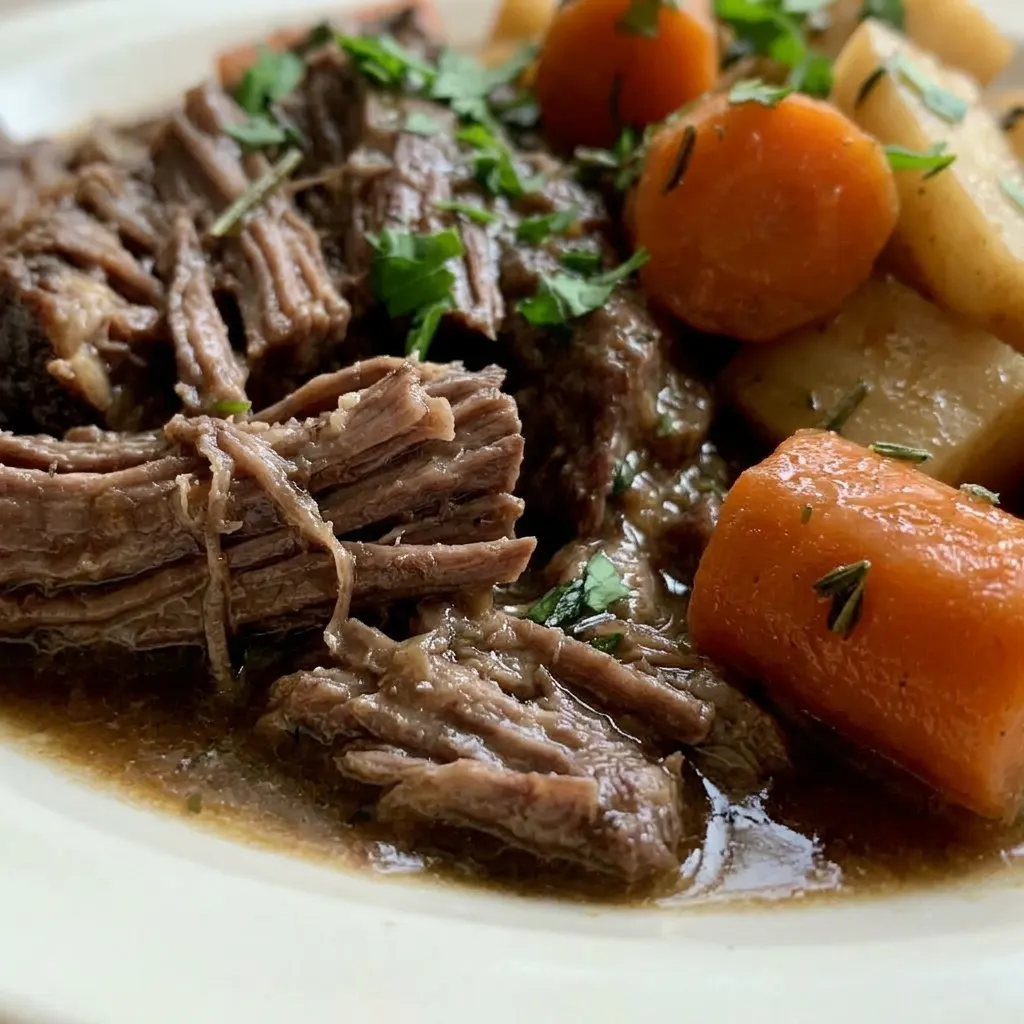
Arrowroot starch gives a clear, glossy sauce that looks elegant and tastes neutral, unlike flour which can leave a raw taste if undercooked or add a matte, grayish finish. The key is timing: stir in the slurry (starch dissolved in cold water) only in the final hour.
Why? Prolonged heat can break down the starch, thinning the sauce back out, so adding it early defeats the purpose. You’ll see the broth turn from watery to silky within minutes, coating a spoon evenly.
No lumps either, because the slurry disperses smoothly. It’s the same technique used in many gluten-free crock pot recipes for the same reason: clean flavor and a pleasant mouthfeel.
Prep: 15 min · Cook: 8 hr · Total: 8 hr 15 min · Servings: 6 · Calories: 390 kcal
Choosing the right cut and root vegetables
Boneless beef chuck roast: Look for good marbling; the fat keeps the meat moist during the long cook and adds flavor.
Parsnips: Peel them; the skin is tough and fibrous, and won’t soften enough in the slow cooker.
Coconut aminos: It’s milder and sweeter than soy sauce; don’t substitute with tamari unless you adjust salt.
Balsamic vinegar: Use a moderately aged one; super thick balsamic glaze is too sweet and syrupy for this broth.
I see so many people just dump arrowroot powder straight into the slow cooker and wonder why it turns into a gluey mess.
Step by step: a pot roast that earns its broth
Sear the beef hard
Pat the chuck dry, wet meat won’t brown. When it hits the hot oil, it should sizzle instantly. Let it sit undisturbed for a full 2 to 3 minutes per side; if you try to lift it and it sticks, it’s not ready to flip.
You want a dark brown crust, not pale gray.
Cook the aromatics fast
In the same skillet, the garlic and onion will soften in 3 to 4 minutes. Scrape up any browned bits left from the beef, those are pure flavor.
When the onion turns translucent, stop. Overcooking here makes them bitter.
Load the slow cooker
Layer the carrots and parsnips on top of the beef so they stay submerged. Tuck the rosemary, thyme, and bay leaves around.
Pour the broth, coconut aminos, and balsamic vinegar down the side. No need to stir; the liquid will find its level.
Wait it out
Set it on low for 7 hours and walk away. The broth will bubble lazily, and the meat will begin to pull apart with a fork around hour 6.
If it still resists, let it go the full time. Don’t open the lid to peek, each time loses heat and adds cook time.
Thicken at the end
Mix arrowroot with cold water until smooth, then pour it into the cooker. Stir gently, then leave the lid off for the final hour. The broth will go from watery to syrupy in minutes.
You should see it coat a spoon evenly, not run off like water.
Finish and shred
Fish out the bay leaves, they’re tough and unpleasant to bite into. Use two forks to pull the beef apart; it should separate into long, tender strands.
If it shreds with no resistance, you’re there. If it feels stringy or dry, it cooked too long on high.
Slow Cooker Pot Roast
Ingredients
- 2 tbsp avocado oil
- 3 lb boneless beef chuck roast
- 1 tsp salt, divided
- 1/2 tsp black pepper
- 4 cloves garlic, minced
- 1/2 yellow onion, diced
- 2 cups carrots, peeled and chopped
- 2 cups parsnip, peeled and chopped
- 1 tbsp rosemary leaves, chopped
- 2 tsp fresh thyme leaves
- 3 bay leaves
- 1 3/4 cups beef broth
- 2 tbsp coconut aminos
- 1 tbsp balsamic vinegar
- 1 tbsp arrowroot starch
- 2 tbsp parsley, chopped
Instructions
Sear the Beef:
Warm avocado oil in a large skillet over medium heat. Season the beef chuck roast with 1/2 tsp salt and pepper; sear each side for 2-3 minutes until browned. Place the roast into the slow cooker.Cook Onion and Garlic:
Into the same skillet, add onion and garlic; cook for 3-4 minutes until they become translucent. Transfer to the slow cooker.Add Vegetables and Broth:
Place carrots, parsnip, rosemary, thyme, bay leaves, beef broth, coconut aminos, and balsamic vinegar into the slow cooker. Cover and cook on low heat for 7 hours.Thicken with Arrowroot:
In a small bowl, combine arrowroot starch with 1 tablespoon water, whisking until smooth. Stir this mixture into the slow cooker; continue cooking uncovered for an additional 1 hour.Shred and Serve:
Switch off the slow cooker; discard the bay leaves. Shred the beef and serve alongside the vegetables and broth. Garnish with chopped parsley.
Storage and Serving
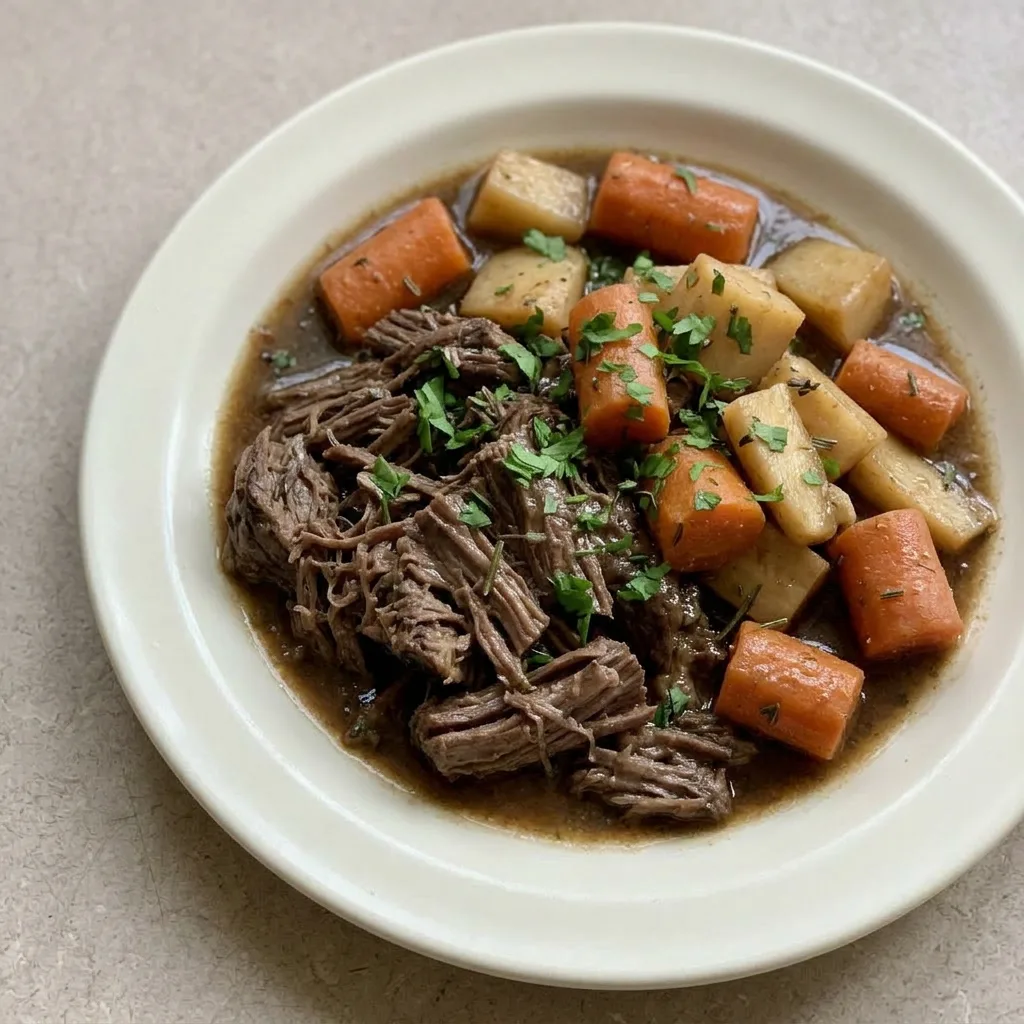
This pot roast is best eaten within 30 minutes of the final hour of thickening. The arrowroot gel sets as it cools, so the broth is most fluid and coats the beef and vegetables best when hot.
Leftovers keep in the fridge for up to 4 days in an airtight container. Over time, the broth thickens further as the starch continues to absorb liquid.
Reheat gently on the stovetop or in the microwave, adding a splash of broth or water if it becomes too thick. The beef stays tender; the carrots and parsnips soften but hold their shape through day two. Freeze the shredded beef and broth in a freezer bag for up to 3 months.
The vegetables turn mushy upon thawing, so freeze them separately or omit them from the frozen portion. Thaw overnight in the fridge, then reheat on low until warm. The parsley garnish goes on just before serving, not during storage.
Tips
- Let the seared roast rest for 5 minutes before placing it in the slow cooker; this allows the juices to redistribute so the meat stays moist during the long cook.
- Trim excess fat from the cooked roast after shredding, not before cooking; the fat renders during cooking and keeps the meat tender, and you can easily remove any large pieces after.
Three swaps that won’t wreck the broth
Coconut aminos: Tamari or soy sauce. Use the same 2 tbsp, but cut the added salt by a quarter to a half teaspoon first.
Tamari is saltier and less sweet; the broth will taste cleaner and more savory, but you lose the subtle sweetness that balances the balsamic. Start with less salt, taste after thickening.
Balsamic vinegar: Red wine vinegar. Use the same 1 tbsp.
Red wine vinegar is sharper and less sweet, so the broth will lack the dark, fruity note balsamic brings. Add 1/4 tsp sugar if you want to approximate the sweetness. The acidity still cuts the beef fat fine.
Arrowroot starch: Cornstarch. Use the same 1 tbsp cornstarch mixed with 1 tbsp cold water. Cornstarch gives a slightly more opaque, less glossy sauce than arrowroot, but it thickens just as reliably.
Stir it in at the final hour the same way; don’t let it boil hard or it can thin out.
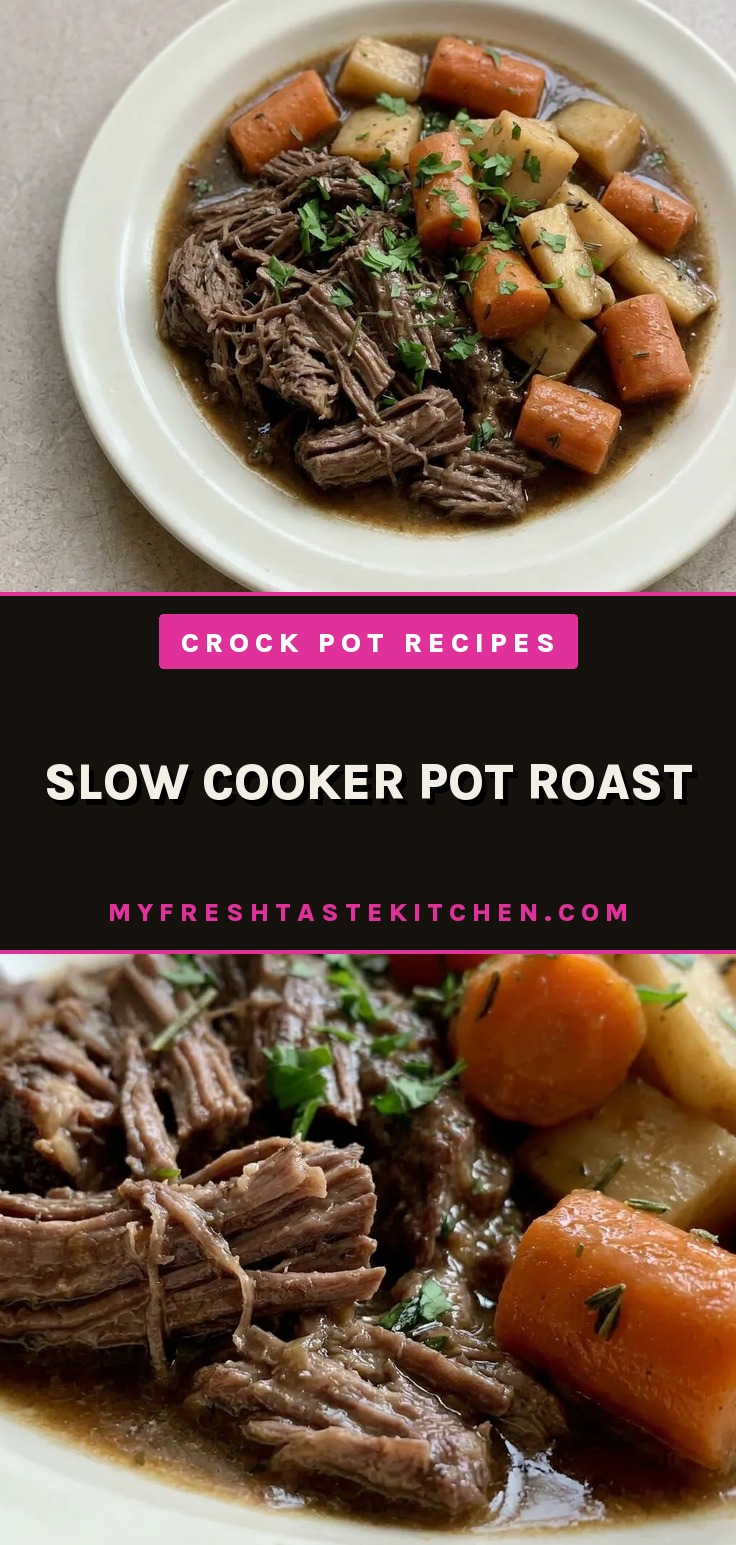
Frequently Asked Questions
Can I cook this pot roast on high instead of low?
You can, but the meat won’t be as tender. Low heat for 8 hours breaks down collagen gradually; high heat in a shorter time can make the beef dry and stringy.
If you’re in a rush, cook on high for about 4 to 5 hours, but check for doneness at hour 4, the meat should shred with no resistance. The broth won’t thicken as well on high, so watch the arrowroot step closely.
How do I prevent the meat from being dry?
Start with a well-marbled chuck roast, the fat bastes the meat as it cooks. Searing the beef first builds flavor, but it’s the long, gentle cook on low that keeps it moist.
If your roast turns out dry, it likely cooked too long or on too high a heat; stick to the 8-hour low setting. Let the meat rest in the broth for a few minutes after shredding to reabsorb some liquid.
Can I make this pot roast ahead of time and reheat it?
Yes, make it up to 4 days ahead and refrigerate in an airtight container. The arrowroot gel will thicken as it cools, so add a splash of broth when reheating to loosen it.
Reheat gently on the stovetop or microwave until warm, and add fresh parsley just before serving. Freeze the shredded beef and broth for up to 3 months, but freeze vegetables separately to avoid mushiness.