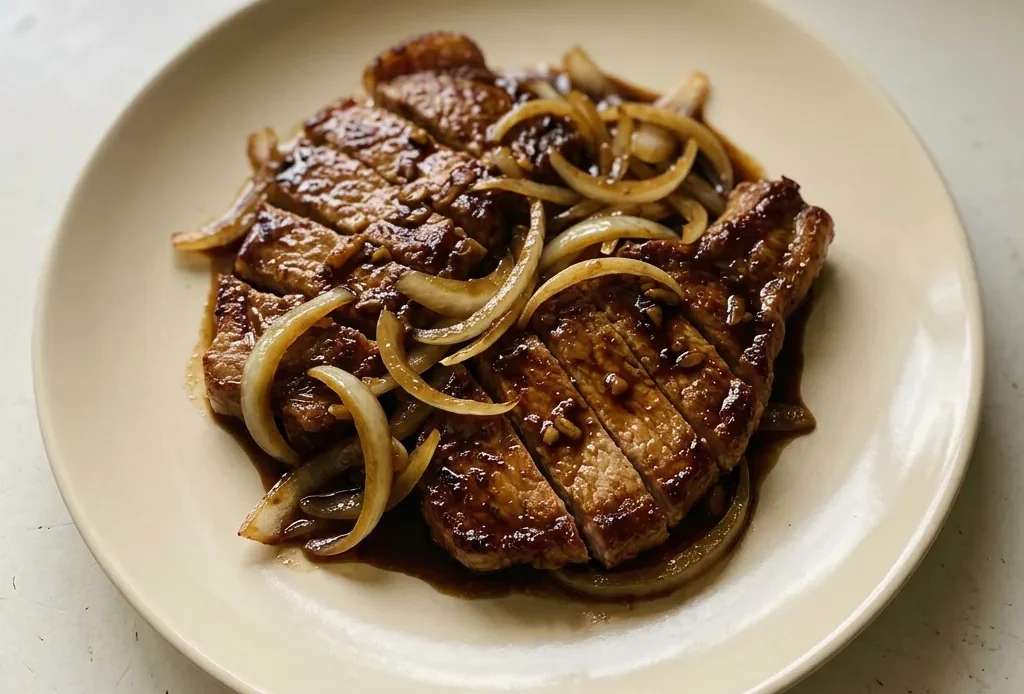
Most Chinese onion pork chops drown in a thick, stewed gravy. This one isn’t that.
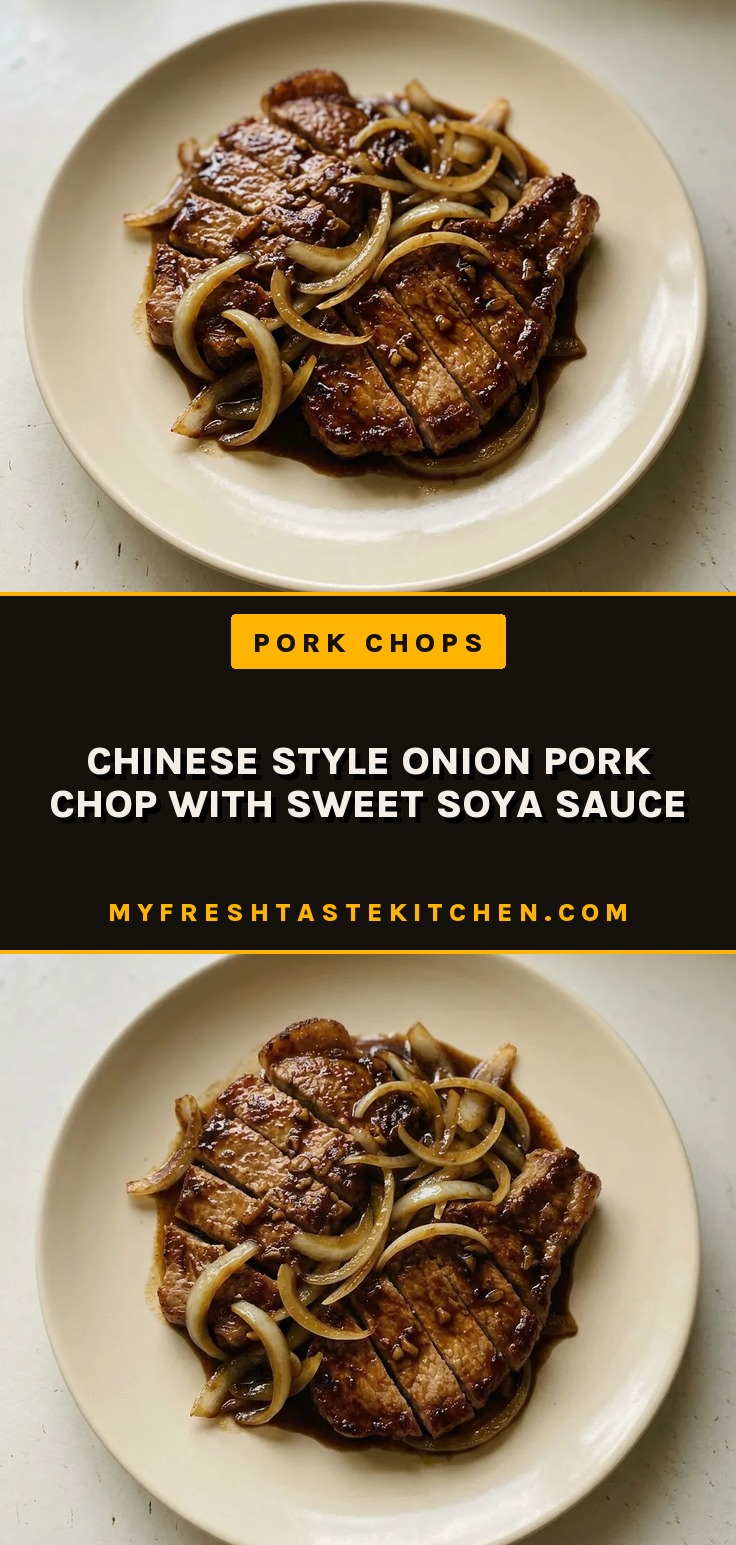
It’s a pan-seared chop with a crisp, caramelized crust, tossed at the last second in a glossy sweet soy sauce that stays bright and never boils. The trick is the cornstarch in the marinade, it sets into a thin coating that seals in juice and gives you a surface that actually browns, not just steams. And the sauce?
You add it at the end, warm it just enough to coat, then eat. That’s the whole difference between a soggy chop and one that still crackles when you bite into it. This chinese style onion pork chop with sweet soya sauce leans into speed and contrast: crunchy meat, raw-edged onions, a sauce that tastes fresh because you didn’t cook the flavor out.
Why does marinating pork chops with cornstarch and sugar give a better crust?
The cornstarch in the marinade clings to the surface of the pork chops. When they hit the hot pan, it sets into a thin, crispy coating that seals the meat. That seal keeps moisture inside, so the chops stay juicy rather than drying out.
The sugar does double duty. As it heats, it caramelizes, turning the crust a deep golden brown and adding a hint of sweetness that plays off the savory sauce. An hour in the fridge lets the flavors sink in without going too far.
Over-marinating with cornstarch and sugar would soften the texture, but here the timing stays in the sweet spot.
What’s the purpose of the sweet soy sauce mixture and why add it at the end?
The sauce brings together light and dark soy sauces, Maggi sauce, and sugar for a layered umami-sweet taste. Dark soy sauce contributes color and a richer depth, while Maggi adds a distinct savory note you can’t get from soy alone. But heat is the enemy here.
Let soy sauces simmer for more than a minute and they turn bitter; the aroma fades fast. That’s why you stir them in at the very last stage, just long enough to warm through and coat the pork.
The result is a glossy, flavorful finish that tastes fresh and balanced.
Why must pork chops sear undisturbed to get a golden crust?
Leave the pork chops alone in the pan for a full 3 to 4 minutes. That stillness lets the surface reach the high heat needed for browning, the Maillard reaction. If you nudge or flip them too soon, the crust hasn’t formed yet, so the meat sticks or tears when you try to move it.
That crust does more than look good: it locks in the juices, giving you a tender interior with a crisp, flavorful outside. Korean pork chops often use a similar approach, but here the marinade’s cornstarch amps up the crunch. Wait for the bottom to turn deep brown before turning.
How does a quick-cooked onion and shallot base build flavor without going soggy?
One minute in the pan is all it takes. The onions and shallots keep their crunch and a hint of sweetness instead of melting into mush.
Once they soften slightly, you add a capful of wine and let it sizzle away. That steam deglazes any browned bits from the pork, pulling that concentrated flavor into the base.
Because you cook them so briefly, the aromatics stay bright, they support the pork and sauce rather than taking over. Vietnamese pork chops often pair with a similar quick-pickled garnish, but here the raw crunch is cooked just enough to meld without losing its bite.
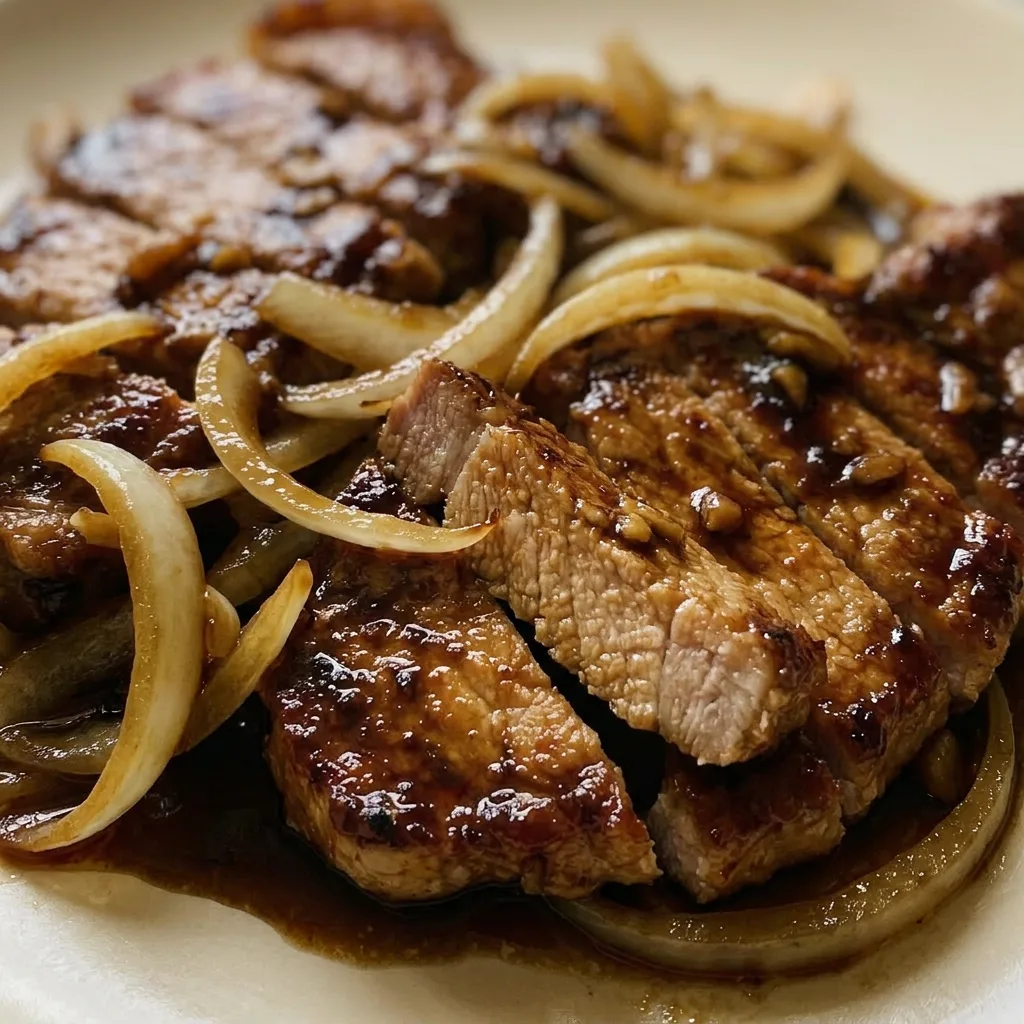
Prep: 1 hr · Cook: 12 min · Total: 1 hr 12 min · Servings: 2
What to look for in the ingredients
Pork shank or premium pork chops: Pick chops with good marbling; the fat keeps the meat juicy during searing.
Maggi sauce: A splash adds savory depth you can’t get from soy alone, but don’t skip it.
Dark soy sauce: Use a thick, sweet one for color and richness; regular soy is too thin.
Wine (brandy, whiskey, rice wine, or any): Any spirit works; just avoid sweet or flavored ones that would throw off the balance.
How to cook Chinese Style Onion Pork Chop without overcooking the sauce
Marinate the pork
Pat the pork dry, then coat with the sugar, soy, cornstarch, and pepper mix. Cover and fridge for exactly 1 hour, any longer and the cornstarch starts to break down the meat’s surface.
Sear the pork
Let the pork sit out while the pan heats oil over medium-high. Lay it in and don’t touch it for 3 to 4 minutes. You’ll see the edges turn opaque and a deep brown crust form underneath before you flip.
Cook the aromatics
In the same pan, add a splash more oil and toss the onion and shallots for 1 minute. They should soften slightly but still have crunch. Add garlic and wine, stir until the sizzle stops and the pan looks dry.
Finish the sauce
Pour in water and sugar, let it dissolve for 30 seconds. Then add the soy sauces and Maggi. Stir just until combined, you want the sauce warm and glossy, not bubbling for more than a minute.
Coat the pork
Return the pork to the pan, turning it in the sauce for 30 seconds. The sauce should cling to the meat, not pool. Serve right away.
Chinese Style Onion Pork Chop with Sweet Soya Sauce
Ingredients
- 1 lb pork shank or premium pork chops 450 g
- 1 tbsp olive oil
- 1/2 onion, sliced
- 3 shallots, sliced
- 2 tsp garlic, minced
- 1 capful wine (brandy, whiskey, rice wine, or any)
- 1 tsp sugar
- 3 tsp light soy sauce
- 2 tsp cornstarch
- Black pepper optional
- 50 ml water 1/4 cup
- 1 tsp dark soy sauce
- 1 tsp sugar
- 1 tsp Maggi sauce
- 1 tsp light soy sauce
Instructions
Marinate the pork:
Dry the pork with paper towels. Combine 1 tsp sugar, 3 tsp light soy sauce, 2 tsp cornstarch, and optional black pepper to create a marinade. Coat the pork thoroughly, then cover and refrigerate for 1 hour.Sear the pork:
Take the pork out of the fridge and allow it to sit until it reaches near room temperature. Warm olive oil in a skillet over medium-high heat. Lay the pork in the pan and let it sear untouched for 3-4 minutes until the bottom is golden brown. Turn it over and continue cooking until fully done. If desired, slice the pork into strips or keep it whole.Cook aromatics:
Using the same pan, add a bit more oil and quickly cook the onions and shallots for 1 minute. Add the minced garlic and a capful of wine; stir until the liquid has evaporated. Pour in 50 ml of water.Add sauces:
Add 1 tsp sugar and let it dissolve for 30 seconds. Then add 1 tsp light soy sauce, 1 tsp dark soy sauce, and 1 tsp Maggi sauce. Stir everything together. Avoid heating the soy sauces for longer than 1 minute; incorporate them at the final stage.Combine and serve:
Return the pork strips (or whole piece) to the pan and toss for 30 seconds, or spoon the sauce over the meat. Serve immediately.
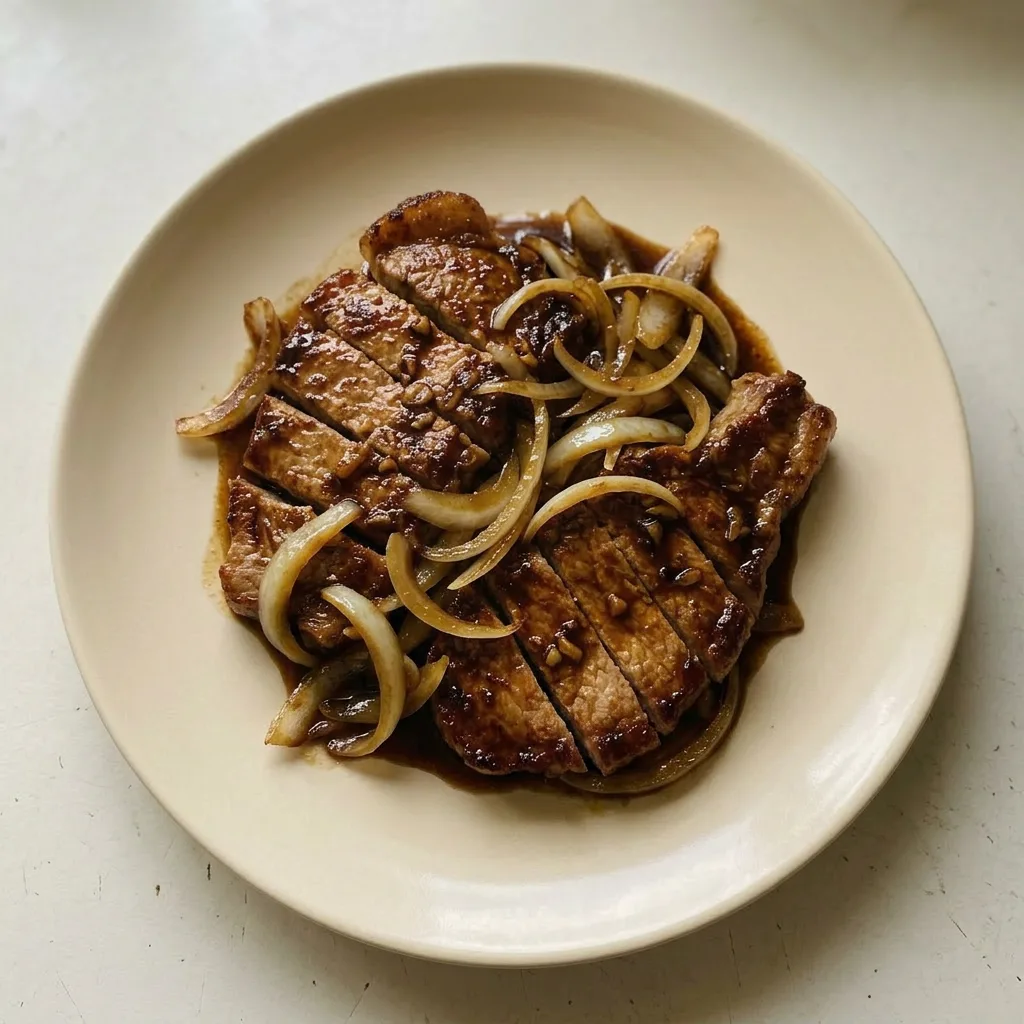
Swapping out the key players: pork, wine, and Maggi
Pork shank or premium pork chops: Pork loin or sirloin chops. Leaner cuts like loin will be less juicy and can dry out if overcooked. Trim off the thin end to even thickness, and watch the internal temp, stop at 145°F.
Wine (brandy, whiskey, rice wine, or any): Dry sherry or sake. Both work fine; they deglaze the pan and add a similar roundness. Avoid sweet Marsala or dessert wines, they’ll make the sauce cloying.
Maggi sauce: Worcestershire sauce or a dash of fish sauce. Worcestershire gives a comparable savory punch. Fish sauce adds salinity and funk, use half the amount and taste.
Skip it entirely and the sauce loses its umami edge, so add an extra 1/2 tsp light soy if you do.
Storage and Serving
This dish is best served immediately. The crust is crispiest, the onions still have bite, and the sauce is glossy and fresh. Leftovers keep refrigerated in an airtight container for up to 2 days, but the crust softens as the meat sits in the sauce.
To revive some crispness, reheat leftover pork in a hot, dry skillet over medium-high heat for 1 to 2 minutes per side; spoon the sauce over just before serving. The sauce alone can be refrigerated for up to a week. Freezing is not recommended: the pork’s texture degrades, and the onions turn limp.
If you must freeze, do so without the sauce, then thaw overnight in the fridge and reheat as above, making fresh sauce to serve.
Tips
- Pat the pork very dry with paper towels before marinating. Any moisture on the surface dilutes the cornstarch coating, preventing it from forming a crisp crust during searing.
I still stand there like a statue, refusing to poke or peek at the pork for the full 4 minutes, even though my inner voice is screaming to flip it.
Frequently Asked Questions
Can I prepare the pork chops ahead of time and cook them later?
You can marinate the pork up to a day ahead, keep it covered in the fridge. But don’t go longer than 24 hours or the cornstarch will start breaking down the meat’s surface. Cook within that window for the best crust and texture.
My pork chops turned out tough, what went wrong?
Most likely you cooked them too long or at too low a heat. With only 12 minutes total cook time, they should be just done.
If you used a lean cut like loin, it’ll dry out fast; stop at an internal temp of 145°F. Also, let the pork come to near room temperature before searing, cold meat seizes up and toughens.
How is this different from the classic Chinese onion pork chop with gravy?
Classic versions often simmer the pork in a gravy for a softer texture. Here, you sear the pork first to build a crisp crust, then toss it in a quick sauce that’s never boiled, just warmed through. The onions stay crunchy instead of melting down, and the sauce is glossy and fresh rather than thick and stewed.
Can I use boneless pork chops instead of pork shank?
Yes, but pick chops with good marbling and watch the cook time. Boneless chops cook faster, so sear them just until done, about 3 to 4 minutes per side depending on thickness. Leaner loin chops will be less juicy and can dry out fast, so pull them at 145°F internal.