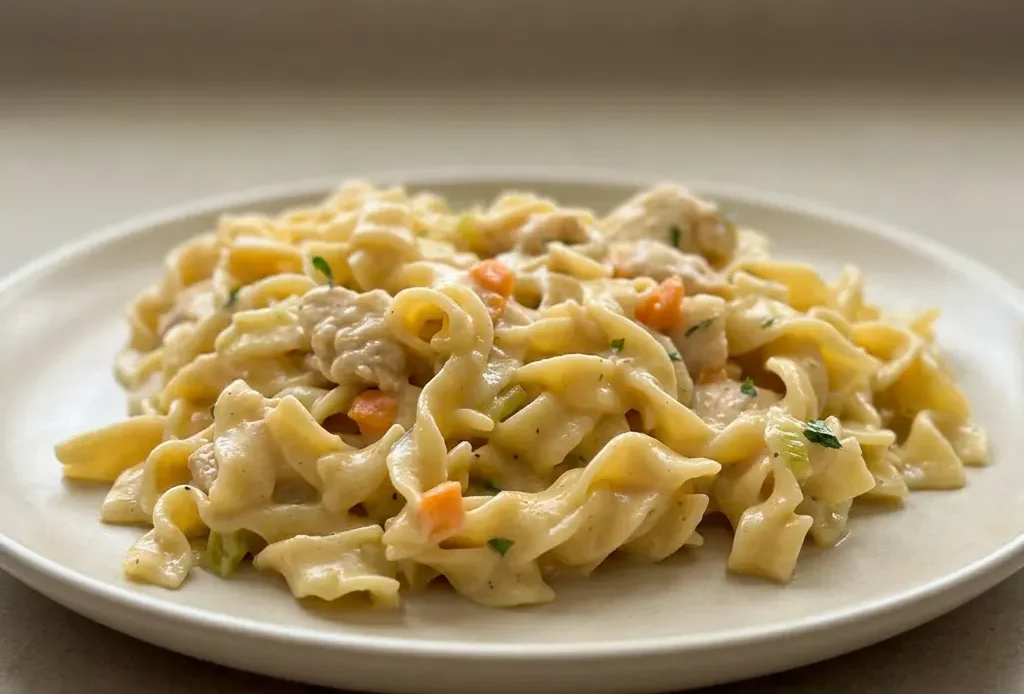
Thirty minutes is just enough time to brown chicken, soften vegetables, and build a roux-based sauce that clings to every noodle without turning pasty. The trick is searing the chicken first, then using the same skillet for the vegetables and roux, so the sauce picks up that browned fond.
That flavor layer is what makes this creamy chicken and noodles taste like it simmered for an hour, not half that. The sauce stays silky because the heavy cream goes in off the heat, not during the simmer. A weeknight dinner that actually delivers on texture, not just speed.
A roux from the vegetables builds body
This sauce gets its creaminess from a roux, butter and flour, cooked right in the skillet after the veggies soften. Dusting flour over the sautéed onions, carrots, and celery and stirring for 2 to 3 minutes cooks out the raw flour taste before any liquid goes in. That step is what gives you a smooth, savory-thickened sauce, not a pasty one.
The heavy cream comes in at the very end, off the heat, just to enrich and round out the texture. Added earlier, it could curdle or thin out the sauce. By building the roux on the vegetables first, you get a silky sauce with depth from the browned bits and veggie fond, no heavy cream alone could do that.
Chicken browned separately stays juicy
Diced chicken breast is cooked first in a hot skillet with olive oil and seasonings until just done, about 6 to 7 minutes, then taken out. That quick sear locks in moisture and gives it a light browned crust. If you left the chicken in the pan while the sauce simmers, it would keep cooking and turn dry and tough.
By returning the chicken at the end, you just coat it with the warm sauce without further cooking. The result is tender, not chalky.
This trick matters most for lean breast meat, which dries out fast in a long simmer.
Egg noodles cook in sync with the sauce
Egg noodles are the right choice here because they’re soft, absorbent, and quick-cooking, about 6 to 8 minutes, same time it takes to brown the chicken and build the sauce. You boil them while the skillet work happens, so everything finishes together. Drained noodles go straight into the sauce while both are hot, so they soak up flavor without turning mushy.
Wider pasta would take longer and throw off the timing; thinner strands would overcook. The noodles’ absorbency means they grab onto that creamy sauce, giving each bite a cohesive, saucy texture.
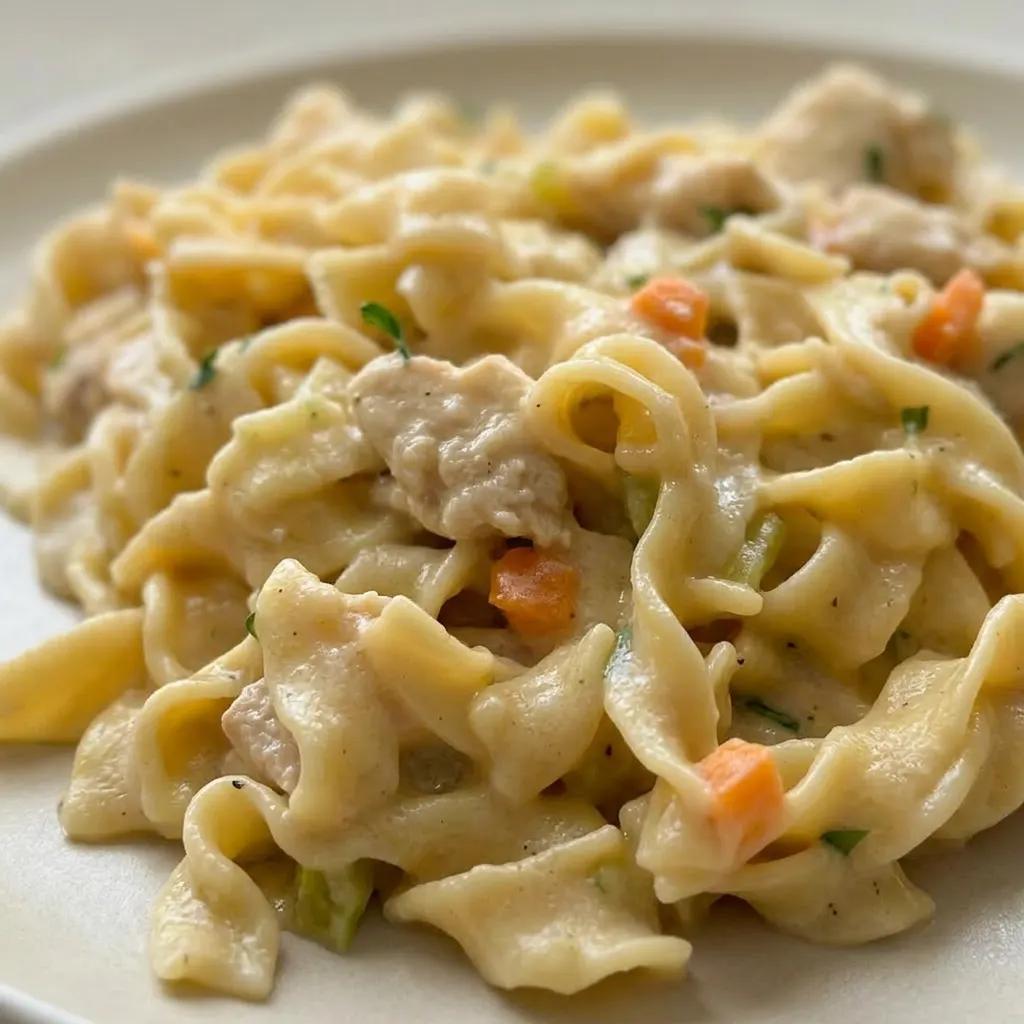
Prep: 10 min · Cook: 20 min · Total: 30 min · Servings: 5 · Calories: 400 kcal
What to look for with each ingredient
Chicken breasts: Boneless skinless breasts dice evenly; trim any excess fat so the pieces cook at the same rate.
Heavy whipping cream: Use heavy cream with at least 36% milkfat so it enriches without thinning or curdling when stirred in off heat.
Egg noodles: Wide egg noodles hold sauce best; avoid extra-wide or ribbon noodles that clump or turn mushy when tossed.
Seasoned salt: Seasoned salt adds a savory, herby boost; Lawry’s is classic but any blend with salt, paprika, and garlic works.
Brown the chicken first, then build the sauce in the same pan
Sear the chicken
Heat 1 tsp olive oil in a large skillet over medium-high. Add diced chicken, seasoned salt, onion powder, garlic powder. Cook 6 to 7 minutes until no longer pink and lightly browned.
Remove to a plate. The fond left behind adds flavor.
Sauté the vegetables
Reduce heat to low. Add butter and remaining olive oil. Once butter melts, add onions, carrots, celery.
Cook, stirring occasionally, until tender and fragrant, about 5 minutes. The vegetables should soften without browning.
Make the roux
Dust flour evenly over vegetables and stir. Cook 2 to 3 minutes, stirring constantly.
The mixture should bubble gently and turn golden. If it smells raw, cook another minute.
This prevents a pasty sauce.
Add broth and season
Gradually whisk in chicken broth. Bring to a simmer; it will thicken quickly. Stir in chicken bouillon, salt, pepper.
The sauce should coat the back of a spoon. If too thin, simmer a minute more; if too thick, add a splash of broth.
Finish with cream and combine
Remove skillet from heat. Stir in heavy cream until smooth.
Add drained noodles and reserved chicken. Toss until everything is evenly coated.
The sauce should cling to the noodles without pooling.
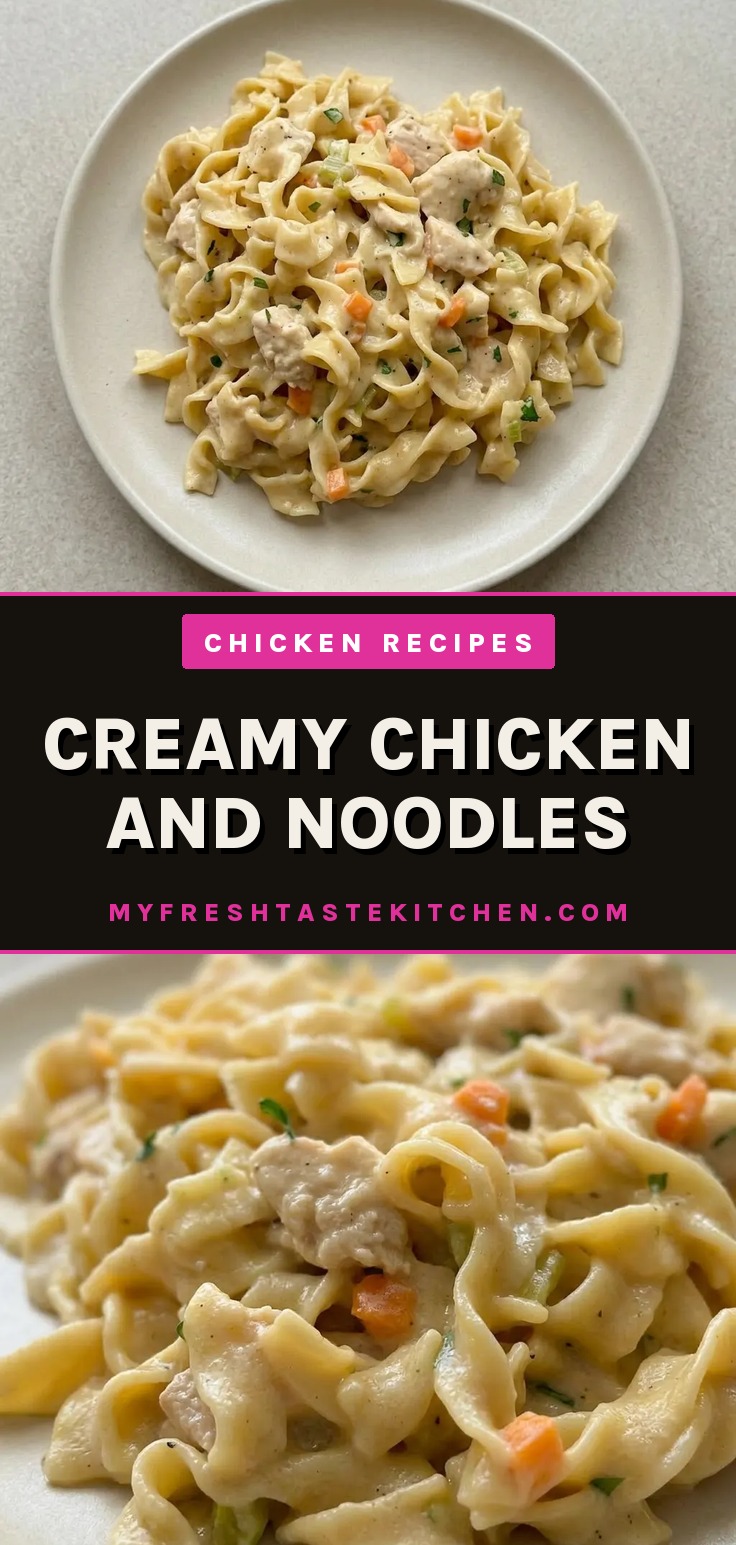
Creamy Chicken and Noodles
Ingredients
- 2 boneless skinless chicken breasts diced
- 2 teaspoons olive oil
- 1 cup celery finely diced
- 1 cup carrots finely diced
- 1/2 yellow onion diced
- 1/3 cup all-purpose flour 42g
- 5 tablespoons butter 71g
- 1 teaspoon chicken bouillon powder
- 1 teaspoon onion powder
- 1 teaspoon garlic powder
- salt and black pepper to taste
- 1 teaspoon seasoned salt
- 5 cups egg noodles
- 2 cups chicken broth
- 1/2 cup heavy whipping cream
Instructions
Cook Noodles and Chicken:
Prepare the egg noodles by boiling them per the package instructions. Simultaneously, warm 1 teaspoon of olive oil in a large skillet set to medium-high heat. Add the diced chicken, then season with seasoned salt, onion powder, and garlic powder. Cook for 6-7 minutes until the chicken is no longer pink inside. Transfer the cooked chicken to a plate and set aside.Sauté Vegetables in Butter:
Lower the heat to low and put the butter and the remaining 1 teaspoon of olive oil into the skillet. Once the butter has melted, toss in the onions, carrots, and celery. Cook over low heat, stirring occasionally, until the vegetables are tender and aromatic.Make Roux with Flour:
Dust the flour evenly over the vegetables and mix thoroughly. Continue cooking the roux while stirring constantly for 2-3 minutes.Add Broth and Cream:
Gradually pour in the chicken broth while whisking to create a smooth mixture. Let it come to a simmer and thicken. Add the chicken bouillon powder, salt, and black pepper to taste. When the sauce has reached your preferred consistency, remove from heat and mix in the heavy whipping cream until well blended.Combine and Serve:
Return the drained egg noodles and cooked chicken to the skillet. Stir everything together until evenly coated. Serve immediately and enjoy.
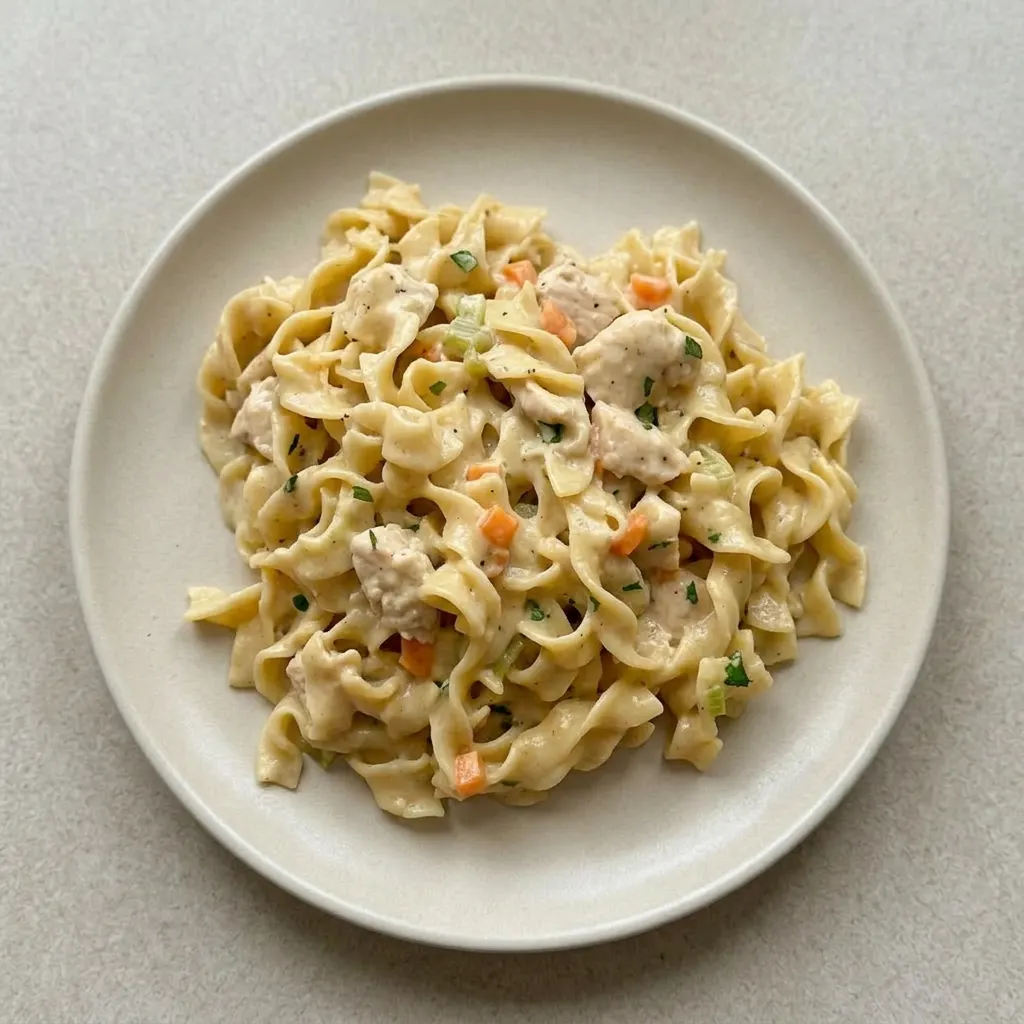
Which swaps work in creamy chicken and noodles
Heavy whipping cream: Half-and-half or whole milk thickened with cornstarch. Half-and-half will make a thinner sauce; to match the body, whisk 1 tablespoon cornstarch into 1/4 cup cold half-and-half before stirring into the sauce off heat. Whole milk alone will be noticeably watery and may curdle when the hot sauce hits it, use the same cornstarch slurry trick.
Heavy cream is the safest bet because its high fat won’t thin or break.
Chicken bouillon powder: Extra salt and garlic powder. Bouillon adds concentrated savory depth, not just salt.
If you omit it, increase salt by about 1/2 teaspoon and add 1/4 teaspoon more garlic powder, then taste and adjust. The sauce will be less rich and won’t have that rounded chicken flavor, but it’ll still be well seasoned.
Egg noodles: Short pasta like rotini or penne. Any sturdy, short pasta works, cook it to al dente so it doesn’t turn mushy when tossed with the sauce.
The timing won’t match the 20-minute cook window; boil pasta first, then proceed with the skillet steps. The sauce will coat the ridges differently, but the texture stays firm and the dish still reads as a creamy chicken and noodle casserole.
Avoid thin spaghetti or angel hair, they clump and overcook too fast for this method.
Butter and flour (for the roux): Gluten-free all-purpose flour blend. Swap the all-purpose flour 1-for-1 by weight (42g) or by volume (1/3 cup) with a gluten-free blend that contains xanthan gum. The roux will thicken similarly but may feel slightly gummier and less silky.
Cook the roux the full 2 to 3 minutes to avoid a raw starch taste. For dairy-free, use a plant-based butter substitute with at least 80% fat; the roux will work but the sauce may separate slightly, whisk in the broth gradually and serve right away.
Storage and Serving
This dish is best served immediately, while the noodles are tender and the sauce is creamy. Leftovers keep refrigerated in an airtight container for up to 3 days. The noodles will continue to absorb the sauce, so expect a thicker, softer texture over time.
To reheat, add a splash of chicken broth or milk and warm gently in a skillet or microwave, stirring occasionally. The cream-based sauce may separate slightly upon reheating; whisking it back together helps.
Freezing is not recommended. The dairy in the sauce and the noodle texture degrade significantly when frozen and thawed, resulting in a grainy, watery dish.
Tips
- When you pour the chicken broth into the roux, add it in a slow, steady stream while whisking constantly to prevent lumps from forming; if you dump it all at once, the flour can seize into clumps.
- Use a whisk, not a spoon, to stir the roux for the full 2 to 3 minutes; the whisk breaks up flour clumps and ensures even cooking, which a spoon cannot do as effectively.
I once ended up with a gravy full of flour dumplings instead of a smooth sauce. It was edible but not pretty.
Frequently Asked Questions
Can I make this dish ahead of time and reheat it?
You can, but it’s best served right away. The noodles keep absorbing sauce, so leftovers will be thicker and softer.
Reheat with a splash of broth or milk, stirring gently. The cream sauce may separate a little; whisk it back together.
Don’t freeze it, dairy and noodles don’t hold up.
How do I prevent the sauce from becoming too thick or lumpy?
Cook the flour with the vegetables for the full 2 to 3 minutes, stirring constantly, that’s what smooths out the roux. When you add the broth, whisk gradually to break up any clumps before they set. If the sauce still seizes up, whisk in a splash of warm broth.
Too thick usually means the roux cooked too long or you added too much flour; next time measure the 1/3 cup level.
Is this recipe similar to chicken and dumplings or chicken Alfredo?
It’s closer to chicken Alfredo in texture, creamy, saucy, with noodles coated in a rich sauce. Chicken and dumplings has a thinner broth and soft dumpling pieces, not noodles.
Here, the sauce is built from a roux and finished with cream, giving a silky cling, not a stew. The chicken stays tender because it’s seared separately and added at the end.