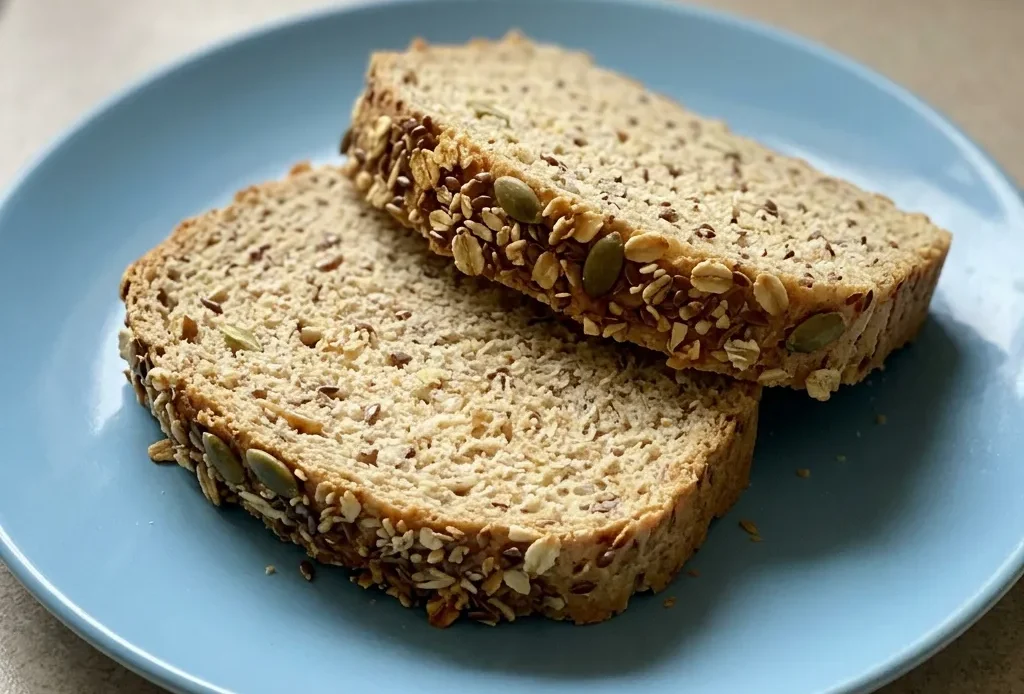
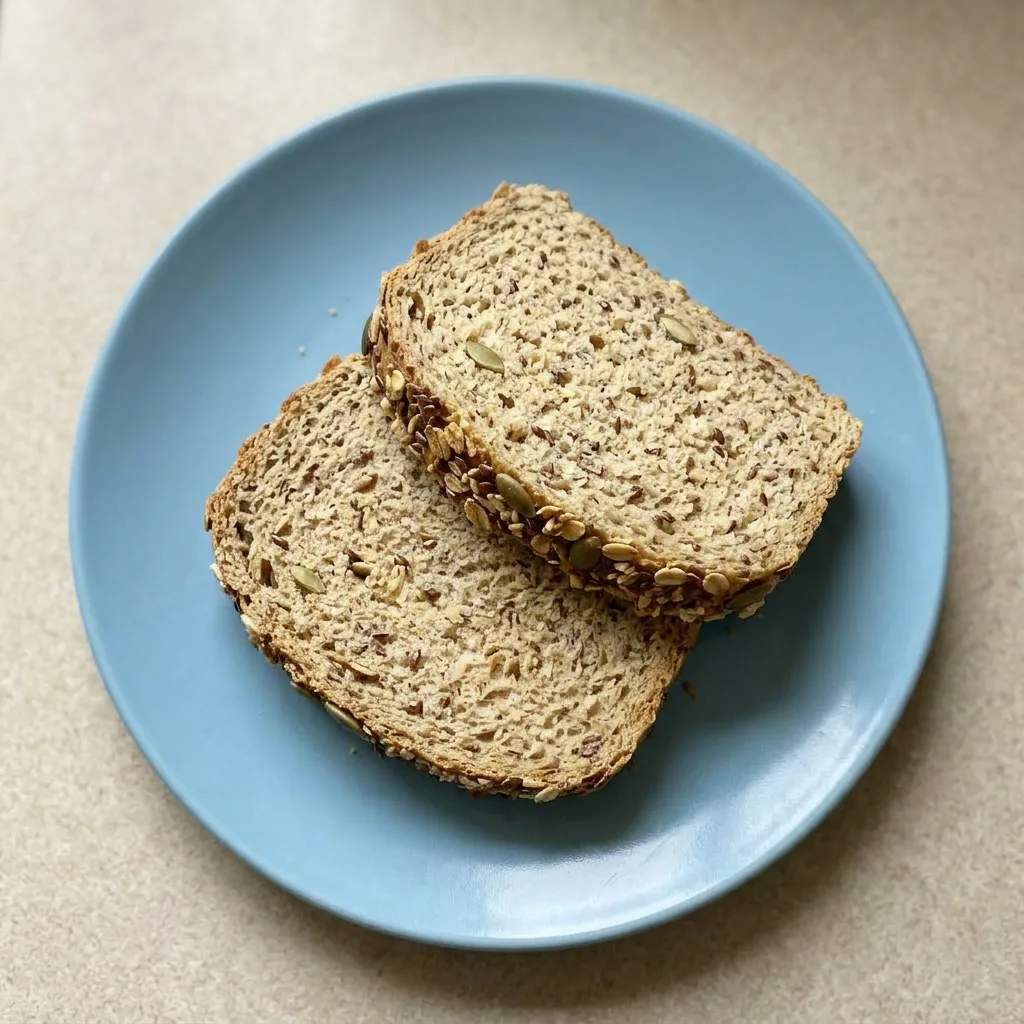
If you’ve ever baked a seeded loaf that turned out dry or the seeds stayed crunchy in a way that felt more like a jaw workout than a pleasant chew, the fix is sitting a bowl of seeds in water before they ever hit the dough. That thirty-minute soak, or longer, if you plan ahead, is what makes whole grain seeded bread taste tender rather than tough. The flax and quinoa turn slightly gelatinous, binding the extra moisture into the crumb, and every bite of the finished loaf gives you a soft, even texture instead of hard little pellets.
Soak seeds before mixing them in
Dry seeds stay hard and crunchy in a baked loaf, they also pull moisture from the dough as it bakes, leaving the crumb dry. A quick soak softens the seeds and pre‑hydrates them so they stay tender and release no extra water.
The recipe calls for a minimum 30‑minute soak; overnight works too. You’ll see the water is fully absorbed, and the flaxseeds turn slightly gelatinous.
That slime helps bind the soak later, but the real reason is texture: a soaked seed chews like part of the crumb, not a stray pebble.
Whole grains change how gluten works
Whole wheat flour and oats add fiber and bran that physically slice through gluten strands as they form. The dough feels less stretchy and tears more easily than an all‑white dough, windowpane testing is harder because the bran pieces break the thin sheet. Kneading for the full 6 to 8 minutes develops enough gluten to trap gas, but you won’t get the same smooth, elastic feel.
Expect a dough that resists spreading and holds its shape a bit more. The reward is a loaf with a hearty crumb and nutty flavor that white flour alone can’t match.
Preshape then rest for easier handling
After bulk fermentation the gluten is tight from all that kneading. Preshaping into a boule and letting it rest 10 minutes relaxes the network so the dough doesn’t snap back during final shaping. You’ll notice the dough becomes more pliable and cooperative.
The final roll‑and‑seal method builds surface tension, which gives the loaf a rounded top and even crumb. Without that rest, shaped loaves tend to tear or deflate.
That short bench pause is the difference between a ragged loaf and one that bakes up tall.
Egg white wash locks seeds onto the crust
Brushing the shaped loaf with beaten egg white before rolling it in the seed mix creates a sticky surface that holds every seed in place. Without it, half the topping falls off during the final rise or when you slide the pan into the oven.
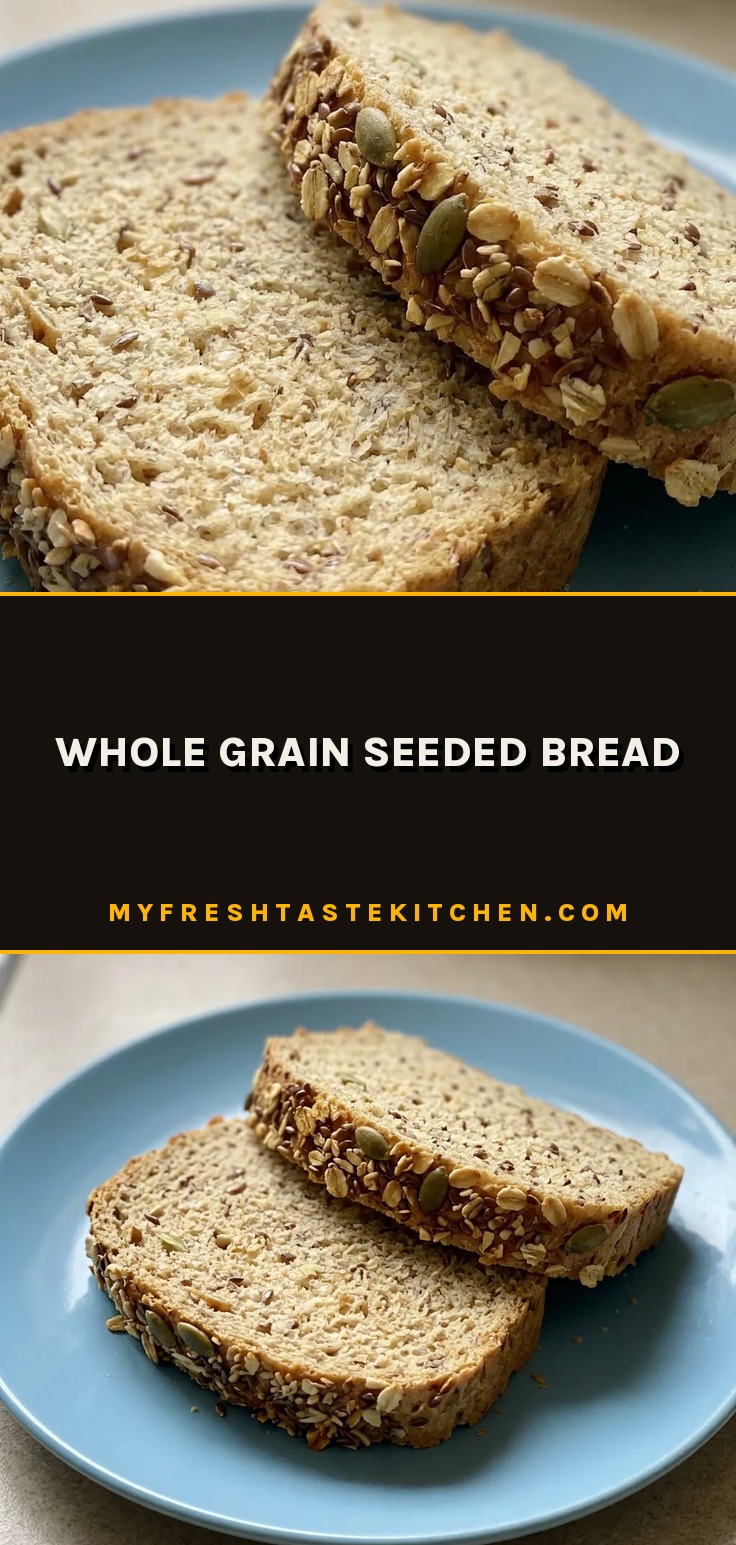
The wash also browns during baking, giving the crust a glossy, dark golden finish. You’ll see the seeds toast and pop slightly, adding a crisp layer that contrasts with the tender crumb. The seed mixture, pumpkin, flax, sesame, oats, clings evenly only when brushed first.
Prep: 30 min · Cook: 35 min · Total: 3 hr 5 min · Servings: 24 · Calories: 180 kcal
Seeds and grains need attention before they hit the dough
seed mix (soaker): Buy raw, untoasted seeds so they soak up water without added salt or oil.
whole wheat flour: Fresh whole wheat flour gives better rise; old flour goes stale and dense quickly.
honey: Use mild honey like clover or orange blossom so the flavor doesn’t overpower the grains.
old-fashioned rolled oats: Use rolled oats not quick oats; quick oats turn to paste and steal the chew.
topping seed mix: Mix seeds and oats fresh for each batch; pre-mixed goes stale and loses crunch.
Shaping this dough rewards gentle hands
Mix until it looks shaggy, then keep kneading
The dough comes together as a rough, lumpy mass. Keep the mixer on medium for the full 8 minutes, the bran and oats prevent a smooth windowpane, but you’ll see the dough pull away from the bowl sides and feel it spring back when you poke it.
Add the soaked seeds slowly
The soaker brings extra water and flax slime. Stop the mixer every minute and cut through the dough with a scraper. You’re looking for even seed distribution without any dry patches, the dough will feel sticky but not soupy.
Bulk rise until doubled, not a minute less
Covered and left alone for an hour to 1 hour 15 minutes. The dough should dome above the bowl rim and hold a finger indentation that doesn’t spring back fully. Underproofed dough will tear during shaping.
Preshape round, then rest exactly 10 minutes
Fold each half into a tight boule. You’ll see the dough relax and spread slightly during the rest. If it snaps back when you try to roll it, wait another 5 minutes, the gluten needs to loosen for the final shape.
Roll and seal for tension
Stretch the rested dough into a rectangle, fold the short sides in, then roll it around your thumb, sealing each turn with the heel of your hand. The finished log should sit tall and not slump, a loose roll will flatten in the pan.
Brush egg white, then coat thickly
Paint every exposed surface with beaten egg white, it should feel tacky. Roll the loaf in the topping mix, pressing gently so seeds stick. If you see bare spots, brush more egg white there.
The wash also gives the crust a dark sheen.
Final rise: watch the dome, not the clock
Covered loaves need 45 minutes to 1 hour. The dough should crown about an inch above the pan rim. Press lightly with a floured finger, if the indentation slowly fills, it’s ready.
Overproofed dough will collapse in the oven.
Bake until the internal temp hits 185°F
At 375°F, the loaves need 35 to 40 minutes. The crust turns deep golden brown and sounds hollow when tapped.
Insert an instant-read thermometer into the center, if it reads below 185°F, the crumb will be gummy. Cool in the pan 5 minutes, then on a rack completely.
Whole Grain Seeded Bread
Ingredients
- 1 cup seed mix (I used ¼ cup each pumpkin seeds, flaxseeds, sunflower seeds, and quinoa)
- 2 ½ cups water divided
- 3 cups all-purpose flour 360g
- 2 cups whole wheat flour 240g
- ¼ cup honey 85g
- ¼ cup unsalted butter 57g, melted
- 2 ¼ teaspoons instant yeast 1 packet
- 1 tablespoon kosher salt
- ½ cup old-fashioned rolled oats 45g
- ½ cup seed mix for topping (2 tablespoons each: pumpkin seeds, flaxseeds, sesame seeds, and oats)
- 1 egg white beaten well
Instructions
Soak Bread Seeds:
In a small bowl or glass container, combine the seeds for the bread. Keep the topping seed mix separate; do not soak it. Pour ½ cup water over the bread seed mixture, stir, cover, and let sit at room temperature for a minimum of 30 minutes or up to overnight (I soaked mine for about 2 hours).Knead Dough:
In the bowl of a stand mixer with the dough hook, combine the all-purpose flour, whole wheat flour, instant yeast, honey, melted butter, the remaining 2 cups warm water (110-115°F (45°C) / 43-46°C), oats, and salt. Mix on low speed to incorporate, then increase to medium speed and knead for 6-8 minutes until a smooth, elastic dough forms that stretches thin before tearing around the oats—the whole wheat and oats make windowpane testing harder.Mix in Soaker:
Reduce speed to low and add all of the soaker (seeds and water). Mix until the seeds are fully integrated and evenly distributed. I pause the mixer every few minutes and cut the dough with a bowl scraper to expose new surfaces, helping the seeds incorporate despite the extra water and flaxseed slime.First Rise:
Cover the bowl with plastic wrap and let the dough rise for 1 hour to 1 hour 15 minutes until doubled in volume.Divide and Preshape:
Spray two 9×5-inch loaf pans with cooking spray. Divide the dough into two equal halves. Preshape each half into a round boule by folding all four corners to the center, flipping it over, and tightening it into a ball. This is just a preshape, so don’t overthink it—a few pulls toward you with both hands, rotating the dough, will suffice. Set aside, cover loosely with plastic or inverted bowls, and let rest on the bench for 10 minutes.Shape Loaves:
Final shape into loaves: Gently stretch the dough into a small rectangle and fold both short sides toward the center. With your left hand, grab the dough and roll it around your thumb, sealing it about 2/3 from the bottom with the heel of your right hand. Work across the entire log from right to left, rolling and sealing as you go. Repeat once more across the whole surface, this time closing the dough roll into a log and sealing the bottom with the heel of your hand. This creates a tight log that will not slouch on the work surface.Coat with Seeds:
Sprinkle the topping seed mixture on a clean surface or on a parchment-lined baking sheet. Brush the loaves with beaten egg white, then roll them in the seed mixture to coat. Transfer each loaf to a prepared loaf pan, seam-side down.Second Rise:
Cover the pans loosely with lightly greased plastic wrap. Let rise for 45 minutes to 1 hour until nearly doubled.Bake Loaves:
Meanwhile, preheat the oven to 375°F (190°C). Bake the loaves for 35 to 40 minutes until deep golden brown and baked through (an instant-read thermometer inserted in the center of each loaf should read 185°F (85°C) / 85°C).Cool Completely:
Cool in the pans for 5 minutes, then transfer to a wire rack to cool completely before slicing.
Seeds and grains you can swap, but don’t cut the fat or sweetener
seed mix (soaker): Any combination of raw pumpkin, sunflower, flax, chia, or quinoa. Use the same total 1 cup. Chia and flax absorb more water, if swapping in more than ¼ cup of either, add an extra tablespoon of water to the soak.
Softer or crunchier seeds depending on choice; quinoa stays tender-crunchy, chia turns gel-like and binds the crumb more. The loaf’s overall texture shifts slightly but stays moist.
honey: Maple syrup or agave nectar, same ¼ cup. Avoid granulated sugar, it won’t dissolve properly in the cold soaker and the dry dough needs the liquid. Maple adds a distinct woody note; agave is neutral but slightly thinner.
Both brown the crust a little faster, check the loaf at 30 minutes instead of 35.
unsalted butter: Coconut oil (melted) or a neutral vegetable oil, same ¼ cup. Do not reduce the fat, the crumb will be dry and the loaf won’t brown as well. Coconut oil lends a faint tropical scent; vegetable oil keeps it lean-tasting but the crust stays softer.
Butter gives the richest flavor and deepest browning.
whole wheat flour: White whole wheat flour or spelt flour, same weight (240g). Substituting rye or oat flour changes the gluten structure too much, the loaf may not rise as high.
White whole wheat is milder in flavor but still gives the same hearty crumb. Spelt makes the dough more extensible (easier to shape) but the crumb is slightly more delicate.
Storage and Serving
Cool the loaves completely before wrapping. Wrap each loaf tightly in foil and store at room temperature for up to 3 days.
The crust will soften over time, but the crumb stays moist. For longer storage, slice the bread and freeze in a sealed bag for up to 3 months.
Toast slices directly from frozen to revive the crust. The seeded topping stays crisp best when eaten within 2 days; after that, the seeds soften.
Serve at room temperature or toasted. The loaf is best sliced fresh the day it is baked, but leftovers hold well. Do not refrigerate; the starch retrogrades faster, drying out the crumb.
Tips
- Check the dough temperature after kneading; it should be around 75°F. If it’s warmer, the yeast will overferment during the long rise, leading to a collapsed loaf and sour off-flavors.
- When adding the soaked seeds, scrape the bowl and dough hook thoroughly halfway through mixing; the flax slime can trap dry flour, creating unincorporated streaks that weaken the crumb structure.
I see people skip the seed soak and wonder why their loaf bakes up like a brick. The seeds are thirsty and they’ll take that water from your dough every time.
Frequently Asked Questions
Can I skip the seed soaking step?
No, skipping the soak leaves seeds crunchy and dry, they’ll pull moisture from the dough as it bakes, making the crumb dense instead of tender. The 30-minute soak softens them so they blend into the crumb, and the flaxseed slime helps bind the extra water. You’ll see the water fully absorbed and the seeds plump before mixing.
Why did my bread turn out dense and not rise well?
Most likely the dough was underkneaded or underproofed. Whole wheat and oats slice gluten strands, so the dough needs the full 8 minutes of kneading to develop enough structure, stop too early and it won’t hold gas. For proofing, the bulk rise must double in volume (about 1 hour to 1 hour 15 minutes), and the final rise should crown an inch above the pan rim; if either falls short, the crumb will be tight.
Can I make the dough the night before and bake it the next day?
You can refrigerate the dough after the bulk rise, but expect a denser loaf, cold fermentation tightens gluten and the seeds may soften further. Shape the next morning, let it come to room temperature until it passes the finger dent test, then proceed. The bake time stays the same, but the crumb won’t be as lofty as a same-day loaf.
How is this different from a classic white sandwich bread?
This loaf swaps some white flour for whole wheat and oats, which add a nutty flavor and hearty crumb but also make the dough less stretchy and harder to windowpane. The soaked seeds stay tender throughout the crumb, and the egg white, seed topping gives a crunchy, toasted crust. It’s more rustic and filling than a soft, uniform white loaf.