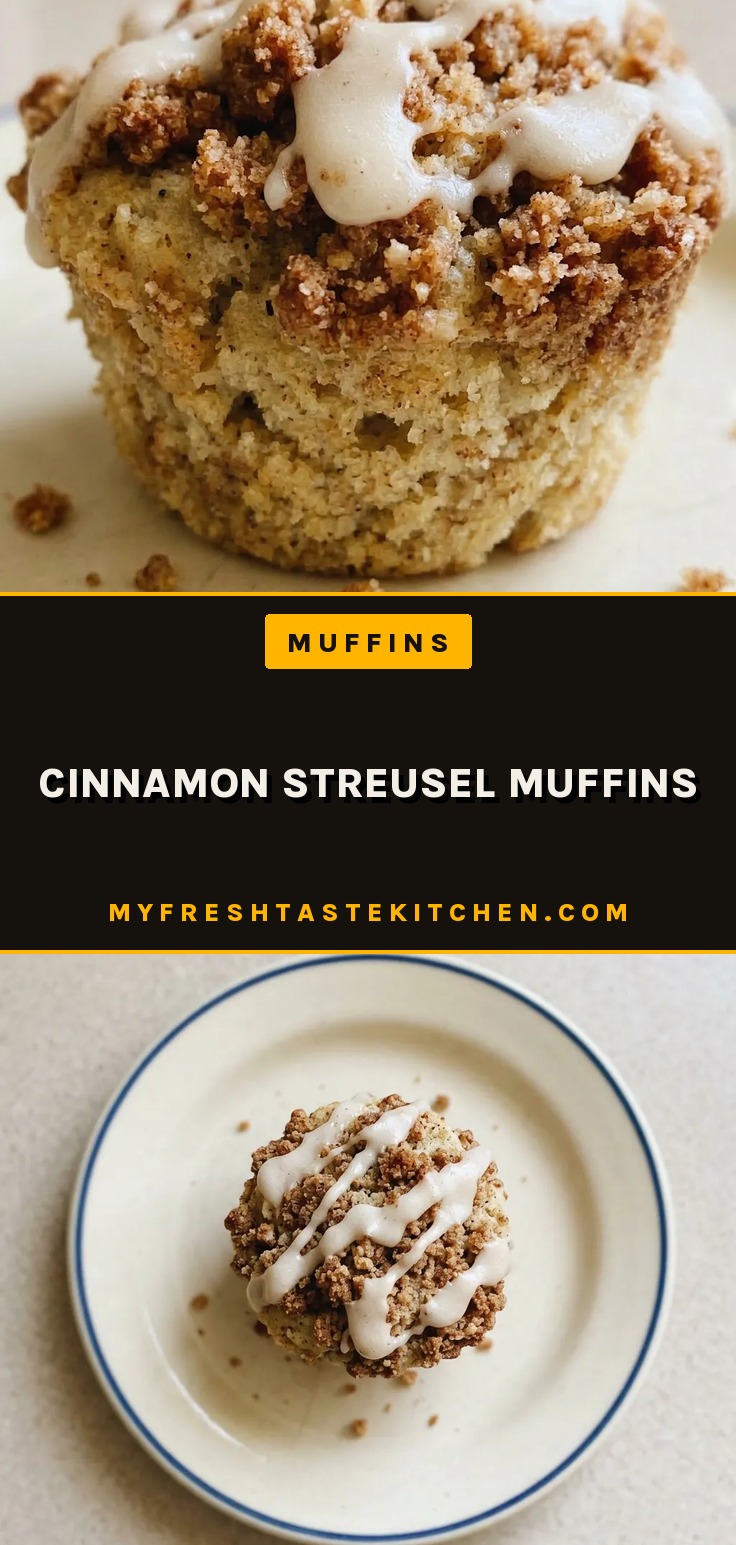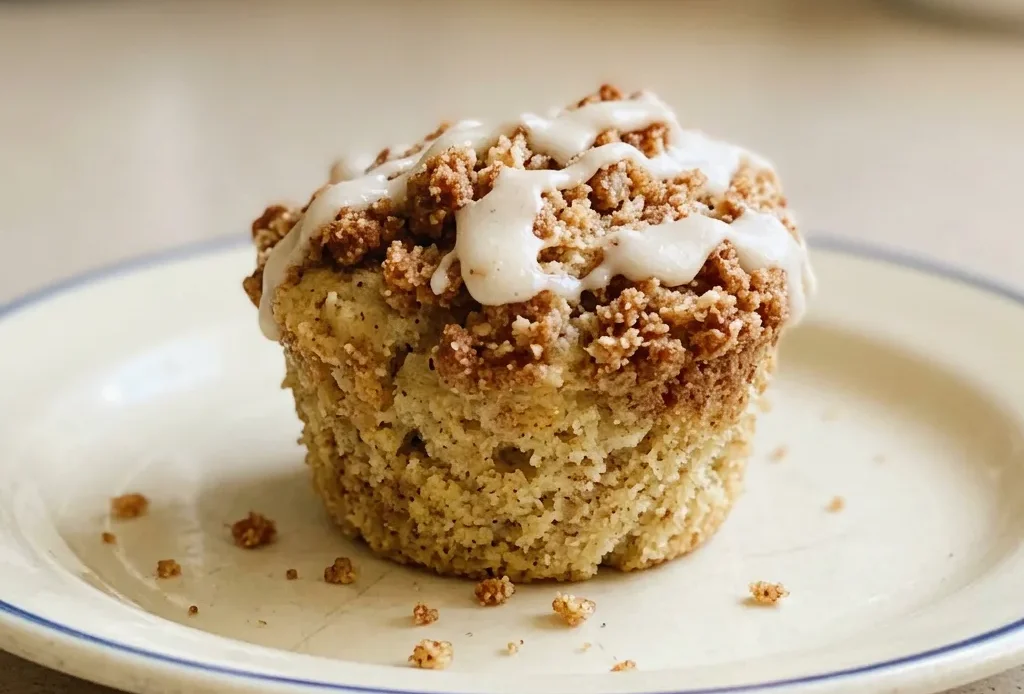
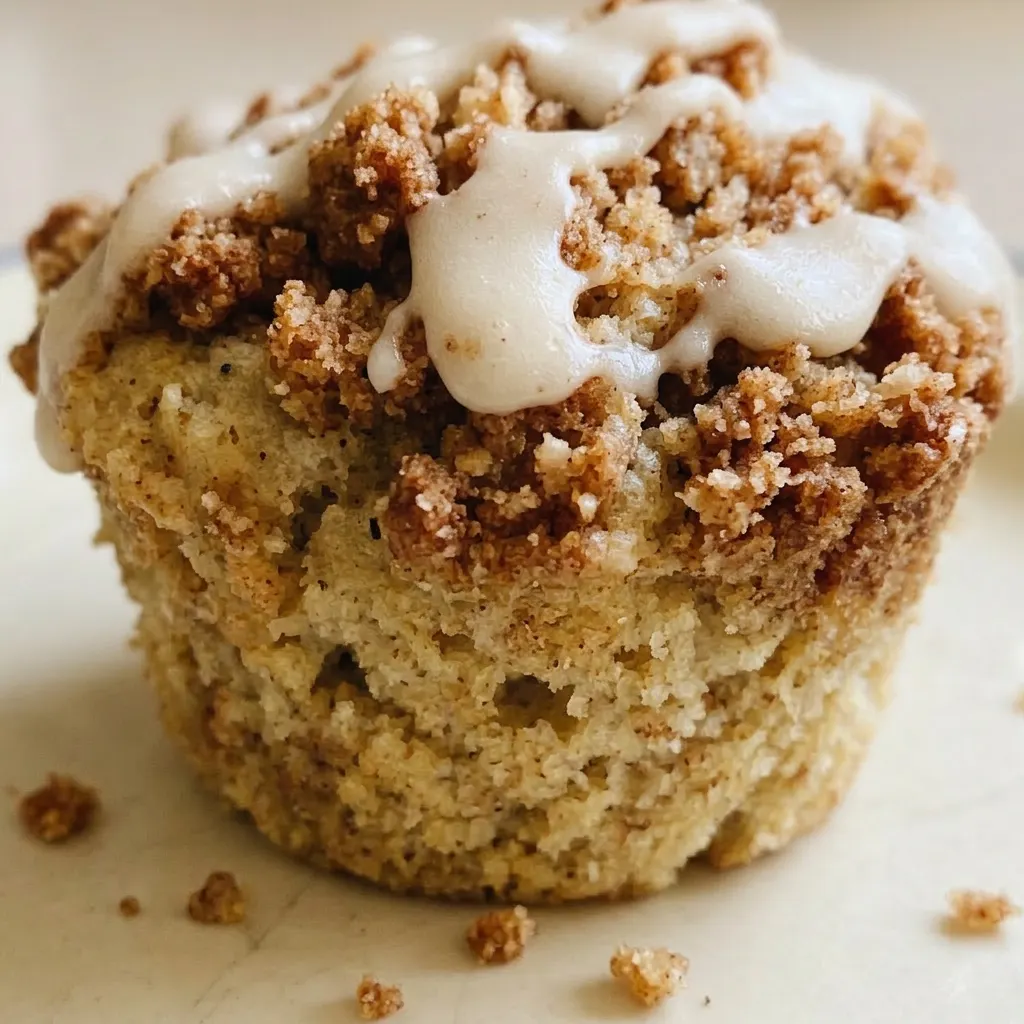
Most gluten-free muffins turn out gritty or dense because the flour blend lacks structure. These cinnamon streusel muffins avoid that fate with a trio of alternative flours that each pull their weight, plus a gelatin egg that traps air for a light, tender crumb. The streusel stays crisp, not greasy, thanks to room-temperature coconut oil that clumps without melting away.
The result is a muffin that eats like a conventional one, not a compromise.
I once stirred the batter like I was punishing it, and the muffins came out so dense they could’ve been hockey pucks.
Gelatin egg brings structure without egg flavor
This muffin relies on a gelatin egg for lift and binding. The froth from whipping gelatin, vinegar, and hot water traps air, giving the batter a light start. Now I gently fold the gelatin egg in just until no streaks remain, preserving the froth that gives lift.
Once baked, that air expands and the gelatin sets, yielding a muffin that holds together despite being gluten-free. No eggy taste intrudes, and the crumb stays moist thanks to the added moisture. The result is a sturdy yet tender muffin, not a dense puck.
Three flours build a tender, not heavy, crumb
Coconut flour soaks up moisture like a sponge, so the applesauce and coconut milk keep it from turning dry. Tigernut flour brings a subtle nuttiness and encourages browning on the outside.
Tapioca starch adds the stretch that gluten normally provides, softening the bite and preventing a gummy texture. Together they create a crumb that’s soft but not fragile, with a golden crust.
Each flour plays a role: one absorbs, one flavors, one lightens. Bite into a muffin and you get a tender interior that doesn’t collapse.
Room-temperature coconut oil keeps the streusel crisp
Cold fat won’t blend evenly into the flours, leaving greasy spots or hard lumps. Room-temperature coconut oil smears into the mixture, coating each grain so the clumps hold together without melting away. As the muffins bake, the oil stays suspended in the topping, creating a crunchy crust that contrasts with the soft muffin.
The coconut flour and tigernut flour in the streusel add their own texture, so each crumb is crisp and flavorful. The topping stays put on top, not sinking in.
Prep: 15 min · Cook: 20 min · Total: 35 min · Servings: 8
Three flours, each with a job
coconut oil (for streusel): Use room temperature so it blends into the flours and creates clumps without melting.
tigernut flour: It adds a subtle nuttiness and encourages browning on the outside of the muffins.
coconut flour: It soaks up moisture, so the applesauce and coconut milk keep the muffins from drying out.
tapioca starch: It adds the stretch that gluten normally provides, softening the bite without gumminess.
gelatin: Whisk with vinegar and hot water until frothy to trap air for lift and structure.
coconut milk: Use full fat, additive free. The fat keeps the crumb tender and moist.
Make the streusel first so it’s ready to pile on
Make the streusel
Mix room-temperature coconut oil with the flours, sugar, vanilla, and cinnamon using your fingers. When the mixture clumps together easily, it’s ready. If it’s dry and crumbly, add a tiny bit more oil.
Mix dry ingredients
Whisk the three flours, baking soda, salt, and cinnamon in a large bowl. No lumps of coconut flour should remain; break them up with your fingers if needed.
Combine wet ingredients
Stir melted coconut oil, applesauce, coconut milk, and vanilla together until smooth. The mixture should be emulsified, not separated. If it looks split, whisk vigorously.
Make the gelatin egg
Whisk gelatin, vinegar, and hot water with a fork until the gelatin dissolves and the mixture turns frothy. It should look like a thick foam, not watery. If it’s still liquid, whisk longer.
Combine wet and dry
Pour the wet mix into a well in the dry ingredients and stir until just combined. A few streaks of flour are okay; overmixing will make the muffins tough.
Fold in gelatin egg
Gently fold the frothy gelatin mixture into the batter until no streaks remain. Keep the motion light to preserve the air bubbles. The batter should look airy, not deflated.
Fill and top
Divide batter among 8 lined muffin cups. Sprinkle streusel over each and press lightly so it sticks. The topping should sit on top, not sink in; if it sinks, your batter is too thin.
Bake and cool
Bake at 350°F for 27 to 30 minutes until a toothpick comes out clean. The tops should be golden and the streusel crisp. Cool completely in the pan before removing; they’re fragile when hot.
Make icing (if using)
Stir melted coconut butter, maple syrup, coconut milk, vanilla, and salt until smooth. If it’s too thick to drizzle, add a splash more coconut milk. Use immediately after cooling.
Cinnamon Streusel Muffins
Ingredients
Cinnamon Crumb Topping
- 2 tbsp coconut oil at room temperature
- 2 tbsp coconut flour
- 2 tbsp tigernut flour
- 2 tbsp coconut sugar
- 1/2 tsp pure vanilla extract
- 1 tsp cinnamon
- pinch of sea salt
Muffin Batter
- 3/4 cup tigernut flour
- 1/2 cup tapioca starch
- 1/4 cup coconut flour
- 1 tsp baking soda
- 1/2 tsp sea salt
- 1/2 tsp cinnamon
- 1/4 cup + 2 tbsp melted coconut oil
- 3/4 cup unsweetened applesauce
- 1/2 cup additive-free full-fat coconut milk
- 1 tsp pure vanilla extract
- 1 tbsp gelatin
- 1 tbsp apple cider vinegar
- 2 tbsp hot water
Icing (optional)
- 1/4 cup melted coconut butter
- 2 tbsp maple syrup
- 2 tbsp full-fat coconut milk
- 1 tsp pure vanilla extract
- Pinch of sea salt
Instructions
Cinnamon Crumb Topping
Preheat Oven and Prep Pan:
Set oven to 350°F (175°C) and line a muffin pan with parchment liners.
Muffin Batter
Make Cinnamon Crumb Topping:
Prepare cinnamon crumb topping: In a small bowl, mix 2 tbsp room-temperature coconut oil, 2 tbsp coconut flour, 2 tbsp tigernut flour, 2 tbsp coconut sugar, 1/2 tsp vanilla extract, 1 tsp cinnamon, and a pinch of sea salt. Work the mixture with your hands until it forms clumps.Whisk Dry Ingredients:
In a large bowl, whisk together 3/4 cup tigernut flour, 1/2 cup tapioca starch, 1/4 cup coconut flour, 1 tsp baking soda, 1/2 tsp sea salt, and 1/2 tsp cinnamon.Mix Wet Ingredients:
In another bowl, combine 1/4 cup + 2 tbsp melted coconut oil, 3/4 cup unsweetened applesauce, 1/2 cup full-fat coconut milk, and 1 tsp vanilla extract.Combine Wet and Dry:
Create a well in the dry ingredients, pour in the wet mixture, and stir until just combined.Prepare Gelatin Egg:
Make gelatin egg: In a small bowl, whisk together 1 tbsp gelatin, 1 tbsp apple cider vinegar, and 2 tbsp hot water with a fork until the gelatin dissolves and the mixture becomes frothy.Fold in Gelatin Egg:
Gently fold the gelatin egg into the batter.Fill Liners and Add Topping:
Divide batter among the muffin liners, then sprinkle the cinnamon crumb topping on top. Lightly press the topping into the batter to help it adhere.Bake Muffins:
Bake on the middle rack for 27–30 minutes, until a toothpick inserted into the center comes out clean.Make Coconut Icing:
If making icing, prepare it while muffins cool: In a small bowl, stir together 1/4 cup melted coconut butter, 2 tbsp maple syrup, 2 tbsp full-fat coconut milk, 1 tsp vanilla extract, and a pinch of sea salt.
Icing (optional)
Cool Muffins Completely:
Remove muffins from oven and let them cool completely in the pan before transferring to a wire rack.Drizzle Icing Over Muffins:
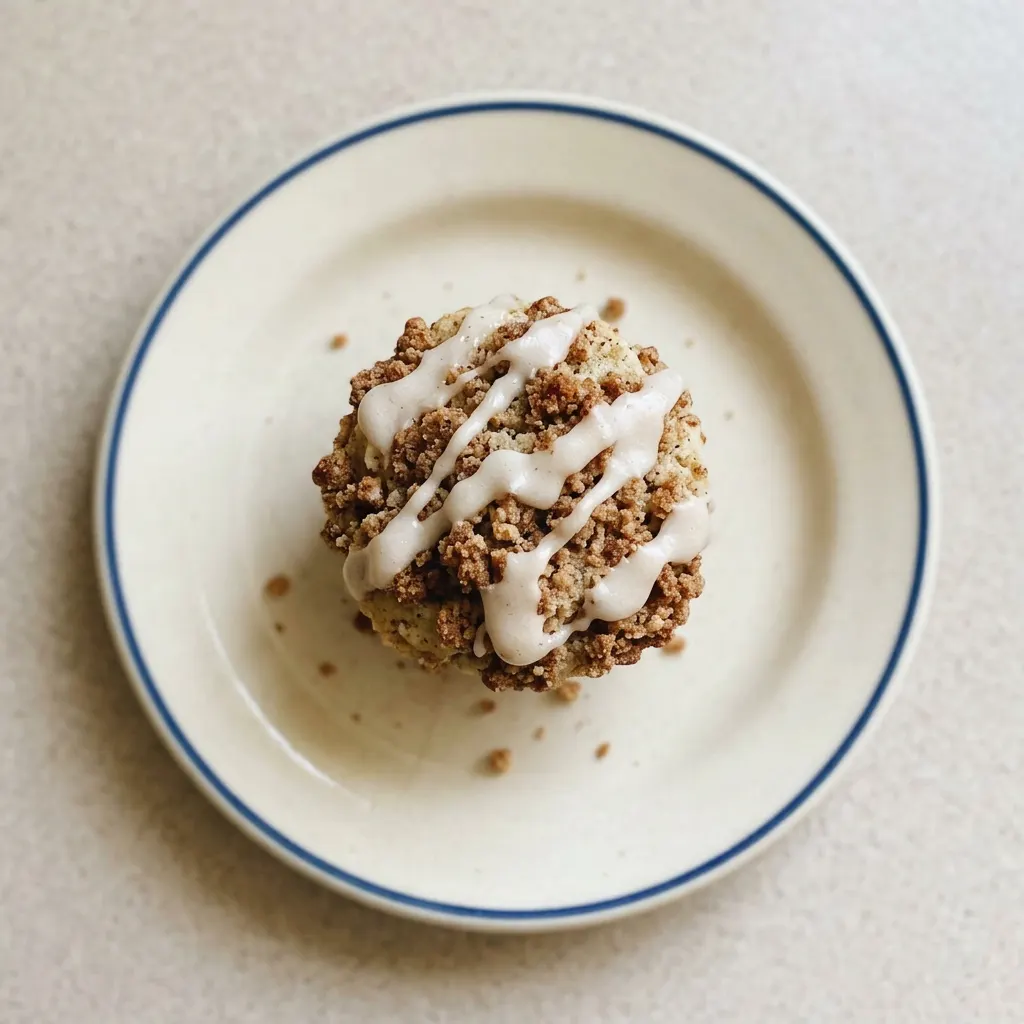
Once fully cooled, drizzle the icing over the muffins.Serve and Enjoy:
Serve and enjoy!
Storage and Serving
These muffins are best eaten the day they’re made, when the streusel is crispiest and the crumb is tender. For leftovers, store in an airtight container at room temperature for up to 3 days. Refrigeration dries out the muffin and softens the streusel, so avoid it if you can.
To reheat a refrigerated or day-old muffin, warm it in a 300°F oven for 5 minutes to revive the topping’s crunch. Freeze muffins without icing for up to 3 months: wrap each tightly in plastic wrap, then place in a freezer bag. Thaw at room temperature, then reheat as above.
If using the icing, drizzle it on just before serving; iced muffins don’t store well because the icing soaks in and becomes sticky. The serving window for best texture is within 4 hours of baking.
Tips
- If your gelatin egg doesn’t froth after whisking for 30 seconds, your water may not be hot enough; use water just off the boil to ensure the gelatin dissolves fully and traps air.
- When folding the gelatin egg into the batter, use a spatula to cut through the center and fold the batter over from the side, rotating the bowl each time, to keep the froth from deflating.
Two swaps that work, one that won’t
tigernut flour: Almond flour. Almond flour is finer and absorbs less moisture, so the batter will be slightly wetter and the crumb a bit more tender.
The nutty flavor shifts from tigernut’s subtle sweetness to almond’s richer taste. Measure by weight for accuracy; if using volume, start with the same 3/4 cup but add a tablespoon more if batter seems loose.
oat or cashew). Coconut milk’s high fat content keeps these muffins moist and tender. A thinner milk like almond will make the crumb drier and less rich.
Oat or cashew milk, with a similar fat profile, work best. Use the same 1/2 cup.
If the batter looks thicker than usual, add a splash more milk.
gelatin: Not recommended. Gelatin provides the lift and structure that eggs would in a standard muffin.
No direct swap: flax eggs lack the foam needed for rise, and commercial egg replacers won’t set the same way. The muffins will turn out dense and flat.
Stick with the gelatin egg as written.