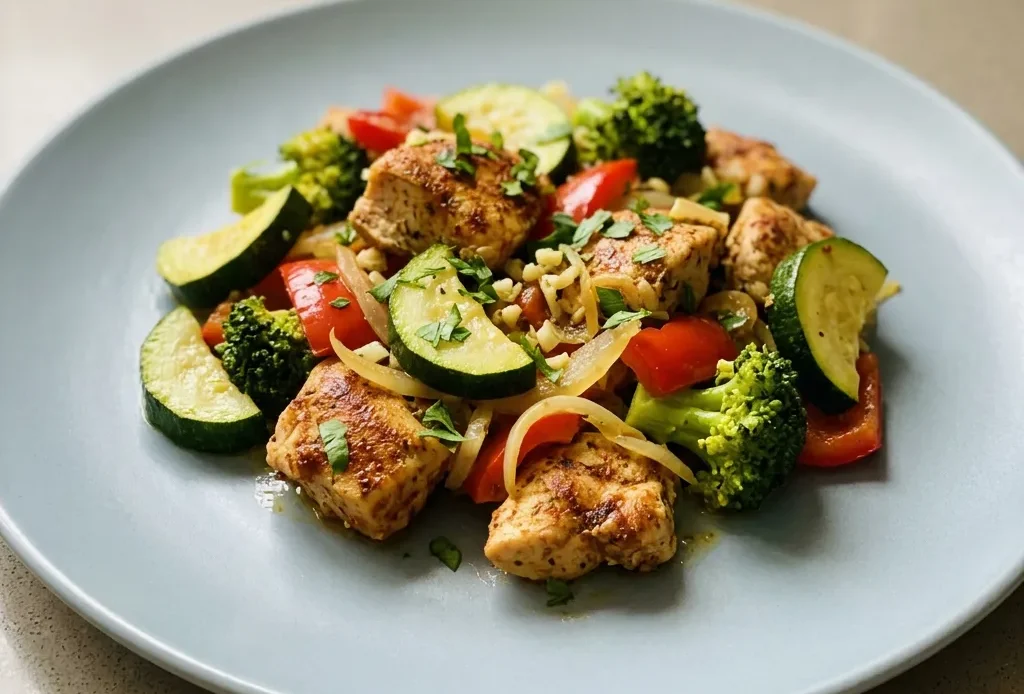
Most low-sodium skillet dinners end up bland or watery. This one doesn’t, because the chicken gets a heavy coat of smoked paprika and Italian seasoning before it ever hits the pan, and the vegetables are cooked in batches so they stay crisp, not steamed.
The lemon juice and parsley at the end aren’t garnish, they’re the trick that makes the whole low sodium chicken and vegetable skillet taste bright, not flat. It’s a complete meal that actually works without salt.
I tried cutting some pieces bigger for juiciness and others smaller for speed, but ended up with dry small bits and undercooked large ones.
Why does cutting chicken and vegetables into uniform pieces matter?
When chicken is cut into 1-inch chunks, each piece browns evenly in the same time. Larger chunks would stay raw inside while the outside overcooks. Vegetables sliced to a similar size, zucchini half-moons, bell pepper strips, broccoli florets, ensure they all finish cooking together.
A mix of sizes leaves some pieces underdone or mushy. In this skillet, you want the chicken fully cooked and the vegetables tender-crisp. That balance depends on starting with pieces that need the same heat exposure.
It’s not just about looks; it’s about every bite having the same doneness.
How does the spice blend build flavor without salt?
Smoked paprika gives a deep, smoky note that mimics the savory punch salt usually provides. Italian seasoning adds a mix of herbs, oregano, basil, rosemary, that bring complexity. Onion powder contributes savory depth without the moisture of fresh onion.
Black pepper adds a mild heat that wakes up the palate. Together, they create a bold flavor profile that satisfies without sodium. The combination doesn’t taste salty, but it feels well-seasoned.
For low-carb dinner recipes, this blend is a go-to because it packs flavor without sugar-laden sauces. You get a satisfying dish that doesn’t need a salt shaker.
Why deglaze with low-sodium chicken broth?
After searing chicken and sautéing vegetables, the pan holds browned bits, fond, that are packed with flavor. Deglazing with low-sodium broth lifts those bits into a light sauce. The liquid also helps steam the vegetables, keeping them crisp but cooked.
Using low-sodium broth keeps sodium in check while adding moisture. If you used water, you’d lose the savory depth the fond provides.
A full-sodium broth would add unnecessary salt. The result is a cohesive sauce that clings to the chicken and veggies, making the dish taste more finished without extra salt.
How do lemon juice and parsley brighten the final dish?
Lemon juice adds acidity that cuts through the richness from the oil and chicken. It lifts the smoky and herbaceous notes, making each flavor more distinct. Without it, the dish would taste flat and heavy.
Fresh parsley brings a clean, grassy flavor and a pop of green that makes the plate look fresh. You taste the brightness immediately, it wakes up your palate.
A squeeze of lemon right before serving keeps the acidity sharp. The herbs and citrus together balance the savory base, leaving a clean finish. That last bit of freshness is what makes the skillet feel complete, not just a pile of cooked food.
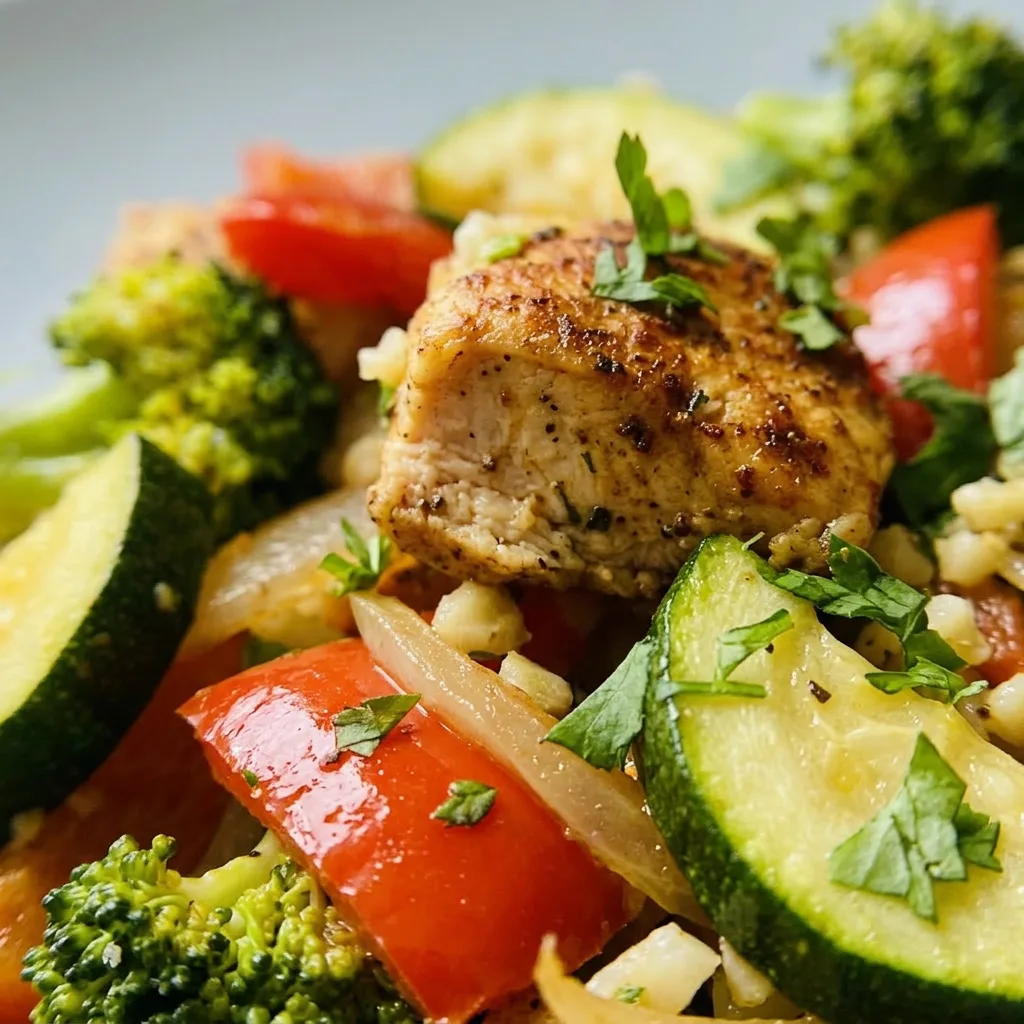
Prep: 12 min · Cook: 22 min · Total: 34 min · Servings: 4 · Calories: 310 kcal
What to look for in each ingredient
Boneless skinless chicken breasts: Buy uniformly sized breasts so each 1-inch chunk cooks at the same rate.
Low sodium chicken broth: No salt added broth gives you control; regular broth can make the dish taste salty.
Lemon juice: Fresh squeezed lemon juice brightens the dish; bottled lacks that sharp acidity.
Smoked paprika: Sweet smoked paprika adds deep color and a subtle smokiness without heat.
How to build flavor in a low-sodium skillet dinner
Season the chicken
Pat the chicken dry, wet meat won’t brown. Toss with paprika, Italian seasoning, onion powder, and pepper.
Each piece should look evenly coated, not patchy. The spices will darken as they cook.
Sear the chicken
Heat 1 tablespoon oil over medium-high until it shimmers. Add chicken in a single layer, crowding drops the pan temperature and steams instead of browns. Cook without moving for 3 minutes, then flip.
The underside should be deep golden, not pale. Cook another 2 to 3 minutes until the thickest piece hits 165°F. Remove to a plate.
Sauté aromatics
Reduce heat to medium. Add remaining oil and onion.
Stir occasionally; the onion should soften and turn translucent in about 2 minutes. If it browns too fast, the pan is too hot, lower the heat. Add garlic and cook just until fragrant, about 30 seconds.
Burnt garlic turns bitter.
Cook the vegetables
Add broccoli and bell pepper. Stir-fry 3 to 4 minutes, they should brighten in color and be tender when pierced with a fork but still have crunch. A dull, limp vegetable means you’ve gone too far.
Add zucchini and broth, scraping up browned bits. Cook 2 to 3 minutes until zucchini is just tender, not mushy.
Finish and combine
Return chicken and any juices to the skillet. Drizzle lemon juice and toss over medium heat for 1 to 2 minutes.
The sauce should coat everything lightly, if it looks dry, add a splash of broth. Taste a piece of chicken; the acid should brighten the spices, not overwhelm. Sprinkle parsley over the top.
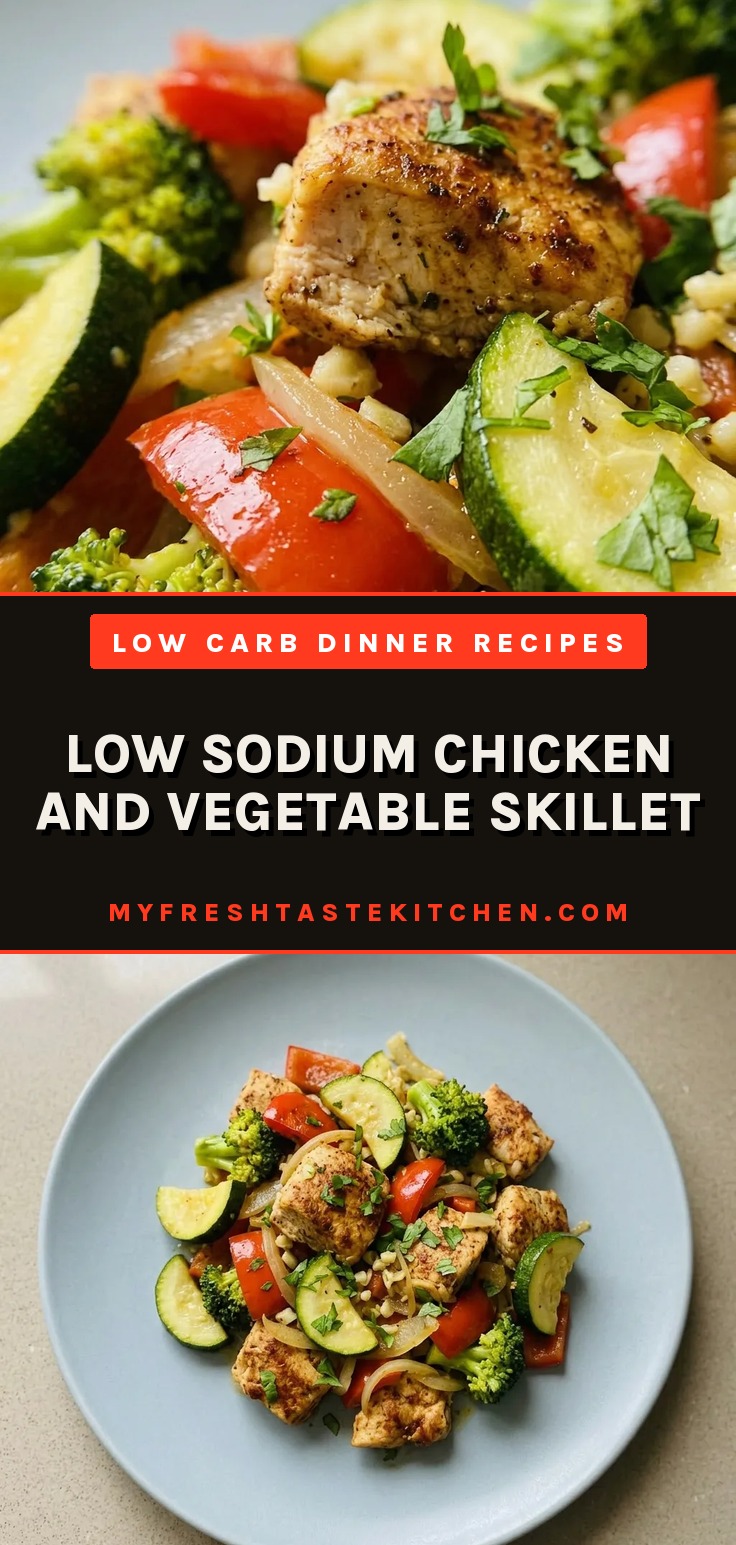
Low Sodium Chicken and Vegetable Skillet
Ingredients
- 1 1/2 lb boneless skinless chicken breasts cut into 1-inch chunks
- 2 tbsp olive oil divided
- 1 zucchini sliced into half-moons
- 1 red bell pepper seeded and sliced
- 2 cups broccoli florets cut into bite-sized pieces
- 1/2 yellow onion thinly sliced
- 4 garlic cloves minced
- 1/4 cup low sodium chicken broth no-salt-added preferred
- 2 tbsp lemon juice freshly squeezed
- 1 tsp smoked paprika
- 1 tsp dried Italian seasoning
- 1/2 tsp black pepper freshly ground
- 1/2 tsp onion powder
- 2 tbsp fresh parsley roughly chopped, for garnish
Instructions
Season Chicken Pieces:
Dry the chicken pieces with paper towels, then coat with smoked paprika, Italian seasoning, onion powder, and black pepper. Mix thoroughly.Brown Chicken:
Warm 1 tablespoon of olive oil in a large skillet set to medium-high heat. When it shimmers, lay the chicken in one layer. Cook for 5 to 6 minutes, flipping once, until browned and fully cooked to 165°F (75°C). Remove to a plate and reserve.Sauté Onion:
Lower the heat to medium and add the remaining 1 tablespoon of olive oil to the same skillet. Sauté the onion for 2 minutes, stirring now and then, until it starts to soften.Cook Broccoli and Pepper:
Stir in the garlic and cook for 30 seconds until aromatic. Next, add the broccoli and red bell pepper. Stir-fry for 3 to 4 minutes until the vegetables are tender yet crunchy.Add Zucchini and Broth:
Put in the zucchini and pour the low sodium chicken broth. Cook for another 2 to 3 minutes, deglazing the pan by scraping up any browned bits.Return Chicken and Lemon:
Put the cooked chicken back into the skillet. Sprinkle with fresh lemon juice and toss everything over medium heat for 1 to 2 minutes until hot and combined.Adjust Seasoning and Serve:
Check the seasoning and add more black pepper if needed. Sprinkle with fresh parsley and serve right away.
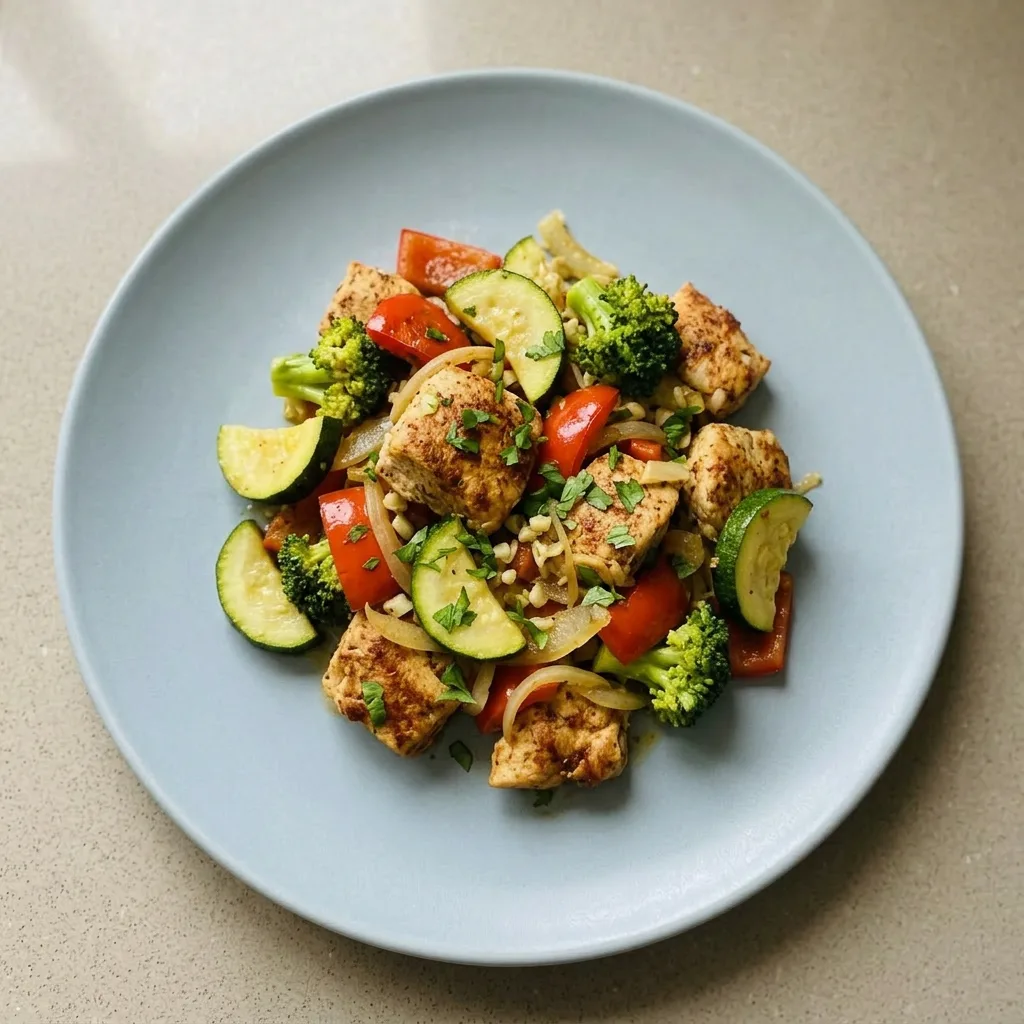
Swapping ingredients without losing the skillet balance
Chicken breast: Boneless skinless chicken thighs. Thighs stay juicier than breasts because they have more fat. Cut them the same 1-inch size.
Sear until the surface is well browned and internal temp hits 165°F. Cooking time may run a minute longer.
The dish ends up richer, less lean.
Zucchini: Yellow squash. Yellow squash has the same moisture content and cooks at the same rate. Slice into half-moons like the zucchini.
The color change is the only difference, the texture and flavor are nearly identical.
Red bell pepper: Orange or yellow bell pepper. Any sweet bell pepper works the same. Green bell pepper is less sweet and more vegetal; the dish will lose some sweetness but still taste fine.
Slice into strips, same size.
Broccoli: Cauliflower florets. Cauliflower needs a minute more cooking to get tender-crisp because it’s denser.
Cut florets to the same bite size. The flavor is milder, less grassy. For low fat dinner recipes, this swap keeps the veggie volume high without adding fat.
Storage and Serving
This skillet is best served within 30 minutes of adding the lemon and parsley, while the vegetables are still bright and the chicken juicy. For leftovers, transfer to an airtight container and refrigerate within 2 hours. The lemon flavor intensifies overnight, which can be pleasant, but the vegetables soften noticeably.
For best texture, eat leftovers within 3 days. Reheat gently in a skillet over medium low with a splash of broth to restore moisture; the microwave will turn the vegetables mushy. Freezing is not recommended: the zucchini and bell pepper release water upon thawing, leaving a watery, limp dish.
The cooked chicken alone freezes well for up to 3 months, but the vegetables do not. If you must freeze, do so before adding the zucchini and lemon, then add fresh vegetables when reheating.
Tips
- Use a paper towel to press down on the chicken pieces after patting dry to remove surface moisture that would otherwise steam instead of sear.
- Season the chicken at least 5 minutes before cooking so the spices adhere and the surface dries further, promoting browning.
Frequently Asked Questions
Can I use chicken thighs instead of breasts?
Yes, boneless skinless thighs work fine. They have more fat, so they stay juicier. Cut them into 1-inch chunks like the breasts.
Sear until the surface is well browned and internal temp hits 165°F; thighs may take a minute longer. The dish ends up richer, less lean.
How do I prevent the vegetables from getting soggy?
Don’t overcrowd the skillet when stir-frying the broccoli and bell pepper. Cook them over medium heat for only 3 to 4 minutes, just until tender-crisp. The zucchini goes in last with the broth, cooking just 2 to 3 minutes.
Overcooking any vegetable makes it limp; watch for bright color and a slight crunch when pierced.
Can I make this dish ahead of time and reheat it?
It’s best served within 30 minutes of adding the lemon and parsley. For leftovers, refrigerate within 2 hours and eat within 3 days.
Reheat gently in a skillet over medium-low with a splash of broth; the microwave will turn the vegetables mushy. Freezing is not recommended, the zucchini and bell pepper release water when thawed.
What makes this dish different from a classic chicken and vegetable stir-fry?
This skillet relies on a spice blend, smoked paprika, Italian seasoning, onion powder, for flavor instead of a soy-based sauce. The chicken is seared first, then the vegetables are cooked in the same pan and deglazed with low-sodium broth. The final hit of fresh lemon juice and parsley brightens everything without a heavy sauce.