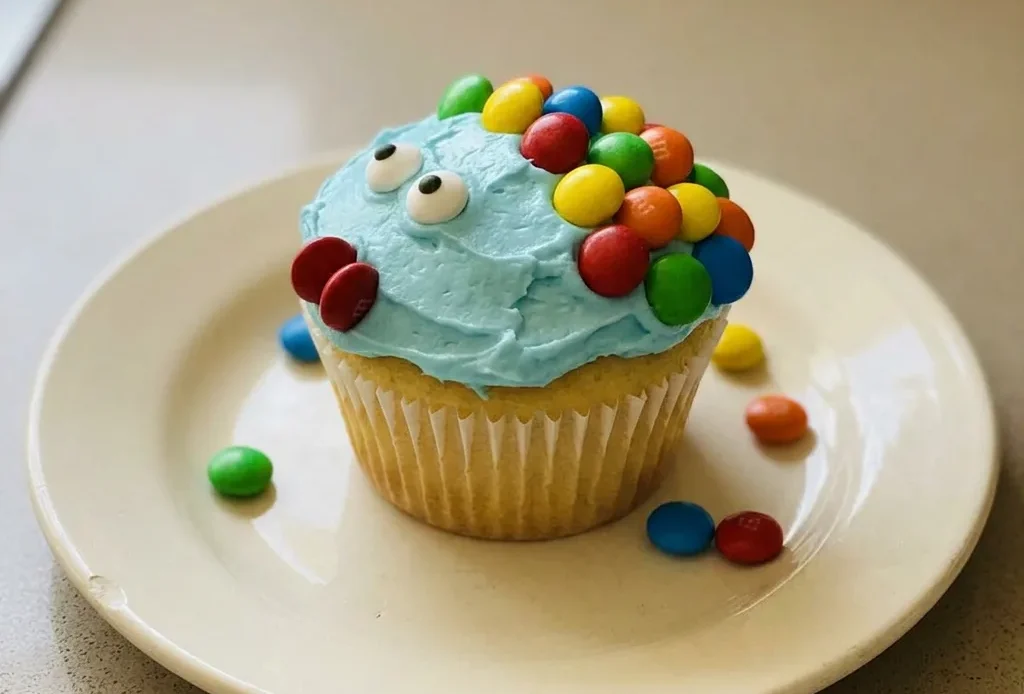
The most common mistake with these fish cupcakes is using liquid food coloring in the frosting, which turns it runny and makes the candy scales slide off. That one swap, gel dye instead of liquid, keeps the frosting thick enough to hold every Skittle in place.
These fish cupcakes work because the candy does the heavy lifting: hard, glossy pieces mimic scales and eyes without any piping skills. The cake mix and frosting are just a reliable base, so you can focus on the fun part.
I still poke each eye in twice, once to break the frosting and once to seat it, even though it feels obsessive.
Convenience of cake mix and frosting
Store-bought cake mix and frosting are the right call here because they remove variables. A mix bakes predictably, same rise, same crumb, every time, so you’re not troubleshooting a dense or domed cupcake while trying to decorate. The frosting is already smooth and stable; you just tint it.
That leaves your attention on arranging candy scales and eyes, which is the whole point. For a kid-friendly activity, this setup keeps frustration low. Kids can stir the batter, drop in liners, and frost without worrying about curdled buttercream or a fallen cake.
The results look deliberate because the base is consistent. You taste a familiar sweet cupcake, but the fun is in the look, not the bake.
Bright color without texture issues
Gel food coloring gives you intense hues with just a drop or two, while liquid colors would thin the frosting into a runny mess. You see the difference immediately: gel-stained frosting holds its shape when swirled; liquid-stained frosting softens and slides off the cupcake.
Controlling color intensity is as simple as adding gel a dab at a time until you hit the shade you want. The frosting stays thick enough to support candy scales without them sinking. For cupcake frosting, this is the surest way to get a bright, even tint without altering its consistency.
You end up with a frosting that looks as vivid as it did in the bowl, which is what you want when the fish’s scales rely on that contrast.
Candy scales and eyes for visual pop
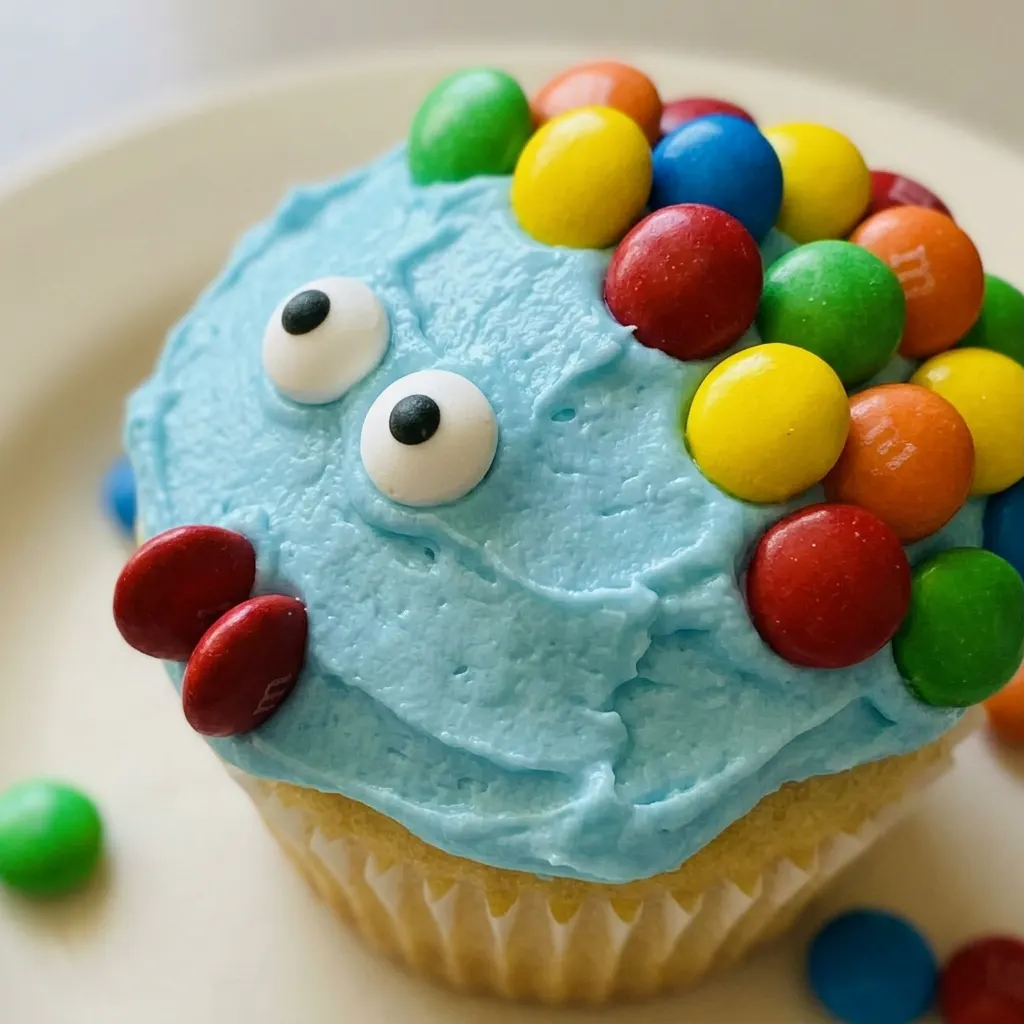
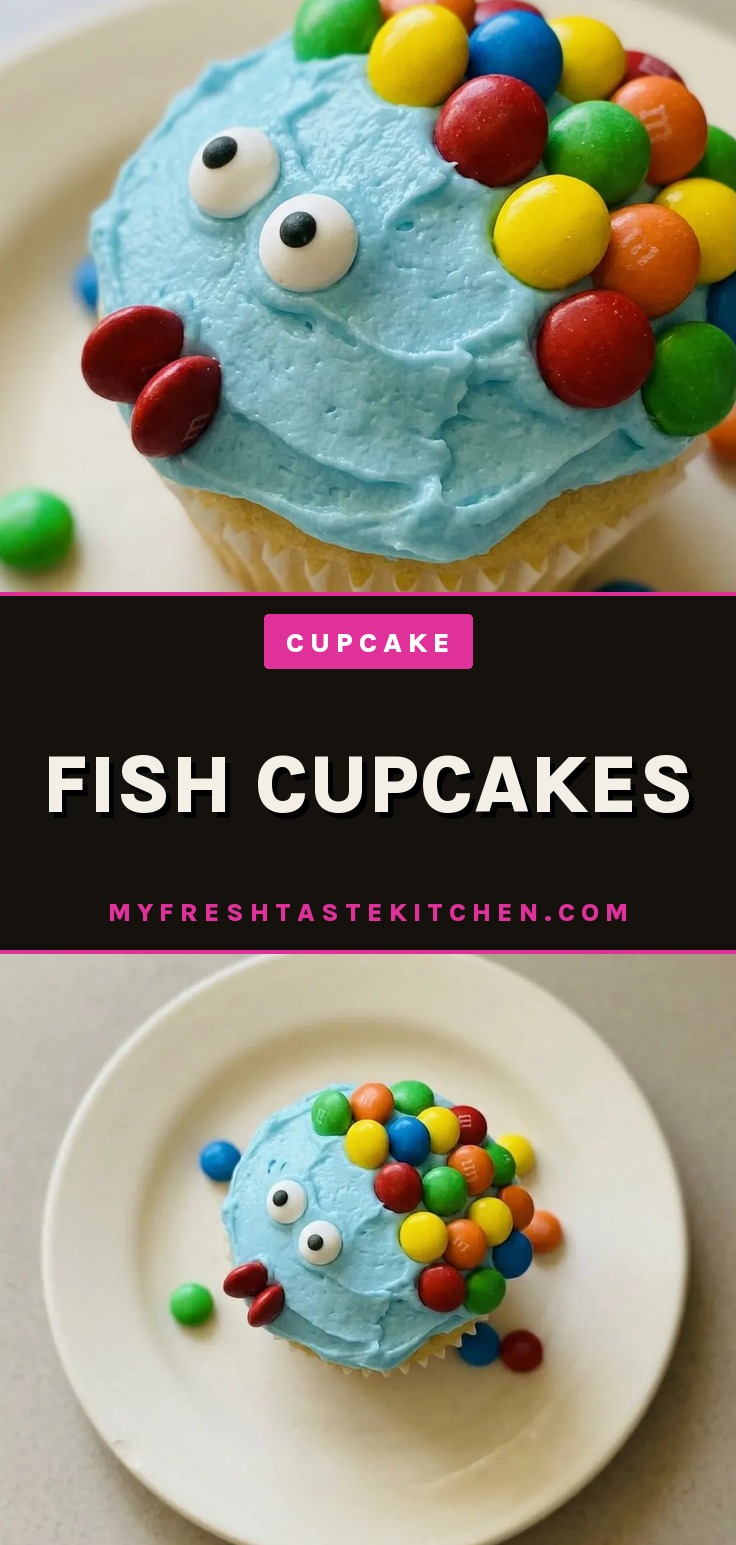
Using colorful candy for scales and eyes creates a fish effect that reads instantly. Each candy catches light differently than the frosting, giving the cupcake a shiny, layered look that mimics real fish scales. The texture contrast is obvious: a soft, smooth frosting base against hard, glossy candies.
And placement is easy, just press them in. The eyes anchor the face, and a pair of candies for the mouth turns the whole thing into a recognizable fish. These are simple cupcake ideas that rely on the candy’s built-in color and shape, so you don’t need piping skills or special tools.
The result is a cupcake that looks assembled, not drawn, which is exactly the effect you want.
What to look for in each ingredient
Boxed cake mix and frosting: Any brand works; just pick one that yields a neutral crumb so the candy colors pop.
Gel food coloring: Gel is important: liquid colors thin the frosting and ruin the swirls.
Colorful candy for scales and mouth: Use hard, glossy candies like Skittles or M&Ms for a shiny scale effect.
Candy eyes: Buy the type with flat backs so they stick easily without extra glue.
Assembling playful fish cupcakes from boxed mix
Bake and cool
Prepare the cake mix per box instructions, fill lined muffin cups two-thirds full, and bake as directed. Let cool completely, warm cupcakes soften frosting into a slip-and-slide, ruining the candy placement.
Tint the frosting
Stir gel food coloring into store-bought frosting a dab at a time until you reach the shade you want. The frosting stays thick enough to hold swirls; if it thins, you added too much color too fast.
Frost and create waves
Spread a generous layer of tinted frosting onto each cooled cupcake, optionally swirling peaks to mimic ocean waves. The frosting should be thick enough that candy pressed in stays put without sliding.
Add candy scales
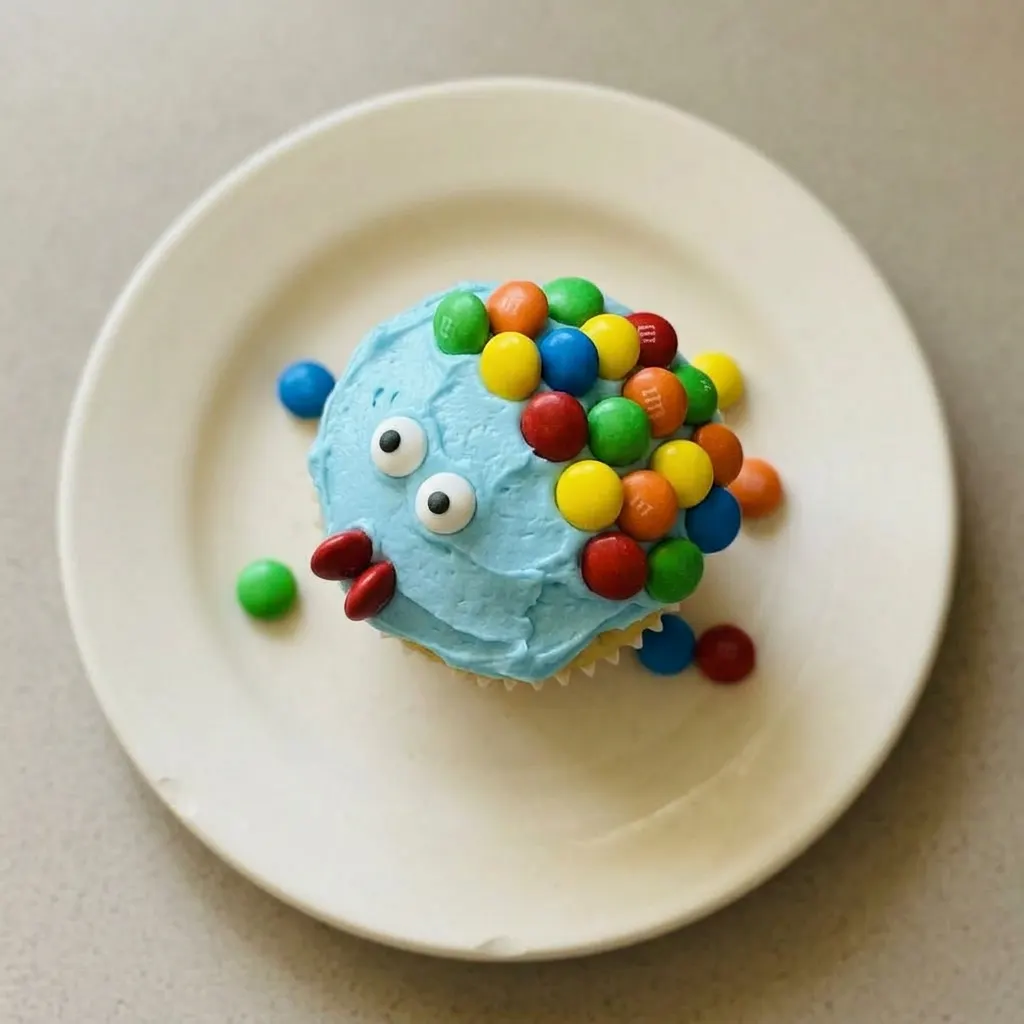
Press colorful candies into the frosting on the sides of each cupcake in overlapping rows from bottom to top. They should stick firmly; if they fall off, the frosting is too thin or the candy too dry.
Attach eyes and mouth
Gently press two candy eyes into the front of each cupcake, then place two same-color candies together for a puckered mouth. The candies should sit flush against the frosting, not wobble.
Optional sparkle finish
Sprinkle edible glitter or sugar crystals over the top to suggest a shimmering ocean surface. A light dusting catches light without overwhelming the candy features.
Fish Cupcakes
Ingredients
- Your favorite cake mix (plus the ingredients listed on the box)
- Store-bought frosting
- Gel food coloring in various colors
- Colorful candy for the scales and mouth (like Skittles or M&Ms)
- Candy eyes
- Muffin tin
- Cupcake liners
Instructions
Bake Cupcakes:
Bake the cupcakes: Prepare the cake mix according to the instructions on the box. Line the muffin tin with cupcake liners, fill each about two-thirds full with batter, and bake as directed. Let cool completely.Tint and Spread Frosting:
Prepare the frosting: While the cupcakes cool, tint the store-bought frosting with gel food coloring to any desired color(s). Once the cupcakes are fully cooled, spread frosting generously on each cupcake, optionally creating swirls to resemble waves.Add Candy Scales:
Add the candy scales: Place colorful candies on the sides of each cupcake to form fish scales.Attach Candy Eyes:
Attach the candy eyes: Press candy eyes gently into the frosting on each cupcake to secure.Form Candy Mouth:
Create a cute mouth: Use two candies of the same color to form a puckered mouth on each cupcake.Sprinkle Edible Glitter:
Final touches: Optionally sprinkle edible glitter or sugar crystals to represent a sparkling ocean.
Storage and Serving
These fish cupcakes are best eaten within a few hours of assembling, while the candy is still crunchy and the frosting is soft but set. If you need to make them ahead, bake the cupcakes up to 2 days in advance and store them unfrosted in an airtight container at room temperature.
Frost and decorate no more than 4 hours before serving; after that, the candy scales soften and lose their snap, and the frosting may start to weep. Leftover assembled cupcakes keep in an airtight container at room temperature for up to 1 day, but expect the candy to become chewy and the frosting to absorb moisture from the candies.
Do not refrigerate: the cold dries out the cake and makes the frosting grainy. For longer storage, freeze unfrosted cupcakes (wrapped individually in plastic, then foil) for up to 1 month; thaw at room temperature before frosting and decorating. Do not freeze assembled cupcakes; the candy will crack and frosting will separate.
Tips
- If your frosting becomes too soft from warm hands or a hot kitchen, pop the bowl in the fridge for 5 minutes before spreading; this firms it up just enough to hold the candy without becoming stiff.
- When pressing candies into the frosting, use a gentle twisting motion rather than straight downward pressure; this helps the candy seat flush without cracking the frosting surface or dislodging nearby scales.
Swapping cake mix and frosting without losing the fish effect
Boxed cake mix: Gluten-free or vegan cake mix. Follow the mix’s own instructions; the crumb may be denser or more tender, but the candy scales and eyes will still adhere as long as the cupcake is fully cooled.
Store-bought frosting: Dairy-free or vegan frosting. Any thick, spreadable frosting works; avoid whipped or aerated styles that are too soft to hold candy. If the frosting is thin, chill it for 10 minutes before tinting.
Gel food coloring: Do not swap with liquid food coloring. Liquid colors thin the frosting, making it runny and unable to support the candy. Stick with gel or try powdered colors dissolved in a drop of water, but gel is the easiest.
Frequently Asked Questions
Can I make these fish cupcakes ahead of time?
Bake the cupcakes up to 2 days ahead and store them unfrosted in an airtight container at room temperature. Frost and decorate no more than 4 hours before serving, because the candy scales soften and lose their crunch after that. Assembled leftovers keep at room temperature for up to 1 day, but expect chewier candy.
Don’t refrigerate; it dries the cake and makes the frosting grainy.
How do I keep the candy eyes from sliding off?
Press the candy eyes into the frosting gently but firmly, making sure they sit flush against the surface. The frosting needs to be thick enough to hold them, if it’s too thin, it won’t grip. If you’re having trouble, chill the frosted cupcakes for 5 minutes before adding the eyes, but only as a rescue; the frosting should be stiff enough at room temperature.
What’s the difference between fish cupcakes and regular decorated cupcakes?
Fish cupcakes use candy scales and a puckered mouth to create a recognizable fish face, relying on the candy’s shape and shine rather than piped details. The frosting is tinted and swirled to suggest ocean waves, not just a flat coat. Regular decorated cupcakes often use buttercream rosettes or themed toppers, but here the decoration is built from store-bought candy for instant visual effect.