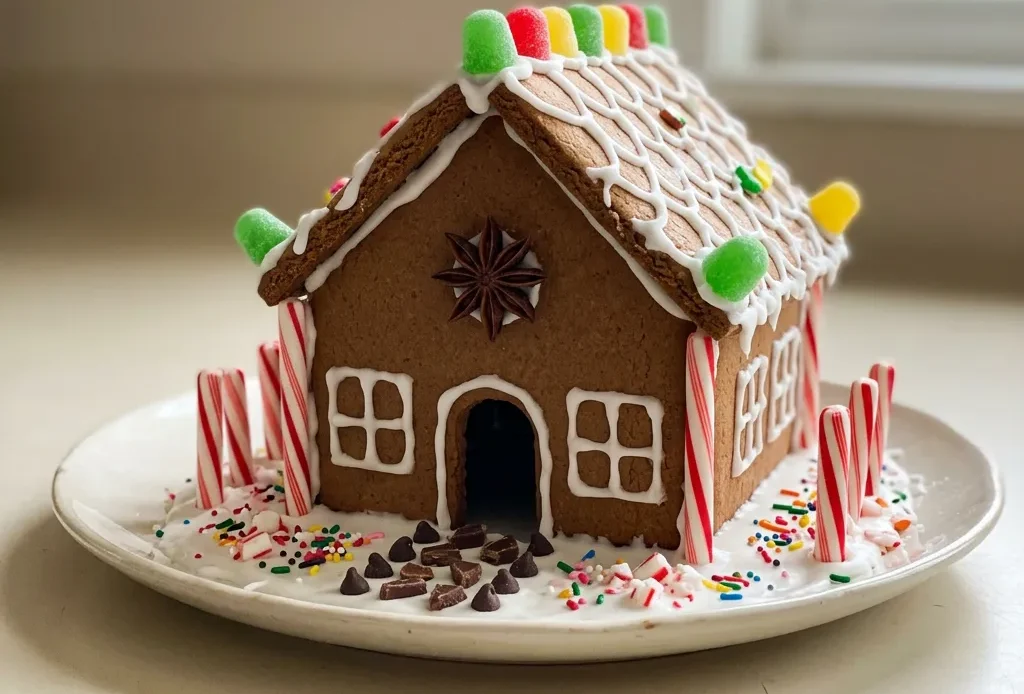
The biggest mistake people make with a gingerbread house recipe is treating the dough like a regular cookie. You don’t want fluffy or soft, you want rigid boards that lock together.
That means fighting the urge to skip the chill or overwork the dough. The reward is a structure that actually stands, ready for the chaotic creativity of candy and icing.
Build it, tweak it, make it lopsided on purpose, that’s the point of homemade.
Why Chilling the Dough Is Critical for Structural Integrity
A warm dough spreads in the oven, turning sharp outlines into blobs. For a gingerbread house, you need crisp, straight edges that mate cleanly at the seams; soft corners leave gaps that frosting can’t bridge. Chilling firms the butter back up, so the cut shapes hold their geometry during baking.
The 30-minute minimum is important for house pieces; any less and the walls may slump. You’ll see the difference when you lift a cooled cookie: a chilled dough bakes into a rigid board, not a puffy cracker.
How the Spice Blend Defines the Gingerbread House Flavor Profile
Cinnamon, ginger, and cloves together create that classic holiday taste, warm, pungent, slightly sharp. Molasses adds depth and a dark, almost smoky color, while dark brown sugar contributes moisture and caramel notes.
The balance is what makes a gingerbread house taste like more than just a sweet cookie; it’s the backbone that carries through even after the candy overload. Without that trio, you’d have a bland, flat base that barely registers.
Why Royal Icing Is the Only Reliable Adhesive for Construction
Royal icing dries hard and acts as edible glue that locks pieces together. Other frostings stay soft, letting walls slide or roofs sag. A 10-minute drying period after assembly lets the icing set enough to hold the weight of additional pieces.
That’s the window where vertical walls and roof panels gain stability. For the best gingerbread house recipe, this isn’t optional, it’s the difference between a house that stands and one that collapses mid-decorating.
The Role of Candy Selection in Decoration and Structural Balance
Candy canes, gum drops, sprinkles, and chocolates add weight and visual appeal. Heavy candies should be placed after the icing sets to avoid collapse. The decorating sequence matters for even distribution; piling everything on one side can tip the structure.
You’ll taste the contrast of crunchy candy against crisp gingerbread, but the house has to stay upright first. Let the icing lock in before you load on the sweets.
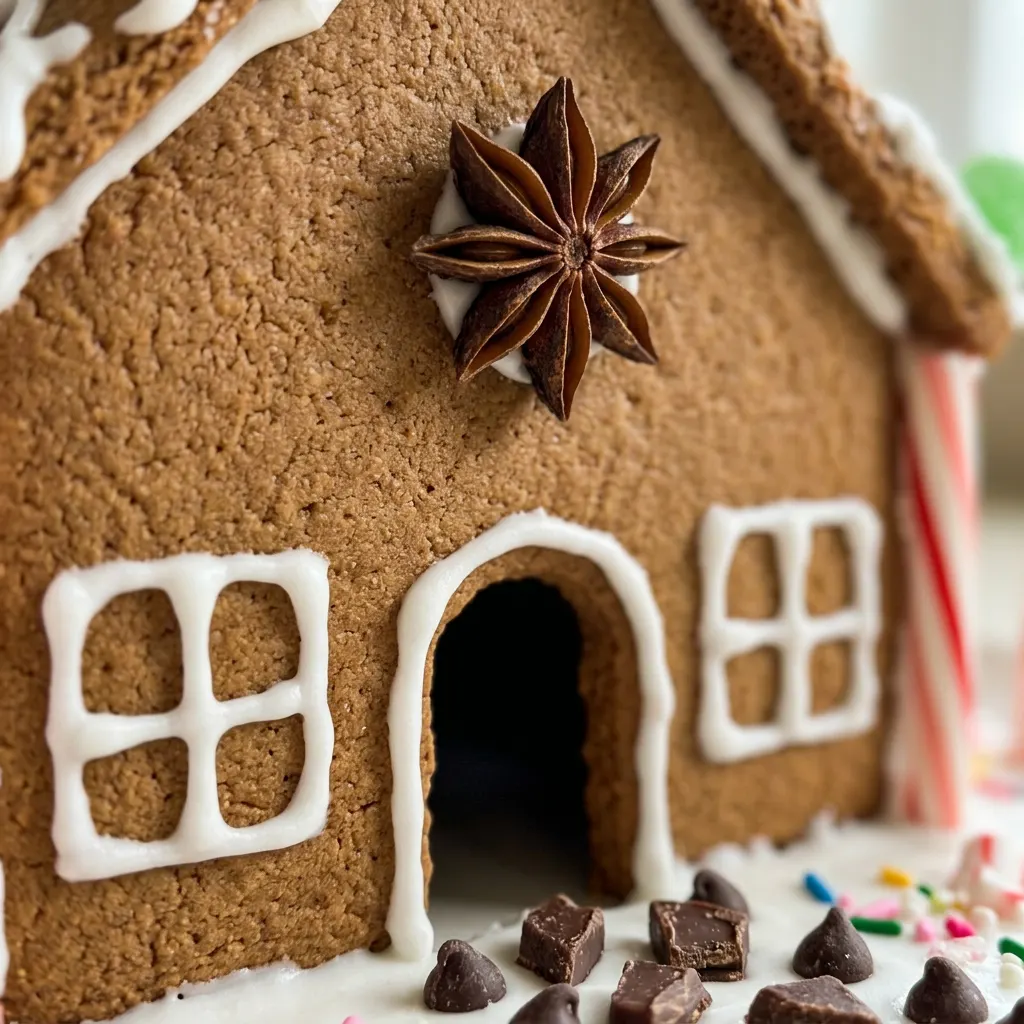
Prep: 25 min · Cook: 10 min · Total: 1 hr 5 min · Servings: 1 · Calories: 2430 kcal
What to Look for in Each Gingerbread House Ingredient
butter: Use unsalted if you want full control over salt; salted works but reduces the spice clarity slightly.
dark brown sugar: Dark brown gives deeper caramel flavor than light; it also adds moisture that helps the dough bind.
molasses: Go for full-flavor unsulphured molasses; blackstrap is too bitter and will overpower the ginger.
ground spices: Buy fresh spices within the year; stale cinnamon and ginger turn flat and lose that punch.
Building a Gingerbread House That Stands: Step-by-Step
Cream the Butter and Sugar
Beat softened butter with brown sugar, molasses, and spices until creamy and uniform. Stop when the mixture looks like wet sand with no streaks of butter.
Add Flour and Water
Mix in flour and water until a stiff dough forms. If the dough sticks to your fingers after a minute of kneading, sprinkle in extra flour a tablespoon at a time.
Chill the Dough
Refrigerate the dough for at least 30 minutes. The dough should feel firm and cold, not soft or tacky, when you press it. A chilled dough holds sharp edges during baking.
Roll and Cut Shapes
On a floured surface, roll dough to 1/4-inch thick. Cut the house pieces using your template or cutters; the set should yield 19 cookies. Reroll scraps once, then chill again if the dough gets sticky.
Bake Until Crisp
Bake at 375°F for about 10 minutes. The cookies are done when the edges are set and the centers feel firm to a light touch; they should not be soft or puffy. Let them cool completely on the pan.
Assemble with Royal Icing
Pipe royal icing along the edges of each piece and press them together. Hold each joint for 10 seconds, if the piece slides, the icing is too thin; add more powdered sugar. Let the assembled house rest 10 minutes before decorating.
Decorate with Candies
Attach candies using royal icing. Place heavier candies like chocolate bars after the icing sets for a few minutes. Distribute decorations evenly so the house doesn’t tip.
The icing must be dry enough to hold the weight.
Gingerbread House Recipe
Ingredients
- 1/2 cup butter, softened (unsalted or salted) 113 g
- 1/2 cup dark brown sugar 100 g
- 1/4 cup molasses 85 g
- 1 tbsp ground cinnamon
- 1 tbsp ground ginger
- 1 1/2 tsp ground cloves
- 1 tsp baking soda
- 2 cups all-purpose flour 250 g (more if dough is very sticky)
- 4 tbsp water
- candy canes
- gum drops
- sprinkles
- chocolates
Instructions
Cream butter and sugars:
In a large bowl, beat together the softened butter, dark brown sugar, molasses, cinnamon, ginger, cloves, and baking soda until the mixture is creamy and uniform.Mix dough with flour:
Add the flour and water, then mix until a stiff dough forms. If the dough is overly sticky, incorporate additional flour as needed.Chill dough until firm:
Refrigerate the dough for a minimum of 30 minutes, or until it becomes firm.Preheat oven to 375°F:
Heat the oven to 375°F (190°C).Roll and cut shapes:
On a floured surface, roll the dough and cut out shapes using cookie cutters designed for a gingerbread house. The cutter set includes a guide indicating how many of each piece to produce (19 total cookies, though only 16 were actually utilized).Bake cookies until crisp:
Bake the cookies for roughly 10 minutes, until they are crisp.Cool components completely:
Allow all gingerbread house components to cool fully prior to assembly.Prepare royal icing:
Make a batch of royal icing to serve as adhesive for constructing the house.Assemble house with icing:
Apply frosting along the edges and base of the house pieces to join them. After the house is fully assembled, let it sit for 10 minutes to dry before decorating.Decorate with candies:
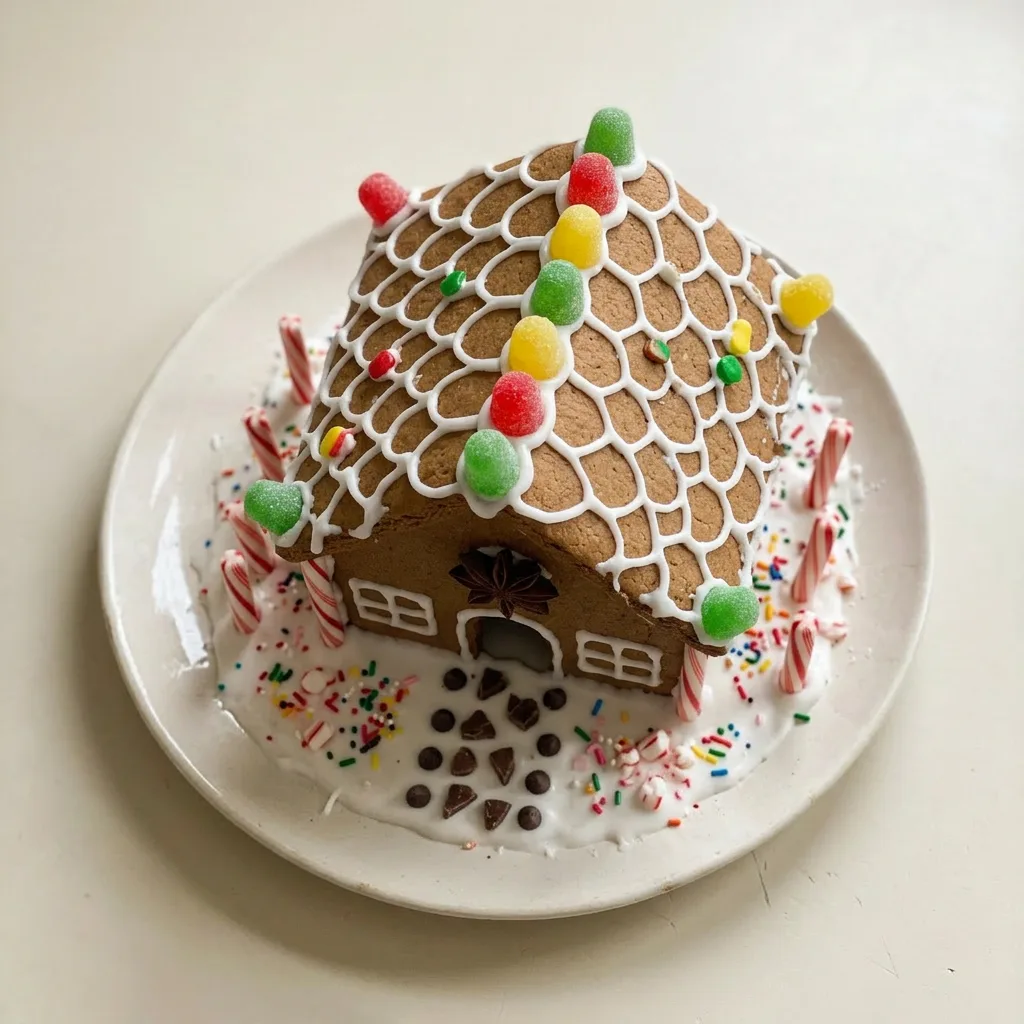
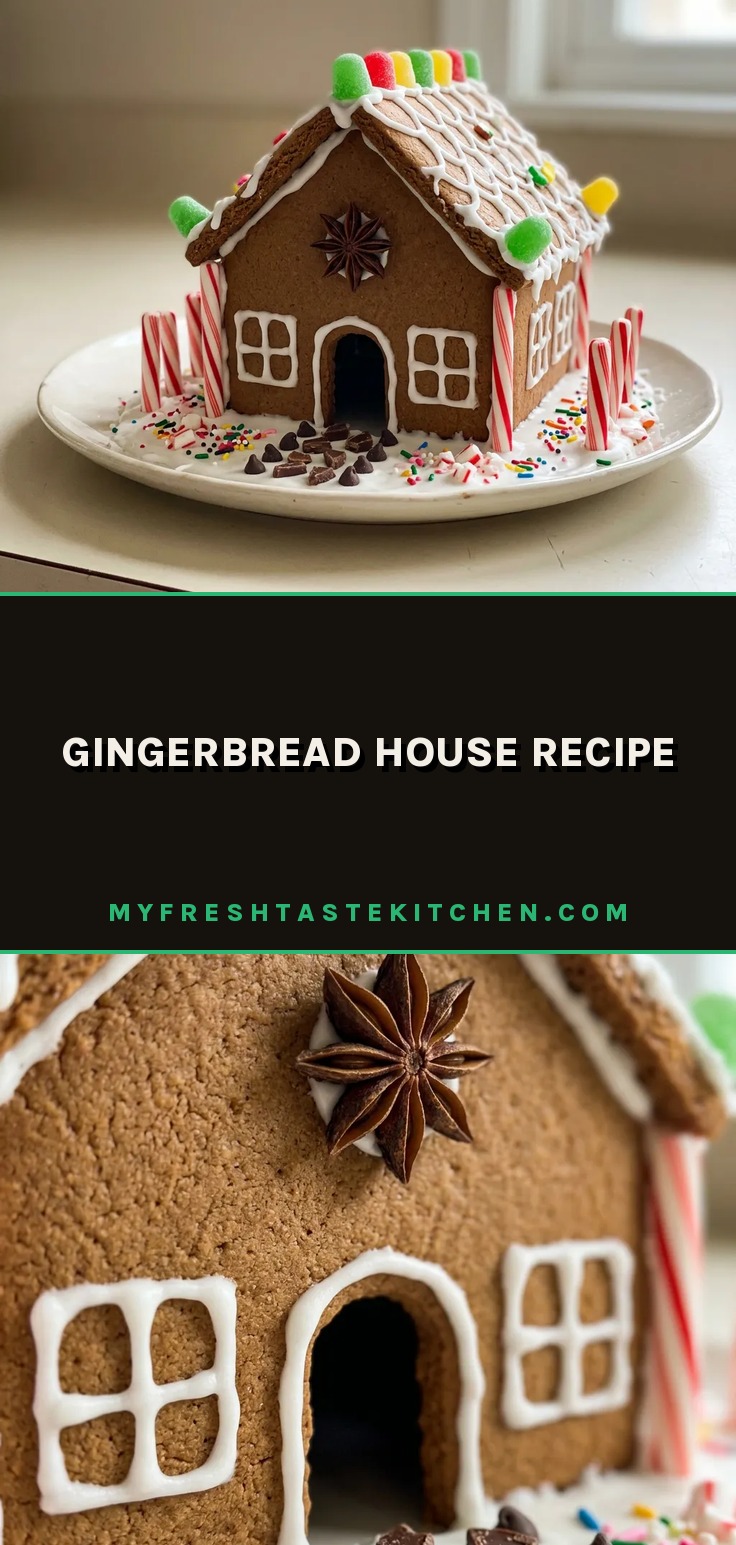
Adorn the house with various piping tips and an assortment of candies: candy canes, gum drops, sprinkles, and chocolates.
Storage and Serving
Store the assembled gingerbread house in a cool, dry place away from humidity. A sealed container or a cake dome works best; exposure to moisture softens the cookies and causes the royal icing to weep.
The house will stay crisp for up to 1 week at room temperature. Do not refrigerate, the moisture in the fridge will turn the gingerbread limp. For longer storage, freeze the unassembled baked cookies in an airtight bag for up to 3 months; thaw at room temperature before decorating.
Once assembled, the house does not freeze well because the icing and candies lose texture. Serve within a day of assembly for the snap of fresh gingerbread and hardened icing. If storing leftovers, eat within 3 days; after that, the cookies soften noticeably.
There is no finishing touch added at the end; the house is ready to serve as soon as the icing sets.
Three Swaps That Work for a Gingerbread House
butter: Vegan margarine (stick form, 82% fat minimum). The dough will feel slightly softer at room temp; chill it a full 40 minutes instead of 30 so it firms enough to cut clean edges. The baked cookies are a touch less crisp but still hold seams.
dark brown sugar: Coconut sugar (same cup-for-cup amount). Coconut sugar is less moist than brown sugar, so the dough may feel drier and crack when rolled.
Add an extra tablespoon of water if the dough won’t come together. The flavor shifts from caramel to a mild, toasty sweetness that’s less deep.
molasses: Honey (same volume). Honey is sweeter and thinner than molasses, so the dough will be stickier and spread more during baking.
The cookies come out paler, with a floral sweetness instead of the dark, bittersweet note. The spice blend becomes the dominant flavor, which some prefer; for a homemade gingerbread house recipe, it works but the house won’t taste as classic.
all-purpose flour: Gluten-free 1-to-1 baking blend (with xanthan gum). Gluten-free dough is more crumbly and prone to cracking when rolled.
Press the dough together with your palms instead of rolling it thin the first time; reroll scraps only once more. The baked pieces are more brittle, handle them gently during assembly.
The structure will hold if you let the royal icing dry a full 15 minutes between layers, but the cookies won’t have the same snap.
Tips
- Use a rolling pin with removable thickness rings or two stacked 1/4-inch dowels to ensure even thickness; otherwise, thin spots bake faster and can crack under the weight of the roof.
I still add a little extra flour at the mixing stage, because one sticky batch made me scrap the whole house.
Frequently Asked Questions
Can I make the gingerbread dough a day ahead?
Yes. Wrap the dough tightly in plastic wrap and refrigerate it for up to 24 hours.
Let it sit at room temperature for about 10 minutes to soften enough to roll, then proceed. The dough may feel stiffer than fresh, that’s fine, it will still bake into crisp walls.
My gingerbread house walls cracked during baking, what went wrong?
Cracking usually means the dough was rolled too thin or not evenly. Keep the dough at a consistent 1/4-inch thickness; thinner spots dry out and split. Also check that you didn’t skip the 30-minute chill, warm dough spreads unevenly, creating weak points that crack as the cookie sets.
How long does a fully assembled gingerbread house last?
It stays crisp for up to 1 week at room temperature in a cool, dry place. After that, the cookies soften, especially in humid air. For the best snap, serve it within a day of assembly.
Don’t refrigerate, moisture will ruin the structure.
Is this gingerbread house recipe different from regular gingerbread cookies?
Yes, it’s stiffer and less sweet. The dough uses less sugar and more spice than a typical cookie so the walls hold their shape and support weight. Regular gingerbread cookies are softer and puffier, they’d sag under the icing and candy.