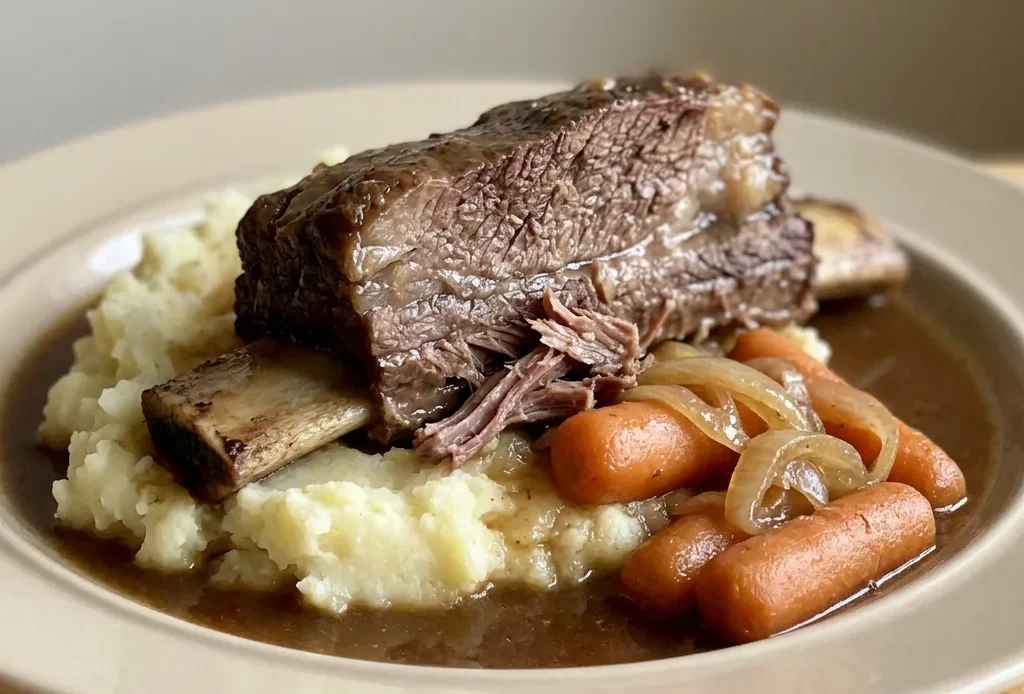
Searing short ribs, then abandoning them to a slow cooker for hours, feels like a contradiction, until you taste what that brief, aggressive heat does to the meat. The crust it builds is the only thing standing between you and bland, flabby braised beef.
That’s the real work; the slow cooker just finishes it, quietly, while you walk away. Crockpot braised short ribs demand effort upfront, but the payoff is meat so tender it barely holds together, a dark gravy that tastes like you hovered over a pot all day. The trick is trusting the process: the initial sear sets the stage, and the long, gentle heat does the rest, turning tough collagen into silk without any fuss from you.
I once let them go 10 hours on low because I forgot, and the meat turned into dry, stringy shreds instead of fork-tender.
Why does browning short ribs matter if they’re going to cook all day?
Skipping the browning step leaves you with gray, flabby meat and a thin, one-note broth. The heat of the pan triggers the Maillard reaction, the same browning that gives a steak its crust. That crust packs savory depth that no amount of slow cooking can conjure on its own.
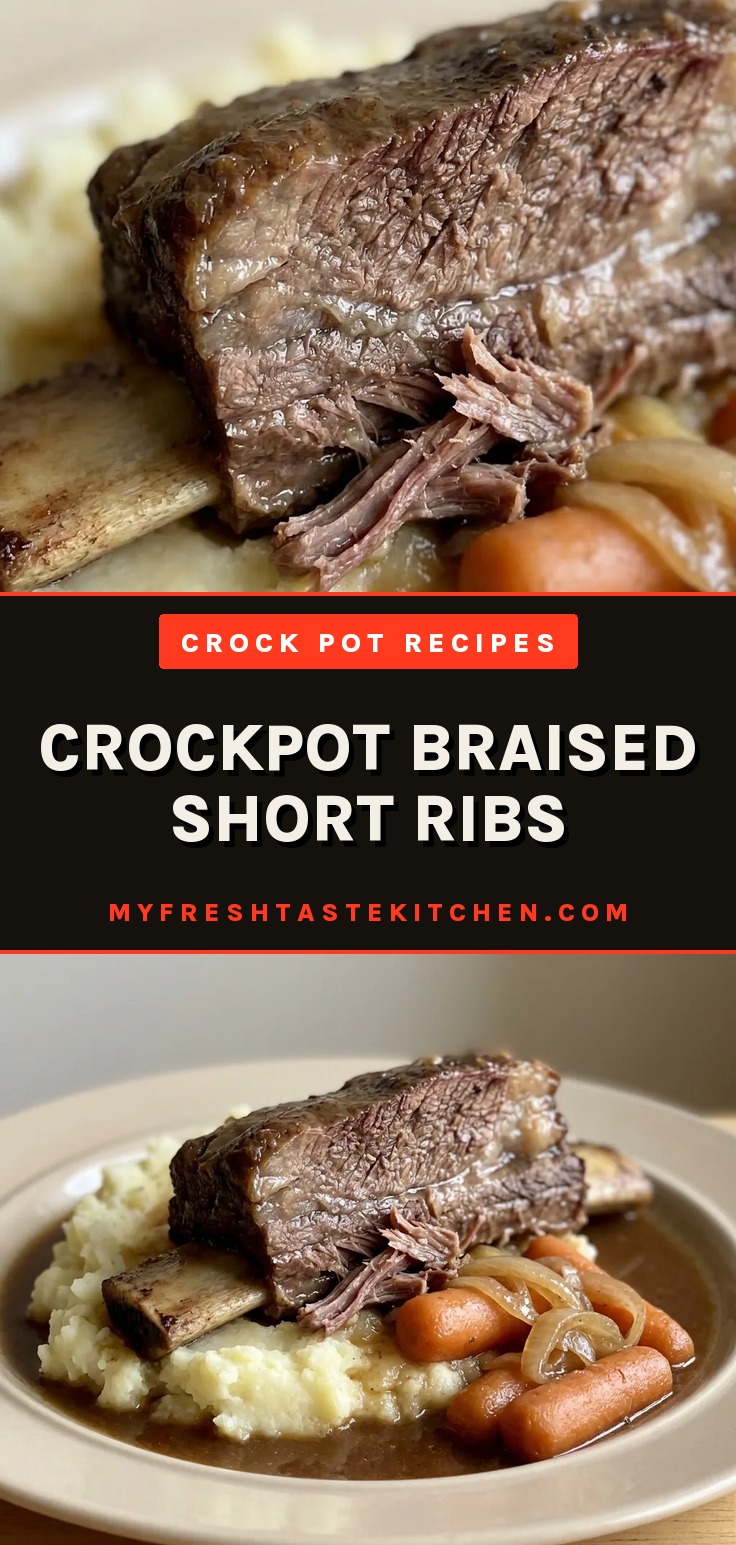
The browning also renders some of the fat, which later enriches the braising liquid. You can see the difference: browned ribs look mahogany, not pale; the fond stuck to the pan dissolves into the wine for a darker, more complex gravy.
That initial sear is the difference between a braise that tastes long-cooked and one that just tastes long.
What does red wine and tomato paste do together in the pot?
Red wine brings acidity and tannins that cut through the richness of short ribs, without it, the gravy tastes flat and greasy. Tomato paste adds concentrated umami and a slight sweetness that rounds out the wine’s sharp edges. As they simmer, the alcohol cooks off, leaving behind fruit and structure.
The paste also helps thicken the liquid slightly, giving the finished gravy body. Together, they create a bold, savory sauce that clings to the meat.
Taste a spoonful before you add the slurry: it should be bold, balanced, and make you want to pour it over potatoes.
Why is a slow cooker ideal for breaking down short rib collagen?
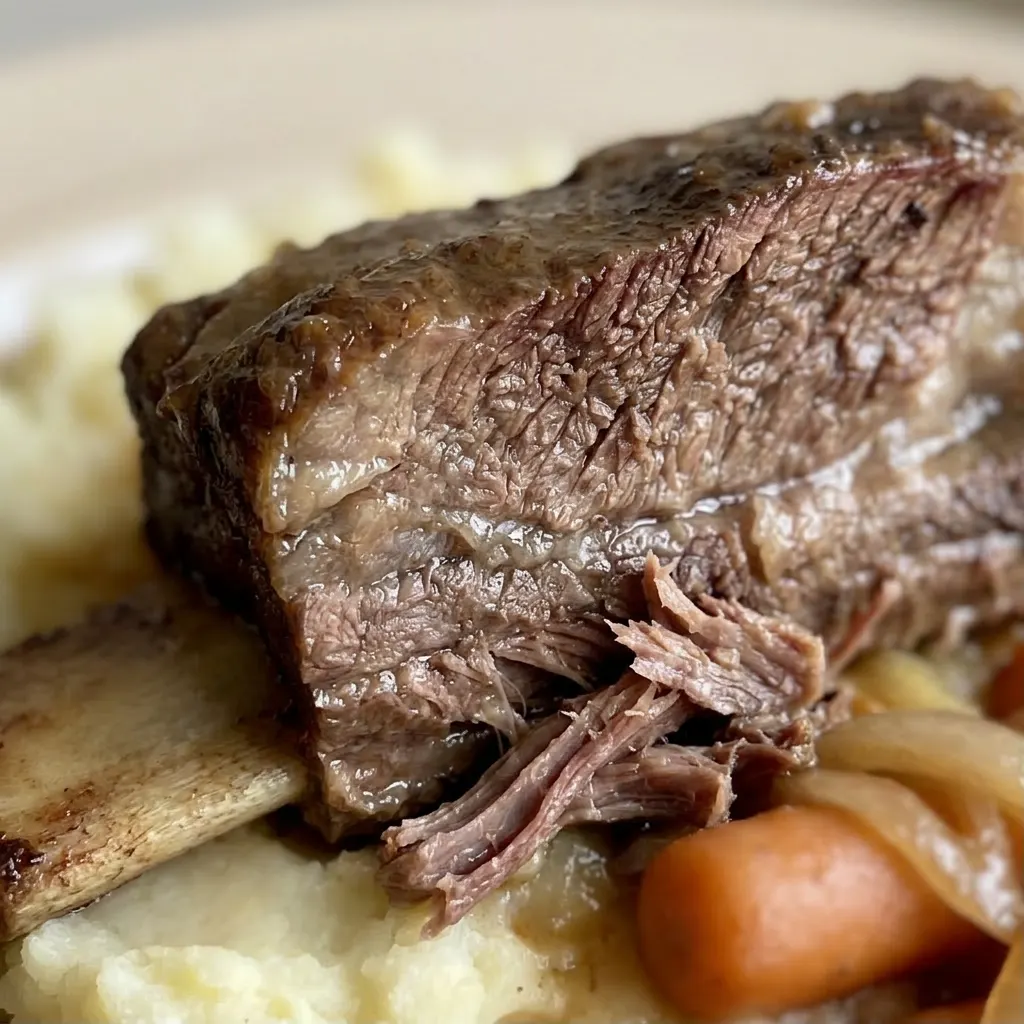
Short ribs are loaded with connective tissue that needs gentle, prolonged heat to turn tender. The slow cooker holds a steady low temperature, around 190°F, where collagen slowly converts to gelatin, giving the meat that silky, fork-tender texture.
Rush it with higher heat and the collagen seizes up, leaving the meat tough and dry. I used to let it go beyond eight hours on low, until the meat started to shred into strings.
Now I use a timer and never exceed 8 hours on low, trusting the slow cooker to keep the collagen converting instead of overcooking. The result: meat that yields to a gentle pull, not a fight.
Why a cornstarch slurry instead of a roux for the gravy
A roux requires cooking flour in fat, which can dull the clean flavor of a braising liquid. Cornstarch thickens at a much lower temperature, just a simmer, and creates a glossy, nearly translucent sauce that lets the meat and wine shine.
A slurry (cornstarch whisked into cold water) dissolves evenly, so you get silky gravy without lumps. The texture is slick and rich, not pasty.
You’ll see the liquid go from brothy to silky in minutes, coating the back of a spoon. That gloss signals the gravy is ready to blanket the ribs and potatoes.
Prep: 20 min · Cook: 8 hr · Total: 8 hr 20 min · Servings: 8 · Calories: 410 kcal
What to look for in each ingredient
Bone-in beef short ribs: Look for ribs with good meat coverage and visible marbling; avoid lean, thin-cut pieces.
Dry red wine: Use a wine you’d drink, not cooking wine: it needs enough body to stand up to the beef.
Beef broth: Low sodium broth gives you control over salt; full strength can make the gravy too salty.
Tomato paste: Buy the tube instead of a can: you only need 2 tbsp and the tube keeps in the fridge.
Baby carrots: No need to chop them; they hold up to long cooking and add a subtle sweetness.
Get the most out of your short ribs: step by step
Sear the ribs
Pat the ribs dry so the salt sticks and they brown, not steam. After searing, the meat should be mahogany, not pale, if the pan looks dry, you’re crowding it.
Build the braise
Scrape up the browned bits with wine, those bits are pure flavor. The liquid should just cover the ribs; if it doesn’t, add more broth. Taste the broth before closing the lid: it should taste bold and balanced.
Cook low and slow
Set the slow cooker to LOW for 8 hours. After 6 hours, test a rib with a fork, it should twist easily but still hold its shape. At 8 hours, the meat should be fork-tender but not falling apart into strings.
Thicken the gravy
Whisk cornstarch with cold water until smooth, then stir into the hot liquid. Watch for the broth to go from watery to glossy, coating the back of a spoon. That gloss signals it’s ready.
Crockpot Braised Short Ribs
Ingredients
- 8 bone-in beef short ribs about 4.25 lbs
- salt and black pepper to taste
- 2 tbsp olive oil
- 1 medium onion, sliced
- 1 lb bag baby carrots
- 3 cloves garlic, minced
- 2 cups dry red wine
- 2 cups beef broth
- 2 tbsp tomato paste
- 1/2 tsp dried thyme
- 1/2 tsp dried parsley
- 1-2 bay leaves
- 1 tbsp cornstarch
Instructions
Season and Brown Ribs:
Apply salt and pepper to the ribs. In hot oil, brown them on all sides, then move to a slow cooker.Cook Ribs with Vegetables:
Put in the onion, garlic, carrots, wine, broth, tomato paste, thyme, parsley, and bay leaf. Cover and cook on LOW for 6–8 hours (or HIGH for 5–6) until the meat is fork-tender.Thicken Gravy:
During the final hour, mix 1 tbsp cornstarch with 1 tbsp cold water and stir into the cooker. Continue cooking until the gravy thickens.Serve over Mashed Potatoes:
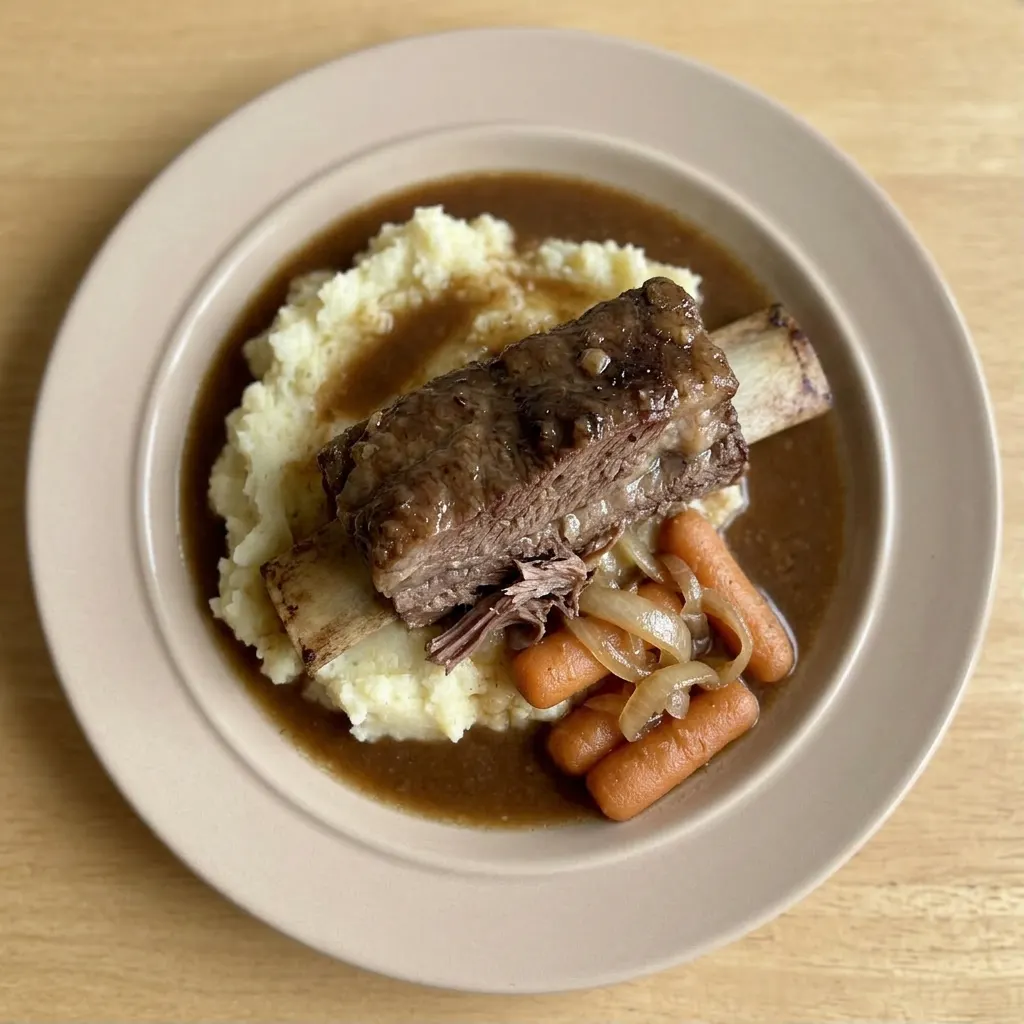
Present over mashed potatoes and ladle on additional gravy.
What to swap in these braised short ribs (and what to leave alone)
Dry red wine: Replace with equal amount beef broth or non-alcoholic red wine. Beef broth alone makes a milder, less complex gravy, the acidity and tannins from wine are what cut the richness. Non-alcoholic red wine comes closer, but still lacks some depth.
If using broth, add 1 tablespoon red wine vinegar per cup to restore some brightness.
Baby carrots: Use regular carrots, peeled and cut into 2-inch chunks, or parsnips in roughly the same size. Regular carrots hold up just as well; parsnips add a sweeter, earthier note that works with the beef. No need to adjust quantity, swap by volume.
Cornstarch: Use arrowroot powder in the same amount (1 tbsp arrowroot + 1 tbsp cold water). Arrowroot thickens similarly but gives a slightly clearer, more glossy sauce.
It’s a good gluten-free alternative. For a flour-based thickener, make a roux with 1 tbsp butter and 1 tbsp flour, cook 1 minute, then whisk in 1 cup of the hot braising liquid before returning it to the pot, this changes the texture to more matte and silky.
Tips
- Pat the ribs dry with paper towels before seasoning. Any moisture on the surface turns to steam in the pan, which prevents browning and leaves the meat gray. Dry surface = deep mahogany crust.
- Sear in batches, not all at once. If you crowd the pan, the temperature drops and the ribs steam instead of sear. Leave at least 1/2 inch between pieces so the heat stays high and the browning happens fast.
Storing and Reheating Short Ribs
Leftover short ribs taste even better the next day. The meat stays moist and the gravy deepens in flavor overnight. Let the ribs cool in the liquid, then transfer meat and sauce to an airtight container.
Refrigerate for up to 4 days. The fat will solidify on top: scrape it off before reheating.
Reheat gently on the stovetop over low heat, covered, adding a splash of broth or water if the gravy is too thick. Avoid the microwave, which can toughen the meat. For longer storage, freeze the meat and gravy together in a freezer-safe container for up to 3 months.
Thaw overnight in the fridge, then reheat as above. Serve over freshly mashed potatoes for the best texture.
The gravy may thin slightly upon reheating: if needed, whisk a little cornstarch slurry (1 tsp cornstarch + 1 tsp cold water) into the simmering sauce to restore body.
Frequently Asked Questions
Can I cook these on high instead of low? How does that affect texture?
Yes, but you’ll lose some tenderness. On HIGH, the meat can turn out drier and stringier because the higher heat tightens the collagen instead of slowly dissolving it. If you’re short on time, cook on HIGH for 5 to 6 hours, but check at 5 hours, the meat should be fork-tender but not falling apart.
Can I make these a day ahead and reheat?
Absolutely, they actually taste better the next day. Let the ribs cool in the liquid, then refrigerate overnight. Before reheating, scrape off the hardened fat on top, then warm gently on the stovetop over low heat, adding a splash of broth if the gravy is too thick.
Why did my short ribs turn out dry?
Most likely overcooked, the collagen fully converted and then the meat started losing moisture. On LOW, start checking at 6 hours; the meat should twist easily with a fork but still hold its shape. Another common cause is lean ribs: look for well-marbled, bone-in pieces with good fat coverage.
What’s the difference between this crockpot version and oven-braised short ribs?
The slow cooker holds a steady low temperature, so the meat becomes fork-tender without you having to monitor it. Oven-braising gives you faster evaporation and more caramelization on the surface, but requires occasional checking. This version is more hands-off and produces a very moist, consistent result every time.