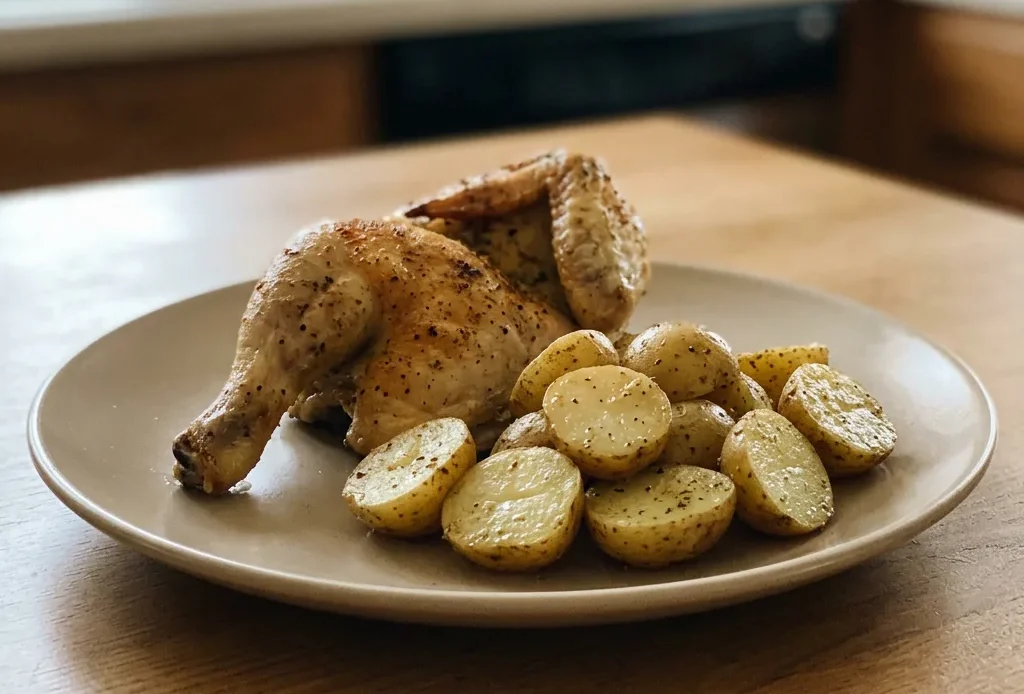
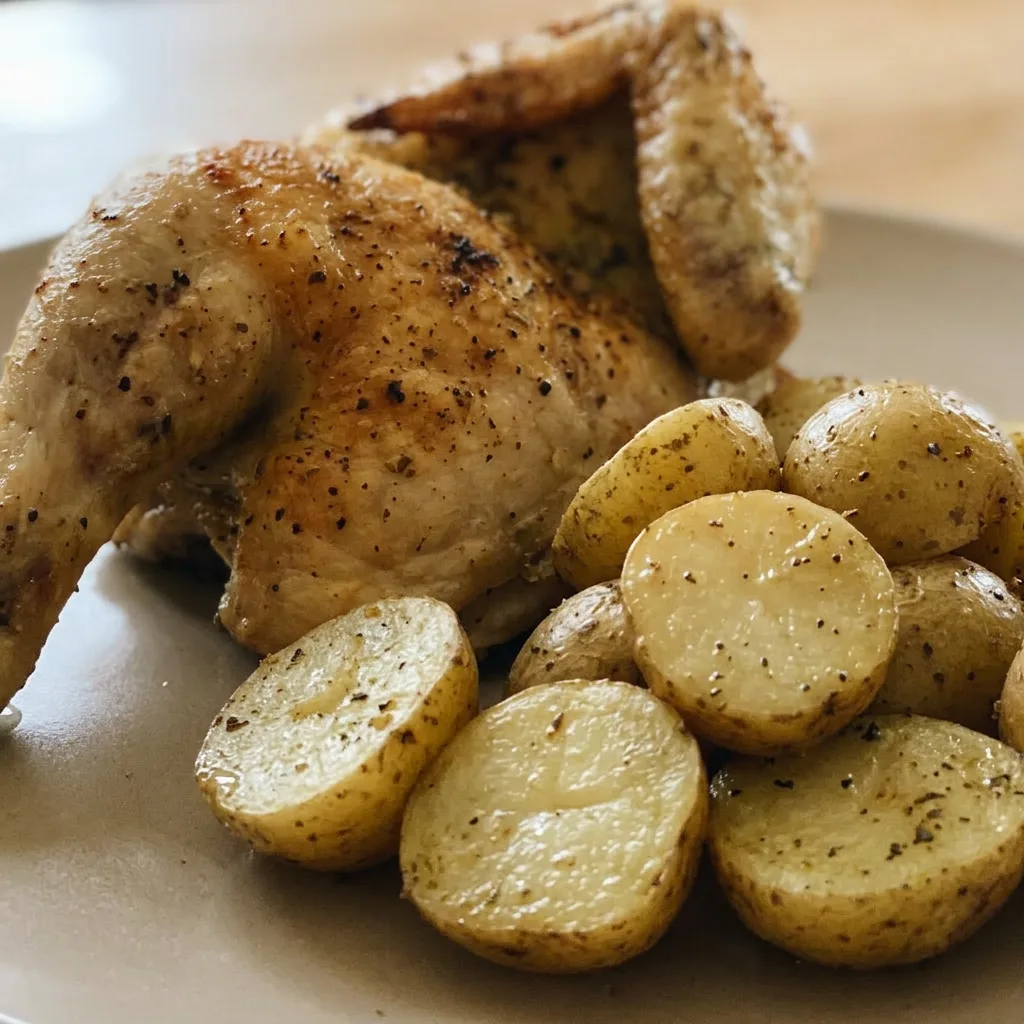
Getting skin that cracks when you bite into it, not chewy or leathery, is the hardest part of roasting a half chicken. Most recipes compromise, crisp skin but dry meat, or juicy meat with pale, soft skin. This one doesn’t.
The trick is a hot blast at 500°F to sear the skin before the meat even starts cooking through. You get the best of both, and the potatoes soak up rendered fat instead of watery steam. It’s a restaurant move that works in a home oven without fuss.
I tried adding potatoes from the start once, and they came out mushy on the outside but still hard inside. The second time I added them halfway through, they were tender and soaked up all the drippings.
Start hot, then lower the heat
A 500°F oven hits the skin with intense heat the moment the chicken goes in. That blast sears the surface, tightening the skin and locking juices inside. You’ll see the skin turn golden and crisp in those first minutes.
After that initial sear, dropping the temperature to 425°F lets the heat penetrate gently. The meat cooks through without the skin burning black.
Basting at that temperature change point does two things: it adds a layer of savory fat back onto the skin, and the liquid hitting the hot pan sends up steam that keeps the meat moist. The result is a half chicken with crackling skin and tender, not dry, meat.
Lemon and oil do more than flavor
Lemon juice works on the meat’s surface, breaking down a bit of protein so the seasoning sinks deeper. You taste the acidity in every bite, not just on the crust.
Oil does the opposite: it coats the chicken and helps the paprika and thyme dissolve into the fat. That fat then browns evenly in the oven.
Thirty minutes is enough for a half chicken, any longer and the acid would start making the texture soft, almost mushy. You don’t want that.
The marinade sits on the surface, not deep inside, so a short rest is all you need. The result is a baked half chicken with a well-seasoned crust and a balanced tang.
Potatoes go in late for a reason
If you put potatoes in from the start, they’d steam in the accumulating juices and turn soft, not crisp. By adding them after the initial high-heat blast, the pan already has a layer of rendered fat and browned drippings. The potatoes sit in that savory fat and roast, soaking up chicken flavor without getting waterlogged.
Halving them is key, each cut side browns directly in the drippings, and the small size means they finish in the same 20 to 25 minutes as the chicken. You get one-pan chicken and potatoes where both are properly cooked, not a compromise.
Prep: 15 min · Cook: 40 min · Total: 1 hr 5 min · Servings: 4 · Calories: 570 kcal
What to look for in the ingredients
Whole chicken: Buy a 4 lb bird, or two pre-cut half chickens. Leave the skin on for crisping.
Lemon juice: Freshly squeezed only. Bottled juice lacks the brightness and acidity needed.
Baby potatoes: Small, waxy ones hold shape. Halve them so cut sides brown in the drippings.
Dried thyme: Use dried if you have it; fresh works too, but use 1 1/2 tbsp instead of 1 tsp.
The hot start is important
Dry the chicken and halve it
Pat the chicken thoroughly dry with paper towels. Any moisture left on the skin steams instead of sears. You want it tacky to the touch before the marinade goes on.
Marinate, then rest
Coat the chicken with the lemon-oil mixture, getting under the skin where you can. Let it sit in the fridge for exactly 30 minutes. Longer and the acid starts softening the surface, you’ll feel a slightly tacky, not slimy, texture when it’s right.
Start at 500°F
Roast the chicken breast-up for 10 minutes, then baste and give it 5 more. The skin should be tight and golden, not blackened. If it’s browning too fast, lower the temp sooner, every oven runs a little different.
Add potatoes and drop the heat
Scatter halved potatoes around the chicken, cut-side down in the drippings. Baste everything, then drop the oven to 425°F. The potatoes should sizzle immediately; if not, the pan wasn’t hot enough.
Roast until the thigh hits 165°F
After 20 to 25 minutes at 425°F, check the thickest part of the thigh with an instant-read thermometer. The juices should run clear, and the skin should be crackling. Let the chicken rest 10 minutes, this isn’t optional, it lets the juices redistribute.
Check potatoes separately if needed
If the potatoes aren’t tender when the chicken is done, move the bird to a cutting board and return the potatoes to the oven. They need to be fork-tender all the way through; undercooked potatoes are chalky and disappointing.
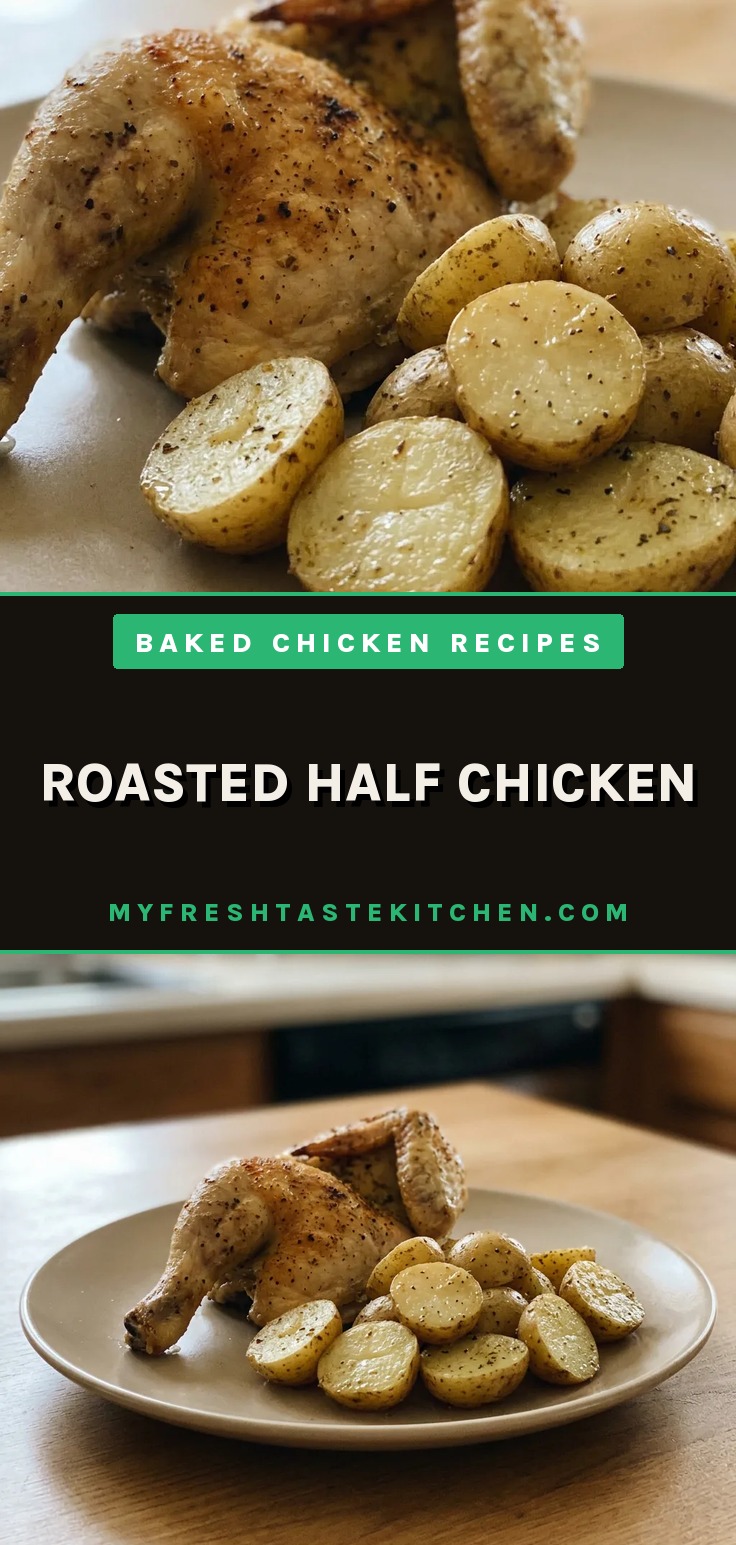
Roasted Half Chicken (Lemon Herb)
Ingredients
- 4 lb whole chicken approximately 4 lb; alternatively, 2 pre-cut half chickens
- 2 tsp minced garlic
- 1 tsp crushed black peppercorns
- 3 tbsp freshly squeezed lemon juice
- 3 tbsp extra virgin olive oil
- 1/2 tbsp paprika
- 1 tsp dried thyme or 1 1/2 tbsp fresh thyme
- 1 1/2 tsp kosher salt adjust to taste
- 1 lb baby potatoes
Instructions
Prepare Chicken:
Take out the giblets from the chicken and wipe it dry with paper towels. Halve the chicken and set aside.Prepare Potatoes:
Rinse, scrub, pat dry, and halve the baby potatoes. Set aside.Mix Seasoning:
Combine the lemon juice, garlic, peppercorns, salt, thyme, paprika, kosher salt, and oil in a small bowl.Marinate Chicken:
Coat the chicken thoroughly with the seasoning mixture and refrigerate for 30 minutes to marinate.Preheat Oven:
Heat the oven to 500°F (260°C).Roast Chicken:
Arrange the chicken breast-side up in an ovenproof skillet or baking dish and place on the lower oven rack. Roast for 10 minutes, basting once with pan juices, then continue for another 5 minutes.Add Potatoes:
Take the pan out of the oven, scatter the halved potatoes around the chicken. Baste both chicken and potatoes with the drippings. Return the pan to the oven.Finish Roasting:
Lower the oven temperature to 425°F (220°C) and roast for 20–25 minutes, until an instant-read thermometer inserted into the thigh reads 165°F (75°C). Allow the chicken to rest for 10 minutes before carving and serving.Check Potatoes:
Check the potatoes for doneness. If they need more time, move the chicken to a cutting board and put the potatoes back in the oven until tender.
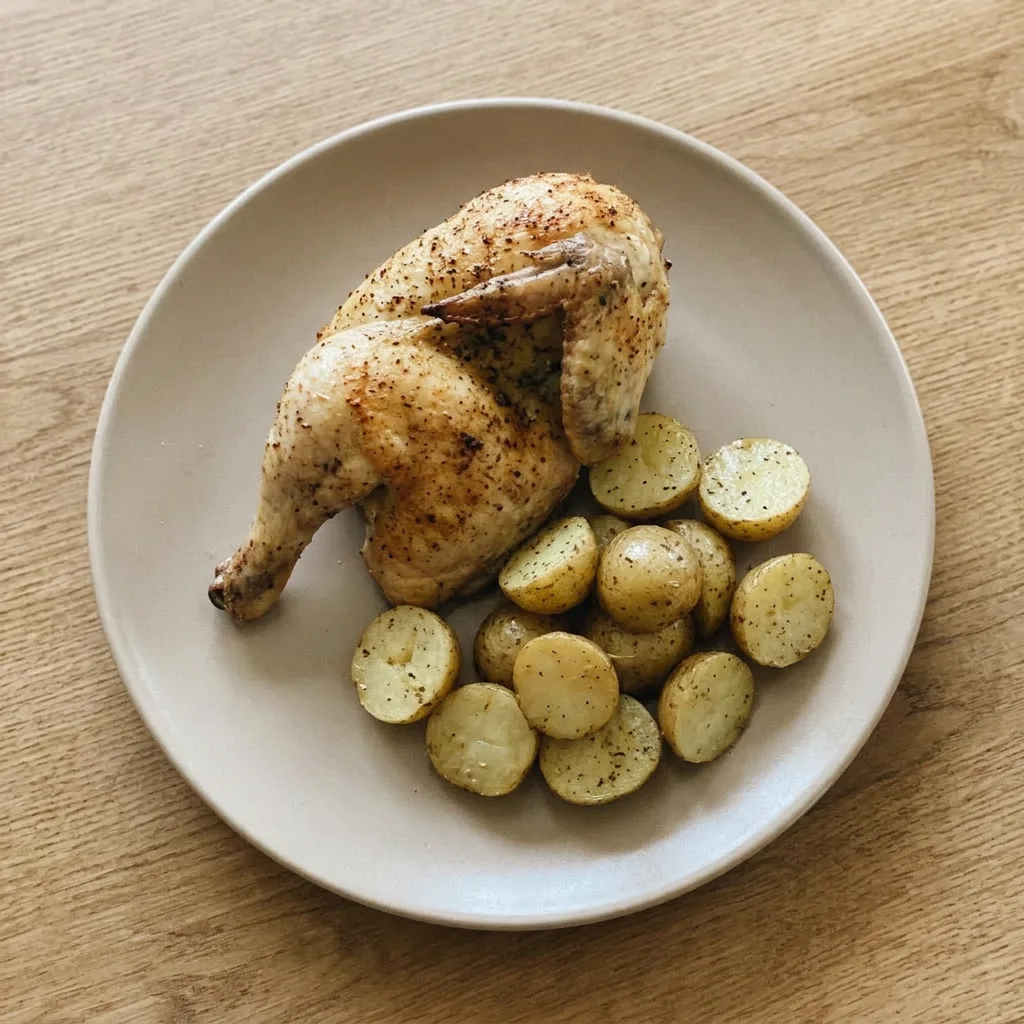
Two swaps that change the texture, not the flavor
Whole chicken: Chicken thighs or legs. Swapping the whole chicken for bone-in, skin-on thighs or legs works fine. Thighs roast to juicy, tender meat with crackling skin.
The catch: thighs cook faster, check for doneness at 15 minutes instead of 20, 25 after the temperature drop. Adjust the potato timing too; they may need longer once the thighs are done.
Breast-only halves will dry out; skip those for this method.
Baby potatoes: Yukon Gold or red potatoes, cut into 1-inch chunks. Baby potatoes aren’t essential. Yukon Golds or reds hold their shape and brown in the drippings.
Cut them into roughly 1-inch pieces so they finish in the same window as the chicken. Russets break down and get mealy, avoid them. You want a potato that stays firm and soaks up the pan juices without going soggy.
Dried thyme: Fresh thyme (use 1 1/2 tbsp) or dried rosemary (use 1 tsp). Fresh thyme gives a more floral, green note instead of the earthy dried version. Use 1 1/2 tablespoons of leaves stripped from stems.
Rosemary is a bolder swap, use 1 teaspoon dried, crumbled. Both change the herb character noticeably. If you go with rosemary, expect a piney, aromatic profile that pairs well with lemon but overpowers if you use more.
Storage and Serving
Serve the roasted half chicken within 30 minutes of resting for the crispiest skin. After that, the skin softens as moisture from the meat migrates upward.
Let leftovers cool uncovered, then refrigerate in an airtight container for up to 3 days. The chicken stays moist, but the skin will never re-crisp fully; the potatoes turn denser. To reheat, place chicken skin-side up in a 350°F oven for 10 to 12 minutes, or until warmed through.
Microwave for speed but expect soft skin. Freeze the cooked chicken and potatoes together in a freezer-safe container for up to 2 months; thaw overnight in the fridge.
The potatoes will be softer after freezing. Reheat from thawed in a 350°F oven for 15 minutes. Do not freeze the raw marinated chicken; the acid will break down the texture over time.
Tips
- If you don’t have a thermometer, pierce the thickest part of the thigh with a skewer or knife tip; the juices should run clear, not pink or red, and the meat should no longer be translucent at the bone.
Frequently Asked Questions
Can I use chicken breasts instead of a half chicken?
Skinless boneless breasts will dry out with this method. The initial 500°F blast and the total 40-minute cook time are designed for bone-in, skin-on chicken.
If you want to swap, use bone-in, skin-on thighs or legs, they have enough fat to stay moist. Check them for doneness at 15 minutes after the temperature drop, not 20, 25.
How do I know when the chicken is done without a thermometer?
Pierce the thickest part of the thigh with a skewer or knife tip. The juices should run clear, not pink or red. Also check that the meat pulls away from the bone easily and the skin is crackling.
But these cues are less reliable than a thermometer, underdone chicken is a safety risk, so consider using one.
Can I prepare this dish ahead of time and reheat it?
You can cook it up to 3 days ahead. Let leftovers cool uncovered, then refrigerate airtight. The skin will soften, and potatoes get denser.
Reheat chicken skin-side up in a 350°F oven for 10 to 12 minutes. Freeze cooked chicken and potatoes together for up to 2 months; thaw overnight in the fridge before reheating.
What’s the difference between this recipe and a classic roast chicken?
This recipe halves the chicken and starts at a very high 500°F for 15 minutes, then drops to 425°F. That hot start sears the skin quickly, giving crackling results in a shorter total time (40 minutes). Classic roast chicken usually roasts at a steady lower temperature for longer, often a whole bird.
The potatoes also go in late here to avoid steaming.