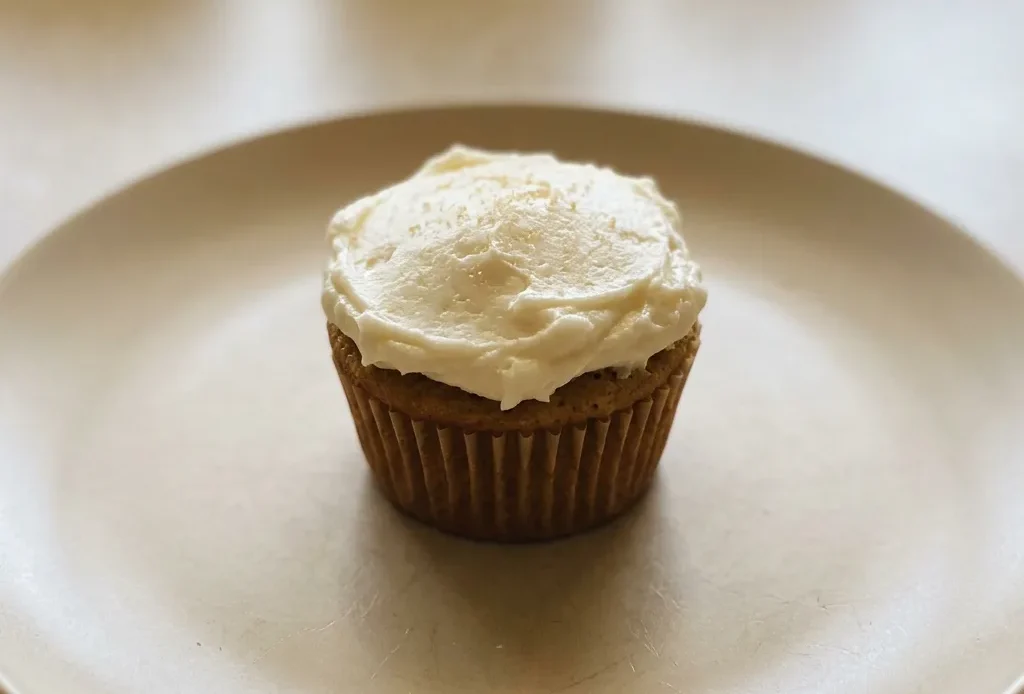
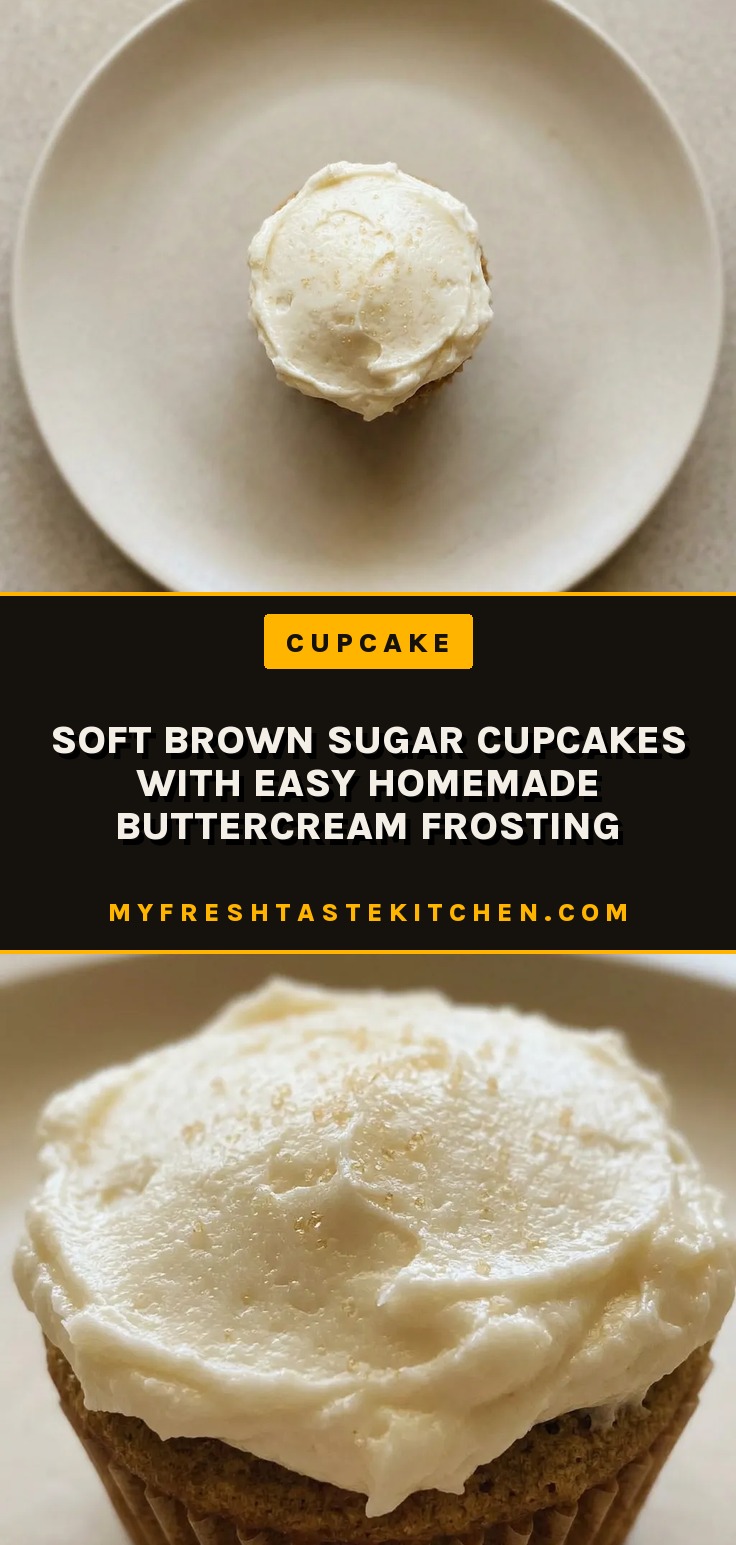
These aren’t your standard vanilla cupcakes. Soft brown sugar cupcakes with easy homemade buttercream frosting trade that airy, quickly-staling crumb for a tender, moist one that stays soft for days. The molasses in the brown sugar does the heavy lifting, it grabs moisture and keeps it there, so you get a velvet-like texture without trying.
And the buttercream? It’s straightforward, no-cook, and silky enough to pipe or spread.
The trick is catching the batter before it overmixes, but the margin is forgiving. If you’ve ever had a cupcake that tasted dry by the next morning, this is the fix.
Choose brown sugar for soft, moist cupcakes
Brown sugar isn’t just a flavor swap, it changes the crumb. The molasses in brown sugar is hygroscopic, meaning it pulls moisture from the air and holds onto it. That’s why these cupcakes stay soft even on day two.
Molasses also adds acidity, which reacts with baking powder to give you a more tender structure. You’ll taste a subtle caramel note, but the real difference is texture: a brown sugar cupcake feels almost silky compared to one made with white sugar. The crumb stays fine, not dry or crumbly.
If you want a cupcake that keeps its softness without turning gummy, this is the way.
Bring ingredients to room temperature for even baking
Cold ingredients fight each other. Room-temperature butter creams smoothly into the brown sugar, trapping air that lifts the cupcakes in the oven.
You’ll see the mixture go pale and fluffy, that’s the air you need. Cold eggs won’t emulsify into the butter; they’ll leave your batter greasy and dense. And room-temperature milk blends right in without forcing you to overmix, which toughens the crumb.
I’ve made the mistake of using cold eggs before, the batter looked curdled, and the cupcakes came out with a tight, heavy texture. Let everything sit out for about 30 minutes.
You’ll feel the difference when the batter looks smooth and homogenous.
Alternate dry and wet additions to avoid a tough batter
When you add all the flour at once, gluten forms fast, and you end up with a dense, bready cupcake. By alternating flour and milk in three rounds, starting and ending with flour, you give the gluten time to develop only enough for structure.
You’ll see the batter come together gently, without streaks. Stop mixing as soon as the last flour streak disappears. Overmixing turns the batter elastic, and the cupcakes will rise with a peaked top instead of a smooth dome.
For tender cupcake recipes, this technique matters more than any single ingredient. The reward is a crumb that’s light, not rubbery.
Build a silky buttercream with powdered sugar and cream
Powdered sugar dissolves almost instantly into the butter, leaving no grit behind, you’ll feel it on your tongue if you skip sifting, so take the step. The heavy cream isn’t just for thinning; it adds a lightness that makes the frosting spreadable without being greasy. A pinch of salt cuts the sweetness and brings out the vanilla.
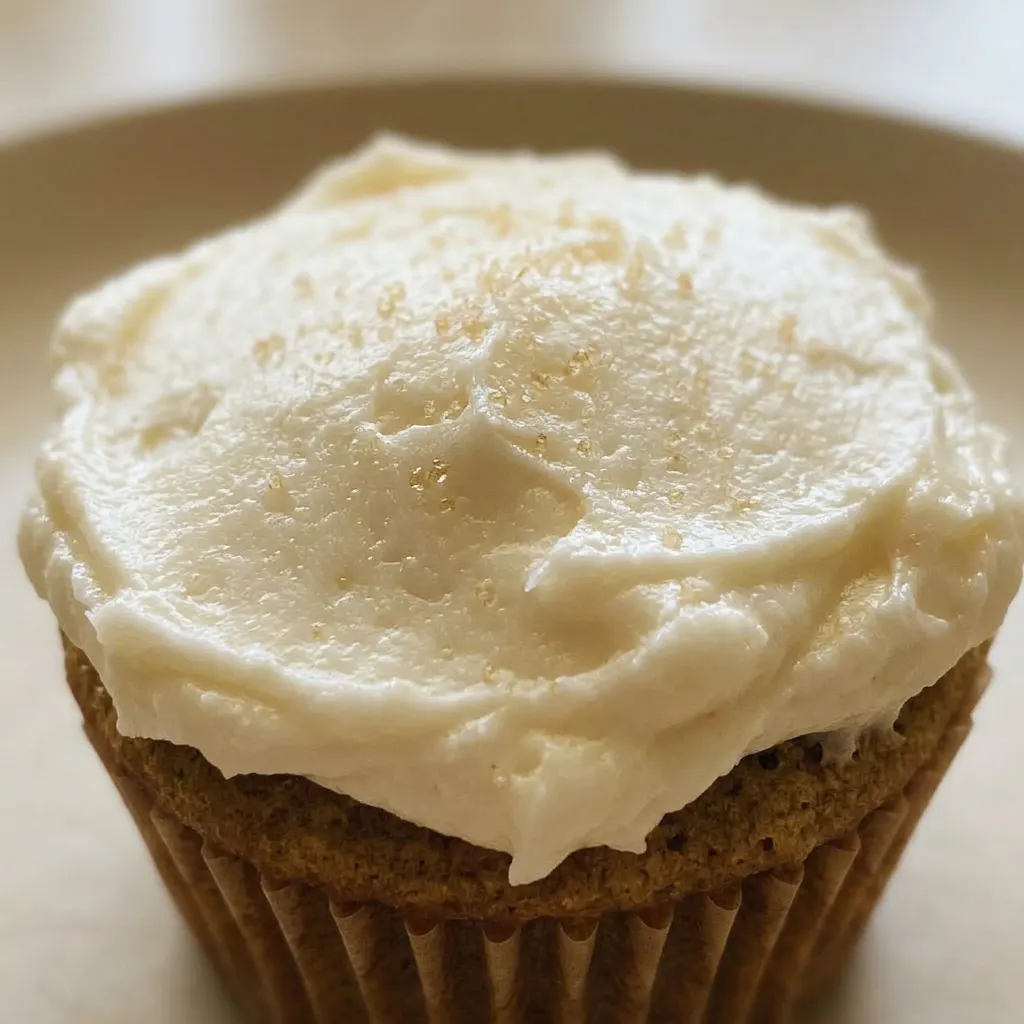
You’ll see the buttercream go from stiff to airy as you add the cream. Taste it: the salt should be barely there, just enough to make you want another bite. This cupcake frosting stays smooth at room temperature, for piping or just slathering on.
Prep: 15 min · Cook: 20 min · Total: 35 min · Servings: 12 · Calories: 320 kcal
Key ingredients for these brown sugar cupcakes
Light brown sugar: Use packed light brown sugar. The molasses content keeps the crumb tender and moist for days.
Unsalted butter: Both cupcake and frosting call for unsalted butter. Softened to room temperature so it creams properly.
Eggs: Bring to room temperature. Cold eggs won’t emulsify into the butter, leaving a greasy, dense batter.
Whole milk: Room temperature whole milk blends smoothly and adds richness. Lower fat milks will change the texture.
All-purpose flour: Standard all-purpose flour works fine. No need to sift unless your flour is lumpy; just whisk with dry ingredients.
Powdered sugar: Sift before measuring. Lumps won’t break down in the buttercream, leaving tiny gritty bits.
Build soft, tender cupcakes with brown sugar and careful mixing
Cream brown sugar and butter until fluffy
Beat the softened butter and brown sugar together for 3 to 4 minutes. You’re looking for a pale, airy texture, when you rub a bit to the touch, it should feel light, not grainy.
Add eggs one at a time
Crack and beat in each egg fully before adding the next. The batter should look smooth and homogenous; if it looks curdled, your butter was too cold or the eggs went in too fast.
Alternate flour and milk in three additions
Start and end with flour, mixing gently after each addition. Stop when the last streak of flour disappears, overmixing makes the batter elastic and gives peaked, tough tops.
Fill liners and bake until just done
Fill each liner about two-thirds full. Bake 18 to 22 minutes; a toothpick inserted in the center should come out clean or with a few moist crumbs, not wet batter.
Make buttercream: cream butter, then add sugar
Beat softened butter until smooth, then slowly add sifted powdered sugar. Taste a pinch, if it feels grainy, keep beating until silky; sifting prevents that grit.
Finish frosting with cream and salt
Add vanilla, salt, and 2, 3 tablespoons cream. Whip until light and spreadable; you should see soft peaks that hold their shape without being stiff. Taste: the salt should barely register.
Frost fully cooled cupcakes
Wait until cupcakes are completely cool, warm cupcakes will melt the buttercream into a puddle. Use an offset spatula or piping bag to swirl the frosting on.
Soft Brown Sugar Cupcakes with Easy Buttercream Frosting
Ingredients
Cupcakes
- 1 cup packed light brown sugar 200g
- 1/2 cup unsalted butter, softened 115g
- 2 large eggs, room temperature
- 1 1/2 cups all-purpose flour 190g
- 1 1/2 teaspoons baking powder
- 1/4 teaspoon salt
- 1/2 cup whole milk, room temperature 120ml
- 1 teaspoon pure vanilla extract
Buttercream Frosting
- 3/4 cup unsalted butter, softened (for frosting) 170g
- 3 cups powdered sugar, sifted 360g
- 2 teaspoons pure vanilla extract (for frosting)
- 2-3 tablespoons heavy cream or milk (for frosting)
- Pinch of salt (for frosting)
Instructions
Cupcakes
Preheat Oven and Prep Pan:
Set oven to 350°F (175°C). Place paper liners into a 12-cup muffin pan.Cream Butter and Sugar:
In a large bowl, cream 1/2 cup (115g) softened unsalted butter with 1 cup (200g) packed light brown sugar until pale and airy, roughly 3–4 minutes.Add Eggs and Vanilla:
Beat in 2 large eggs one by one, ensuring each is fully incorporated. Mix in 1 teaspoon pure vanilla extract.Mix Dry Ingredients:
In another bowl, combine 1 1/2 cups (190g) all-purpose flour, 1 1/2 teaspoons baking powder, and 1/4 teaspoon salt with a whisk.Fold Dry and Wet Alternately:
Fold the dry mixture into the wet mixture in three additions, alternating with 1/2 cup (120ml) whole milk, commencing and concluding with dry ingredients. Stir until just combined.Fill Muffin Cups:
Divide the batter among the prepared muffin cups, filling each roughly two-thirds full.Bake Cupcakes:
Bake for 18–22 minutes, until a toothpick inserted into the center emerges clean or with a few moist crumbs.Cool in Pan Then Rack:
Allow cupcakes to rest in the pan for 5 minutes, then move them to a wire rack to cool entirely before applying frosting.
Buttercream Frosting
Whip Butter and Sugar:
For the buttercream: whip 3/4 cup (170g) softened unsalted butter until smooth. Slowly incorporate 3 cups (360g) powdered sugar, beating thoroughly after each addition.Add Cream for Spreadable Texture:
Blend in 2 teaspoons vanilla extract and a pinch of salt. Add 2–3 tablespoons heavy cream or milk until the mixture achieves a spreadable texture.Frost and Garnish:
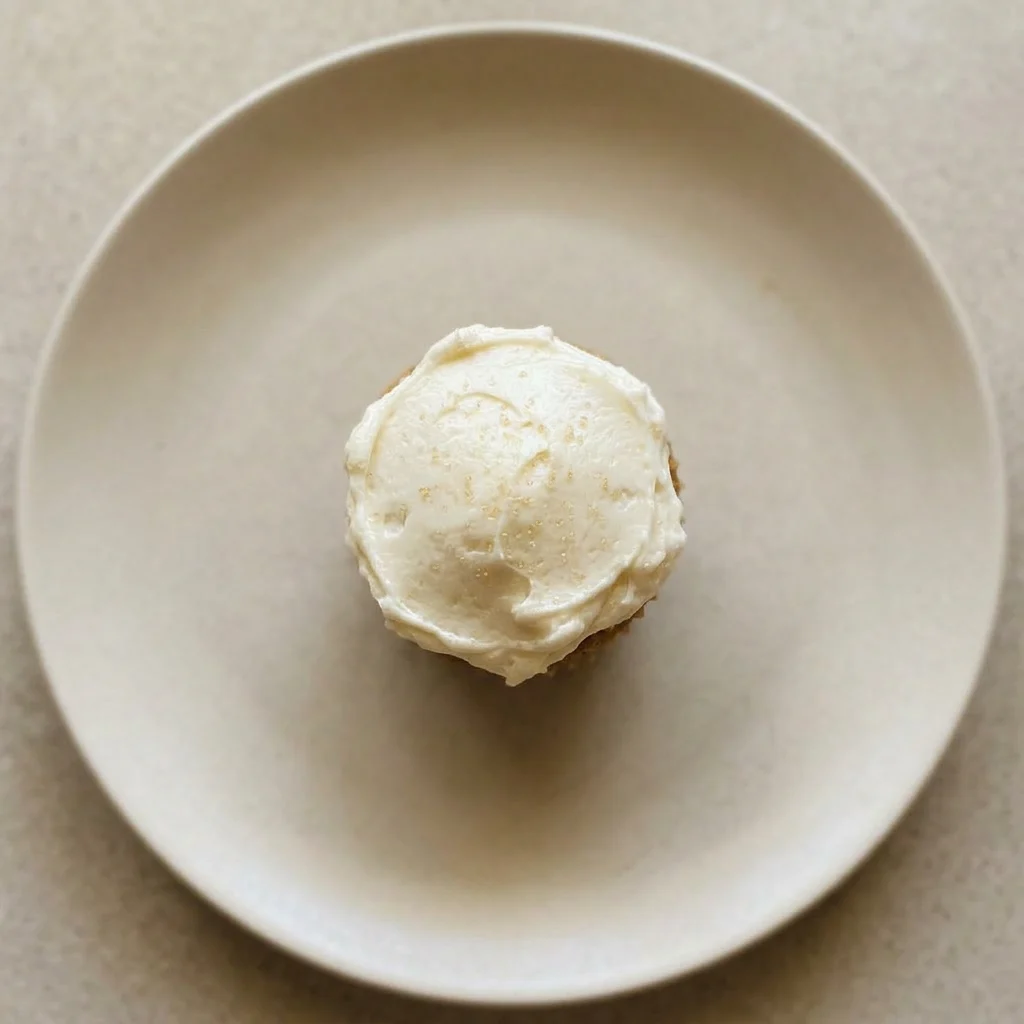
Apply frosting to the cooled cupcakes using an offset spatula or piping bag. Optionally, dust with a pinch of brown sugar or cinnamon on top.
What you can swap in these brown sugar cupcakes (and what to leave alone)
Light brown sugar: Dark brown sugar. More molasses means a deeper, almost coffee-like flavor and a slightly denser, moister crumb. The cupcakes will be darker in color too.
All-purpose flour: Gluten-free all-purpose flour blend (with xanthan gum). The cupcakes will be tender but more delicate, handle gently after baking. The crumb may be slightly grittier; add 1 tablespoon milk to the batter if it seems dry.
Unsalted butter (cupcakes): Vegan butter sticks (like Miyoko’s or Earth Balance). Works for both cupcake and frosting.
The cupcakes will be a tad less fluffy, and the frosting may soften faster at room temp. Chill frosted cupcakes if serving later.
Whole milk: Buttermilk (room temp) or oat milk + 1 teaspoon lemon juice. Buttermilk adds tang and a slightly finer crumb; the cupcakes will be extra tender.
Oat milk with acid mimics that acidity but gives a slightly denser texture. Skip skim or almond milk, they make the crumb dry.
Storage and Serving
Store unfrosted cupcakes in an airtight container at room temperature for up to 3 days. The brown sugar keeps them moist; the crumb stays tender.
Frosted cupcakes go in the fridge for up to 5 days, but the buttercream stiffens when cold. Let them sit at room temperature for 30 minutes before serving so the frosting softens back to a silky texture.
If you’re making ahead, freeze unfrosted cupcakes for up to 3 months. Wrap each tightly in plastic wrap, then foil. Thaw at room temperature still wrapped, about 2 hours, then frost.
Do not freeze the buttercream; it will separate when thawed. The optional brown sugar or cinnamon dusting goes on just before serving, or it will dissolve into the frosting within an hour.
For the best texture, eat frosted cupcakes within 24 hours of frosting. After that, the crumb starts to dry slightly, though the frosting will still taste fine.
Tips
- Fill each liner with exactly 3 tablespoons of batter for consistent two-thirds full and domed tops.
I once beat the batter like I was mad at it, and the cupcakes came out flat as pancakes. The next batch I folded gently and they domed, by accident at first.
Frequently Asked Questions
Can I make these cupcakes a day ahead and frost them later?
Yes. Bake the cupcakes, cool them completely, then store them in an airtight container at room temperature.
The brown sugar keeps them moist, so they’ll still be tender the next day. Whip up the buttercream and frost just before serving, the crumb stays soft, and the frosting won’t have time to dry out.
Why did my cupcakes sink in the middle after baking?
The most likely cause is opening the oven door too early, before the structure sets. Cupcakes need steady heat to rise; a sudden temperature drop makes the center collapse.
If your oven runs hot or you overfilled the liners (they should be two-thirds full), the dome can also sink as it cools. Next time, wait until at least the 18-minute mark to peek.
How is this brown sugar cupcake different from a classic vanilla cupcake?
The molasses in brown sugar pulls in moisture and adds acidity, so the crumb is softer, more silky, and stays tender a day longer than a white-sugar cupcake. You’ll taste a subtle caramel note, but the real difference is texture, this one feels almost silky, not dry or crumbly. Classic vanilla cupcakes rely on white sugar for pure sweetness and a lighter, airier crumb that dries out faster.
Can I freeze the unfrosted cupcakes for later use?
Yes, wrap each cooled cupcake tightly in plastic wrap, then foil, and freeze for up to 3 months. Thaw them still wrapped at room temperature for about 2 hours, then frost.
The brown sugar helps the crumb stay moist even after freezing, so they’ll taste fresh. Don’t freeze the buttercream, it will separate when thawed.