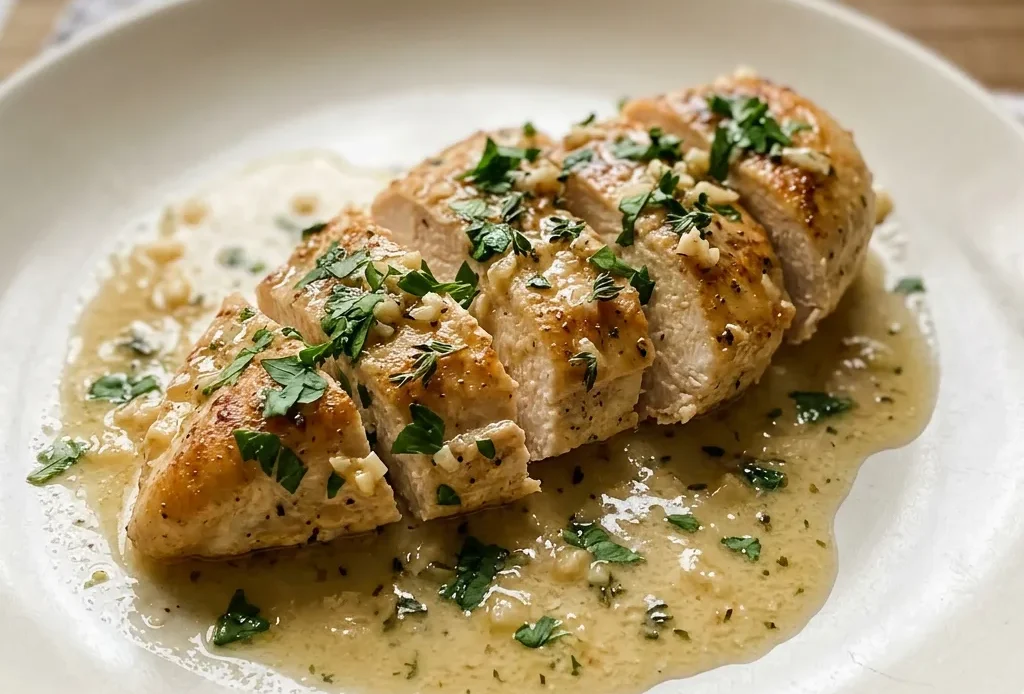
Most chicken breast recipes that promise both a crisp crust and a rich sauce end up with one or the other, the crust gets soggy from the sauce, or the sauce tastes burnt from the pan. Cowboy butter chicken sidesteps that trade-off by splitting the butter in half, and the reason has everything to do with heat management.
The chicken turned pale and steamed in a puddle of water. I had to crank the heat to fix it, but the meat came out tough.
Half the butter for searing, half for sauce
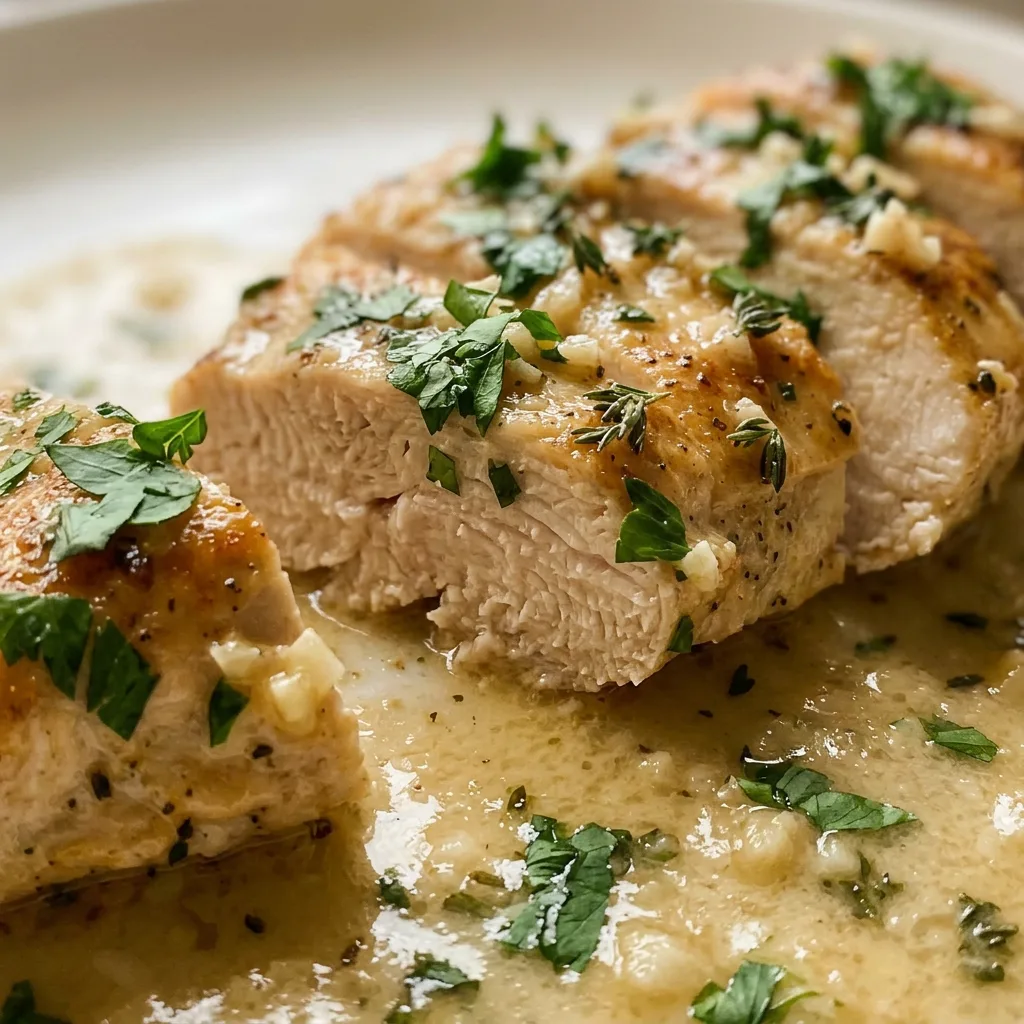
Searing with half the butter keeps the heat high enough to brown the chicken properly. Butter burns easily once its milk solids darken, so using the full amount at the start would drop the pan temperature and risk scorching. That first half gives you a deep golden crust.
The remaining butter goes in after the chicken comes out, when the pan is still hot but not screaming. That lower heat lets you cook the garlic without bitterness, minced garlic can go acrid in seconds over high heat. Fresh herbs stirred in at the end stay bright, not wilted.
The result: a crust that cracks when you bite it, and a sauce that tastes rich and bright, not greasy or burnt.
Dry chicken, golden crust
Now I always pat the chicken bone-dry with paper towels before it hits the pan. Surface moisture is the enemy of browning. Wet chicken lowers the pan temperature the instant it lands, and the water evaporates as steam, which essentially steams the meat instead of searing it.
You end up with pale, tough chicken and a pale, watery pan. A dry surface lets the butter make direct contact, and the heat stays high enough to trigger the Maillard reaction, the browning that builds flavor. The paper towels absorb every bit of moisture without leaving lint.
The payoff is a crust that’s deeply golden and crisp, not patchy or gray.
Fresh herbs over dried: why it matters here
This sauce relies on parsley and thyme for lift, not just color. Fresh herbs release their essential oils quickly when they hit warm butter, giving you that grassy, peppery, and slightly floral hit.
Dried herbs have already lost most of those volatile compounds, and when you cook them briefly in butter, they can turn dusty or bitter, especially parsley, which tastes like hay when dried. The butter here is the delivery system; you want it perfumed, not muddied. Fresh parsley adds a clean finish, fresh thyme a piney warmth.
Together they keep the sauce tasting lively against the rich butter and tangy lemon, exactly what this dish needs.
Prep: 30 min · Cook: 15 min · Total: 45 min · Servings: 4 · Calories: 400 kcal
Butter, chicken, herbs: what to look for
Chicken breasts: Buy fresh, not frozen. Frozen chicken releases too much water as it thaws, ruining the sear.
Unsalted butter: Use unsalted so you control the salt level. Salted butter can make the sauce taste harsh.
Garlic: Fresh cloves only. Pre-minced jarred garlic tastes metallic and burns faster in the butter.
Fresh parsley and thyme: Dried herbs won’t work here. They lack the volatile oils that keep the sauce bright and fresh.
Building the sauce after the crust
Sear the chicken
Melt half the butter over medium-high heat. Lay the dry, seasoned chicken in the pan.
You should hear a steady sizzle, if it fades, the pan’s too cool. Cook 5 to 7 minutes per side until the underside is deep brown and releases easily.
Rest the chicken
Transfer the chicken to a plate. The pan will still be hot but not smoking. Leave the fond, those browned bits, in the pan, as they’ll flavor the sauce.
Sauté the garlic
Drop the remaining butter into the pan. Once it melts, add the garlic. Stir constantly for about 1 minute, until fragrant but not colored.
If it browns, it’s bitter.
Finish the sauce
Stir in parsley, thyme, and lemon juice off the heat. The herbs should brighten immediately and the sauce turn glossy. Swirl to combine.
Coat and serve
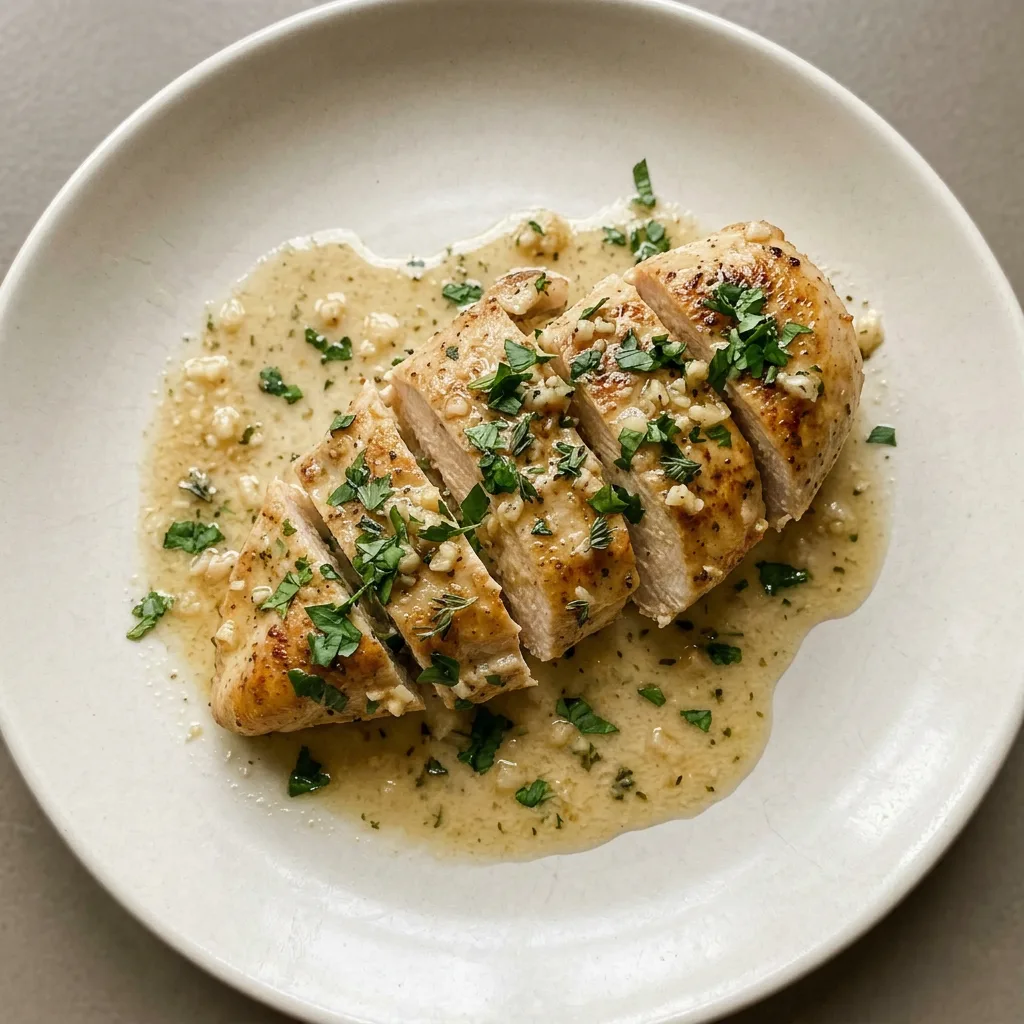
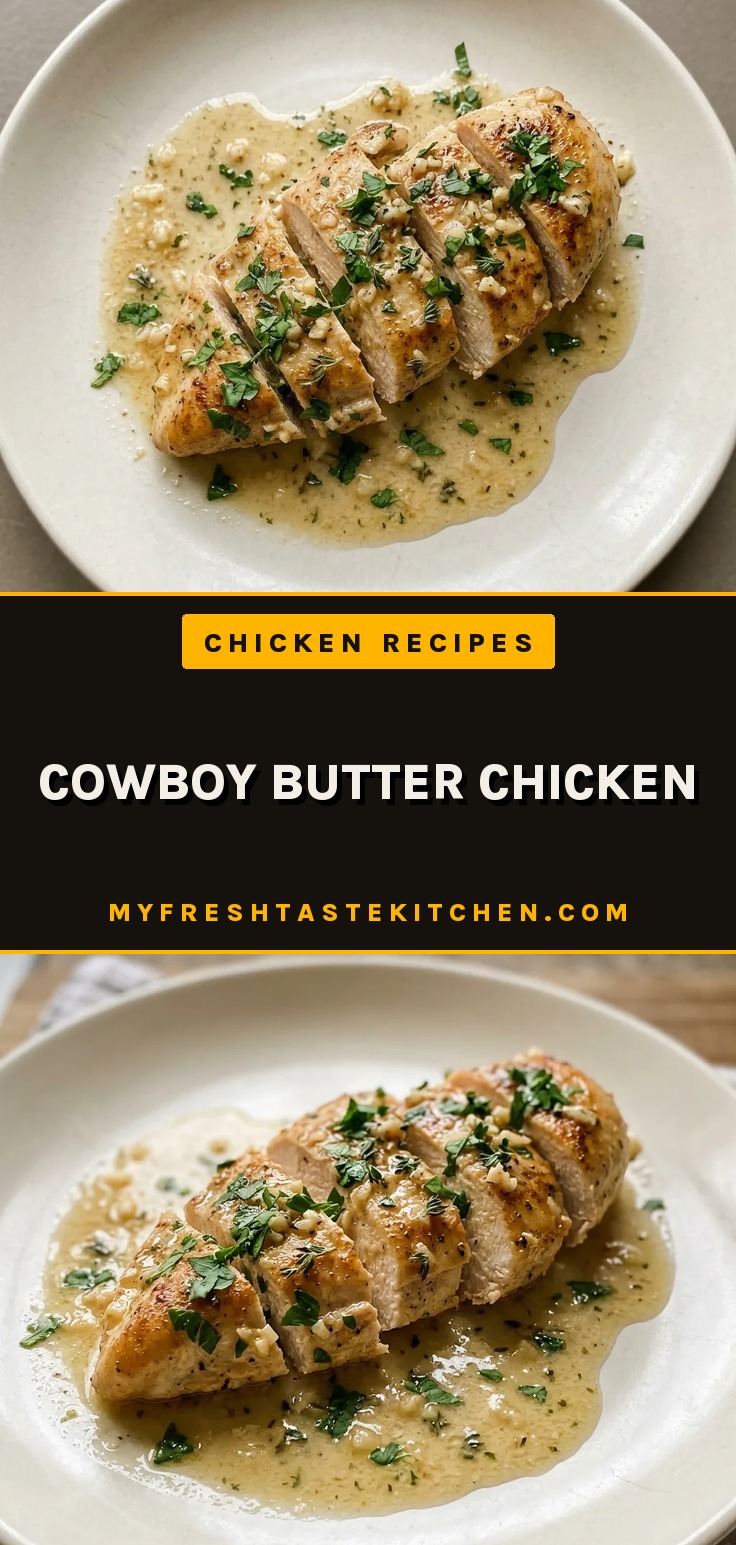
Return the chicken to the pan, spooning sauce over each piece. Let it rest in the warm sauce for a minute, turning once. The crust stays crisp while the sauce clings.
Cowboy Butter Chicken
Ingredients
- 4 pieces boneless, skinless chicken breasts Opt for fresh, premium chicken to achieve optimal results.
- 1/2 cup unsalted butter Split into two equal halves.
- 4 cloves garlic, minced Brings depth to the buttery sauce.
- 1 tablespoon fresh parsley, chopped Used for garnish and taste.
- 1 tablespoon fresh thyme, chopped Provides an aromatic note.
- 1 tablespoon lemon juice Adds a bright, tangy element.
- salt and pepper Used to season the chicken.
Instructions
Season Chicken Breasts:
Using a paper towel, dry the chicken breasts thoroughly, then season each side generously with salt and pepper.Sear Chicken Breasts:
In a large skillet over medium-high heat, melt half the butter. Place the chicken breasts in the skillet and cook for 5-7 minutes per side until golden and fully cooked. Transfer the chicken to a plate and set aside.Sauté Garlic in Butter:
To the same skillet, add the remaining butter and the minced garlic. Sauté for about 1 minute until the garlic becomes fragrant.Add Herbs and Lemon:
Mix in the chopped parsley, thyme, and lemon juice.Simmer Chicken in Sauce:
Return the chicken to the skillet, spooning the garlic butter sauce liberally over the pieces. Let the chicken simmer for a few minutes to absorb the flavors.Serve Cowboy Butter Chicken:
Serve the Cowboy Butter Chicken hot, with extra parsley if desired. Accompany with rice, pasta, or vegetables for a full meal.
Swap chicken thighs in, breasts out for juicier meat
Boneless, skinless chicken breasts: Boneless, skinless chicken thighs. Thighs stay juicier because they have more fat and connective tissue. The sear time stays about the same, cook until the thickest part hits 165°F.
The sauce clings just as well, and the meat won’t dry out if you go a minute over.
Lemon juice: White wine vinegar. Use the same amount, 1 tablespoon.
Vinegar gives a sharper, less sweet acidity than lemon. The sauce will taste more tangy and less bright, but the herbs and butter still balance it.
Start with 2 teaspoons if you’re wary, then add more to taste.
Unsalted butter: Ghee or clarified butter for dairy-free. Ghee has the milk solids removed, so it won’t burn as quickly during the sear.
Use the same amount. The sauce will be nuttier, less rich, and slightly thinner because ghee lacks the water in butter.
The crust still forms well.
Storage and Reheating
Serve the chicken immediately after glazing for the best texture: the crust stays crisp and the butter sauce coats each piece. Leftovers keep in the fridge in an airtight container for up to 3 days. The sauce solidifies when chilled, so reheat gently to avoid breaking it.
Warm the chicken in a covered skillet over low heat, adding a splash of water or broth, until the sauce melts and the chicken is heated through (about 5 minutes). Microwaving works in a pinch but can toughen the meat; use 50% power and short bursts. Freezing is not recommended.
The butter sauce separates when thawed, and the chicken’s texture turns watery and fibrous. If you must freeze, freeze the cooked chicken without the sauce, then make a fresh batch of the sauce when reheating. The sauce itself does not freeze well.
Tips
- Place each breast between two sheets of plastic wrap and pound to an even 1/2-inch thickness. Uneven chicken cooks at different rates, leaving thin parts dry while thick parts are underdone. A uniform thickness ensures the entire breast reaches 165°F at the same time, so the sear is consistent and the interior stays moist.
- After pounding, season the chicken and let it rest at room temperature for 15 minutes before cooking. Cold chicken from the fridge seizes in the pan, leading to a tough texture. Resting lets the meat relax and come up in temperature, so it cooks more evenly and retains more juice when seared.
Frequently Asked Questions
Can I use chicken thighs instead of breasts?
Yes, boneless skinless thighs work great. They stay juicier due to higher fat content. Cook until the thickest part reaches 165°F, about the same time as breasts.
The sauce clings just as well.
How do I know when the chicken is fully cooked without a thermometer?
Cut into the thickest part of a breast, the juices should run clear, with no pinkness. The meat should feel firm to the touch but still give slightly. If it’s still jiggly or translucent inside, cook another minute.
Can I make the cowboy butter sauce ahead of time?
The sauce does not store well, it solidifies and the fresh herbs lose vibrancy. Best to make it fresh while the chicken rests. Leftover sauce can be reheated gently with the chicken, but the texture won’t be as glossy.