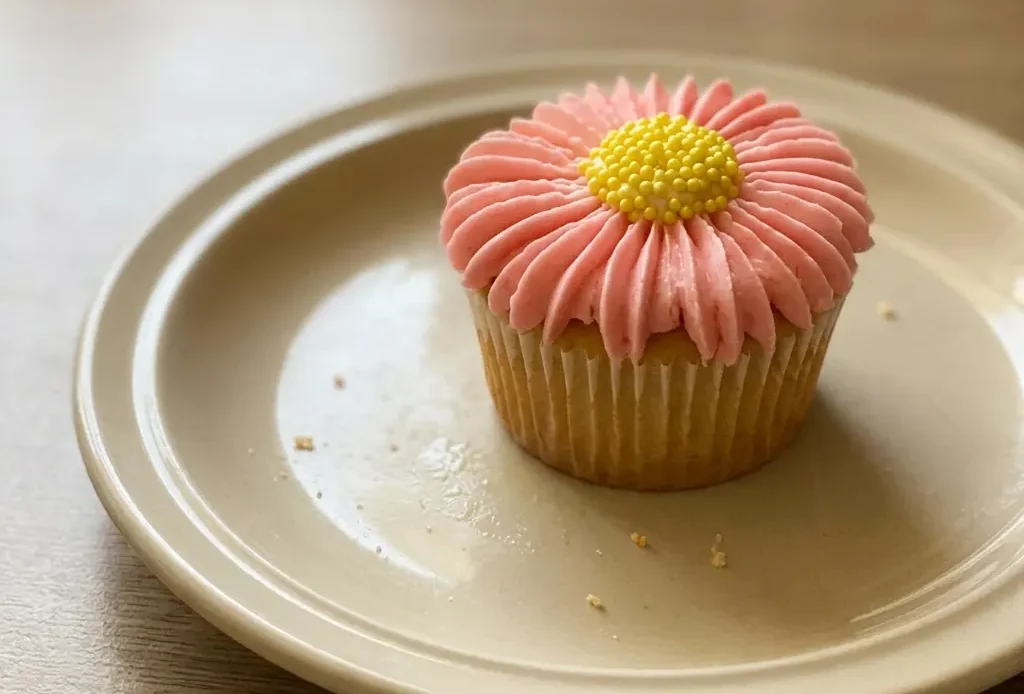
Most people’s buttercream flowers droop or blur because the frosting is too soft. The fix isn’t in the piping technique, it’s in the buttercream itself.
Italian meringue buttercream, made with a cooked sugar syrup, gives you a stable foam that holds butter without breaking. That means every rose swirl, zinnia petal, and ruffled hydrangea shape keeps its edge, even on a warm counter. These flower cupcakes rely on that structure, not luck, to look like the real thing.
The first time I made this, I dumped all the cold butter in at once and ended up with a soupy mess that wouldn’t pipe. By pure luck, I had a warm bowl and whisked it back together on a double boiler.
Buttercream stability from cooked syrup
Italian meringue buttercream uses a hot sugar syrup that fully dissolves the sugar. That gives the meringue structure. When you beat in the butter, the stable foam traps air and fat without collapsing.
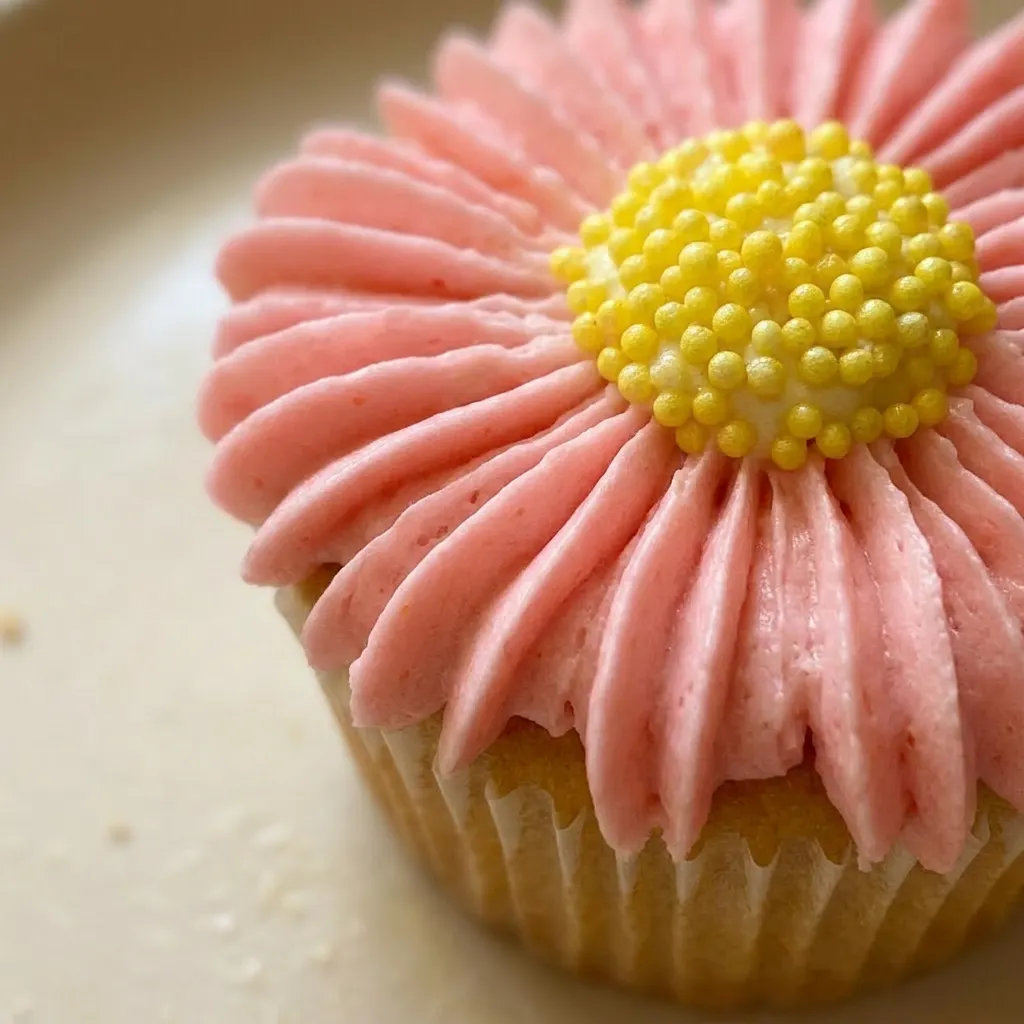
The result is a buttercream that pipes clean lines, rose swirls stay distinct, zinnia petals don’t droop, and ruffled hydrangea shapes keep their edges. It feels silky, not greasy, because the emulsion holds. If you want cupcake piping ideas that look sharp and last, this base delivers.
A cook can see the peaks don’t weep; the buttercream stays put.
Why gel coloring beats liquid dye
Gel food coloring is concentrated, so you add just a dab to reach a pastel pink or lavender. That tiny amount doesn’t add water to the buttercream. Liquid coloring, by contrast, thins the frosting and risks breaking the buttercream’s emulsion, you’d see it separate or get greasy.
With gel, the texture stays smooth and pipeable. The colors come out consistent batch to batch, which matters when you’re aiming for realistic flowers.
For any cupcake frosting that needs vivid, stable color, gel is the choice. A cook can tell: the buttercream still feels firm in the bag, not loose.
Room-temperature butter prevents curdling
Butter that’s softened to room temperature blends evenly into the meringue. You’ll see the mixture stay smooth as each piece incorporates. Cold butter won’t break down properly, you get lumps in the piping bag.
Melted butter turns the buttercream into a soupy mess. Room-temperature butter (around 68°F, pliable but not shiny) ensures a creamy, spreadable consistency that holds shape for piping flowers. That’s the texture you want for easy cupcake recipes that call for decorated tops.
A cook can feel it: the buttercream is supple, not stiff or greasy.
Prep: 30 min · Cook: 30 min · Total: 1 hr · Servings: 12 · Calories: 250 kcal
Butter and sugar for IMBC
unsalted butter: 3 cups, cut into pieces and softened to room temperature so it emulsifies into the meringue without curdling.
sugar: 1 cup granulated for the syrup plus 1 cup powdered. The cooked syrup dissolves fully for stable meringue.
gel food coloring: Pink, yellow, lavender. Use gel, not liquid, to avoid thinning the buttercream.
Piping flowers that look like the real thing
Prepare the Italian meringue buttercream
Whisk egg whites and sugar over simmering water until the sugar dissolves, rub a bit to the touch; no graininess means you’re done. Then beat to stiff peaks; the bowl should feel cool to the touch before adding butter.
Add the butter piece by piece
Drop in butter one chunk at a time on medium speed. The mixture may look curdled at first, that’s fine. Keep beating until it comes together into a smooth, silky buttercream.
Stop when it’s glossy and holds its shape on a spatula.
Color the buttercream with gel
Divide into three bowls. Add a tiny dab of gel color to each, start with less than you think. Stir until the color is even; the buttercream should feel as firm as before, not looser.
If it gets runny, you added too much liquid dye, but gel won’t do that.
Pipe the rose base
Fit a bag with a #2D tip. Hold the bag perpendicular to the cupcake, squeeze a tight spiral from the center outward, then continue building upward in a cone. The buttercream should hold each swirl sharply; if it droops, your buttercream is too warm, chill the bag for 10 minutes.
Pipe zinnia petals
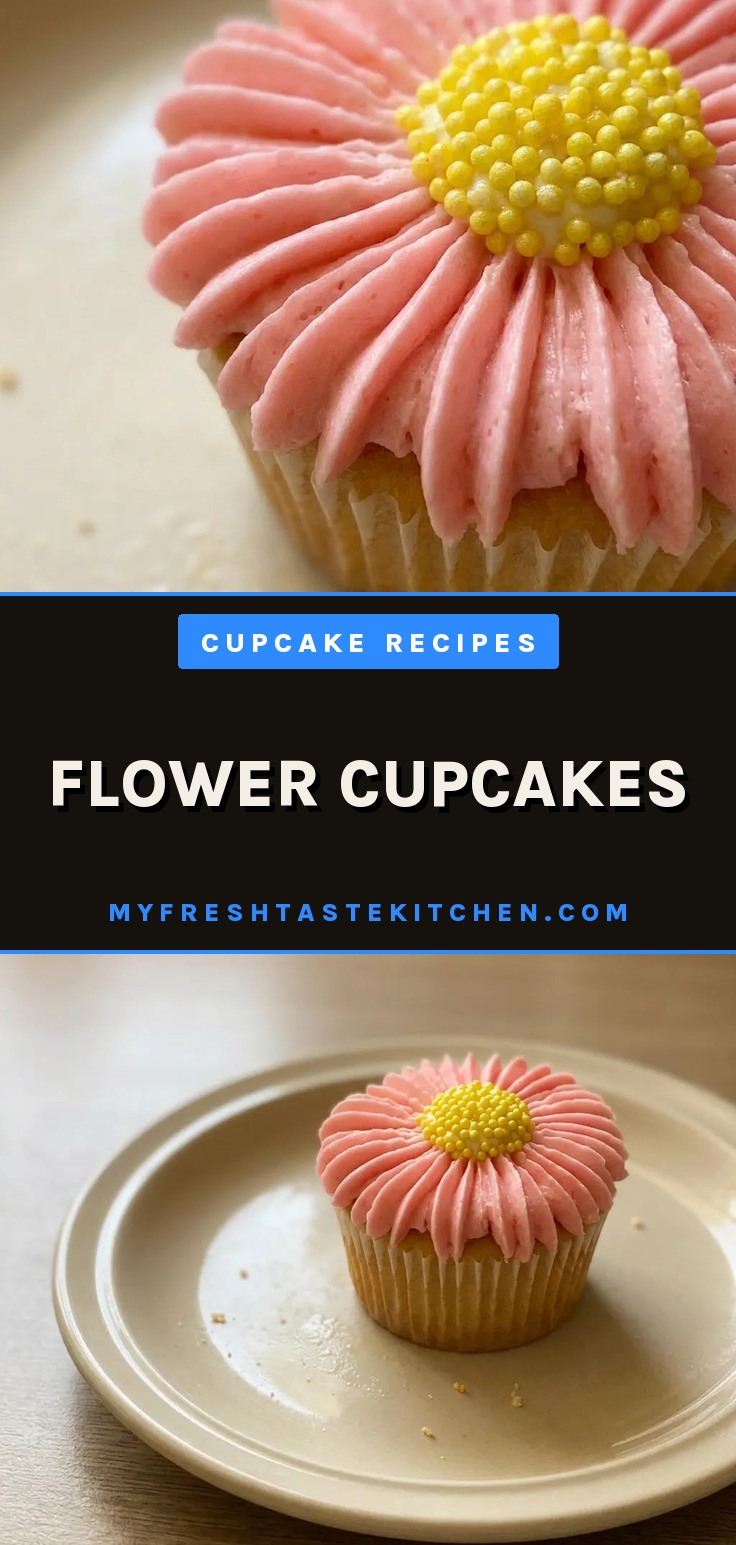
Switch to a #104 tip with the wide end facing the center. Start at the outer edge, squeeze a ribbon while moving inward, then release. Overlap petals in concentric circles.
Each petal should stand up slightly, if they flatten, the buttercream is too soft.
Pipe ruffled hydrangea shapes
Use a #4B tip. Hold the bag straight up and squeeze small stars or ruffled mounds directly onto the cupcake, covering the surface. The ridges should stay crisp; if they blur into each other, the buttercream needs a quick chill in the fridge.
Easy Flower Cupcakes
Ingredients
Buttercream Preparation
- 1 cup sugar 200 g
- 3 cups unsalted butter 680 g, cut into pieces, at room temperature
- 1 cup powdered sugar 120 g
- 1 pinch salt
- 2 tablespoons vanilla extract
- 1 teaspoon almond extract
- as needed pink gel food coloring
- as needed yellow gel food coloring
- as needed lavender gel food coloring
Decoration
- as needed mint leaves for decorating
- as needed sugar pearls for zinnia centers
- as needed white non pareils for hydrangea decorations
- 12 vanilla cupcakes your favorite recipe or store-bought
Instructions
Buttercream Preparation
Dissolve sugar in egg whites:
In a mixer bowl set over a pot of gently simmering water, whisk together egg whites and sugar until the sugar fully dissolves.Beat meringue to stiff peaks:
Fix the bowl to a stand mixer and beat on high speed until the mixture forms stiff, glossy peaks and has cooled down.Add butter piece by piece:
Add the room-temperature butter piece by piece to the meringue while mixing.Mix in flavorings until smooth:
Mix in powdered sugar, vanilla extract, and almond extract until the buttercream becomes smooth.Divide and color buttercream:
Split the buttercream into three separate bowls and color each with pink, yellow, and lavender gel food coloring.Fill piping bags with colors:
Attach couplers and chosen piping tips to bags, then fill each bag with one of the colored buttercreams.
Decoration
Pipe rose base and swirl:
Pipe a rose base with the #2D tip, then continue swirling upward.Pipe zinnia petals inward:
Using the #104 tip, pipe zinnia petals beginning from the outer edge inward.Pipe ruffled hydrangea shapes:
With the #4B tip, pipe small ruffled hydrangea shapes directly onto each cupcake.
Storage and Serving
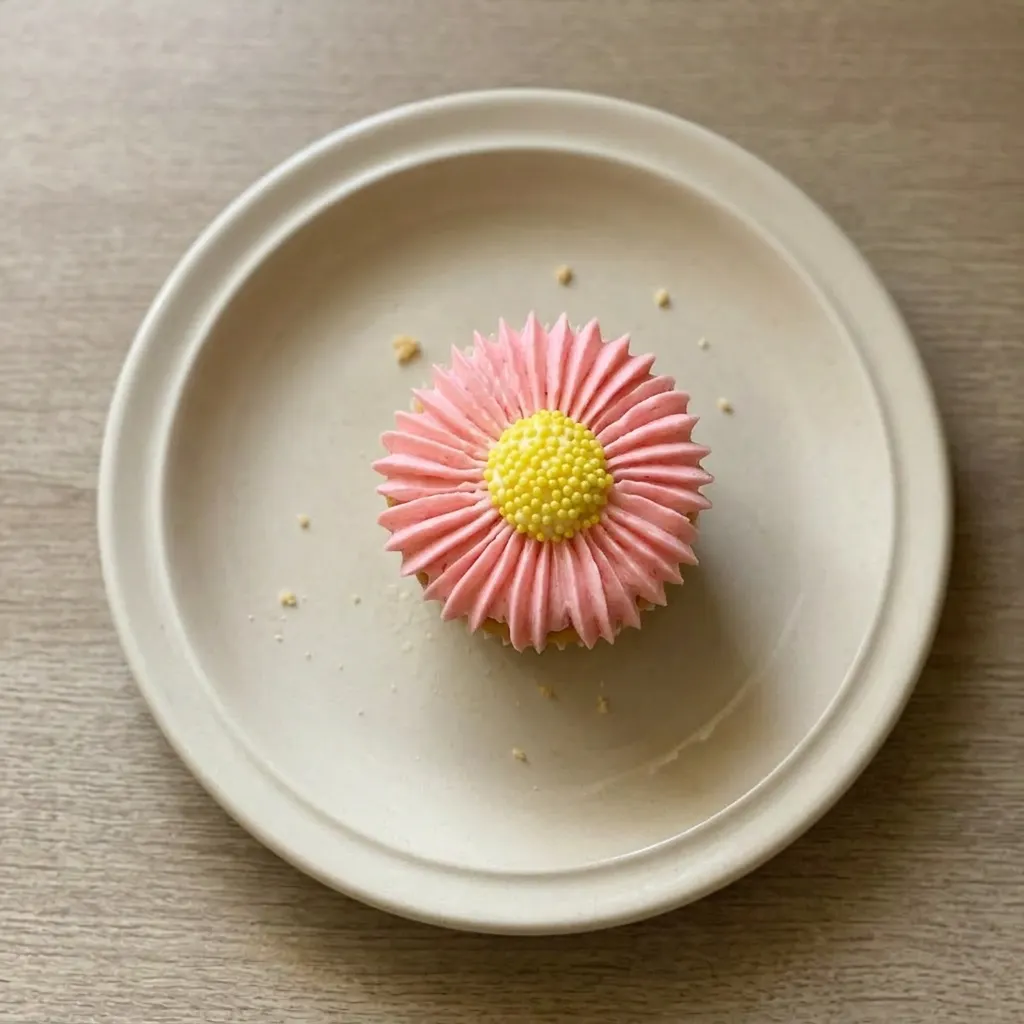
These flower cupcakes are at their best within a few hours of piping, when the buttercream is smooth and the petals hold their shape. For leftovers, refrigerate in an airtight container for up to 3 days. The cold stiffens the buttercream, making the flowers less delicate; bring to room temperature, about 30 minutes, before serving so the frosting softens and the texture returns.
You can make the buttercream and pipe the cupcakes a day ahead; store covered in the fridge, then let them sit out before serving. Freezing is not recommended for the assembled cupcakes: the buttercream can weep and the mint leaves wilt. Instead, freeze the vanilla cupcakes unfrosted, wrapped well, for up to 2 months.
Thaw, then pipe fresh buttercream for the best result.
What you can swap in this buttercream, and what you can’t
almond extract: Omit it or replace with an equal amount of vanilla extract. The almond flavor is subtle here; skipping it doesn’t hurt the buttercream’s structure.
Adding more vanilla keeps the frosting aromatic but changes the flavor profile to straight vanilla. Easy cupcake recipes often skip almond entirely.
gel food coloring: Natural gel or powdered colors, never liquid food coloring. Liquid dye introduces water that thins the buttercream; you’ll see it turn runny and lose its pipe-ability.
Gel stays thick, so the buttercream holds roses, zinnias, and hydrangea shapes. Use the same amount by weight as the recipe’s gel, but start with half if switching brands.
unsalted butter: Vegan butter sticks (like Miyoko’s or Earth Balance) for dairy-free, not margarine from a tub. Tub margarine has too much water; the buttercream will separate and look greasy. Vegan sticks with high fat content (80%+) mimic butter’s emulsion: they pipe similarly but feel slightly softer at room temp.
Use the same weight. The flavor leans buttery but not identical. For dairy-free cupcakes, this works.
Tips
- Wipe the mixer bowl and whisk with vinegar or lemon juice on a paper towel before starting to remove any invisible grease film; even a trace of fat can prevent the egg whites from reaching stiff peaks, and this buttercream relies on a stable meringue to hold the butter emulsion without collapsing.
Frequently Asked Questions
Can I make the buttercream a day ahead and pipe the flowers later?
Yes. Store the colored buttercream in piping bags in the fridge overnight.
Next day, let the bags sit at room temperature for about 20 minutes, then squeeze a small test swirl, if it’s still stiff, let it warm a bit more. The texture returns to smooth and pipeable without re-beating. Just don’t let it get too warm or the petals will droop.
My buttercream looks curdled or separated, what went wrong and can I fix it?
Most likely your butter was too cold when you added it. The mixture breaks into a curdled mess because the fat doesn’t emulsify. Keep beating on medium speed; it will come together as the butter warms from friction.
If after 5 minutes it’s still separated, the bowl is too cold, warm the outside with your hands or a hair dryer on low for a few seconds, then beat again. Once it’s silky and holds a peak, it’s fixed.
How do I keep the piped flowers fresh and avoid them melting before serving?
Pipe the flowers shortly before serving, within a few hours. If you need to hold them longer, refrigerate the finished cupcakes in an airtight container; the cold sets the buttercream firm. Take them out 30 minutes before serving so the frosting softens to a smooth, creamy texture, not hard.
Avoid direct sun or a warm kitchen; the buttercream can soften enough to lose petal definition.