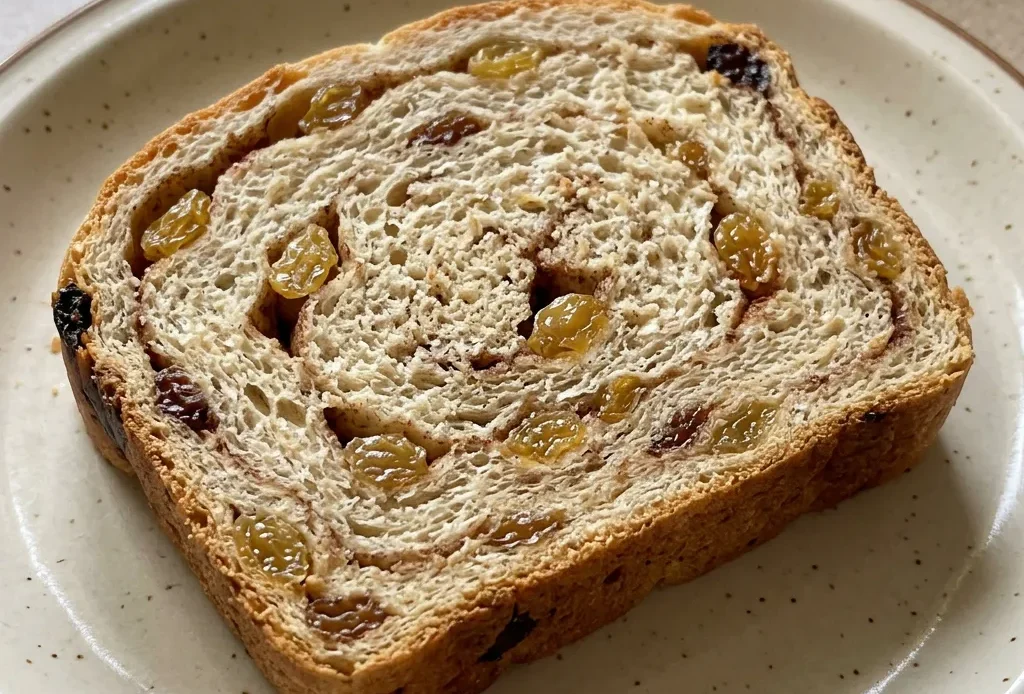
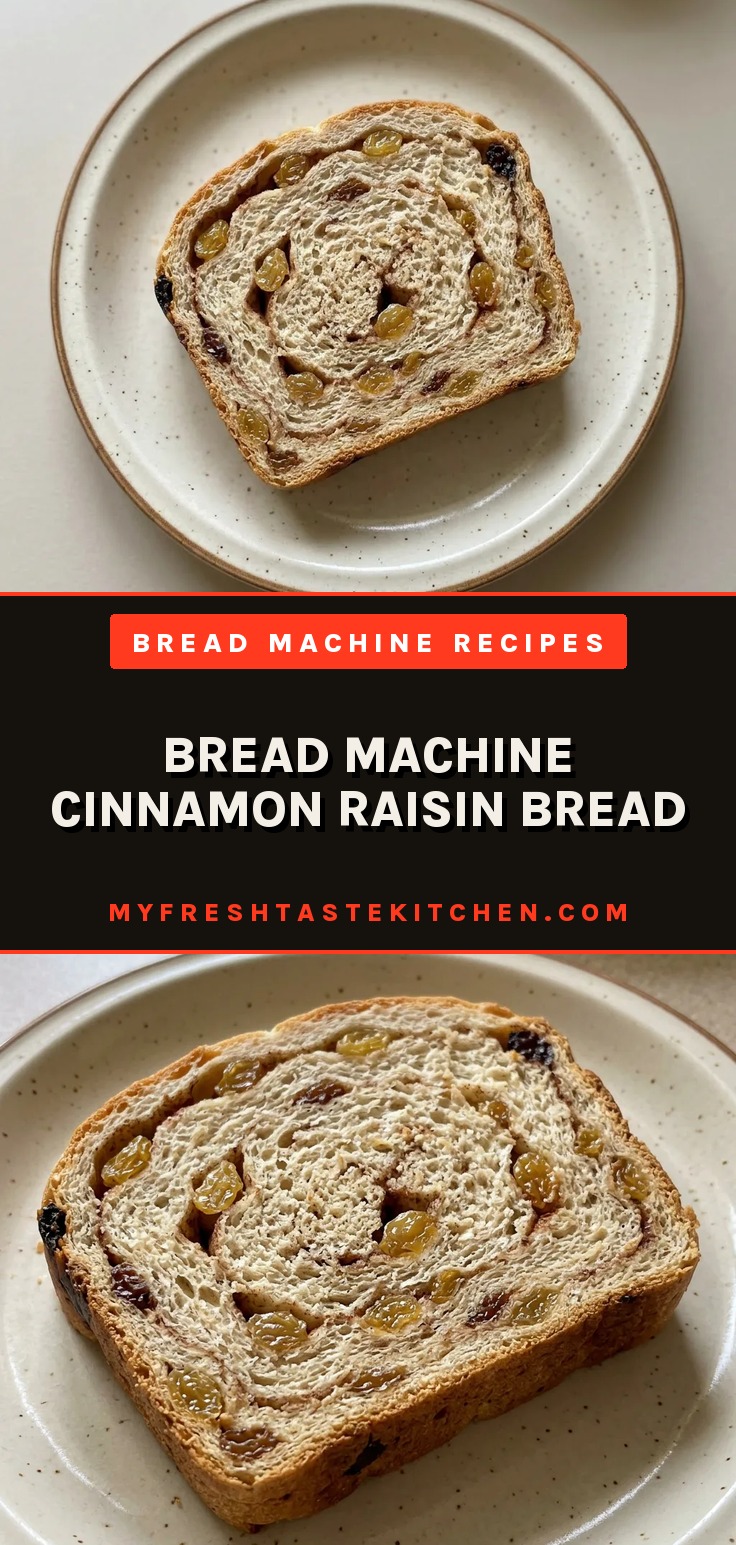
Cinnamon raisin bread from a machine isn’t automatic, timing the raisin addition separates a fluffy, swirled loaf from one with bare spots. This recipe uses bread machine yeast so the rise stays reliable through the programmed cycles, no guesswork. The raisins stay soft, the cinnamon stays forward, and a light crust keeps the outside tender.
It’s the kind of loaf you slice thick for toast or just eat plain while it’s still faintly warm.
Why does this recipe call for bread machine yeast?
Bread machine yeast is ground finer than active dry yeast, so it dissolves and activates faster. In a bread machine, the first knead and rest cycle is timed for that rapid start.
Active dry yeast needs warmer liquid and a longer activation window; the machine’s cycle may not give it enough time to fully hydrate and start working. The result: a loaf that doesn’t rise as high, with a denser crumb. Bread machine yeast ensures the yeast is already doing its job when the kneading begins, matching the machine’s programmed schedule.
You won’t see any granules left in the finished bread, and the rise will be consistent from the first proof.
Why golden raisins instead of regular dark ones?
Golden raisins are milder and plumper than dark raisins. They add sweetness without overwhelming the cinnamon, so the spice stays forward in each bite. Because they’re treated with sulfur to retain color, they also keep a softer, juicier texture after baking.
When you bite into the bread, the raisins offer pockets of moisture that keep the crumb tender, not dry. Dark raisins can taste more concentrated and sometimes slightly tart, which can compete with the cinnamon. Here, you want the cinnamon to be the main flavor, with the raisins as a supporting sweet note.
Why set the crust to light?
Brown sugar and cinnamon caramelize quickly. On a medium or dark crust setting, the extra baking time can push that caramelization past golden into bitter, with the crust turning dark brown and hard. A light crust cycle bakes the loaf just long enough to brown the outside evenly without burning the sugars.
The crust stays soft and pliable, which matches the tender interior you want in a sweet raisin bread. The cinnamon flavor also stays bright, overbaking can mute it. Stick with light and the exterior will be a pale gold, easy to slice without crumbling.
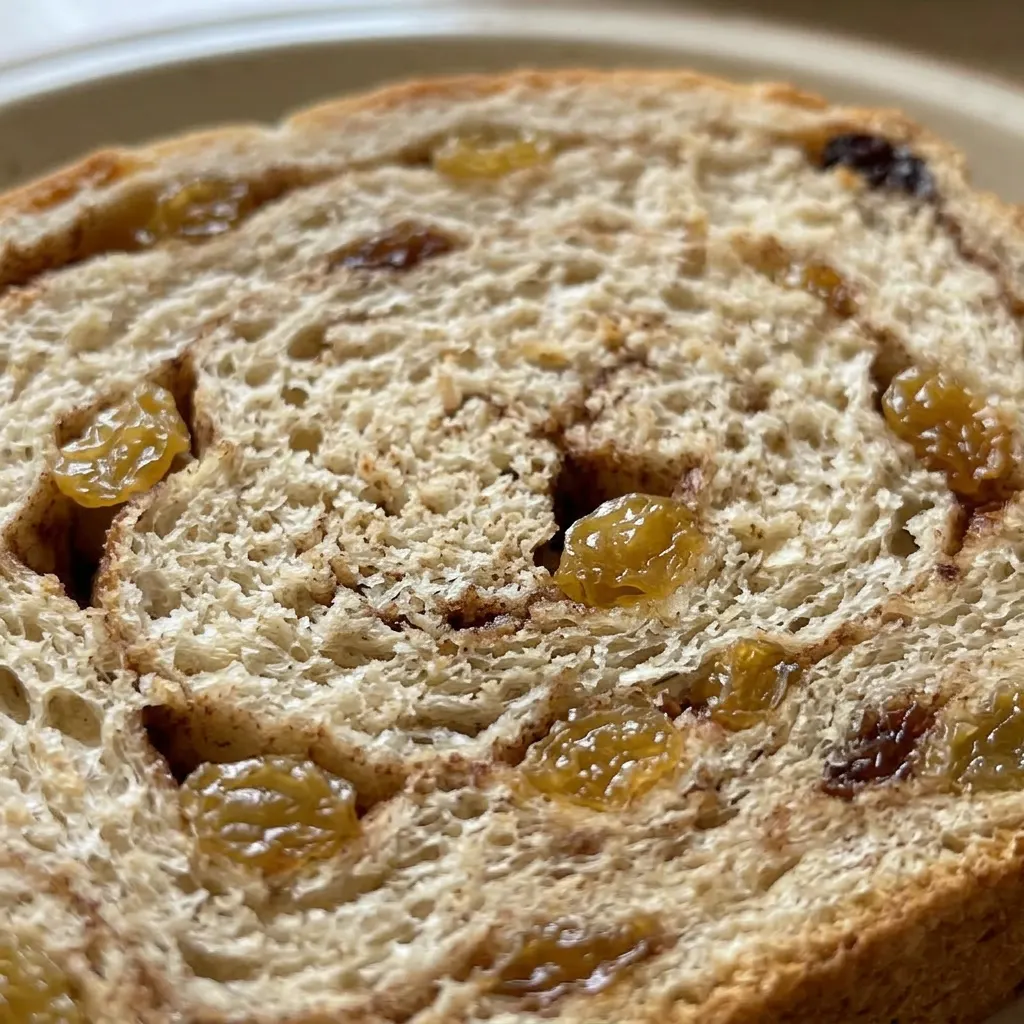
Prep: 5 min · Cook: 3 hr · Total: 3 hr 5 min · Servings: 12 · Calories: 250 kcal
A Few Things About the Ingredients
Bread machine yeast: Use bread machine yeast, not active dry. It’s finer and activates faster, matching the machine’s timing so the loaf rises properly.
Golden raisins: Golden raisins are milder and plumper than dark. They keep a softer texture after baking and let the cinnamon flavor stay forward.
Bread flour: Bread flour has more protein than all-purpose, giving the loaf structure to support the raisins without collapsing.
Warm milk: Warm the milk to bath water temperature, about 110°F. Too hot kills the yeast; too cold slows the rise.
Light brown sugar: Light brown sugar adds moisture and a mild molasses note. Pack it firmly when measuring to get the right sweetness.
Building the Loaf: Step by Step
Set Up the Machine
Unplug the machine and remove the pan. Add warm milk first, it should feel like bath water, not hot. Layer in flour, sugar, cinnamon, salt, then butter.
Make a small well on top for the yeast.
Add Yeast Last
Sprinkle yeast into its well, keeping it away from the milk and salt. If yeast touches the liquid early, it may activate too fast and fizzle out before baking. The dough should look shaggy after the first few turns.
Start the Cycle
Return the pan, plug in, select a 2 lb loaf with light crust and basic/white program. Press start. Within 10 minutes the dough should form a smooth ball that cleans the sides.
If it’s too dry or wet, adjust with a tablespoon of milk or flour.
Add Raisins at the Right Moment
When the machine beeps or pauses after the first knead (about 10 to 12 minutes in), open the lid and pour in the raisins. They should get evenly distributed during the second knead, not squished into paste.
Let It Bake and Cool
After the full cycle, unplug and lift out the pan with oven mitts. Turn the loaf out onto a rack; if the paddle sticks, remove it with mitts while hot, or wait until cool. The bread will feel firm but soft when tapped.
Wait Before Slicing
Cool for 1 to 2 hours. Slicing too early compresses the crumb and makes it gummy. When fully cool, the crust gives a slight crackle under the knife and the interior springs back gently.
Bread Machine Cinnamon Raisin Bread
Ingredients
- 1 1/8 cups warm milk 259 ml
- 3 tbsp unsalted butter, sliced and softened 43 g
- 3 cups bread flour 360 g
- 1/4 cup packed light brown sugar 54 g
- 1 tsp ground cinnamon 3 g
- 1 tsp salt 6 g
- 1 tsp bread machine yeast 3.6 g, not active dry
- 3/4 cup golden raisins
- 1 1/2 cups warm milk 345 ml
- 4 tbsp unsalted butter, sliced and softened 57 g
- 4 cups bread flour 480 g
- 1/3 cup packed light brown sugar 72 g
- 1 1/2 tsp ground cinnamon 4.5 g
- 1 1/2 tsp salt 9 g
- 1 1/2 tsp bread machine yeast 5.4 g, not active dry
- 1 cup golden raisins
Instructions
Set Machine Program:
Configure the bread machine for a 1.5 or 2 lb loaf with a light crust and basic/white program.Add Ingredients Carefully:
Disconnect the machine and take out the bread pan to avoid mess. Add the warm milk to the pan, then put in all other ingredients except the raisins. Introduce the yeast last, making sure it doesn’t contact the liquid or salt before mixing starts. Avoid placing salt where the yeast will go.Start the Cycle:
Put the pan back into the machine, plug it in, set the program, and begin the cycle.Add Golden Raisins:
Once the initial kneading cycle finishes (prior to the second kneading cycle), incorporate the golden raisins. This usually occurs about 10-12 minutes after starting, when the first rest period begins. Adhere to your machine’s guidelines for adding dried fruit.Remove and Cool Bread:
When the baking cycle ends, unplug the machine. Using oven mitts, lift out the pan (it will be extremely hot). Transfer the bread from the pan to a cooling rack. If the mixing paddle is stuck, remove it with oven mitts or wait until the bread has fully cooled.Cool Before Slicing:
Allow the bread to cool for 1-2 hours before slicing. Consult the tips section for advice on success and typical bread machine issues.
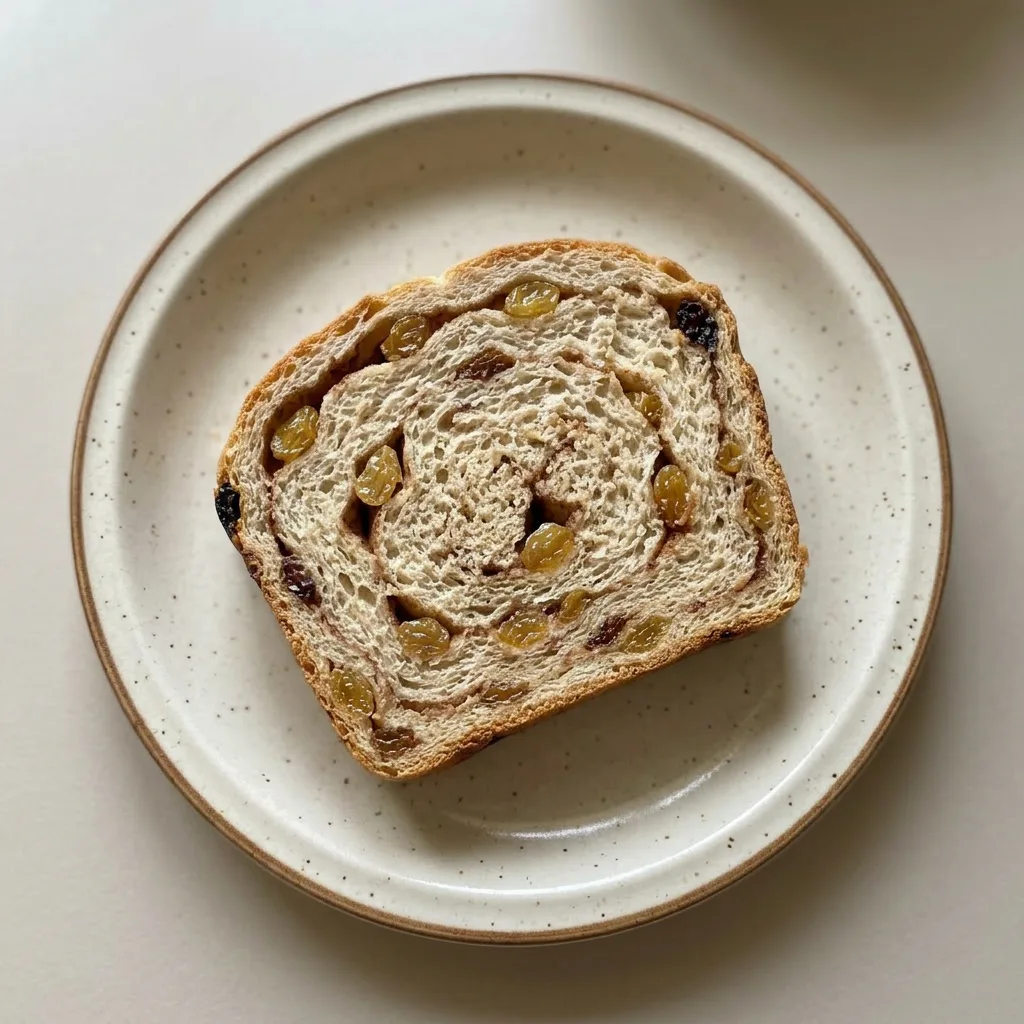
Storage and Serving
Cool the loaf completely, 1 to 2 hours, before slicing. Store slices in an airtight container at room temperature for up to 3 days. The crust softens slightly by day two but stays pleasant.
After day three, the crumb starts to dry out. To refresh, toast slices until the crust crisps and the interior warms through. For longer storage, slice the cooled loaf, wrap each slice in plastic wrap, then place in a freezer bag.
Freeze for up to 3 months. Thaw at room temperature or toast directly from frozen.
Do not refrigerate the bread; the cold accelerates staling, making the crumb dry and crumbly. The butter and milk in the dough keep the bread tender at room temperature, but refrigeration strips that moisture. Serve the bread at room temperature or lightly toasted within the first day for the softest texture.
If you add a finishing touch like butter or cream cheese, do it just before serving, after toasting if desired.
Tips
- If you don’t have a thermometer, test the milk by dripping a few drops on your inner wrist; it should feel neutral, not warm or cold. Milk that feels comfortably warm to the touch is around 110°F.
Three Swaps That Work in This Cinnamon Raisin Bread
Golden raisins: Dried cranberries or chopped dried apricots. Cranberries add a tart pop that brightens the cinnamon; apricots bring a softer, honey-like sweetness. Both plump during baking and keep the crumb moist, just like golden raisins.
Use the same volume the recipe calls for.
Bread machine yeast: Active dry yeast. Switch only if you adjust the liquid. Active dry yeast needs warmer milk (around 120, 130°F) and a 5-minute proof before adding.
If you skip proofing, the yeast may not fully activate in the machine’s short first knead, leaving you with a shorter, denser loaf. 4 g for 2 lb).
Warm milk: Water or plant milk (oat, almond, soy). Milk adds tenderness and a subtle richness; water makes the crumb slightly chewier and less tender.
Plant milks vary: oat milk mimics milk’s body best, while almond milk can thin the dough, if switching, reduce the liquid by 1, 2 tablespoons or add a tablespoon of flour to compensate. The crust will be paler and less browned regardless.
Bread flour: All-purpose flour. The loaf will be softer and shorter, with less structure to support the raisins, they may sink toward the bottom.
The crumb will be more cake-like. Swap by volume (same cups) but know the rise will be a bit less.
For a stronger result, add 1 tablespoon vital wheat gluten per cup of all-purpose flour.
First time I used active dry yeast, the loaf came out like a brick. I was so frustrated until I realized the yeast just didn’t activate in time.
Frequently Asked Questions
Can I use regular active dry yeast instead of bread machine yeast?
Yes, but you need to proof it first. Active dry yeast requires warmer liquid, around 120, 130°F, and a 5-minute rest to activate before adding to the pan. Without proofing, the yeast may not fully hydrate during the machine’s short first knead, leading to a denser loaf.
Use the same weight as the recipe calls for.
Why did my bread turn out dense and not rise well?
Most likely the yeast didn’t activate fully. Check that your milk was warm enough, about 110°F, and that the yeast was kept away from salt and liquid before mixing.
Another cause: using active dry yeast without proofing. If the dough looked dry during kneading, it may have been too stiff; add a tablespoon of milk next time.
Can I make this bread ahead of time and freeze it?
Yes, freeze after cooling and slicing. Wrap each slice in plastic wrap, then place in a freezer bag for up to 3 months. Thaw at room temperature or toast directly from frozen.
Do not refrigerate, as that speeds staling. The bread stays tender at room temperature for up to 3 days stored airtight.