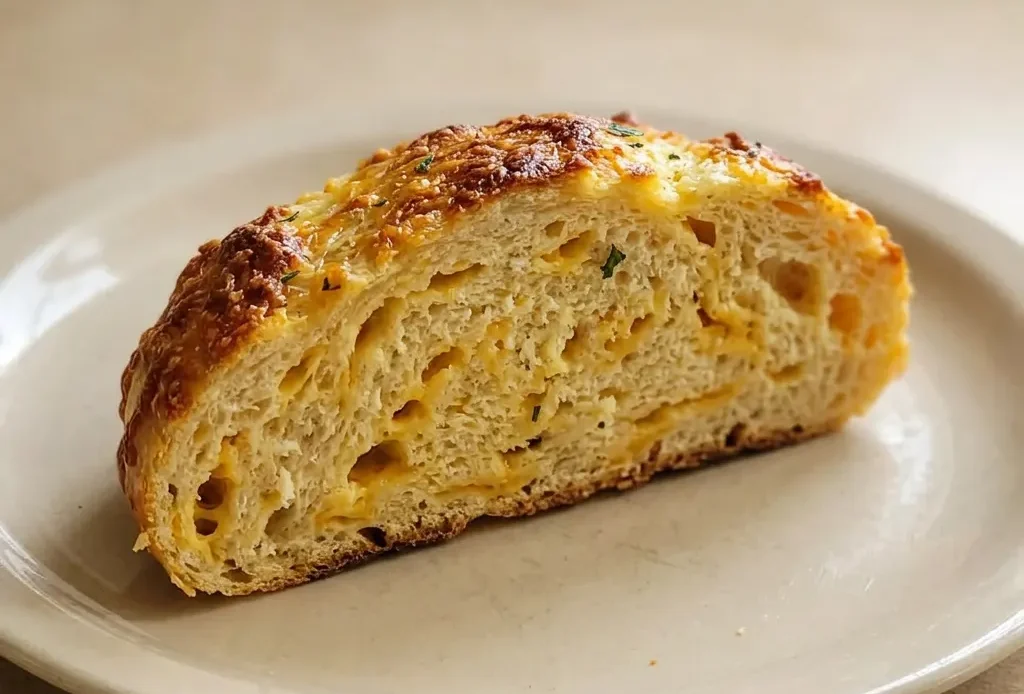
Most people’s first no-knead loaf turns out flat because they don’t wait long enough. This no knead cheddar bread in the dutch oven demands 12 to 18 hours of rest, not for your convenience, but for the yeast to stretch the gluten and build a chewy, open crumb that actually holds the cheese pockets. The long rise also develops a subtle tang that sharp cheddar needs to shine; shortchange it, and you get a dense, bland puck.
The hot Dutch oven then delivers a crust that crackles when tapped, exactly what you want from a bread that took almost no active effort.
Why does a no-knead rise take so long?
The 12- to 18-hour rest isn’t just about convenience. That long fermentation does the work your arms would otherwise do: it slowly develops gluten, which builds the structure for a chewy, open crumb.
You’ll see a dough that’s bubbly and doubled in size, not a tight ball. The hours also let yeast produce organic acids that add a subtle tang, a flavor that stands up to sharp cheddar instead of being buried by it. That tang is what makes this bread taste complex, not just salty and cheesy.
If you’re looking for dutch oven bread recipes quick might be a common search, but rushing that rise means a denser, blander loaf. Let the clock do the mixing; the reward is a crusty bread that tastes like it took more effort than it did.
How does the Dutch oven create a crust?
A preheated Dutch oven at 450°F gives you two baking environments in one. With the lid on, trapped steam from the dough’s moisture keeps the surface supple, letting the loaf expand fully, that’s the oven spring that lifts a dense blob into an airy boule. You’ll see the dough dome up against the lid.
After 30 minutes, removing the lid exposes the crust to dry heat. That shift from steamy to arid turns the exterior golden and crisp, with a crackling sound when you tap it. The result: a thick, shatteringly crisp shell that gives way to a soft interior.
If you’re after a crusty bread recipe dutch oven style, the heavy pot is the key. No other vessel traps steam as effectively, and no spray bottle can match that sustained humidity.
Why sharp cheddar and not mild?
Sharp cheddar brings a bold, savory punch that doesn’t get lost in the bread’s yeasty backdrop. Mild cheddar would taste faint, almost like a whisper of cheese.
For the best distribution, stir 1 cup of shredded cheese into the dough before the long rise, those shreds soften but stay distinct, dotting the crumb with pockets of melted richness. Reserve the remaining ¼ cup for the top, right before baking. That exposed cheese browns into a crackly, golden crust that contrasts with the pale interior.
You’ll smell the nutty, toasted notes as it bakes. The key is using a dry, aged cheddar; younger, moister cheese can clump or release too much water, making the dough slack.
Save those for a grilled cheese, not this loaf.
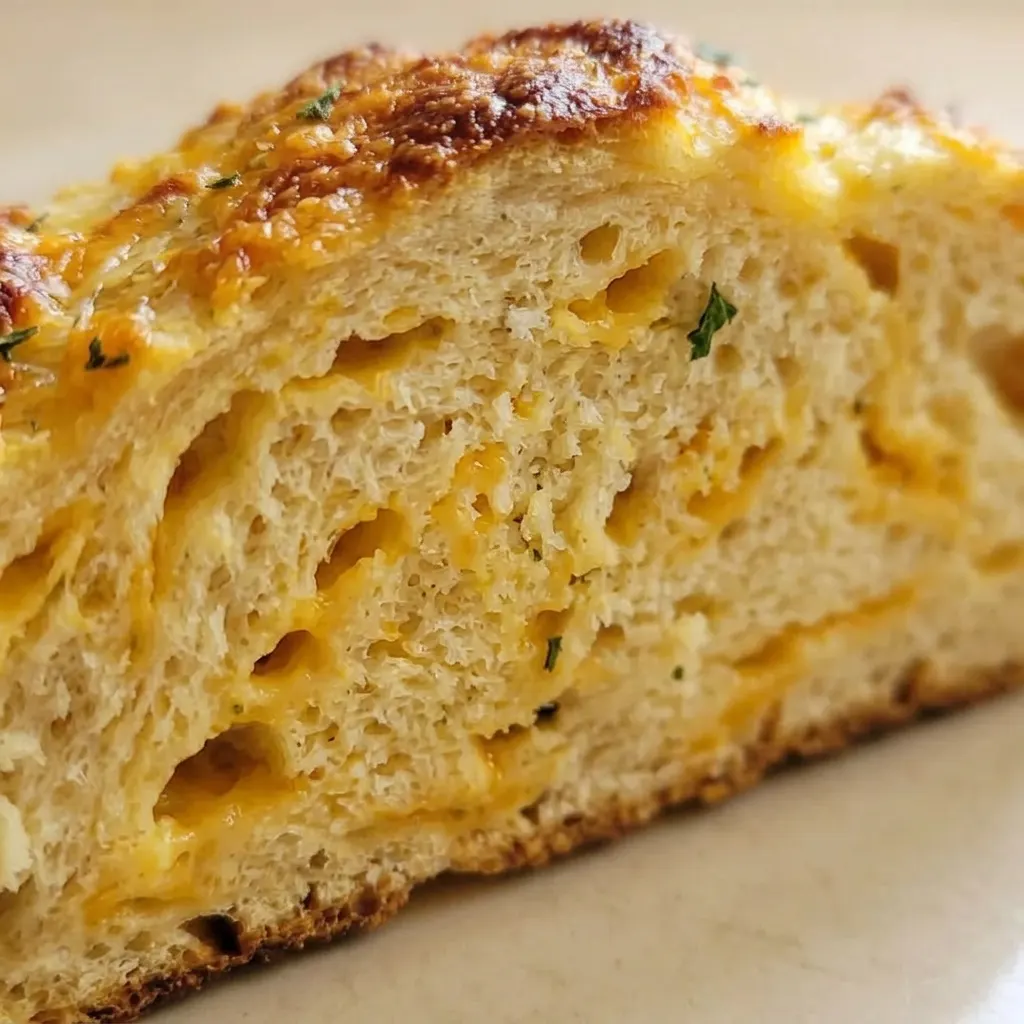
Prep: 15 min · Cook: 50 min · Total: 18 hr 5 min · Servings: 10 · Calories: 220 kcal
What to Know About the Ingredients
Bread flour: Use bread flour for its higher protein; all-purpose makes a flatter, less chewy loaf.
Instant yeast: Instant yeast dissolves directly into dry flour, no proofing needed; active dry must be activated first.
Sharp cheddar cheese: Buy a block of sharp cheddar and shred it yourself; pre-shredded has anti-caking agents that hurt melt.
I learned the hard way that rushing the rise turns the bread into a hockey puck. Now I always set a timer for a full 12 hours, even if it means starting the night before.
Building the Dough and the Long Rise
Mix the dough
Whisk flour, salt, and yeast together, then pour in the warm water. Stir until a shaggy, sticky mass forms, no dry bits left. When you fold in 1 cup cheddar, the dough should be lumpy but cohesive, not soupy.
Cover and rest
Cover the bowl tightly and leave it at room temperature for 12 to 18 hours. After 12 hours, check for a bubbly surface and doubled volume. If it still looks flat, let it go the full 18, the longer wait deepens the tangy flavor.
Preheat the Dutch oven
About 30 minutes before you shape, set the oven to 450°F with the Dutch oven inside. A hot pot is critical, dropping dough into a cold one kills oven spring and gives a flat, pale crust.
No Knead Cheddar Bread in Dutch Oven
Ingredients
- 3 cups bread flour 360g
- 1 1/2 teaspoons kosher salt
- 1/2 teaspoon instant yeast
- 1 1/2 cups warm water about 100°F (40°C) / 38°C
- 1 1/4 cups shredded sharp cheddar cheese divided
- Cornmeal or extra flour for dusting
Instructions
Mix dry ingredients:
In a large bowl, combine 3 cups (360g) bread flour, 1 1/2 tsp kosher salt, and 1/2 tsp instant yeast using a whisk.Add water and cheese:
Pour in 1 1/2 cups warm water (about 100°F (40°C) / 38°C) and mix until a rough dough comes together. Fold in 1 cup shredded sharp cheddar cheese. Cover the bowl and leave to rise at room temperature for 12-18 hours.Preheat oven and Dutch oven:
Set the oven to 450°F (230°C) and place a Dutch oven inside to heat for 30 minutes.Shape dough and add cheese:
Transfer the dough to a floured surface, form it into a round, and set it on parchment paper dusted with cornmeal. Sprinkle the top with the remaining 1/4 cup shredded cheddar cheese and make a cut across the top.Bake covered then uncovered:
Carefully place the dough in the hot Dutch oven, put the lid on, and bake for 30 minutes. Remove the lid and continue baking for 15-20 minutes until the crust is golden.Cool on wire rack:
Allow the bread to cool on a wire rack before cutting.
Storage and Serving
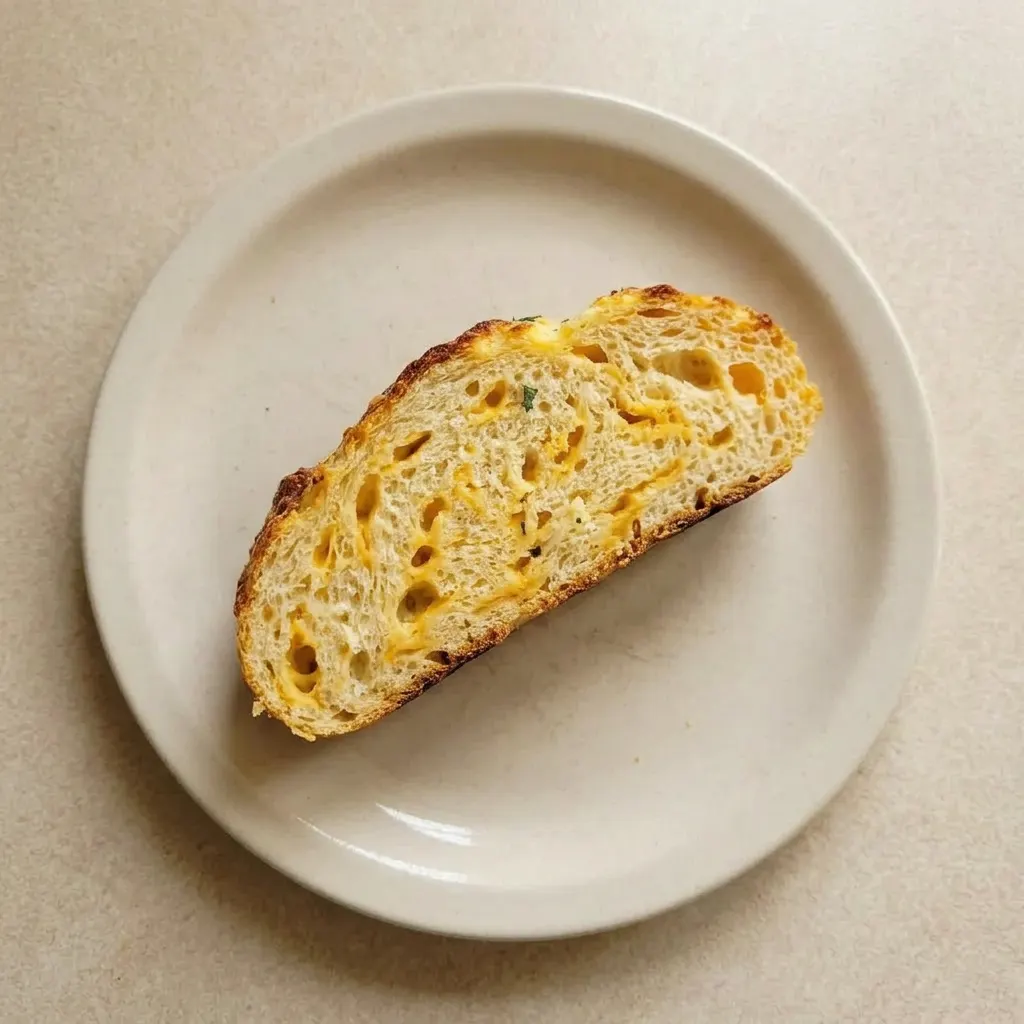
Cool the bread completely on a wire rack before storing. Wrap tightly in foil and keep at room temperature for up to 3 days. The crust will soften over time; to restore crispness, reheat slices or the whole loaf in a 350°F oven for 10 minutes.
For longer storage, freeze the whole loaf or slices wrapped in foil and placed in a freezer bag for up to 3 months. Thaw at room temperature, then reheat as above. Do not refrigerate: the starch retrogrades faster, turning the crumb stale and dry.
Serve within an hour of reheating for the best crust and soft interior. If you add any finishing touch like a butter wash or extra cheese, do it just before serving, not ahead.
What to Swap (and What to Leave Alone) in This No-Knead Loaf
Bread flour: All-purpose flour. AP flour has less protein, so the gluten network will be weaker. The loaf won’t rise as tall and the crumb will be denser, less chewy.
To compensate, reduce the water by about 2 tablespoons to keep the dough from getting too slack.
Instant yeast: Active dry yeast. Active dry yeast needs to be proofed first: dissolve it in the warm water with a pinch of sugar and wait 5 to 10 minutes for foam. Use 1/2 teaspoon as well, but the rise may take slightly longer, check at 16 hours.
If you skip proofing, the yeast may not activate evenly and the loaf could be flat.
Sharp cheddar cheese: Gouda, Gruyère, or another semi-hard cheese. Mild cheeses like Gouda or Monterey Jack will taste faint; you won’t get that sharp punch. Stick with a bold cheese for the top crust, the 1/4 cup sprinkled on top browns best when it’s dry and aged.
If you swap the interior cheese, shred it yourself; pre-shredded bagged cheese has starches that can make the dough sticky.
Tips
- If the dough feels too dry after mixing, add a tablespoon of water; if too sticky, dust with flour during shaping.

Frequently Asked Questions
Can I let the dough rise for less than 12 hours if I’m short on time?
You can, but expect a denser loaf with less tang. The 12-hour minimum gives yeast time to develop gluten and produce those organic acids that complement the sharp cheddar. If you cut the rise to 8 hours, the dough won’t have doubled and the crumb will be tighter.
For best results, plan ahead.
Why did my bread turn out dense and not rise properly?
Most likely the dough didn’t rise long enough, 12 hours is the minimum for a bubbly, doubled dough. If it looked flat after 12, it needed the full 18. Another cause: your water might have been too hot (over 110°F) and killed the yeast, or too cold (under 95°F) and slowed fermentation.
Use an instant-read thermometer to hit 100°F.
Can I make this bread ahead of time and reheat it?
Yes. Cool the loaf completely, then wrap tightly in foil and keep at room temperature up to 3 days.
To restore crispness, reheat slices or the whole loaf in a 350°F oven for 10 minutes. Freeze for longer storage, up to 3 months in a freezer bag. Don’t refrigerate; it stales the crumb faster.