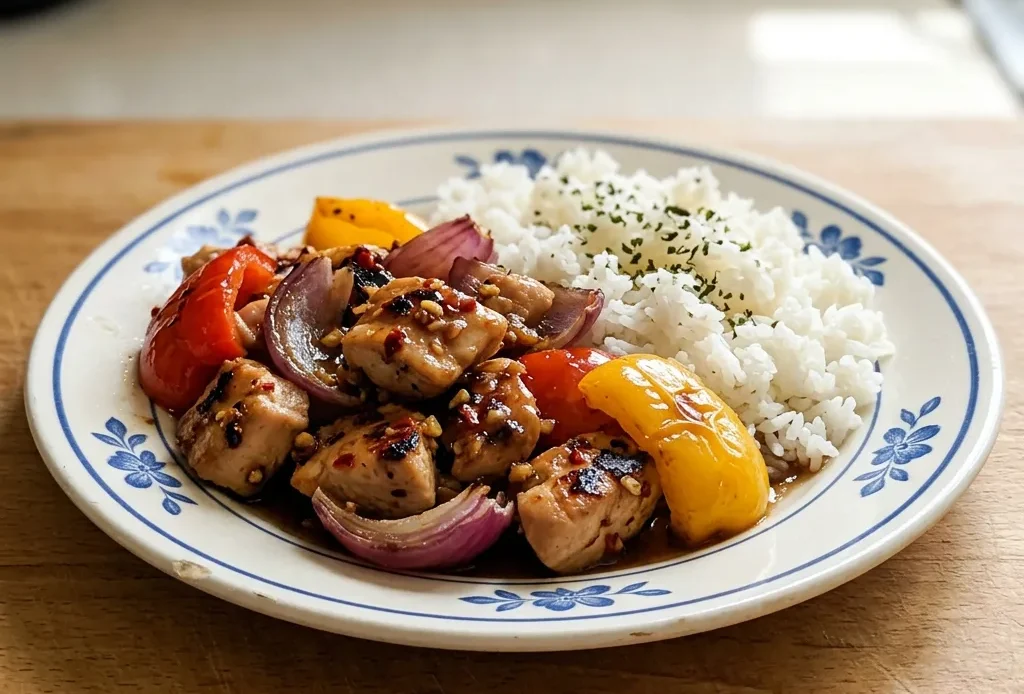
Balancing a glossy sweet-tangy sauce with caramelized chicken and pineapple on a single pan sounds straightforward, but the margin for error is narrower than you’d think, the pineapple’s moisture can easily turn everything soggy if you crowd the pan. This hawaiian chicken sheet pan gets around that by roasting in a single layer, letting the heat hit every piece directly so edges brown and juices concentrate instead of pooling. The result: chicken that stays juicy, pineapple with golden corners, and a pan that’s nearly clean when you’re done.
Why does a sheet pan work so well here?
A sheet pan’s open surface lets chicken and vegetables roast in a single layer, so heat hits every piece directly. That encourages browning without steaming, you want those browned edges for flavor. Pineapple and bell peppers release a good amount of moisture as they cook.
On a sheet pan, that liquid spreads thin and evaporates quickly, concentrating the fruit’s sweetness and the peppers’ flavor rather than stewing everything in a puddle. If you packed them into a crowded pan, you’d get pale, soggy pieces instead of caramelized ones. The high edges of a sheet pan also contain any sauce or juices, so cleanup stays simple.
This method gives you a direct way to get color and intensity without extra steps.
What does the sauce actually do for the dish?
The sauce pulls the whole plate together by hitting three distinct notes. Soy sauce brings a deep saltiness that makes the chicken taste savory, not just sweet. Honey adds a rounded sweetness that clings to the meat and vegetables.
Rice vinegar cuts through with acidity, keeping each bite from feeling heavy or cloying. Pineapple juice reinforces the fruit flavor already on the pan and helps tenderize the chicken slightly as it sits. When you taste a piece of chicken with the sauce, you get salt first, then sweetness, then a bright tang that clears your palate.
That balance is what keeps you coming back for another bite.
Why uniform pieces matter for texture
Cutting chicken and vegetables into roughly 1-inch chunks means they cook at the same pace. If some pieces are larger, they’ll stay underdone while smaller ones dry out or burn.
The goal is chicken that stays juicy inside and vegetables that soften evenly without turning mushy. With a sheet pan, you also want pieces that lie flat and don’t overlap, so each side browns properly. Consistent size gives you control: you can check one piece and know the rest are similar.
That evenness is what separates a dish where everything is cooked just right from one where you’re picking out the burnt bits.
Prep: 15 min · Cook: 25 min · Total: 40 min · Servings: 6
Ingredients That Make or Break This Sheet Pan
chicken breasts: Cut into 1-inch cubes so they cook through in the same time as the vegetables.
pineapple: Fresh or canned both work; if using canned, save the juice for the sauce.
honey: Use real honey, not pancake syrup; its floral sweetness balances the soy and vinegar.
rice vinegar: Mild acidity brightens the sauce; apple cider vinegar works but gives a fruitier tang.
The key to even cooking: arranging the pan right
Prep the pan
Line a large sheet pan with parchment or oil it lightly. The pan should feel slick but not pooled. This prevents sticking and lets you slide the spatula under easily later.
Cut everything uniform
Chop chicken and vegetables into 1-inch chunks. If pieces vary, the small ones burn while big ones stay raw. Check a few; they should look roughly the same size in your palm.
Spread in a single layer
Arrange the chicken, peppers, onion, and pineapple so none overlap. Overlapping pieces steam instead of brown, you’ll see pale spots where they touch. Leave small gaps for air to circulate.
Season and toss
Drizzle with olive oil, garlic, salt, pepper, paprika, and chili flakes. Toss with your hands until every piece glistens. If some pieces look dry, add a touch more oil, dry spots won’t brown.
Roast and flip halfway
Bake at 400°F for 20 to 25 minutes, flipping pieces at 10 to 12 minutes. After flipping, look for caramelized edges on the pineapples and peppers. The chicken should read 165°F inside; juices run clear.
Make the sauce while it bakes
Simmer soy sauce, pineapple juice, honey, and vinegar for 3 to 4 minutes. For thicker sauce, whisk in cornstarch slurry and cook until glossy, it should coat the back of a spoon.
Finish and coat
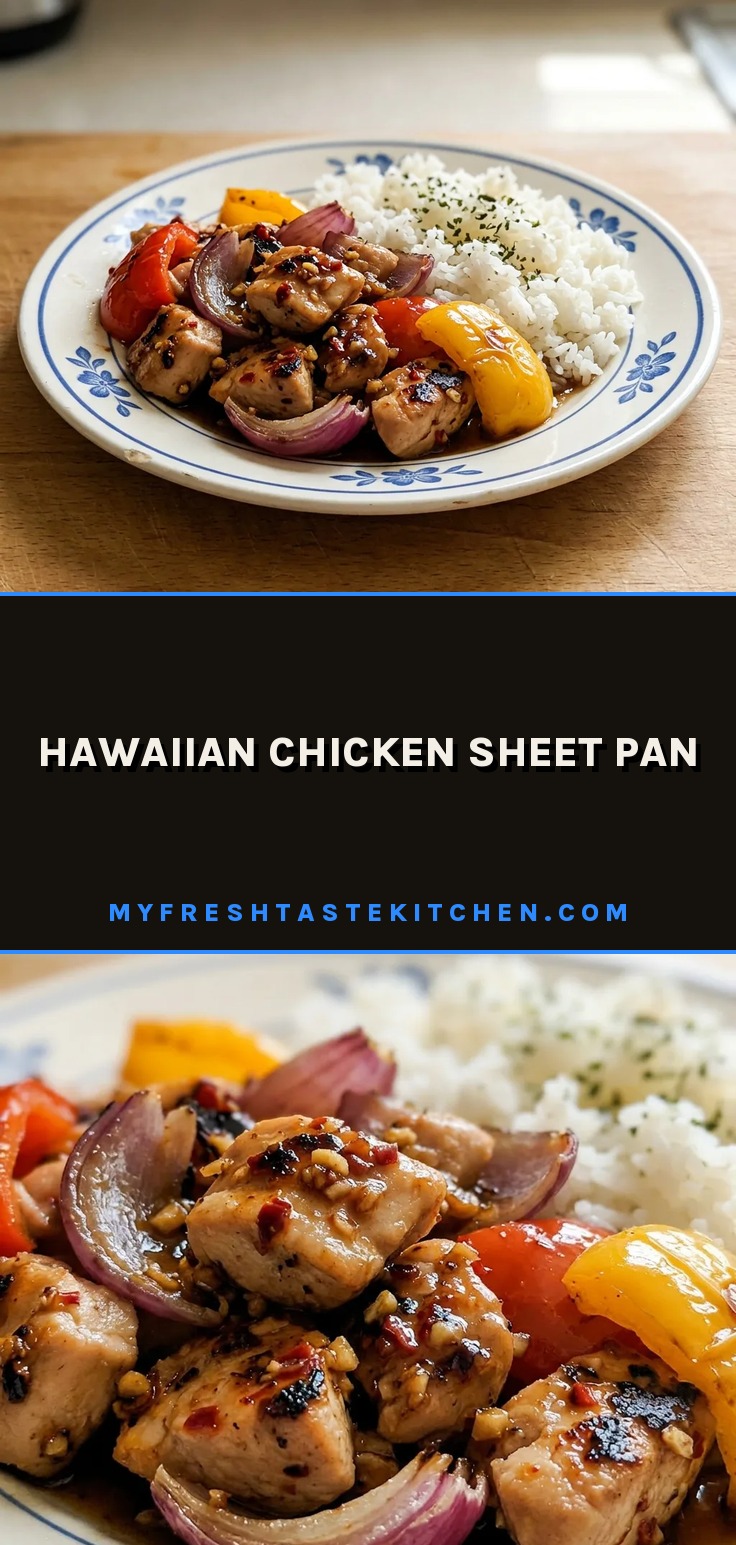
Pour the sauce over the hot chicken and vegetables and toss gently. You’ll see the sauce cling to the pieces, shiny and balanced. Taste a piece: salty, sweet, a little tangy.
Hawaiian Chicken Sheet Pan
Ingredients
Chicken and Vegetables
- 1 ½ lbs boneless skinless chicken breasts cut into 1-inch pieces
- 1 red bell pepper chopped
- 1 yellow bell pepper chopped
- 1 small red onion cut into wedges
- 1 ½ cups fresh pineapple chunks or canned, drained
- 2 tbsp olive oil
- 2 cloves garlic minced
- ½ tsp salt
- ½ tsp black pepper
- ½ tsp paprika
- ¼ tsp chili flakes optional
Sauce
- ⅓ cup low-sodium soy sauce
- ¼ cup pineapple juice from the can or fresh
- 3 tbsp honey or brown sugar
- 2 tbsp rice vinegar or apple cider vinegar
- 1 tbsp cornstarch + 2 tbsp water (slurry, optional for thickening)
Instructions
Chicken and Vegetables
Preheat Oven and Prep Sheet:
Heat oven to 400°F (205°C). Cover a large baking sheet with parchment or apply a light coating of oil.Arrange Chicken and Veggies:
Arrange chicken, bell peppers, onion, and pineapple on the sheet. Drizzle with olive oil, garlic, salt, pepper, paprika, and chili flakes. Mix thoroughly to coat.Bake Until Chicken Cooked:
Bake for 20–25 minutes, turning the pieces over halfway, until chicken reaches an internal temperature of 165°F (75°C) / 74°C.
Sauce
Simmer Sauce with Slurry:
During baking, combine soy sauce, pineapple juice, honey, and vinegar in a small pot. Bring to a simmer and cook for 3–4 minutes. For a thicker sauce, whisk in the cornstarch slurry and continue until glossy.Pour Sauce and Garnish:
After chicken and vegetables are cooked, pour the sauce over them (or serve on the side). Sprinkle with sesame seeds or sliced green onions if desired.
Storing and Serving Leftovers
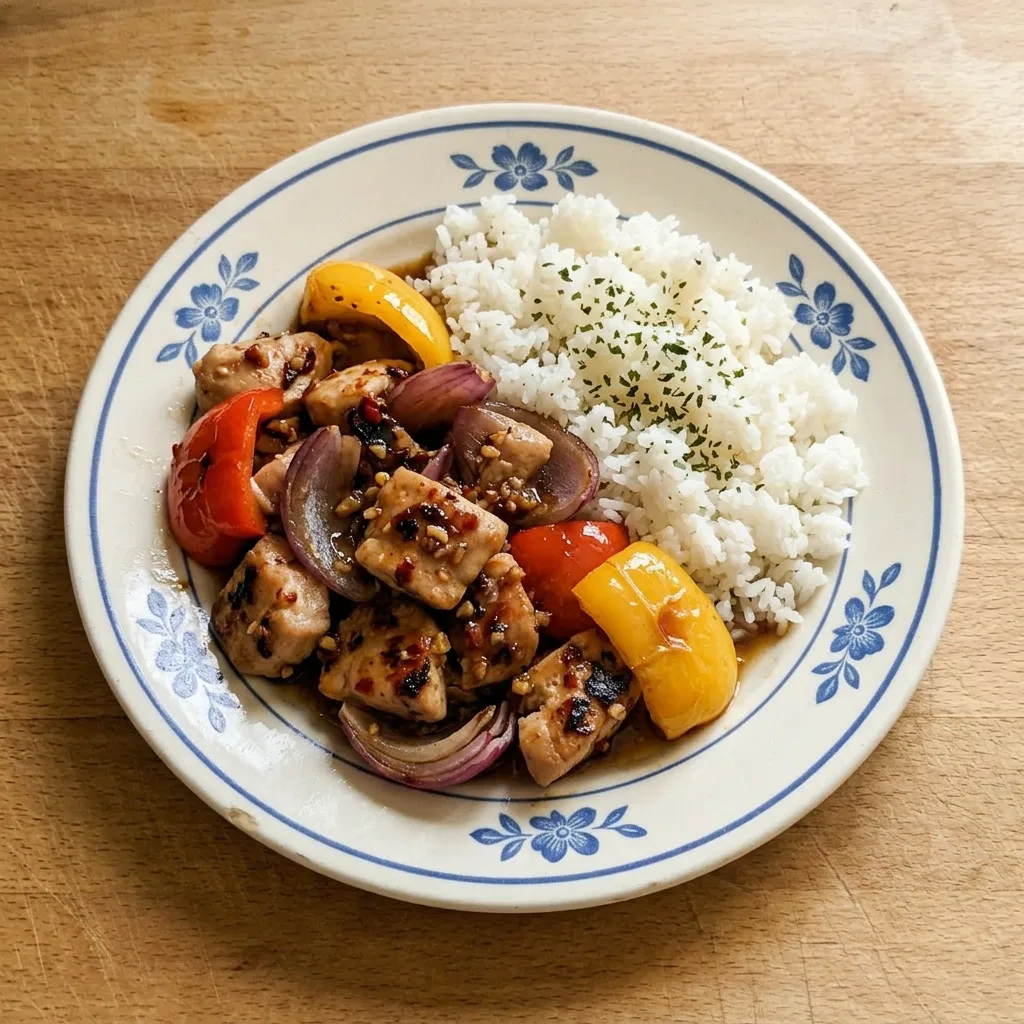
This dish is best served within 30 minutes of adding the sauce. The chicken stays juicy and the vegetables keep their slight bite. After that, the sauce begins to soften the exterior of the chicken and the pineapple loses its caramelized edge.
For leftovers, transfer to an airtight container and refrigerate for up to 3 days. The sauce thickens as it sits; when reheating, add a splash of water or pineapple juice and warm gently in a skillet or microwave to loosen it back up. The vegetables will be softer but the flavors remain bright.
Freezing is not recommended because the peppers and pineapple turn mushy and the sauce’s texture degrades. If you must freeze, freeze the cooked chicken and vegetables without the sauce, then make fresh sauce when reheating.
That way you preserve the best texture.
Tips
- Pat the chicken pieces dry with paper towels before adding oil and seasonings. Surface moisture inhibits browning, and with the pineapple and peppers already releasing liquid, removing that initial moisture helps the chicken develop a sear in the oven rather than steaming.
- Toss the pineapple chunks with 1 teaspoon of cornstarch before adding to the sheet pan. The cornstarch helps the natural sugars caramelize more evenly, giving you deeper golden edges on the pineapple without burning the sugars before the chicken is cooked through.
What to swap (and what to leave alone) in this sheet pan
chicken breasts: Use boneless skinless chicken thighs instead. Thighs stay juicier at 400°F because they have more fat. They need the same 1-inch cut and the same cook time, check for 175°F internal temp for thighs.
low-sodium soy sauce: Use tamari or coconut aminos for gluten-free. Tamari gives almost identical savory saltiness. Coconut aminos are sweeter and less salty, so add salt to taste and expect a milder sauce.
honey: Use packed brown sugar instead. Brown sugar dissolves in the sauce and caramelizes similarly, but gives deeper molasses notes. Use an equal amount by volume.
pineapple: Don’t swap the pineapple. Pineapple provides both sweetness and acidity that balance the soy sauce. Without it, the dish turns one-note salty-sweet and loses the bright tang that cuts through the richness.
I still prod the pieces apart with a spatula before baking, even though the recipe says to arrange them in a single layer. It prevents that sad, gray, steaming effect.
Frequently Asked Questions
Can I use chicken thighs instead of breasts?
Yes, boneless skinless thighs work fine. They have more fat so they stay juicier at 400°F, but cut them into 1-inch pieces and they’ll cook in the same 20 to 25 minutes. Check for 175°F internal temp for thighs.
How do I prevent the chicken from drying out?
Cut the breasts into uniform 1-inch pieces so they cook evenly. Don’t crowd the pan, overlapping pieces steam instead of roast. Flip halfway and pull them at 165°F internal temp; if you wait longer, they’ll dry.
Can I make this dish ahead of time?
This dish is best served within 30 minutes of adding the sauce. For leftovers, refrigerate up to 3 days.
Reheat with a splash of water or pineapple juice in a skillet or microwave. Freezing is not recommended because the peppers and pineapple turn mushy.
What’s the difference between this and a traditional Hawaiian plate lunch?
A traditional plate lunch features a protein like kalua pork or teriyaki chicken, served with two scoops of white rice and macaroni salad. This sheet pan version uses roasted chicken and vegetables with a sweet-tangy sauce, skipping the rice and salad entirely, it’s a one-pan meal, not a composed plate.