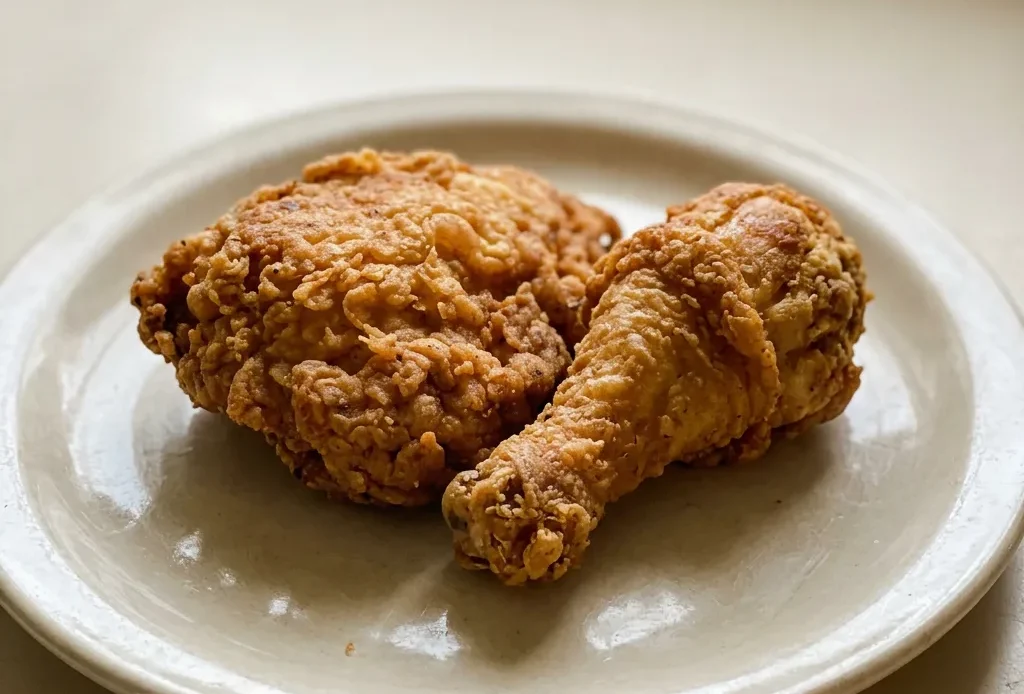
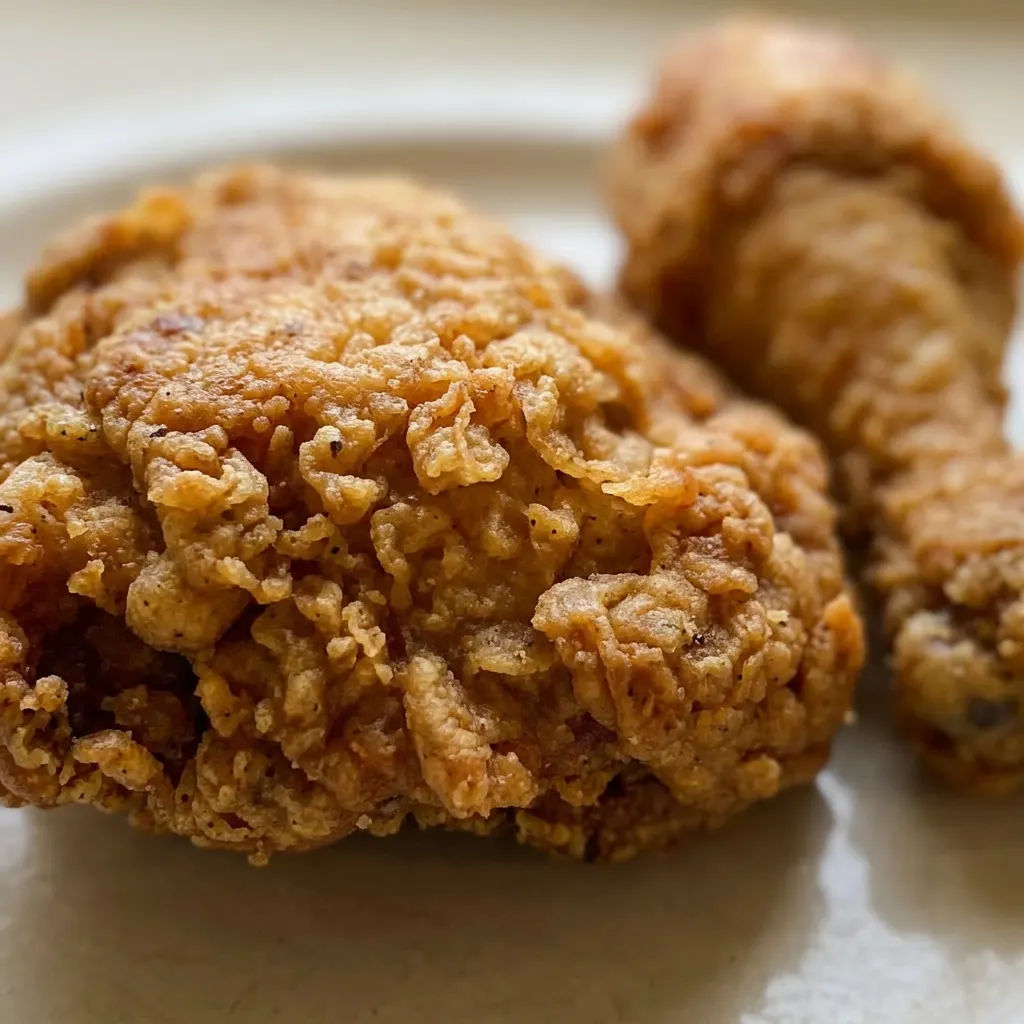
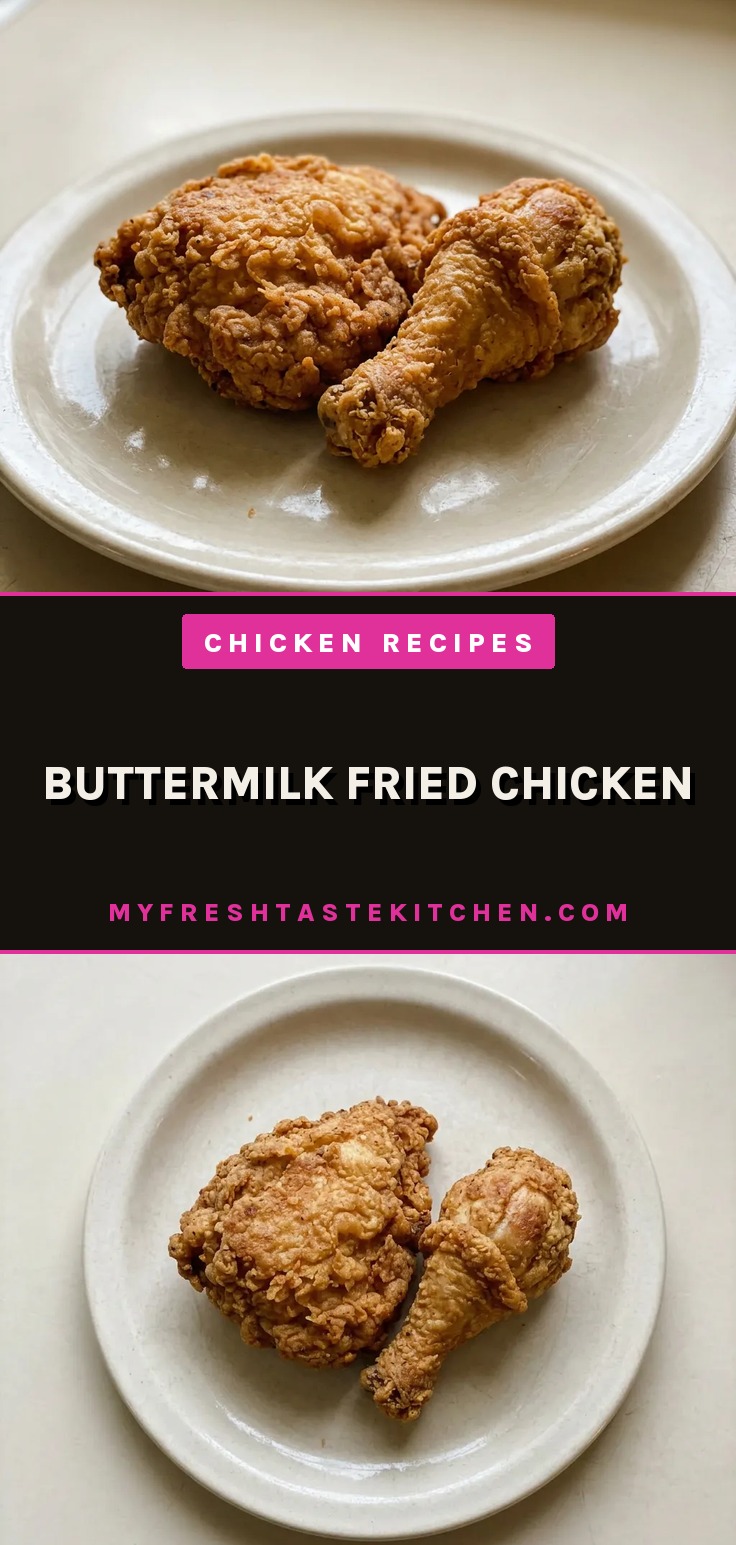
The crust shatters with the first bite, revealing meat so tender it almost falls apart. That contrast, crisp, spiced shell against tangy, juicy interior, is what makes buttermilk fried chicken worth the effort.
The buttermilk does more than add flavor; it works on the meat from the inside, while baking powder in the flour creates an airy crunch you can’t get with a simple dredge. This isn’t a quick weeknight dinner, but the results speak for themselves.
Buttermilk’s role in tender chicken
Buttermilk does two things here. Its acidity gently breaks down chicken proteins, so the meat comes out more tender after frying.
You won’t get that from regular milk. The buttermilk also carries the spice rub deep into the meat, not just on the surface.
After an hour of marinating, you can taste the difference in the first bite. Overnight is even better.
The texture goes from firm to almost silky, especially in thighs. What you’re after is the way the meat pulls apart without resistance, and that starts in the marinade.
What baking powder does to the crust
The flour coating isn’t just for crunch. Baking powder in the mix creates tiny gas bubbles when it hits hot oil. Those bubbles give the crust a lighter, airier structure, crisp without being dense.
The spice blend, paprika, cayenne, dried herbs, adds color and a subtle heat that builds as you eat. To get that coating to stick, dredge each piece thoroughly. Press the flour into every crevice.
Any bare spot is a missed crunch. You’ll see a golden, craggy shell that shatters when you bite.
Oil temperature: the difference between greasy and crisp
Oil at 340°F is the sweet spot. Drop it to 300°F and the chicken soaks up fat, greasy, heavy, sad.
Crank it to 375°F and the crust burns black before the inside cooks through. A candy thermometer takes the guesswork out.
Fry in batches so the oil doesn’t plunge when cold chicken hits the pan. Let the temperature climb back to 340°F between batches.
You’ll see steady bubbles around each piece, and the crust will set fast without darkening too quick.
Knowing when dark meat is done
Dark meat needs to hit 170°F to break down connective tissue and render fat. That’s higher than white meat.
If you cook by time alone, you risk underdone thighs. Use an instant-read thermometer into the thickest part without touching bone. The 15-minute guideline is a starting point.
Bigger pieces take longer. Once out of the oil, set the chicken on a wire rack.
That keeps the crust crisp, no steam softening the bottom. The result: juicy meat beneath a shell that stays crunchy even after a few minutes.
Prep: 15 min · Cook: 45 min · Total: 2 hr · Servings: 4 · Calories: 330 kcal
What to look for in the ingredients
chicken: Use skin-on thighs and drumsticks. The skin renders fat that keeps the meat moist during frying.
buttermilk: Go for whole buttermilk, not low fat. The extra fat helps transfer spice flavor and keeps the meat tender.
baking powder: Check the date. Fresh baking powder creates the light, airy crust; old one leaves the coating flat and dense.
dried herbs and spices: Make sure your dried basil and thyme are fragrant. Stale herbs add little flavor to the crust.
cayenne pepper: Use standard cayenne, not chili powder blends. You want pure heat without extra salt or cumin.
vegetable oil: Use a neutral oil with a high smoke point, like peanut or canola. Olive oil burns before you get the right crust.
I once fried a batch with the oil at 300°F, and the chicken came out greasy and heavy. The next time I kept it at 340°F, the crust was light and crispy.
Get the crust right, crisp, craggy, and not greasy
Season the chicken
Toss the chicken with the spice rub before adding buttermilk. You’ll see the spices cling to the skin; that’s your flavor base, not just a coating.
Marinate in buttermilk
Pour the buttermilk over the seasoned chicken and stir until every piece is coated. Let it sit in the fridge at least an hour. Overnight works better, the meat relaxes and the spices penetrate deeper.
Mix the flour coating
Whisk flour, baking powder, and the remaining spices in a shallow dish. The baking powder is key: it creates tiny bubbles in the crust, making it light and shatteringly crisp rather than dense.
Heat the oil
Heat oil in a deep pan to 340°F. Use a candy thermometer. If you drop a pinch of flour in and it sizzles steadily without smoking, you’re in the zone.
Dredge the chicken
Lift each piece from the buttermilk, let excess drip off, then drop into the flour. Press the flour into every crevice. Any bare spot will be a soggy patch after frying.
Fry in batches
Lower 4-5 pieces into the hot oil. Don’t crowd the pan, temperature drops too much. You should see steady bubbles around each piece.
Turn occasionally until deep golden brown, about 15 minutes.
Check internal temperature
Use an instant-read thermometer in the thickest part, avoiding bone. Dark meat needs to hit 170°F. If it’s under, keep frying a few more minutes.
The 15-minute mark is a guide, not a guarantee.
Drain on a wire rack
Transfer the chicken to a wire rack set over a baking sheet. This keeps air circulating under the crust. Don’t use paper towels, they trap steam and soften the crust.
Buttermilk Fried Chicken
Ingredients
- 8 pieces skin-on chicken (thighs and drumsticks recommended, around 3 lb)
- 1 tsp salt
- 1 tsp ground black pepper
- 1 tsp garlic powder
- 1 tsp dried mustard
- ½ tsp paprika
- ½ tsp dried sage
- 2 cups buttermilk 480 mL
- 2 cups all-purpose flour 260 g
- 1 tbsp baking powder
- 1½ tsp salt
- 1½ tsp garlic powder
- 1½ tsp paprika
- 1½ tsp dried basil
- 1½ tsp dried thyme
- 1½ tsp onion powder
- 1 tsp cayenne pepper
- vegetable oil (for frying, depth of 1-2 inches in a deep frying pan)
Instructions
Season and Marinate Chicken:
In a large bowl, combine the chicken pieces with 1 tsp salt, 1 tsp black pepper, 1 tsp garlic powder, 1 tsp dried mustard, ½ tsp paprika, and ½ tsp dried sage. Toss until evenly seasoned. Then pour in 2 cups buttermilk and stir to coat thoroughly.Refrigerate for Tenderizing:
Cover the bowl and refrigerate for at least 1 hour (or overnight) to marinate; extended marination results in more tender chicken.Prepare Flour Coating:
In a shallow dish, whisk together 2 cups all-purpose flour (260 g), 1 tbsp baking powder, 1½ tsp salt, 1½ tsp garlic powder, 1½ tsp paprika, 1½ tsp dried basil, 1½ tsp dried thyme, 1½ tsp onion powder, and 1 tsp cayenne pepper until uniform.Heat Oil to 340°F:
In a deep frying pan, heat vegetable oil to 340°F (170°C) to a depth of 1-2 inches. Keep the oil at this temperature to achieve a crispy golden crust without burning while cooking the chicken through.Coat Chicken in Flour:
Take each chicken piece from the marinade, let excess drip off, then drop into the flour mixture. Toss to coat completely on all sides.Fry Chicken Until Golden:
Fry the chicken in batches of 4-5 pieces, ensuring not to overcrowd the pan. Turn pieces as needed and fry until golden brown, roughly 15 minutes per batch. The internal temperature must reach 170°F (75°C). Use a candy thermometer to track oil temperature, adjusting the heat to stay near 340°F (170°C) after adding cold chicken.Drain on Wire Rack:
Transfer fried chicken to a wire rack to drain; this preserves crispiness.
Storing and reheating fried chicken without losing the crunch
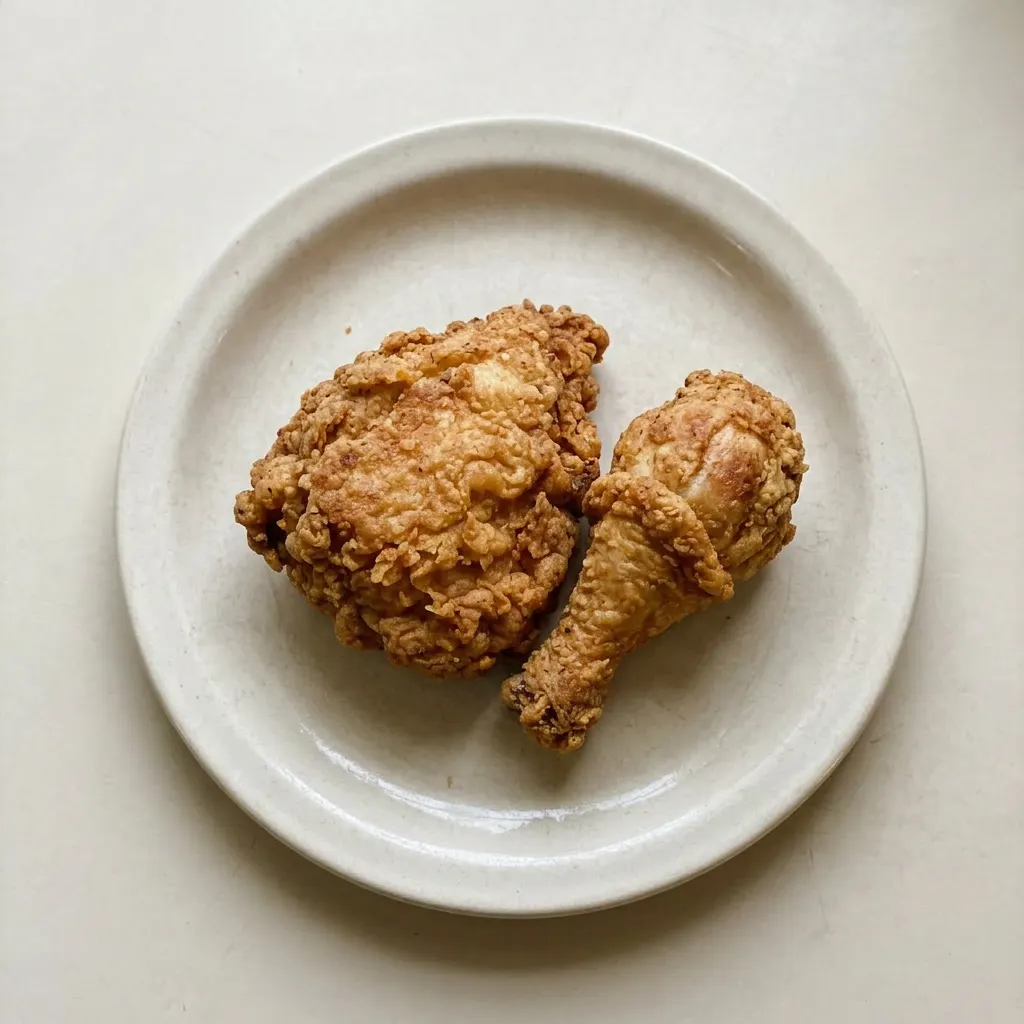
Fried chicken is best eaten within an hour of frying. That’s when the crust is at its crispiest. For leftovers, cool the chicken completely on a wire rack before storing.
Never stack warm pieces or wrap them tight. Instead, place them in a single layer in an airtight container lined with paper towels. Add a loose paper towel on top, then seal.
Refrigerate for up to 3 days. The fridge will soften the crust, but you can bring it back. Reheat in a 400°F oven on a wire rack set over a baking sheet for 10 to 15 minutes.
The wire rack lets hot air circulate, drying the surface and restoring crunch. Don’t use a microwave, it turns the crust to rubber. You can freeze the fried chicken, but expect the crust to lose its snap.
Freeze in a single layer on a tray, then transfer to a freezer bag. Reheat directly from frozen in a 375°F oven for 20 to 25 minutes.
The meat will still be juicy, but the coating won’t be as shattery as fresh. Serve within 2 months for the best quality.
Tips
- Let the buttermilk drip off for about 10 seconds per piece before dredging. If the chicken is too wet, the flour clumps into thick, pasty patches that fry into dense, doughy spots instead of a light crust. The coating should look like a thin, even layer of sandy texture.
Swapping chicken cuts and buttermilk without losing the crunch
chicken thighs/drumsticks: Skin-on chicken breasts (bone-in, about 2 lb). White meat dries out faster.
Cook to 155°F internal, carryover heat takes it to 160°F. Check temp earlier; breast might finish in 12 minutes.
The meat stays juicy but lacks the deep flavor of dark meat.
buttermilk: 1 cup whole milk + 1 tbsp lemon juice or white vinegar (stir, let sit 5 minutes). Gives similar tang and tenderizing. The marinade won’t coat as thickly, flour clings a little less.
If you need dairy-free, use unsweetened plain yogurt (coconut or soy based) thinned with water to buttermilk consistency. The crust may be slightly less even.
all-purpose flour: 1-to-1 gluten-free flour blend (with xanthan gum, like King Arthur Measure for Measure). Crust browns faster and feels more fragile. Lower oil temp to 325°F to avoid burning.
The coating won’t puff as much without gluten, so it’s denser but still crisp.
vegetable oil: Peanut oil or canola oil. Both have high smoke points. Peanut oil adds a slight nutty note.
No change to crispness or cooking time.
Frequently Asked Questions
Can I use boneless chicken for this recipe?
You can, but the cooking time will be shorter and the meat dries out faster. Bone-in thighs and drumsticks are recommended because the bone insulates the meat, keeping it juicier through the 15-minute fry.
If you swap to boneless, use an instant-read thermometer and pull the chicken at 155°F for breast or 165°F for thigh, carryover heat will finish the job. The crust will still crisp up the same way.
How do I keep the fried chicken crispy if I’m making it ahead?
Fried chicken is best within an hour of frying, that’s the peak crisp window. To hold it longer, cool completely on a wire rack, then store in a single layer in an airtight container lined with paper towels, with another loose towel on top.
Refrigerate up to 3 days. To restore crunch, reheat in a 400°F oven on a wire rack for 10 to 15 minutes. The microwave will turn the crust rubbery.
What’s the difference between this buttermilk fried chicken and Southern-style fried chicken?
The main difference is the marinade and coating structure. Southern-style often uses a simple seasoned flour or an egg wash, while this recipe relies on a buttermilk marinade with a spice rub, plus baking powder in the flour for a lighter, airier crust.
The baking powder creates tiny bubbles in the hot oil, so the coating shatters rather than being dense. The spice blend also leans toward dried herbs like basil and thyme, not just paprika and cayenne.