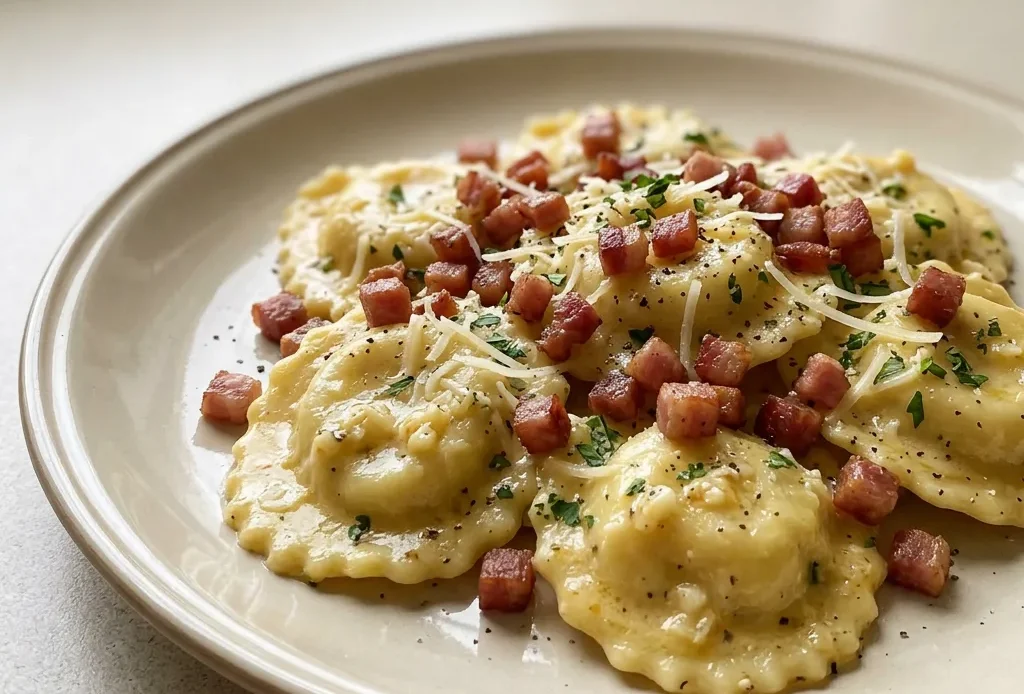
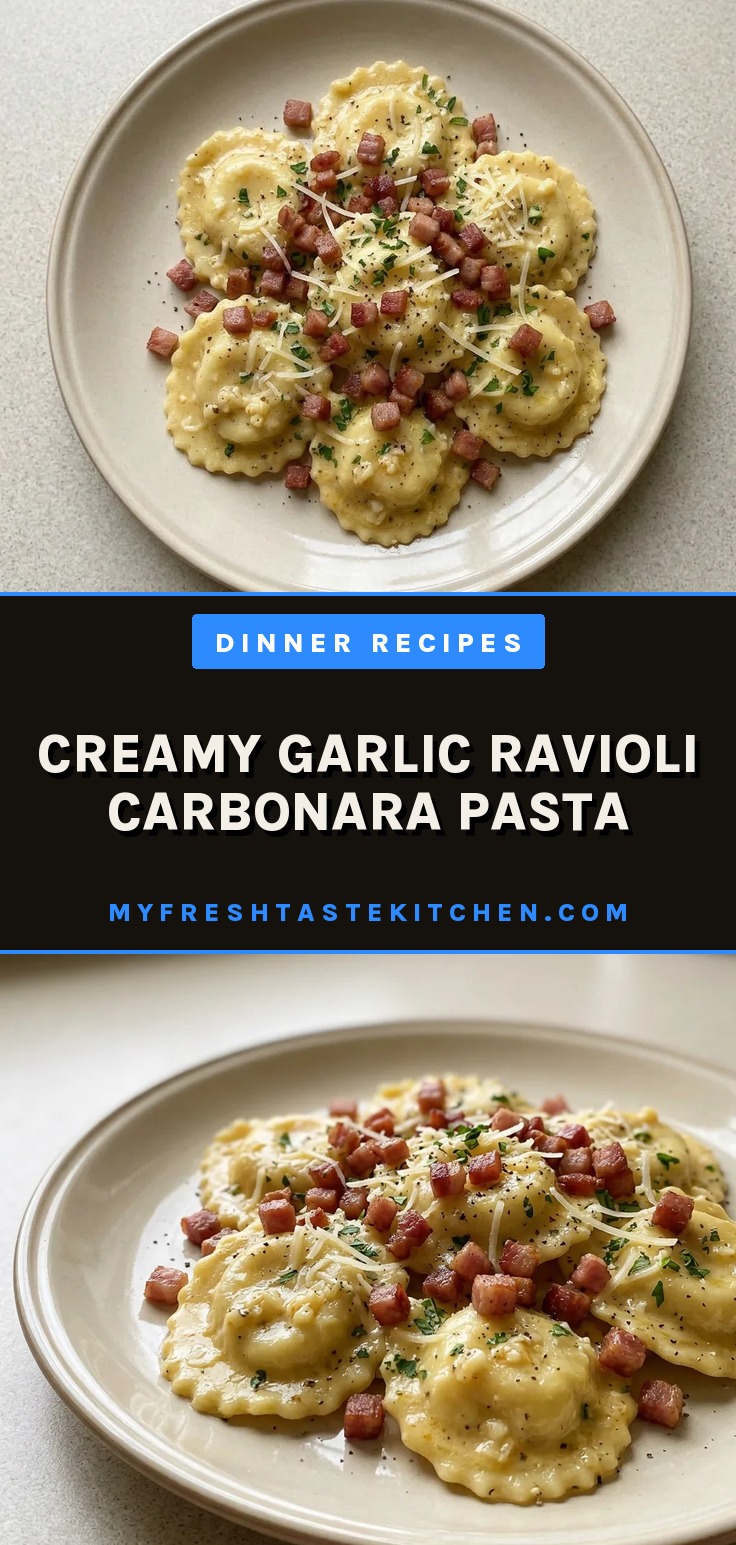
This isn’t carbonara, it’s creamier, richer, and built around tender pillows of ravioli instead of long pasta. The egg yolks still give that silky, rich body, but the heavy cream makes the sauce more forgiving, so you don’t have to nail the timing like a Roman nonna. Pancetta crisps in its own fat, garlic barely whispers through the richness, and the whole thing comes together in the time it takes to boil water.
This creamy garlic ravioli carbonara works because it borrows carbonara’s best trick, tempered yolks and salty pork, then wraps it around a weeknight-friendly shortcut that actually tastes deliberate, not lazy.
Pancetta’s savory depth and crisp
Diced pancetta does more than add meat. As it renders, the fat becomes the flavorful base for your sauce, carrying garlic and cream into every bite. The crispy bits provide contrast against tender ravioli without overwhelming the delicate filling.
Pancetta’s milder, saltier profile keeps the dish balanced, bacon’s smokiness would compete with the garlic and cheese. You taste the pancetta, but it doesn’t steal the show.
Tempering eggs for a silky sauce
Egg yolks scrambled in the pan are a common disaster, turning a creamy sauce into a lumpy mess. Whisking them with cold cream and Parmesan before heating is the safeguard.
The dairy fat and cheese solids shield the yolks from sudden heat, allowing them to thicken gently. Low heat and constant stirring keep the emulsion smooth.
You’ll see the sauce go from thin to silky without any curdling.
Pasta water as a sauce adjuster
Reserved pasta water is starchy, not just salty. That starch helps the sauce cling to each ravioli, creating a cohesive coating that extra cream alone can’t match. Add a splash when the sauce seems too thick or needs more fluidity; stir and watch it loosen without turning greasy.
It’s a better choice than milk or more cream, those would thin the flavor, not the texture. You control the final consistency by eye.
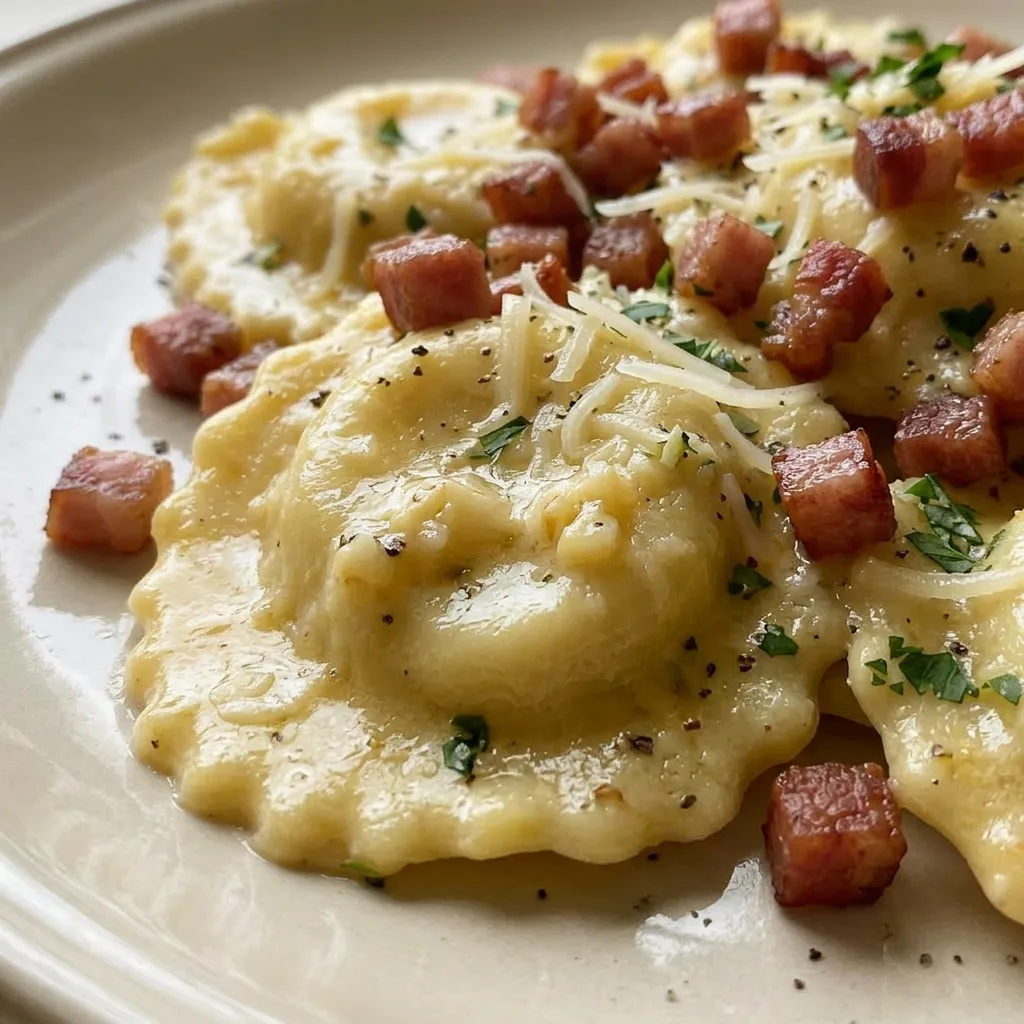
Prep: 10 min · Cook: 20 min · Total: 30 min · Servings: 4 · Calories: 580 kcal
Ingredients that matter
Ravioli: Fresh or frozen works. Avoid overcooking: stop boiling when they float to the surface.
Pancetta: Buy diced pancetta or slab bacon. It renders clean fat without overpowering the garlic and cheese.
Egg yolks: Use large yolks. Whisk them with cold cream and cheese before heating to prevent scrambling.
Parmesan: Grate a block yourself. Pre-grated contains anticaking agents that won’t melt smooth.
Heavy cream: Heavy cream (36% fat) gives the sauce body without breaking. Light cream will thin too much.
I tried dumping the egg-cream mix straight into the hot pan once; got scrambled egg bits in my sauce. Now I whisk it with cream and cheese first, then add low and slow.
Building the carbonara sauce without scrambling the eggs
Cook the ravioli
Boil ravioli in salted water until they float, then scoop out with a slotted spoon. Reserve 1/2 cup pasta water. Overcooking makes them burst, stop when they bob to the surface.
Crisp the pancetta
Fry diced pancetta in olive oil over medium heat until golden and crispy, about 5 to 7 minutes. The fat should be clear, not cloudy. Remove pancetta, keep the rendered fat in the pan.
Sauté garlic in butter and fat
Add butter to the skillet with the pancetta fat. When melted, stir in minced garlic and cook 1 minute until fragrant but not browned. Burnt garlic turns bitter, stop at the first whiff.
Temper the egg mixture
Whisk heavy cream, egg yolks, and Parmesan until smooth. Pour into the skillet over low heat, stirring constantly. The sauce will thin out, then slowly thicken to a silky coat, 3 to 4 minutes.
Combine and adjust consistency
Return ravioli and pancetta to the skillet. Toss gently to coat. If the sauce looks too thick, add pasta water a splash at a time until it clings without glooping.
Season with salt and pepper.
Creamy Garlic Ravioli Carbonara
Ingredients
- 12 oz cheese or meat ravioli (fresh or frozen) 340 g
- 4 oz pancetta or bacon, diced 115 g
- 3 cloves garlic, minced
- 1 cup heavy cream 240 ml
- 1/2 cup freshly grated Parmesan cheese 50 g
- 2 large egg yolks
- 2 tbsp butter 28 g
- 1 tbsp olive oil
- Salt to taste
- Black pepper, freshly cracked to taste
- Fresh parsley, chopped optional
Instructions
Boil Ravioli:
Fill a large pot with water, salt it generously, and bring to a vigorous boil. Drop in the ravioli and cook per package directions (3-5 minutes if fresh, 8-10 if frozen) until they rise to the surface. Scoop them out with a slotted spoon into a bowl, setting aside roughly 1/2 cup (120 ml) of the cooking water. Avoid overcooking.Crisp Pancetta:
Warm olive oil in a broad skillet set to medium heat. Toss in the diced pancetta and fry until it turns crispy and golden, roughly 5-7 minutes. Lift the pancetta out with a slotted spoon and reserve it, keeping the rendered fat in the skillet.Sauté Garlic:
Drop the butter into the skillet along with the pancetta fat. As soon as it melts, stir in the minced garlic and cook for about 1 minute until it becomes aromatic without browning. Stir continuously and maintain a moderate heat.Make Cream Sauce:
In a separate bowl, whisk the heavy cream, egg yolks, and grated Parmesan together until homogeneous. Pour this mixture into the skillet with the garlic and cook over low heat, stirring constantly, until the sauce thickens a bit (3-4 minutes). If it gets too thick, thin with a splash of the reserved pasta water.Combine Ravioli:
Return the cooked ravioli and crispy pancetta to the skillet. Toss gently to evenly coat with the creamy garlic sauce. Adjust the consistency with more pasta water as needed. Season with salt and freshly cracked black pepper to taste.Plate and Garnish:
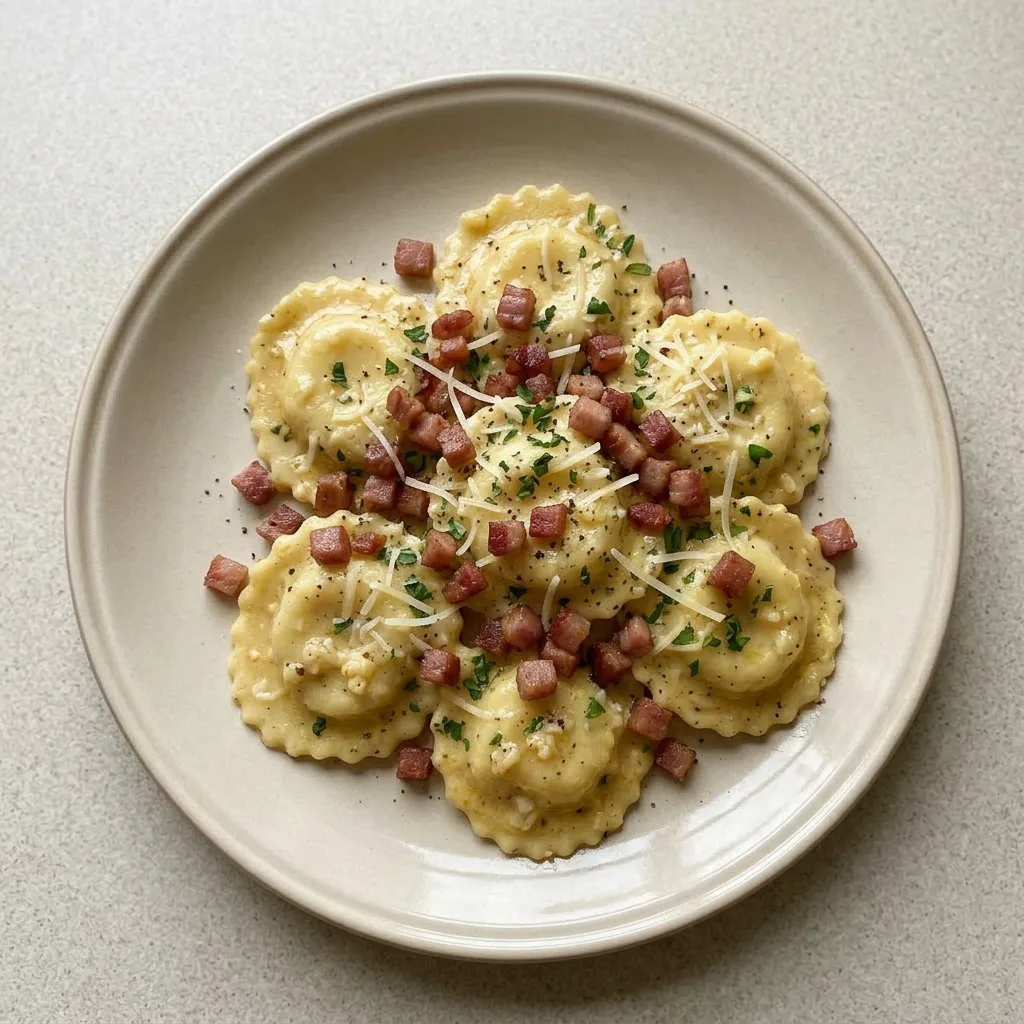
Plate right away, topping with optional chopped fresh parsley and extra Parmesan if desired.
Storage and Serving
This dish is best eaten right after plating. The sauce is at its silkiest, and the ravioli have the ideal tender bite. If you have leftovers, transfer them to an airtight container and refrigerate within two hours.
They’ll keep for up to 2 days, but the texture won’t be the same. The sauce thickens as it sits, and the ravioli soften further. To reheat, use a low flame and add a splash of milk or pasta water, stirring gently until the sauce loosens.
Avoid high heat, which can break the emulsion and leave you with a greasy, curdled mess. Don’t freeze the assembled dish. The cream sauce will separate upon thawing, turning grainy and watery.
You can freeze the pancetta separately, but the ravioli and sauce won’t recover. For best results, only make what you’ll eat in one sitting.
Tips
- Pat the ravioli dry with paper towels after draining to prevent excess water from thinning the sauce.
- Use a microplane to grate the Parmesan; the fine shreds dissolve instantly into the sauce, ensuring a smooth texture.
Swapping without breaking the sauce
Pancetta: Guanciale or thick-cut bacon. Guanciale gives a richer, porkier depth; bacon adds smokiness and a slightly sweeter edge. Both render the same fat needed for the sauce base.
If using bacon, reduce salt slightly, bacon is saltier than pancetta.
Ravioli: Tortellini or other filled pasta. Any filled pasta works, just cook to al dente per package directions. The shape doesn’t affect the sauce.
Avoid stuffed shells or large shapes that don’t coat evenly.
Heavy cream: Half-and-half. Half-and-half (10-18% fat) makes a thinner, less silky sauce. It won’t emulsify as readily and may look slightly grainy if overheated.
For best results, use heavy cream; if swapping, reduce heat further and stir constantly.
Parmesan: Pecorino Romano or Grana Padano. Pecorino is saltier and sharper, cut added salt. Grana Padano is milder but still melts well.
Both provide the same creamy, savory backbone. Never swap with pre-shredded cheeses; they contain anti-caking agents that break the emulsion.
Frequently Asked Questions
Can I make this creamy garlic ravioli carbonara ahead of time?
Not really, this dish is best eaten right after plating, when the sauce is silkiest and the ravioli have the ideal tender bite. Leftovers will keep in the fridge for up to 2 days, but the sauce thickens and the ravioli soften further. Reheat gently with a splash of milk or pasta water over low heat, stirring until the sauce loosens.
Avoid freezing; the cream sauce will separate and turn grainy upon thawing.
Why did my sauce curdle or become grainy?
Most likely the heat was too high or you stopped stirring. The sauce needs low heat and constant stirring to keep the egg yolks from scrambling. If the pan was too hot, the yolks cooked in clumps rather than thickening smoothly.
Another cause: adding the egg mixture directly to a hot pan without tempering, whisk the yolks with cold cream and Parmesan first to shield them from sudden heat.
How is this different from traditional carbonara?
Traditional carbonara uses only eggs, cheese, and pasta water, no cream, and typically coats spaghetti. This version adds heavy cream and swaps in ravioli for the pasta, making the sauce thicker and creamier from the start. The garlic and pancetta add extra flavor layers, while the ravioli filling makes it a heartier one-dish meal.
The cream also makes the sauce more forgiving to cook, since it’s harder to scramble the eggs with the extra fat.