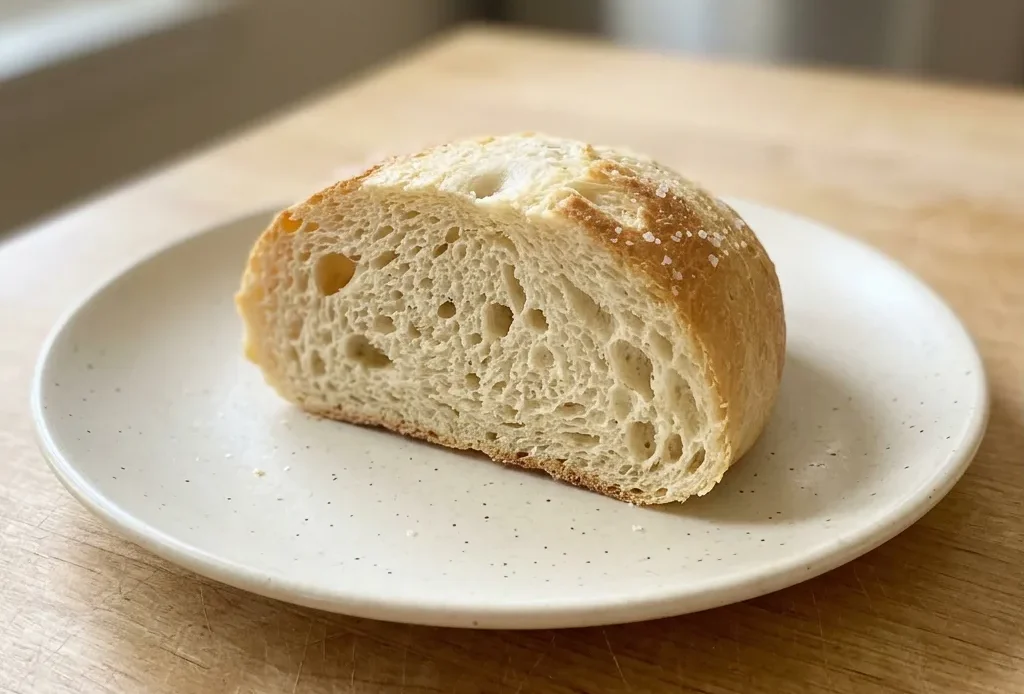
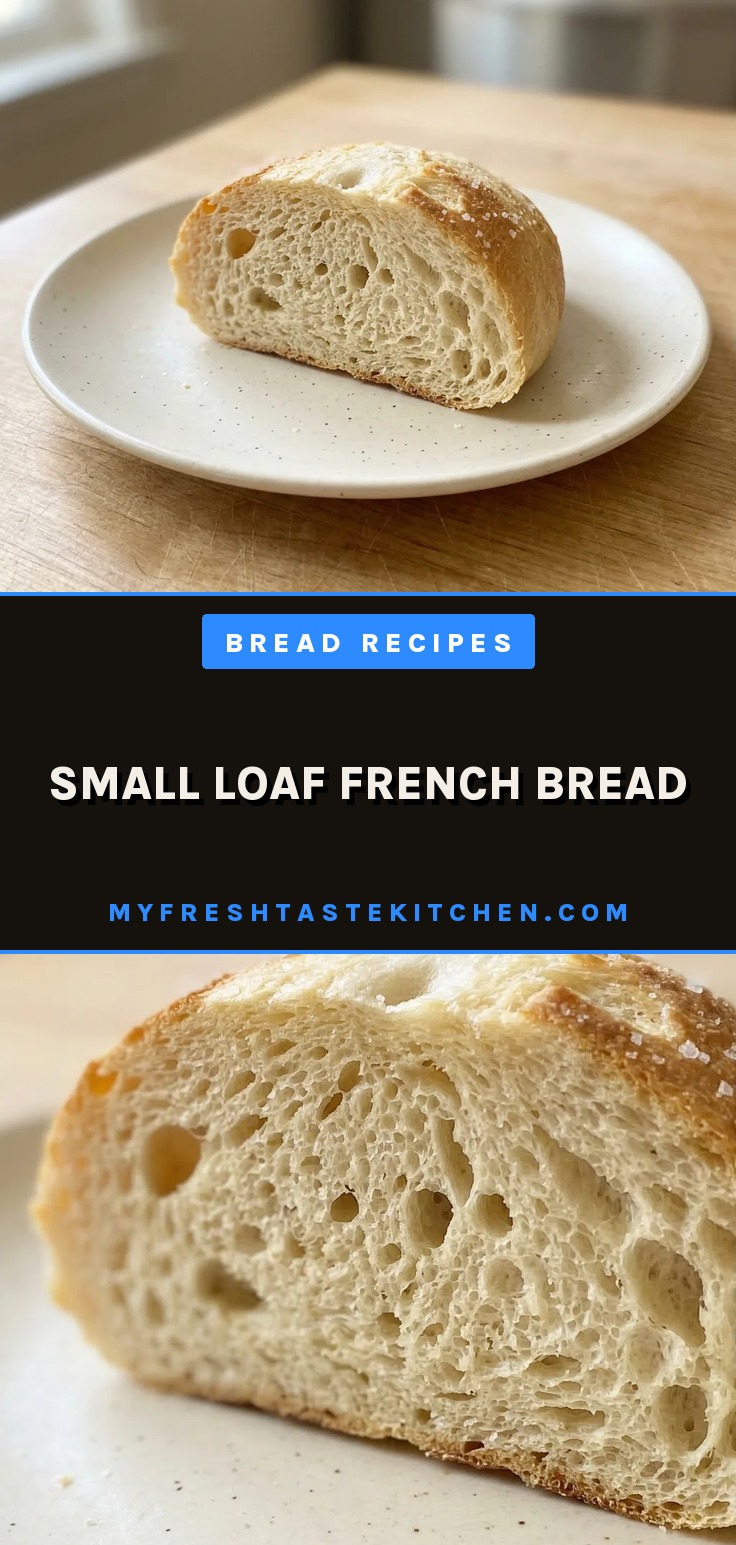
This isn’t a crusty, chewy Parisian baguette. It’s a small loaf french bread with a tender crumb and a thin, crisp crust, a practical, home-baker-friendly version that delivers real bakery flavor without a dozen steps. The surprise?
You get that shattery shell from just olive oil, salt, and a single slash.
Add honey and olive oil for a tender, flavorful crumb
Honey does more than sweeten. It attracts moisture during baking, keeping the crumb soft longer, and its sugars caramelize for a deeper gold crust. Olive oil enriches the dough, making each slice slightly tender without greasiness.
Together they produce a loaf that’s aromatic and supple, not lean and chewy like a classic baguette. You taste a faint sweetness and a rounded richness that lingers. If you want the crust to brown evenly without burning, these two ingredients help.
They’re not traditional in French bread, but they work well for a small, home-style loaf that stays fresh an extra day.
Let the first rise go full and warm for gluten and flavor
A warm rise, around 75, 80°F, coaxes the yeast into steady activity, building both structure and complexity. After an hour the dough should double, puffy and soft. Press a finger in; if the indent stays, gluten has developed enough to trap gas and support an airy crumb.
If it springs back fast, give it more time. This slow fermentation also lets enzymes break down flour starches into simple sugars, adding a toasty aroma you can’t rush.
For easy bread recipes that rely on a single rise, making that rise count is the key to a light interior and a distinct wheaty scent.
Shape the dough to control crust-to-crumb ratio
How you shape directly changes the bite. For a baguette, roll the dough into a 6×3-inch rectangle, then seal the seam well, if it splits during baking, steam escapes and the crumb tightens.
That long, narrow form gives a high proportion of crust to crumb, meaning more chew and a louder crackle. A round boule, in contrast, bakes into a softer, more even interior with less crust per bite. Both are artisan bread recipes in miniature, but the shape decides whether you get a crackling shell or a tender, bread-like center.
Choose based on what you’re serving alongside.
Slash, brush, and salt for a crisp, flavorful crust
A single slash across the top isn’t decorative, it directs where the loaf expands, preventing random bursts that tear the crust. Brushing with olive oil before baking promotes even browning and adds a subtle fruity note.
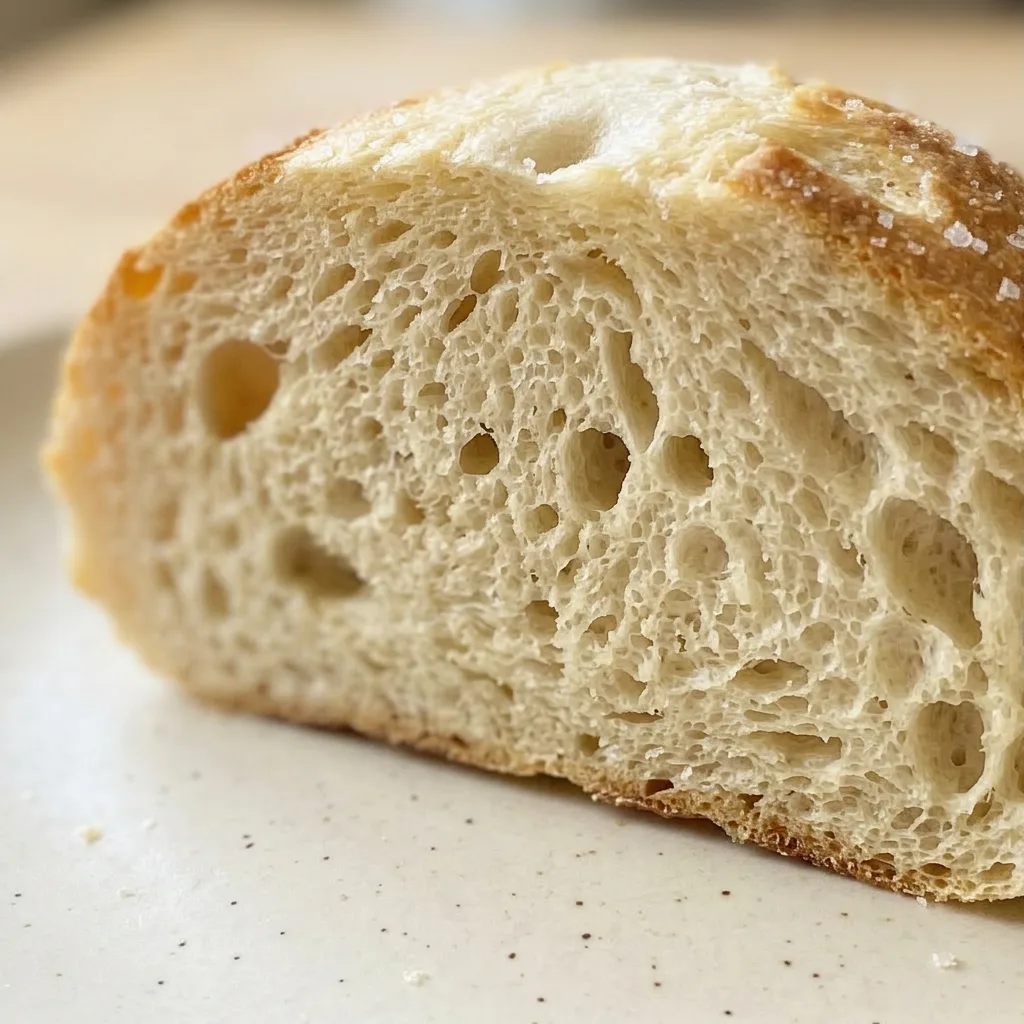
The kosher salt sprinkled on top doesn’t just season; it draws moisture to the surface, creating a drier, crunchier finish as it bakes. For yeast bread recipes where a crisp crust is the goal, this trio of steps changes a plain loaf into one with a shattering exterior and a seasoned edge that contrasts the soft crumb.
The salt crystals stay visible and crunchy after baking.
Prep: 2 hr 40 min · Cook: 20 min · Total: 3 hr · Servings: 12 · Calories: 80 kcal
Flour, yeast, and a little fat for a tender loaf
All-purpose or bread flour: Bread flour gives more chew; all-purpose makes a slightly softer crumb. Either works here.
Active dry yeast: Scatter it over the warm water and let it soften before mixing. It should look creamy.
Honey: Use a mild honey so it doesn’t overpower. It helps keep the loaf tender for an extra day.
Olive oil: A fruity extra virgin adds subtle flavor, but any olive oil works. Don’t skip it.
Mix and knead until the dough is smooth and elastic
Combine ingredients
Whisk flour, salt, honey, olive oil, and warm water together. Scatter yeast over the water and let it dissolve, you’ll see it soften and bloom.
Knead the dough
Mix on medium until dough comes together, then knead with dough hook 10 minutes. The dough should pull away from the bowl and feel smooth, not sticky. If kneading by hand, work 15 to 20 minutes until it springs back when poked.
First rise
Cover and let rise in a warm spot about 1 hour until doubled. Press a finger into the dough, if the indent stays, gluten is set. If it springs back fast, let it go longer.
Shape the loaf
Turn dough onto a floured surface, knead gently 4 to 5 times to deflate. Let rest 10 to 15 minutes. For a baguette, shape into a 6×3-inch rectangle, seal seam well with heel of hand to prevent splitting during baking.
Second rise
Place shaped dough on baking sheet, cover with towel, let rise about 1 hour until puffy. It should look soft but hold its shape, overproofing makes it flatten.
Slash, brush, bake
Preheat oven to 400°F. Slash top once with sharp knife, this directs expansion so the loaf doesn’t tear randomly.
Brush with 1 tbsp olive oil and sprinkle 1/2 tsp kosher salt. Bake 18 to 20 minutes until golden brown. Tap bottom; a hollow sound means it’s done.
Small Loaf French Bread
Ingredients
- 10 oz all-purpose or bread flour 284 g; 2 1/4 cups for one loaf; for a double batch, use 4 1/2 cups
- 1 tsp kosher salt plus an extra 1/2 tsp for topping
- 1 tbsp honey
- 1/2 tbsp olive oil plus 1 tbsp for brushing the top
- 6 fl oz warm water
- 1/2 tsp active dry yeast
Instructions
Mix dry ingredients:
In a large mixing bowl, whisk together the flour, salt, honey, olive oil, and warm water. Scatter the yeast over the water and let it dissolve.Knead dough:
Attach the paddle to a stand mixer and mix on medium speed until the dough begins to come together. Switch to the dough hook and knead for about 10 minutes until the dough is smooth and clears the sides. If kneading manually, work on a floured counter for 15–20 minutes until smooth and elastic.First rise:
Cover the bowl with plastic wrap and let it rise in a warm location for roughly 1 hour until doubled. Test by pressing a finger into the dough; if the indentation remains, it is ready.Deflate and rest:
Transfer the dough to a lightly floured surface and gently knead 4–5 times to release air. Cover with a dish towel and allow it to rest for 10–15 minutes.Shape loaf:
Shape the dough into a round boule, an oval, or a 6×3-inch rectangle for a baguette. For a baguette, press the ends down with the heel of your hand to seal. Set it on a baking sheet, cover with a towel, and let it rise for about 1 hour until puffy.Slash and season:
Preheat the oven to 400°F (205°C). Using a sharp knife, make one slash across the top of the loaf. Brush with 1 tbsp olive oil and sprinkle with 1/2 tsp kosher salt.Bake bread:
Bake for 18–20 minutes until the crust is golden brown. Tap the bottom of the loaf; it should sound hollow when done.Cool and serve:
Allow to cool for a few minutes, then slice and serve warm.
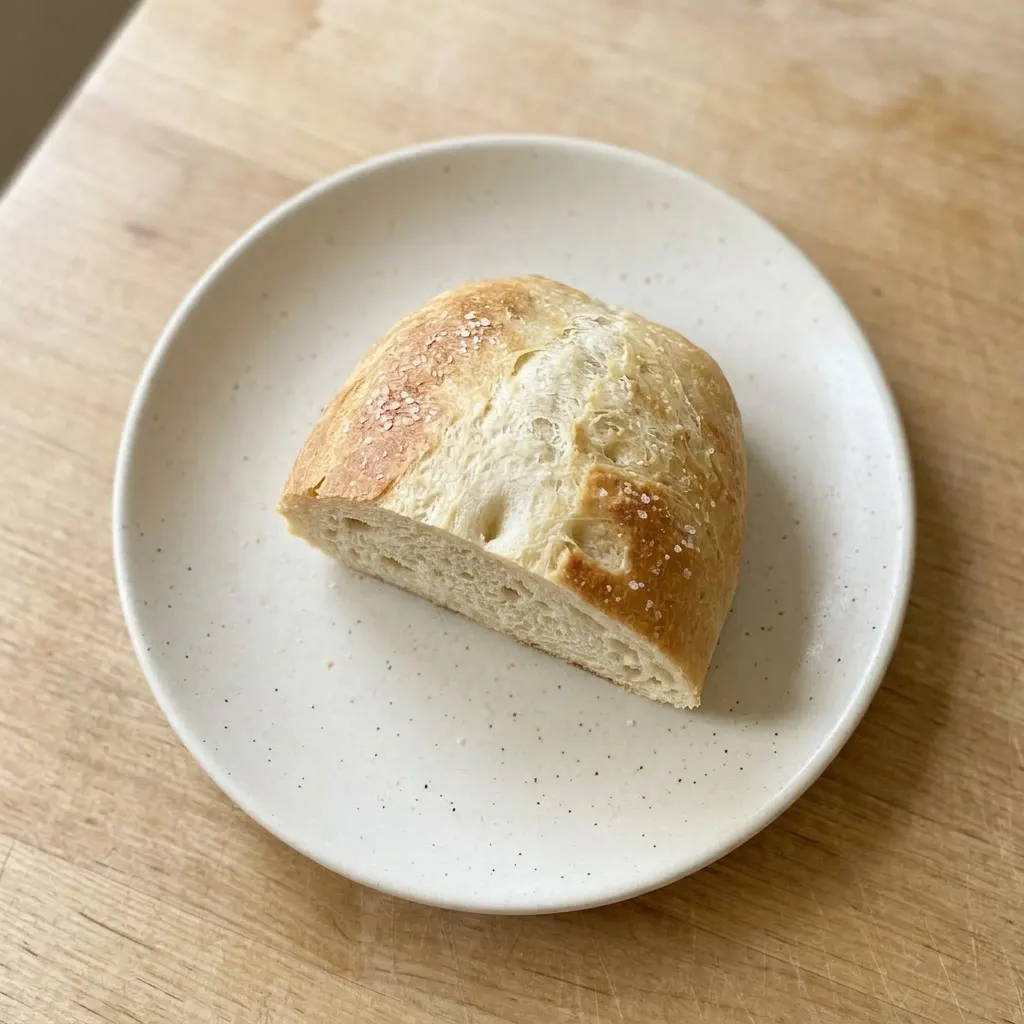
Storage and Serving
This bread is best within 2 to 3 hours of baking, when the crust is crisp and the crumb is soft and springy. Once cooled, store leftovers in a paper bag at room temperature for up to 2 days; plastic traps moisture and softens the crust. To re-crisp, place the loaf directly on the oven rack at 350°F for 5 minutes.
The bread dries out and the crust chews rather than shatters after day one. Freeze the whole loaf or slices well wrapped in foil and a zip-top bag for up to 3 months. Thaw at room temperature and reheat in the oven.
The honey and oil keep the crumb tender even after freezing, but the crust will be softer than fresh. Do not refrigerate; it accelerates staling.
Tips
- Proof your yeast in the warm water with the honey before mixing. If it doesn’t foam within 5 to 10 minutes, the yeast is dead and you need fresh yeast. This recipe relies on a single rise, so inactive yeast will ruin the loaf.
- When kneading by hand, wet your hands instead of adding extra flour to the dough. This prevents the dough from sticking without drying it out, which would make the crumb dense.
Swapping flour, yeast, sugar, and fat changes the loaf more than you’d think
All-purpose or bread flour: Bread flour. Bread flour has more protein, so it absorbs more water and produces more gluten.
Expect a chewier crumb and a slightly taller rise. All-purpose yields a softer, more tender loaf. Either works; it’s a texture choice.
Active dry yeast: Instant yeast. Instant yeast is more potent and doesn’t need dissolving.
Use 25% less by weight (about 1/3 teaspoon instead of 1/2). It may shorten the first rise by 10 to 15 minutes; watch the dough, not the clock.
Honey: Granulated sugar. Honey adds moisture and a mild floral sweetness. Sugar dries the crumb slightly and doesn’t caramelize as deeply.
Use the same amount (1 tbsp) but expect a paler crust and a leaner texture.
Olive oil: Melted butter. Butter adds a richer flavor and a softer crumb but less crisp crust.
Use the same amount (1/2 tbsp in dough, 1 tbsp for brushing). The crust may brown faster due to milk solids; reduce oven temp by 25°F if it darkens too quickly.
I once rushed the first rise because I was impatient, and the bread came out like a brick. The one time I let it go a full 90 minutes in a warm spot, it doubled and I’ve never gone back.
Frequently Asked Questions
Can I make the dough ahead and refrigerate it overnight?
Yes, but expect a different rise. After the first rise, punch it down, cover tightly, and refrigerate.
The cold slows fermentation, so the second rise will take longer, maybe 2 hours instead of 1. Shape it cold, then let it warm up and puff until puffy before baking. The flavor deepens slightly, but the crust will be less crisp than a same-day loaf.
Why did my bread turn out dense and not rise enough?
Most likely the dough didn’t rise long enough. Press a finger into the first rise; if it springs back fast, give it more time until the indent stays. For the second rise, it should look soft and hold its shape, not flatten.
Cold kitchen? Place the bowl in a turned-off oven with the light on to warm it.
Over-kneading can also tighten gluten, but that’s rare by hand.
How do I get a crustier crust without burning the bottom?
Brush with olive oil and sprinkle salt before baking, that draws moisture to the surface for crunch. Bake on the middle rack, not lower, and use a light-colored baking sheet; dark ones absorb heat and burn bottoms.
If the bottom still darkens too fast, slide a second baking sheet underneath halfway through. The hollow tap test tells you it’s done, not overdone.
Is this bread supposed to be soft inside or more chewy like a baguette?
It’s meant to be soft and tender, not chewy like a baguette. The honey and olive oil keep the crumb supple, and all-purpose flour makes it softer than bread flour would.
A baguette shape gives more crust per bite, but the interior stays plush. If you want a chewier loaf, swap to bread flour, but this recipe leans toward a home-style, easy-eating bread.