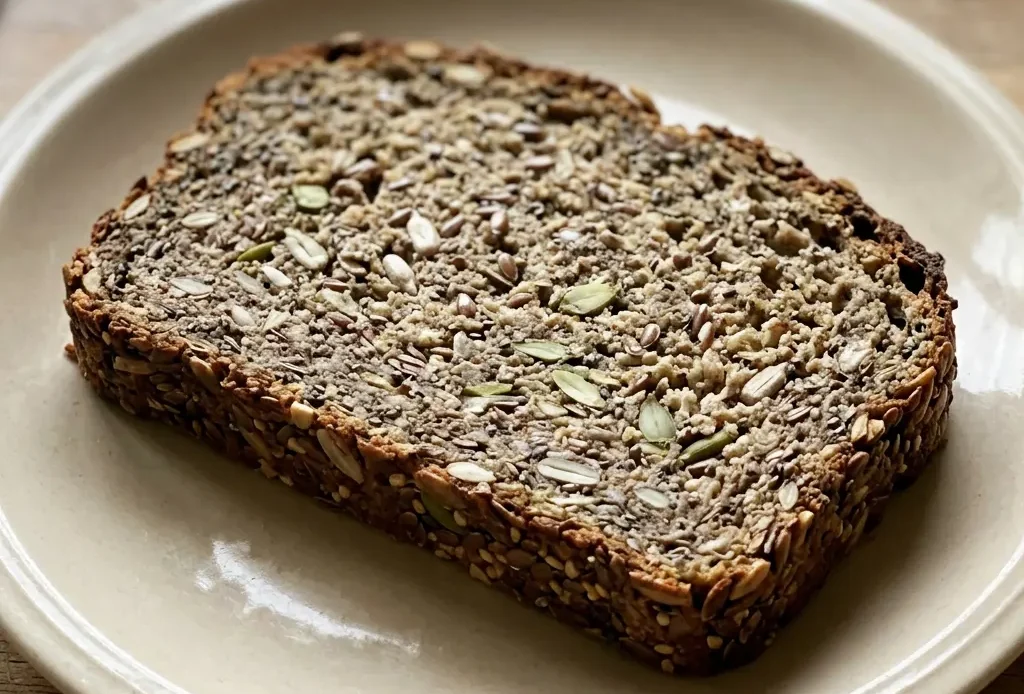
Most people assume gluten-free bread has to be crumbly or dense, but the real pitfall here is underhydrating the seeds. If the batter looks thick yet dry, the loaf will never set into a sliceable crumb, it’ll stay fragile no matter how long it bakes.
That’s why the balance of wet to dry matters more than any mixing technique. This seed-based approach leans on a clever gel network instead of gluten, which makes it naturally gluten-free and opens up an entirely different texture. For anyone exploring flourless bread recipes, the trick is trusting that gel to do the work, not fighting it with extra liquid or overmixing.
Seed structure without flour
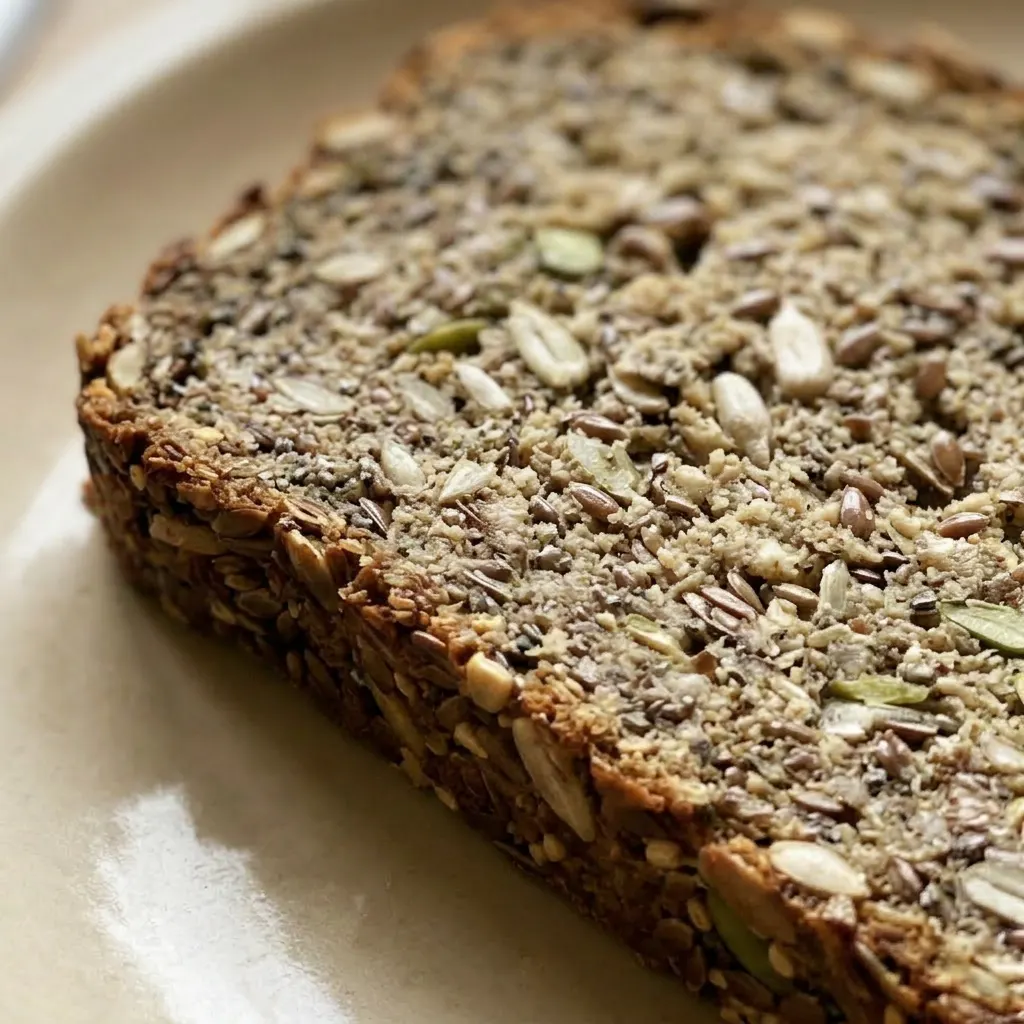
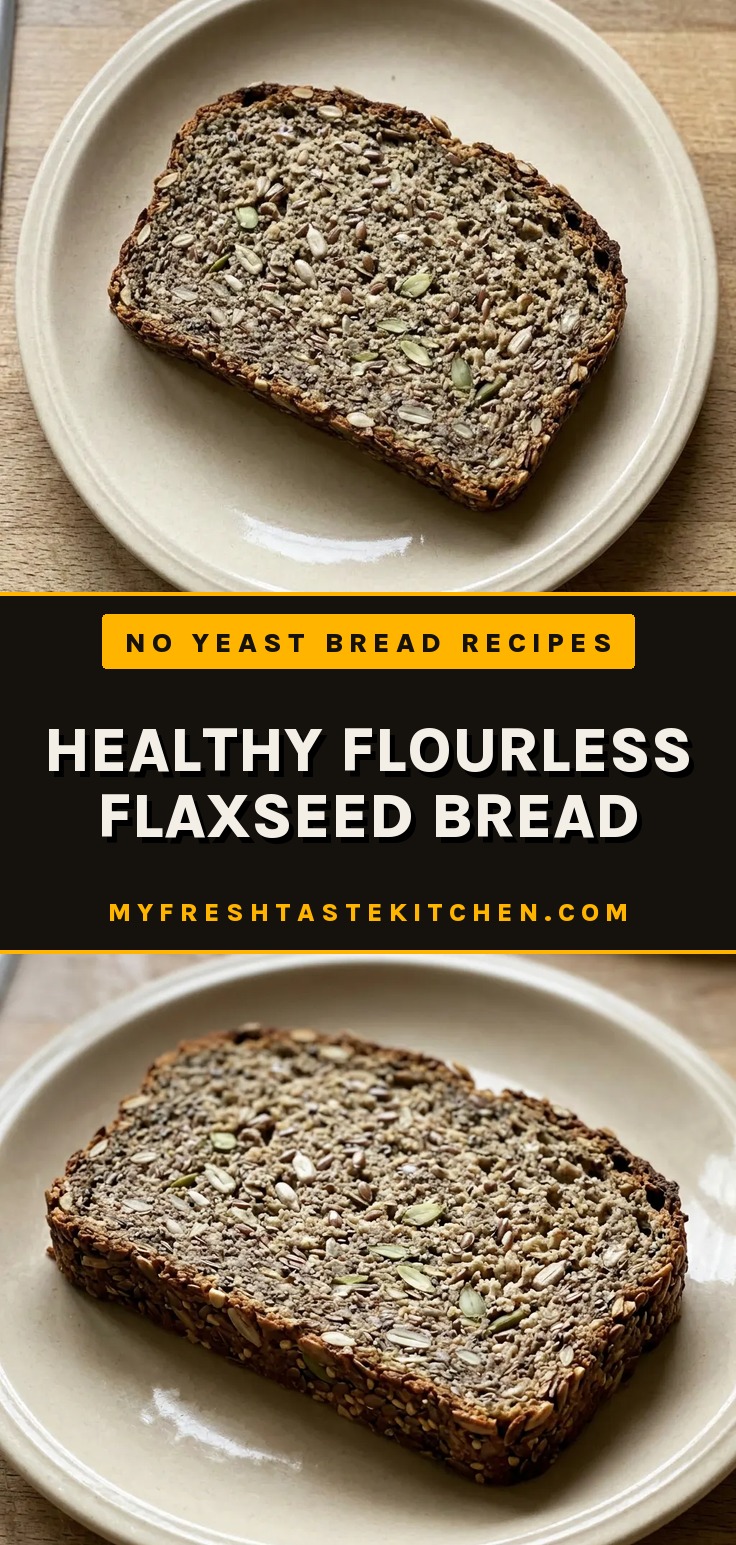
This bread leans entirely on seeds for its crumb, not wheat flour. Ground flaxseed meal acts as the base, while whole flaxseeds, sunflower seeds, pumpkin seeds, and chia seeds each contribute texture.
When chia and flax meet liquid, they swell into a gel that traps air and binds the loaf. That gel mimics gluten’s job, holding everything together without any stretchy dough. You get a dense but tender slice, not a crumbly mess.
The seeds also pack fiber and healthy fats, so each serving feels substantial. If you’ve tried other yeastless bread recipes and found them gummy or bland, this seed-heavy mix gives real bite and nutty flavor.
Moist crumb from the right wet-dry balance
Four eggs provide the main structure and moisture here, enough to set the loaf without making it heavy. Olive oil adds a subtle richness and keeps the crumb tender, not tough.
Water does the subtle work: it hydrates the seeds fully, especially the chia and flax, so their gelling power activates. Without enough water, those seeds would stay dry and the bread would turn out dense and crumbly. With it, you get a moist interior that doesn’t feel wet.
This ratio avoids the common pitfall of no yeast bread recipes that end up too dry or too pasty. The crumb holds together without being gummy.
Cooling is part of the bake
This bread sets as it cools, not just in the oven. Slice it warm and you’ll get a crumbly, soft mess.
The interior continues to firm up as steam escapes during the rest. Fifteen minutes in the pan lets the structure stabilize, then turning it out onto a rack lets air circulate all around. That airflow prevents condensation from making the bottom soggy.
If you rush it, the crumb will collapse under the knife. Patience here turns a fragile loaf into one that slices cleanly.
For yeast free bread recipes, this resting step is important, it’s what gives you neat sandwich slices instead of a heap of seeds.
Prep: 13 min · Cook: 45 min · Total: 1 hr 13 min · Servings: 12 · Calories: 130 kcal
What to look for in each seed
Ground flaxseed meal: Buy the meal, not whole seeds you grind yourself. Pre ground gives a consistent crumb without patches of whole seeds.
Whole flaxseeds: Use brown or golden, they behave the same. Skip if you want a smoother texture, but they add nice crunch.
Sunflower seeds: Raw and unsalted, so the bread’s salt level stays in your control. Roasted ones can turn bitter during baking.
Pumpkin seeds: Raw pepitas, green and hulled. Their small size blends evenly without needing a chop.
Chia seeds: Whole seeds, not ground. They gel just fine as is and provide visible speckles throughout the loaf.
Mix the batter by feel, not by time
Combine dry ingredients
Whisk the flaxseed meal, whole flaxseeds, sunflower seeds, pumpkin seeds, chia seeds, baking powder, and salt in a large bowl. You should see an even distribution of seeds and no clumps of baking powder.
Whisk the wet ingredients
In a separate bowl, whisk eggs, olive oil, and water until the mixture is uniform and slightly frothy on top. The eggs should be fully incorporated, not streaky.
Fold wet into dry
Pour the wet mixture over the dry. Fold gently with a spatula, scraping the bottom, until no dry streaks remain. Stop as soon as it comes together; overmixing can make the bread tough.
The batter will be thick and paste-like.
Bake until set
Scrape the batter into the oiled pan and smooth the top. Bake at 350°F for 45 to 50 minutes. The loaf is ready when golden brown and a toothpick inserted near the center comes out with a few moist crumbs, not wet batter.
Cool completely before slicing
Let the bread rest in the pan for 15 minutes, then turn it out onto a wire rack. Cool fully, at least 1 hour, until the interior feels firm to the touch. Slicing warm will cause the crumb to crumble.
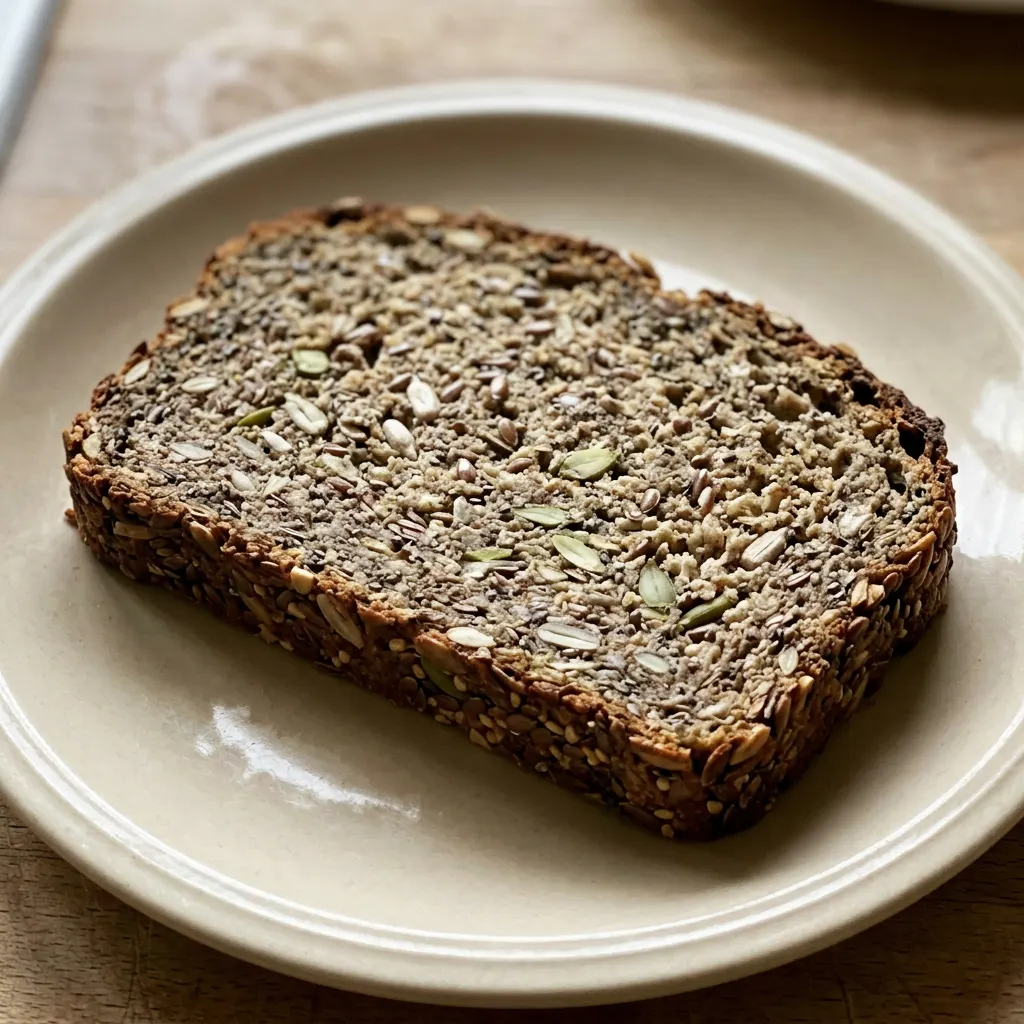
Healthy Flourless Flaxseed Bread
Ingredients
Method
Preheat Oven and Prep Pan:
Heat oven to 350°F (175°C). Coat an 8×4 or 9×5-inch loaf pan with olive oil or line with parchment.Whisk Dry Ingredients:
In a large bowl, combine ground flaxseed meal, whole flaxseeds, sunflower seeds, pumpkin seeds, chia seeds, baking powder, and salt by whisking.Whisk Wet Ingredients:
In a separate bowl, whisk eggs with olive oil and water until uniform and lightly aerated.Fold Wet into Dry:
Add the wet mixture to the dry ingredients. Gently fold with a spatula until barely mixed; avoid overworking.Bake and Cool Loaf:
Transfer batter to the prepared pan, level the top. Bake for 45-50 minutes until golden and a toothpick inserted yields mostly clean with a few moist crumbs. Let cool in pan for 15 minutes, then turn out onto a wire rack.
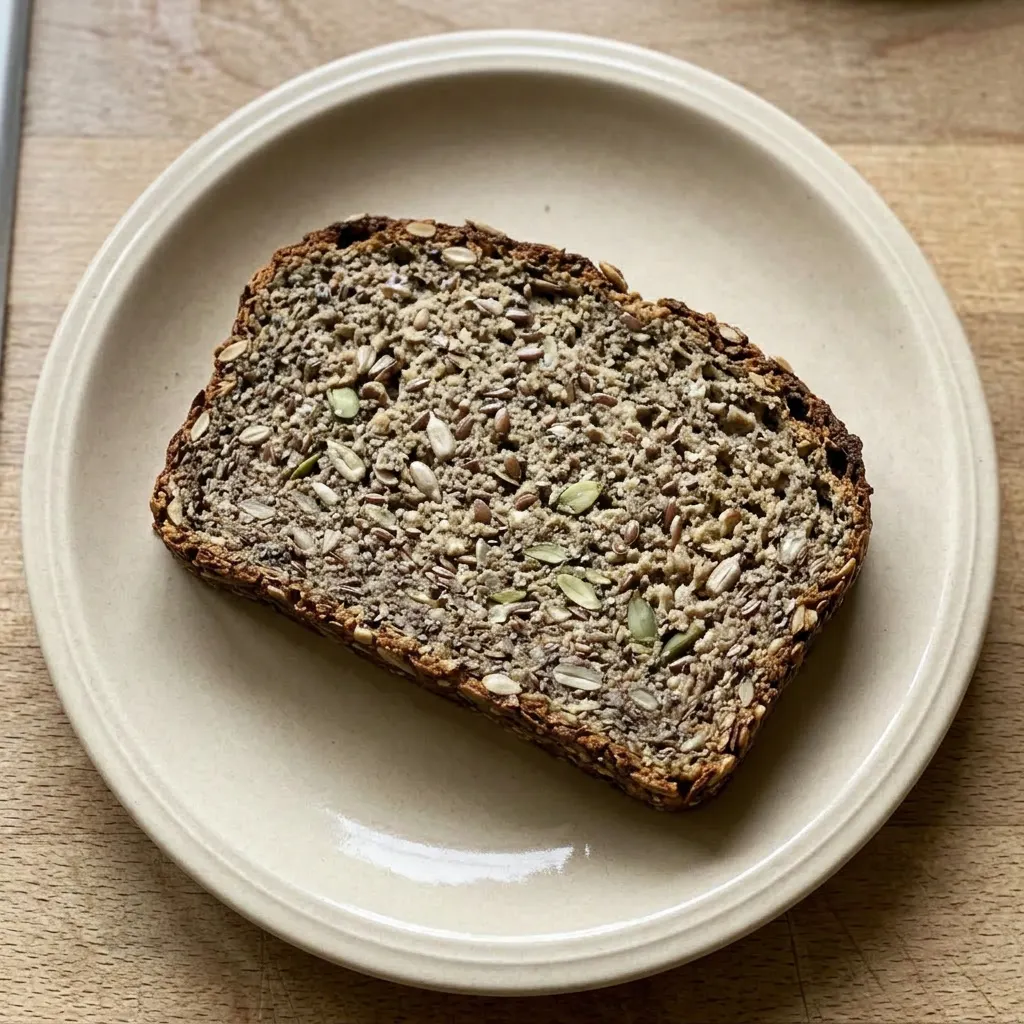
Storage and Serving
Cool the bread completely before storing. Wrap tightly in a clean kitchen towel and keep at room temperature for up to 3 days.
The towel wicks moisture, preventing sogginess while the crumb stays tender. After day 3, the texture starts to dry out. For longer storage, slice the cooled loaf, arrange slices in a single layer on a baking sheet, freeze until solid, then transfer to a zip top bag.
Slices keep for up to 3 months. Reheat directly from frozen in a toaster or 350°F oven for 5 minutes to revive the crust and soften the interior.
Serve within a few hours of toasting for the best texture. Do not refrigerate the whole loaf; it accelerates staling.
The bread is most firm and sliceable after a full 1 hour cool down. If making ahead, bake and cool completely, then freeze slices immediately.
Thaw and toast as needed.
Tips
- Weigh the ground flaxseed meal and seeds with a kitchen scale rather than using measuring cups. Cup measurements for seeds and meal can vary by 20% or more due to packing, which directly changes the liquid absorption and can leave the bread too wet or too dry.
Swapping seeds without breaking the crumb
Sunflower seeds: Hemp seeds or chopped almonds, same weight. Hemp seeds soften the crunch; almonds keep it. Either works without changing moisture.
Pumpkin seeds: Sesame seeds, same weight. Sesame seeds are smaller and milder; the bread will be less seedy but still hold together.
Ground flaxseed meal: Don’t swap. Ground flax is the structural backbone. Without it, the loaf won’t gel or set; you’d get a greasy scramble.
Whole flaxseeds: Don’t swap. They add crunch, but more importantly they help the crumb bind. Skip them and the texture turns denser and more fragile.
Frequently Asked Questions
Can I make this bread ahead of time?
Yes, bake and cool completely, then freeze slices immediately. The Storage section covers the details: slices keep up to 3 months.
Thaw and toast as needed. Do not refrigerate the whole loaf, it accelerates staling.
Why did my flaxseed bread turn out too dense?
Most likely you overmixed the batter. Fold just until no dry streaks remain; overworking develops toughness. Another cause: your baking powder may be old.
Check the expiration date, it’s the only leavener here.
How is this different from traditional seed breads?
Traditional seed breads often rely on a flour base with seeds scattered in. This one uses ground flaxseed meal as the structural backbone, with no flour at all. The chia and flax gel bind the loaf, giving a dense but tender crumb that holds together without gluten.
Can I toast this bread after baking?
Absolutely. Toasting revives the crust and softens the interior.
Cool the loaf fully first, slice, then toast directly from frozen or at room temperature. Serve within a few hours of toasting for the best texture.