
The biggest mistake with sourdough discard breakfast pockets is treating the leftover starter like a throwaway ingredient rather than the backbone of the dough. That tangy, unfed discard isn’t just a way to avoid waste, it’s what gives these pockets a tender, almost biscuit-like crumb and a subtle sourness that cuts through the richness of eggs and cheese. Skip the yeast, skip the rise time; this dough comes together in minutes and rolls out without fighting back.
But the real trick? Cooling the filling completely before sealing.
Hot eggs will steam the dough from the inside, leaving you with a soggy pocket instead of a crisp, golden one. Get that right, and these sourdough discard breakfast pockets are the kind of make-ahead breakfast that actually keeps its texture.
Sourdough Discard’s Role
Sourdough discard brings a tangy flavor and a tender crumb without any commercial yeast. The fermentation acids in the discard relax the gluten, so the dough stays pliable and soft.
It also generates some gas, but not enough for rise, that comes from steam and a bit of baking powder. The discard’s hydration varies; if the dough feels sticky, add a tablespoon of flour.
Too stiff? A splash of water.
You’ll taste the difference: a subtle sourness that pairs well with rich fillings. This isn’t about saving leftover starter; it’s about using its unique properties to make a more interesting pocket.
The result is a dough that’s flavorful on its own, not just a neutral wrapper. For easy sourdough breakfast recipes, this approach saves time and adds character.
Cooked and Cooled Filling
A hot filling is the enemy of a sealed pocket. Steam from warm eggs or cheese softens the dough before it sets, leading to sogginess and burst seams.
Scramble the eggs just until they’re barely set, they’ll finish cooking in the oven. Let the mixture cool to room temperature on a plate, about 10 minutes. That pause firms up the eggs and stops the cheese from weeping fat.
The edges stay clean when you pinch them, and the dough bakes evenly without a wet spot. You’ll see the difference in the final pocket: a crisp, golden crust that holds its shape. No steam pockets, no leaking.
The filling stays inside where it belongs.
Rolling and Sealing
Rolling to a consistent 1/4-inch thickness does two things: the dough bakes through at the same rate as the filling, and it’s thick enough to hold the filling without tearing. Too thin and the bottom burns before the top browns; too thick and you get a doughy center. A fork crimp seals the edges securely, press firmly so the two layers fuse.
Leave no gaps. As for filling amount, 2 to 3 tablespoons per pocket is enough. Overstuffing stretches the dough thin at the seams, and those weak spots burst in the oven.
A sealed pocket puffs evenly; a leaky one deflates. Check the crimp before baking, if you see any filling peeking out, pinch it closed.

Prep: 15 min · Cook: 20 min · Total: 50 min · Servings: 4 · Calories: 250 kcal
Ingredient Notes for Sourdough Discard Breakfast Pockets
Sourdough Discard: Use unfed, straight from the fridge; its hydration can vary, so adjust dough with flour or water as needed.
All-Purpose Flour: Standard AP flour works; too much dusting during rolling makes the dough dry and hard to seal.
Butter: Melt it before mixing; cold butter won’t incorporate evenly into the discard dough.
Cheddar Cheese: Shred your own from a block; pre-shredded cheese has anti-caking agents that prevent smooth melting.
Bacon or Sausage: Cook and crumble the meat fully before adding to the eggs so it doesn’t release moisture in the pocket.
Making Sourdough Discard Breakfast Pockets
Mix the dough
Stir the discard, flour, salt, and melted butter until a shaggy mass forms. It should come together without dry patches but feel slightly tacky, not sticky.
Rest the dough
Cover and let rest for 15 minutes. This relaxes the gluten so the dough rolls easily. If it resists or snaps back, rest another 5 minutes.
Prepare the filling
Scramble the eggs over medium heat until just set but still moist, about 3 minutes. Fold in cheese and meat until the cheese melts, then spread on a plate to cool.
Roll and cut
Roll the dough to a 1/4-inch rectangle. It should hold its shape without shrinking. Cut into 4 to 5 inch squares.
If the dough sticks, dust lightly with flour.
Fill and seal
Spoon 2 to 3 tablespoons cooled filling onto each square. Fold and press edges, then crimp with a fork. Check for gaps; any opening will leak during baking.
Bake
Bake at 350°F for 20 minutes until golden brown. The pockets should feel firm and sound hollow when tapped. Let cool 5 minutes before serving.
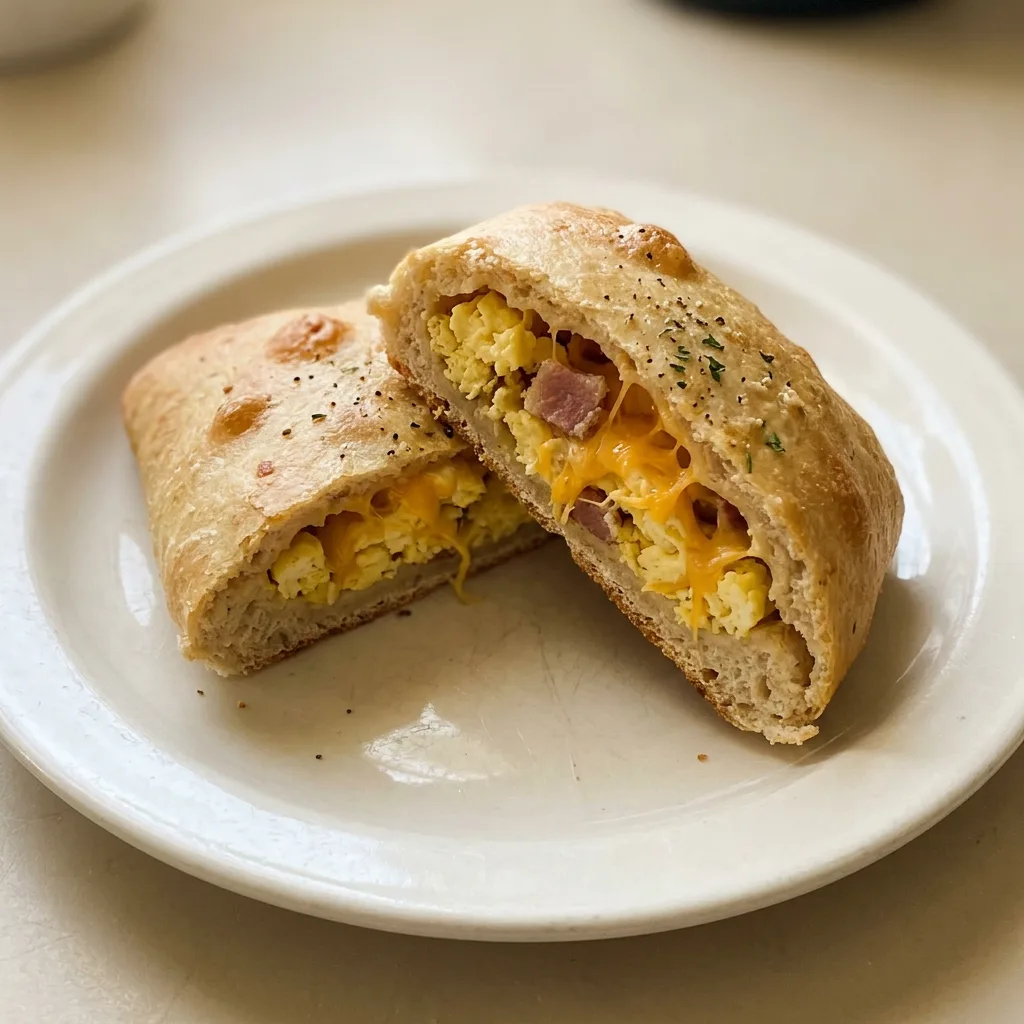
Sourdough Discard Breakfast Pockets
Ingredients
Method
Mix dough ingredients:
In a big bowl, mix together sourdough discard, all-purpose flour, salt, and melted butter. Blend until the dough comes together, roughly 3-5 minutes.Rest dough:
Drape a towel over the dough and allow it to rest at room temperature for 15 minutes.Cook scrambled eggs:
During the dough’s rest, cook scrambled eggs in a non-stick skillet over medium heat for 3-4 minutes. Fold in cheese and optional meat; continue cooking until the cheese has melted.
Fill and seal pockets:
Roll the dough to a rectangle approximately 1/4 inch thick. Slice into 4-5 inch squares, spoon the egg mixture onto each, then press edges to seal.
Bake pockets:
Heat the oven to 350°F (175°C). Place the pockets on a parchment-lined baking tray and bake for 20 minutes until golden.Cool and serve:
Let them cool on a wire rack for 5 minutes, then serve while still warm.
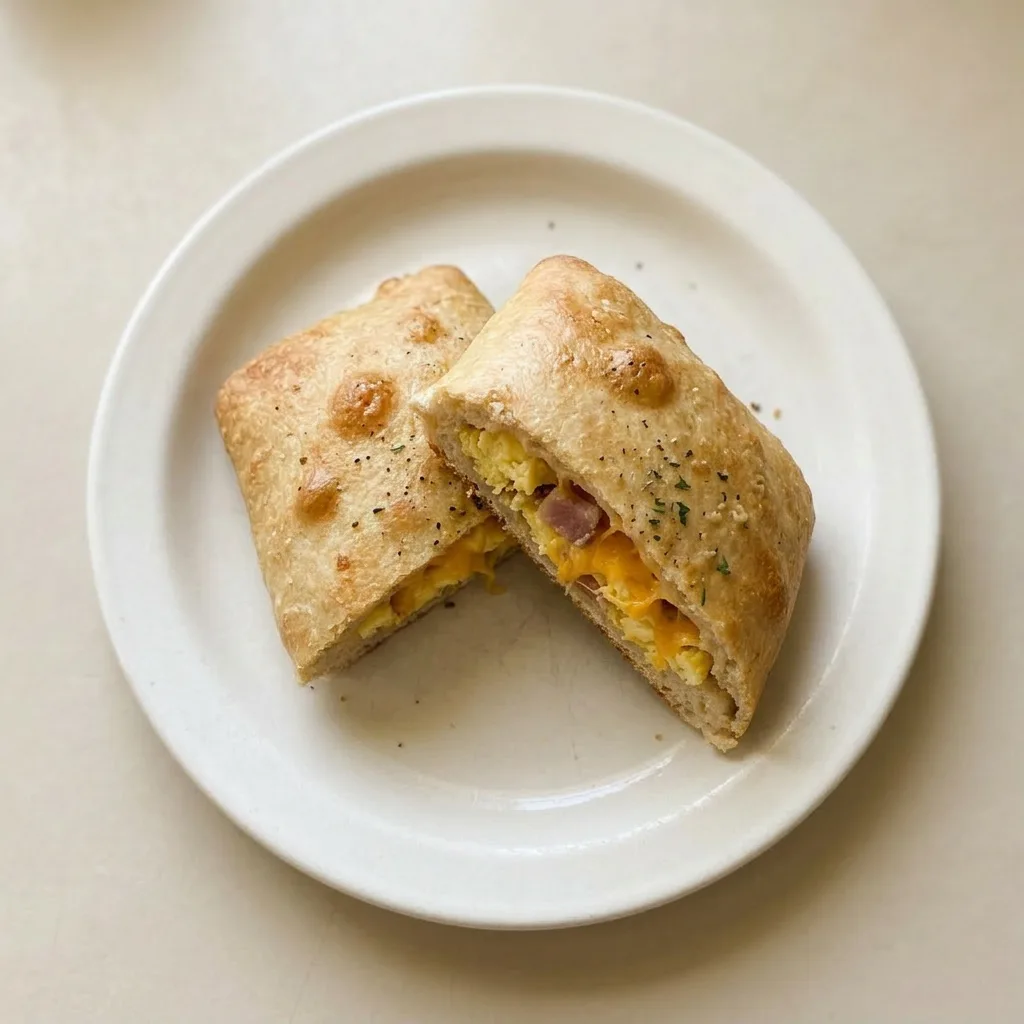
Storage and Serving
These pockets are best eaten within 30 minutes of baking, while the crust is crisp and the filling is hot. Let them cool on a wire rack for 5 minutes before serving to set the crust. For leftovers, cool completely, then store in an airtight container in the fridge for up to 3 days.
The crust softens as it sits, but reheating restores some crispness. Reheat in a 350°F oven for 10 minutes, or in a toaster oven for 8 minutes. Avoid microwaving, which makes the dough gummy.
The filling stays intact and the cheese doesn’t separate. Freezing is not recommended; the dough loses its crisp structure and the eggs turn rubbery. If you must freeze, freeze the unbaked pockets on a tray, then transfer to a bag.
Bake from frozen at 350°F for 25 minutes, adding 5 minutes to the bake time. The texture won’t match fresh, but it’s acceptable.
Tips
- Measure the sourdough discard by weight rather than volume; its density varies with hydration, and using a cup measure can throw off the dough balance.
- Let the baked pockets rest on the baking sheet for 2 minutes before transferring to a wire rack; this prevents the bottoms from sticking or tearing.
What to Swap and What to Keep in These Pockets
Sourdough Discard: Active sourdough starter or buttermilk + baking powder. Active starter ferments faster, so the dough may become slack if rested too long. Buttermilk (same volume) plus 1/2 teaspoon baking powder gives a similar tang and tenderness, but the dough won’t have the same subtle sourness; it’ll be more like a biscuit pocket.
All-Purpose Flour: Gluten-free all-purpose blend with xanthan gum. Use 250g of a 1:1 GF blend.
The dough will be more fragile and sticky, so wet your hands when handling. The pockets won’t puff as much and the crumb will be denser, but they’ll still seal and hold filling. Add an extra tablespoon of melted butter if the dough feels dry.
Cheddar Cheese: Pepper Jack, Gouda, or shredded mozzarella (dairy-free if needed). Pepper Jack adds heat; Gouda brings a smoky, creamy melt.
Mozzarella gives a stretchier, milder pocket. For dairy-free, use a shreddable plant-based cheese, check that it melts, as some only soften. Start with 1 cup and add more if the filling looks dry.
Bacon or Sausage: Cooked chorizo, finely chopped mushrooms, or crumbled tempeh. Chorizo adds smoky spice; sauté mushrooms until all moisture evaporates or they’ll make the pocket soggy. Tempeh, crumbled and sautéed in oil until browned, mimics meaty texture.
Use the same volume (1/2 cup) and ensure any swap is fully cooked and cooled before adding to eggs.