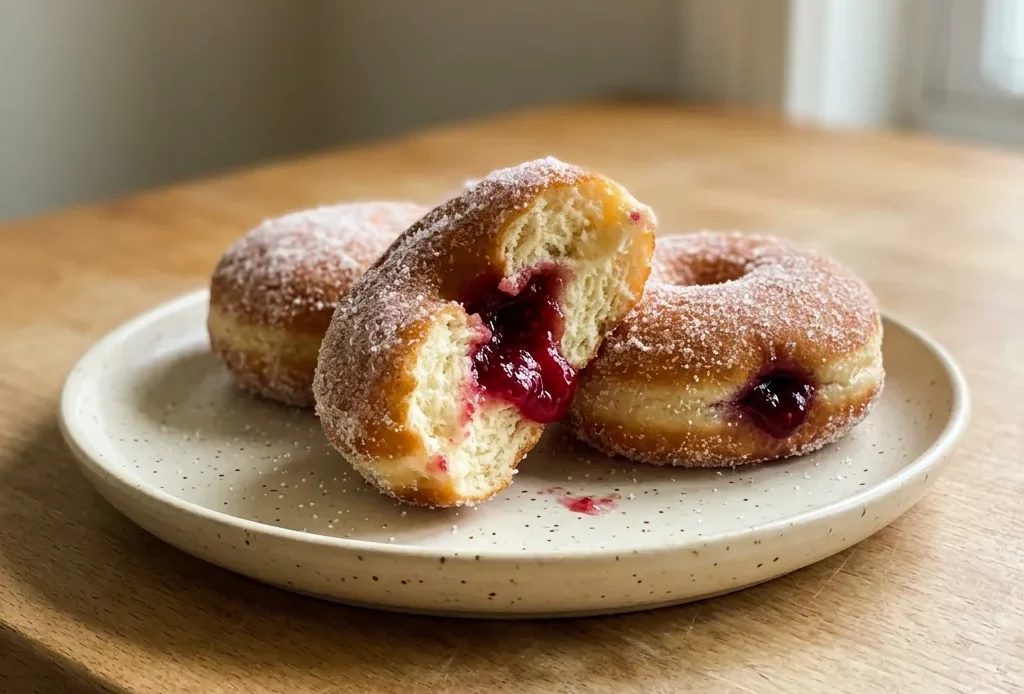
The biggest hurdle with homemade jelly donuts isn’t the filling or the frying, it’s keeping the dough soft and airy through the next day. This recipe uses a tangzhong, a cooked flour paste that locks in moisture, so the crumb stays tender and springy rather than turning dense after a few hours. That extra step makes the difference between a donut that’s good fresh and one that still tastes just-made the next morning, which matters if you’re making a batch for a crowd or want to enjoy them over a couple of days.
The dough itself is sticky and soft, but that’s exactly what you want for a light interior that can hold a generous jelly filling without tearing. This tangzhong approach is the reason these donuts have that bakery-quality texture, and it’s worth the small extra effort in the method.
Every time I pick up a proofed donut to lower it into the oil, I half-hold my breath because I’ve seen them deflate in my hands before. Now I always slide the parchment square right into the oil, paper and all.
Why tangzhong makes a better donut
A tangzhong, a cooked paste of flour and water, gives the dough a softer, more tender crumb that stays fresh longer than a standard yeasted dough. By gelatinizing the starches before mixing, the tangzhong lets the dough hold onto more moisture without feeling wet. You’ll notice the difference in the texture: the crumb is fluffier and slightly springy, not dense or dry.
The 3:1 water-to-flour ratio creates just the right consistency to incorporate without making the dough sticky. If you’ve ever had a homemade donut that turned tough by the next day, this technique solves that.
The result is a donut that tastes just-made even hours later.
The dough needs two rests for a reason
After mixing, the dough gets a short 20 to 30 minute rest before rolling. That brief pause relaxes the gluten, so the dough rolls out without snapping back, you’ll feel how cooperative it becomes. Then after cutting, the proof time (45 to 65 minutes) allows the donuts to double in size.
That’s where the light, airy interior comes from. A good test before resting: stretch a small piece of dough; if it forms a thin, translucent membrane without tearing, the gluten is developed enough.
Skipping either rest leaves you with tough donuts that don’t puff properly. You want that gentle, soft bite.
Frying on parchment keeps your donuts round
Parchment squares under each proofed donut solve a delicate problem: how to move a soft, puffy ring of dough into hot oil without squishing it. You lower the whole square into the oil, and after about 5 to 10 seconds the dough firms up enough to pull the paper out with tongs.
No deflating, no distorted shapes. Because the donut never gets handled directly during transfer, it holds its round form.
When you pick one up after frying, you’ll see the even shape and consistent rise. This small trick makes a big difference, donuts come out looking bakery-, every time.
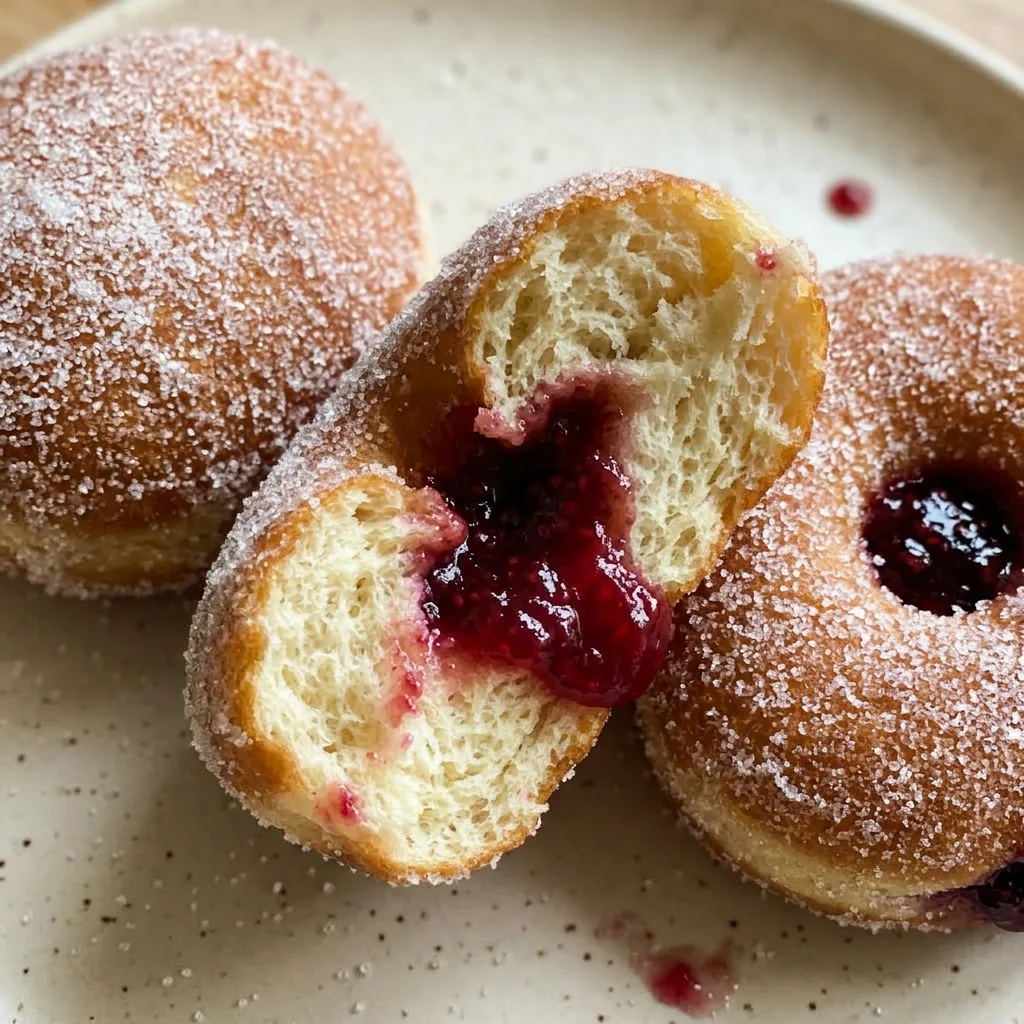
Prep: 3 hr 45 min · Cook: 15 min · Total: 4 hr · Servings: 9 · Calories: 120 kcal
What to look for in these ingredients
Bread flour: Use bread flour, not all purpose, for the structure needed to hold the jelly without tearing.
Instant yeast: Instant yeast mixes right into the flour; no need to proof it first.
Whole milk: Whole milk at room temperature blends smoothly into the tangzhong dough without cooling it down.
Unsalted butter: Softened butter, not melted, so it creams into the dough without making it greasy.
Raspberry jelly: Pick a seedless jelly or jam so the filling stays smooth when piping into the donuts.
Neutral oil: Choose a neutral oil with a high smoke point like canola or avocado for clean frying.
How to handle the sticky, soft dough without frustration
Mix the tangzhong first
Whisk water and bread flour in a saucepan over medium heat. Within a minute you’ll see the mixture thicken; keep whisking until it forms a smooth, stiff paste that pulls away from the sides, about 4 to 5 minutes. Set it aside to cool while you gather the rest.
Knead until the dough passes the windowpane test
After mixing flour, sugar, yeast, salt, milk, egg, and tangzhong, add butter a tablespoon at a time. Once all butter is in, knead on medium-low for 12 minutes. Pinch off a small piece and stretch it gently; if it forms a thin, translucent sheet without tearing, you’re done.
Let the dough rest before rolling
Shape the dough into a ball and let it rest for 20 to 30 minutes. This relaxes the gluten so the dough rolls out without snapping back. You’ll feel how cooperative it becomes, no fighting to keep it stretched.
Cut donuts and proof on parchment squares
Roll dough to 3/4-inch thickness, cut with a 3-inch round cutter, and place each on a parchment square. Cover loosely and let rise until doubled, 45 to 65 minutes. The dough should feel puffy and airy when you touch it gently.
Lower donuts into oil on the parchment
Heat oil to 350°F. Using a slotted spoon, lower one or two donuts on their parchment squares into the oil.
After 5 to 10 seconds, the dough firms up, and you can pull the paper out with tongs. This keeps the donuts round.
Fry until golden brown, flipping once
Fry each donut for 2 1/2 minutes total, flipping halfway. Use a timer, they go from to overdone fast.
The finished donut should be deep golden brown and sound hollow when tapped. Transfer to a wire rack to cool completely.
Fill with jelly after coating in sugar
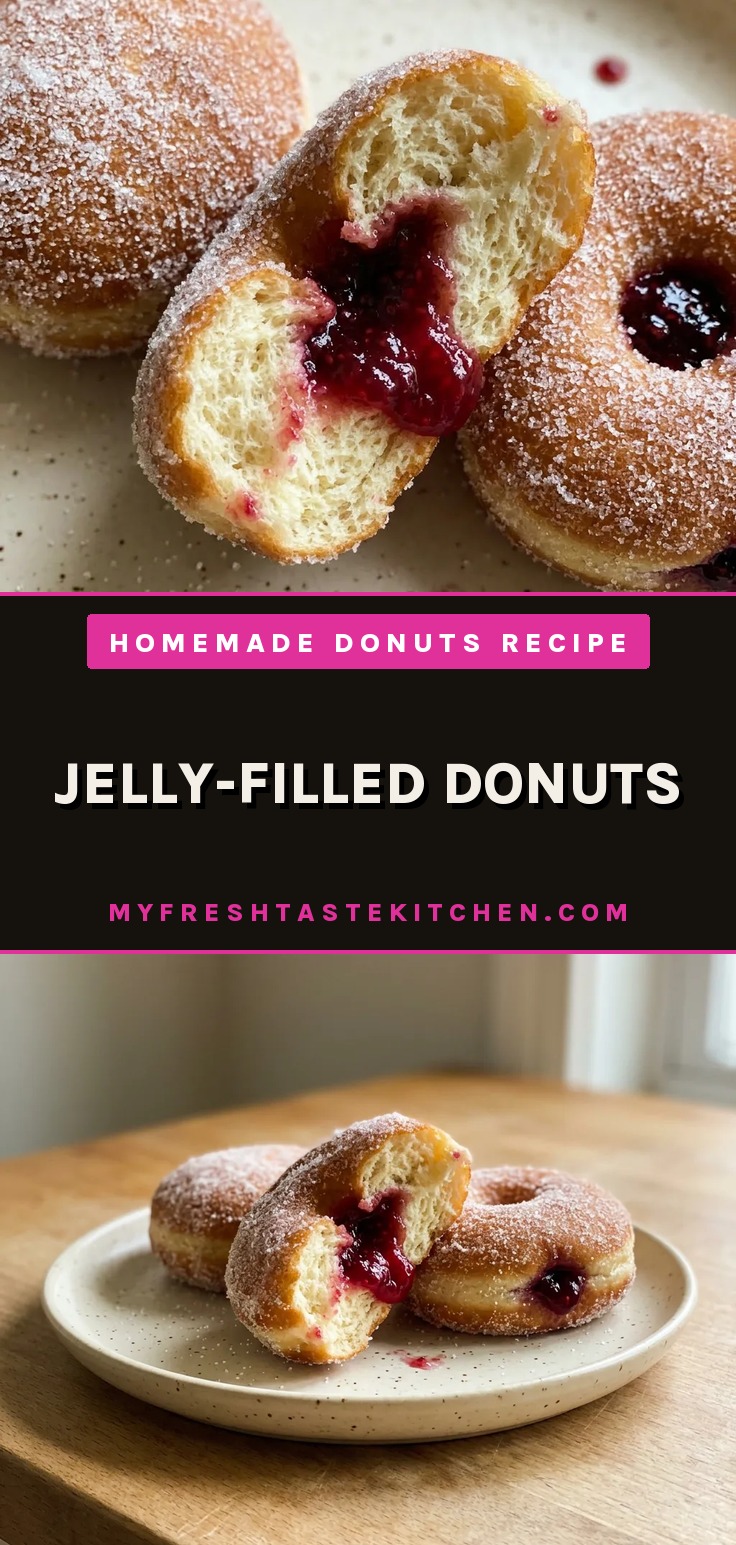
Once completely cool, toss donuts in granulated sugar. Fill a piping bag with raspberry jelly and insert the tip into the side of each donut. Gently squeeze until you feel the donut puff slightly and the jelly starts to push back.
Jelly-Filled Donuts
Ingredients
Tangzhong
- 3/4 cup water
- 1/4 cup bread flour 32g
Dough
- 3 cups + 2 tablespoons bread flour 408g
- 1/3 cup granulated sugar 67g
- 1 tablespoon instant yeast
- 1 1/4 teaspoon fine sea salt
- 1/2 cup whole milk room temperature
- 1 large egg room temperature
- Tangzhong from recipe above
- 5 tablespoons unsalted butter room temperature (71g)
Coating and Filling
- Neutral oil for frying, like canola, vegetable, or avocado oil
- Granulated sugar for rolling
- ~1 cup homemade or store-bought raspberry jelly jam, or preserves
Instructions
Tangzhong
Make Tangzhong Paste:
In a small saucepan, whisk together the water and bread flour. Cook over medium heat, whisking constantly, until the mixture thickens to a paste, about 4–5 minutes. Scrape into a small bowl and set aside until ready to use.
Dough
Mix Dough Ingredients:
In the bowl of a stand mixer fitted with the dough hook, combine the bread flour, sugar, yeast, and salt. Add the milk, egg, and tangzhong. Knead on low speed for 2 minutes until a dough forms.Knead with Butter:
With the mixer running on low, add the softened butter a tablespoon at a time, letting it fully incorporate before adding more. Once all the butter is added, increase the speed to 2 on the KitchenAid and knead for 12 minutes, or until the dough is smooth, elastic, and passes the windowpane test.Shape and Rest Dough:
Shape the dough into a ball and place it in a lightly greased bowl. Cover and rest for 20–30 minutes to relax the dough.Cut Parchment Squares:
While the dough is resting, cut out 9 squares of parchment paper.Cut Donut Rounds:
Turn the dough onto a floured surface, lightly flour the top, and roll to 3/4-inch thickness. Use a large ~3-inch round cutter to cut donuts. Gently re-roll the scraps once, then rest the dough for 5–10 minutes before cutting again.Proof Donuts:
Place each donut on a square of parchment paper and arrange them on a baking tray. Cover the top loosely with plastic wrap and let rise until puffy and doubled, about 45–65 minutes.Heat Oil:
When the donuts are about halfway through their final proof, start heating 3–4 inches of oil in a heavy pot over medium-low heat to 350°F (175°C). Line a baking sheet with a wire rack. Keep an eye on the temperature with a candy thermometer. If the oil reaches 350°F (175°C) before the donuts are ready, lower the heat slightly to hold it steady until they finish proofing.Fry Donuts:
You’ll know the donuts are ready when you gently touch the side with your finger and the dough feels slightly airy. Use a metal slotted spoon to lower 1-2 donuts into the oil with the parchment paper on. After 5-10 seconds, use tongs to remove the paper from the oil. Each donut will fry for 2 1/2 minutes total, flipping once halfway through. Use a timer so you don’t overcook them! Once fried, transfer them to the prepared wire rack.
Coating and Filling
Coat in Sugar:
Once completely cool, toss the donuts in sugar until fully coated.Fill with Jelly:
Then, fill a piping bag fitted with a small round tip with the jelly. Insert the tip into the side of the donut and gently pipe until you feel the donut puff slightly and the jelly starts to push back.
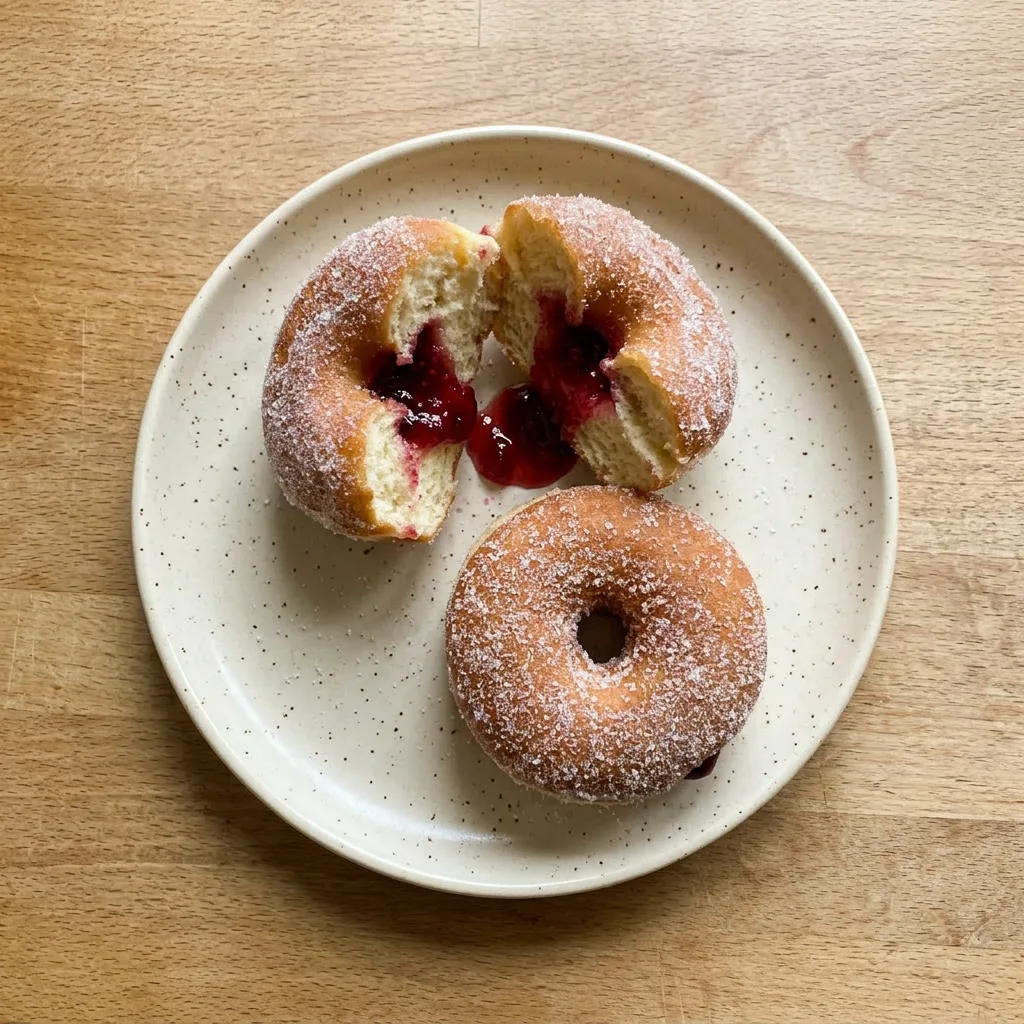
Stick with the tangzhong, swap the jelly
Raspberry jelly: Strawberry, apricot, or any seedless jam or preserves. The flavor changes, but the texture and sweetness stay the same. Use the same amount and pipe until you feel the donut puff.
Bread flour: All-purpose flour. The donuts will be less chewy and may tear more easily when filled. The crumb will be softer but not as sturdy.
Replace by weight (408g) or volume (3 cups + 2 Tbsp) but expect a denser interior.
Whole milk: 2% or oat milk. Lower fat reduces tenderness slightly; oat milk may make the dough a touch stickier.
Use the same 1/2 cup at room temperature. Donuts still work but won’t be quite as soft.
Tips
- Use a candy thermometer and adjust the burner to keep the oil at a steady 350°F; fluctuations cause uneven browning and greasy spots.
Storage and Serving
For the best texture, fill and serve the donuts within a few hours of frying. The sugar coating stays crisp, and the interior is soft and airy. If you plan to make them ahead, leave the donuts unfilled and store them in an airtight container at room temperature for up to 2 days.
The tangzhong helps the crumb stay tender, but after a day the coating will start to soften. To serve, reheat unfilled donuts in a 350°F oven for 3 to 4 minutes to restore some crispness, then roll in fresh sugar and fill.
Don’t refrigerate the donuts; the fridge dries them out. You can freeze unfried dough after the first rise: shape into balls, freeze on a tray, then transfer to a bag. Thaw in the fridge overnight, proof, and fry.
But once fried, donuts don’t freeze well; the texture becomes rubbery.
Frequently Asked Questions
Can I make the dough ahead of time and refrigerate it?
You can, but the recipe’s method, with a short rest after mixing and then proofing, is designed for same-day frying. If you must, freeze the dough after the first rest (before shaping) instead: shape into balls, freeze on a tray, then bag.
Thaw overnight in the fridge, then proceed with proofing and frying. Refrigerating the mixed dough will slow the rise unevenly and can toughen the crumb.
Why did my donuts come out greasy?
Most likely the oil wasn’t hot enough when you added the donuts. At 350°F, the dough sets quickly and absorbs minimal oil. If the temperature dips below that, the crust forms slowly and soaks up grease.
Check your thermometer before each batch. Also, overcrowding the pot drops the oil temperature, fry no more than two donuts at a time.
How is this jelly donut different from a classic American jelly donut?
The dough uses a tangzhong, a cooked flour-water paste, which gives a softer, more tender crumb that stays fresh longer than a standard yeasted dough. Classic jelly donuts often use a leaner dough that can turn dry or dense by the next day. Here the crumb is fluffier and slightly springy, almost like a light brioche, without being greasy.
The frying method on parchment also keeps the shape round, something harder to achieve with traditional hand-transfer.