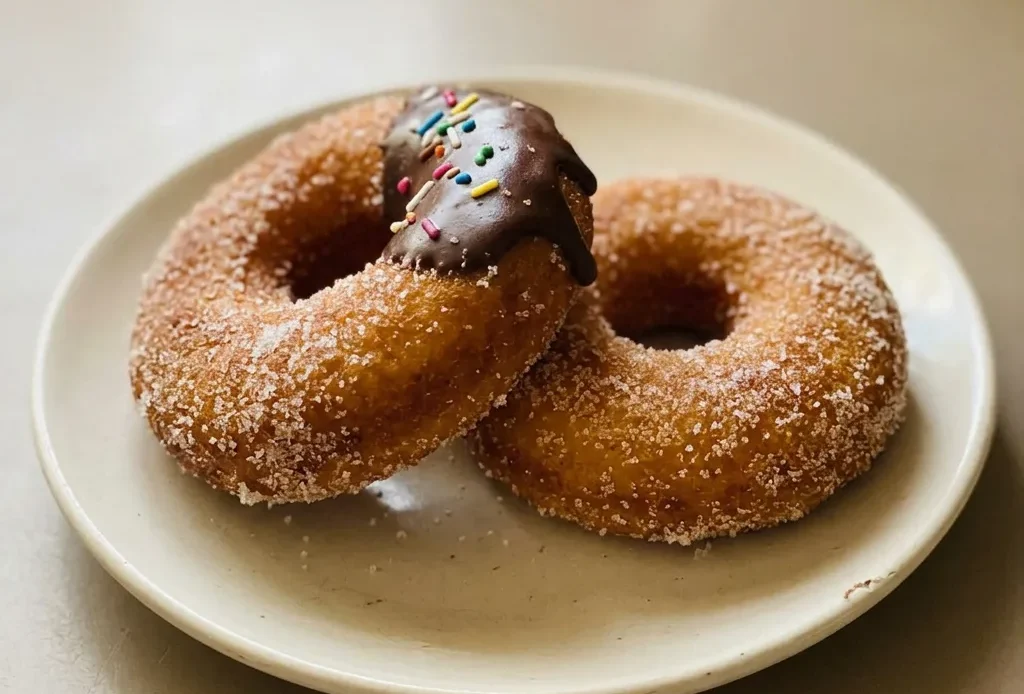
A gluten-free donut that doesn’t fall apart in the fryer or taste like cardboard? That’s the bar. The trick is treating the dough like a wet, sticky batter that needs a hard sear from hot oil, and enough xanthan gum to hold everything together while it happens.
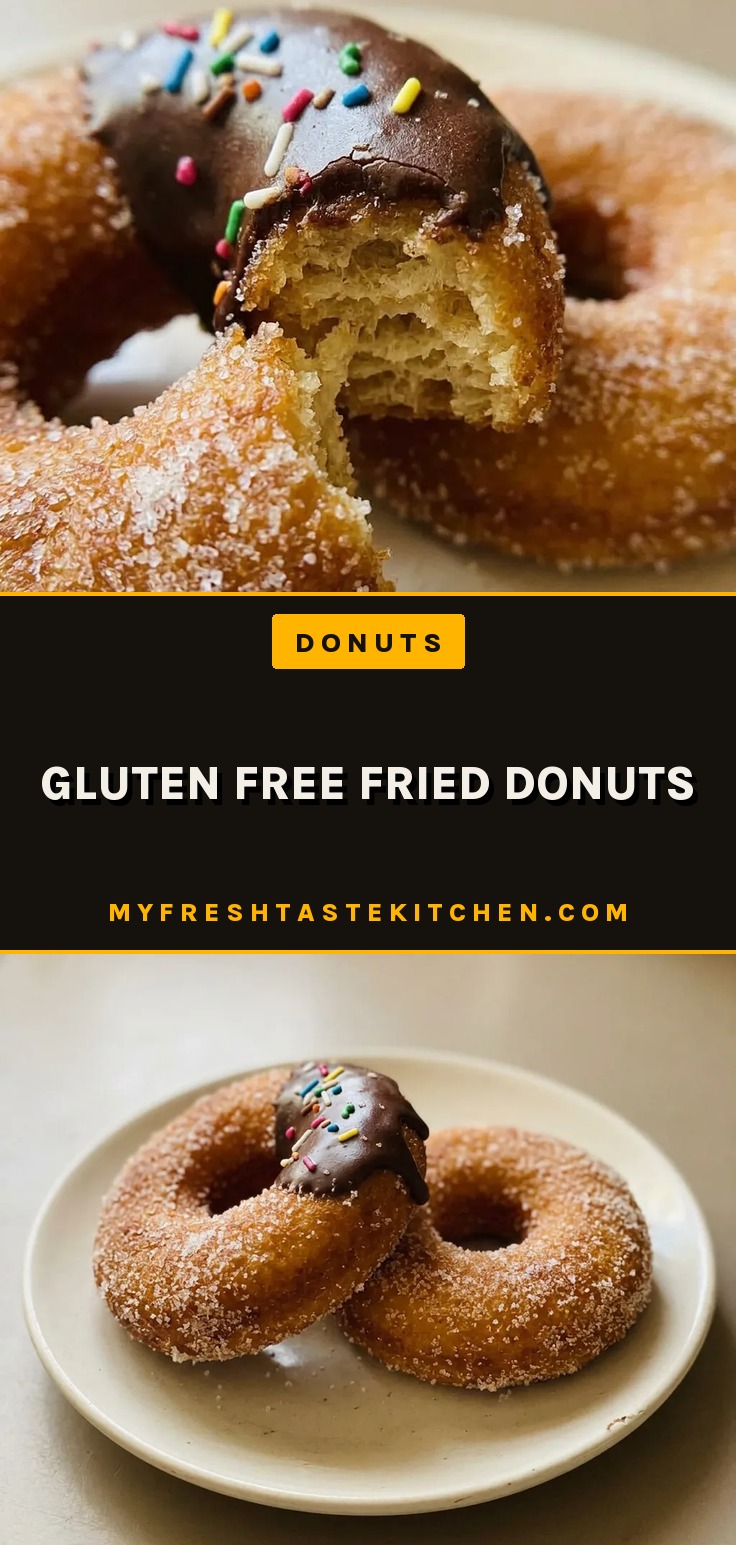
These gluten free fried donuts come out tender inside, with a thin, crackly glaze that sets as it cools. The margin for error is narrower than with wheat dough: too cool oil and they soak up grease, too little xanthan and they disintegrate. But get those two things right, and you’ve got a cake donut that doesn’t taste like a compromise.
First batch came out looking like sad, oily pancakes instead of fluffy donuts. The kitchen smelled like a fast-food joint gone wrong.
Xanthan gum builds structure
Gluten gives dough elasticity and chew. Without it, gluten-free flour blends turn crumbly.
Xanthan gum steps in to mimic that stretch, trapping air and holding the donut together. The 2 teaspoons here is a hefty amount, double what you’d use for a cake or cookie. Frying demands that extra grip: the dough bubbles and expands rapidly, and without enough xanthan gum, the donuts would fall apart in the oil or turn dense.
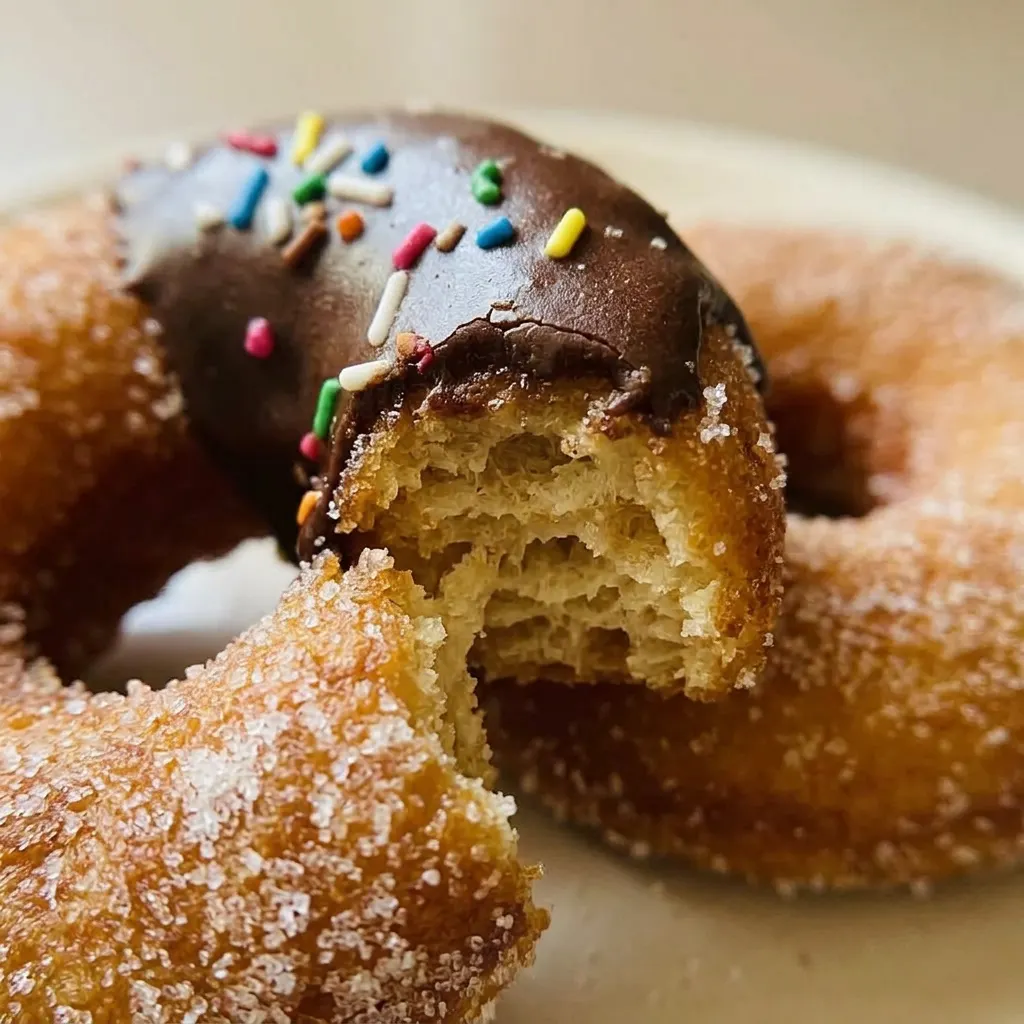
You’ll feel the difference when you bite in, a soft, cohesive crumb instead of a sandy mess. That’s the xanthan gum at work, giving structure where gluten would have.
Sour cream and eggs give tenderness
Sour cream brings two things: fat for a soft mouthfeel and acidity that tenderizes the proteins in the flour and eggs. The eggs themselves add structure and richness, but their protein can make a gluten-free dough tough if it’s the only binder.
The sour cream’s acid keeps that in check. Together they produce a crumb that’s moist and tender, not dry or rubbery. That matters because gluten-free flour alone tends to drink up moisture and turn pasty.
With this combo, the interior stays light and cakey, even after the hot oil sets the outside. You can taste the richness, but it’s not heavy.
Wet dough, high heat seal
The dough for these donuts is noticeably wetter than a yeast or cake donut dough. That’s deliberate: the extra moisture steams inside the crust during frying, creating a light, airy crumb. Gluten-free flours absorb more liquid, and if you cut back, the donuts turn dry and dense.
But wet dough is sticky to handle. Heavy flouring on the work surface and the cutter prevents it from gluing to everything. Now I always preheat the oil to 375°F and use a thermometer to keep it steady, because that wet dough needs high heat to seal quickly and stay light.
Too low, and the donuts absorb oil and get greasy. The heat sets the crust fast, trapping steam inside for a tender center.
Prep: 15 min · Cook: 25 min · Total: 40 min · Servings: 12 · Calories: 380 kcal
What to know about gluten-free flour and xanthan gum
Gluten-free all-purpose flour: Use a blend with rice flour, tapioca, and potato starch for best texture. Avoid bean flour mixes.
Xanthan gum: This recipe calls for a full 2 teaspoons; don’t reduce it or the donuts will fall apart in the oil.
Sour cream: Full fat only. Low fat or nonfat will make the dough less tender and drier.
Oil for frying: Use a neutral oil with high smoke point like peanut, canola, or vegetable. No olive oil.
How to fry gluten-free donuts that stay light and tender
Mix the wet ingredients
Beat eggs and sugar until light and slightly thickened, about 2 minutes. You’ll see the color pale and the mixture fall in a ribbon from the whisk. Then stir in milk, sour cream, vanilla, and melted butter until smooth.
Add dry ingredients
Whisk flour, baking soda, baking powder, salt, and xanthan gum together. Add to wet mixture and mix just until combined. The dough will be sticky and wetter than typical donut dough, that’s fine.
Roll and cut
Heavily flour your work surface and rolling pin with gluten-free flour. Pat dough into a 1-inch thick round. Use a floured cutter to stamp out donuts and holes.
If dough sticks, add more flour to the surface.
Heat the oil
Pour oil into a deep pan or fryer to a depth of at least 2 inches. Heat to 375°F.
Use a thermometer. The oil should shimmer but not smoke.
Too low and donuts absorb oil; too high and they burn outside before cooking through.
Fry the donuts
Slide 2-3 donuts into the hot oil, being careful not to crowd. Fry 2 to 3 minutes, flipping once, until deep golden brown. The first side should bubble vigorously; if it doesn’t, oil is too cool.
Drain on a wire rack over paper towels.
Glaze and finish
Whisk powdered sugar, melted butter, and milk until smooth and runny. While donuts are still warm, dip the top into the glaze.
Let excess drip off, then set on rack. The glaze sets as it cools, forming a thin, crackly shell.
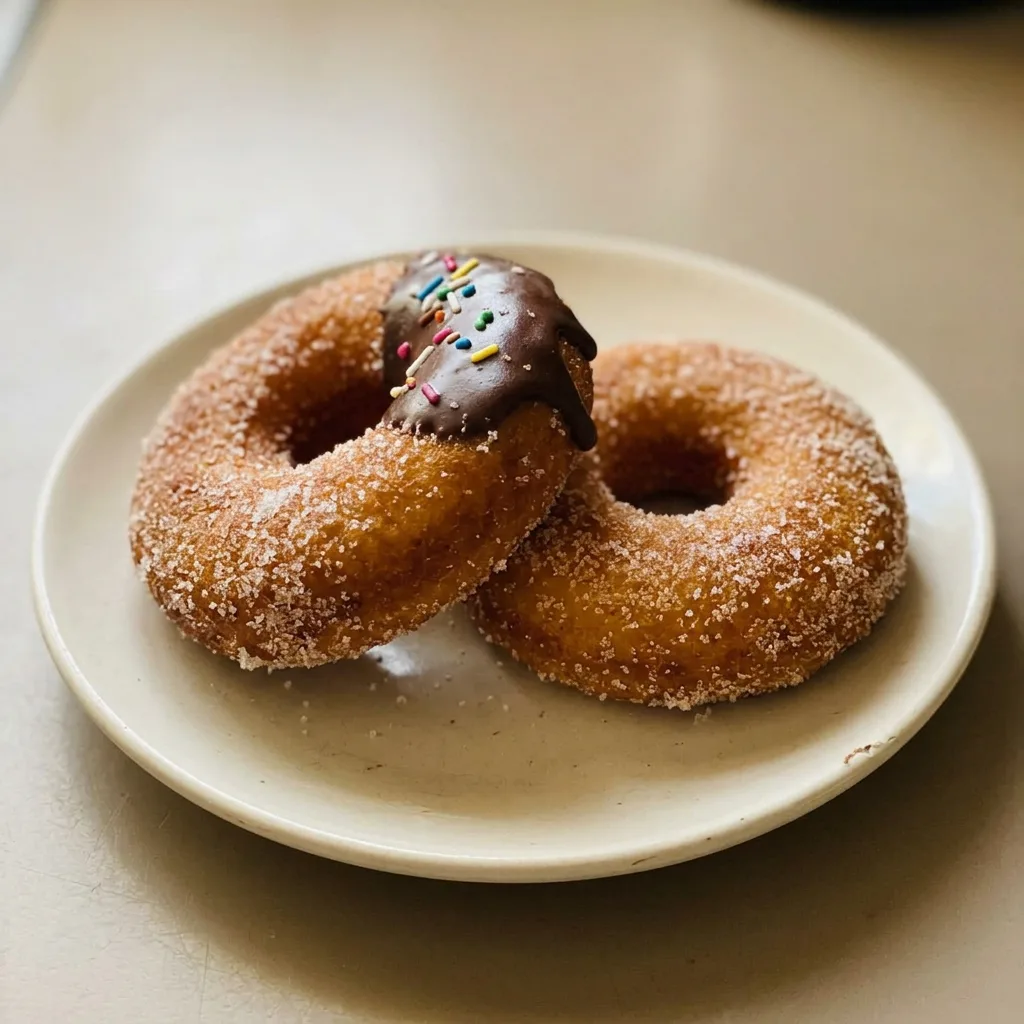
Gluten Free Fried Donuts
Ingredients
Method
Beat eggs and sugar:
In a standing mixer bowl, beat eggs and sugar until light.Mix wet ingredients:
Add milk, sour cream, vanilla, and melted butter; mix well.Whisk dry ingredients:
In a separate bowl, whisk together gluten-free flour, baking soda, baking powder, salt, and xanthan gum.Combine wet and dry:
Slowly add dry ingredients to wet ingredients, mixing until combined. Dough will be wet.Roll dough thickly:
On a heavily floured surface (use gluten-free all-purpose or white rice flour), roll dough to 1 inch (2.5 cm) thick, using plenty of flour to prevent sticking.Cut donuts and holes:
Cut into donuts and donut holes.Heat oil to 375°F:
Heat oil in a deep fryer or deep pan to 375°F (190°C).Fry donuts golden:
Fry donuts for 2-3 minutes, flipping once, until golden brown.Drain on rack:
Transfer to a wire rack over paper towels to drain.
Make glaze:
For the glaze: whisk together powdered sugar, melted butter, and milk until smooth. Optionally, add 1/2 teaspoon vanilla or make a chocolate glaze (see note).Glaze warm donuts:
Dip warm donuts into glaze, let excess drip off, and set on wire rack to set.
Notes
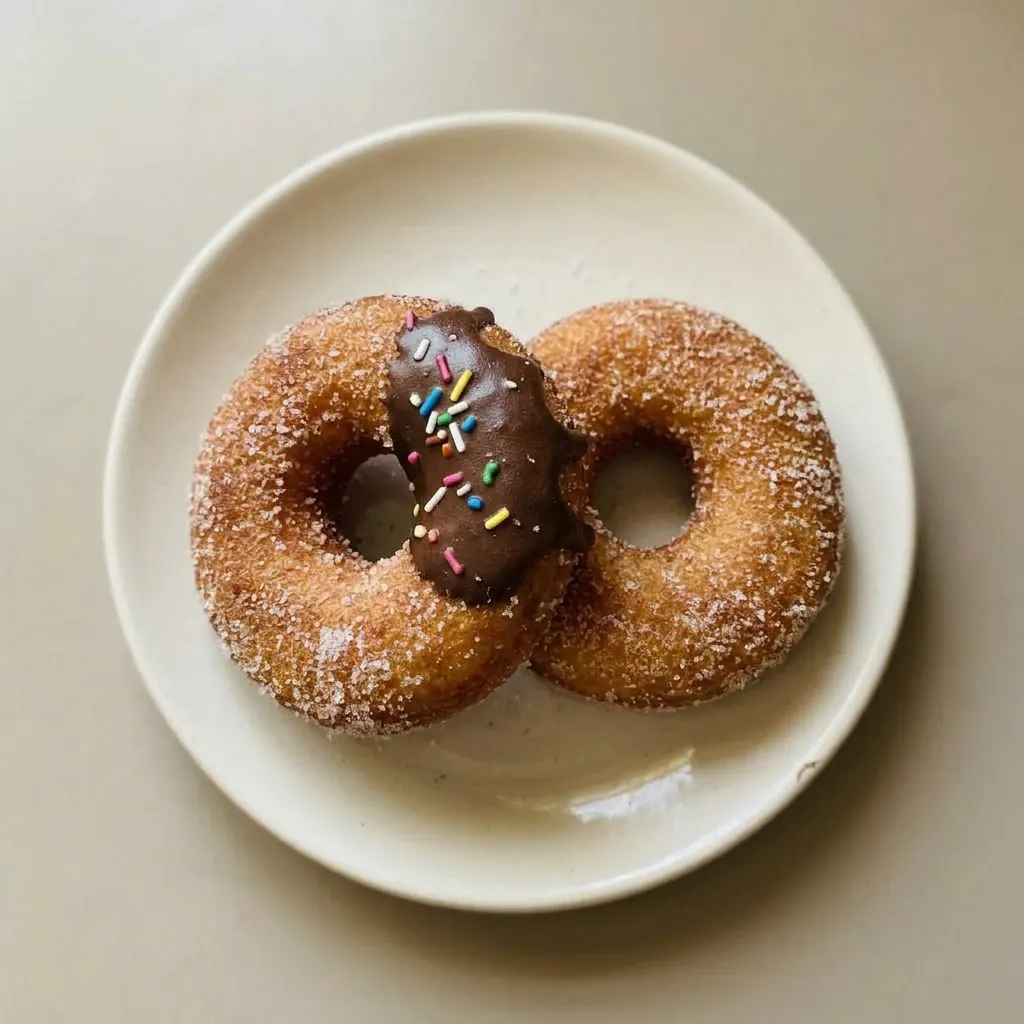
Storage and Serving
For the best texture, glaze and serve these donuts within 2 hours of frying. The glaze creates a thin, crackly shell that stays crisp for about 4 hours; after that it softens. Leftover glazed donuts keep in an airtight container at room temperature for up to 2 days.
To restore some crispness, reheat in a 350°F oven for 5 minutes. Fridge storage is not recommended, the cold makes the crust soggy and the interior dense. Freezing unglazed donuts works well: cool completely, wrap individually in plastic wrap, then place in a freezer bag for up to 1 month.
Thaw at room temperature and reheat in a 350°F oven for 5 minutes before glazing. Do not freeze glazed donuts, the glaze weeps and turns sticky upon thawing.
Swap sour cream, not xanthan gum
Sour cream: Full-fat plain yogurt or buttermilk. Same tang and tenderness.
Yogurt is thicker, add a splash of milk if the dough feels stiff. Buttermilk is thinner; you may need an extra tablespoon of flour.
Either way, the donuts stay moist.
Gluten-free all-purpose flour: A blend without xanthan gum, if you add the 2 tsp separately. Some blends already include gum; check the label. If yours has none, you must add the full 2 tsp yourself.
Skip it and the donuts will break apart in the oil, leaving a greasy mess.
Sugar: Granulated erythritol or monk fruit blend for sugar-free donuts. Use a 1:1 baking blend. The dough may brown faster, watch the fry time and lower heat 10°F if needed.
Sweetness will be slightly less, and the crumb a hair denser. Adjust glaze with powdered erythritol.
Tips
- If the dough sticks to the cutter, dip the cutter in gluten-free flour between cuts to keep the shapes clean.
Frequently Asked Questions
Can I make the dough ahead of time and fry later?
Not really, this dough is best fried right after mixing. The wet, high-moisture dough relies on baking soda and powder for lift, and those start reacting immediately. If you refrigerate it, the bubbles dissipate and the donuts turn dense.
For make-ahead, fry unglazed donuts, cool completely, and freeze for up to 1 month. Reheat in a 350°F oven for 5 minutes before glazing.
Why did my donuts turn out greasy?
Most likely the oil wasn’t hot enough. The recipe calls for 375°F, if it’s cooler, the crust doesn’t seal fast and oil soaks in. You’ll see the surface bubble lazily instead of vigorously.
Next time, use a thermometer and fry in small batches to keep the temperature steady. Overcrowding also drops the oil temperature, so fry only 2-3 donuts at a time.
How are these different from regular yeast-raised donuts?
These are cake donuts leavened with baking powder and soda, not yeast, so there’s no rise time and the crumb is tender and moist, not airy and chewy. The sour cream and xanthan gum create a soft, cohesive structure that holds together during frying, unlike yeast donuts that rely on gluten strands. The texture is denser and more like a rich, tender cake.