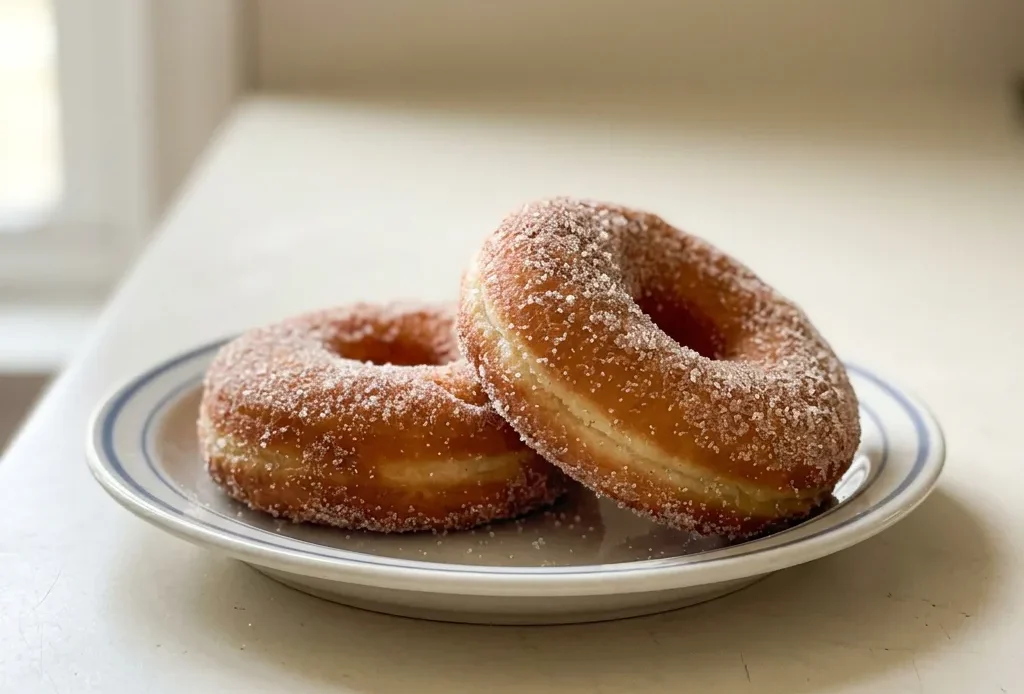
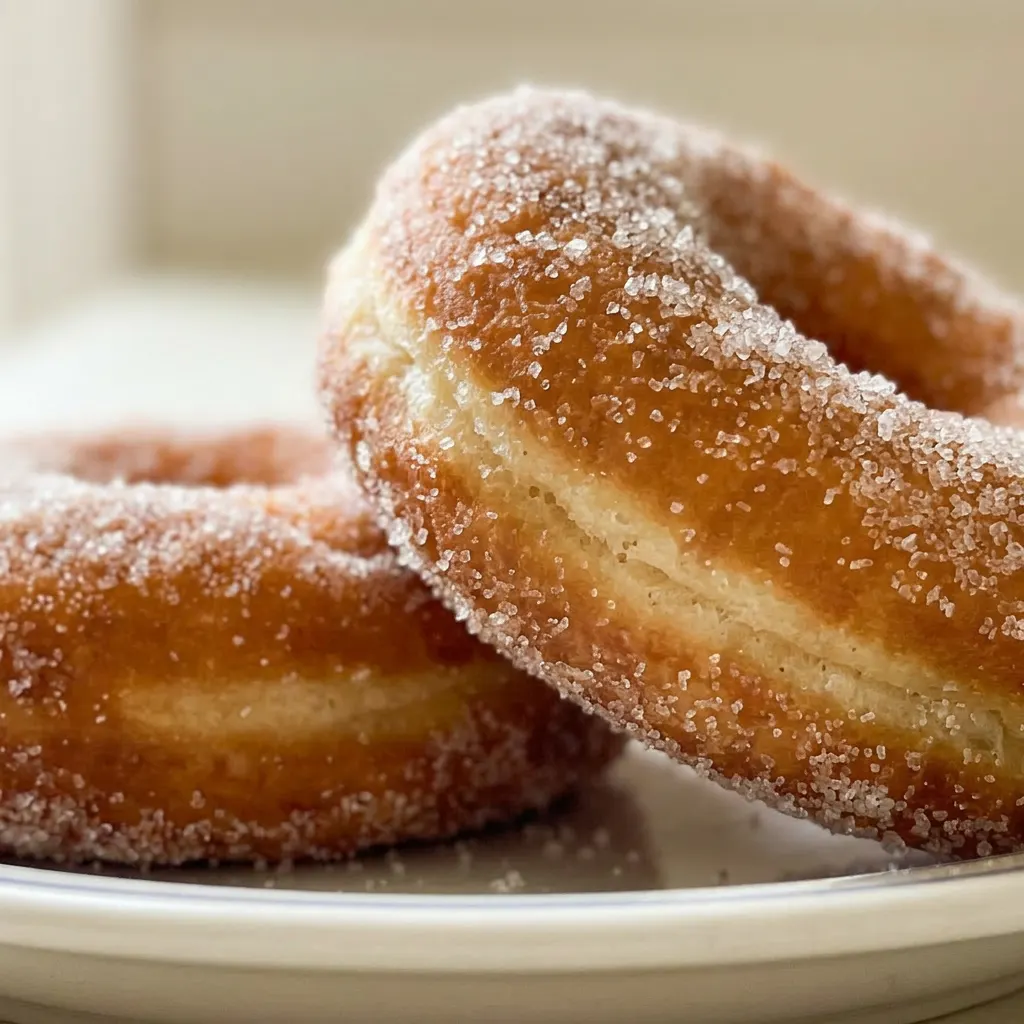
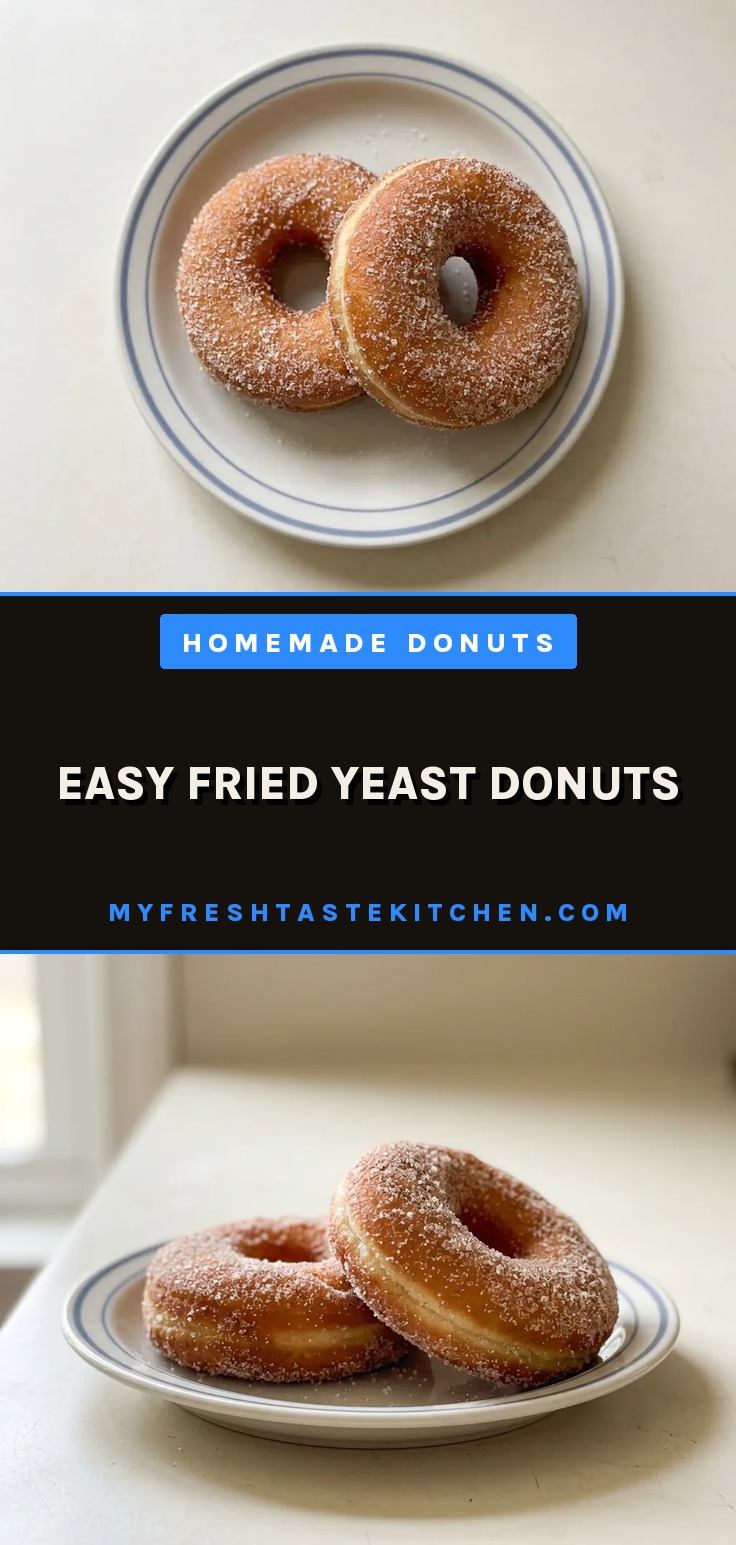
These aren’t cake donuts. They’re yeast-raised, which means a long, patient rise for that airy, pull-apart interior that store-bought versions can’t touch.
The dough is deliberately sticky, wet enough to steam into tenderness during frying, but manageable with a generous dusting of flour. It’s a recipe that rewards timing: the coating goes on about half a minute after draining, when the surface is still tacky enough to grab the sugar but not so greasy it clumps.
That narrow window is the difference between a crackly crust and a patchy one. If you’ve made easy fried yeast donuts before and wondered why the coating slid off or the interior was dense, the clues are in the feel of the dough and the sound of the oil. This version walks you through those cues without guesswork.
Yeast makes these donuts light, not cakey
These donuts get their airy crumb from yeast, not chemical leaveners. After mixing, the dough sits in a warm spot for two hours.
You’ll see it double in size, that’s the yeast producing gas and developing gluten. That long rise builds a tender, elastic structure. After shaping, another 30-minute rest lets the rings puff slightly, so they spring open in the oil instead of staying dense.
No baking powder here; the result is a soft, almost soft interior, not a tight crumb like a cake donut.
Coating timing: 30 seconds after draining
The cinnamon sugar sticks best when you hit a narrow window. About half a minute after the donut comes out of the oil, the surface is still warm and tacky, but most excess oil has dripped off. If you roll too soon, the coating clumps and slides off in patches.
If you wait too long, the surface dries and the sugar just falls away. You can feel the donut is no longer greasy but still slightly sticky, that’s the moment.
The result: a thin, even layer that clings without making the crust soggy.
A sticky dough gives a soft interior
Right after kneading, the dough feels wet and clings to your fingers. That high hydration is deliberate. More water means more steam during frying, which helps create a fluffy, tender crumb rather than a dry, bready one.
To handle it, you flour the work surface and rolling pin generously, don’t be shy. The exterior stays dry enough to roll, but the interior retains moisture. The payoff is a donut that feels light and delicate, not tough.
The stickiness isn’t a mistake; it’s the texture you’re after in the finished donut.
Prep: 3 hr · Cook: 15 min · Total: 3 hr 15 min · Servings: 6 · Calories: 180 kcal
Ingredient Notes
Instant yeast: Check the date. If it doesn’t foam in 5 minutes, it’s dead and you need a fresh packet.
All-purpose flour: Use a standard brand like Gold Medal or King Arthur. Bleached or unbleached both work fine.
Egg yolk: Save the white for another use. The yolk adds richness without making the dough too wet.
Butter: Bring to room temperature so it incorporates evenly into the dough during kneading.
Oil for frying: Use a neutral oil with a high smoke point, like canola, vegetable, or peanut.
Cinnamon: Fresh cinnamon matters here. If it’s been in the cabinet for years, replace it for that warm punch.
Watch the dough, not the clock
Proof the yeast
Whisk yeast, 1/2 tsp sugar, and warm water together. After 5 minutes, the surface should look foamy. If it doesn’t, your yeast is dead, start over with fresh yeast.
Mix and knead
Combine the flour and salt, then add the yeast mixture and egg yolk. Use a fork to form a shaggy dough.
Knead with the dough hook for 5 minutes, adding butter gradually. The dough will look wet and sticky, that’s right.
First rise
Cover and set in a warm spot for 2 hours. The dough should at least double in size. If it hasn’t, the spot might be too cool; move it somewhere warmer and wait.
Shape the donuts
Scrape onto a well-floured surface and knock out air. Roll to 1/4 inch thick. Cut rings with floured cutters.
Re-roll scraps once. The dough will stick if you skimp on flour, add more as needed.
Second rest
Place rings on a floured tray, cover, and rest 30 minutes. They should puff slightly but not double. If they look deflated, the dough is over-proofed; fry them anyway, they’ll be less airy.
Fry
Heat oil to 360°F (180°C). Fry in batches, 2 to 3 minutes per side, until deep golden brown. The oil should bubble steadily around the donut; if it’s too hot, the outside browns before the inside cooks.
Coat
Drain on paper towels for about 30 seconds, then roll in cinnamon sugar while still warm and tacky. If the sugar slides off, you waited too long; if it clumps, you rolled too soon.
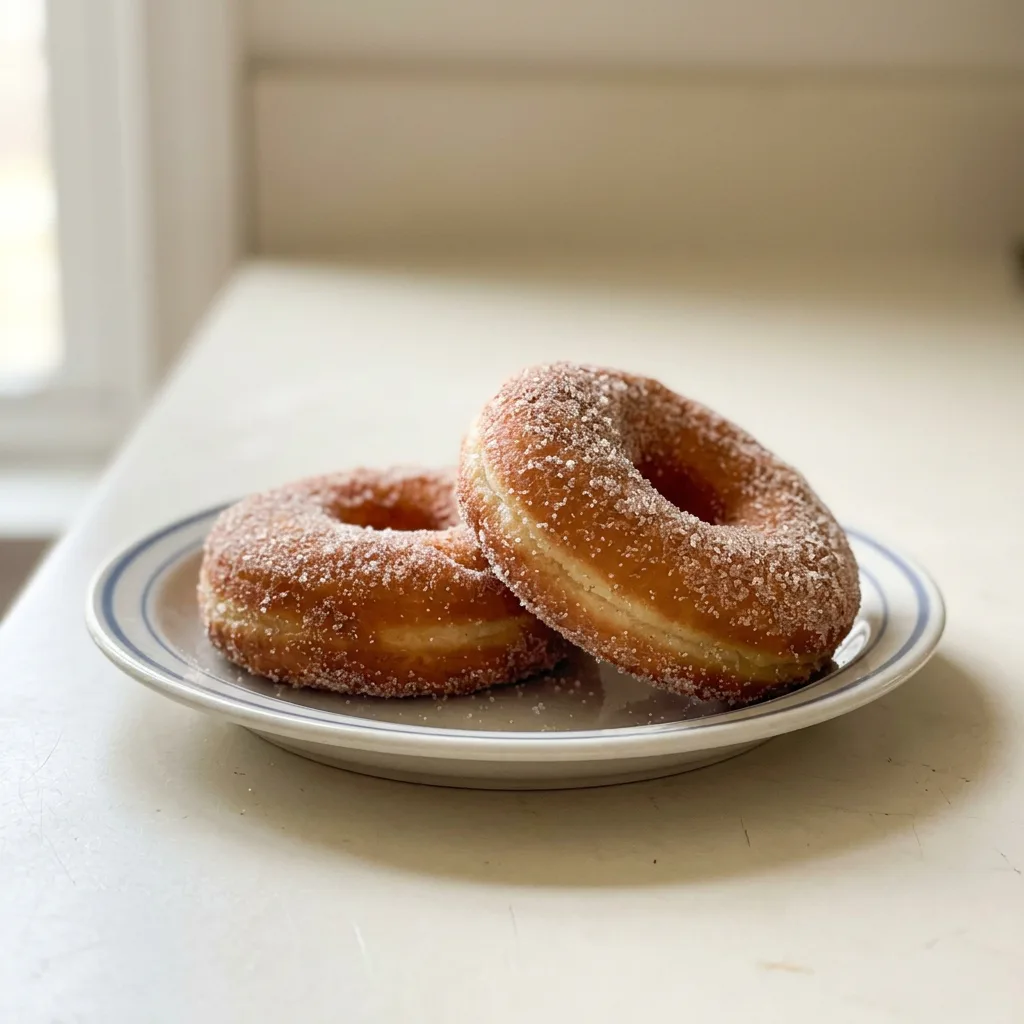
Easy Fried Yeast Donuts
Ingredients
Method
Activate yeast mixture:
Combine the yeast, 1/2 tsp sugar, and warm water by whisking. Let stand for 5 minutes until the yeast dissolves and the liquid becomes frothy.Mix dry ingredients:
In a stand mixer bowl, whisk together the flour and salt.Combine wet and dry:
Whisk the egg yolk, milk, and vanilla into the yeast mixture, then add to the flour mixture. Use a fork to mix into a shaggy dough.Knead dough with butter:
Attach the dough hook and knead for 5 minutes, slowly incorporating the butter and scraping down the bowl as needed. The dough will be sticky and wet.First rise for 2 hours:
Cover the bowl with plastic wrap and set in a warm spot for 2 hours until the dough doubles in size.Roll dough to 1/4 inch:
Turn the dough out onto a heavily floured surface and punch down to release air. Using a well-floured rolling pin, roll to 1/4-inch thickness.Cut doughnut shapes:
Cut out doughnut shapes using the largest and smallest cookie cutters. Re-roll scraps and cut additional doughnuts.Second rest for 30 minutes:
Place the doughnuts on a floured tray, cover with plastic wrap, and let rest for 30 minutes.Heat oil and mix coating:
Meanwhile, heat at least 4 inches of oil in a large heavy pot to 360°F (180°C). In a shallow bowl, stir together the 1/2 cup sugar and cinnamon.Fry and coat doughnuts:
Fry the doughnuts in batches using a slotted spoon, cooking for 2-3 minutes per side until deep golden. Drain on paper towels, then roll in the cinnamon sugar about 30 seconds later. If rolled too soon after frying, the coating will be uneven; if too late, the sugar won’t adhere.
Storage and Serving
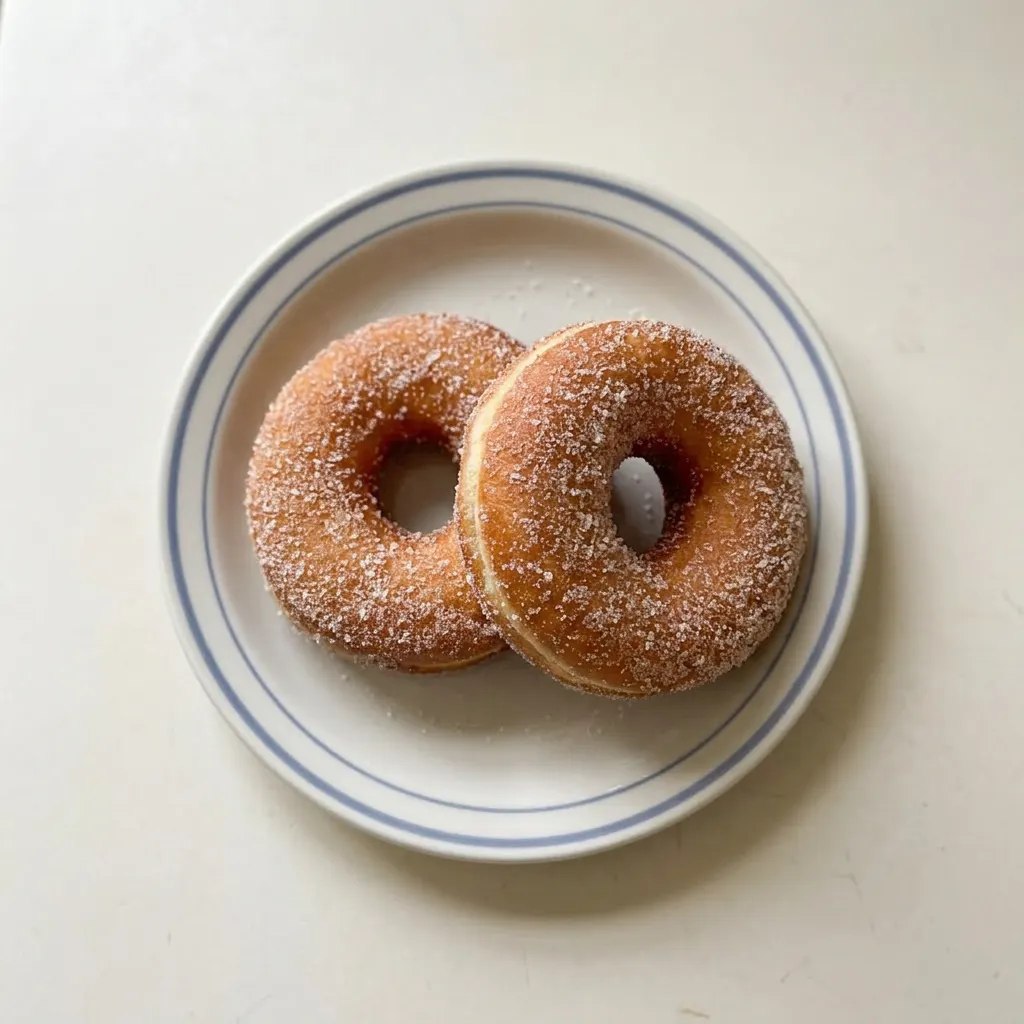
These donuts are best within a few hours of frying. The exterior stays crisp, the interior is soft.
After that, the coating softens and the texture becomes denser. Store leftovers in an airtight container at room temperature for up to 1 day.
Avoid the fridge; it dries them out. To refresh, reheat in a 350°F oven for 3 to 4 minutes, then re-coat with cinnamon sugar. The coating won’t stick as well the second time, but the donut will be warm and soft.
Freezing not recommended; the texture suffers.
Swapping yeast or flour changes the crumb and rise
Instant yeast: Active dry yeast: use 1 1/4 tsp and proof in the warm water with the sugar until foamy (about 5 to 10 minutes). Active dry yeast needs proofing to confirm it’s alive.
If your dough doesn’t double during the first rise, the yeast was dead, start over. The donuts will be slightly less airy if the yeast is older, but still fine.
All-purpose flour: Bread flour: same weight (156g). Bread flour has more protein, so the dough will be stiffer and less sticky.
The donuts will be chewier, less tender. You may need a splash more milk if the dough feels too dry.
Butter: Vegan butter or margarine (stick form, not spread): same weight (14g), at room temperature. Most vegan butters work, but the dough may feel slightly less pliable.
The flavor will be less rich, but the texture stays close. Avoid spreadable tub margarine, too much water makes the dough slack.
Milk: Non-dairy milk (unsweetened, plain): same volume (2 1/2 tbsp). Oat or soy milk work best; almond milk can make the dough slightly less tender. The donuts will be a touch drier.
Use a neutral-flavored milk so it doesn’t compete with the vanilla.
Tips
- Use a candy or deep-fry thermometer to keep the oil at a steady 360°F (180°C). If the temperature drops too low, the doughnuts absorb excess oil and become greasy; if it spikes, they brown before the center cooks through.
- Fry in small batches of 2, 3 doughnuts at a time. Adding too many at once lowers the oil temperature drastically, leading to uneven cooking and a heavier, oil-soaked result.
Frequently Asked Questions
Can I make the dough ahead and refrigerate it overnight?
It’s not recommended. The dough is best used the same day; refrigerating overnight will over-proof it, leading to flat, dense donuts. The recipe’s two-hour rise is already optimized for texture.
If you must pause, refrigerate after shaping, but note the second rest will take longer to puff, and the final donuts won’t be as airy.
Why did my donuts turn out greasy?
Most likely the oil temperature was too low. At 360°F, the exterior sets quickly, sealing out oil. If the oil is cooler, the donuts absorb more fat.
Check that the oil bubbles steadily around the donut as it fries. Another possibility: you crowded the pan, which drops the oil temperature and causes greasiness.
How do I know when the oil is at the right temperature without a thermometer?
Drop a small cube of bread into the oil. If it sizzles and turns golden brown in about 60 seconds, the oil is near 360°F.
You can also watch the donut itself: when you add it, the oil should bubble vigorously around the edges, not silently. If the donut browns too fast or too slow, adjust the heat.
