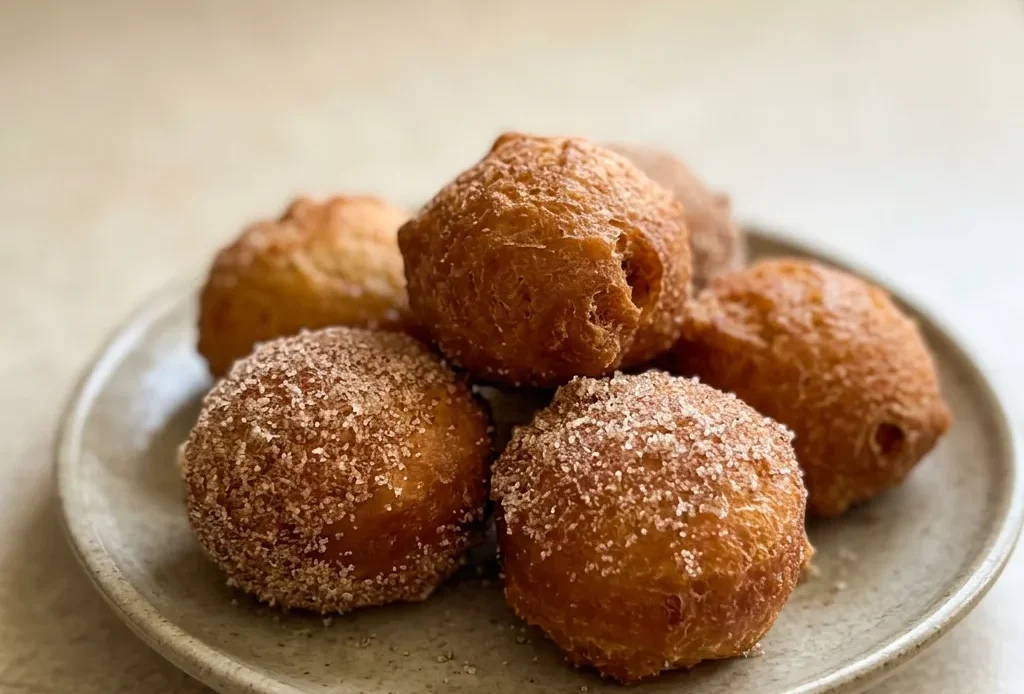
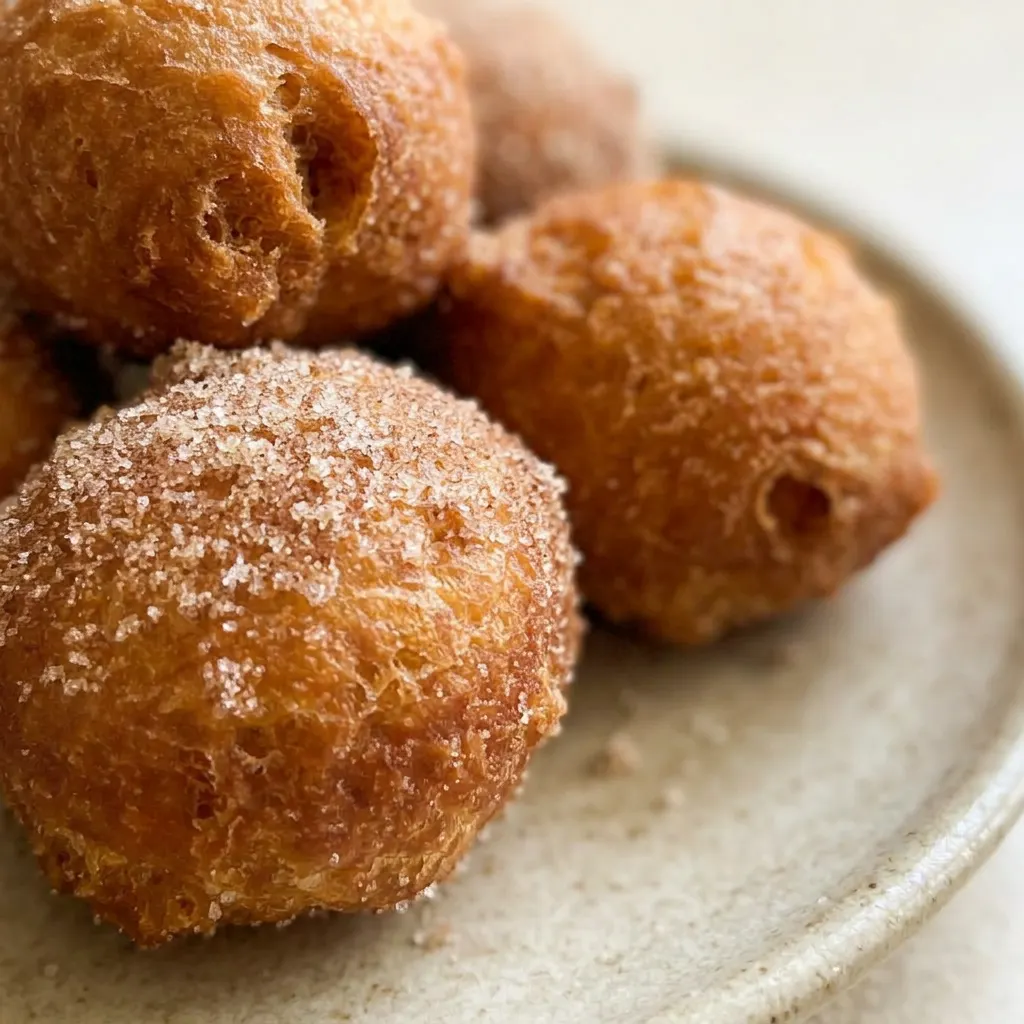
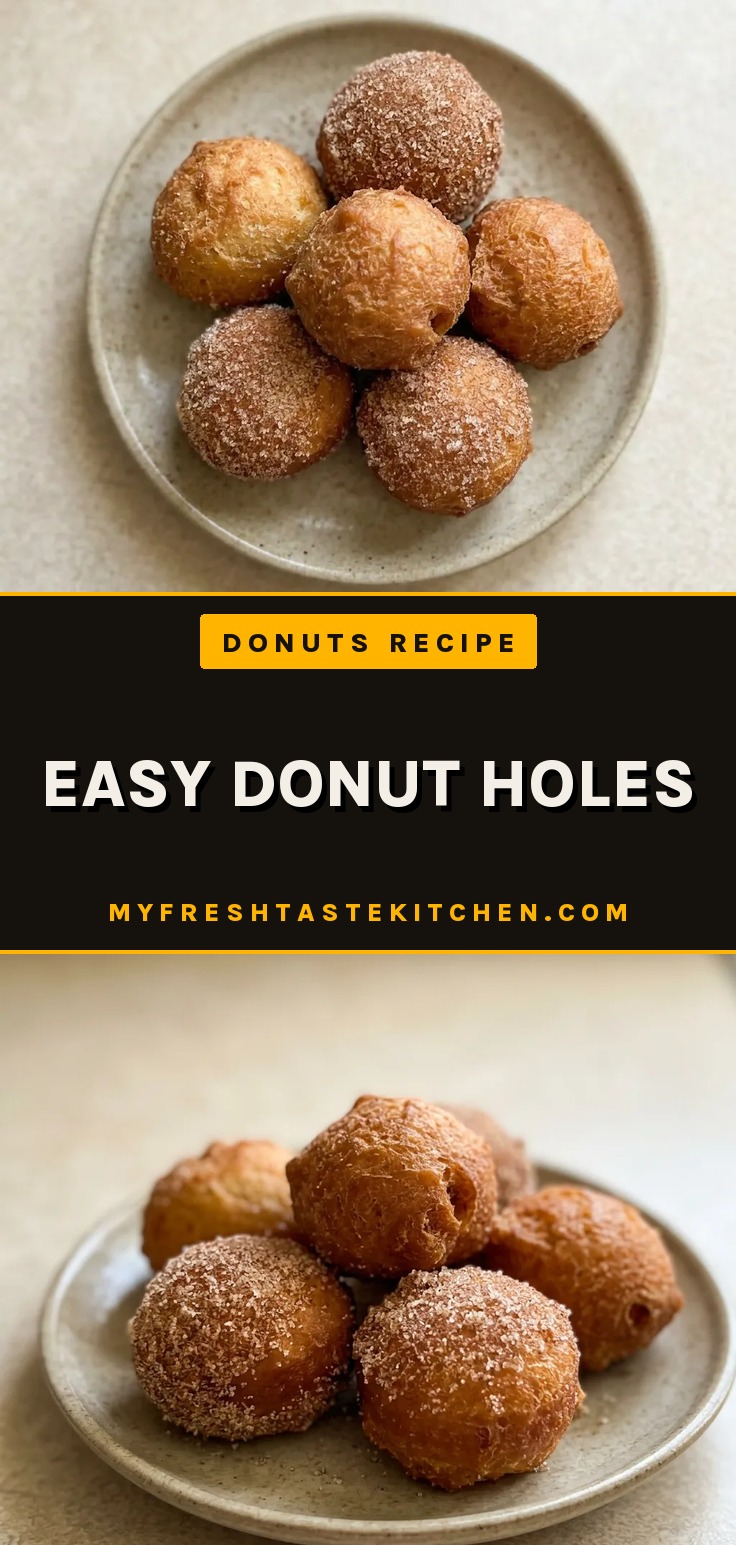
These aren’t the dense, greasy puffs from a gas-station counter. They’re cakey, tender, and surprisingly light, thanks to a fat-heavy cream-and-milk base that does the job of eggs.
The real trick is handling the sticky dough without flattening it, a short chill keeps the rounds round and the fry consistent. If you’ve ever had donut holes that came out heavy or oily, the culprit was usually temperature or leavening.
This version uses a hefty dose of baking powder to get a fast puff in hot oil, so the interior stays soft before the crust sets. They’re easy donut holes in the sense that the technique forgiving enough for a first fry, but detailed enough to reward a careful hand.
Create a tender crumb with heavy cream and milk
You don’t need eggs here. Heavy cream brings fat for tenderness and richness, while milk adds moisture and structure.
Together they mimic the action of eggs, giving you a soft, cake-like interior. Feel the dough, it should be sticky but cohesive.
This combo is what lets you skip eggs entirely without losing that melt-in-your-mouth quality.
Use extra baking powder for quick puff in hot oil
This recipe uses 2½ teaspoons baking powder for just 2 cups flour. That’s a lot. Why?
Frying sets the crust fast, so the dough has only a short window to rise. High leavening pushes the donut holes to puff up before the outside hardens.
Too little, and they come out dense and heavy. Make sure your baking powder is fresh, check the date by dropping some in hot water; if it fizzes, it’s alive.
Chill dough balls to keep their shape while frying
The dough is sticky, and dropping it straight into hot oil can lead to flattened or irregular holes. Chilling firms the balls for easier handling and helps them hold a round shape as they cook. Even size means even cooking, no small ones burning while big ones stay raw.
This step is optional, but if you want consistently good results, don’t skip it.
Prep: 30 min · Cook: 30 min · Total: 1 hr · Servings: 36 · Calories: 200 kcal
Choose heavy cream and whole milk for structure and richness
Heavy cream: Buy pasteurized heavy cream with at least 36% fat; ultra pasteurized works but has a slightly cooked flavor.
Whole milk: Use whole milk for best moisture and structure; lower fat milks change the texture and tenderness.
Baking powder: Check freshness by dropping a pinch in hot water; if it doesn’t fizz vigorously, replace it.
Vegetable oil: Use a neutral oil with a high smoke point like canola or peanut; avoid olive or butter.
Fry donut holes to a deep golden brown in small batches
Heat the oil to 350°F
Clip a thermometer to the pot and bring oil to 350°F over medium heat. If you see wisps of smoke or the oil shimmers aggressively, it’s too hot, pull it off the burner briefly.
Drop in chilled dough balls
Working with 3-4 balls at a time, gently slide them into the oil. The temperature will dip; that’s fine. They should sizzle immediately.
If they sink and sit quiet, your oil isn’t hot enough.
Flip once halfway through
After about 2 minutes, the bottoms will be deep golden brown. Flip each ball using a slotted spoon or chopstick. The cooked side stays firm.
Fry another 2 minutes until the other side matches.
Drain on paper towels
Lift donut holes out with a slotted spoon, letting excess oil drip back into the pot. Transfer to a paper towel-lined sheet. They’ll be hot and greasy for a moment, the towels absorb enough so they’re not slick.
Check one for doneness
Tear a donut hole in half. The interior should be pale yellow, fluffy, and cooked through, no raw dough streaks. If it’s dense or gummy, your oil was too cool or the dough too warm.
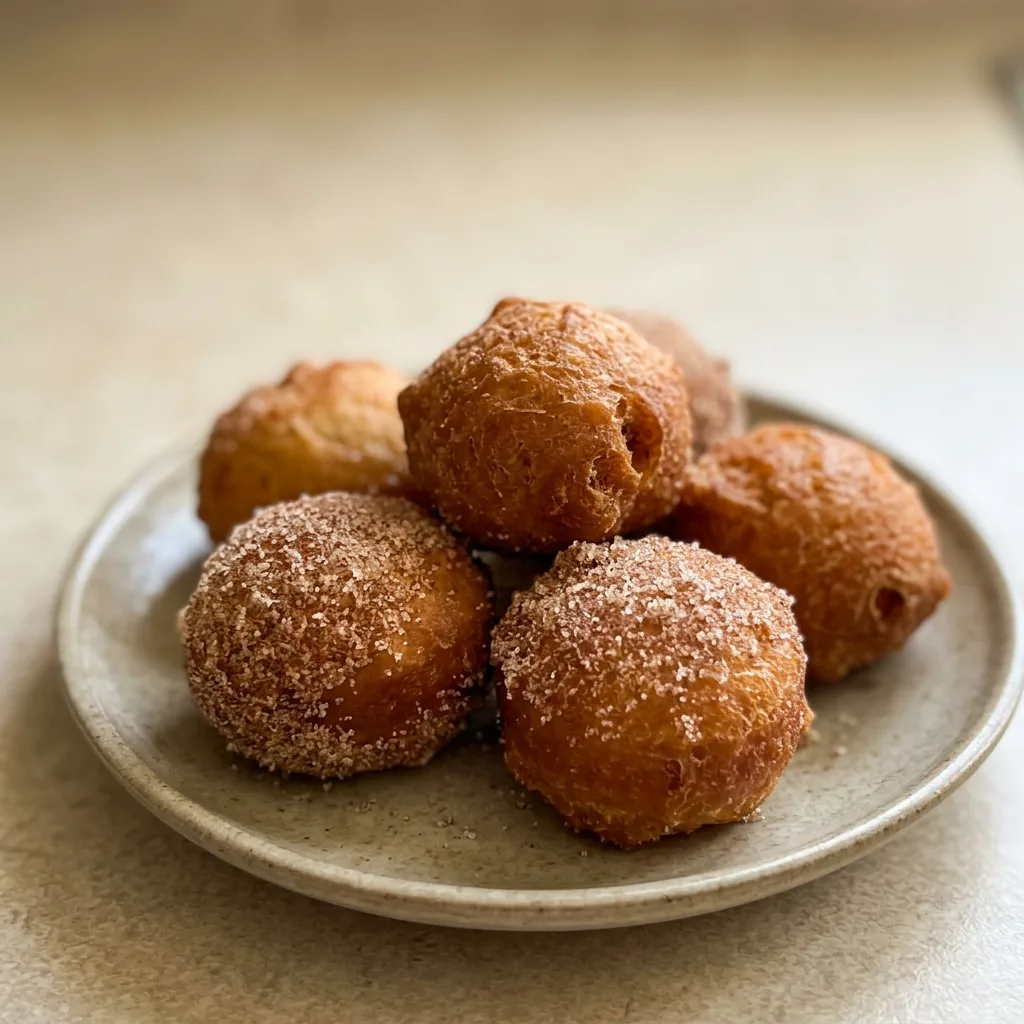
Easy Donut Holes
Ingredients
Method
Whisk dry ingredients:
In a large mixing bowl, combine the flour, baking powder, salt, and sugar by whisking them together.Add cream and milk:
Pour in the heavy whipping cream and milk, then stir using a wooden spoon or spatula until a sticky dough forms.Scoop dough portions:
Using a cookie scoop, portion out 1 tablespoon of dough per piece. Either drop directly into hot oil or place on a parchment-lined baking sheet to chill until needed.Heat oil to 350°F:
In a 3-quart saucepan, heat the oil to 350°F (175°C), checking with a thermometer. Have a paper towel-lined baking sheet ready nearby.Fry donut holes:
Fry 3-4 donut holes at a time, ensuring the pan isn’t overcrowded. Cook each for about 3-5 minutes, turning halfway, until deep golden brown.Drain and coat:
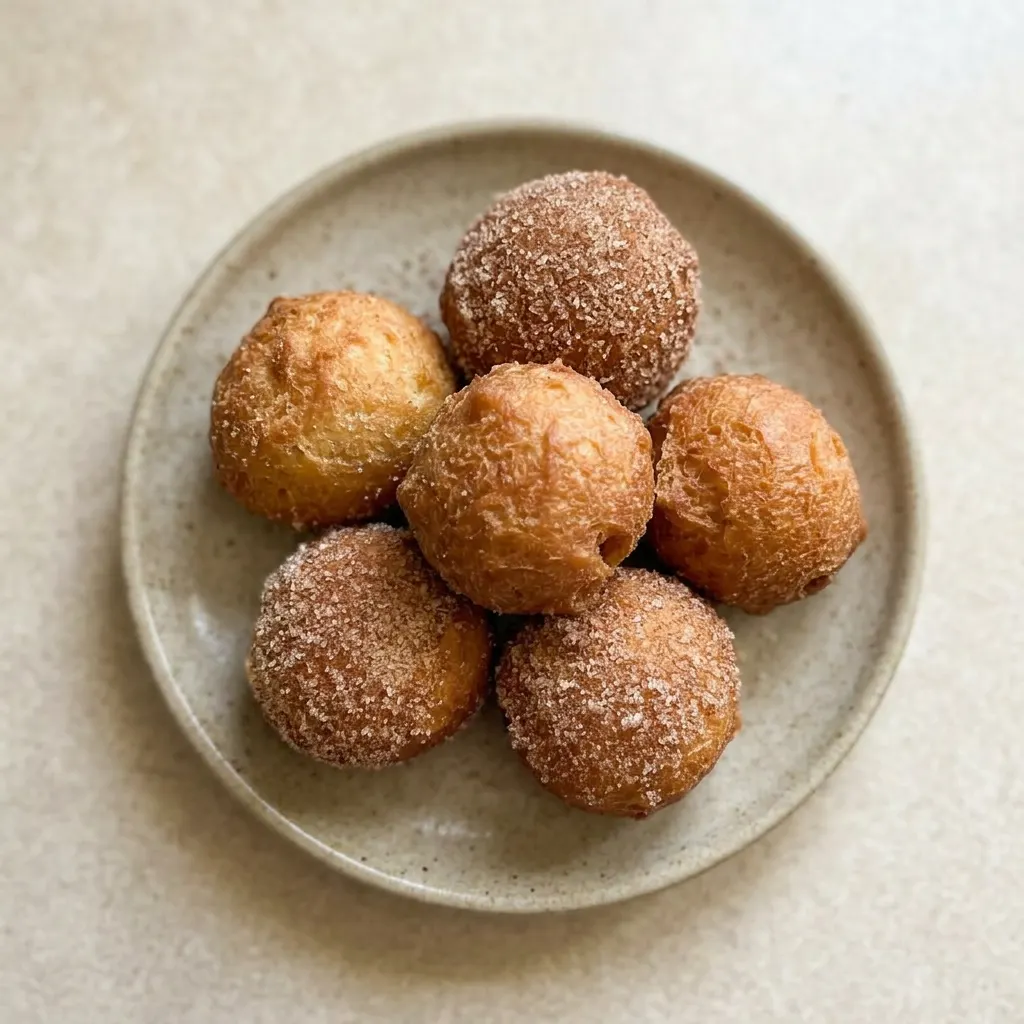
Remove with a slotted spoon and transfer to the paper towel-lined sheet. Let cool briefly before coating with cinnamon sugar or glaze.
Don’t swap out heavy cream and milk for low-fat dairy
Heavy cream + whole milk: Half-and-half plus 2 tablespoons melted butter, or whole milk plus 3 tablespoons melted butter. The dough will be slightly less rich but still tender. Skip this swap if you want the fullest flavor; the butter helps mimic the fat content of cream.
All-purpose flour: Gluten-free 1-to-1 baking flour (with xanthan gum). Expect a denser, more crumbly donut hole.
Frying time may shorten slightly because gluten-free batters brown faster. Weigh the flour for accuracy.
Vegetable oil: Canola, peanut, or refined coconut oil. Any neutral oil with a smoke point above 375°F works.
Coconut oil adds a faint tropical scent. Olive oil or butter will burn at frying temps.
Baking powder: No substitute. You need the chemical leavening here because there’s no yeast. Without it, donut holes will be dense and flat.
If you’re out, don’t attempt this recipe.
Storage and Serving
Donut holes are best eaten within a few hours of frying, while the exterior is still crisp and the interior is soft. If you must store them, keep cooled donut holes in an airtight container at room temperature. They lose crispness quickly; after 1 day the coating may soften and the texture turns more cake-like.
They hold up to 2 days, but after that the crumb dries out. Do not refrigerate: the fridge accelerates staling and makes them tough.
Reheat leftovers in a 350°F oven for 3 to 5 minutes to revive some crunch, but they won’t be as good as fresh. Freezing is not recommended: the high moisture in the dough leads to a soggy, gummy texture after thawing.
If you must make ahead, fry the donut holes, cool completely, and store at room temperature without any coating. Coat with cinnamon sugar or glaze only just before serving: any coating left on will draw moisture from the air and turn sticky within hours. For the best experience, serve within 2 hours of frying.
Tips
- Use a candy or deep-fry thermometer clipped to the pot and adjust the burner as needed to keep the oil at a steady 350°F. Oil that drops below 325°F will soak into the dough, making greasy donut holes that lack a crisp shell.
Frequently Asked Questions
Can I make the dough ahead and fry later?
Yes. Portion the dough into balls and chill them on a parchment-lined baking sheet, then fry within a few hours.
The article mentions chilling helps them hold shape; if you go longer, cover the sheet with plastic wrap so the dough doesn’t dry out. But don’t fry from fridge-cold, let the balls sit at room temperature for 10 minutes so the oil doesn’t drop too much.
For best texture, fry and serve the same day.
Why did my donut holes turn out greasy?
Most likely your oil wasn’t hot enough when you dropped the dough. At 350°F, the crust sets fast and seals against oil absorption; below that, the dough soaks up fat instead.
Another common cause: overcrowding the pan. Adding too many balls at once drops the oil temperature, so stick to 3-4 per batch. Finally, drain them well on paper towels, those first few seconds of drainage matter.
What’s the difference between donut holes and regular donuts?
Donut holes are the round, bite-sized pieces that puff evenly because they have no hole in the middle. They fry faster, 3 to 5 minutes versus longer for a full donut, so the exterior gets crisp while the inside stays soft. The dough is the same, but the shape changes the oil-to-dough ratio: holes have more surface area relative to volume, so they brown more quickly and absorb slightly less oil.
