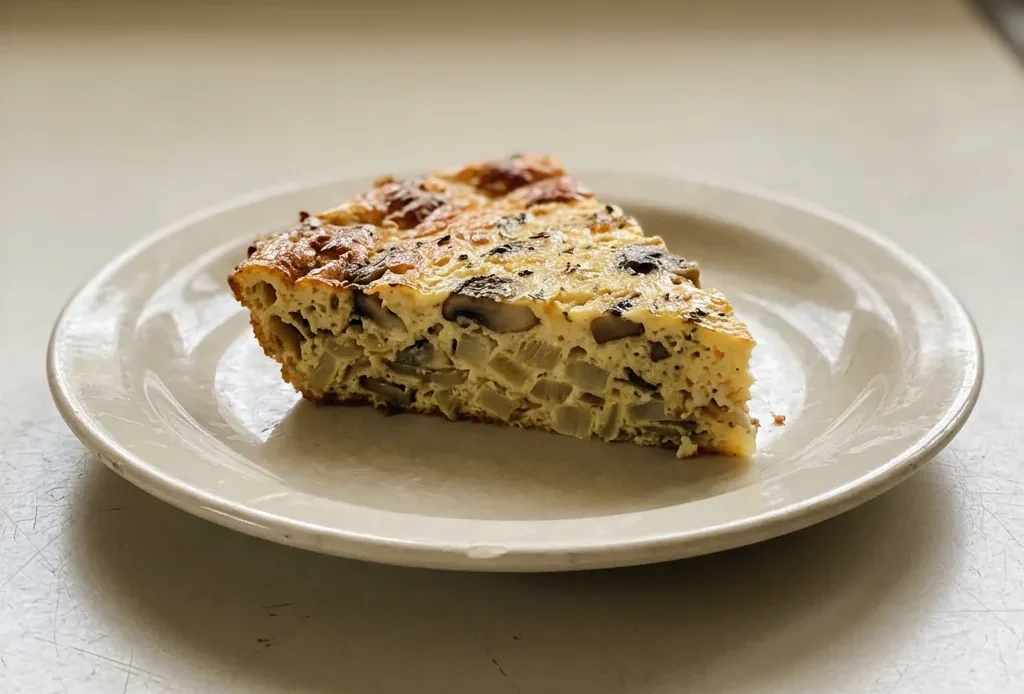
A crustless quiche is not a frittata in a pie dish. The ratio of eggs to dairy, six eggs to almost a cup of milk and half-and-half, creates a silky custard that slices cleanly without a crust. The margin for error is narrower than you’d think: too little dairy and it’s rubbery, too much and it won’t set.
Sautéing the vegetables first keeps the custard from weeping, a step that separates a tender slice from a watery mess. This crustless quiche delivers the same creamy forkful as the classic, without the rolling pin.
Build structure with eggs and dairy, not crust
Without pastry, the eggs have to do all the heavy lifting. They set into a firm custard that holds everything together. The ratio matters: six eggs to just under a cup of dairy gives a silky, sliceable texture, too little egg and it’s watery, too much and it’s rubbery.
Whole milk provides enough liquid to loosen the eggs without diluting them; half-and-half adds richness that compensates for the missing butter in a crust. That’s why these proportions work for a crustless quiche.
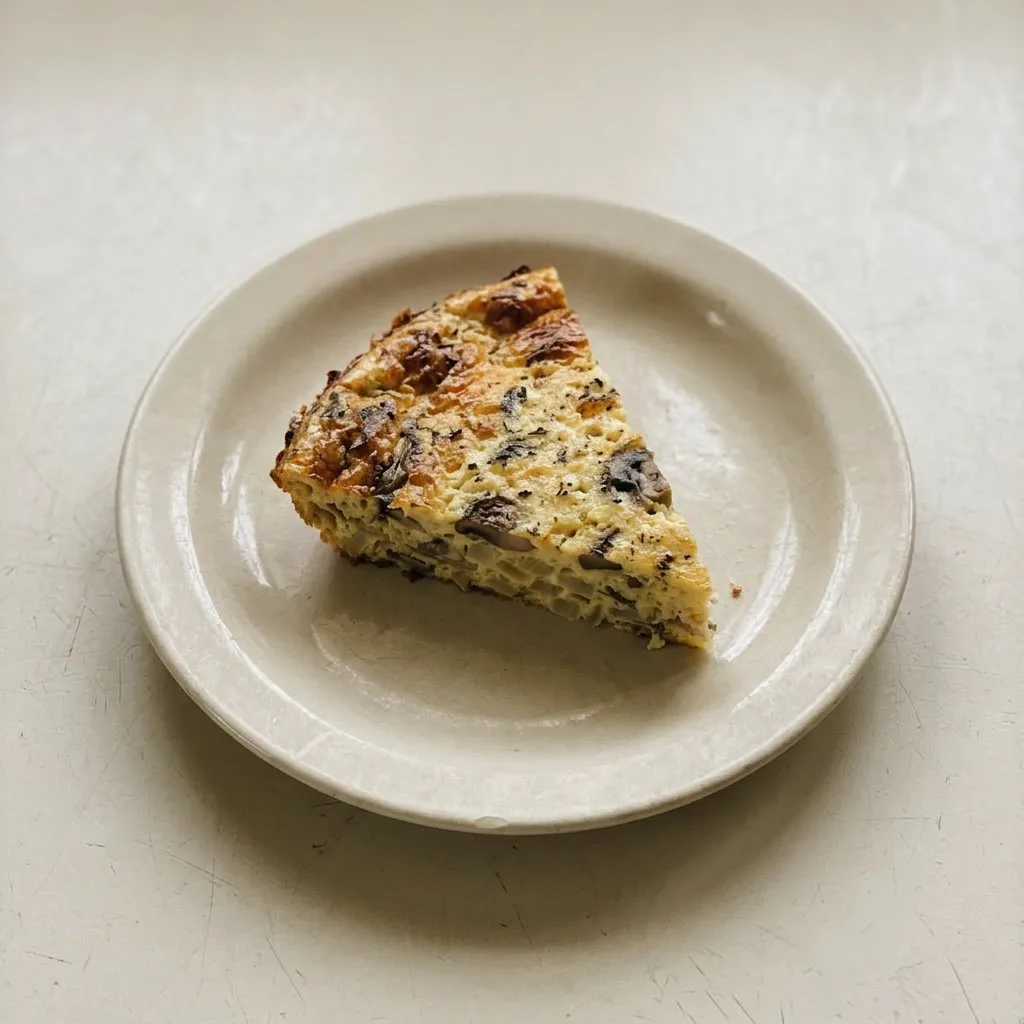
The result is a tender, cohesive slice that doesn’t crumble, even without a pastry shell. For easy breakfast recipes like this, you get the same satisfying forkful without the rolling pin.
Sauté vegetables first to keep the custard from watering out
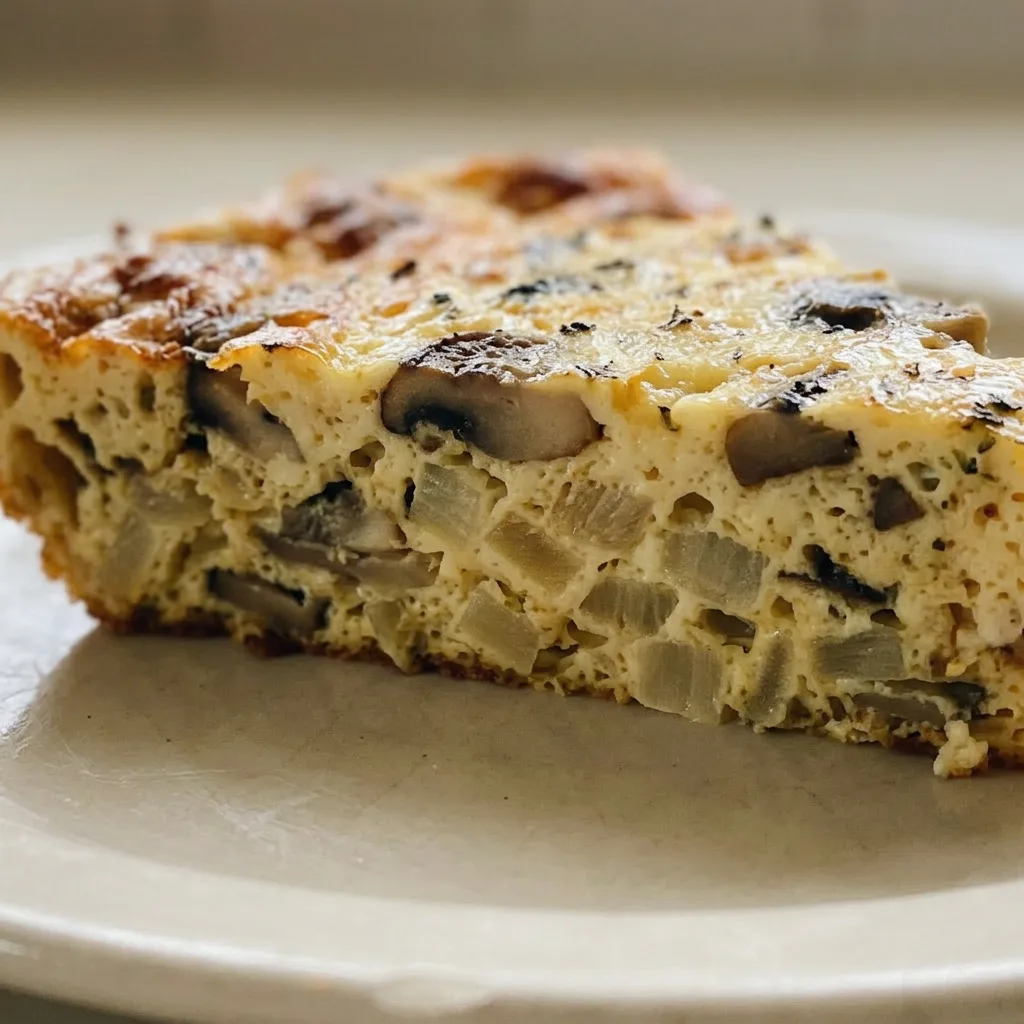
Mushrooms and onions hold a lot of water. If you add them raw, that moisture leaches into the egg mixture during baking and pools between the curds, leaving you with a wet, separated quiche.
Sautéing drives off that liquid before it ever reaches the oven. You also get browning, which brings sweetness and depth, flavors you’d miss with raw veg.
By the time the eggs set, those vegetables are already tender, so the cooking times align. The result is a dense, creamy custard with concentrated vegetable flavor, not a soggy bottom. That’s the payoff for a quick sear before mixing.
An easy breakfast casserole needs that step to stay firm and flavorful.
Let mustard and nutmeg lift the custard without taking over
A plain egg custard can taste flat. Dijon mustard cuts through the richness with a sharp tang, and it also helps the eggs and dairy emulsify, you see a smoother, more homogenous mixture when you whisk it in.
Nutmeg adds a warm, aromatic note that plays off the creaminess. Both are traditional in quiche for good reason: they brighten the base without competing with your mix-ins.
You won’t taste mustard or nutmeg outright, but you’ll notice the custard tastes more complex and less one-note. It’s a small adjustment that makes a big difference in the final bite. For quick and easy breakfast recipes, these seasonings deliver depth without extra work.
Prep: 20 min · Cook: 50 min · Total: 1 hr 10 min · Servings: 6 · Calories: 280 kcal
Pick your mix-ins with moisture in mind
Onions and mushrooms: Sauté them first so they don’t release water into the custard and make it weepy.
Whole milk and half-and-half: Whole milk gives body; half-and-half adds richness without making the custard too heavy.
Dijon mustard and nutmeg: Both are optional but they brighten the custard without overpowering the other flavors.
Sauté until the vegetables release and reabsorb their liquid
Cook the onions
Heat butter or oil over medium. Add diced onions; they should sizzle on contact. Stir occasionally until they turn translucent and edges just start to brown, about 3 to 5 minutes.
Add mushrooms
Tumble in sliced mushrooms. They’ll release moisture, keep cooking until the pan is nearly dry again and mushrooms are browned in spots, about 5 to 7 minutes. Stop there.
Whisk the custard
Beat eggs until frothy, lighter color and lots of tiny bubbles. Add milk, half-and-half, salt, pepper, mustard, and nutmeg. Whisk until homogenous; you should see a smooth, pale yellow liquid.
Fold in mix-ins
Add the sautéed vegetables and any other mix-ins to the egg base. Fold gently with a spatula until evenly distributed. Don’t overmix or you’ll deflate the eggs.
Bake until set
Pour into greased dish. Bake at 375°F until the top is golden brown and center jiggles like firm gelatin when gently shaken, 40 to 55 minutes. Let rest 10 to 15 minutes before slicing.
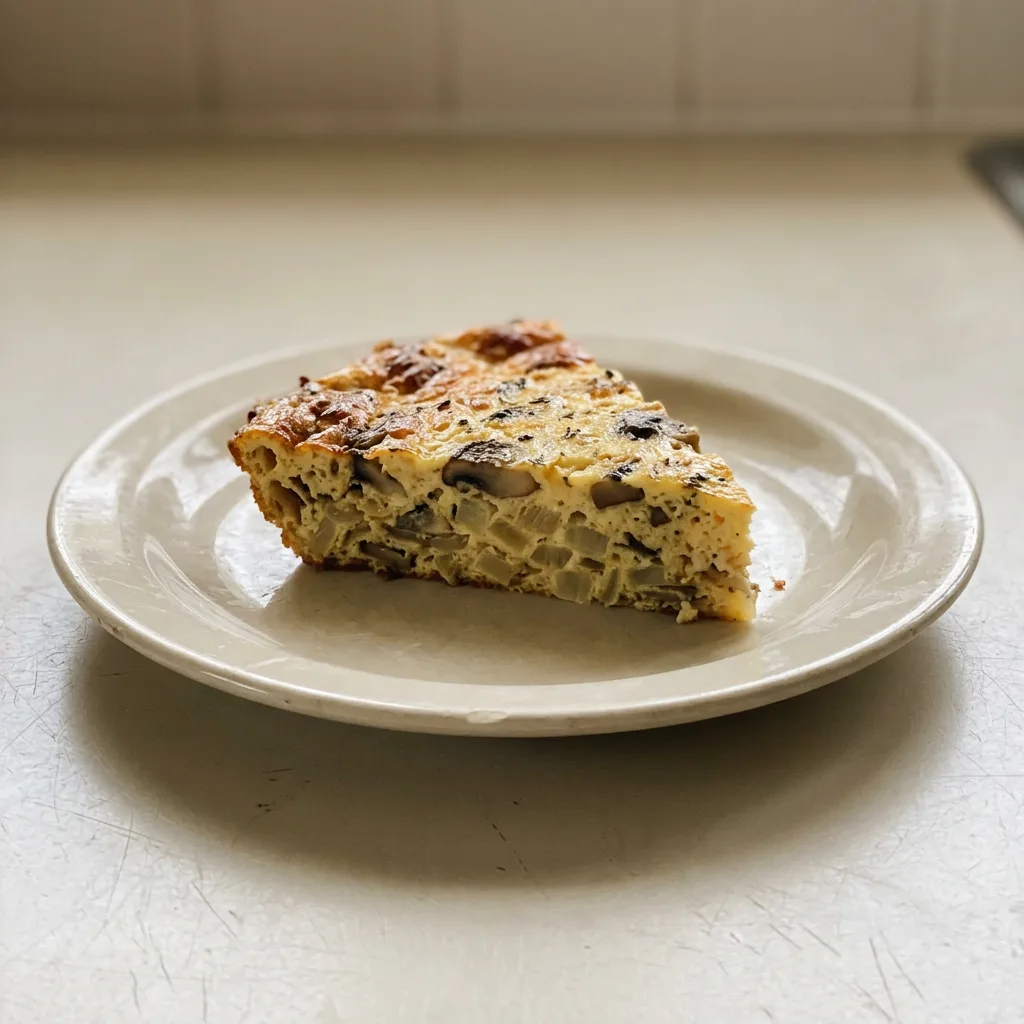
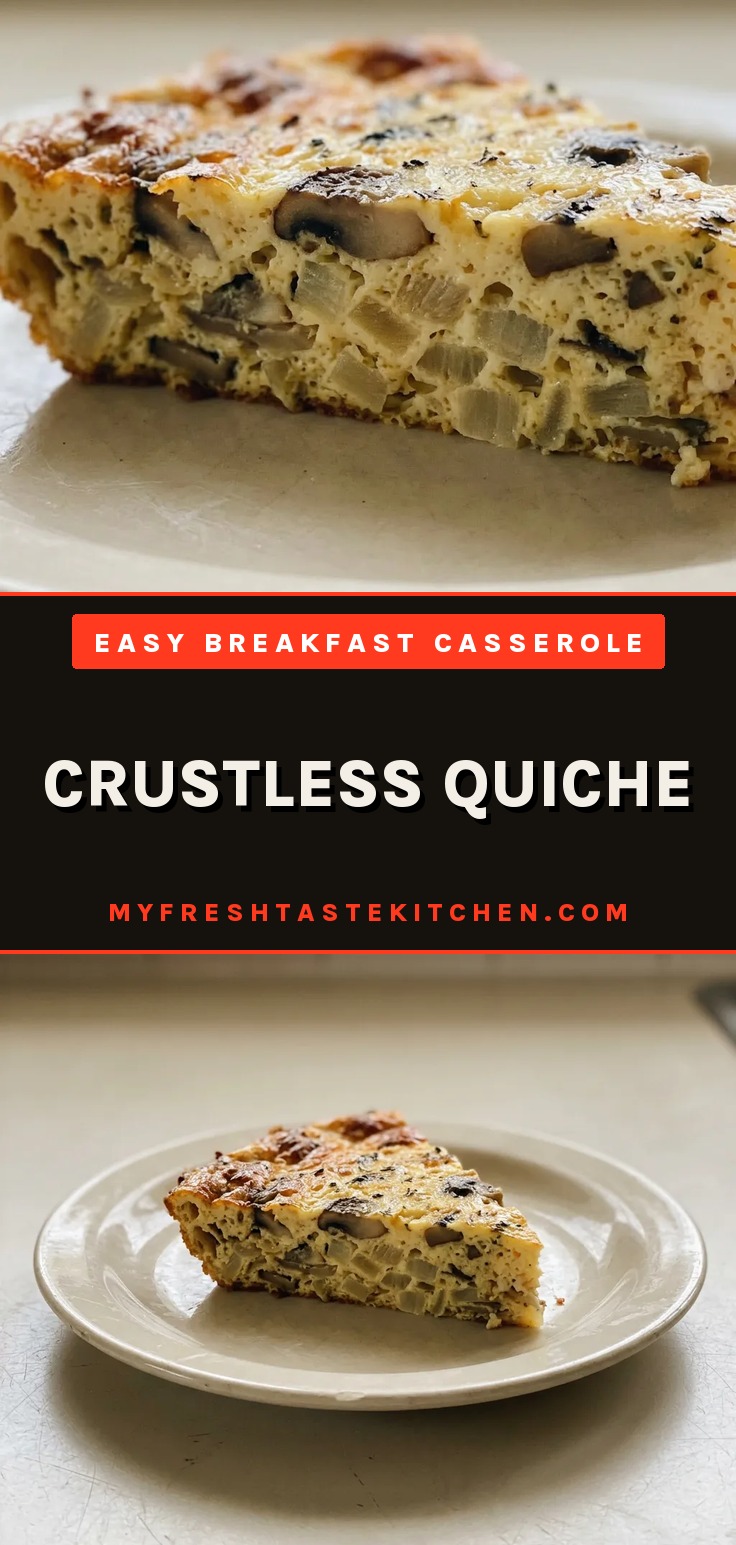
Crustless Quiche
Ingredients
Method
Preheat oven and grease dish:
Set the oven to 375°F (190°C). Coat a 9-inch pie dish with butter or nonstick spray.Sauté onions and mushrooms:
In a skillet over medium heat, warm 1 tablespoon butter or olive oil. Cook diced onions for 3-5 minutes until they become translucent. Then add sliced mushrooms and continue cooking for another 5-7 minutes.Whisk egg mixture:
In a large bowl, beat 6 eggs until they are frothy. Pour in 2/3 cup whole milk, 1/4 cup half-and-half, 1/2 teaspoon kosher salt, 1/4 teaspoon ground black pepper, and optionally 1 teaspoon Dijon mustard plus a pinch of ground nutmeg. Stir until well combined.Fold in mix-ins:
Carefully fold 1 1/2 cups of your chosen mix-ins (including the sautéed onions and mushrooms) into the egg base.Pour into dish:
Pour the mixture into the greased pie dish and smooth the surface.Bake quiche:
Bake for 40 to 55 minutes, until the top is golden brown and the center is slightly jiggly.Cool before slicing:
Allow the quiche to rest on a wire rack for 10-15 minutes prior to slicing.
Swap the dairy, not the eggs, and you get a working quiche
half-and-half: heavy cream. Richer, denser custard with a more silky mouthfeel. The higher fat content gives a silkier set with a bit more heft.
whole milk: 2% or skim milk. Lighter, less creamy texture. The custard sets a little softer and may be slightly less stable when slicing.
Avoid skim, too watery, the eggs can’t compensate.
half-and-half (for dairy-free): full-fat coconut milk (not light). Coconut flavor will come through; custard is still sliceable but slightly less tender. The fat helps mimic richness, but the texture is a bit firmer and less silky.
whole milk (for dairy-free): unsweetened oat milk (barista blend preferred). Thinner custard, but oat milk’s starchiness helps set it.
You’ll get a slightly softer, less cohesive slice. Avoid almond milk, too watery, quiche won’t hold together well.
Tips
- Use a glass or ceramic pie dish rather than metal; glass retains heat more evenly and helps the egg custard set without a crust to insulate it, reducing the risk of a soggy bottom or uneven doneness.
- If your mix-ins include cheese, toss them with a teaspoon of flour before folding into the custard; this prevents the cheese from sinking to the bottom and keeps it evenly distributed throughout the quiche.
Storage and Serving
Crustless quiche is best served within 30 minutes of its 10 to 15 minute rest. At that point the custard is tender, sliceable, and still warm.
Leftovers keep in the fridge for up to 3 days. Cover the dish tightly with plastic wrap or transfer slices to an airtight container. Over time the eggs continue to release moisture, so by day 3 the texture is softer but still pleasant.
Reheat individual portions in a 300°F oven for 10 minutes, or microwave at 50% power in 30-second bursts. The quiche does not freeze well. The custard breaks down on thawing, turning watery and grainy.
If you must freeze, bake the quiche first, cool completely, wrap in foil and a freezer bag, and eat within 1 month. Expect a looser texture after thawing.
For the best experience, make it fresh or up to 2 days ahead and reheat gently.
Frequently Asked Questions
Can I make crustless quiche ahead of time and reheat it?
Yes. Bake it fully, let it cool, then refrigerate covered for up to 3 days.
Reheat individual slices in a 300°F oven for 10 minutes or microwave at 50% power in 30-second bursts. The texture will be slightly softer than fresh, especially by day 3, but it’s still good. Don’t freeze it, the custard breaks down and turns watery.
How do I know when the quiche is done without a crust?
Look for a golden brown top and a center that jiggles like firm gelatin when you gently shake the dish. That wobble means the custard is set but still tender, overbaking makes it rubbery. Let it rest 10 to 15 minutes after baking; the carryover heat finishes the set.
Why did my crustless quiche turn out watery?
Most likely the vegetables weren’t sautéed long enough to drive off their moisture. Mushrooms and onions release water as they cook; if you add them raw, that liquid seeps into the custard and pools during baking.
Next time, cook them until the pan is nearly dry and the mushrooms are browned. Another possible cause is underbaking, if the center is still too loose when you slice, it will weep.
Can I freeze crustless quiche?
Freezing is not recommended. The custard breaks down on thawing, turning watery and grainy. If you must, bake it first, cool completely, wrap tightly in foil and a freezer bag, and use within 1 month.
Expect a looser, less pleasant texture after thawing. For best results, make it fresh or up to 2 days ahead and refrigerate.
What’s the difference between crustless quiche and a frittata?
Crustless quiche uses a higher ratio of dairy to eggs, here, 6 eggs to almost a cup of milk and half-and-half, baked low and slow until set like a custard. A frittata has less dairy, starts on the stovetop, and finishes under the broiler for a firmer, more egg-forward texture. Crustless quiche is silkier and more delicate; a frittata is heartier and quicker to make.
