
The margin for error on these cream cheese crepes is narrower than flour-based ones, get the heat wrong and you’re prying a stuck mass off the pan, not flipping a lacy round. But nail the medium-low touch and the batter spreads paper-thin, setting into a tender sheet that folds without a crack. These carnivore cream cheese crepes deliver that pliable texture with only eggs, cream cheese, and salt, no grains at all.
Smooth batter, no shortcuts
Cream cheese lumps aren’t just a texture issue, they create weak spots that tear when you try to flip. Blending eggs with softened cream cheese until the mixture pours like heavy cream eliminates those trouble zones. The two-minute rest after blending matters just as much.
You’ll see tiny bubbles rise and pop; if you skip the rest, those bubbles cook into pinholes that make the crepe fragile. A smooth, rested batter spreads into a thin, even layer without resisting the tilt of the pan.
That uniformity is what gives you a crepe that holds together when you fold it. In a pan over medium-low heat, the batter sets gently from edge to center, no raw patches, no burned spots. This is the base step for a high-protein breakfast that feels rich but keeps carbs near zero.
Heat and fat: the release factor
Medium-low heat does two things you can see: it lets the crepe cook through before the bottom darkens, and it gives the fat time to form a slick barrier. Crank the heat higher and the butter browns before the batter sets, then the crepe sticks in patches.
Swirl the fat so it reaches every corner of the pan; a dry spot means batter welds to the metal. Use enough butter or tallow to see a thin sheen across the surface, that’s the layer that lets the spatula slide under cleanly. If the pan looks matte after pouring, add more fat next time.
The right heat and greasing work together so you never need to pry or scrape. One smooth flip and you’re done.
Flip when the crepe tells you
Don’t time this step, watch it. The first side is ready when the edges pull away from the pan and a spatula tip slides under without catching. If the spatula meets resistance, wait another few seconds.
That visual cue means the structure is set enough to survive the flip. The second side cooks in a fraction of the time because the pan and the crepe are already hot.
You’ll see it turn a light golden in 20 to 40 seconds; any longer and it gets brittle. The color is your only doneness signal here, there’s no browning on the first side to judge by. Flip when the crepe says so, not when the clock beeps.
That’s how you get a pliable crepe that folds without cracking.
Stack warm crepes for best texture
As each crepe comes off the pan, lay it directly on top of the previous one. The stack traps steam, so every crepe stays soft and warm, not crisp or leathery. That moisture keeps them flexible while you finish the batch, you can fold or roll them without splits.
If you let crepes cool singly on a rack, they dry out and stiffen, which makes them hard to handle. Stacking also means you serve all crepes at once, hot and tender, rather than racing to fill each one as it finishes. For a zero-carb breakfast that needs no reheating, this simple habit makes the difference between crepes that drape and crepes that crack.
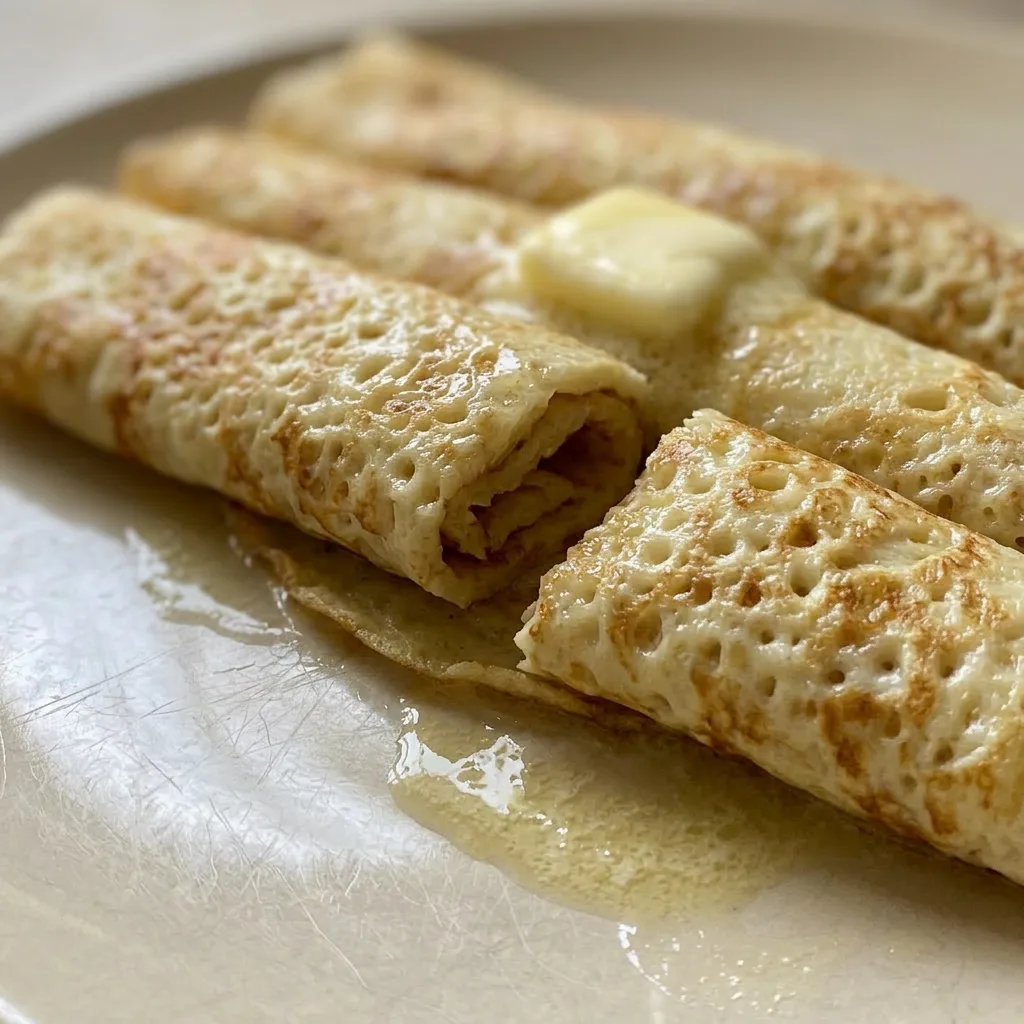
Prep: 5 min · Cook: 10 min · Total: 15 min · Servings: 2
What to buy and how to prep
cream cheese: Pull it from the fridge 20 minutes before blending so it softens enough to blend lump-free.
eggs: Use large eggs straight from the carton; the 3 count is calibrated for that size.
butter or tallow: Use a fat with a smoke point above 350°F; butter adds flavor, tallow is more neutral.
Blend, rest, then pour
Blend until smooth
Blend eggs, softened cream cheese, and salt until the mixture pours like heavy cream. Stop when you see no white flecks, lumps here mean tears later.
Rest the batter
Let the batter sit for 2 minutes. Watch for tiny bubbles rising and popping; if you skip this, those bubbles cook into pinholes that weaken the crepe.
Heat the pan
Set a skillet over medium-low heat. The pan is ready when a drop of water sizzles gently, not violently, too hot, and the butter browns before the batter sets.
Grease and pour
Swirl about a teaspoon of butter or tallow to coat the pan. Pour 2, 3 tablespoons for an 8-inch pan (1/4 cup for 10-inch). If the batter doesn’t spread easily, the pan is too cool.
Tilt to spread
Immediately tilt and rotate the pan so batter forms a thin, even layer. If it sets before spreading, your pan is too hot; next time lower the heat.
Cook first side
Cook 60 to 90 seconds. The first side is ready when the edges pull away from the pan and a spatula slides under without resistance, don’t flip if it sticks.
Flip and finish
Flip gently and cook 20 to 40 seconds. Watch for a light golden color on the second side; any darker and the crepe turns brittle. Stop at pale gold.
Stack while warm
Transfer crepe to a plate and lay next one directly on top. The stack traps steam, keeping crepes soft and pliable, if you let them cool singly, they stiffen and crack.

Carnivore Cream Cheese Crepes (Easy 3-Ingredient)
Ingredients
Method
Blend batter smooth:
Combine the eggs, softened cream cheese, and salt in a blender; process until the mixture is utterly smooth and free of any cream cheese lumps.Rest batter briefly:
Allow the batter to sit for 2 minutes while you preheat a skillet over medium-low heat—this brief rest lets air bubbles dissipate for more even cooking.Grease and pour:
Grease the pan with a small amount of butter or tallow, swirling to cover, then pour in roughly 2–3 tablespoons of batter for an 8-inch pan (or about 1/4 cup for a 10-inch pan).Spread batter thin:
Quickly tilt and rotate the pan to spread the batter into a thin, uniform layer.Cook until set:
Cook for 60–90 seconds, until the edges appear set and a spatula can slide under the crepe without resistance.Flip and brown:
Carefully flip and cook the other side for 20–40 seconds, just until it turns a light golden color.Repeat and stack:
Move the crepe to a plate and repeat, adding more fat to the pan as necessary.Fill and serve:
Stack the crepes as you cook (they remain soft and warm that way), then fill, fold, and serve.
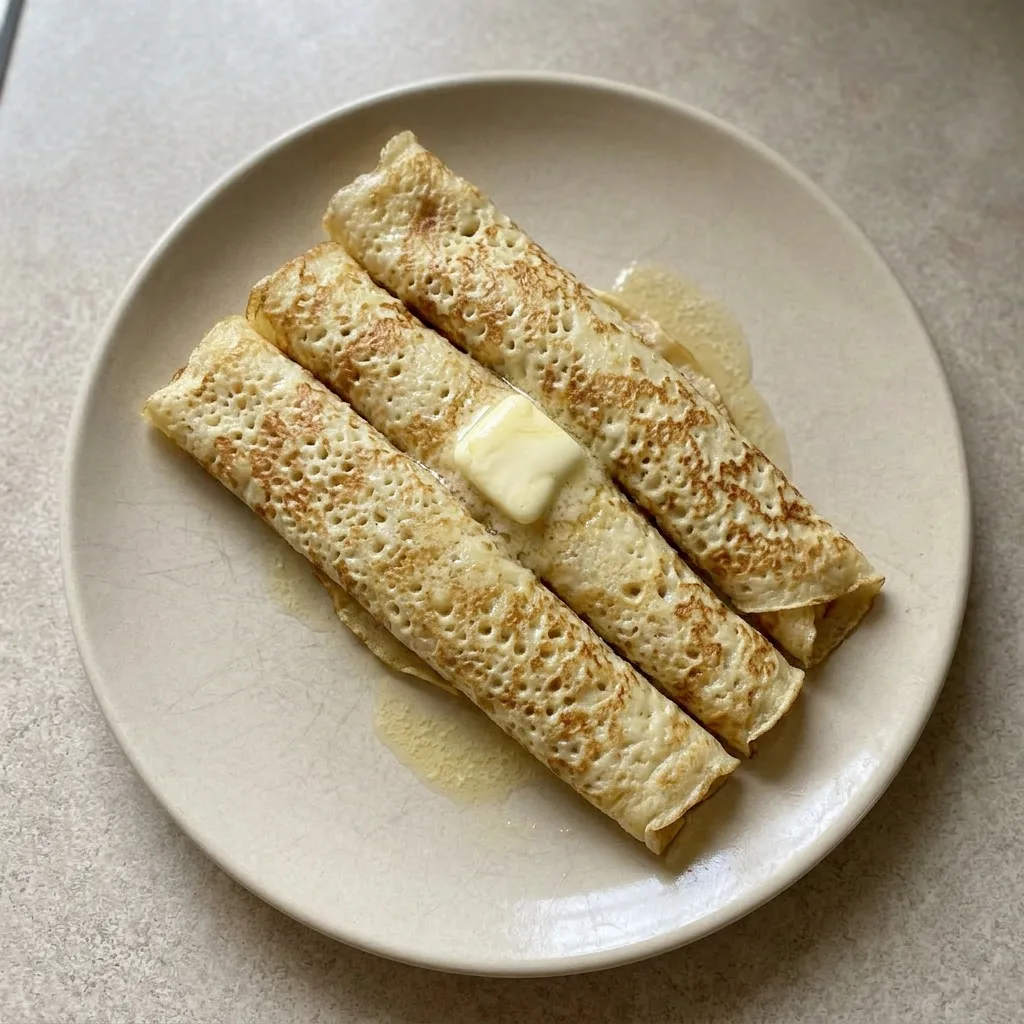
Storage and serving
Stack cooled crepes with a sheet of parchment between each, then wrap the stack tightly in plastic wrap or place in an airtight container. Refrigerate up to 3 days.
The crepes soften further as they sit, so reheat them briefly in a dry pan over medium heat, about 20 seconds per side, to restore a tender, pliable texture. If you skip reheating, refrigerated crepes feel dense and cold.
For longer storage, freeze the stacked crepes (with parchment) in a freezer bag for up to 1 month; thaw in the fridge overnight and reheat as above. Cream cheese crepes are best eaten within 2 hours of cooking. Once filled, the moisture from fillings like smoked salmon or scrambled eggs makes the crepe soggy within 30 minutes, so fill just before serving.
Leftover filled crepes can be refrigerated but will be noticeably limp the next day.
Tips
- Let the batter rest exactly 2 minutes. Resting longer than 3 minutes allows the cream cheese to absorb too much liquid from the eggs, resulting in a dense, heavy crepe that doesn’t spread as thinly.
Swap cream cheese? Watch the fat and the set
cream cheese: Full-fat mascarpone, 1:1 by weight. Mascarpone has more fat and less water, so the batter pours slightly thicker and the crepe feels richer, almost custard-like.
It sets a bit slower, add 10 to 15 seconds to the first side cook time. Flavor turns milder, less tangy.
Kite Hill or Miyoko’s), 1:1 by weight. Dairy-free spreads are softer and higher in water; the batter will be runnier and bubbles more pronounced.
Crepes spread faster and are more delicate, you’ll need an extra 5 seconds rest after blending. They also brown quicker on the second side, so pull them at pale gold. Texture stays tender but less sturdy for rolling.
butter or tallow: Ghee or coconut oil, same amount. Ghee has a higher smoke point than butter, so you can run the pan a touch hotter without browning. Coconut oil imparts a mild coconut note that clashes with savory fillings but works with sweet ones.
Both release crepes cleanly when the pan is properly greased.
eggs: None, eggs are the structure. No egg replacer or flax gel will give the same tender set and pliable fold. Skip this swap.

Frequently Asked Questions
Can I make the batter ahead of time and refrigerate it?
You can, but it’s not ideal. The batter thins as it sits because the cream cheese absorbs moisture, so crepes spread even thinner and become more delicate.
If you must, refrigerate in a sealed container for up to 24 hours, then whisk in a tablespoon of water to loosen it back to the original heavy-cream consistency. The 2-minute rest after blending still applies.
Why did my crepes turn out rubbery or tough?
Overcooking is the usual suspect. The second side needs only 20 to 40 seconds, any longer and the proteins tighten into a stiff sheet.
Another cause: the pan was too hot, setting the batter before it could spread thin, so the crepe ends up thick and dense. Stick to medium-low heat and pull the crepe at pale gold, not brown.
How do I prevent the crepes from tearing when I flip them?
Wait for the visual cue: the edges pull away from the pan and a spatula slides under without resistance. If it sticks, the crepe isn’t set enough, give it another 10 to 15 seconds. Also, make sure the pan has a thin sheen of fat; a dry spot bonds batter to metal and guarantees a tear.
Can I use this batter for savory fillings?
Yes. The batter has only eggs, cream cheese, and salt, no sugar, so it’s neutral enough for smoked salmon, scrambled eggs, or sautéed mushrooms. Just skip any sweet add-ins.
The crepes are sturdy enough to roll but best filled right before serving, since moisture from fillings softens them within 30 minutes.
How is this different from a classic French crepe?
Classic crepes use flour and milk, so they’re more elastic and can fold without cracking after cooling. These cream cheese crepes rely on eggs for structure, so they’re tender but less forgiving, they must be stacked warm to stay pliable, and they soften more quickly when filled. The trade-off: they’re nearly zero-carb and ready in 15 minutes.
