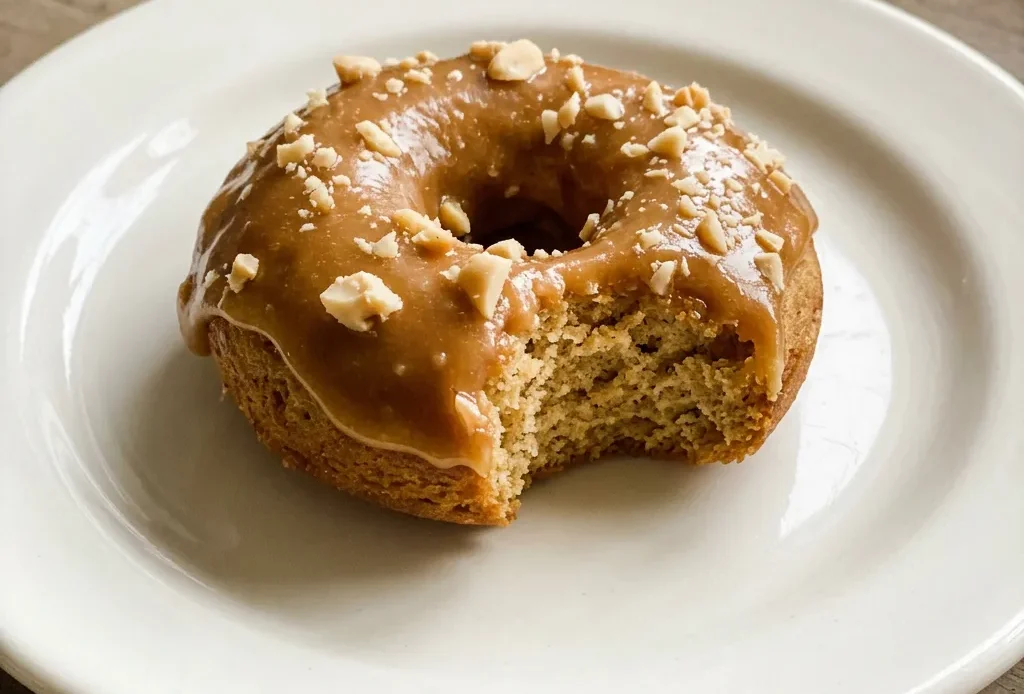
The hardest part of a vegan baked donut is getting real caramel flavor, not just sweetness. This recipe pushes it with molasses and a boiled brown-sugar glaze, the same technique caramel candy uses. The batter mixes fast, the glaze sets in minutes, and the peanuts add a crunch that keeps the soft crumb from feeling one-note.
These caramel donuts taste intentionally deep, not accidentally sweet.
Why add molasses to the batter?
Molasses works with brown sugar to push the caramel flavor beyond what sugar alone gives. Brown sugar carries some molasses already, but the extra tablespoon adds a darker, more complex note, almost like a hint of burnt sugar. In the batter, it doesn’t dominate; it sits underneath the nutmeg and yogurt, making the donuts taste richer than their ingredient list suggests.
The same logic applies to the glaze: brown sugar provides the base caramel tone, and the brief boil deepens it further. What you smell while the glaze cooks is that sugar actually caramelizing, not just melting. The result is a donut that tastes intentionally caramel, not just sweet.
What does the yogurt do in these donuts?
Vegan yogurt replaces eggs by providing both moisture and acid. The acid reacts with the baking soda, creating bubbles that lift the batter in the oven. You’ll see the donuts puff up and dome slightly, just like with eggs.
But the yogurt also keeps the crumb tender, almost silky, not cakey or dry. Without it, you’d get a denser, tighter crumb because there’s no extra liquid and no acid to soften the gluten.
The tang from the yogurt doesn’t come through in the final taste; it gets masked by the brown sugar and molasses. What matters is the texture: a moist, soft bite that holds the glaze without turning soggy.
Why boil the glaze ingredients?
Boiling butter and brown sugar together does two things. First, it forces the sugar to dissolve fully into the fat, so the glaze ends up smooth, not grainy.
Second, the heat drives off some water and causes the sugar to caramelize slightly, you’ll see the mixture darken and smell a toasted, butterscotch-like aroma. If you skip the boil, the glaze stays thin and the brown sugar can crystallize as it cools, leaving a gritty layer on the donuts. Letting the mixture cool for about five minutes before whisking in the powdered sugar prevents clumps from forming; hot liquid would make the powdered sugar seize into lumps.
The final glaze should be thick enough to coat the back of a spoon but still pourable. Dip the donuts while the glaze is still just warm and tacky.
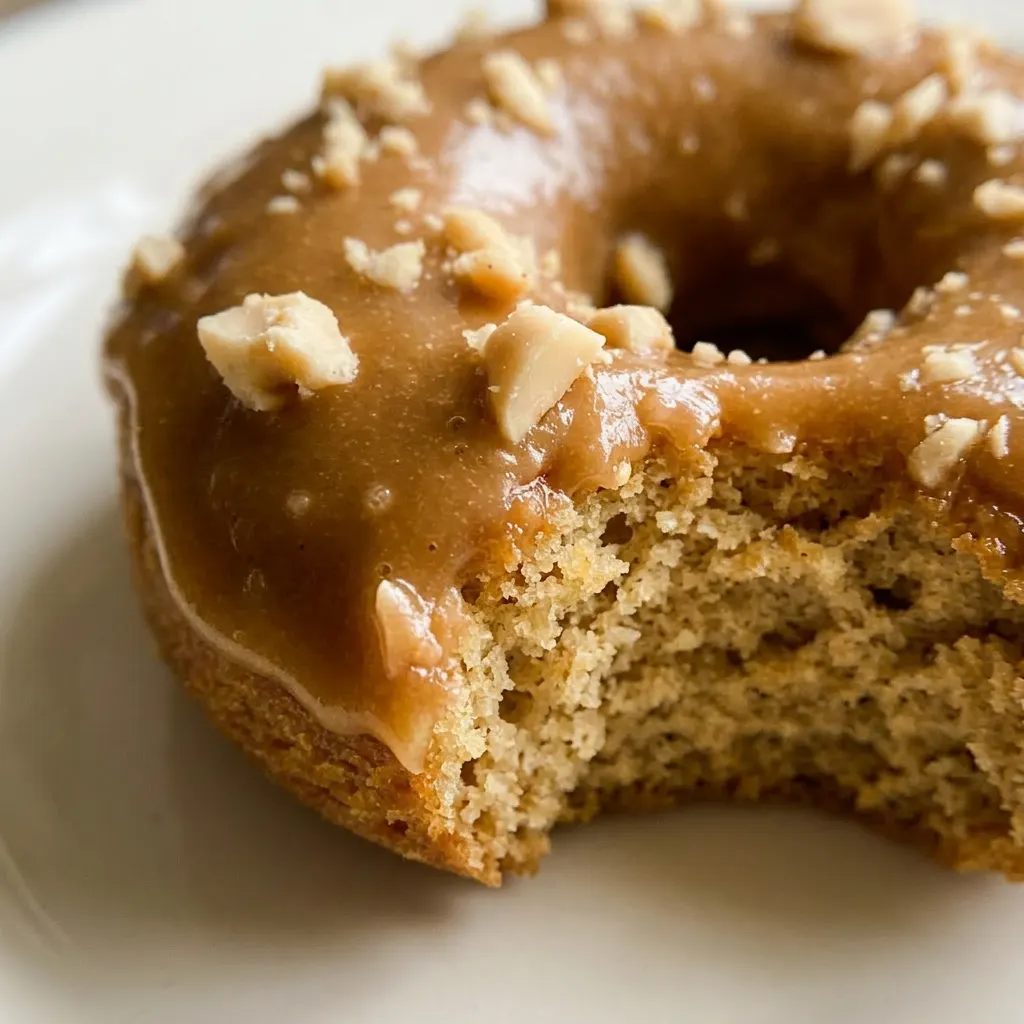
Prep: 10 min · Cook: 15 min · Total: 25 min · Servings: 12 · Calories: 270 kcal
A few things about these ingredients
Brown sugar: Use packed dark brown sugar; light brown sugar won’t give the same deep caramel flavor in the batter or glaze.
Vegan yogurt: Plain, unsweetened yogurt works best; flavored yogurts add sweetness you don’t want here.
Molasses: Use regular (not blackstrap) molasses; blackstrap is too bitter and will overpower the batter.
Vegan creamer: Any plain, unsweetened non-dairy creamer or milk works; avoid flavored or sweetened ones.
Chopped peanuts: Use dry roasted, unsalted peanuts for crunch without extra salt or oil.
How to make caramel donuts
Mix the dry ingredients
Whisk flour, brown sugar, salt, baking powder, baking soda, and nutmeg until uniform. You want no brown sugar lumps, if you see any, break them with your fingers.
Combine the wet ingredients
Melt vegan butter in the microwave, then stir in yogurt, molasses, and water. The mixture should look smooth and slightly frothy from the yogurt. If it curdles, that’s fine; it’ll come together with the dry.
Fold batter together
Pour wet into dry and fold just until no flour streaks remain. The batter will be thick but soft, like a muffin batter. Overmixing makes the donuts tough, so stop as soon as it’s combined.
Fill donut pan
Spoon batter into greased cavities, filling each about ⅔ full. Use a piping bag for cleaner fill, snip the tip and pipe in a continuous ring. Batter should mound slightly above the rim.
Bake donuts
Bake at 350°F for 12 to 16 minutes. They’re done when the tops spring back to the touch and a toothpick comes out clean. Let cool in the pan for 5 minutes, then transfer to a wire rack.
Make caramel glaze
Boil butter and brown sugar in a saucepan over medium-high, stirring constantly. Once it reaches a full boil, cook for up to 1 minute, you’ll see it darken and smell a butterscotch aroma. Remove from heat.
Finish the glaze
Stir in vanilla and creamer, then let cool 5 minutes. Whisk in powdered sugar until smooth. If too thick, add creamer ½ teaspoon at a time.
The glaze should coat a spoon thickly but drip slowly.
Glaze and garnish
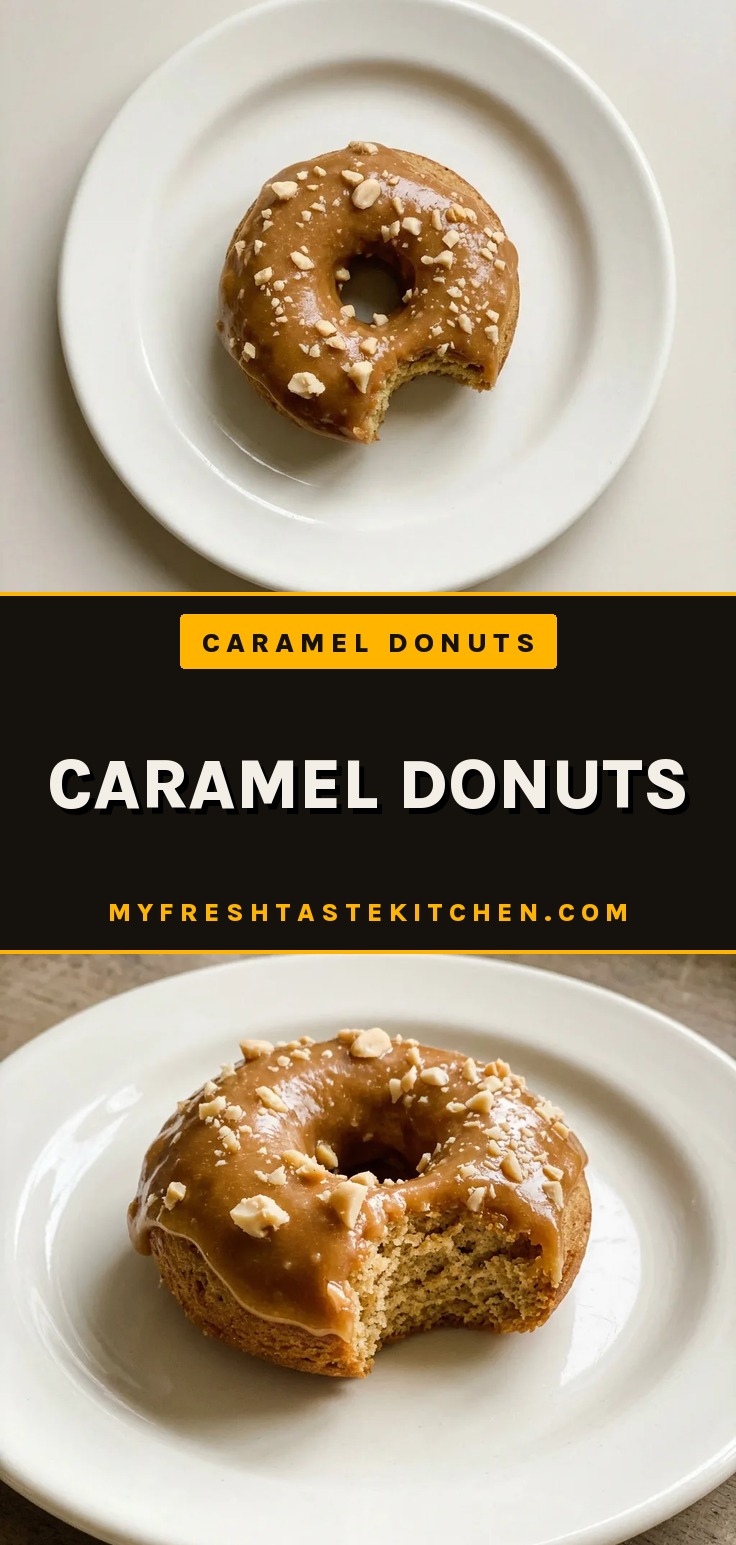
Dip each donut top into the warm glaze, letting excess drip off. Sprinkle chopped peanuts on top while the glaze is still tacky. Work quickly, the glaze sets as it cools, so dip and garnish in batches.
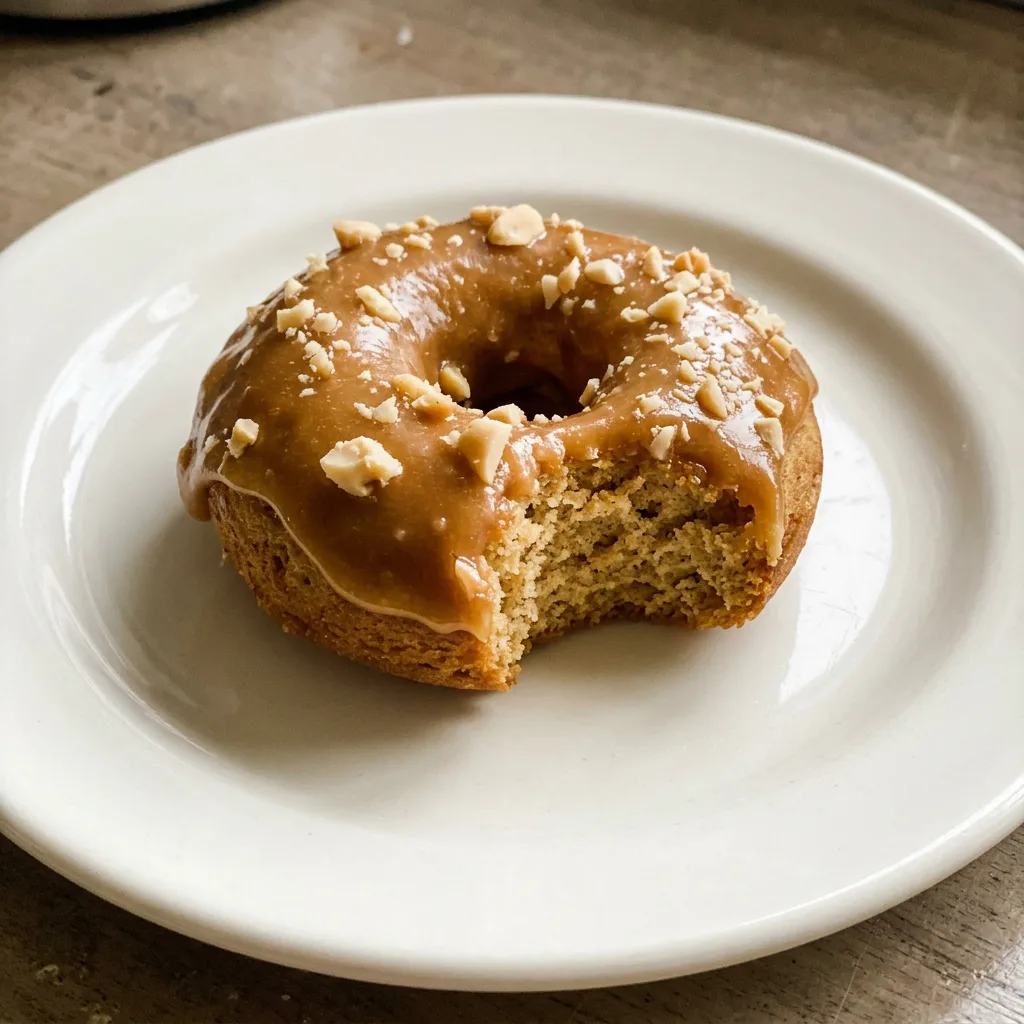
Caramel Donuts
Ingredients
Method
Preheat Oven and Pan:
Preheat oven to 350°F (175°C). Spray a standard donut pan with non-stick spray.Whisk Dry Ingredients:
In a mixing bowl, whisk together flour, 3/4 cup brown sugar, salt, baking powder, baking soda, and nutmeg until uniform.Melt Butter and Mix Wet:
In a microwave-safe bowl, microwave 1/4 cup vegan butter for 20-30 seconds until liquefied. Mix in vegan yogurt and molasses, then stir in water.Combine Wet and Dry:
Add the wet mixture to the dry ingredients. Fold together until no dry streaks remain; batter should be thick but smooth.Fill and Bake Donuts:
Spoon batter into donut cavities, filling each generously and evenly. Use 3 tablespoons per cavity for thinner donuts or 4 tablespoons for thicker ones. Bake 12-16 minutes or until a toothpick comes out clean.
Boil Butter and Sugar:
For caramel icing: In a saucepan over medium-high heat, bring 1/4 cup vegan butter and 1/2 cup brown sugar to a boil. Stir constantly and let boil for up to 1 minute.Finish Caramel Glaze:
Take off heat; mix in vanilla and vegan creamer. Let cool for about 5 minutes, then whisk in powdered sugar until smooth. The glaze will thicken as it cools; thin with 1/2 teaspoon extra creamer if desired.Glaze and Top Donuts:
Once donuts are baked, remove from oven and let cool a few minutes. Dip the top of each donut into the caramel glaze. Sprinkle chopped peanuts on top while the glaze is still tacky.
Notes
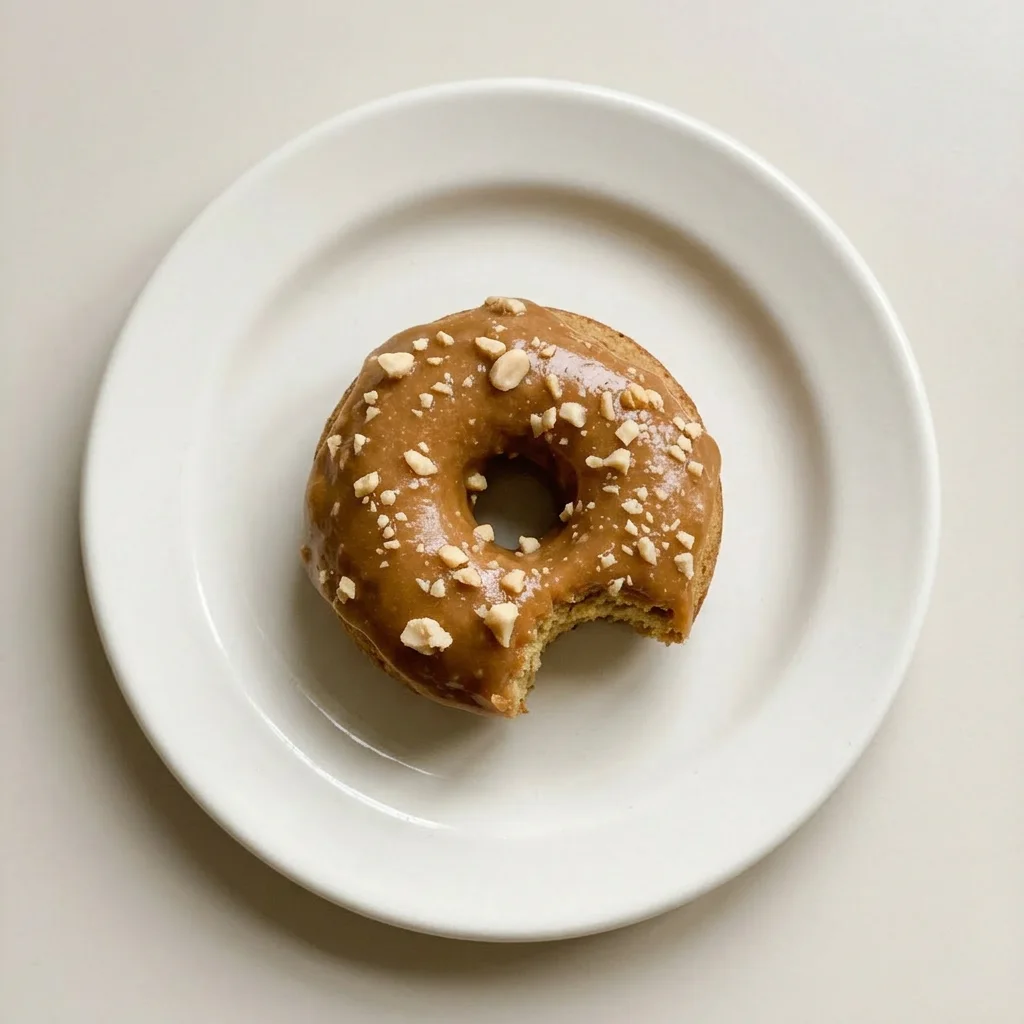
Storage and Serving
These donuts taste best the day they’re made, when the glaze is glossy and the crumb is tender. If you have leftovers, store them in an airtight container at room temperature for up to 2 days. The glaze will soften and absorb into the donut over time, making the texture more like a coffee cake than a fresh donut.
To re-crisp the exterior, warm individual donuts in a 300°F oven for 3 to 5 minutes. You can also freeze the unglazed donuts: wrap them tightly in plastic wrap and freeze for up to 1 month.
Thaw at room temperature, then glaze and garnish just before serving. Do not freeze glazed donuts, as the glaze will become sticky and messy upon thawing. For make-ahead, bake the donuts a day in advance, but glaze them no more than a few hours before serving to keep the glaze intact.
What to swap and what to leave alone in caramel donuts
Vegan yogurt: Plain non-dairy yogurt (soy, coconut, almond) or buttermilk (1 tbsp lemon juice + enough non-dairy milk to make 2/3 cup, let sit 5 min). Any plain, unsweetened non-dairy yogurt works similarly.
Buttermilk provides the same acidity for lift and tender crumb. Flavored or sweetened yogurts add unwanted taste and sugar.
The batter may be slightly thinner with buttermilk, but the donuts still rise and stay moist.
Vegan butter: Coconut oil (refined, melted) or margarine (vegan stick margarine, melted). Coconut oil yields a slightly firmer crumb and a faint coconut note if unrefined. Margarine gives nearly identical texture.
Both work in the batter and glaze. Do not substitute with vegetable oil, the lack of solid fat makes the batter too thin and the donuts greasy.
In the glaze, coconut oil or margarine will still seize and caramelize properly.
All-purpose flour: Gluten-free 1:1 baking blend (with xanthan gum). Substitute by weight, not volume (use 300g). The batter will be slightly thicker and the donuts may dome less; the crumb will be a bit more tender and can be fragile when warm.
Let them cool fully in the pan before removing. Do not use single flours like almond or coconut, they lack structure and the donuts will crumble.
Chopped peanuts: Chopped pecans, walnuts, or omit entirely. Pecans or walnuts add a similar crunch and nutty flavor. Leaving them out is fine, you’ll have a smooth glazed donut.
Salted peanuts can work but reduce the salt in the batter by a pinch to avoid oversalting.
Tips
- Use a 1.5-tablespoon cookie scoop to fill each donut cavity; that amount gives you the 3-tablespoon portion for thinner donuts without overflow.
Most people think they can just stir the glaze together and it’ll be smooth, but skipping the boil means you end up with a gritty mess.
Frequently Asked Questions
Can I make these donuts ahead of time?
Bake the donuts up to a day ahead, but glaze them no more than a few hours before serving. The glaze stays glossy and intact only when fresh; if you glaze too early, it softens and absorbs into the crumb. Store unglazed donuts in an airtight container at room temperature, then glaze just before serving.
Why did my glaze turn out grainy?
Most likely the brown sugar didn’t dissolve fully, make sure it reaches a full boil and you stir constantly for up to 1 minute. If the glaze cools too much before you whisk in the powdered sugar, it can seize; let it cool only 5 minutes, then whisk immediately. Also check that your powdered sugar isn’t lumpy; sift it if needed.
How is this different from traditional fried caramel donuts?
These are baked, not fried, so the crumb is softer and more cake-like rather than crisp and airy. The caramel flavor here comes from brown sugar and molasses in both batter and glaze, plus the glaze is boiled to deepen the taste, mimicking the caramelization of fried dough without the oil. You get a moist, tender donut that tastes richly caramel, but with a lighter texture and less mess.
