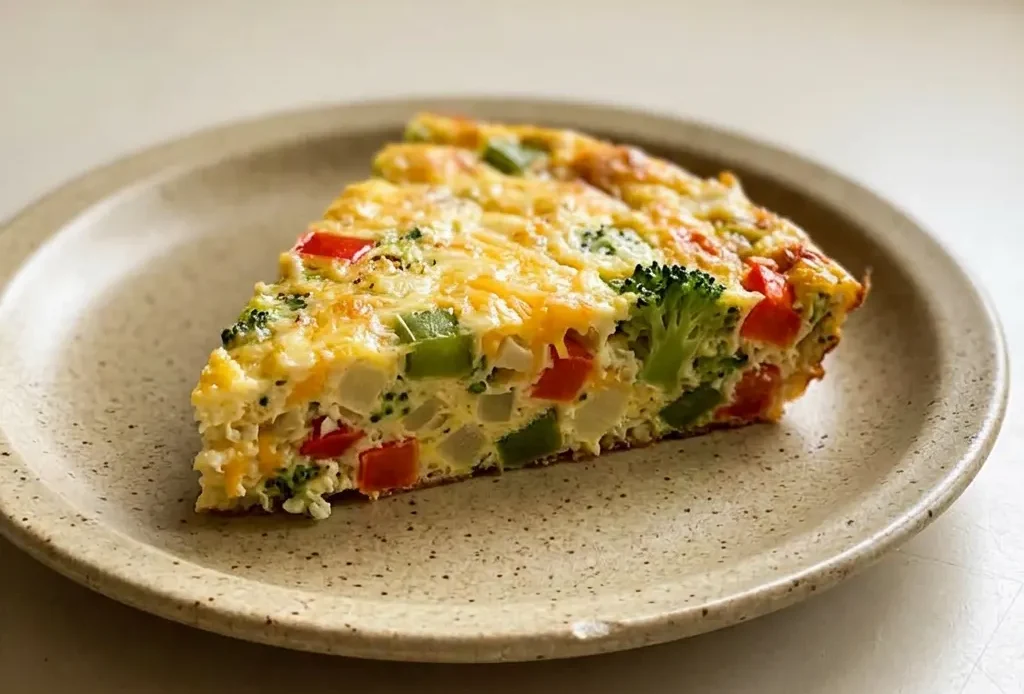
A frittata is just eggs and odds from the fridge, but it’s easy to end up with a dry, rubbery disc or a weepy mess. What saves this one is a plain rule: pre-cook everything until the pan is almost dry before the eggs go in. That means bacon crisp, vegetables tender, no standing liquid.
Then a hot oven puffs the eggs light and sets the top golden while the inside stays creamy. It’s a fine line between done and overdone, the center should still jiggle slightly when you pull it, but the 10-minute rest finishes the job. That’s the whole trick behind this frittata recipe: dry ingredients, hot oven, patient rest.
Why use a cast iron skillet for frittata?
The recipe calls for a 10-inch cast iron skillet because it goes straight from stovetop to oven without missing a beat. Cast iron holds heat evenly, so the frittata cooks consistently from edge to center.
That steady heat also helps the top brown nicely under the broiler or in the hot oven. You get a crisp, golden exterior while the inside stays tender. No hot spots, no undercooked patches.
An oven-safe nonstick pan works, but it won’t deliver the same crust. If you have cast iron, this is its moment.
How milk and cheese keep the texture creamy, not watery
Milk and cheese do more than add flavor, they control the frittata’s texture. The 1/4 cup of whole milk thins the eggs just enough to keep them from setting into a rubbery slab. As the eggs cook, the milk’s water steams off, leaving a soft, custardy crumb.
Shredded Cheddar melts into the mixture, its fat coating the egg proteins so they don’t tighten too much. That fat also binds the vegetables and bacon into a cohesive slice.
The result is rich and moist, never dry or weeping liquid on the plate.
Pre-cooking vegetables and bacon prevents a soggy frittata
Vegetables and bacon release water as they cook. If you poured raw eggs over them, that moisture would leach into the custard, making it weepy and loose.
By sautéing the bacon, onion, and garlic first, you render out fat and drive off steam. Then you cook the vegetables covered, which steams them tender, but the lid traps steam that keeps them from browning, that’s fine because the uncovered part of the stovetop cook evaporates any remaining liquid.
By the time the eggs go in, the pan is dry. The flavors concentrate, and the frittata sets up firm, not waterlogged.
The puff and deflate: what the frittata’s rise tells you
When the frittata hits the hot oven, it puffs up like a soufflé. That’s the air trapped in the beaten eggs expanding as they heat.
The puff is dramatic but temporary, as soon as it comes out and starts to cool, the air contracts and the top settles. That deflation is a good sign: it means the eggs were light and airy, not dense.
If it stayed puffed, you’d have overbaked it. The gentle collapse leaves a tender, even crumb. Watch for that puff, then know it’s done when it’s set but still jiggles slightly in the center.
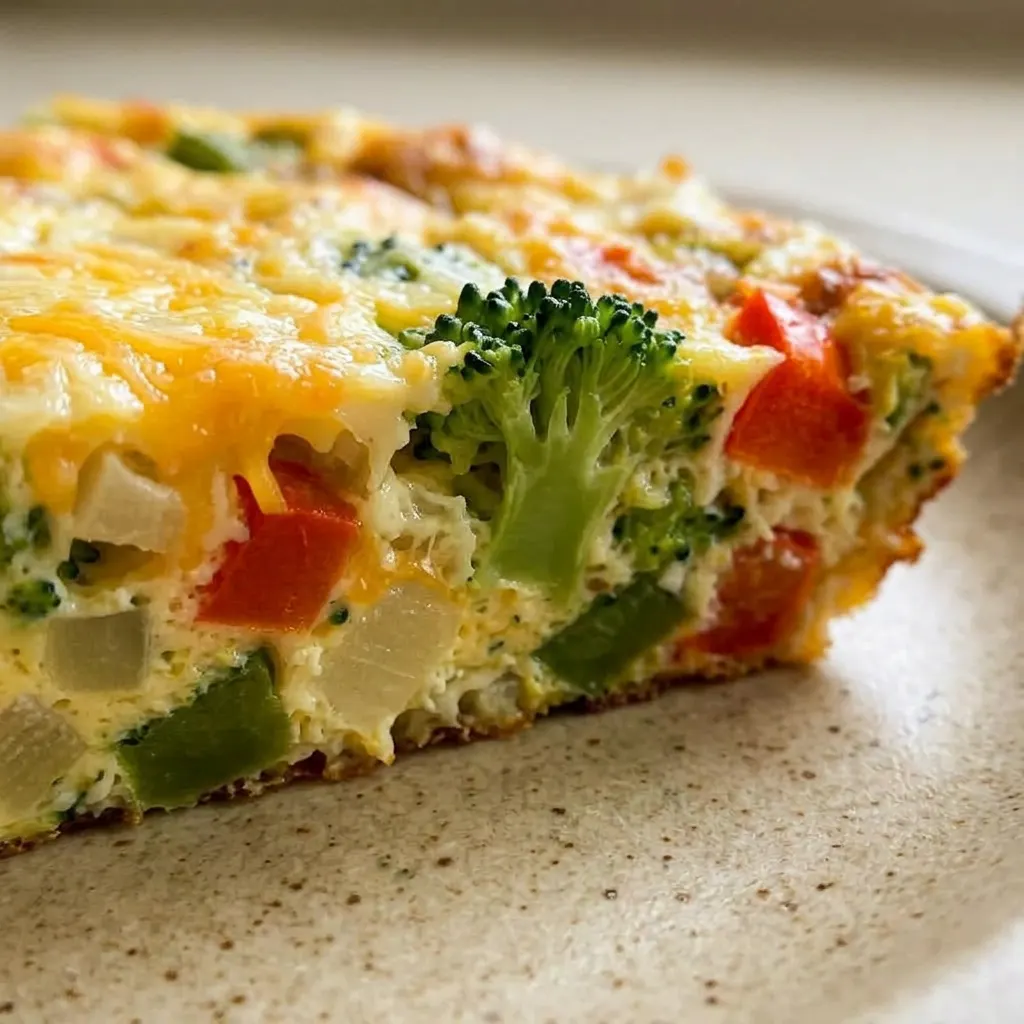
Prep: 5 min · Cook: 20 min · Total: 25 min · Servings: 8 · Calories: 210 kcal
Ingredient notes for a tender, savory frittata
Bacon: Thick cut renders more fat and stays chewy; use 2 Tbsp olive oil for vegetarian.
Vegetables: Cut into even, bite sized pieces so they all cook through in the same time.
Eggs: Large eggs, about 10. Whisk until frothy to incorporate air for a lighter texture.
Whole milk: Whole milk adds richness; lower fat milks make the eggs tougher and less creamy.
Cheddar cheese: Shred your own from a block; pre shredded contains starch that prevents smooth melting.
How to build a frittata from stovetop to oven
Preheat and prep the eggs
Heat oven to 425°F with a rack in the middle. Whisk eggs, milk, salt, pepper, and paprika until uniform and slightly frothy, no streaks of white.
Stir in the cheese; set aside. The mixture should look homogenous, not separated.
Cook the bacon and aromatics
In a 10-inch cast iron skillet over medium heat, cook bacon, onion, and garlic until the bacon begins to brown and the onion turns translucent, about 5 minutes. The fat should be rendered, and you’ll hear a steady sizzle.
Cook the vegetables until tender
Add the vegetables, cover, and cook, stirring occasionally, until tender and the bacon is crisp, about 5 minutes. Lift the lid to check: the vegetables should be softened, and the pan bottom nearly dry, no standing liquid.
Pour and set the eggs on the stovetop
Reduce heat to medium. Pour the egg mixture over the vegetables and stir quickly just until evenly distributed. Cook undisturbed for 4 to 5 minutes.
Watch the edges: they should set and turn opaque while the center still jiggles.
Bake until puffed and set
Transfer the skillet to the oven. Bake 7 to 10 minutes until the top is lightly browned and puffed. The center should feel set but still have a slight wobble when you shake the pan, it will finish setting as it rests.
Rest before slicing
Remove from oven and let cool in the pan for 10 minutes. The puff will deflate, that’s normal.
The frittata should pull away from the sides slightly. Slice and serve warm or at room temperature.

Frittata Recipe
Ingredients
Method
Preheat oven:
Set oven to 425°F (220°C).Whisk egg mixture:
In a large bowl, combine eggs, milk, sea salt, pepper, and paprika using a whisk until uniform. Mix in cheese; reserve.Fry bacon and aromatics:
In a 10-inch cast iron skillet over medium heat, fry bacon, onion, and garlic until bacon starts to brown, roughly 5 minutes.Cook vegetables:
Add vegetables, cover, and cook until tender and bacon is fully browned, stirring from time to time, about 5 minutes.Pour in eggs:
Lower heat to medium, pour in egg mixture, and stir rapidly into the bacon and vegetables until well dispersed.Cook on stovetop:
Cook over medium heat for 4-5 minutes until the edges are firm.Bake frittata:
Move skillet to the preheated oven and bake for 7-10 minutes until the top is golden brown and set. (The frittata will rise in the oven; it falls as it cools.)Cool and serve:
Take out of the oven, allow to cool for 10 minutes, then slice and serve.
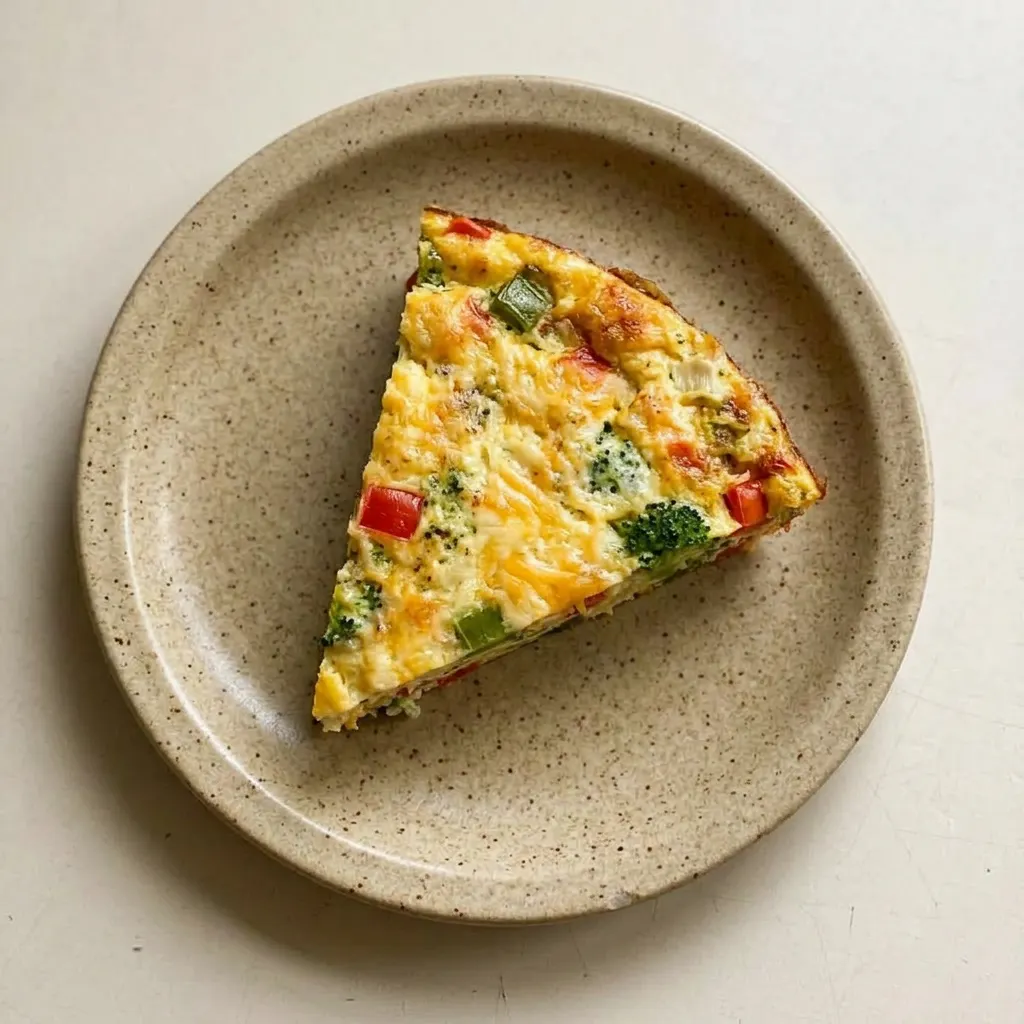
What you can swap in this frittata and what to leave alone
Bacon: Use 2 tablespoons olive oil for vegetarian. Cook the onion and garlic in the oil before adding vegetables.
You lose the smoky, salty crunch. The frittata will be milder, leaning on the vegetables and cheese for flavor. The texture stays the same.
Cheddar cheese: Any good melting cheese: Monterey Jack, Gruyère, mozzarella, or a mix. Shred it yourself from a block.
Flavor shifts with the cheese. Monterey Jack gives buttery mildness, Gruyère adds nuttiness, mozzarella stretches more.
All melt into the egg custard the same way, so the creamy texture holds.
Whole milk: Half-and-half or heavy cream (same amount). Skip skim or 2%, they make the eggs tougher and less creamy. More fat makes the frittata richer and softer.
The custard sets silkier, but it can feel heavier. Stick with whole milk for the intended balance; cream is a splurge, not a correction.
Vegetables: Swap the mix for any quick-cooking veg: mushrooms, spinach, cherry tomatoes, asparagus. Cut to uniform bite-size pieces. For watery veg like zucchini, salt and drain 10 minutes first.
Texture and moisture content change. Spinach wilts fast and releases liquid, squeeze it dry after cooking.
Mushrooms soak up fat and add chew. The key is pre-cooking until tender and the pan is nearly dry before adding eggs, or the frittata turns weepy.
Tips
- Use a nonstick spatula to gently lift the edges of the frittata after the stovetop cook to let uncooked egg run underneath; this helps the center set evenly before going into the oven.
- If your cast iron skillet handle is not oven-safe (e.g., silicone or plastic), wrap it in a double layer of foil to protect it, or use a 10-inch oven-safe nonstick skillet instead.
Storage and Serving
Serve the frittata warm or at room temperature within 2 hours of the rest for the best texture, tender, moist, and sliceable. Once cold, the eggs firm up noticeably.
Refrigerate leftovers in an airtight container for up to 3 days. For the best texture, reheat individual slices in a 350°F oven for 5 to 7 minutes, covered loosely with foil, or in a dry skillet over medium heat for 2 to 3 minutes per side. Microwave works but makes the eggs tough and rubbery.
The frittata firms as it sits; reheating cannot restore the original tenderness. Freezing is not recommended, the eggs turn watery and spongy upon thawing.
If you must freeze, do so before baking in a freezer-safe dish, then thaw overnight in the fridge and bake as directed, but expect a denser result.
Frequently Asked Questions
Can I make a frittata ahead of time and reheat it?
Yes, but the texture won’t be the same as fresh. The frittata firms as it sits, and reheating can’t restore its original tenderness.
For best results, reheat slices in a 350°F oven for 5 to 7 minutes or in a dry skillet over medium heat. Avoid the microwave, it turns the eggs tough and rubbery.
How do I prevent my frittata from sticking to the pan?
Use a well-seasoned cast iron skillet. The recipe’s stovetop cook with bacon or oil creates a natural nonstick surface. If your pan is new or sticky, let the frittata cool for the full 10 minutes, it pulls away from the sides as it rests.
A thin spatula run around the edge before slicing helps release any clingy spots.
What’s the difference between a frittata and a quiche?
A quiche has a pastry crust and a higher ratio of cream to eggs, giving it a custard-like texture that’s baked slowly in a pie dish. A frittata, like this one, is crustless, uses milk instead of cream, and starts on the stovetop before finishing in a hot oven. The result is firmer and more egg-forward, with browned edges from the direct pan contact.
