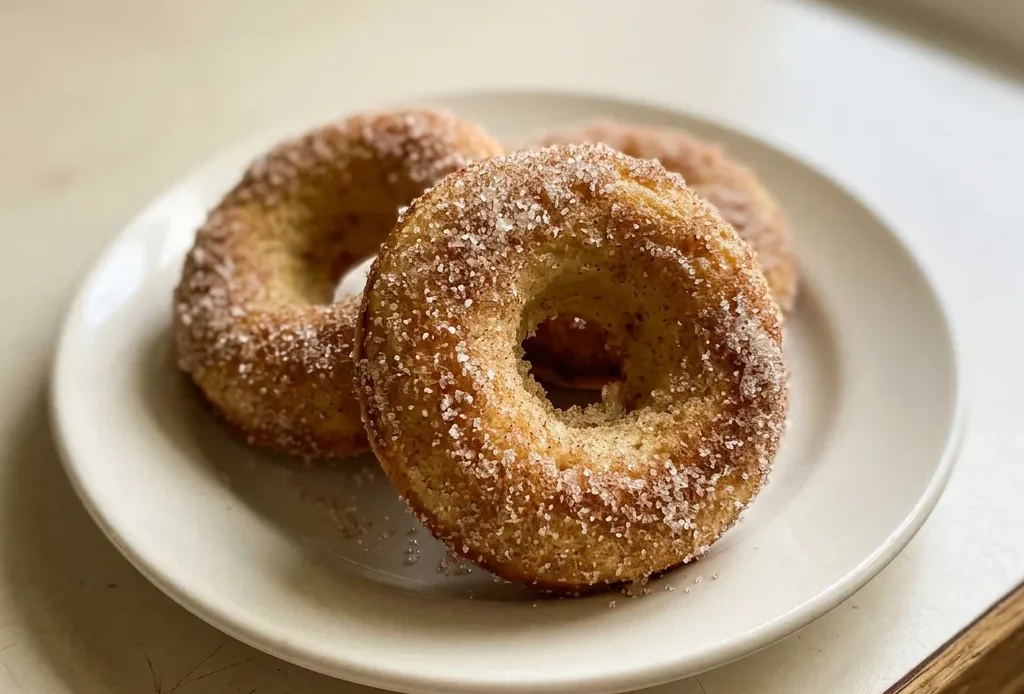
The easiest way to wreck cottage cheese donuts is to overmix the batter. Stir just until the flour disappears, stop while the dough still looks shaggy and the curds are barely broken up. That restraint keeps the crumb tender and light, not tough or rubbery.
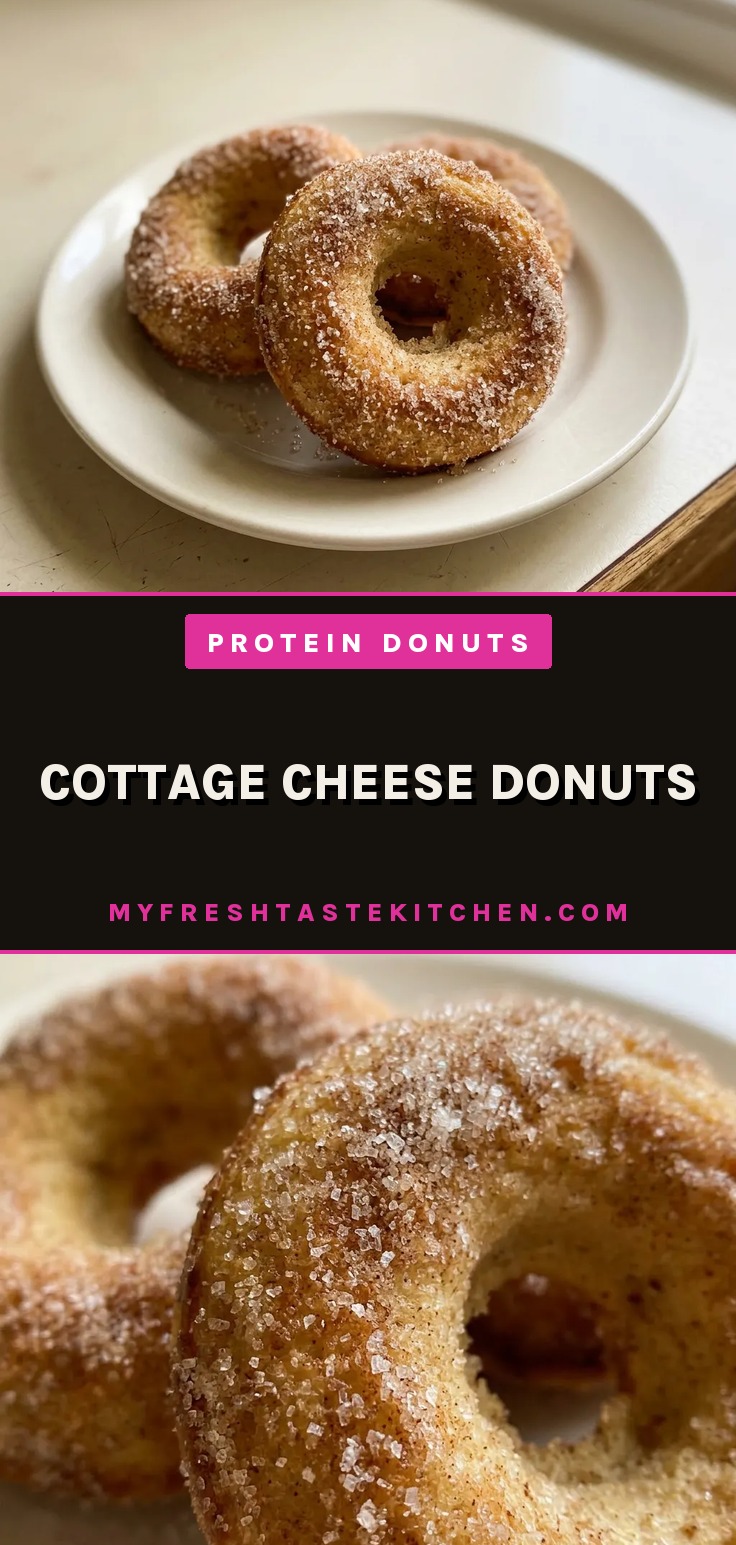
The cottage cheese itself does more than add protein: it replaces eggs and oil, so the donuts bake up soft and moist without any added fat. A quick roll in cinnamon sugar while they’re still hot gives them a thin, crunchy crust that contrasts with the airy interior. These are cake donuts, not fried, so the texture is closer to a muffin than a glazed ring, but that’s what makes them work for a quicker, lighter dessert.
Cottage cheese brings protein and tenderness
Cottage cheese replaces both eggs and oil in these donuts, cutting fat while adding a solid protein boost. As you stir the batter, the curds break down into small bits, dispersing moisture evenly. That moisture keeps the crumb soft and tender without any added fat.
The result is a donut that’s noticeably lighter in fat and higher in protein than a traditional fried version, yet still feels satisfying and rich.
Self-rising flour eliminates guesswork
Self-rising flour already has baking powder and salt mixed in, so you don’t need to add leavening separately. That’s important because cottage cheese is dense; the built-in leavening ensures the donuts rise evenly and stay light and airy. If you used all-purpose flour, you’d have to add the right amounts of baking powder and salt yourself, and any mistake could leave the donuts flat or unevenly risen.
Baking these as cake donuts means you rely on that chemical lift, and self-rising flour delivers it consistently.
Coat while warm for a crunchy sweet crust
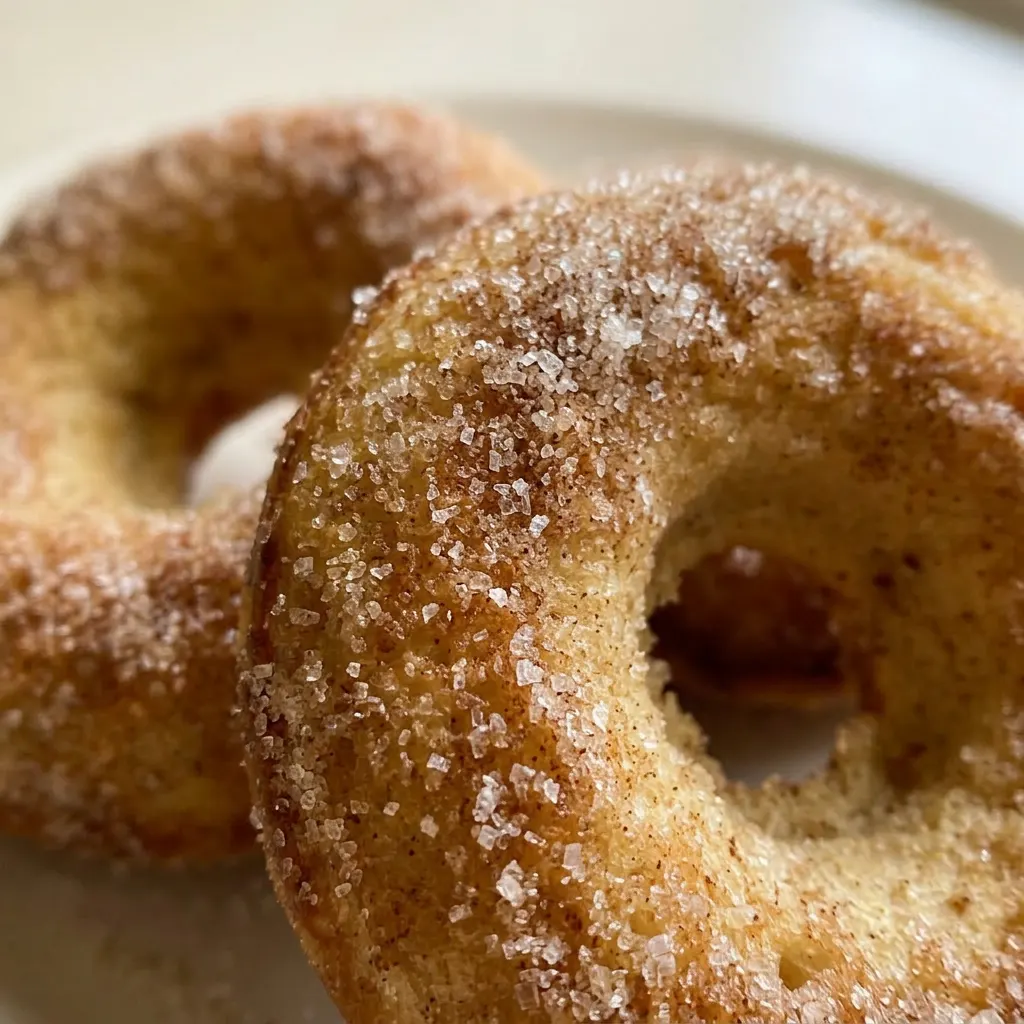
The moment the donuts come out of the oven, their warmth is your best tool. That heat melts the butter or cooking spray just enough to make it tacky, so the cinnamon sugar clings to every surface. Coat them while they’re still hot and the sugar sticks evenly, forming a thin, crunchy crust.
Let them cool first and the coating will slide right off, leaving bare patches. That contrast between the soft, tender interior and the crisp, sweet exterior is what makes these cinnamon sugar donuts so satisfying, and it only works if you act fast.
Prep: 10 min · Cook: 15 min · Total: 25 min · Servings: 12 · Calories: 140 kcal
What to look for in each ingredient
Self-rising flour: Contains baking powder and salt already, so you don’t need to add either.
Cottage cheese: Full fat or low fat both work; just drain any excess liquid before measuring.
Milk: Any milk works, but unsweetened almond milk keeps the donuts dairy free if needed.
Sugar: The optional 1 to 2 tablespoons in the batter add just a hint of sweetness.
Cinnamon: Fresh cinnamon has more punch; old jars lose their kick quickly.
Work the batter just until it comes together
Mix the batter
Stir the flour, cottage cheese, milk, and sugar just until a stiff dough forms. Overmixing makes the donuts dense and tough, so stop the second the flour disappears. Some small curd lumps are fine, they’ll soften as the donuts bake.
Fill the pan evenly
Spoon the batter into the greased cavities, dividing it equally. It’s a thick dough, so press it gently into the pan to fill the wells. Uneven filling means some donuts will overbake while others stay pale in the center.
Bake until golden and springy
Bake at 375°F for 15 to 17 minutes. The donuts are done when the edges turn golden brown and the tops spring back when you press them gently. If they feel soft or leave an indent, give them another minute.
Coat while hot
As soon as the donuts come out, mist or brush every side with cooking spray or melted butter. Then dip each one into the cinnamon-sugar mix. Work fast, once they cool, the coating won’t stick and you’ll get bare spots.
Cottage Cheese Donuts
Ingredients
- 2 1/2 cups self-rising flour 300g
- 1 cup cottage cheese 225g
- 1 cup milk, unsweetened almond milk or any milk 240ml
- 1-2 tablespoons sugar, optional 12-25g
- 1/4 cup sugar 50g
- 1 1/2 teaspoons cinnamon
- 1 serving cooking spray or melted butter, for coating
Instructions
Preheat oven and pan:
Heat oven to 375°F (190°C). Mist a 12-cavity donut pan with cooking spray.Mix dough ingredients:
In a large bowl, stir together self-rising flour, cottage cheese, milk, and sugar if using. Mix until a stiff dough forms. If mixture is too thick, add 1-2 tablespoons more milk; if too thin, add an extra tablespoon of flour.Bake donuts:
Spoon batter into the donut pan, distributing evenly among cavities. Bake for 15-17 minutes, until edges are golden and donuts spring back when pressed. Take pan out of oven.Prepare cinnamon sugar:
While donuts bake, in a shallow bowl, whisk the 1/4 cup sugar with cinnamon.Coat warm donuts:
Mist or brush all sides of the warm donuts with cooking spray or melted butter. Immediately dip each donut into the cinnamon-sugar, coating both sides thoroughly.
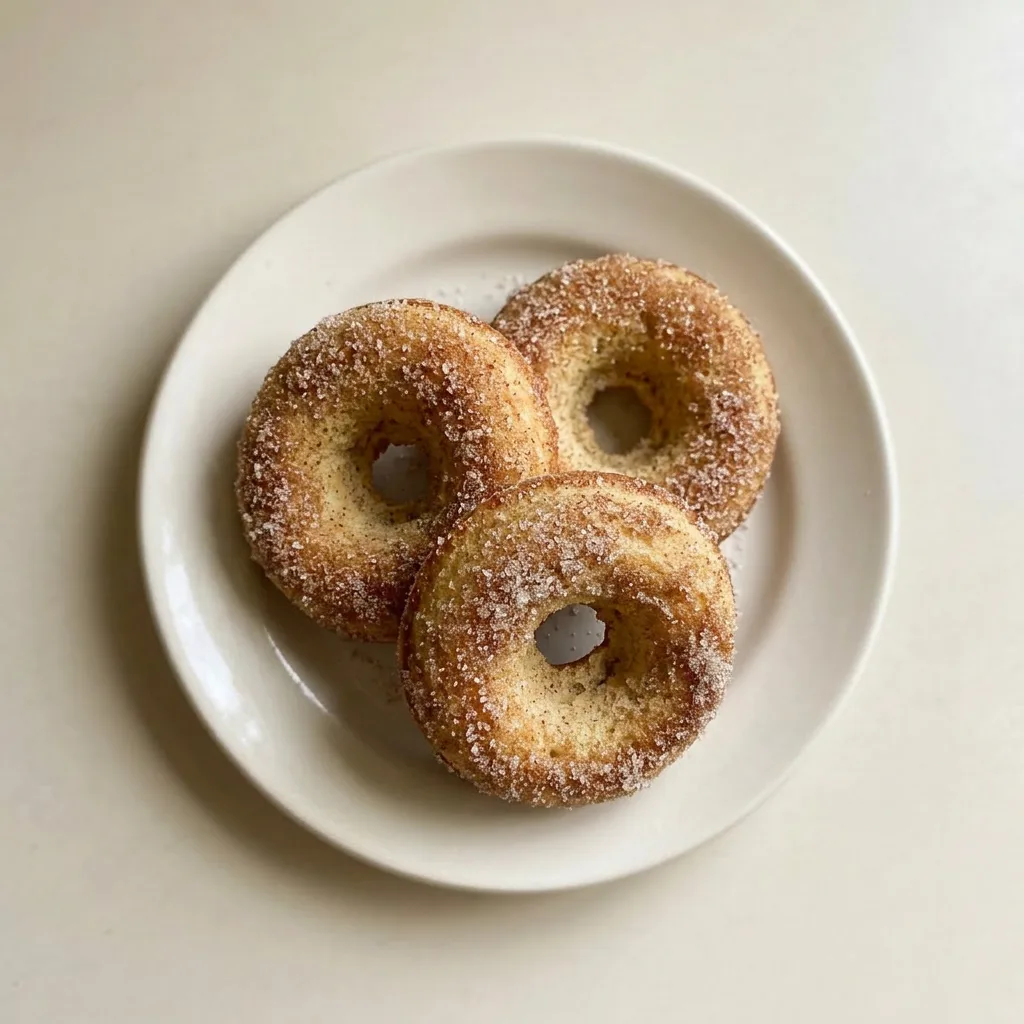
Swap cottage cheese or flour and the donut texture changes completely
Cottage cheese: Greek yogurt or silken tofu (full fat, drained if needed). Greek yogurt gives a similar protein boost but a tangier flavor and slightly less moisture; donuts may be a touch denser. Blended silken tofu (use the same 225g) makes them dairy-free and keeps them tender, but the crumb is more cake-like and less fluffy.
Drain any excess liquid from either before measuring, too much moisture makes the batter slack.
Self-rising flour: All-purpose flour plus baking powder and salt. For each 2 1/2 cups (300g) all-purpose flour, add 3 1/2 teaspoons baking powder and 1/2 teaspoon salt. Whisk them together thoroughly before mixing.
The leavening is critical here: too little and the donuts bake up flat and dense; too much and they rise then collapse. Self-rising flour is already balanced, so this swap carries risk if you measure imprecisely.
Milk: Unsweetened almond milk or any non-dairy milk. Works fine for dairy-free donuts.
Almond milk is thinner than whole milk, so the batter may be slightly looser; add an extra tablespoon of flour if it seems too wet. The donuts will be a tad less rich but still tender.
Oat milk gives a fuller body closer to dairy milk.
Storage and Serving
These donuts are best eaten within a few hours of coating, while the exterior stays crisp and the interior is soft. If you have leftovers, store them in an airtight container at room temperature for up to 1 day. After that, the coating softens and the crumb dries out.
For longer storage, refrigerate up to 3 days in a sealed container, but expect the texture to become denser and the sugar crust to melt slightly. To reheat, microwave a donut for 10 to 15 seconds or warm in a 300°F oven for 5 minutes; this restores some softness but won’t bring back the original crunchy coating. Freezing is not recommended, as the cottage cheese batter turns gummy and the coating weeps when thawed.
Make-ahead: You can mix the dry and wet ingredients separately the night before, then combine and bake fresh. Coat only what you’ll serve immediately; leftover coating sugar keeps indefinitely in a sealed container.
Tips
- Use a light hand when stirring: fold the flour into the wet ingredients with a spatula, not a whisk. Overworking the gluten makes the donuts rubbery, and the cottage cheese curds already add structure without needing vigorous mixing.
- If the batter feels too stiff to spoon, add milk 1 tablespoon at a time until it just comes together. Adding too much liquid to loosen it will make the batter slack, leading to flat, dense donuts that don’t rise properly.
I once stirred the batter vigorously for a full minute trying to smooth out the cottage cheese lumps, and the donuts came out like hockey pucks.
Frequently Asked Questions
Can I make these donuts ahead of time and reheat them?
You can prep the dry and wet ingredients separately the night before, then combine and bake fresh. Once baked and coated, they’re best within a few hours; after a day at room temp the coating softens. Reheating in a 300°F oven for 5 minutes restores some softness, but the crunchy crust won’t come back.
Freezing turns the batter gummy, so skip it.
Why did my donuts turn out dense and not fluffy?
Most likely you overmixed the batter, stir just until the flour disappears, even if some small curd lumps remain. Another common cause: if you swapped flours, you may have gotten the leavening wrong; self-rising flour has the right balance already. Also check that your oven is fully preheated to 375°F so the rise starts quickly.
How do I know when the donuts are done baking?
Look for golden edges and tops that spring back when pressed gently. If they feel soft or hold an indent, give them another minute. The bake window is 15 to 17 minutes, but ovens vary, so rely on the visual and touch cues.
Can I use a different pan shape if I don’t have a donut pan?
Yes, you can bake the batter in a greased muffin tin. Fill each cup about two-thirds full; bake time will be similar but check at 15 minutes, muffins may need a couple extra minutes. The texture will be the same, just a different shape, and you’ll still coat them while warm.
Are these donuts supposed to be as sweet as traditional fried donuts?
No, these cake donuts are less sweet than fried glazed donuts. The optional 1, 2 tablespoons sugar in the batter add only a hint of sweetness, and the cinnamon-sugar coating provides a thin crunchy crust. The result is a tender, lightly sweet donut that lets the cottage cheese and flour flavors come through.