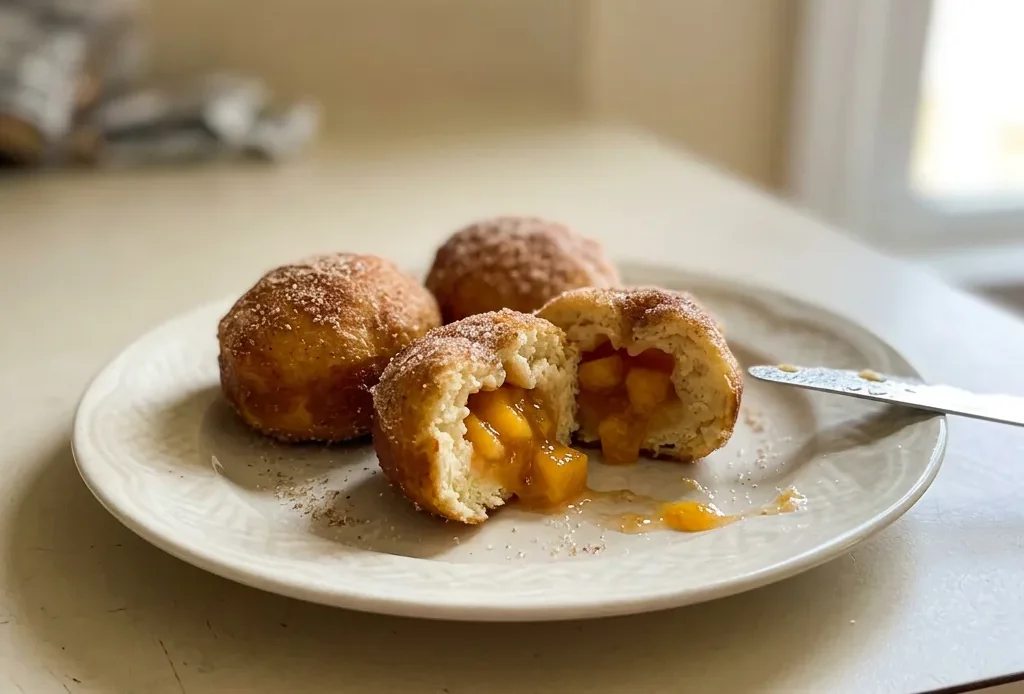
These peach pie stuffed donut holes come together in minutes, but the real trick is sealing the dough so the filling stays put during frying. Refrigerated biscuit dough skips the yeast wait and fries up flaky, which means you get a dessert that’s fast without tasting rushed. The peach filling needs a quick simmer first, skip that and you’ll be chasing runny juice in hot oil.
It’s a small prep step that makes the difference between a clean donut and a oily mess.
Biscuit dough for quick donut holes
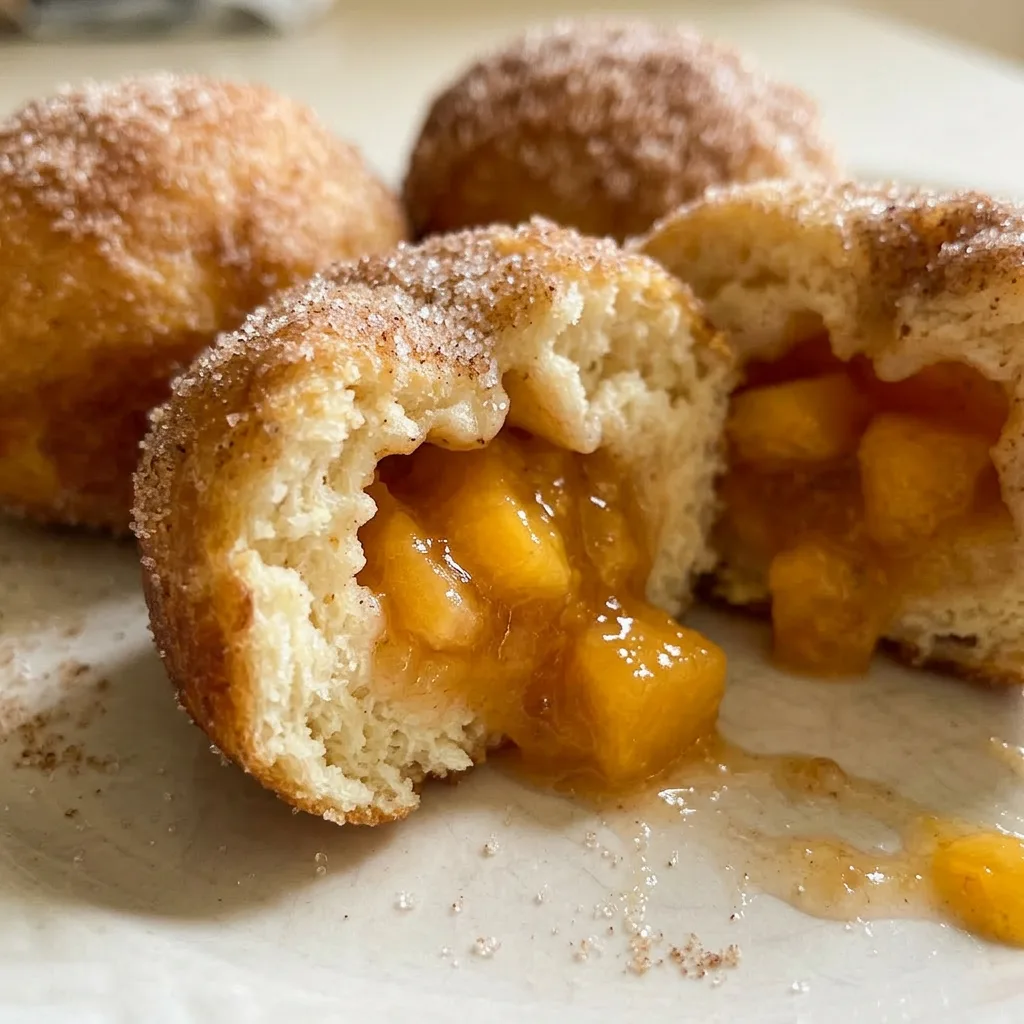
Biscuit dough skips the proofing, so you can go from mixing to frying in minutes. That’s a real advantage when you want a fast dessert. The flaky layers in the dough create a delicate shell that doesn’t overpower the juicy peach filling.
And it fries up crispier than yeast dough, adding a satisfying texture contrast against the soft interior.
Why cook the peaches first
Cooking the peaches before stuffing them does two things you can see and taste. First, it pulls out excess moisture, watch the liquid bubble away and thicken.
That prevents the filling from making the dough soggy or exploding during frying. Second, the heat softens the peaches so they’re tender by the time the dough is cooked. You get concentrated peach flavor that stays put inside the donut.
Seal tight or lose the filling
If the dough isn’t sealed completely, the filling leaks into the oil. You’ll see splattering and end up with greasy donut holes.
Pinch the edges firmly and roll into a smooth ball, eliminating any air pockets. A secure seal also keeps the filling from burning or caramelizing too quickly. The result is a clean donut with the peach center intact.
Frying at the right heat
Oil temperature makes or breaks these donut holes. Too hot and the outside burns before the dough cooks through; too cool and they soak up oil like sponges. You want a gentle sizzle when you drop them in.
That medium heat lets the dough cook evenly and the filling warm up without erupting. You get a golden crust and a fully cooked interior.
Prep: 15 min · Cook: 20 min · Total: 35 min · Servings: 12 · Calories: 150 kcal
Peaches and dough for these donut holes
Fresh peaches: Ripe but still firm peaches hold their shape when cooked and won’t going soggy in the filling.
Biscuit dough: Canned or homemade, the dough should be pliable and not too sticky to seal easily.
Neutral oil: Use a high smoke point oil like vegetable or canola to avoid off flavors during frying.
Make the filling, then seal and fry
Cook the peaches
Simmer diced peaches with sugar and cinnamon over medium heat until the liquid thickens and the fruit softens, about 5 to 7 minutes. You want a jammy consistency, not watery. Let it cool completely, warm filling will tear the dough.
Stuff and seal
Roll out biscuit dough and cut 2-inch circles. Place a small spoonful (about 1 teaspoon) of cooled filling in the center.
Pinch the edges firmly, then roll into a smooth ball. No gaps, if you see any filling, pinch again. A tight seal keeps the oil clean.
Fry until golden
Heat 2 inches of oil over medium heat. Drop in a test ball, it should sizzle gently, not violently. Fry 3 to 4 minutes per side, turning once, until deep golden brown.
If they darken too fast, lower the heat. Drain on paper towels.
Sugar while warm
Roll hot donut holes in sugar or cinnamon-sugar immediately. The sugar sticks to the still-warm surface, creating a light crust. If they cool first, the coating won’t adhere as well.
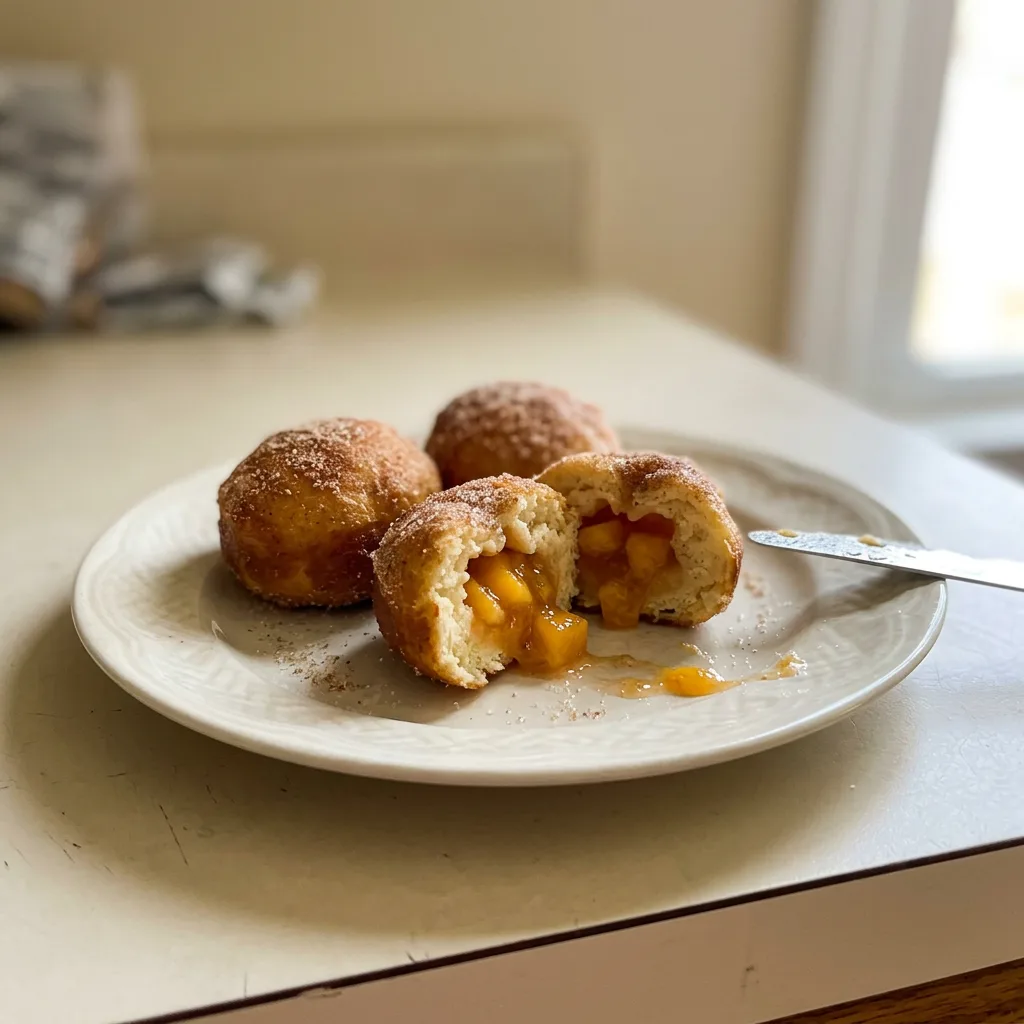
Peach Pie Stuffed Donut Holes
Ingredients
Method
Cook Peach Filling:
Prepare the Peach Filling: In a medium saucepan over medium heat, combine diced peaches, sugar, and cinnamon. Cook until peaches are tender, about 5 to 7 minutes. Allow to cool.
Cut Biscuit Rounds:
Make the Donut Holes: Roll out the biscuit dough and cut into small circles, about 2 inches in diameter.Fill and Seal Donuts:
Fill the Donuts: Place a small spoonful of peach filling in the center of each dough round. Seal securely and roll into balls.Heat Frying Oil:
Heat the Oil: In a pot, heat about 2 inches of oil over medium heat until ready for frying.Fry Donut Holes:
Fry the Donut Holes: Carefully drop the stuffed dough balls into the hot oil and fry for about 3-4 minutes on each side until golden brown.Drain and Coat with Sugar:
Drain and Sugar: Transfer cooked donut holes to a paper towel-lined plate and roll in sugar or cinnamon-sugar while warm.
Storage and Serving
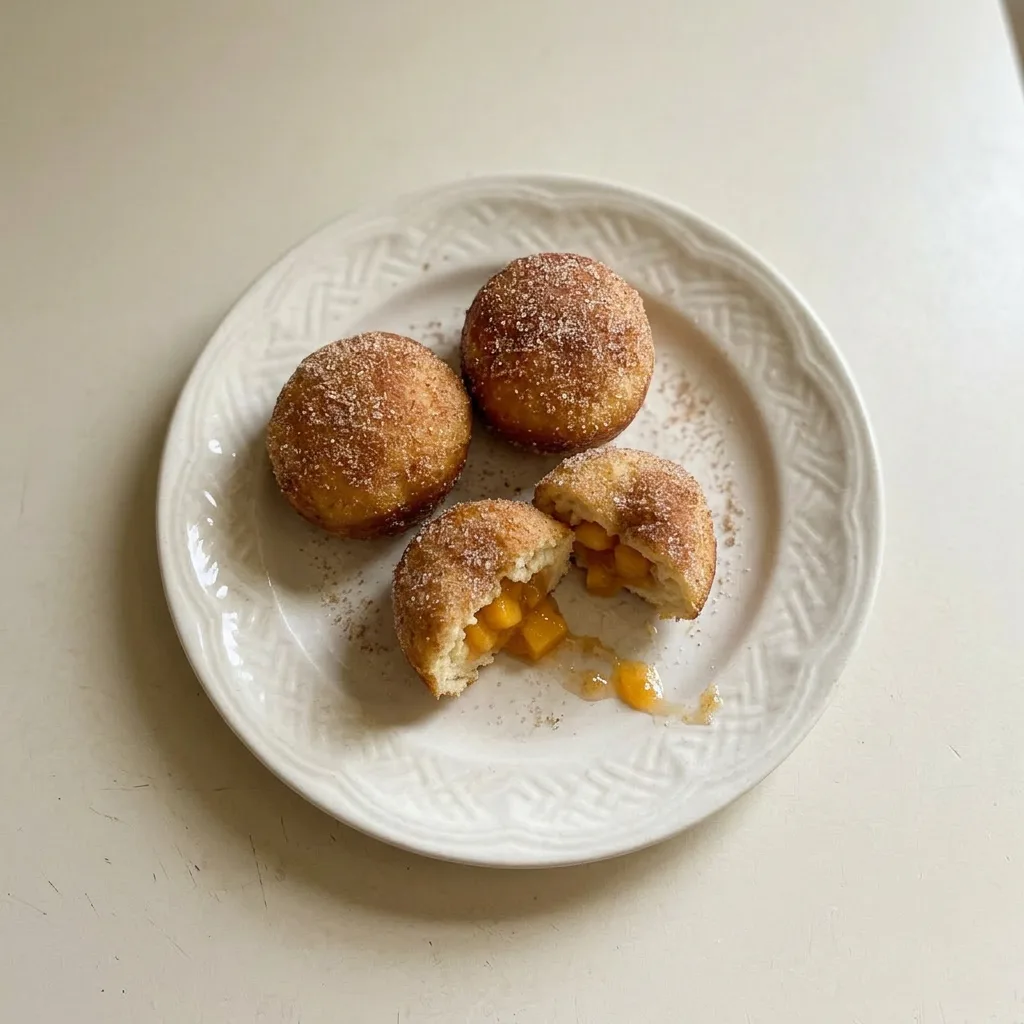
These donut holes are best within a few hours of frying, when the exterior is still crisp and the filling is warm. If you have leftovers, store them in a paper bag at room temperature for up to 2 days.
A sealed container traps moisture and softens the crust faster. The texture degrades noticeably after day one: the sugar dissolves into the dough, and the fried shell loses its snap. To restore some crunch, reheat in a 350°F oven for 5 minutes, but they won’t return to just-fried quality.
The peach filling keeps fine at room temperature for those two days. Do not refrigerate; the cold turns the dough dense and the sugar sticky.
For make-ahead, prepare the peach filling up to 3 days ahead and refrigerate, then stuff and fry when ready to serve. Freezing is not recommended: the dough becomes soggy upon thawing, and the filling can weep.
Frozen peaches work, but watch the moisture
Fresh peaches: Frozen peaches (thawed and drained). Frozen peaches release more water than fresh. Thaw them first, then drain off the excess liquid before cooking; otherwise the filling stays runny and may leak during frying.
Fresh peaches: Nectarines (peeled, same volume). Nectarines have a firmer, less juicy texture, so the filling will be slightly thicker and tarter. Cook them the same way; no other changes needed.
Biscuit dough: Gluten-free biscuit mix (follow package to make dough). Gluten-free dough is often more delicate and less elastic.
Roll it gently between floured hands; it may crack when sealing. Pinch extra carefully and don’t overfill.
The finished donut holes will be a little denser and less flaky.
Neutral oil for frying: No swap recommended. Swapping to olive oil (low smoke point) or butter (burns) will ruin the oil or create off-flavors. Stick with vegetable, canola, or peanut oil for a clean fry.
Tips
- When rolling the dough into balls after sealing, put the seam side down first so the weight of the dough helps keep it closed while you shape the ball.

Frequently Asked Questions
Can I make the peach filling ahead of time?
Yes, the filling can be made up to 3 days ahead and refrigerated. The cooked peaches keep their texture and flavor well in the fridge. Let the filling come to room temperature before stuffing, because cold filling can cause the dough to tear.
How do I keep the donut holes from getting soggy after frying?
Drain them on paper towels right after frying and serve within a few hours, that’s when the crust is crispest. For leftovers, store in a paper bag at room temperature, not in a sealed container, which traps steam. Reheating in a 350°F oven for 5 minutes can restore some crunch, but they won’t be as crisp as fresh.
Can I bake these instead of frying?
No, baking won’t work here. The biscuit dough needs hot oil to create a crisp, browned shell and cook the interior quickly. In an oven, the dough dries out before the filling warms through, and you lose the texture that makes these donut holes distinctive.
Why did my donut holes burst open while frying?
Most likely the seal wasn’t tight enough, pinch the edges firmly and roll into a smooth ball with no gaps. Air pockets inside expand during frying and blow out the seam. Also, if the oil is too hot, the outside sets fast while steam builds inside, so keep the oil at a gentle sizzle.
How do I know when the donut holes are fully cooked inside?
Look for a deep golden brown on the outside after about 3 to 4 minutes per side. The dough is thin enough that the color tells you the interior is cooked through. If you cut one open, the biscuit should be flaky and the filling hot, not doughy.