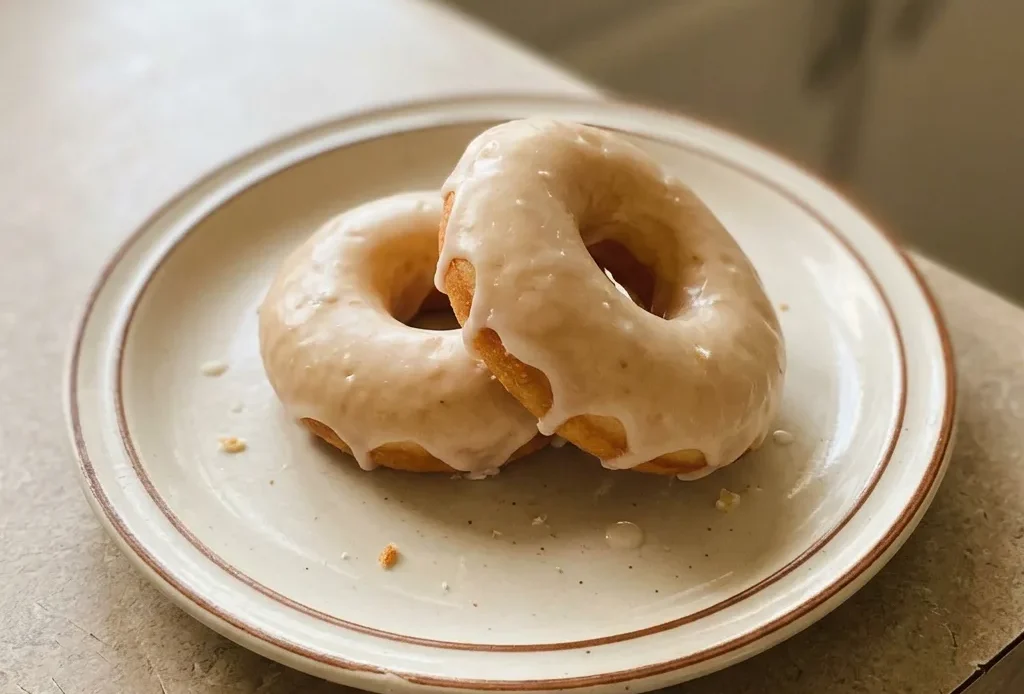
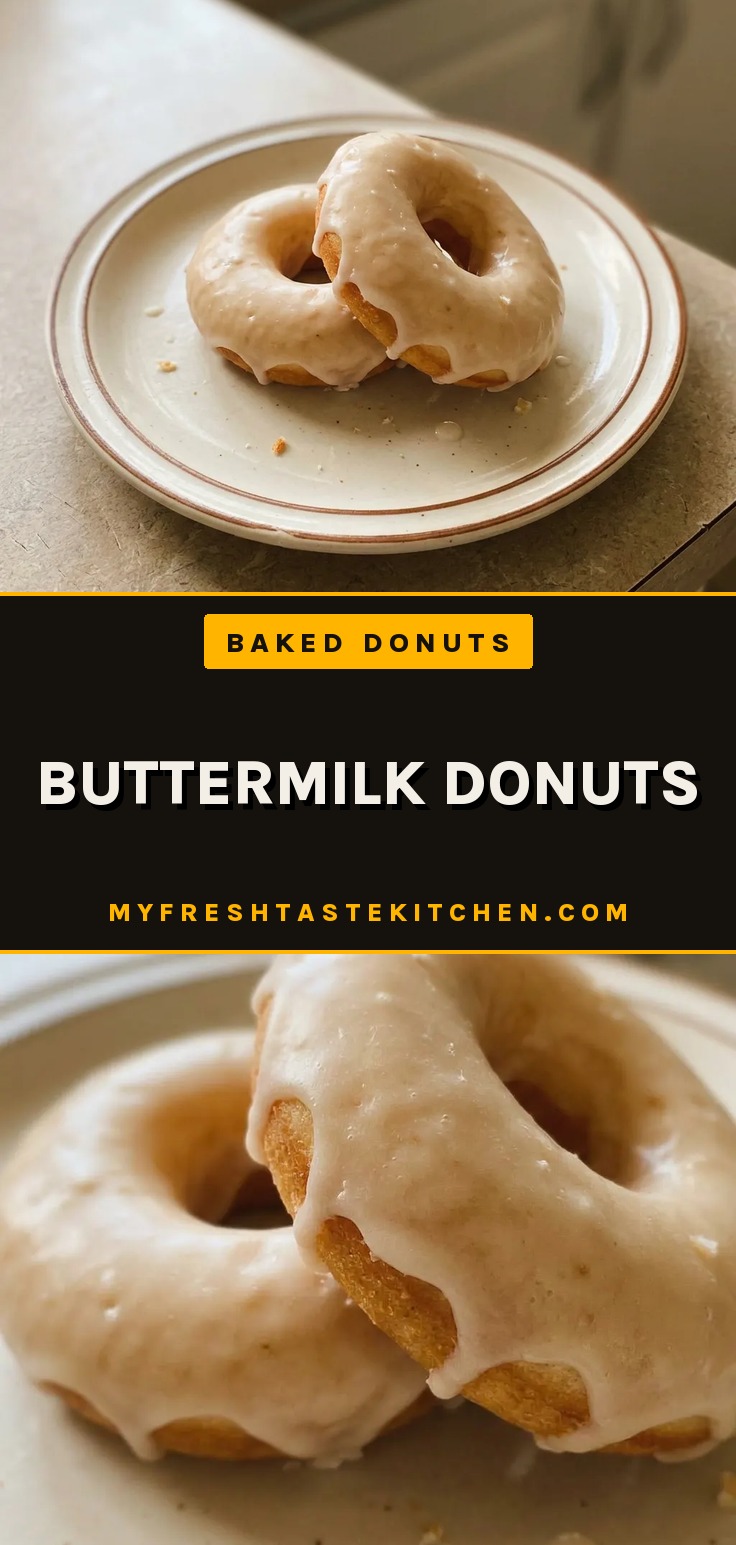
These aren’t the greasy, deep-fried rings from the bakery case. They’re baked buttermilk donuts old fashioned in spirit but modern in method, tender, tangy, and finished with a glaze that shatters when you bite.
The batter comes together in one bowl and pipes into a pan, so there’s no rolling, no cutting, no hot oil to manage. What you get is a cakey crumb with a mild buttermilk tang that keeps the sweetness in check, not a dense muffin masquerading as a donut. The trick is getting the glaze consistency right: thin enough to coat smoothly, thick enough to cling and set into a crackly shell.
Why does buttermilk make donuts tender and flavorful?
Buttermilk’s acidity does two things you can see and taste. It tenderizes the gluten network, giving the crumb a soft, almost silky bite, not tough or bready.
That same acid reacts with baking powder to produce carbon dioxide, creating the lift that makes these donuts light, not dense. You’ll also pick up a mild tang that cuts through the sweetness of the glaze and sugar, keeping each bite balanced. The flavor isn’t sharp; it’s a subtle background note that makes the donut taste more complex than a plain vanilla cake.
When you pull one apart, the texture should be tender, not crumbly, and the inside should look evenly aerated.
What’s the trick to filling donut pans without mess?
A piping bag gives you control you can’t get with a spoon. You can direct the batter exactly into each cavity without dripping over the edges or trapping air pockets. That means the donuts come out cleanly shaped, with no ragged edges or uneven tops.
It’s also easy to stop at three-quarters full, the sweet spot that lets the donut rise into a nice dome without overflowing. Overfill, and you get a flat, misshapen ring with a bulge on the bottom.
Now I always use a piping bag and fill each cavity exactly 3/4 full to get shaped donuts. The same technique works for mini muffin pans if you’re making donut holes.
How does glaze consistency affect the finished donut?
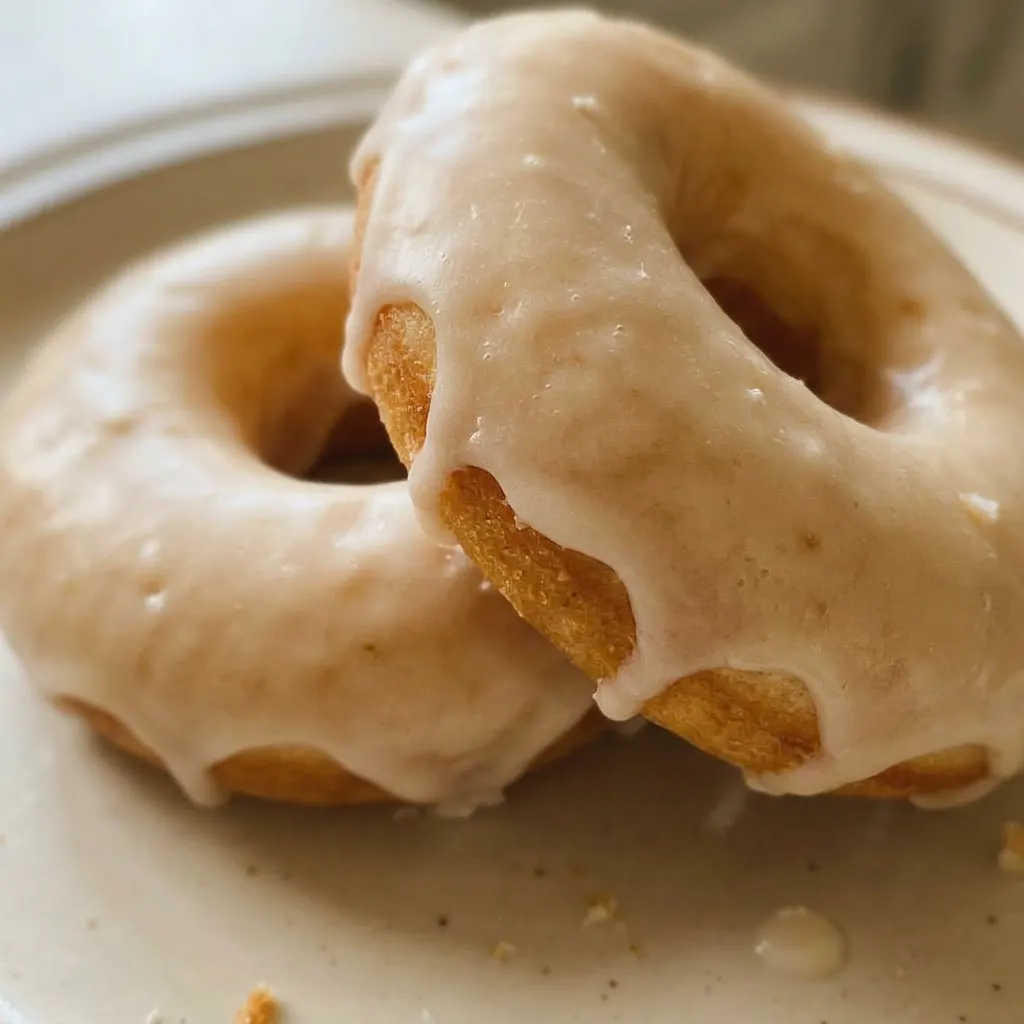
The glaze needs to be thin enough to flow over the curved top in a smooth, even layer, but thick enough to cling. If it’s too thin, it runs straight off onto the rack, leaving a sparse, patchy coat.
Too thick, and it piles up in globs and sets into a clumpy, uneven crust. You adjust with tiny splashes of liquid until the glaze drips lazily off a spoon, it should coat the back and then slowly run down. That consistency gives a clean, glossy finish that hardens into a thin, crackly shell.
When you bite in, the glaze shatters evenly, not in chunks.
Prep: 20 min · Cook: 10 min · Total: 35 min · Servings: 12
What to Look for in Buttermilk Donut Ingredients
Buttermilk: Use full fat buttermilk, not low fat; the extra fat keeps the crumb moist and tender.
Butter: Melt unsalted butter, not margarine or spread; salted butter will make the donuts too salty.
Honey or maple syrup: Use a mild honey or grade A maple syrup; strong flavored ones will overpower the buttermilk tang.
Eggs: Bring eggs to room temperature so they blend smoothly into the batter without seizing the butter.
How to Make Buttermilk Donuts Step by Step
Prep the pans and oven
Butter the donut pans well, especially the raised center post, any bare spot will stick. Set them aside while you mix the batter.
Mix the dry ingredients
Whisk flour, sugar, baking powder, and salt together until uniform. No lumps of baking powder should remain. Set aside.
Mix the wet ingredients
Beat eggs in a large bowl until frothy and lighter in color, about 30 seconds. Stir in melted butter, honey or maple syrup, vanilla, and buttermilk until the mixture is smooth and fully combined.
Combine wet and dry
Pour the dry mix into the wet and stir with a spatula just until no streaks of flour remain. The batter will be thick and slightly lumpy, stop mixing as soon as it comes together to keep the donuts tender.
Fill the pans
Spoon the batter into a piping bag (or zip-top bag with a corner snipped). Pipe into each cavity until it’s about three-quarters full, the batter should not reach the rim. Overfilling will cause flat, bulging donuts.
Bake until springy
Bake at 350°F for 10 to 12 minutes. The tops should spring back when lightly pressed and the edges will be lightly golden. A toothpick inserted into the thickest part comes out clean.
Cool completely
Let the donuts rest in the pan for 5 minutes, then turn them out onto a wire rack. Wait until they’re completely cool, warm donuts will absorb the glaze instead of letting it set on top.
Make and apply the glaze
Whisk powdered sugar with 1 tablespoon of buttermilk (or milk or cream). Add more liquid a teaspoon at a time until the glaze drips lazily off the whisk, it should coat the back of a spoon and then slowly run off in a smooth ribbon. Dip the top of each donut into the glaze, lift, and let excess drip off for a few seconds before setting back on the rack.
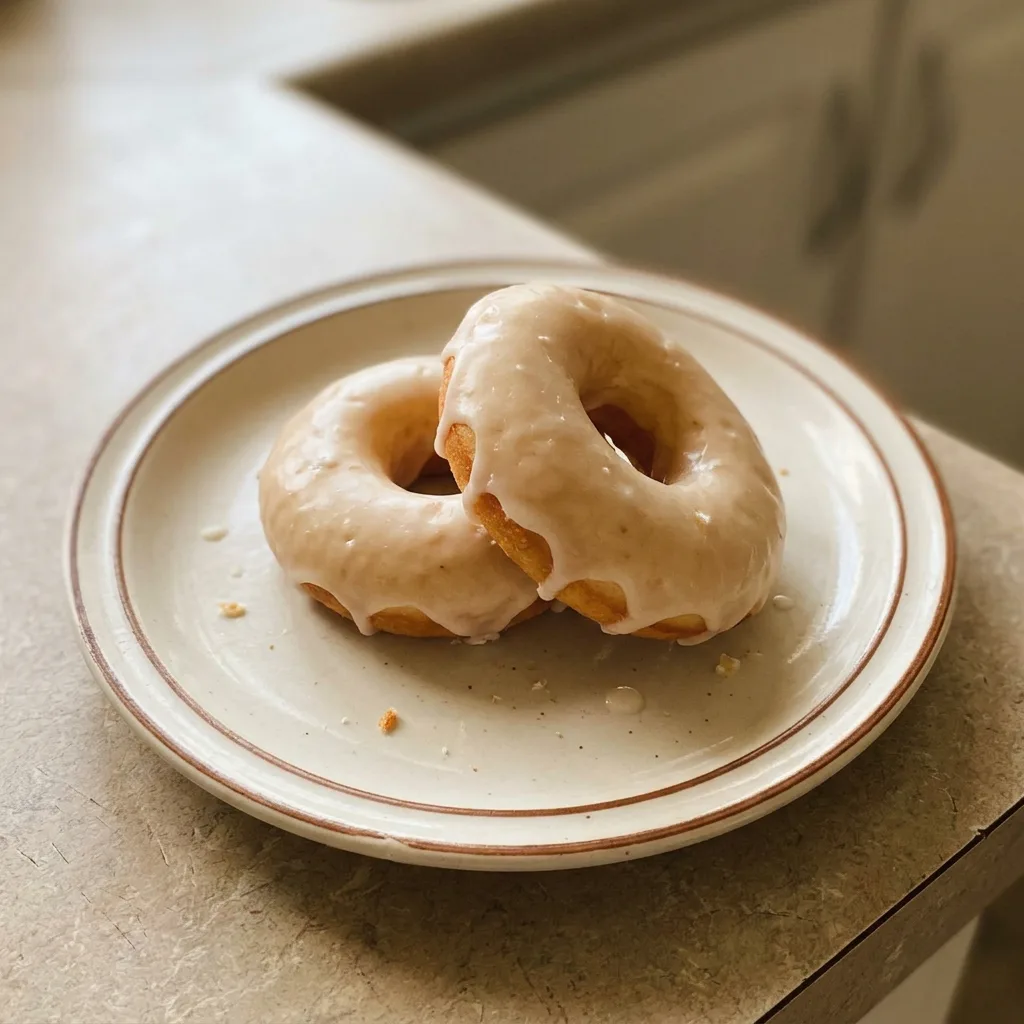
Buttermilk Donuts (Old Fashioned Baked)
Ingredients
Method
Preheat and Butter Pans:
Heat oven to 350°F (175°C). Butter 1-2 (6-count) donut pans; for donut holes, butter a mini muffin pan.Mix Dry Ingredients:
In a large bowl, combine flour, granulated sugar, baking powder, and salt with a whisk until uniform.Combine Wet and Dry:
In a separate large bowl, beat eggs until frothy. Stir in melted butter, honey or maple syrup, vanilla extract, and buttermilk until smooth. Pour dry mixture into wet mixture and stir until just combined and mostly smooth. Spoon batter into a piping bag or a zip-top bag.Fill and Bake Donuts:
Fill each donut cavity about ¾ full with batter. Bake for 10-12 minutes, until the tops spring back when touched lightly.Cool Donuts:
Let donuts cool in the pan for 5 minutes, then move to a wire rack to cool entirely.
Glaze and Garnish:
For the glaze: mix powdered sugar with 1-2 tablespoons buttermilk, milk, or cream until smooth. Dip the tops of cooled donuts into the glaze, allow extra to drip off, and set on a wire rack. Garnish with sprinkles or edible flowers if you like.
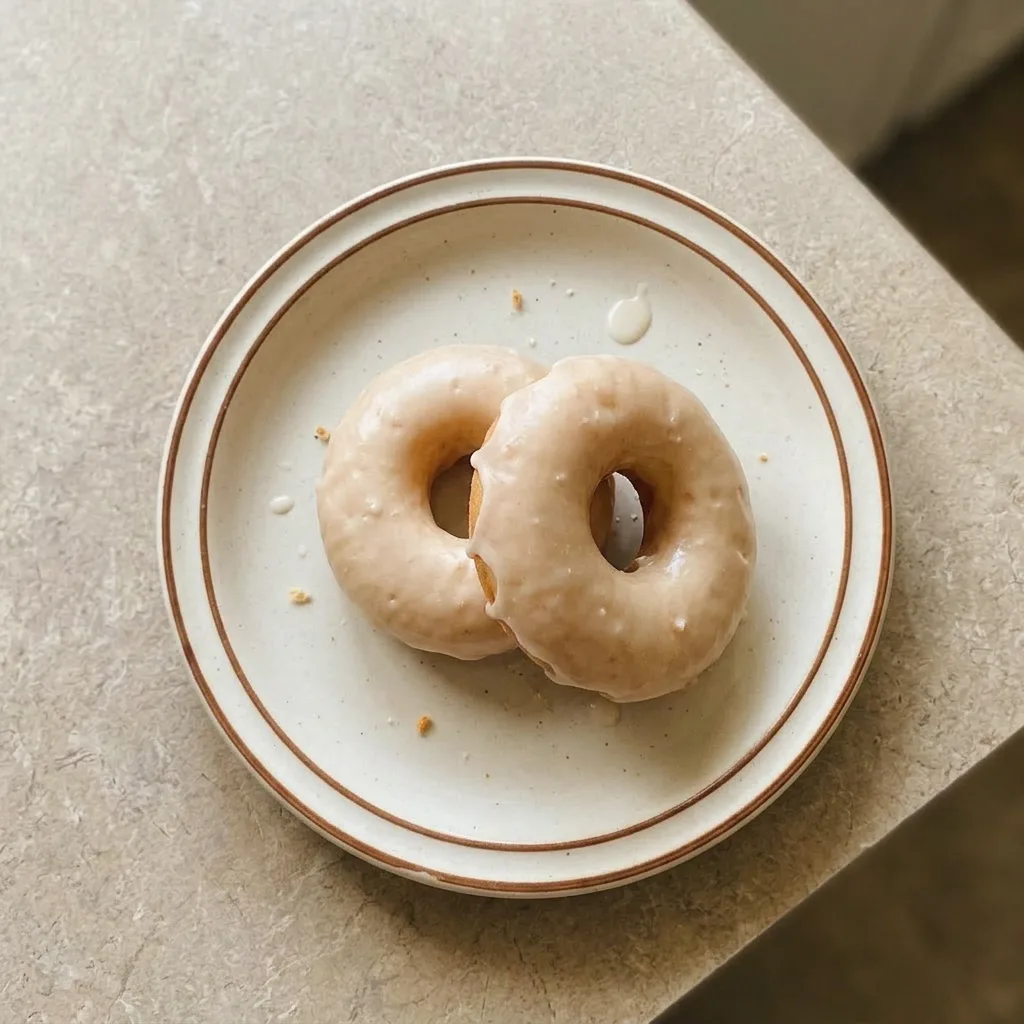
How to Store and Serve Buttermilk Donuts
These donuts are best within a few hours of glazing, when the glaze is crisp and the cake is tender. If you’re making them ahead, skip the glaze.
Store unglazed donuts in an airtight container at room temperature for up to 2 days. The texture will soften slightly over time but remains pleasant.
For longer storage, freeze unglazed donuts in a single layer in a freezer bag for up to 1 month. Thaw at room temperature about 30 minutes, then glaze just before serving. Glazed donuts don’t freeze well; the glaze turns sticky and loses its snap.
If you have leftover glazed donuts, keep them in a single layer in an airtight container at room temperature for up to 2 days. They’ll soften but still taste good. Don’t refrigerate; the fridge dries them out.
Serve at room temperature.
Tips
- When testing doneness, press the top of a donut with your finger. If it springs back immediately, it is done. A toothpick test can overbake the donuts because the crumb is so tender that a toothpick may come out clean even when the center is slightly underdone.
- If your donuts stick to the pan despite buttering, try using a nonstick donut pan and brush the cavities with melted butter using a pastry brush, making sure to coat the center post. Let the pan cool completely between batches, as residual heat can cause the batter to set before the pan is refilled.
How to Swap Buttermilk, Sweetener, and Flour in These Donuts
Buttermilk: Whole milk + 1 tablespoon lemon juice or white vinegar. Let sit 5 minutes until curdled. The acid mimics buttermilk’s tang and tenderizing effect.
The donuts will be slightly less tender but still soft. Full-fat buttermilk gives the best crumb; low-fat or non-dairy milks make a drier, less rich donut.
Honey or maple syrup: Swap honey for maple syrup 1:1, or use ½ cup (100 g) granulated sugar plus 2 extra tablespoons liquid (milk or water). Swapping one liquid sweetener for another changes only the flavor.
Using granulated sugar removes moisture, so you need to add liquid to keep the batter from being too stiff. The sweetness level stays the same, but the donut will be less moist if you skip the extra liquid.
All-purpose flour: Use a 1:1 gluten-free baking blend (one that contains xanthan gum). Do not sub almond or coconut flour.
The donuts will be more delicate and slightly crumblier because gluten-free blends lack the stretch of wheat flour. They bake up lighter but may not dome as high.
Stick to blends designed for cakes to get the best texture.
Buttermilk (dairy-free): Unsweetened almond or oat milk + 1 tablespoon lemon juice or vinegar. Let sit 5 minutes. These donuts will be less rich and the crumb may be slightly tougher because non-dairy milks lack buttermilk’s fat and protein.
Full-fat oat milk gives the closest texture. Avoid low-fat or flavored milks.
Frequently Asked Questions
Can I make these donuts ahead of time?
Yes, make them up to 2 days ahead if you leave them unglazed. Store in an airtight container at room temperature.
Glaze just before serving to keep the coating crisp. Glazed donuts soften within a few hours, so glaze day-of for best texture.
Why did my donuts turn out dense instead of fluffy?
Most likely the batter was overmixed. Stir only until no streaks of flour remain, overworking develops gluten, making the crumb tough. Another cause is expired baking powder; test it by dropping a spoonful into hot water, it should fizz vigorously.
Also check that your buttermilk is truly room temperature; cold batter won’t rise as well.
Can I use a donut cutter instead of a pan?
This batter is too soft to roll and cut, it’s a drop batter, not a dough. It would stick to the cutter and lose its shape.
Stick with the pan; the batter pipes easily and bakes up neatly. For a different shape, use a mini muffin pan to make donut holes.
How is this baked version different from fried donuts?
Baked donuts are tender and cake-like, not greasy, with a soft crumb that springs back. Fried donuts have a crisp, oily exterior and a chewier, airier interior. The glaze here sets into a thin, crackly shell, fried donuts often use a thicker icing.
Both are satisfying, but baked ones are lighter and quicker to make.
