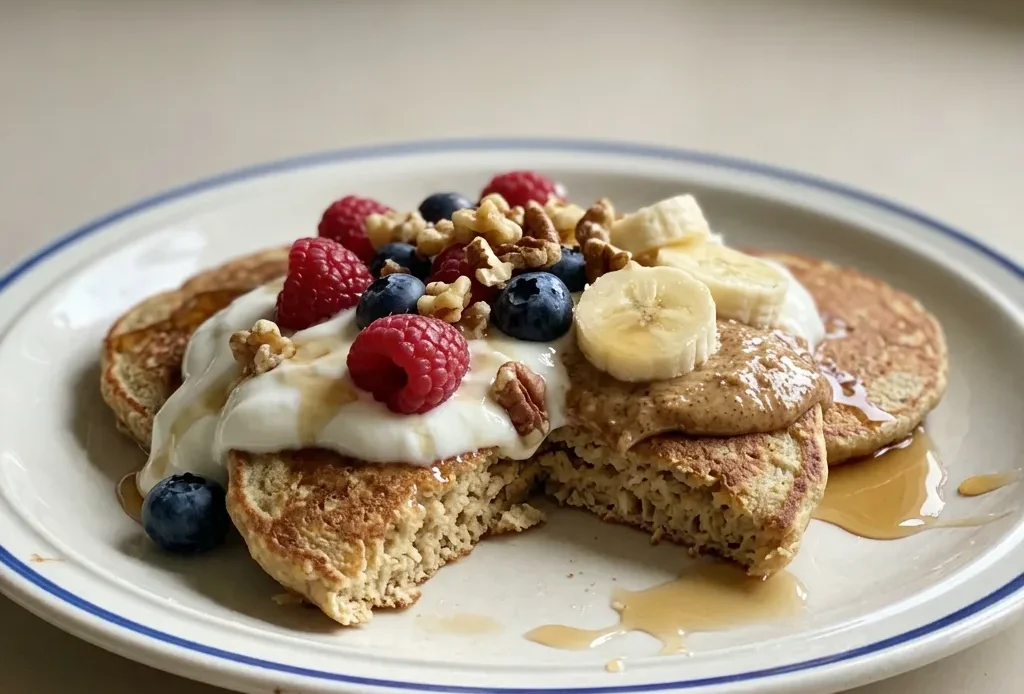
The trouble with protein pancakes isn’t the protein, it’s the dry, rubbery texture that makes you wonder why you bothered. This recipe sidesteps that by blending rolled oats yourself (fresh powder, no stale bag) and leaning on Greek yogurt for moisture and a gentle lift. The result is a pancake that’s tender, not tough, with a crumb that holds together without turning into cardboard.
A short batter rest and patient medium-low heat seal the deal. These aren’t a compromise; they’re just good pancakes that happen to pack protein.
Why blend oats instead of using oat flour?
Whole oats in pancake batter leave a chewy, uneven texture that fights the fluffiness you want. Pre-ground oat flour from a bag often sits on shelves long enough to go stale or clump, making the batter dense before it hits the pan.
Blending rolled oats yourself produces a fine, fresh powder that behaves like all-purpose flour, it disperses evenly, so every bite has the same tender crumb. The brief rest after blending matters: dry oat particles need a few minutes to soak up the liquid.
Skip that, and you’ll feel a faint grittiness, not the smooth pancake texture you were after. This one step turns a bowl of grain into something that cooks up light, with no telltale oat graininess.
For easy protein breakfast ideas, this approach keeps the prep simple while delivering a pancake that doesn’t taste like a compromise. You get the protein boost without the texture penalty.
How does Greek yogurt keep these pancakes moist?
Greek yogurt brings two things that dry pancakes never have enough of: protein and moisture, but in a thick form that doesn’t make the batter watery. The extra protein from yogurt stacks on top of what the powder provides, so each pancake has a substantial, satisfying heft. Its acidity reacts with the baking powder, creating a gentle lift that keeps the crumb open and airy, you see small, even bubbles throughout the cooked pancake, not a flat, rubbery sheet.
Because yogurt is thick, it replaces some of the fat you’d normally need, cutting calories while still giving you a tender bite. When you cut into the pancake, it should be soft, not crumbling or tough. For easy high protein breakfast ideas, this ingredient does double duty: it hydrates the batter without thinning it out, so you get a pancake that’s rich but not heavy.
Why medium-low heat?
Protein powder burns faster than regular flour. The sugars in flavored powders and the amino acids themselves darken quickly, so high heat chars the outside long before the center sets.
You flip a pancake that looks done on one side only to find raw batter running out. Medium-low heat gives the interior time to cook through gently, the batter firms up evenly, and the surface develops a golden-brown crust instead of a blackened one. You see the pancake puff gradually, with bubbles rising slowly across the surface, not a frantic burst.
The result is a fully cooked pancake with a uniform color, no scorched spots, and a tender middle that holds together when you cut it. For quick and easy high protein breakfast, this temperature control is what separates a stack of pancakes from a batch that goes straight to the trash.
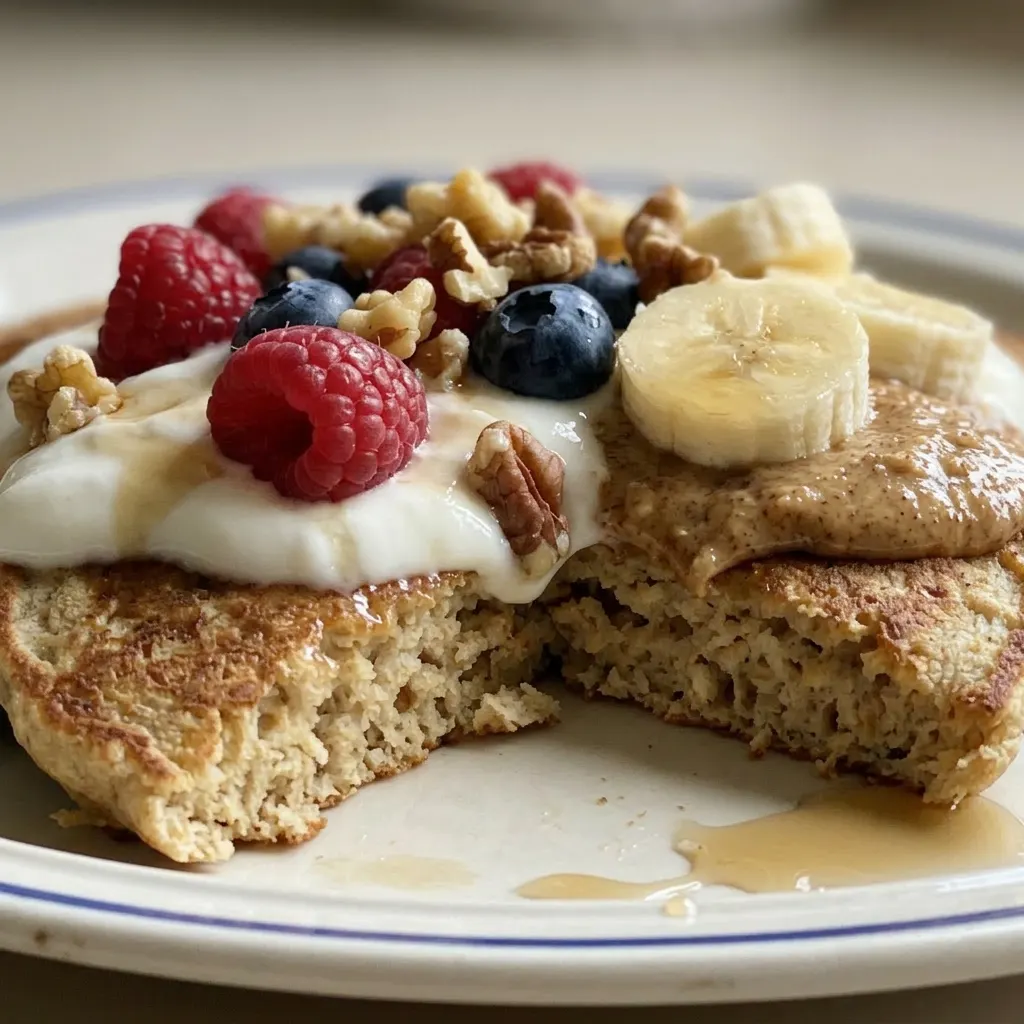
Prep: 5 min · Cook: 12 min · Total: 17 min · Servings: 6 · Calories: 320 kcal
A few things about these ingredients
Rolled oats: Blend them yourself; pre-ground oat flour can be stale or clumpy, ruining the texture.
Greek yogurt: Use full fat or 2% for the right thickness; nonfat makes the batter too thin.
Protein powder: Vanilla flavored works best; unflavored will taste flat, and plant based blends may turn gummy.
Maple syrup or honey: Use real maple syrup, not pancake syrup; honey adds a distinct flavor that not everyone wants.
Melted butter or oil: Neutral oil like avocado works fine; butter adds flavor but watch for browning.
How to cook protein pancakes that are light, not dry
Blend the dry ingredients to a fine powder
Run the blender until the oats turn into a powder fine enough that no flakes remain. If you see any oat pieces left, the pancakes will feel gritty no matter how long you cook them.
Add the wet ingredients and blend smooth
Blend until the batter is completely smooth and thick, like a milkshake. Scrape the sides once to catch any dry pockets. If the batter looks thin or runny, your yogurt or milk measurement was off.
Rest the batter for 3 to 5 minutes
Let the batter sit undisturbed. You’ll see it thicken slightly as the oat particles hydrate. If you skip this rest, the pancakes will have a faint, sandy texture you can feel on your tongue.
Cook over medium-low heat
Grease the pan lightly and heat it until a drop of water sizzles slowly. The batter should spread gently, not sizzle aggressively. If the first pancake browns too fast, lower the heat immediately.
Flip when bubbles appear and edges firm up
Watch for small bubbles breaking the surface and the edges looking set, about 2 to 3 minutes. If you flip too early, the pancake will tear; too late, it burns. The bottom should be golden brown, not dark.
Cook the second side briefly
Cook the second side for 1 to 2 minutes until it’s golden brown and the pancake feels firm when pressed gently in the center. If the center feels soft or jiggly, cook a little longer over low heat.
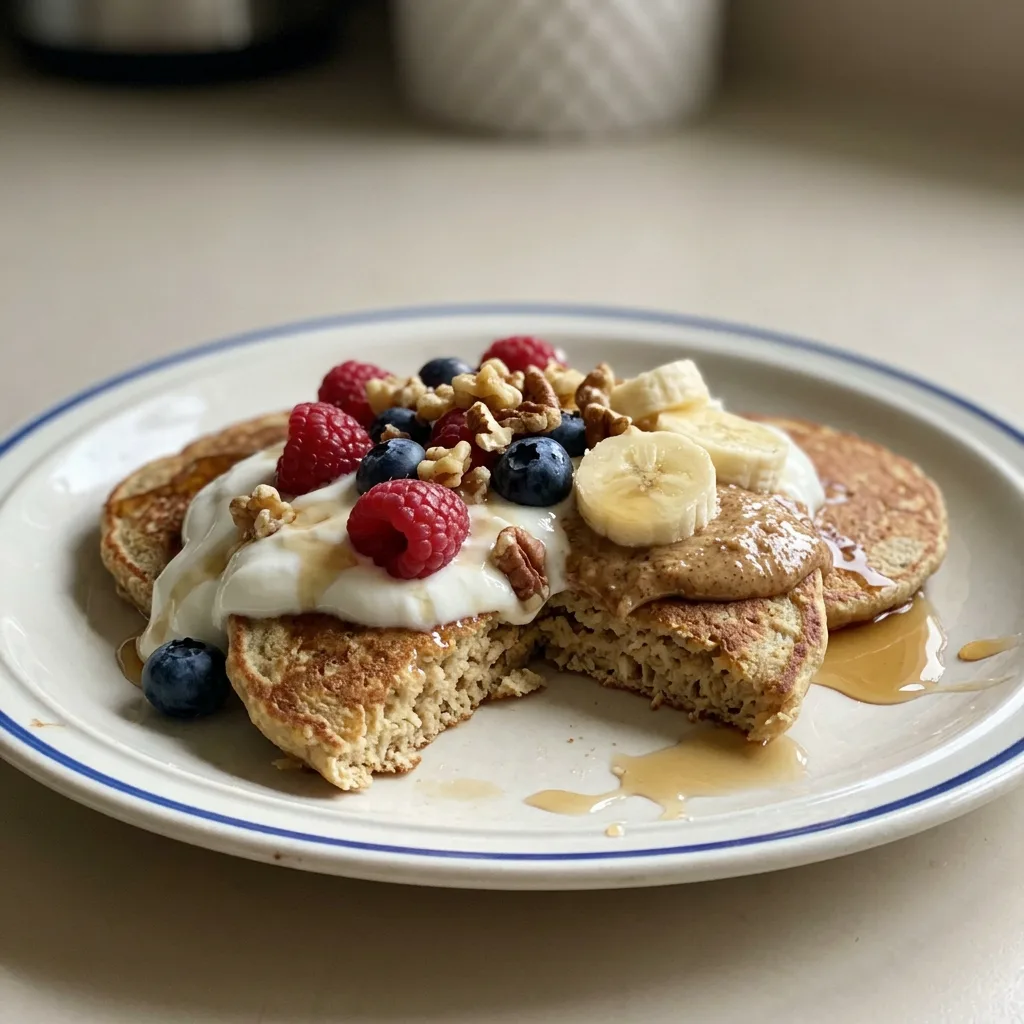
Protein Pancakes (Fluffy, Easy & High-Protein Breakfast)
Ingredients
Method
Blend dry ingredients:
Place rolled oats, protein powder, baking powder, cinnamon, and salt into a blender. Process until the oats become a fine powder.Mix wet ingredients:
Add eggs, Greek yogurt, milk, maple syrup, vanilla extract, and melted butter. Blend until the mixture is smooth and thick.Rest the batter:
Allow the batter to sit for 3–5 minutes so the oats can hydrate.Preheat greased pan:
Set a nonstick pan over medium-low heat and apply a light coating of grease.Cook first side:
Drop small rounds of batter onto the pan. Cook for 2–3 minutes until bubbles appear and the edges look firm.Flip and finish:
Carefully flip each pancake and cook for another 1–2 minutes until golden brown and fully cooked.Serve with toppings:
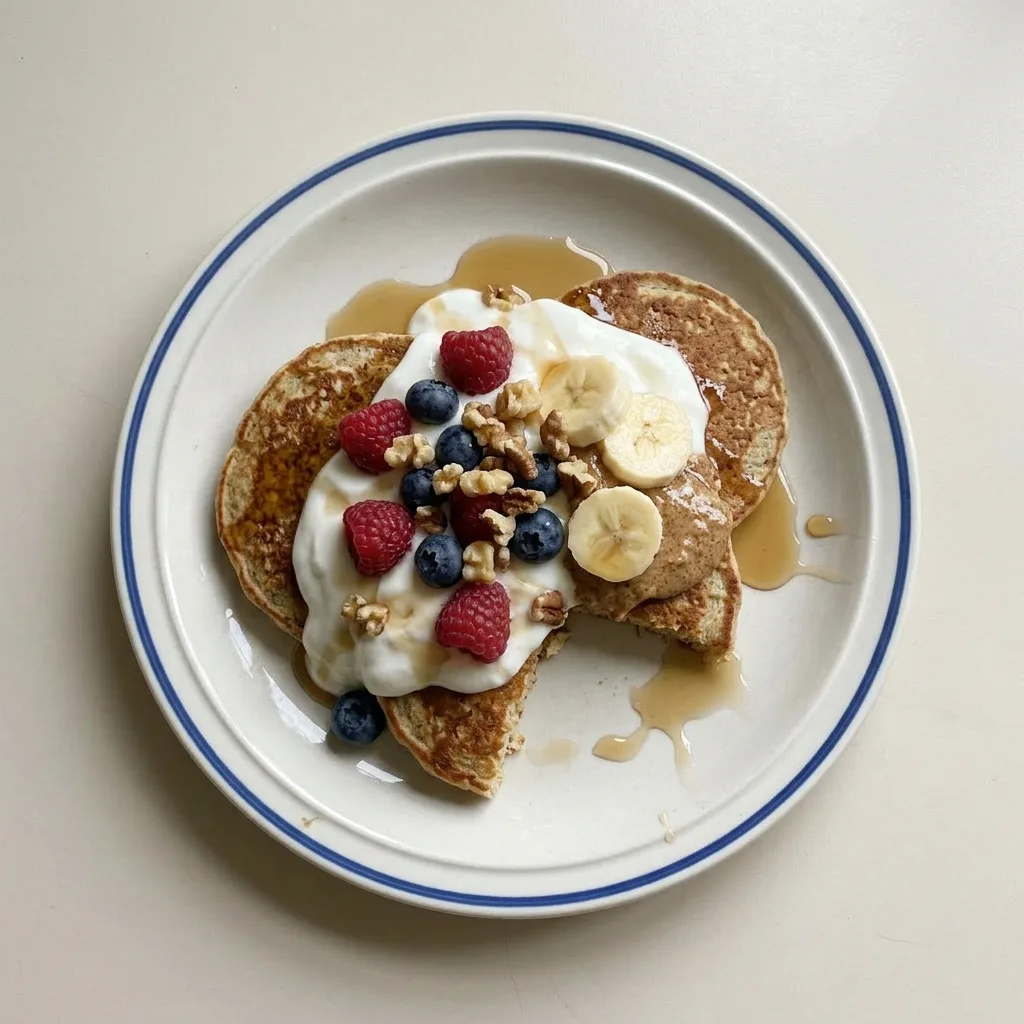
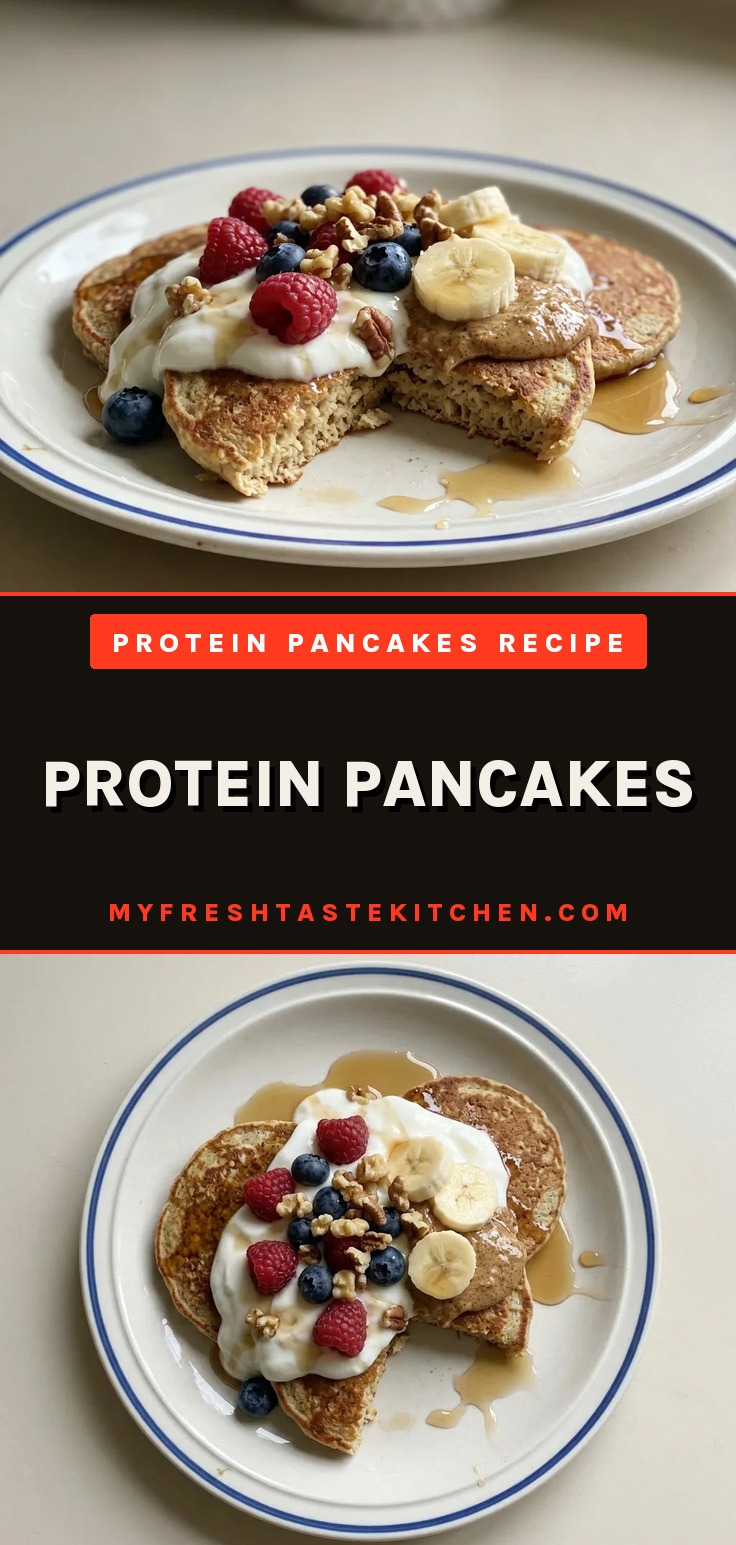
Serve at once with desired toppings: fresh berries, banana slices, Greek yogurt, nut butter, maple syrup, or chopped nuts.
What to swap in protein pancakes (and what to leave alone)
Greek yogurt: Cottage cheese or silken tofu. Blend until completely smooth or you’ll get white flecks.
The batter will be slightly thinner with cottage cheese, so the pancakes spread a bit more. Silken tofu makes them a touch denser but still tender.
Maple syrup or honey: Agave nectar or date syrup. Agave is sweeter, so start with 2 teaspoons instead of 1 tablespoon. Date syrup is less sweet but thicker; your batter will be a shade darker and the pancakes may brown a little faster, keep an eye on the heat.
Milk: Unsweetened almond milk or oat milk. Almond milk makes the batter thinner; let the rest go a full 5 minutes to thicken. Oat milk works almost exactly like dairy milk, no adjustment needed.
Rolled oats: Gluten-free rolled oats. Use certified gluten-free oats and blend them yourself.
Pre-ground gluten-free oat flour can be gritty. The texture is identical to regular oats, these are naturally gluten-free, just watch for cross-contamination.
Tips
- Use a kitchen scale to measure oats and yogurt for consistent batter thickness, as volume measurements can vary and affect hydration.
Storage and Serving
These pancakes dry out fast. Refrigerate leftovers in an airtight container for up to 2 days; after that, they turn rubbery. Reheat in a toaster or 350°F oven for 3 to 4 minutes to restore some crispness.
Microwaving makes them tough. For best texture, serve fresh off the pan. If making ahead, blend the dry mix and store it separately; mix wet ingredients just before cooking.
The batter does not hold. Freezing is not recommended; thawed pancakes become soggy. Finish with toppings like berries or nut butter right before serving, not earlier, or they’ll make the pancakes wet.
Frequently Asked Questions
Can I make the batter the night before and cook pancakes in the morning?
No, the batter does not hold overnight. The oat flour will continue absorbing liquid, turning the batter into a thick, gummy paste that won’t cook evenly. Blend the dry mix separately and combine with wet ingredients just before cooking.
Why did my protein pancakes turn out rubbery or dense?
Overmixing after adding the wet ingredients develops too much gluten, making them tough. More likely, the pan was too hot, protein powder scorches fast, leaving the inside undercooked and dense. Cook over medium-low heat and flip only when bubbles appear and edges are set.
How do these protein pancakes compare to regular pancakes in taste and texture?
They are slightly thicker and more filling thanks to the yogurt and protein powder, but still tender with a mild vanilla-cinnamon flavor. The crumb is less airy than classic buttermilk pancakes, not rubbery, more like a hearty whole-grain pancake. Toppings like nut butter or syrup bridge the gap nicely.
