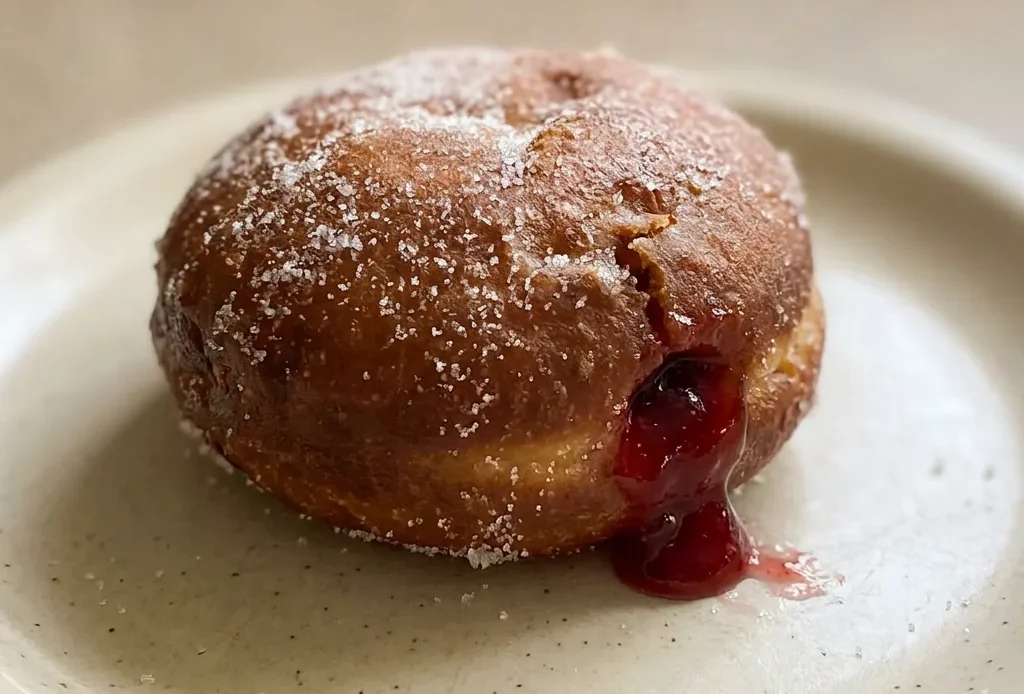
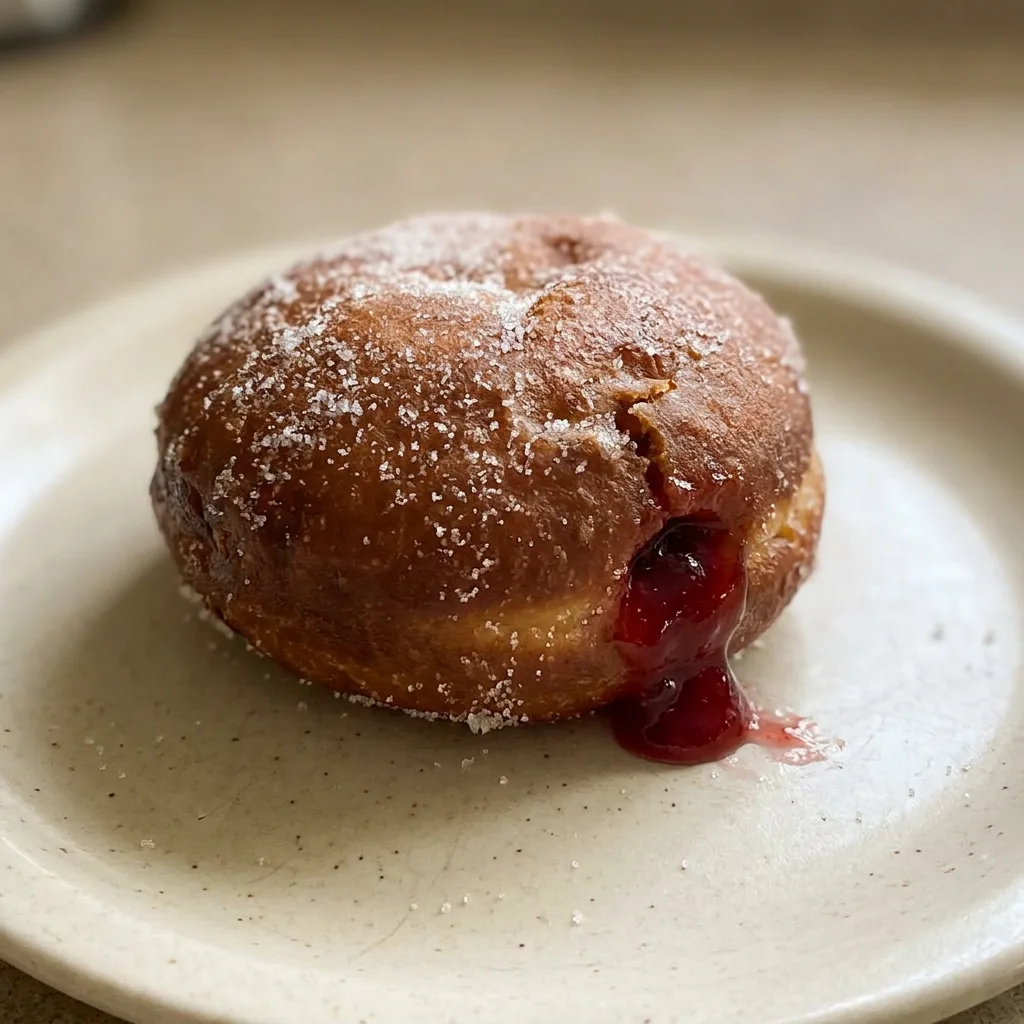
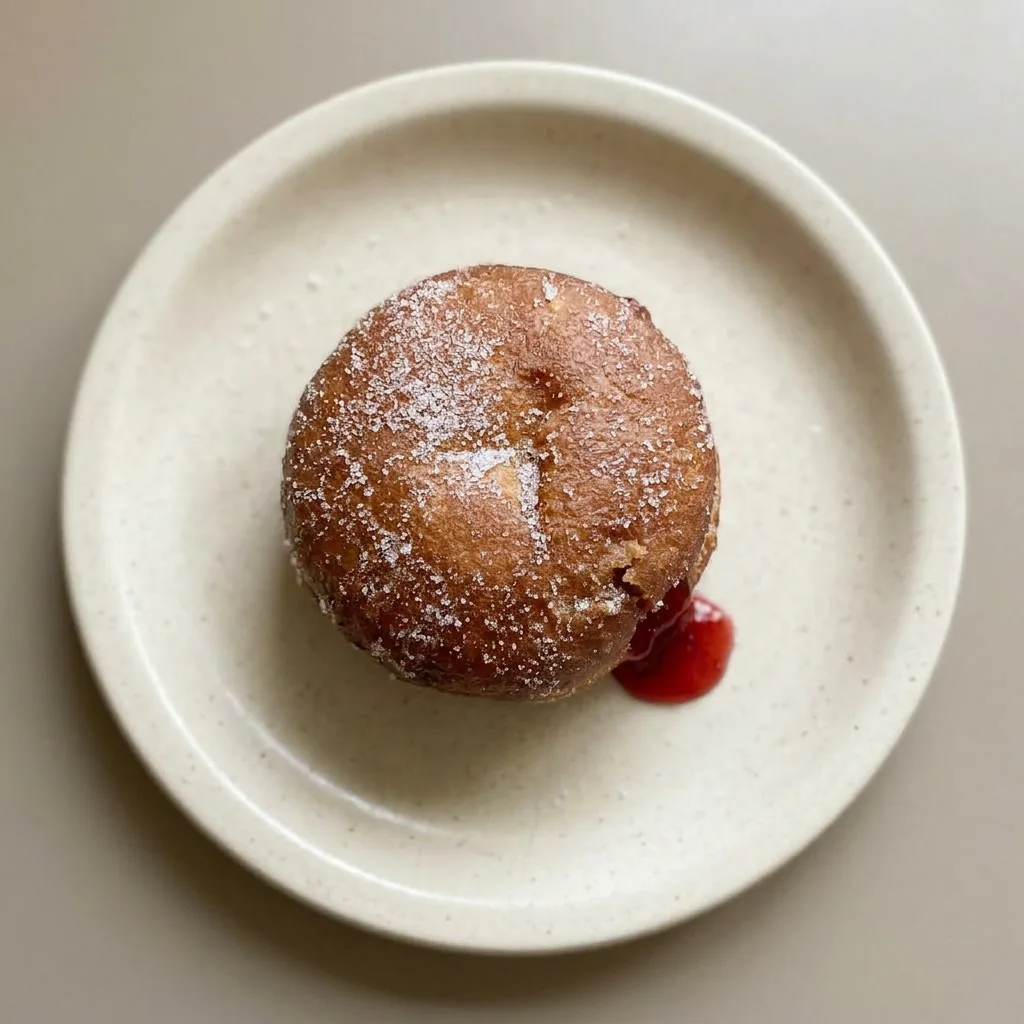
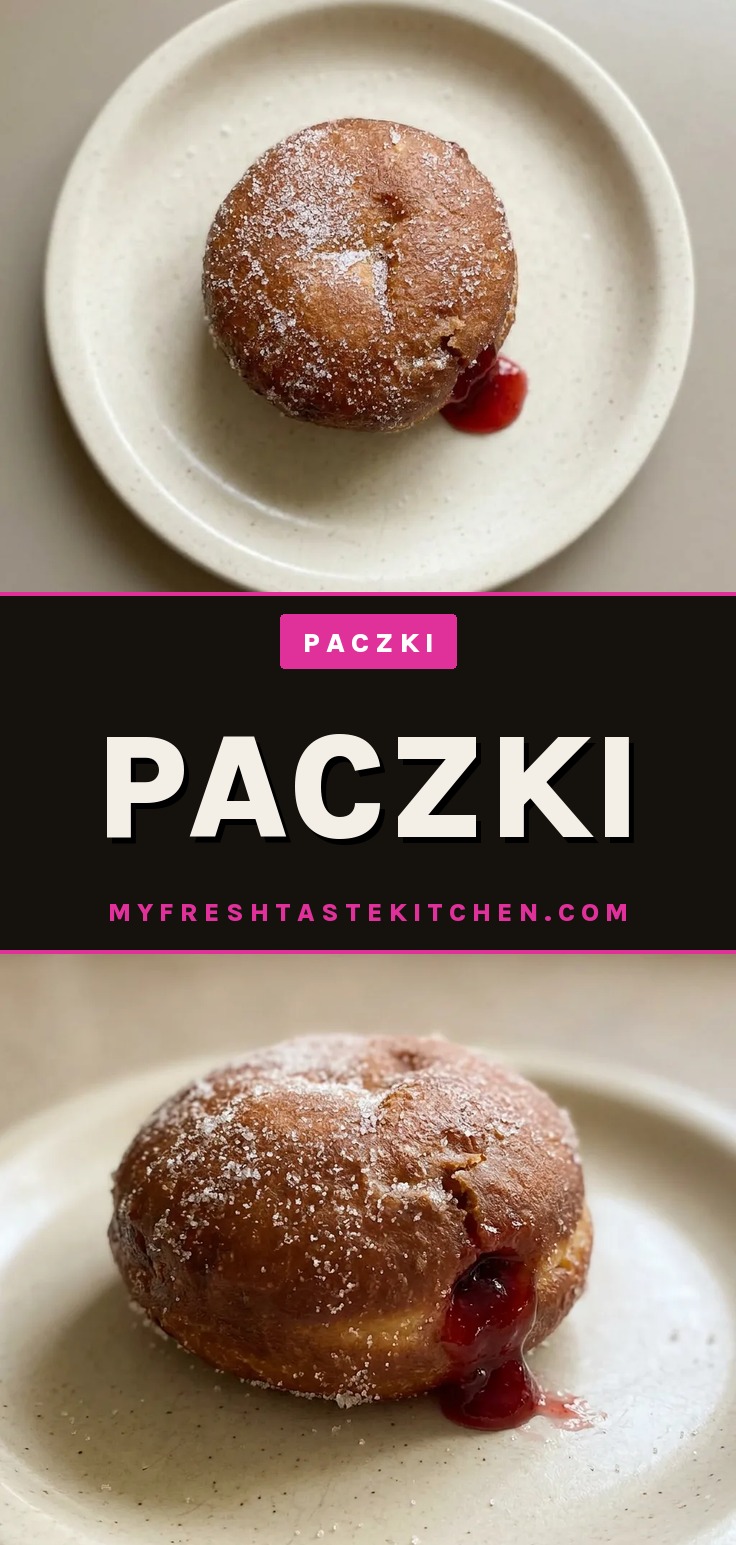
Paczki are the Polish donut that makes you question every other filled pastry you’ve had. The dough is enriched with butter and eggs, which gives it a tenderness that stands up to deep-frying without turning greasy.
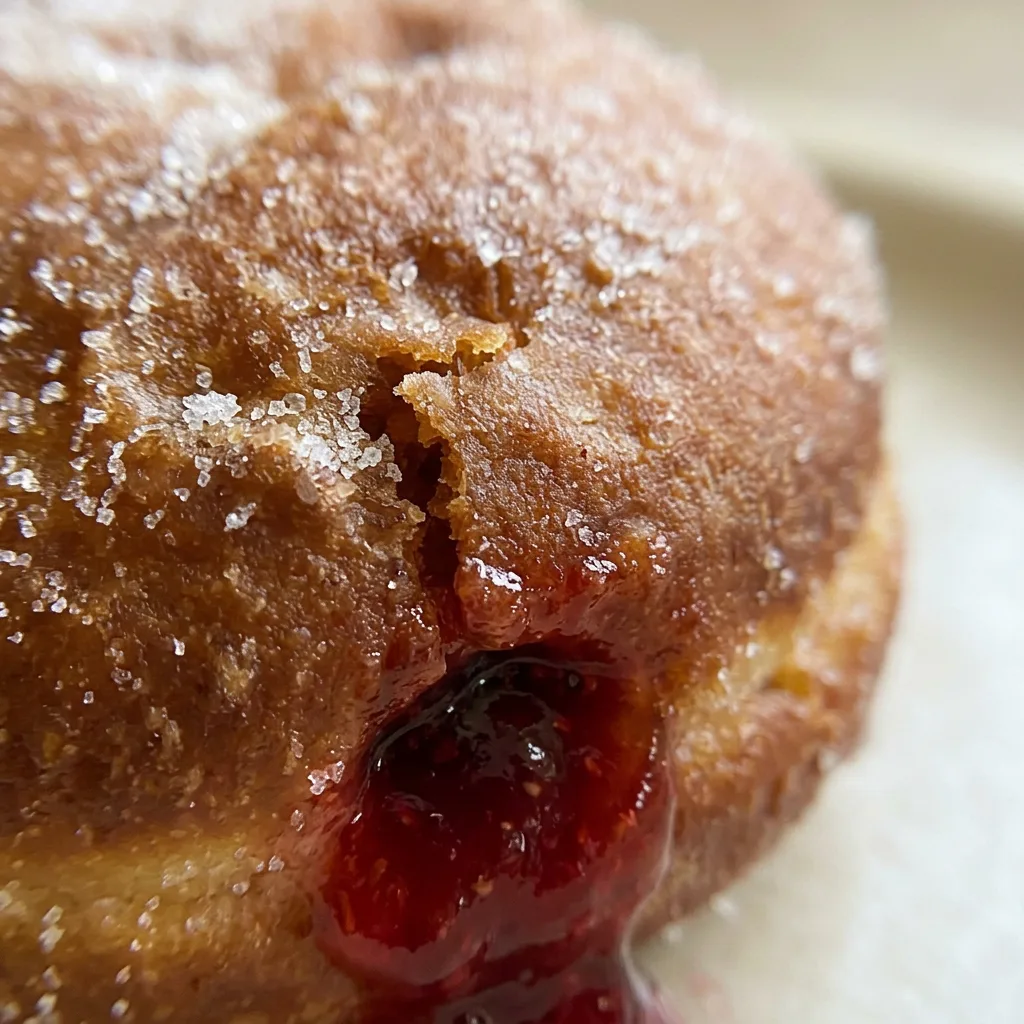
That’s the tricky part: the balance between a rich crumb and a crisp shell is narrow, but when it hits, you get a contrast that’s hard to beat. The raspberry filling stays bright because it’s added after frying, so the jam doesn’t get cooked or thinned out.
If you’ve only had mass-market jelly donuts, these paczki will reset your expectations, they’re lighter, more delicate, and the sugar coating adds just enough crunch.
Choose a yeast-risen dough for light, airy paczki
Yeast dough gives paczki their signature soft, fluffy crumb. As the yeast feeds on sugar, it releases carbon dioxide, creating tiny air pockets throughout the dough.
That’s what makes each bite soft, not dense like a cake donut. Enriching the dough with butter and eggs adds tenderness and a rich flavor that balances the tart jam filling. The result is a delicate pastry that feels light despite being fried.
If you’ve ever had a dense, greasy donut, that’s from a dough that wasn’t given enough time to rise or had too little fat. Here, the yeast does the work, and the enrichment ensures the crumb stays tender, not tough.
Fry at 350°F for a crisp, grease-free shell
Deep-frying at a steady 350°F is key to getting that golden, crisp crust without the dough soaking up oil. When the oil is hot enough, the exterior sets quickly, forming a seal that locks moisture inside.
If the temperature drops, the dough absorbs more oil and turns greasy. Frying in batches prevents the oil from cooling too much.
You’ll see the paczki puff and brown evenly, and when you bite in, the shell shatters slightly before giving way to the soft interior. That contrast is what makes homemade donuts so satisfying.
The crisp shell also protects the dough from becoming soggy when you add the filling later.
Fill after frying to keep the dough crisp and the jam fresh
Waiting to fill paczki until after they’ve fried and cooled preserves the crisp exterior and keeps the filling from making the dough soggy. Whisking the jelly until smooth ensures it flows easily through a pastry tip without clogging. Poking a hole with a chopstick guides the tip into the center, so the jam distributes evenly as you pipe.
You’ll feel the donut plump slightly when it’s filled enough. Because the jam stays separate from the hot oil, it retains its bright fruit flavor. This technique is standard for filled donuts recipe because it delivers that burst of cold jam against the warm, tender dough.
Prep: 10 min · Total: 3 hr 30 min · Servings: 12 · Calories: 510 kcal
Check your yeast and use whole milk for a tender crumb
Active dry yeast: Look for a foamy layer after 5 minutes; if not, the yeast is dead and won’t give you a light donut.
Whole milk: Use whole milk, not skim or 2%, for the richness that keeps the dough tender and soft.
All-purpose flour: Standard all-purpose flour works well; avoid bread flour which makes the donuts tougher.
Raspberry jelly or seedless jam: Seedless jam is easiest to pipe; if using jam with seeds, strain them out first to avoid clogging the tip.
Vegetable oil: Choose a neutral oil with a high smoke point like canola or peanut; avoid olive oil which adds flavor.
Shape and fill paczki for even results every time
Activate the yeast
Stir milk and 1 teaspoon sugar until dissolved, then scatter yeast on top. After 5 minutes, you should see a foamy layer; if not, the yeast is dead, start over.
Mix the dough
Whisk flour, salt, and 1/4 cup sugar in a large bowl. Make a well, add yeast mixture, butter, vanilla, and eggs, then stir until a shaggy dough forms. It should look rough and sticky.
Knead and first rise
Turn dough onto a floured surface and knead for about 6 minutes until smooth and elastic. Shape into a tight ball, place in greased bowl, cover, and let rise until doubled, 1 to 1 1/2 hours.
Cut the rounds
Roll dough to 1/2-inch thickness on a floured surface. Cut rounds with a 3-inch cutter, gathering scraps gently. Place on floured baking sheets, cover, and let rise until puffy, 30 to 45 minutes.
Heat the oil
Fill a heavy pot with 1 inch oil and attach a deep-fry thermometer. Heat over medium-high until it reaches 350°F. Don’t let it overshoot, or the outsides will brown before the centers cook.
Fry the paczki
Fry rounds in batches, flipping once, until golden and puffed, 1 to 2 minutes per side. Adjust heat to keep oil at 350°F. If they brown too fast, the oil is too hot; if they absorb oil, it’s too cool.
Sugar and cool
Transfer fried paczki to a wire rack for 15 seconds to drain excess oil, then toss in a bowl of sugar to coat. Return to rack and cool completely before filling.
Fill the donuts
Whisk jelly until smooth, then fill a pastry bag fitted with a 1/4-inch tip. Use a chopstick to poke a hole in each donut’s side, insert the tip, and pipe until you feel slight resistance, the donut will plump gently.
Paczki (Polish Jelly Donuts)
Ingredients
Method
Activate Yeast Mixture:
In a medium bowl or liquid measuring cup, combine milk and 1 teaspoon sugar, stirring until sugar dissolves. Scatter yeast over the surface. Let stand until yeast becomes foamy and bubbly, roughly 5 minutes.Mix and Knead Dough:
Coat a large bowl with cooking spray. In another large bowl, combine flour, salt, and 1/4 cup sugar, whisking thoroughly. Create a well in the middle, then add yeast mixture, butter, and vanilla. Crack eggs into the well. Using a wooden or silicone spoon, mix until a shaggy dough forms. Turn dough out onto a lightly floured surface and knead until soft and smooth, approximately 6 minutes. Shape into a tight ball. Transfer to the greased bowl, cover tightly with plastic wrap, and let rest until doubled in volume, 1 hour to 1 hour 30 minutes.Cut and Rise Dough:
Lightly flour 2 baking sheets. On a floured surface, roll dough to 1/2″ thickness. Use a 3″ round cutter to cut out rounds. Gently gather scraps, reroll, and cut additional rounds without overworking the dough (you should get about 12). Place rounds on prepared sheets, cover with plastic wrap, and let rise until puffy, 30 to 45 minutes.Heat Oil for Frying:
Pour remaining 1/2 cup sugar into a large bowl. Fill a large heavy pot with oil to a depth of 1″ and attach a deep-fry thermometer. Heat over medium-high heat until thermometer reads 350°.Fry and Coat Donuts:
Fry rounds in batches, flipping once and adjusting heat to keep oil temperature steady, until golden and puffed, 1 to 2 minutes per side. Move to a wire rack placed over a baking sheet, letting excess oil drain for 15 seconds. Toss in sugar to coat the outside of each donut. Return to rack and cool completely. Repeat with remaining rounds.Fill Donuts with Jelly:
Attach coupler and 1/4″ tip to pastry bag. In a medium bowl, whisk jelly until smooth. Fill bag with jelly. Using a chopstick or wooden skewer, poke a hole in the side of each donut. Insert tip and pipe jelly until the center feels slightly puffed and offers some resistance. Arrange on a platter.
Swap the filling, but keep the dough as written
Raspberry jelly or jam: Strawberry, apricot, or plum jam (seedless or strained). The fruit flavor changes, but seedless jam won’t clog the tip. Chunky preserves get stuck in the pastry tip, and you’ll end up with uneven filling or a burst seam.
Active dry yeast: Instant yeast (same amount, no proofing needed). Instant yeast can be mixed directly with the dry ingredients; skip the 5-minute proofing step. The rise times stay similar, but the dough may puff slightly faster.
All-purpose flour: Gluten-free 1-to-1 baking flour (with xanthan gum). The dough will be more fragile and less elastic. Paczki may spread more during frying and have a denser, slightly gummy crumb.
They won’t be as soft, but they’ll still be edible.
Whole milk: Unsweetened oat or soy milk (for dairy-free). The dough will be slightly less tender and rich. Oat or soy milk works best because their protein and fat content mimic whole milk better than almond or rice milk, which can make the dough slack.
Granulated sugar (for coating): Cinnamon sugar (mix 1/2 cup sugar with 1 tbsp cinnamon). You get cinnamon sugar donuts instead of plain sugared ones. The cinnamon adds warmth, but the coating won’t stick as well if the donuts are too cool, toss them while still warm, not hot.
Storage and Serving
Paczki are best eaten within a few hours of frying and filling. The dough is crispiest and the filling most distinct right after they’re made. For leftovers, store in an airtight container at room temperature for up to 2 days.
The sugar coating will dissolve slightly, and the dough will soften, losing its crisp shell. To refresh, reheat in a 350°F oven for 5 minutes, which firms the exterior without drying the interior.
Do not refrigerate; the dough will stale faster. Freezing is not recommended, as the filled paczki become soggy upon thawing. If you must freeze, do so before filling: freeze the fried, sugar-coated donuts on a baking sheet, then transfer to a freezer bag for up to 1 month.
Thaw at room temperature, then reheat and fill fresh. The jam filling should be added just before serving for the best texture contrast.
Tips
- If your yeast mixture doesn’t foam after 5 minutes, discard it and start over with fresh yeast; dead yeast will produce dense, heavy donuts that don’t rise properly.
- When filling the donuts, stop piping as soon as you feel resistance and see the donut plump slightly; overfilling can cause the jam to burst out through the hole or split the donut.
Frequently Asked Questions
Can I make paczki dough ahead of time and refrigerate it overnight?
Yes, you can refrigerate the dough after the first rise. After it doubles, punch it down, wrap tightly, and refrigerate overnight. The next day, let it come to room temperature for about 30 minutes before rolling and cutting.
The dough may rise a bit slower, so expect the second rise to take closer to 45 minutes to 1 hour.
Why did my paczki turn out greasy or dense?
Most likely the oil wasn’t hot enough, it should be a steady 350°F. If the oil drops below that, the dough absorbs more fat and turns greasy.
Dense paczki usually mean the dough didn’t rise enough before frying; check that your yeast was foamy at the 5-minute mark. Frying in batches helps keep the oil temperature stable.
What’s the difference between paczki and regular jelly donuts?
Paczki are richer and more tender because the dough has more butter and eggs than typical jelly donuts. They’re also traditionally made with a yeast dough that’s allowed to rise twice, creating a lighter, airier crumb. The frying method is the same, but paczki are often coated in granulated sugar rather than glazed.
