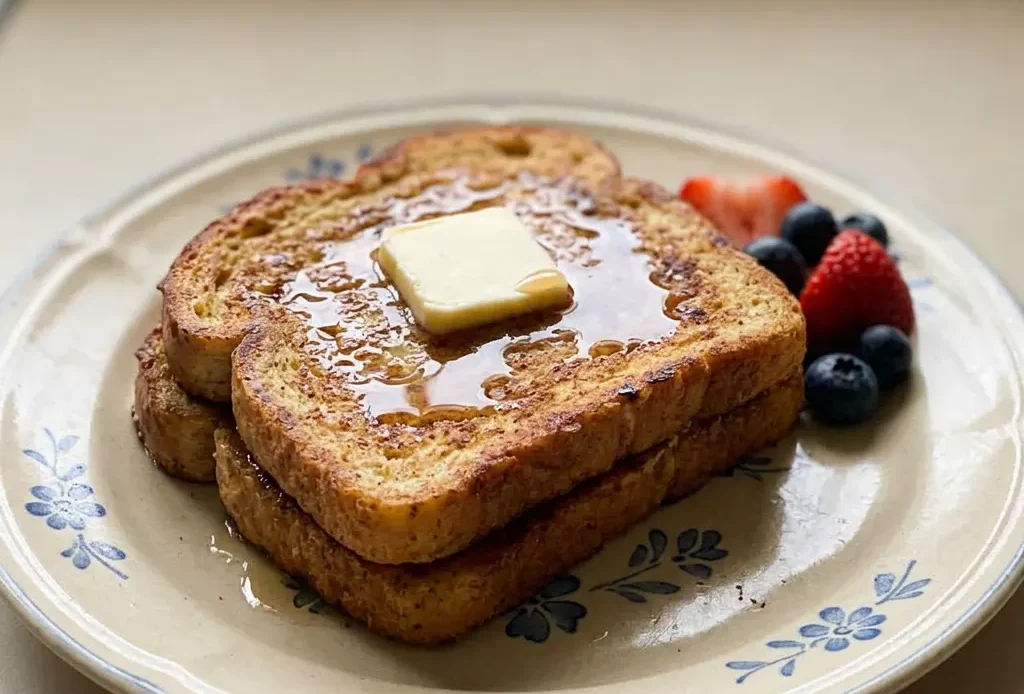
Cornstarch and flaxseed are doing the heavy lifting here, not eggs. The five-minute rest isn’t optional, it’s the difference between a batter that clings and one that runs off the bread like water.
You’ll see it go from thin to coating-thick, and that’s the moment it’ll actually work. This vegan french toast gets crisp edges and a tender center if you respect that rest and keep the heat low. The margin for error is wider than most vegan breakfasts, but only if you let the batter set before the pan hits it.
Cornstarch and flaxseed mimic egg texture
Eggs in traditional French toast create a custard that clings to bread and sets when cooked. To replicate that without eggs, you need thickeners. Cornstarch thickens the batter as it heats, forming a coating that firms up on the skillet.
Ground flaxseed adds viscosity and helps the batter stick to the bread rather than pooling in the dish. The five-minute rest is critical: it gives flax time to gel and cornstarch to hydrate. Skip that, and the batter stays thin and runs off.
You’ll see the difference when you dip, the batter should coat like heavy cream, not drip off instantly. That’s the texture that comes from both working together. This is a simple vegan breakfast that relies on pantry staples, not special ingredients.
Low heat keeps the crust golden, not burnt
Maple syrup in the batter contains sugars that scorch easily over high heat. Cook on low, and you give the sugars time to caramelize slowly, building a deep golden color without bitter burnt spots. Three to four minutes per side is long enough for the heat to penetrate and crisp the coating.
Coconut oil or vegan butter provides the fat needed for even browning and adds its own flavor. If you rush the heat, you’ll get a dark crust with a raw, gummy interior.
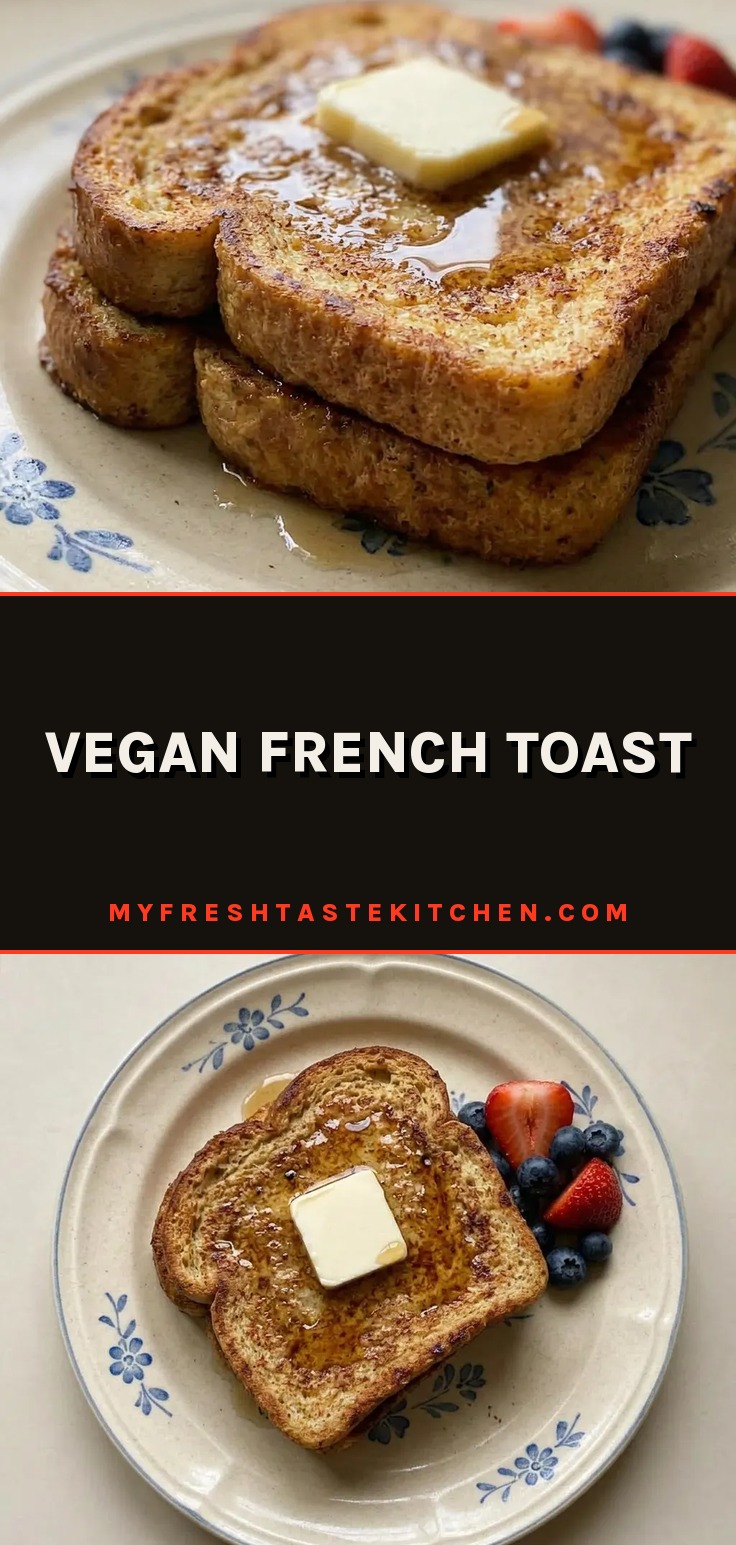
Patience pays off: the finished slices come out crisp on the outside, tender within. That’s the result you want for easy vegan breakfast ideas, and it’s only possible with controlled heat.
Day-old bread holds up best
Fresh bread is soft and full of moisture. When you dip it, it soaks up batter too fast and turns soggy, often falling apart in the pan.
Day-old or intentionally dried bread has less water, so it absorbs batter at a slower, more even rate. The thick slices keep their structure during soaking and flipping, you can handle them without tearing. Look for bread that feels firm but not rock-hard; you should be able to press a dent that springs back slowly.
Stale bread also toasts up crispier because there’s less moisture to steam off. That’s why it’s the standard for French toast, vegan or not. If this is your first time with vegan French toast, day-old bread gives you a forgiving base.
It’s a practical choice for breakfast ideas vegetarian or anyone avoiding waste.
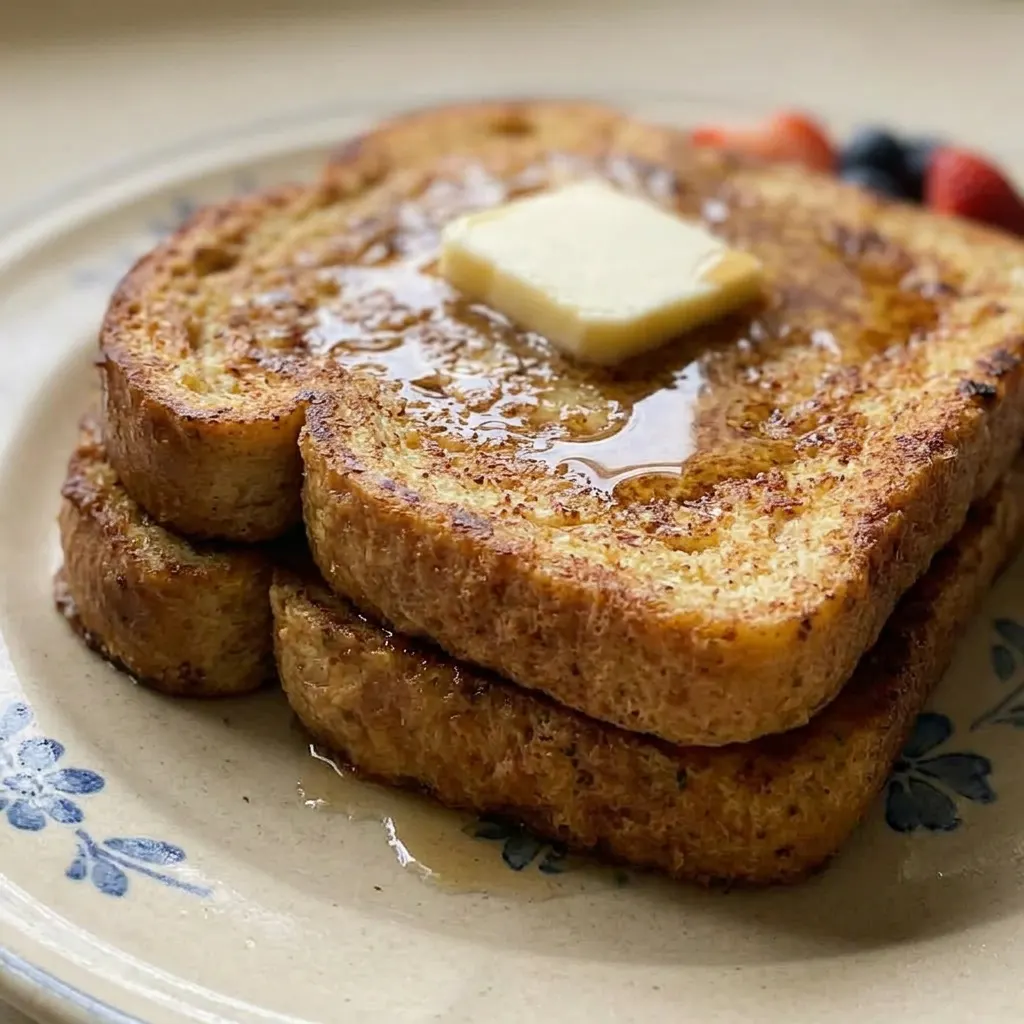
Prep: 10 min · Cook: 30 min · Total: 40 min · Servings: 8 · Calories: 60 kcal
Picking the right bread and milk for vegan French toast
Bread: Day-old or slightly stale thick slices hold up best; fresh bread soaks too fast and turns mushy.
Almond milk: Use unsweetened unflavored; sweetened or vanilla varieties throw off the flavor and burn faster.
Cornstarch: It thickens the batter as it heats, giving that custard-like coating without eggs.
Ground flaxseed: Adds viscosity so the batter clings to the bread instead of pooling in the dish.
How to make vegan French toast that sets up crisp, not soggy
Whisk the batter and let it rest
Combine almond milk, cornstarch, flaxseed, maple syrup, cinnamon, and vanilla in a shallow dish. Whisk until smooth, then let it sit for 5 minutes. You’ll see it go from watery to a coating that clings to the whisk, that’s the gel forming.
Heat the pan on low
Melt a small amount of coconut oil or vegan butter in a skillet over low heat. The fat should shimmer, not smoke. If it browns right away, the pan is too hot, turn it down and let it cool slightly before adding bread.
Dip each slice evenly
Submerge one side of the bread for a few seconds, then flip. Press gently so the batter soaks in, but don’t let it sit more than 10 seconds total. Lift the slice, batter should coat like heavy cream, not drip off in sheets.
Cook slowly until golden and crisp
Place the dipped bread directly into the hot pan. Cook on low to medium heat for 3 to 4 minutes per side.
The underside should be deep golden brown with no dark spots. Flip when the edges look set and the center no longer looks wet.
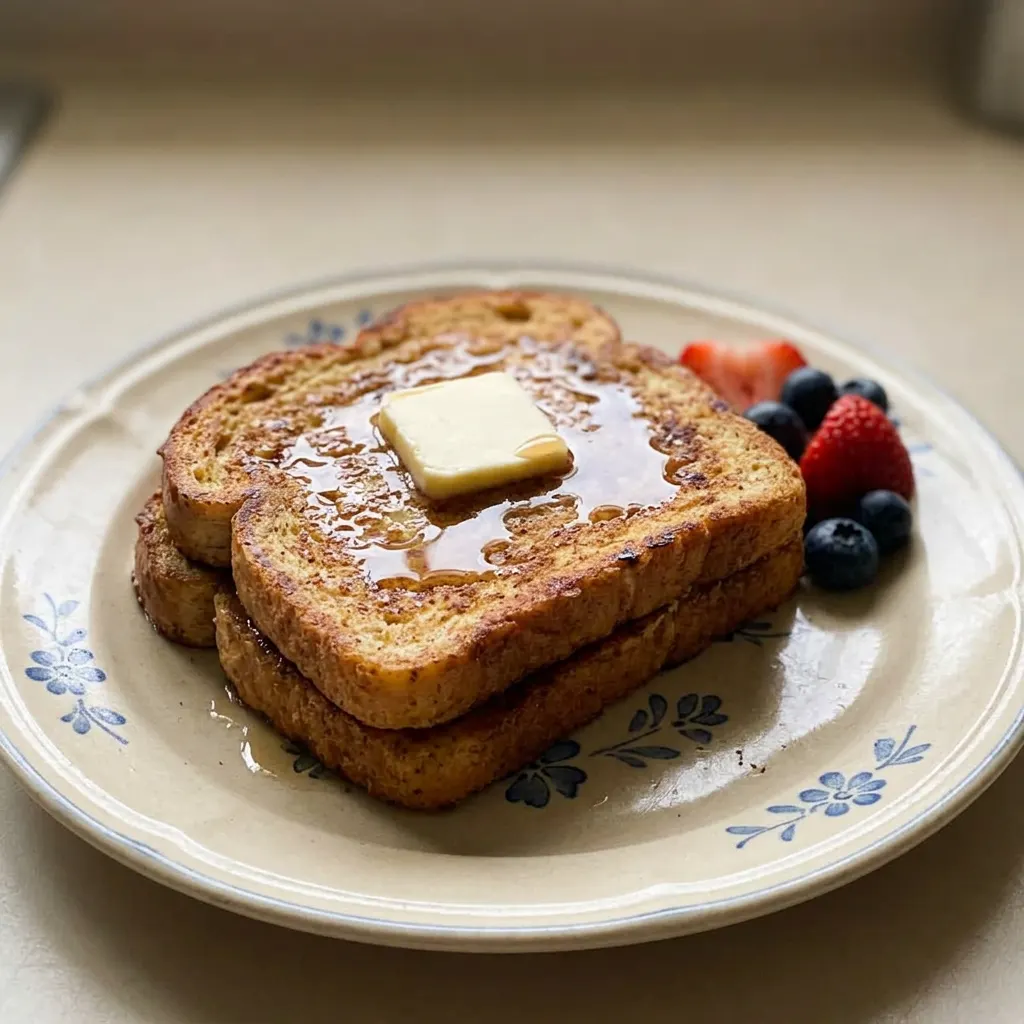
Vegan French Toast
Ingredients
Method
Whisk batter mixture:
Combine almond milk, cornstarch, ground flaxseed, maple syrup, cinnamon, and vanilla extract in a shallow dish and whisk thoroughly. Allow the mixture to rest for 5 minutes so it can thicken.Melt fat in skillet:
Heat a small amount of coconut oil or vegan butter in a skillet over low heat until melted.Coat bread slices:
Submerge one side of a bread slice into the batter, then flip and coat the other side. (Refer to notes regarding bread consistency.)Cook until golden:
Transfer the coated bread directly to the preheated, greased pan. Cook over medium heat, flipping once, until each side is golden brown and crisp, roughly 3-4 minutes per side.
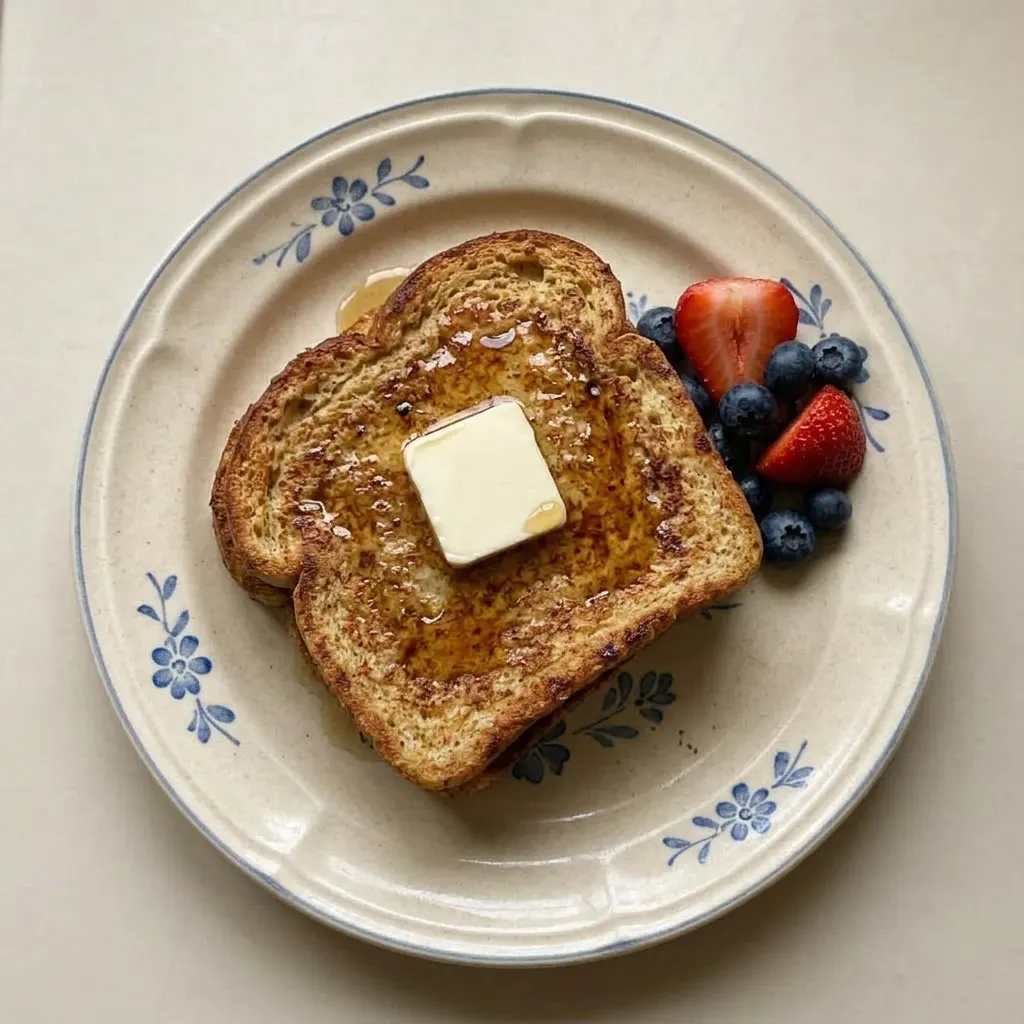
Storage and Reheating
Leftover French toast keeps in the fridge for up to 3 days. Stack slices with parchment between them in an airtight container to prevent sticking. The texture shifts after day one: the coating softens as moisture migrates from the bread to the crust.
To restore crispness, reheat in a 350°F oven on a wire rack for 5 to 7 minutes, flipping halfway. The rack lets hot air circulate so both sides dry evenly without steaming. A toaster oven works too, but watch closely since the sugars can scorch before the center warms.
You can freeze the cooked slices for up to 2 months. Cool completely, then wrap each slice individually in plastic wrap and place in a freezer bag.
Thaw in the fridge overnight, then reheat as above. The texture after freezing is slightly softer but still pleasant. The 5-minute batter rest is not a storage step; it’s part of prep and must be done before cooking.
Serve French toast immediately after cooking for the best crisp contrast. If you’re making a batch for a crowd, keep slices warm on a baking sheet in a 200°F oven for up to 20 minutes; beyond that, they dry out.
Tips
- Use a timer for the 10-second soak per side: the batter absorbs quickly, and over-soaking makes the bread fall apart.
Substitute milk, thickeners, or sweetener with these swaps
Almond milk: Oat milk or soy milk. Oat milk gives a slightly thicker batter and a mild sweetness; soy milk is closer in protein to dairy and yields a firmer coating. Both work cup-for-cup.
Avoid coconut milk from a can, too thick and fatty, it makes the batter greasy and the toast heavy.
Cornstarch: Arrowroot powder. Arrowroot thickens at a slightly lower temperature, so the batter may set a little faster. Use the same 3 tablespoons.
The final crust will be slightly less crisp but still golden. Potato starch also works, but it can make the coating feel gummy if over-soaked.
Maple syrup: Agave nectar or date syrup. Agave is thinner and sweeter, so start with 2 teaspoons instead of 1 tablespoon and add more to taste.
Date syrup is thicker and darker; it browns faster, so watch the heat. Both sugars caramelize, so low heat is still critical to avoid burning.
Coconut oil: Any neutral oil (like avocado or grapeseed). Neutral oil won’t add flavor, so the toast tastes more of cinnamon and vanilla. It browns the same way.
Use the same 2 tablespoons. Vegan butter also works, it adds a slight dairy-like richness but may brown a touch faster due to milk solids.
Frequently Asked Questions
Can I make the batter ahead of time and refrigerate it?
No, make the batter right before cooking. The cornstarch and flaxseed gel after resting 5 minutes, but if you refrigerate it longer, the mixture thickens into a gluey paste that won’t coat the bread evenly. Whisk fresh each time.
Why did my French toast come out soggy in the middle?
Two likely reasons. First, the bread was too fresh or you oversoaked it, day-old bread and a 10-second dip keep the structure intact.
Second, the pan wasn’t hot enough; low heat is for browning, but if it’s too low, the middle steams instead of setting. Check that the underside is deep golden before flipping, and cook a full 3 to 4 minutes per side.
Can I freeze cooked vegan French toast for later?
Yes, freeze for up to 2 months. Cool completely, wrap each slice individually in plastic wrap, then bag them. Thaw overnight in the fridge, then reheat in a 350°F oven on a wire rack for 5 to 7 minutes, flipping halfway.
The texture will be slightly softer than fresh but still crisp on the outside.
How is this different from traditional French toast made with eggs?
This version uses cornstarch and flaxseed to create a custard-like coating instead of eggs. The batter thickens as it heats, forming a crisp shell, while the interior stays tender. The maple syrup adds sweetness that caramelizes on low heat, giving a golden crust without the rich flavor of egg custard.
