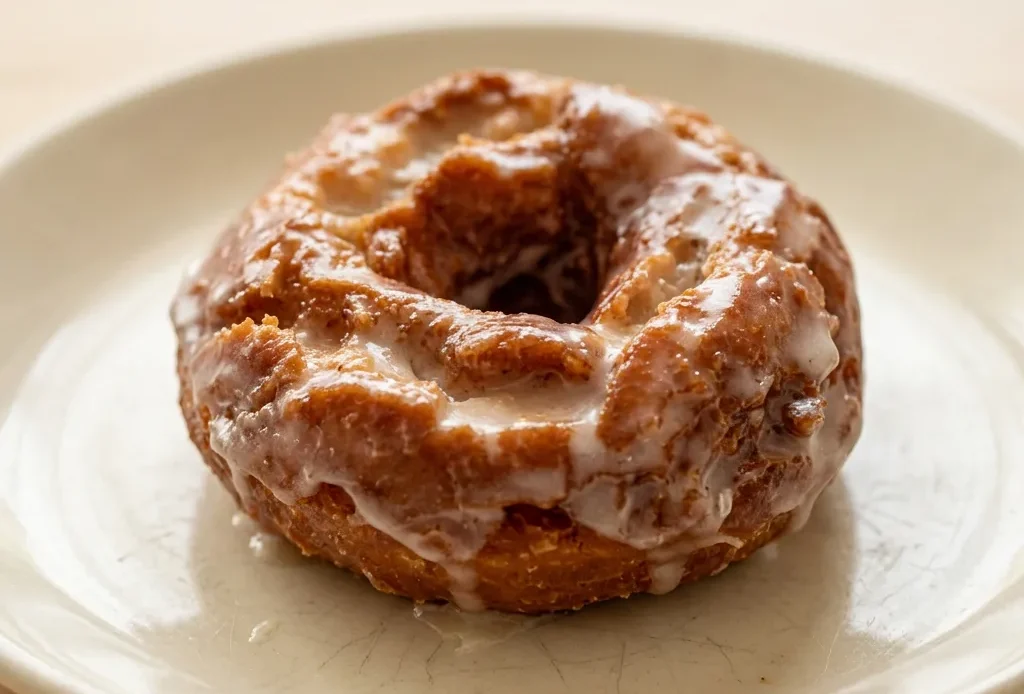
The crackle of a good old-fashioned sour cream donut glaze is a sound that tells you, before the first bite, that you’re about to hit that shatter-and-melt moment. But getting that texture isn’t about luck; it’s about patience. The dough needs a full chill, the oil needs to hold steady, and the glaze has to hit the donut at the right temperature.
This old fashioned sour cream donuts recipe walks a line between cakey tenderness and a fragile shell that flakes off as you eat. If you’ve ever wondered why bakery versions taste better than yours, it’s usually one of those three things slipping. Nail them, and you’ll have donuts that crack properly, stay moist inside, and don’t taste like the fryer.
Sour cream makes them tender and tangy
Sour cream is the secret to the melt-in-your-mouth texture and a subtle tang that cuts through the sweetness. The acidity in sour cream tenderizes gluten, so the crumb stays soft and cakey rather than tough or bready.
You’ll taste a faint, pleasant sharpness that balances the sugary glaze, it’s what keeps you coming back for another bite. The extra moisture from the sour cream also means the donuts stay tender even after frying, without drying out.
That tang isn’t overwhelming; it just lifts the flavor, making each donut feel lighter than it is.
Cake flour and nutmeg for classic texture and flavor
Cake flour is the backbone of a true old-fashioned donut. Its lower protein content means less gluten development, so the crumb stays tender and delicate, not chewy like a bread donut. That’s the signature texture you’re after.
Nutmeg provides the warm, aromatic spice that defines these donuts. It’s subtle but unmistakable; a little goes a long way. Without it, they’d just be sweet fried dough.
Together, cake flour and nutmeg recreate that nostalgic bakery taste you remember.
Chill the dough for easier handling and better frying
Chilling the dough firms it up, so it doesn’t stick to your work surface or the cutter. You’ll be able to roll and stamp out clean shapes without wrestling with a sticky mess.
More importantly, cold dough fries better. It prevents the donuts from soaking up excess oil, giving you a crisp exterior and a fluffy interior that holds its shape. Warm dough would spread and absorb oil, turning greasy.
The fridge does the work for you, just give it time.
The glaze creates that signature crackly finish
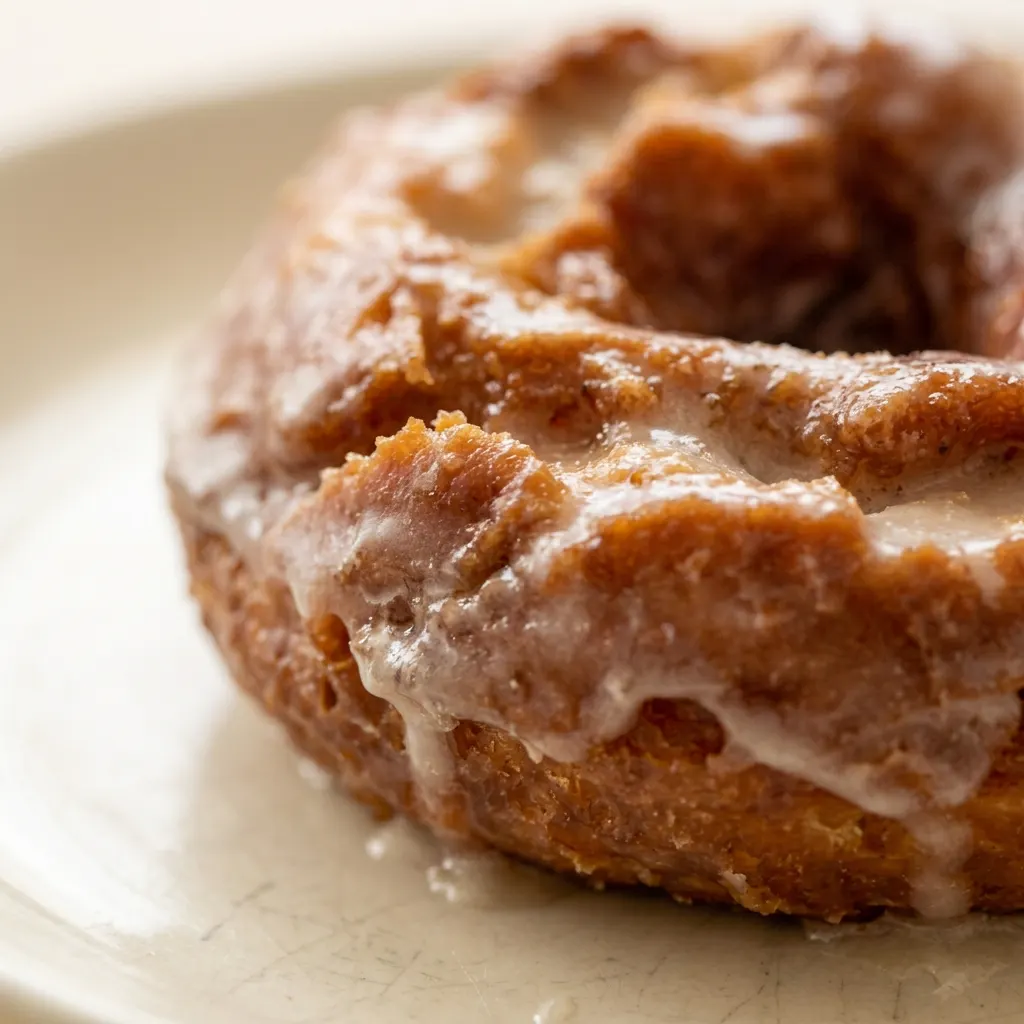
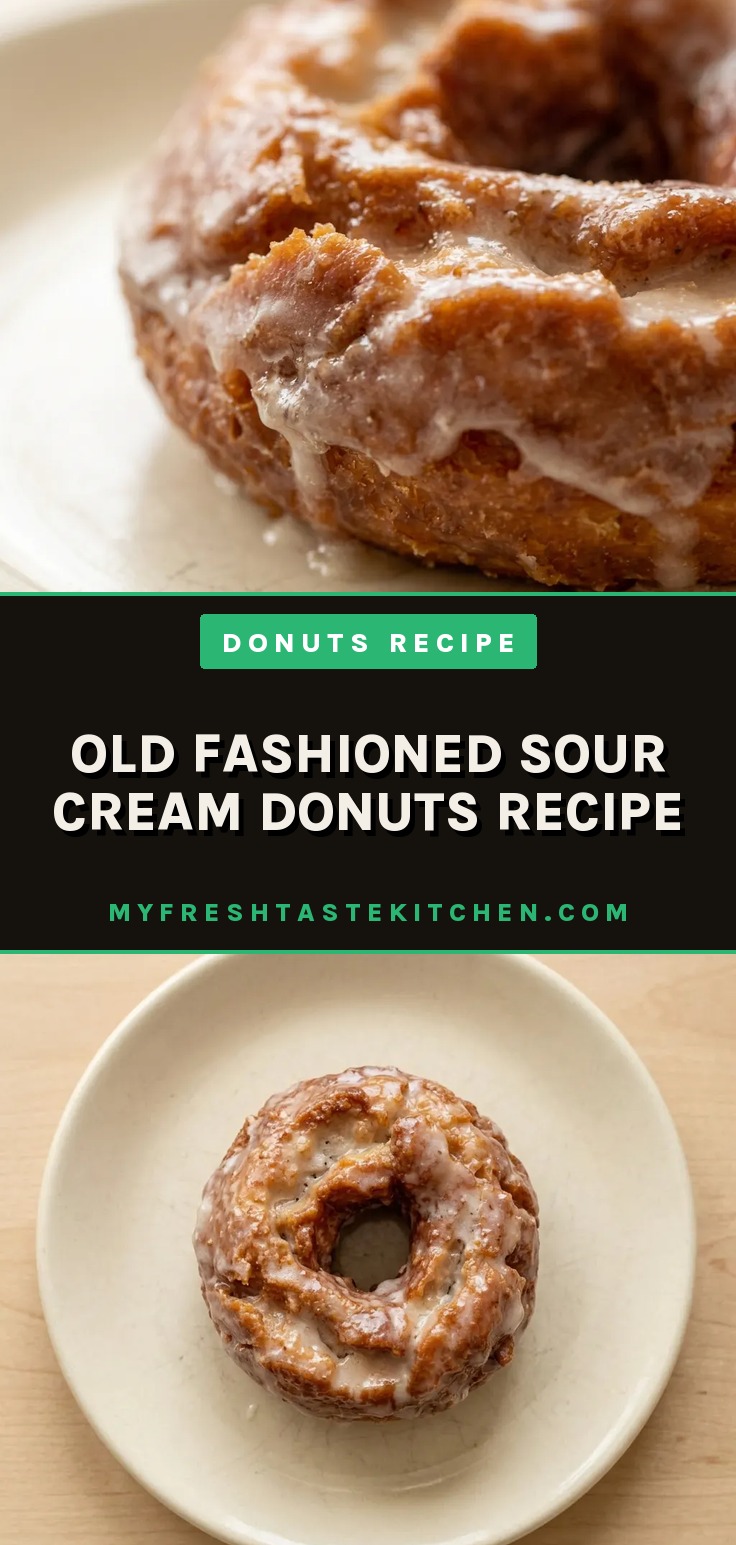
That crackly, glossy shell you love comes from a simple glaze, but two things make it special. Corn syrup adds a subtle chew and a mirror-like shine that plain powdered sugar and milk can’t match. Dipping both sides while the donuts are still just warm, not hot, ensures the glaze sets into a thick, even coating.
When you bite in, it shatters with a clean crack, then melts against the tender crumb underneath. That contrast is what makes an old-fashioned donut so satisfying.
Prep: 15 min · Cook: 20 min · Total: 1 hr 35 min · Servings: 12 · Calories: 430 kcal
What to look for in each ingredient
Cake Flour: Use cake flour, not all-purpose. Its lower protein keeps the crumb tender and delicate.
Sour Cream: Full-fat sour cream gives the best tang and moisture. Low-fat will make the dough drier.
Nutmeg: Freshly grated nutmeg is punchier than pre-ground. But pre-ground works fine if that’s what you have.
Butter: Butter must be truly room temperature, soft enough to press easily, or the creaming step won’t work.
Vegetable Oil: Use a neutral oil with a high smoke point like vegetable or canola. Olive oil will overpower the flavor.
Corn Syrup: Light corn syrup adds shine and a slight chew. Don’t substitute honey or maple; they change the texture.
How to make old fashioned sour cream donuts step by step
Sift the dry ingredients
Sift cake flour, baking powder, nutmeg, and salt into a bowl. This aerates the flour and distributes the leavener evenly. If you skip sifting, you risk dense patches.
Cream butter and sugar
Beat the room-temperature butter alone for 2 minutes until smooth, then add sugar and beat 3 minutes more. It should look light and fluffy, not greasy. If it looks separated, the butter was too cold.
Add egg yolks and vanilla
Mix in the egg yolks one at a time, then the vanilla, beating about 2 minutes total. The mixture should be thick and pale yellow. If it curdles, the butter was too cool.
Alternate adding sour cream and flour
Fold in half the sour cream and half the flour mixture until just combined, then repeat. The dough will be slightly firm and not sticky. If it’s too wet, you overmixed; stop as soon as the flour disappears.
Chill the dough
Cover the bowl with plastic wrap and refrigerate for at least 1 hour. The dough should be firm to the touch, not soft. If it’s still sticky after chilling, it needs more time.
Roll and cut the donuts
On a generously floured surface, roll the dough to 1/2-inch thickness. Cut with a 3-inch cutter, then cut holes with a bottle cap. If the dough sticks, dust with more flour.
Chill cut donuts
Place the cut donuts on a baking sheet and refrigerate uncovered for 20 minutes. This firms them up so they hold shape when fried. If they’re not cold, they’ll absorb more oil.
Heat the oil
Heat vegetable oil in a Dutch oven to 350°F. Use a thermometer. If the oil smokes, it’s too hot; if bubbles barely form around a test scrap, it’s too cold.
Fry the donuts
Fry 2-3 donuts at a time, 2 to 3 minutes per side, until deep golden brown. Flip when the edges look set. They should puff and crack slightly.
If they brown too fast, lower the heat.
Drain excess oil
Transfer fried donuts to a wire rack or paper towels. They should feel light, not greasy. If they’re oily, the oil was too cool or the dough was too warm.
Make the glaze
Whisk powdered sugar, corn syrup, warm milk, and vanilla until smooth. The glaze should be thick but pourable, like heavy cream. If it’s too thin, add more sugar; if too thick, add more milk.
Glaze the donuts
Dip both sides of slightly warm donuts into the glaze, letting excess drip off. Place on a wire rack. The glaze should set into a crackly shell within a few minutes.
If it stays soft, the donuts were too hot.
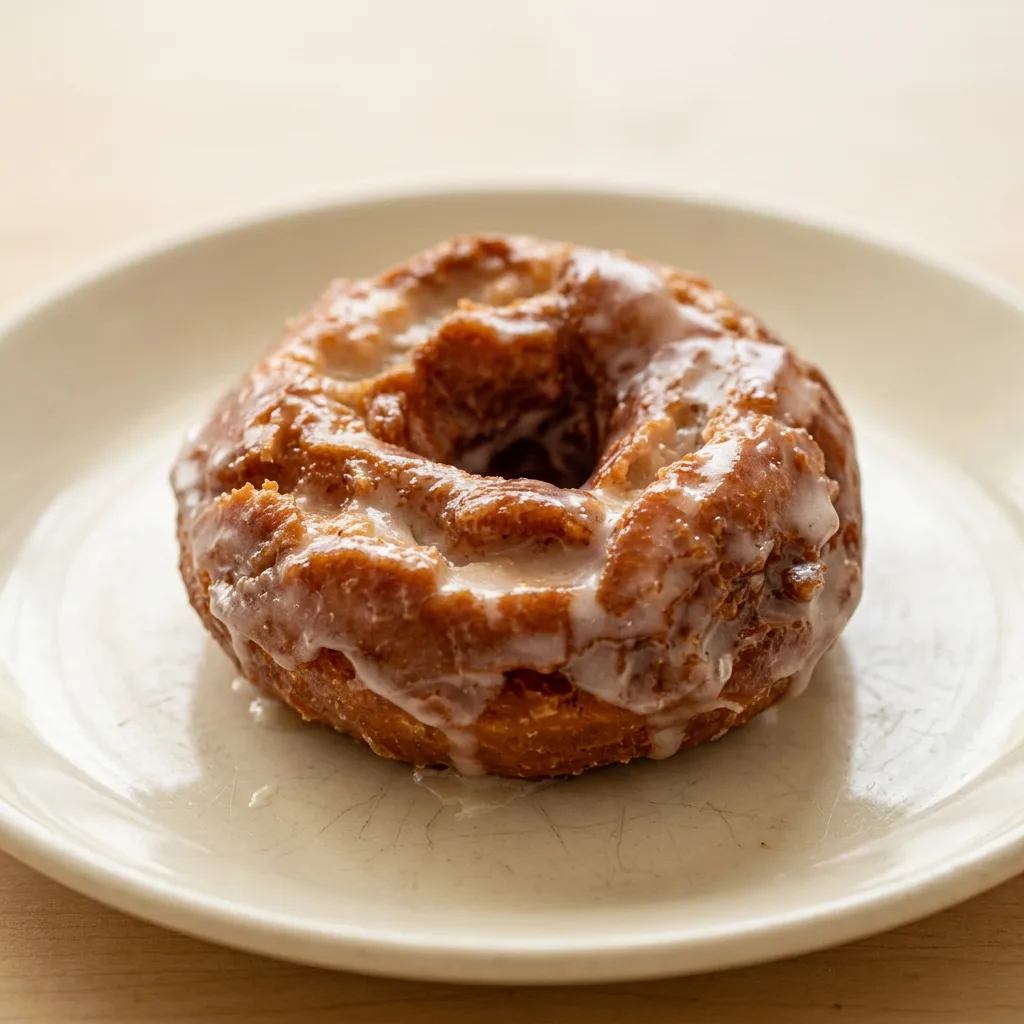
Old Fashioned Sour Cream Donuts Recipe
Ingredients
Method
Sift dry ingredients:
In a medium bowl, combine cake flour, baking powder, nutmeg, and kosher salt by sifting them together.Cream butter and sugar:
Using a hand mixer, beat softened butter in a large bowl for 2 minutes. Then incorporate sugar and mix for another 3 minutes. Add egg yolks and vanilla extract; blend until uniform, roughly 2 minutes.Fold in sour cream mixture:
Fold in half the sour cream and half the flour mixture using a flat spatula until just combined. Add the remaining sour cream and flour, then mix until fully integrated. The dough should be somewhat firm.Chill dough:
Wrap the dough in plastic and chill for at least 1 hour, or overnight, until firm.Heat oil:
In a large pot or Dutch oven, heat vegetable oil to 350°F (175°C).Roll and cut donuts:
On a heavily floured surface, roll out dough to a thickness of 1/2 inch. Cut donuts using a 3-inch biscuit or donut cutter, and punch a small hole in the center (a soda bottle cap works well). Gather scraps, re-roll, and repeat.Chill cut donuts:
Arrange cut donuts on a baking sheet and refrigerate uncovered for 20 minutes.Fry donuts:
Fry 2-3 donuts at a time in the hot oil, cooking each side for about 2-3 minutes until deep golden brown. Transfer to a wire rack or paper towels to remove excess oil.
Make glaze:
While donuts are cooling, prepare the glaze: whisk powdered sugar, corn syrup, warm milk, and vanilla extract together in a large bowl until smooth.Glaze donuts:
After donuts have cooled, dip each side in the glaze and set on a wire rack to let the glaze harden.
Storage and Serving
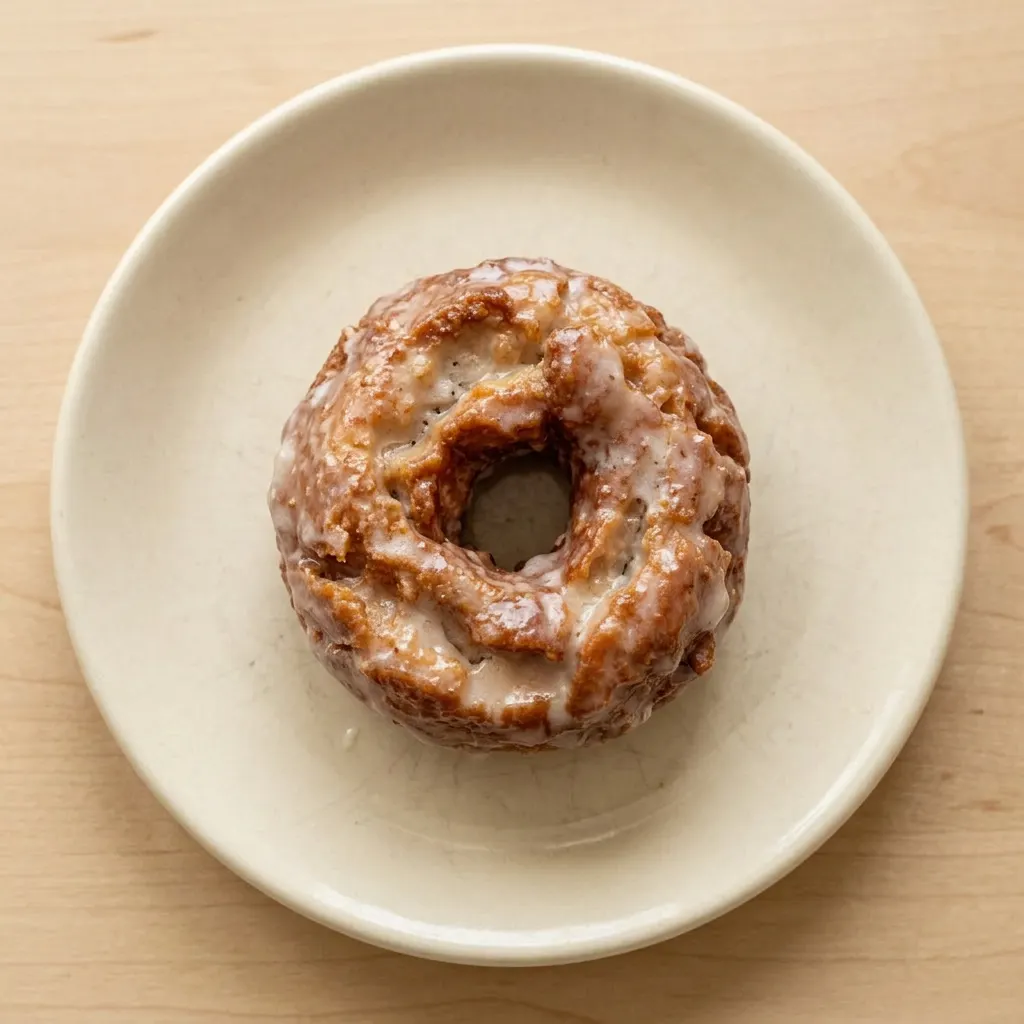
Glazed donuts are best eaten within a few hours of glazing, while the shell is still crackly. Beyond that, the glaze softens and the donut becomes tender but not crisp.
Store leftover glazed donuts in a single layer in an airtight container at room temperature for up to 1 day. Do not refrigerate; cold air stales the crumb and turns the glaze sticky. For longer storage, freeze the unglazed donuts.
Place them on a baking sheet in the freezer until firm, then transfer to a zip-top bag. They keep for up to 1 month. To serve, thaw at room temperature, then reheat in a 350°F oven for 3 to 4 minutes to restore some crispness.
Let cool slightly, then dip in the fresh glaze. The glaze does not freeze; make it fresh just before serving. Don’t freeze glazed donuts; the glaze becomes gummy and the texture suffers.
Swap sour cream or cake flour without losing texture
Sour Cream: Full-fat Greek yogurt, same amount by weight (240g). You’ll get nearly identical tang and moisture. The crumb stays tender, though it might be slightly less rich, hard to notice once glazed.
Cake Flour: All-purpose flour, same volume (2 3/4 cups + 2 tbsp), but reduce by 2 tbsp and add 2 tbsp cornstarch for closer protein level. All-purpose alone makes a denser, slightly tougher donut, more like a cakey biscuit. The cornstarch trick helps, but the crumb won’t be as delicate as with cake flour.
Butter: Use a high-fat plant-based stick butter (like Miyoko’s) for dairy-free, same amount by weight (42g). The dough will be a bit less tender, plant butters have higher water content, and the flavor loses that buttery richness. Still works, but expect a slightly less fluffy donut.
Nutmeg: Ground mace or cinnamon, same amount (1/4 tsp). Mace mimics nutmeg’s warmth closely; cinnamon shifts the flavor toward a spiced donut, more like a cake donut than an old-fashioned. Either works, just a different profile.
Tips
- Use a clip-on thermometer to monitor oil temperature continuously; even a 10°F drop leads to greasy donuts.
- Fry only 2-3 donuts at a time to avoid crowding the pot, which lowers the oil temperature and increases absorption.
Frequently Asked Questions
Can I make the dough the night before and fry the next day?
Yes. The recipe actually calls for at least an hour of chilling, but you can refrigerate the dough overnight. It will be firmer, so let it sit at room temperature for 10 to 15 minutes before rolling.
Don’t cut the donuts the night before; cut them fresh the next day after rolling. Frying will still work fine, and the texture remains tender.
Why did my donuts turn out greasy?
Most likely the oil was too cool, below 350°F, so the donuts soaked up fat instead of forming a quick crust. Next time, check that the oil returns to temperature between batches.
Also, if the dough wasn’t cold when it hit the oil, it can absorb more. The 20-minute chill after cutting is key.
How do I know when the oil is at the right temperature without a thermometer?
Drop a small scrap of dough into the oil. If it sizzles immediately and floats, bubbling steadily, the oil is around 350°F.
If it sinks and barely bubbles, it’s too cool. If it browns in under 30 seconds, it’s too hot.
The scrap should turn golden in about 60 seconds.
What’s the difference between these and yeast donuts?
Yeast donuts are light and airy from fermentation, with a chewy texture. These old-fashioned sour cream donuts use baking powder for lift, so they’re denser, more tender, and cake-like. The sour cream adds a tang and a moist crumb that yeast donuts lack.
Plus, the glaze cracks when you bite it, something you don’t get with yeast.
