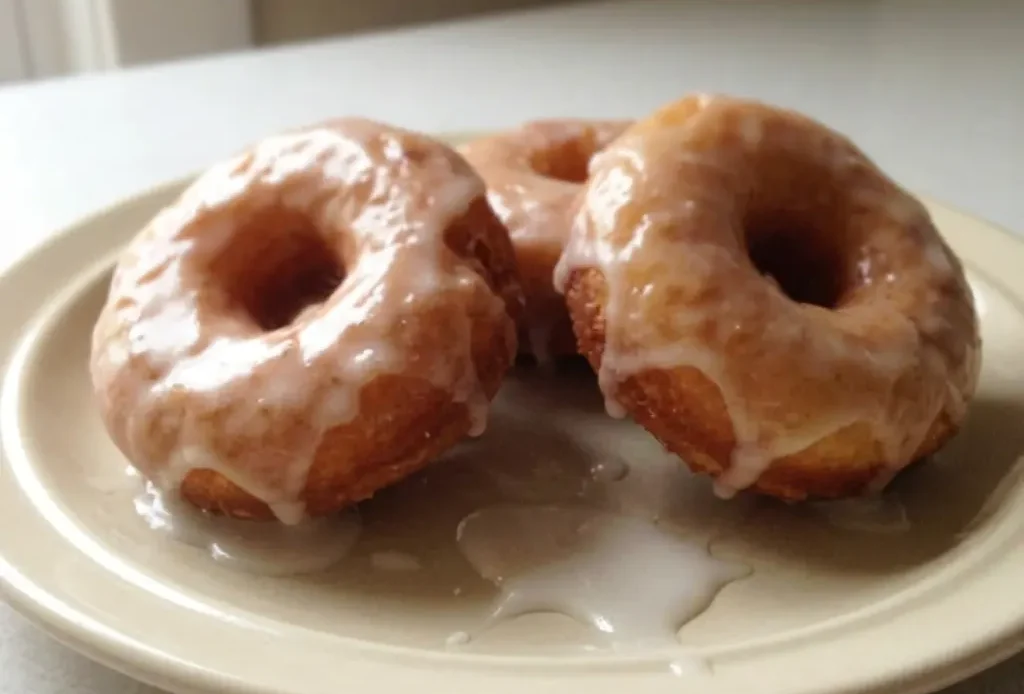
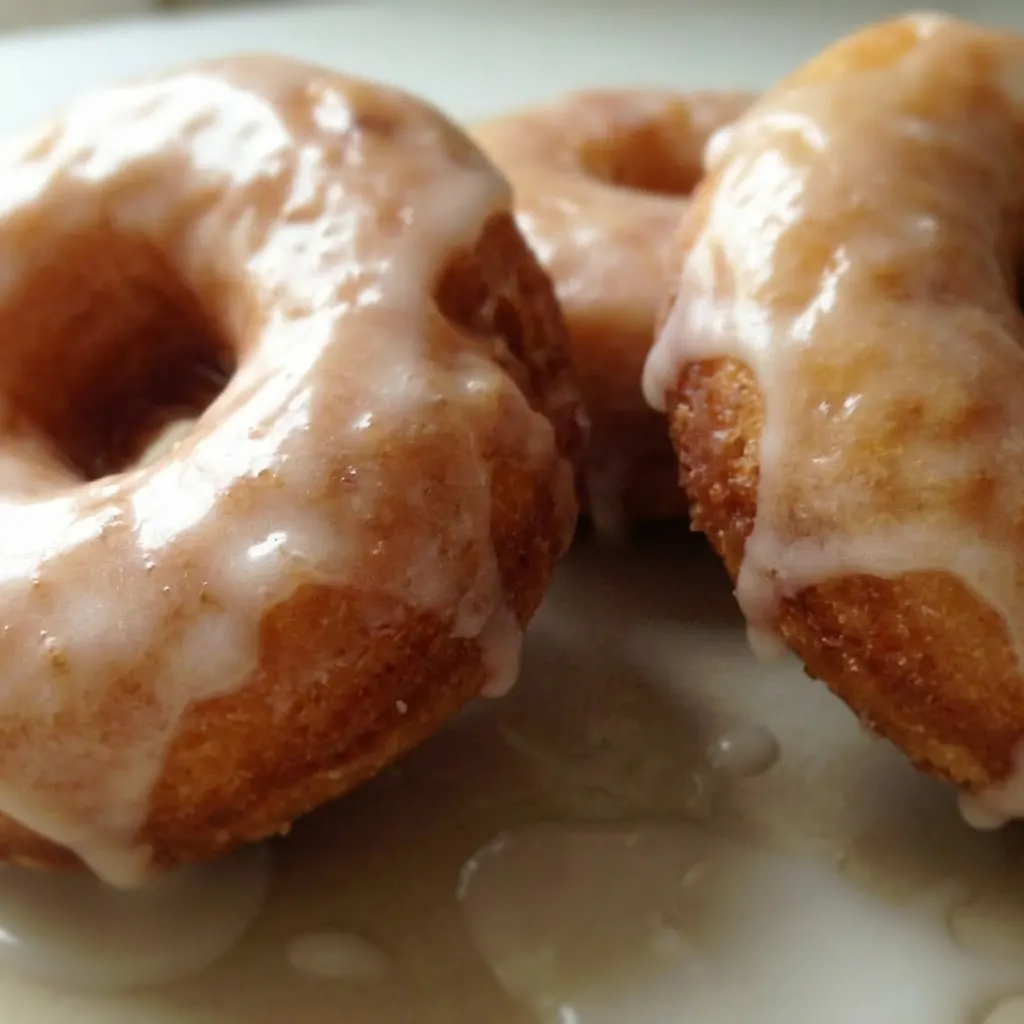
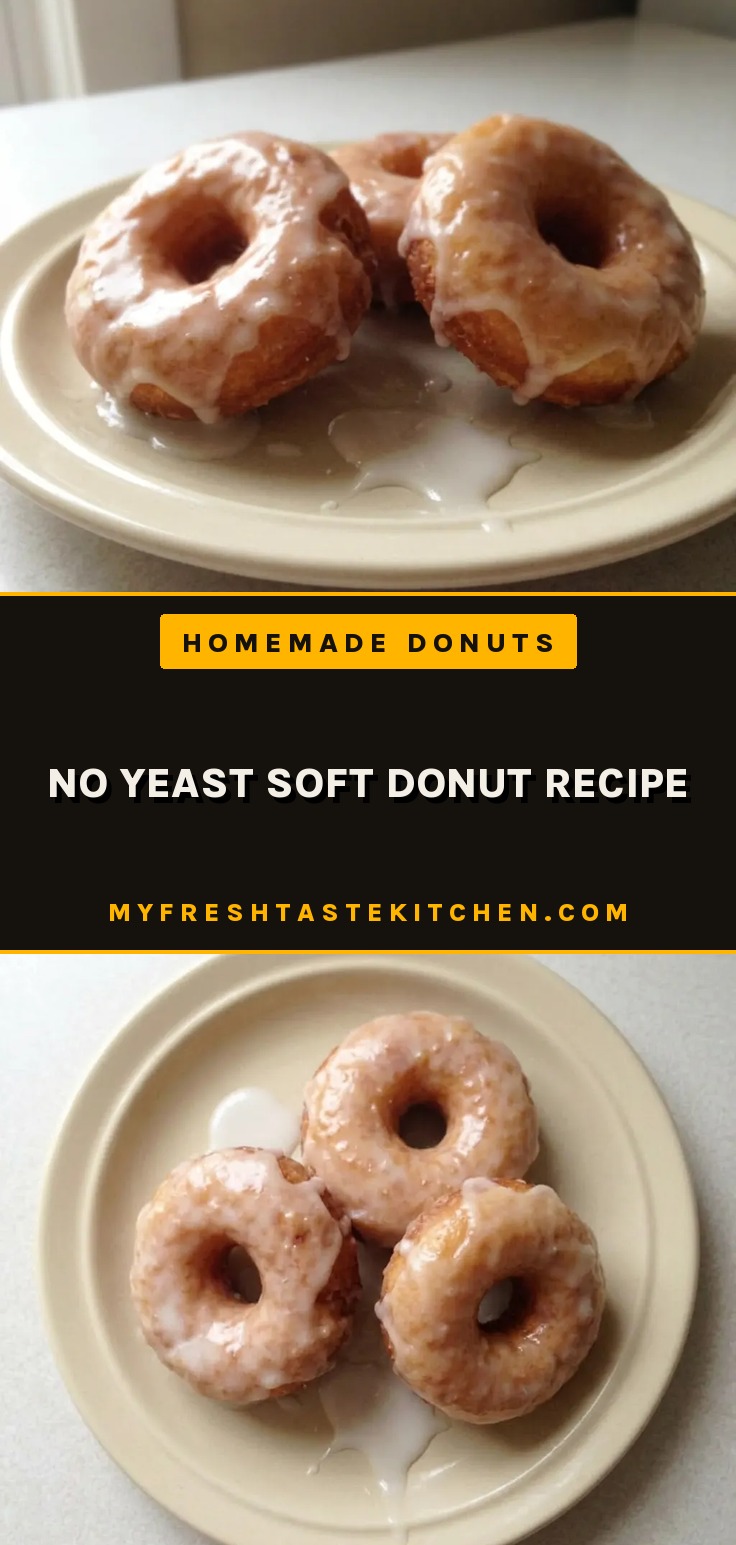
The first bite cracks through a thin, glossy glaze into a tender, cakey crumb that’s soft without being airy. No yeast soft donut recipe means no proofing, no waiting, and a 20-minute start-to-finish time that feels almost too fast for homemade donuts. The catch is that you have to handle the dough gently, kneading would turn it tough since there’s no yeast to relax the gluten.
It’s a trade-off: a denser, more delicate texture in exchange for speed, and the crumb stays pleasantly moist hours later thanks to the butter-and-oil combination. The glaze sets into that satisfying shell because you dip while the donuts are still warm, letting the residual heat do the work.
Baking powder leavening
Donuts no yeast means you skip proofing entirely. Baking powder reacts with liquid and heat to create bubbles, giving a quick rise in the hot oil.
That cuts total time to twenty minutes from start to eat. The catch is that you cannot knead the dough. Kneading develops gluten, and without yeast’s long fermentation to relax it, the gluten would make the donuts tough.
Instead, you stir until just combined, then pat or roll the dough gently. The result is a denser, cake-like crumb that’s tender but not airy. You get a soft donut with a fine, even crumb, not the open texture of a yeast donut.
It’s a trade-off for speed, and one that works well when you want donuts without the wait.
Butter and oil together
Homemade donuts often use one fat, but this recipe calls for both butter and oil. Butter brings flavor and a rich mouthfeel you can taste.
Oil, being liquid at room temperature, keeps the crumb soft and prevents it from drying out. If you used only butter, the donuts would taste great but turn stiff once cooled. Only oil would give a tender bite but miss that buttery depth.
The combination gives you a moist, tender donut that isn’t greasy. You can feel it in the texture: a soft, almost silky crumb that holds together without being heavy.
The fats work together so each donut stays pleasant to eat hours later, not just fresh from the fryer.
Glazing while warm
Glazed donuts need the glaze to stick without sliding off. Warm donuts do that naturally. The residual heat slightly melts the sugar mixture, helping it adhere to the surface in a thin, even layer.
As the donut cools, the glaze sets into a smooth, glossy shell that cracks when you bite. The glaze itself is just powdered sugar and hot water. Hot water dissolves the sugar faster and gives a silkier finish than cold.
You control thickness by the water amount: two tablespoons for a thicker coat that stays put, three for a thinner, more transparent layer that drips a little. Either way, dip one side only and let the excess run off on a rack. The result is a clean, sweet coating that complements the soft donut without overwhelming it.
Prep: 10 min · Cook: 10 min · Total: 20 min · Servings: 20 · Calories: 80 kcal
The butter and oil combo
Butter: Use unsalted to control salt, or salted and skip the added salt in the dry mix.
Milk: Whole milk gives the richest crumb, but any milk you have works fine.
Baking powder: Make sure it’s fresh; stale baking powder won’t give a good rise.
Working the dough without kneading
Melt the butter
Heat the butter until fully liquid, then stir in the milk and oil. The mixture should be warm to the touch, not hot, if it’s too hot, it’ll start cooking the flour later.
Mix dry ingredients
Sift the flour and baking powder together, then whisk in sugar and salt. This ensures the baking powder is evenly distributed; you’ll see no white clumps of powder when you stir.
Combine wet and dry
Pour the liquid into a well in the dry ingredients and stir with a spoon until no dry patches remain. The dough will be soft and slightly sticky; if it sticks to your fingers aggressively, add 1 tablespoon extra flour.
Pat the dough
Turn the dough onto a floured surface and pat it into a 1/2-inch thickness. Don’t roll back and forth, just press evenly. If the dough resists or springs back, let it rest 2 minutes; it’s overworked and needs relaxation.
Cut the donuts
Use a floured cutter to stamp out rounds. Press straight down without twisting, twisting seals the edges and prevents the donut from rising evenly. You’ll see clean edges that puff uniformly.
Test the oil
Drop a small dough scrap into 350°F oil. It should rise to the surface in about 15 seconds and turn golden within 30 seconds. If it sinks and stays pale, the oil’s too cold; if it browns immediately, it’s too hot.
Fry in batches
Add donuts without crowding, they need room to float. Cook 3 minutes per side. Flip only when the bottom is deep golden; flipping too early makes the oil soak in, giving a greasy feel.
Drain and glaze
Transfer donuts to paper towels for 30 seconds, then dip one side in glaze while still warm. The glaze will spread thin and set to a matte sheen after a minute. If it runs off completely, wait until the donut cools slightly.
No Yeast Soft Donut Recipe
Ingredients
Donuts
- 1/4 cup butter 57g
- 1/2 cup milk 120ml
- 2 tablespoons oil 30ml (plus extra for deep frying)
- 2 cups all-purpose flour 250g
- 1/2 cup white granulated sugar 100g
- 1 teaspoon baking powder level
- 1/2 teaspoon salt
Glaze
- 1 1/2 cups powdered sugar 180g
- 2-3 tablespoons hot water 30-45ml
Instructions
Donuts
Melt butter mixture:
Soften the butter using a microwave or stovetop. After it liquefies, pour in the oil and milk. Stir thoroughly, then put aside.Sift dry ingredients:
In a separate container, sieve the flour together with the baking powder, then incorporate the sugar and salt.Mix dough gently:
Create a depression in the dry mixture’s center and add the liquefied butter combination. Blend with a spoon until uniform. Should the dough feel overly sticky, mix in 1 tablespoon (9g) more flour. Refrain from kneading.Shape donuts:
Place the dough on a surface dusted with flour. Flatten it to roughly 1/2 inch (12mm) thickness and shape donuts using a donut or cookie cutter.Fry donuts:
Warm oil to 350-360°F (175-180°C). Check by dropping a dough scrap; if it browns and rises, the oil is set. Cook donuts for 3 minutes per side until golden. Work in small groups, turn delicately, and wait before flipping to preserve form.Drain donuts:
Move the finished donuts onto a plate lined with paper towels. Apply glaze while they remain warm.
Glaze
Glaze donuts:
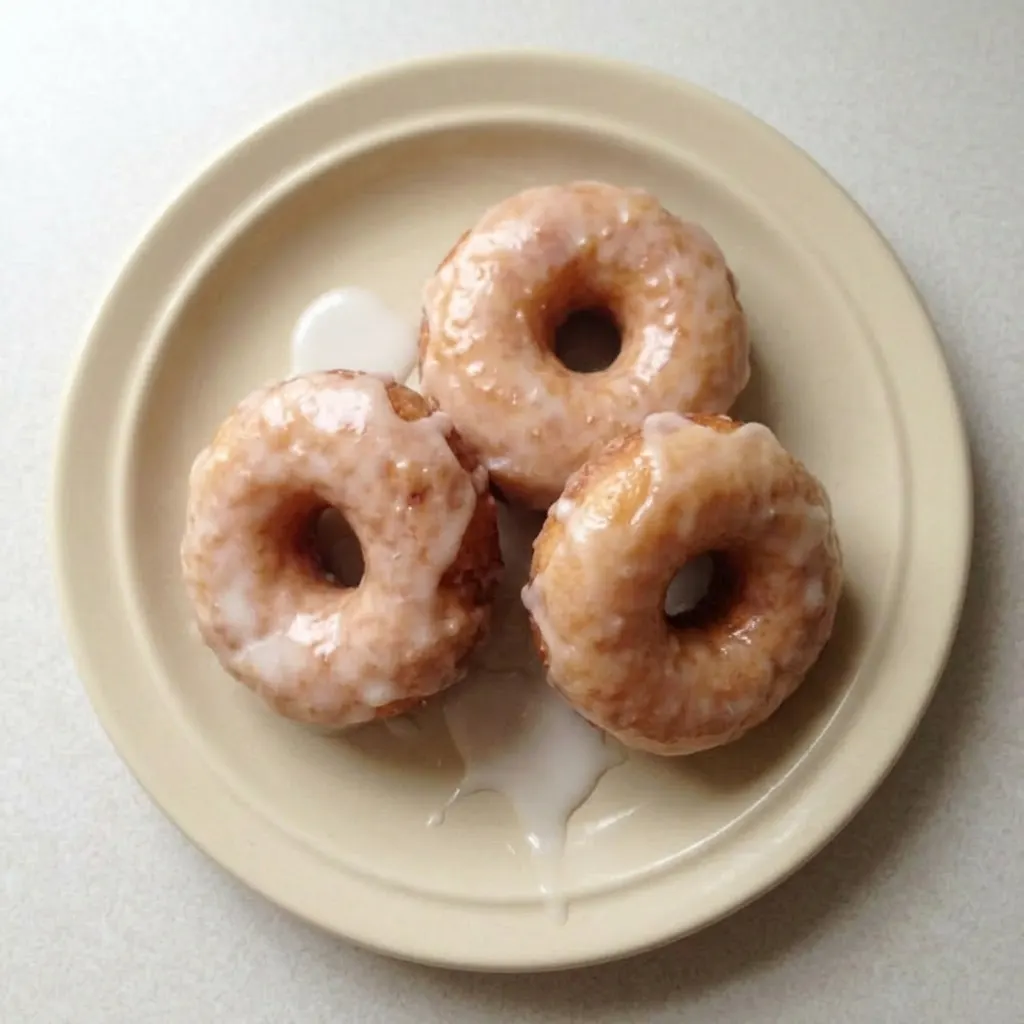
Combine powdered sugar with 2-3 tablespoons of hot water. Beat until glossy and even. Submerge one face of each donut into the glaze, then set on a cooling rack so excess drips off.Serve immediately:
These donuts taste best right away or within the day they are made.
Swapping fats and flours in these quick donuts
Butter and oil: Use 3 tablespoons (42g) coconut oil plus 2 tablespoons (30ml) additional oil in place of butter; keep the 2 tablespoons oil from the recipe. You lose the butter flavor, but the donuts stay tender.
The coconut oil, solid at room temp, replaces the butter’s structure, so the texture remains close. No other solid fat works as well, shortening makes them greasy, margarine adds water that throws off the dough.
All-purpose flour: Replace with a 1-to-1 gluten-free baking blend that contains xanthan gum. Use the same weight (250g).
Do not use single flours like almond or rice alone. The donuts will be slightly more crumbly and less cohesive, but still soft.
Without xanthan gum, the dough won’t hold together when patting and cutting. Expect a finer, more delicate crumb that may break apart if handled roughly.
Milk: Use any plant-based milk (unsweetened almond, oat, or soy) for dairy-free. Same volume (120ml).
The donuts will taste slightly less rich and may brown a touch faster because plant milks have less sugar. The crumb stays similar, milk’s role here is hydration, not fat.
Baking powder: Do not replace or omit. Baking powder is the only leavener; without it, the donuts will be dense pancakes. No substitute works, yeast needs proofing time, baking soda needs an acid not present.
If you try swapping, you’ll get flat, hard discs. The recipe relies on baking powder’s double-action: it bubbles when wet and again in the hot oil. That’s the only rise you get.
Storage and Serving
These donuts are best eaten the day they’re made, within a few hours of glazing. The glaze stays glossy and the crumb is softest then. Leftovers keep in an airtight container at room temperature for up to 1 day, but the glaze will soften and the texture will stale.
Don’t refrigerate: the fridge dries out the donuts faster and hardens the glaze. To restore some softness, warm a donut in a 300°F oven for 3 to 4 minutes.
Freezing is not recommended; the thawed donuts turn dense and the glaze weeps. If you must freeze, freeze unglazed donuts in a single layer, then wrap well.
Glaze after thawing and warming slightly.
Tips
- Use a kitchen thermometer to check oil temperature before each batch; even a 10°F drop can make donuts absorb oil and become greasy instead of crisp.
- Fry only 2-3 donuts at a time in a 3-quart pot; overcrowding drops the oil temperature too fast, leading to pale, oily donuts that take longer to cook.
I see people knead the dough until it’s smooth, then wonder why their donuts come out like hockey pucks.
Frequently Asked Questions
Can I make these donuts ahead of time and reheat them?
These donuts are best the day they’re made, but you can make them a few hours ahead. If you reheat, use a 300°F oven for 3 to 4 minutes to soften the crumb without melting the glaze.
Do not refrigerate leftovers, the fridge hardens the glaze and dries the donuts faster. Freezing isn’t recommended; the thawed donuts turn dense and the glaze weeps.
Why did my donuts turn out greasy or dense?
Greasy donuts most likely came from oil that wasn’t hot enough. The dough scrap test is key: it should rise and turn golden in about 30 seconds.
If the oil is under 350°F, the donuts absorb oil instead of setting a crust. Dense donuts usually mean the dough was overworked.
Kneading develops too much gluten, and without yeast to relax it, the crumb turns tough. Stir only until combined, then pat gently.
How is this no-yeast donut different from a traditional yeast donut?
This donut uses baking powder instead of yeast, so there’s no proofing and the total time is 20 minutes. The crumb is denser and more cake-like compared to the airy, open texture of a yeast donut. You also can’t knead the dough, kneading without yeast’s fermentation makes it tough.
The trade-off is speed for a softer, finer crumb that’s tender but not as light.