In a large bowl, combine the starter, salt, and water; stir with a spatula until just mixed—uniformity is not necessary. Add the flour and mix until fully incorporated.
If time allows, perform one fold: 30 minutes after mixing, reach into the bowl, pull the dough up and into the center. Rotate the bowl a quarter turn and repeat 8–10 times. See video for guidance.
Drizzle with a splash of olive oil and rub to coat. Cover the bowl with a tea towel or bowl cover and let rise at room temperature (70°F (20°C)/21°C) for 4–18 hours. Timing varies with season, starter strength, and kitchen temperature—for example, in summer the dough may double in 6 hours, in winter in 18 hours. Do not use an oven with the light on for bulk fermentation; it will be too warm. Rely on visual cues (doubling in volume) rather than time. A straight-sided vessel makes monitoring easy because you can see when the dough has truly doubled.
When the dough has doubled, pour 2 tbsp olive oil into a 9×13-inch pan. (I use this USA Pan, which I love, with no sticking issues. If using a glass pan, you may want to butter it first as a precaution—I have had sticking disasters with oil alone in other vessels.)
Drizzle the dough with 1 tbsp olive oil. Gently deflate the dough with your hand and release it from the sides of the bowl. Scoop the dough into the center of the oil pool in the prepared pan. Fold the dough envelope-style from top to bottom and side to side to form a rough rectangle. Turn the dough seam-side down. See video for guidance.
Rub the top of the dough with oil. Let rest uncovered for 4–6 hours, or until puffy and nearly doubled.
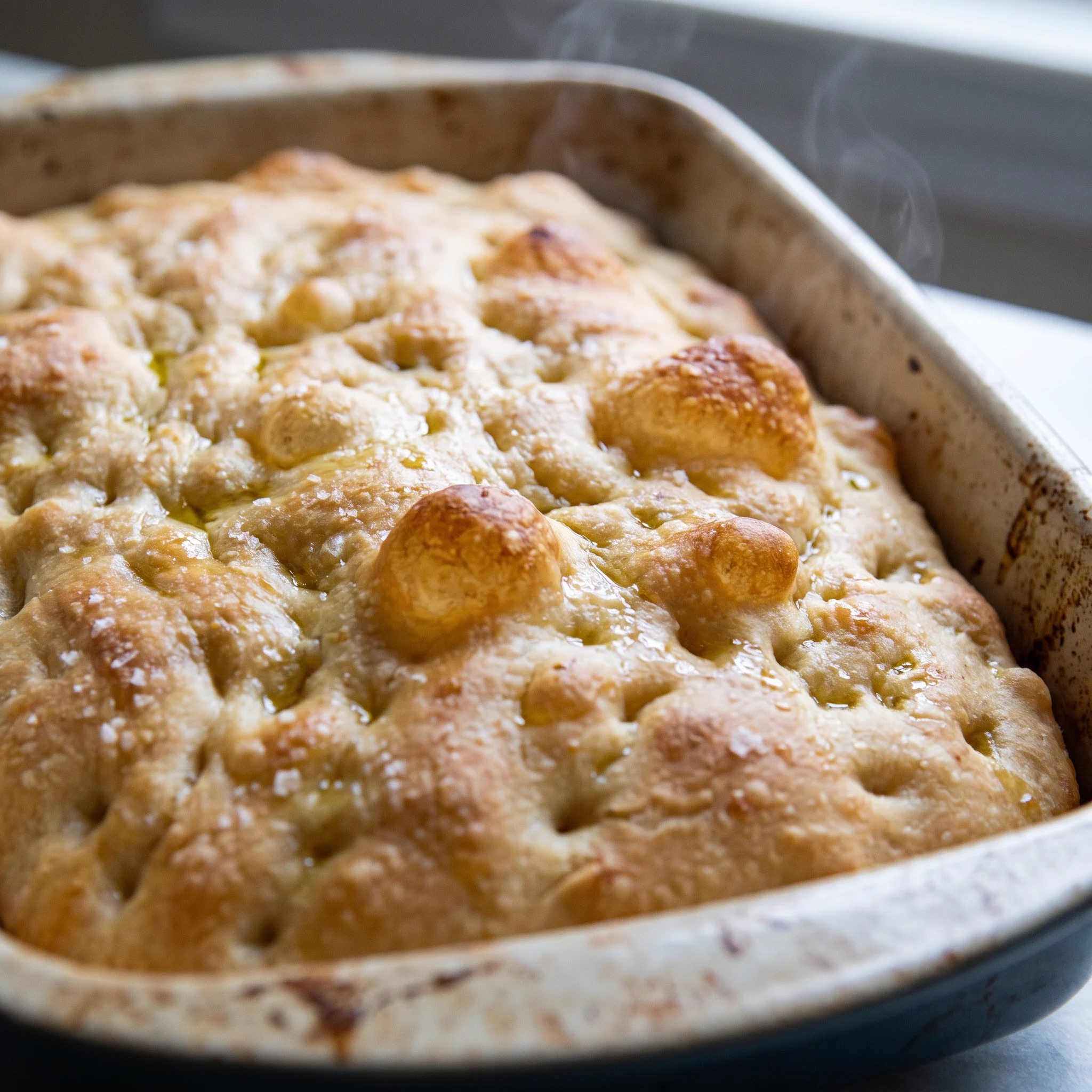
Heat oven to 425°F (220°C). Lightly oil your hands and, using all ten fingers, gently press into the dough to dimple and stretch it to nearly fit the pan. Sprinkle generously with flaky sea salt. Bake for about 25 minutes, or until golden all around. Remove the pan from the oven and transfer the bread to a cooling rack. Cool at least 20 minutes before slicing.