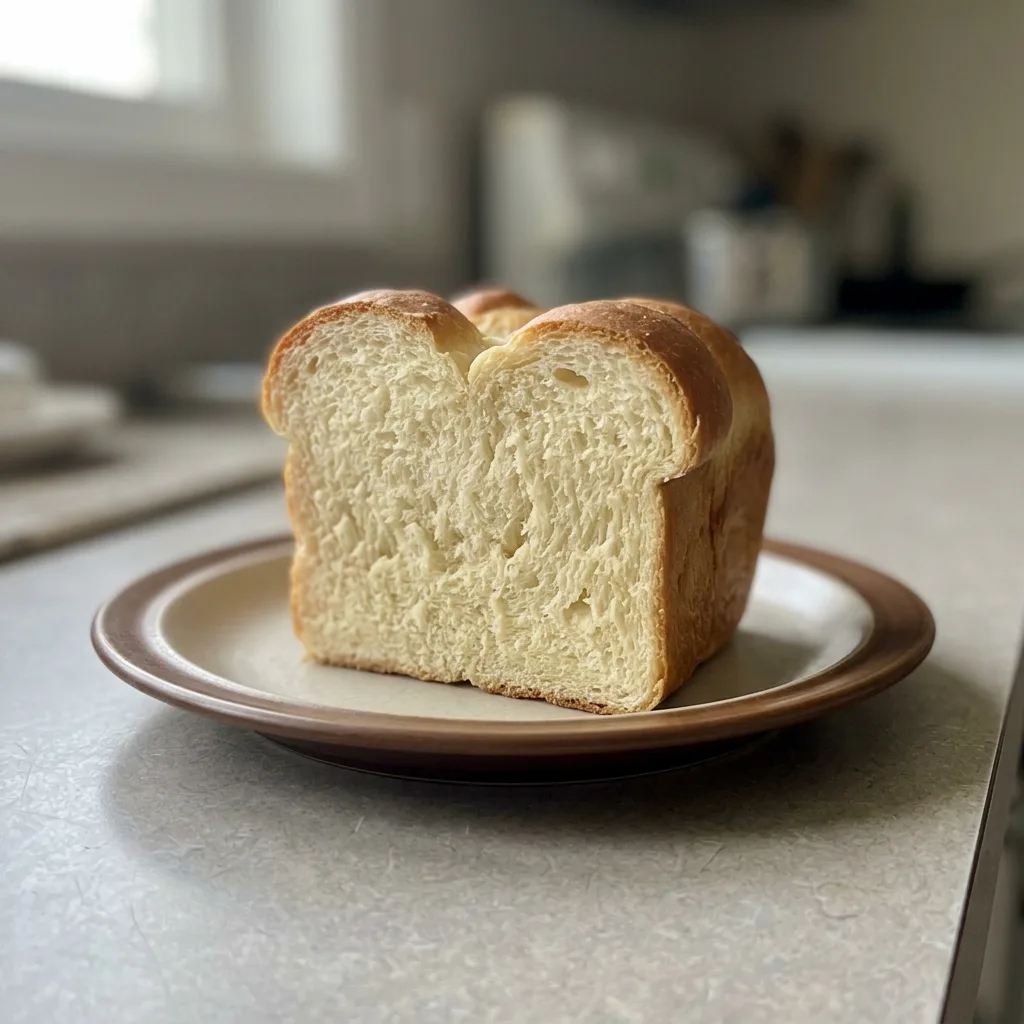
Ingredients
Method
Tangzhong
Whisk Tangzhong Base:
In a small saucepan, combine the water and bread flour, whisking until no lumps remain. Pour in the remaining milk and whisk again.Cook Tangzhong:
Set the saucepan over medium heat and whisk continuously until the mixture thickens to a pudding-like consistency.Cool Tangzhong:
Transfer the mixture to a bowl, press plastic wrap directly onto the surface to prevent a skin, and let it cool to room temperature.
Japanese milk bread dough
Activate Yeast:
In the mixing bowl, stir together the lukewarm milk and about 1 tsp of sugar until dissolved. Sprinkle the yeast over the milk and stir gently; let stand for 10-20 minutes until bubbly and frothy.Mix Dough Ingredients:
After the yeast activates, add the remaining sugar, dry milk powder, tangzhong, egg, flour, and salt. Stir with a spatula until a shaggy dough forms.Knead Dough Initially:
Using the dough hook on low speed (2-3), knead for 5 minutes. The dough will be very sticky but will come together.Incorporate Butter:
Add the softened butter in 3-4 portions, mixing for about 20 seconds between each addition. Scrape down the bowl as needed.Knead Until Smooth:
Once the butter is fully incorporated, increase the speed to medium (4-5) and knead for 5-7 minutes, scraping the bowl once or twice, until the dough is smooth, silky, and pulls away from the sides.First Rise:
Turn the dough out onto a lightly floured surface, shape into a ball, and return it to the bowl. Cover with plastic wrap and let rise in a warm spot until doubled, about 1-2 hours.Optional Refrigeration:
Optional: Refrigerate the dough for a couple of hours for easier handling, or slow-proof in the fridge for about 12 hours.Prepare Pans:
Butter a 4.5x8.5-inch loaf pan and dust with flour. For dinner rolls, butter a 9- or 8-inch square cake pan and dust with flour. Set aside.Degas Dough:
Turn the proofed dough onto a lightly floured surface and press to release all gas.
Japanese milk bread loaf
Shape Loaf Rolls:
For the loaf: Weigh the dough and divide into 4 equal portions. Roll each into a 6-inch square. Fold opposite corners toward the center, then roll up tightly from the pointed end, pinching the seam to seal. Place seam-side down in the loaf pan (4 rolls per pan). Cover with plastic wrap and let proof in a warm place until doubled and just below the pan rim, about 1-2 hours.
Japanese milk bread rolls
Shape Dinner Rolls:
For rolls: Divide the dough into 9 equal pieces. Roll each into a smooth ball and place in the square pan, spacing ¼-½ inch apart. Cover with plastic wrap and let proof in a warm place until doubled, about 1-2 hours.
Baking the bread
Bake Bread:
Preheat oven to 350°F (175°C). Brush the proofed bread with milk wash (matte crust) or egg wash (glossy crust). Bake loaf for 30-35 minutes, rolls for 20-30 minutes. If browning too quickly, tent with foil. Internal temperature should reach 190-205°F (88-96°C).Cool Bread:
Remove from oven and let cool in the pan for a few minutes, then turn out onto a wire rack to cool completely. Bread is easier to slice at room temperature but can be enjoyed warm.