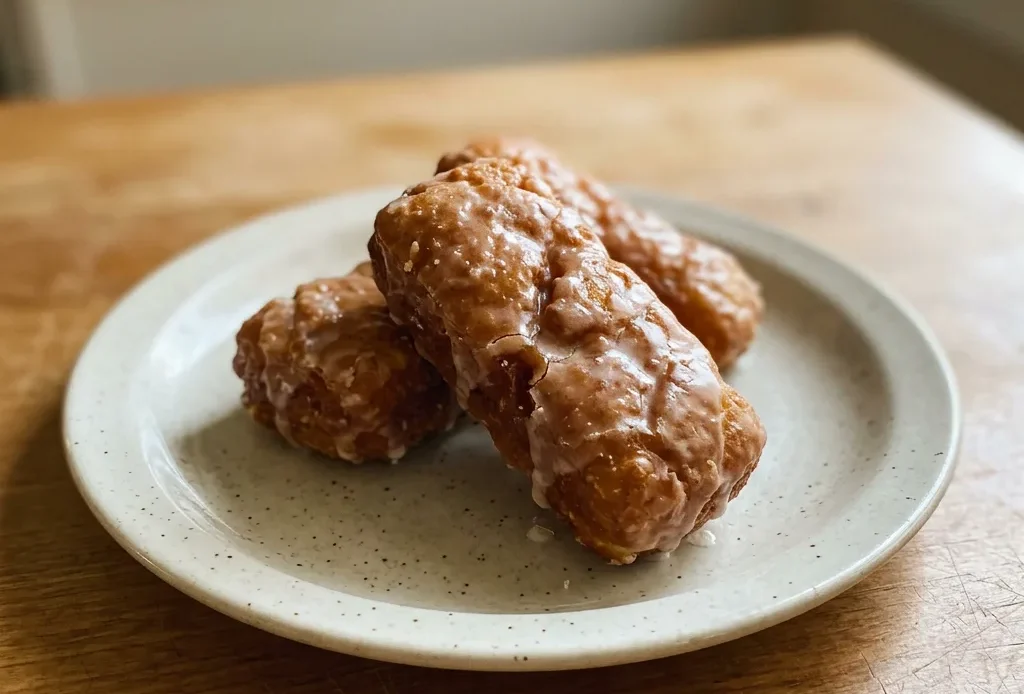
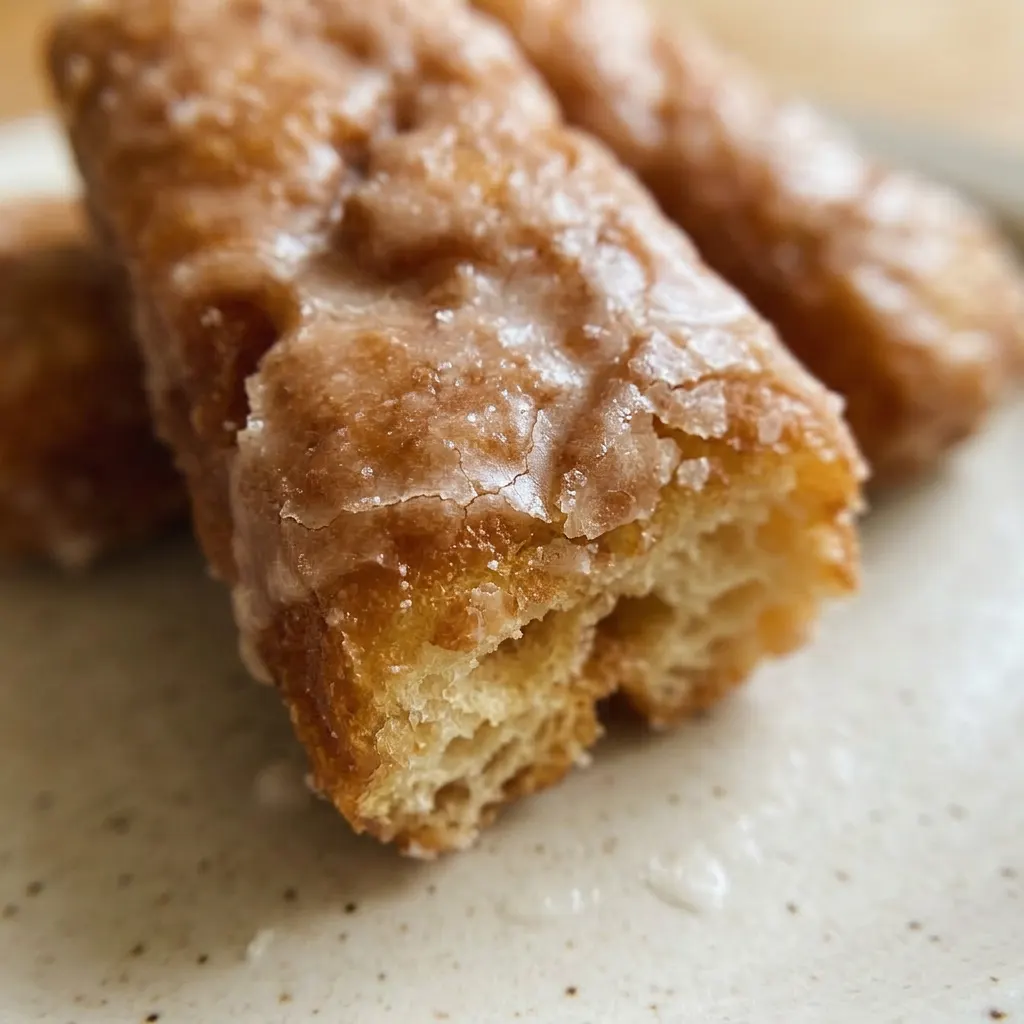
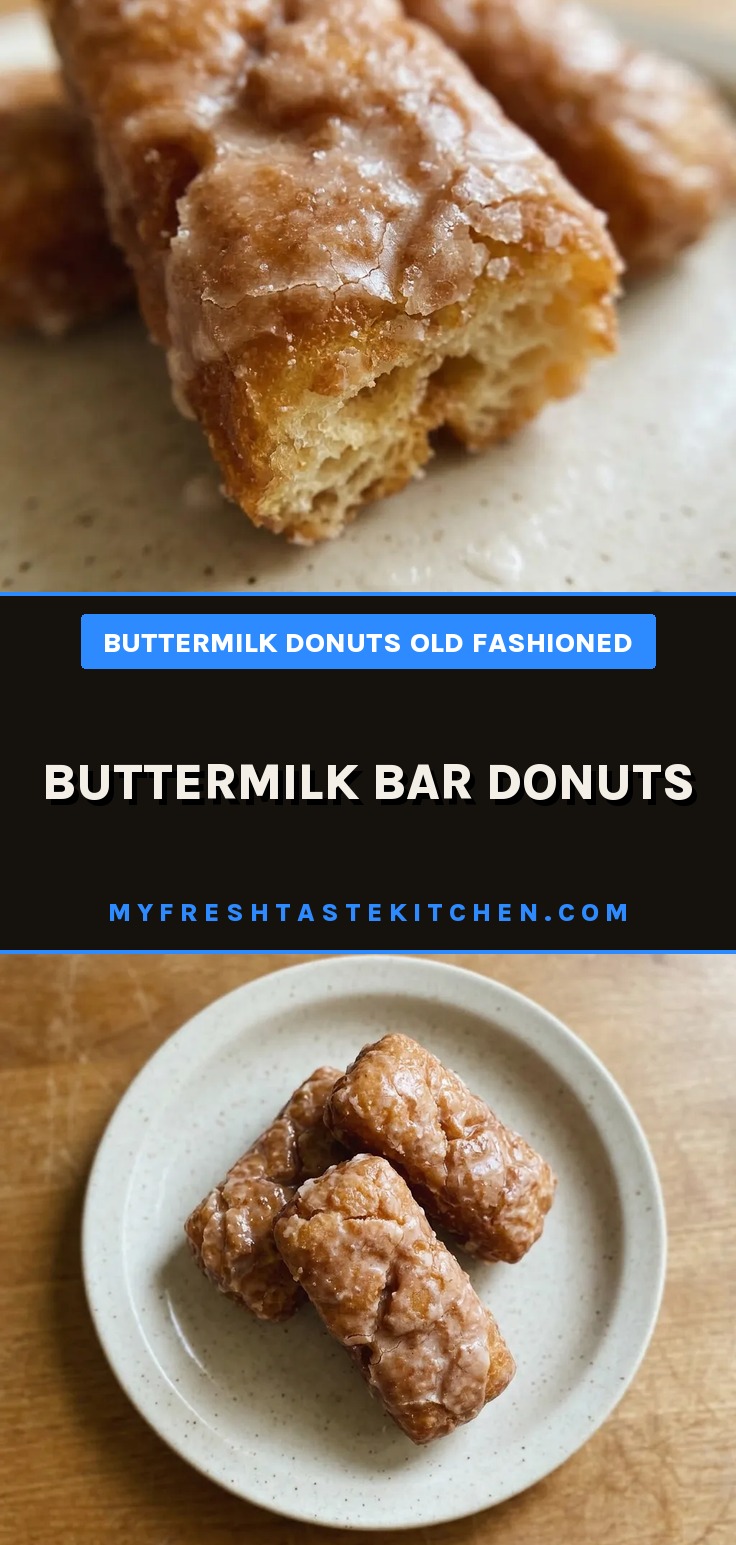
The trick with buttermilk bar donuts is getting that thin, shattering shell around a crumb that’s almost fluffy, not bready. Most cake donuts lean one way or the other, but these balance a crisp exterior with an interior that stays tender without being greasy. The secret isn’t just the fry temperature, it’s the chill time, the cake flour, and the shortening that keep the shape and texture right.
Slide a floured spatula under the sticky dough, lower it gently, and watch the oil do its work.
Buttermilk lifts the crumb
Buttermilk’s acidity reacts with the baking soda, producing carbon dioxide that gives these donuts their tender lift. Without that tang, the crumb would be denser and flatter. The acidity also cuts through the richness, leaving a clean finish that balances the sweet glaze.
You taste it as a subtle brightness, not sourness, just enough to keep each bite from feeling heavy. It’s the reason the texture stays soft and cakey, not bready.
Chill the dough, keep the shape
The dough starts soft and sticky, closer to a thick batter than a rollable dough. Chilling firms it up so you can handle it without drowning it in flour. Now I always chill the dough for at least 30 minutes, which firms it up so the bars hold their shape and don’t absorb excess oil.
Without that rest, the bars would spread into ragged disks in the hot oil. You want clean rectangles with a defined indent, and that only happens when the fat is solid enough to resist melting on contact.
Cake flour, not all-purpose
Cake flour has less protein than all-purpose, which means less gluten forms when you mix. Less gluten gives a tender, almost fluffy crumb instead of a chewy, bread-like bite.
You can feel the difference as you bite through the crisp shell: the interior is soft and fine, not tough or springy. That’s exactly what makes these taste like old-fashioned donuts, not dinner rolls.
A thin glaze that sets fast
This glaze uses only confectioners’ sugar, vanilla, and warm water, no butter or cream to soften it. The result is a thin, glossy coating that hardens into a crisp shell within minutes.
That shell shatters when you bite, contrasting with the tender crumb underneath. It doesn’t soak in or stay tacky; it dries to a clean, matte finish that holds up on the rack.
The sweetness is direct, letting the buttermilk tang come through.
Prep: 20 min · Cook: 5 min · Total: 55 min · Servings: 18 · Calories: 240 kcal
A few ingredients worth talking about
cake flour: Cake flour’s lower protein keeps the crumb tender, not chewy. All-purpose will make them bready.
vanilla bean paste: Paste gives a speckled look and deeper flavor, but extract works fine. Avoid imitation vanilla.
shortening: Shortening keeps the dough tender and helps the bars hold their shape during frying. Butter alone makes them spread.
buttermilk: Real buttermilk, not soured milk. The acidity is key for lift and tang; a thin cultured buttermilk works best.
confectioners’ sugar: Sift it before whisking the glaze. Lumps won’t dissolve in water and leave a gritty finish.
Fry them hot, drain them fast
Cream the fat and sugar
Beat the shortening, butter, sugar, and vanilla on medium until light and fluffy, about 3 minutes. You’ll see the mixture pale and increase in volume. Scrape the bowl well; any streaks of unmixed butter mean uneven rise.
Add yolks and buttermilk
One yolk at a time on low speed, scraping after each. The batter may look broken after the yolks, but it smooths out once the buttermilk goes in. Stop mixing as soon as the buttermilk is incorporated, overworking tightens the crumb.
Mix in dry ingredients
Add the flour mixture all at once and mix on low just until no dry streaks remain. The dough will be soft and sticky, like a thick batter. Fold any stray flour from the sides with a spatula.
Stop here; more mixing makes tough donuts.
Chill the dough
Cover the dough and refrigerate for at least 30 minutes. After chilling, the dough firms up to a rollable consistency. If it’s still too sticky to handle after 30 minutes, give it another 10.
You want it cold but not hard.
Shape the bars
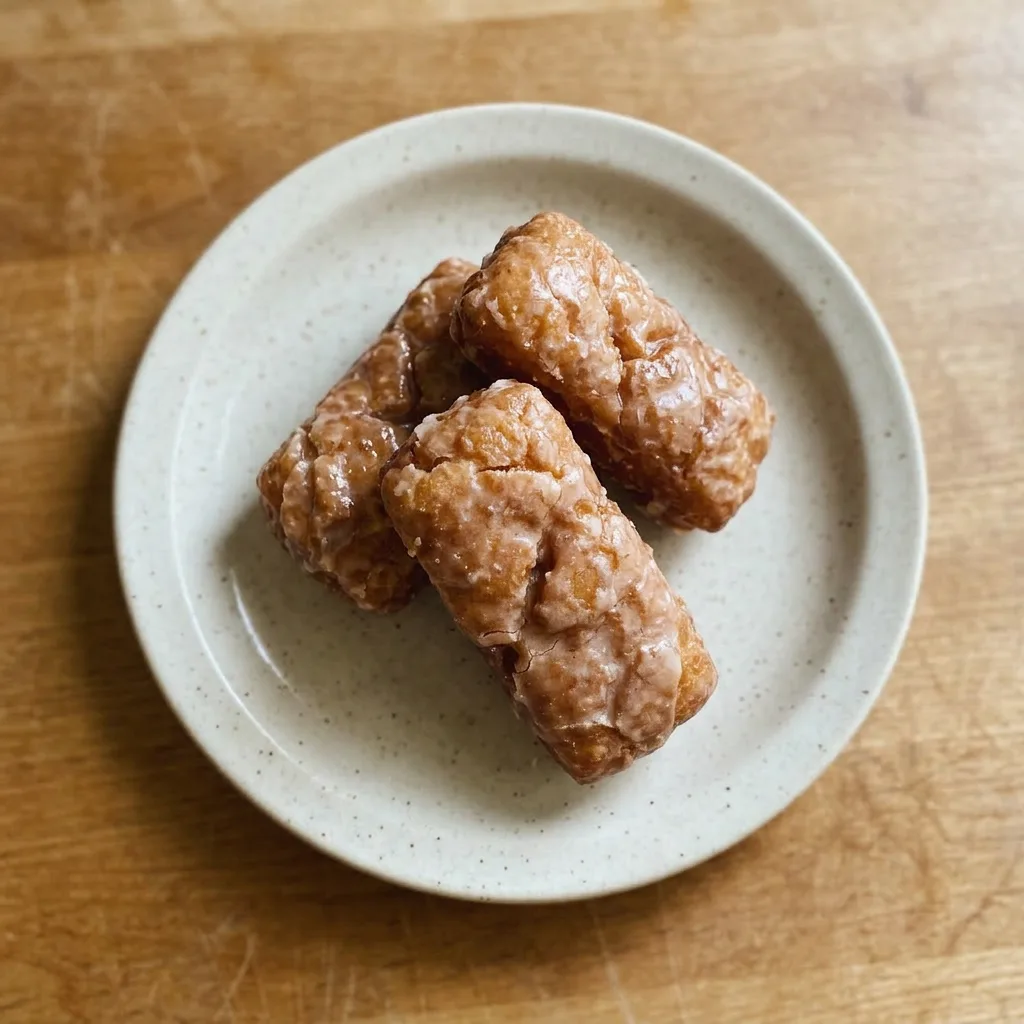
Dust your work surface and hands generously with flour. Pat the dough into a rectangle 1/2 inch thick, about 3 1/2 inches wide. Cut into bars 3 1/2 by 1 1/2 inches.
Press a shallow indent down the center of each bar with a floured bench scraper, this keeps the middle from puffing too much. Brush off excess flour before frying.
Heat the oil
Melt enough shortening to fill a heavy pot 2 inches deep. Heat to 350°F (175°C). If the oil smokes, it’s too hot; if it barely ripples when you drop in a test piece, it’s too cool.
Maintain that temp throughout.
Fry the bars
Carefully lower a bar into the oil, bottom side down. Fry 1 to 2 minutes per side until golden brown. The bars should sizzle gently; violent bubbling means the oil is too hot, no bubbles means too cool.
Fry in batches, not crowding, so the oil temperature stays steady.
Drain and cool
Transfer the fried bars to a rack lined with 4 layers of paper towels. They’ll be crisp on the outside and tender inside. Let them cool completely to room temperature before glazing, if they’re warm, the glaze will soak in and stay sticky.
Glaze and set
Whisk the confectioners’ sugar, vanilla, and warm water until smooth and glossy. Dip each bar top-side down into the glaze, then lift and let the excess drip off. Place on a rack and let set for 4 to 5 minutes.
The glaze will harden to a crisp, matte shell that shatters when you bite.
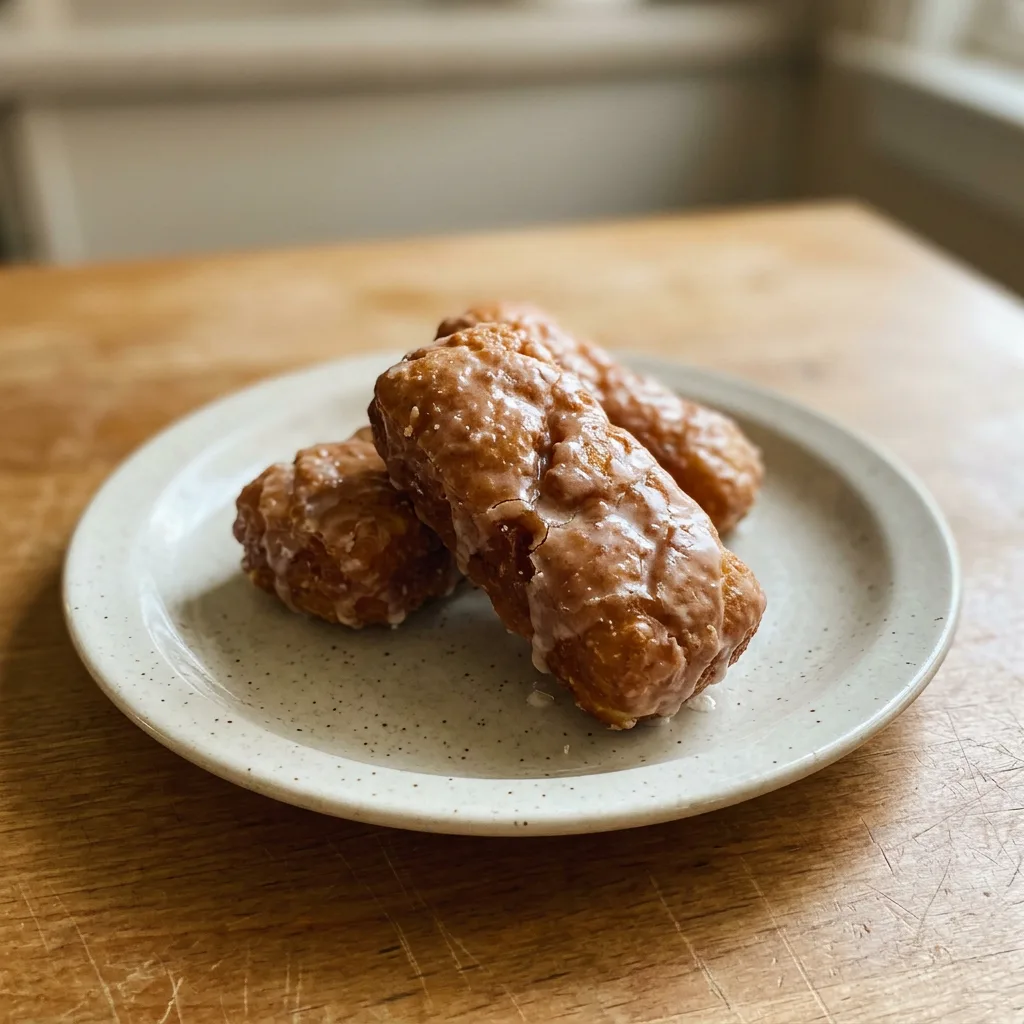
Buttermilk Bar Donuts
Ingredients
Method
Sift Dry Ingredients:
In a large bowl, sift or whisk together the cake flour, baking powder, baking soda, and salt.Cream Sugar and Fats:
Using a stand mixer with the paddle attachment, cream the sugar, vanilla, shortening, and melted butter on medium speed for about 3 minutes until light and fluffy. Scrape down the bowl with a rubber spatula.Add Egg Yolks and Buttermilk:
Reduce mixer speed to low and add the egg yolks one at a time, scraping the bowl after each addition. Pour in the buttermilk and mix until fully incorporated.Mix Dough and Chill:
On low speed, add the dry ingredients all at once and mix just until combined. Use a spatula to fold in any remaining flour from the sides. Transfer the sticky dough (similar to a cross between cookie dough and cake batter) to a clean bowl, cover, and refrigerate for 30-60 minutes (at least 30 minutes).Shape and Cut Bars:
Dust a work surface and your hands generously with flour. Place the chilled dough on the floured surface and roll it gently to coat. Pat into a rectangle about 1/2 inch thick and 3 1/2 inches wide, adding more flour as needed. Using a floured bench scraper, cut the rectangle into bars measuring 3 1/2 by 1 1/2 by 1/2 inches. Re-flour the scraper and lightly press it down the center of each bar to create a shallow indent. Brush off excess flour with a pastry brush.Heat Frying Oil:
In a large heavy pot, melt 6 cups of shortening (about 2 inches deep) and heat to 350°F (175°C) over medium-high heat, using a candy thermometer to monitor.Prepare Cooling Rack:
Prepare a cooling rack lined with 4 layers of paper towels.Fry Bars Until Golden:
Once the oil reaches 350°F (175°C), dust a thin metal spatula with flour and carefully lower a bar into the oil, bottom side down. Fry for 1-2 minutes, then flip and fry another 1-2 minutes until golden brown. Transfer to the prepared rack.Cool Fried Bars:
Allow the fried bars to cool completely to room temperature before glazing.
Make Vanilla Glaze:
For the glaze, whisk together the sifted confectioners’ sugar, vanilla paste, and warm water until smooth and glossy.Glaze and Set Bars:
Dip each bar top-side down into the glaze, then place on a cooling rack for about 4-5 minutes until the glaze sets.
How swapping affects the crumb
cake flour: All-purpose flour. More gluten forms, making the donuts chewy and bread-like instead of tender. The interior loses that fine, crumbly texture.
If you must swap, use 1 cup minus 2 tablespoons per cup of all-purpose and add 2 tablespoons cornstarch to approximate cake flour, but the result won’t be the same.
buttermilk: Whole milk + lemon juice (3/4 cup milk + 2 tsp lemon juice, let sit 5 min). The acidity is weaker, so the rise is less, the crumb denser. The tang is muted.
The donuts still taste good but miss the signature lift and brightness.
shortening: All butter (2 tbsp extra butter instead of shortening). Butter has water, so the dough spreads more during frying.
The bars lose their clean rectangle shape and may puff unevenly. The texture is slightly less tender.
vanilla bean paste: Pure vanilla extract (same amount). No visible specks, slightly less intense flavor, but the donuts still taste vanilla-forward. Imitation vanilla gives a harsh, artificial note.
Storage and Serving
Glaze these bars only when you plan to serve them. The glaze sets to a crisp shell that softens within hours, so any glazed bar past 4 to 6 hours loses that shatter. Serve unglazed bars within 2 days at room temperature in an airtight container; after that the crumb dries.
Don’t refrigerate: the fridge pulls moisture from the cake, making it stale faster. For longer storage, freeze unglazed bars.
Wrap each in plastic, then foil, and freeze up to 1 month. Thaw at room temperature still wrapped, then glaze just before serving.
The glaze won’t freeze well; it turns tacky and loses its set. Fry and store unglazed, then glaze on the day you eat.
Tips
- Dust the spatula with flour before lowering each bar into the oil to prevent the sticky dough from adhering and tearing as it releases.
Frequently Asked Questions
Can I make the dough ahead and fry later?
Yes, you can chill the dough up to 24 hours before frying. Wrap it tightly in plastic so it doesn’t dry out, then proceed with shaping and frying straight from the fridge. The longer rest actually makes the bars easier to handle and less likely to absorb oil.
Why did my donuts turn out greasy?
Greasy donuts usually mean the oil was too cool, so the bars sat in the fat too long before browning. Keep the shortening at 350°F and fry in small batches so the temperature doesn’t drop. Also, brush off excess flour before frying, flour in the oil makes the coating greasy.
How do I know when the oil is at the right temperature without a thermometer?
Drop a small scrap of dough into the oil. If it sinks to the bottom and stays there, the oil is too cold. If it bubbles vigorously and browns within 30 seconds, it’s too hot.
You want it to sizzle gently and rise to the surface, turning golden in about 1 minute.
Can I bake these instead of frying?
You can bake them, but the texture and shape will be completely different, more like a soft cake bar than a crisp, old-fashioned donut. Bake at 375°F for 10 to 12 minutes until golden, but expect a denser crumb and no shatter from the glaze. The indent won’t hold as well either.
What’s the difference between these and classic round donuts?
These are rectangular bars with a shallow indent down the center, which controls the puff so the middle stays tender, not domed. The shape also gives a higher crust-to-crumb ratio, so each bite has more of that crisp shell. Round donuts have a hole for even cooking, while these rely on the indent.
