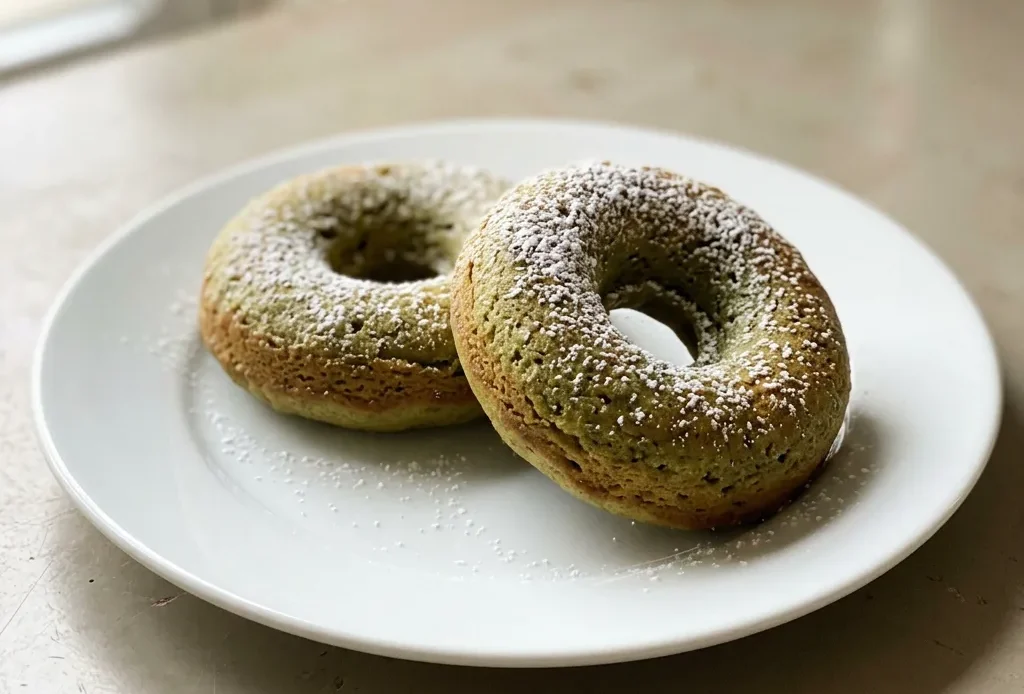
Baked donuts have a reputation for being dense and dry, but matcha donuts sidestep that trap. The batter relies on a careful balance of fat and liquid to keep the crumb tender, and matcha’s natural bitterness actually works in your favor, it makes the donut taste less sweet than it is, so you can use enough sugar to keep the texture soft without cloying. The real trick is in the mixing: overwork the batter, and you’ll get tough rings instead of light ones.
These are not quick to throw together on a whim; the batter is forgiving but not careless, and the donut pan needs thorough greasing or you’ll lose half the batch to sticking. But when they come out right, the crumb is fine and even, with a clean green color that doesn’t fade.
Baked, not fried
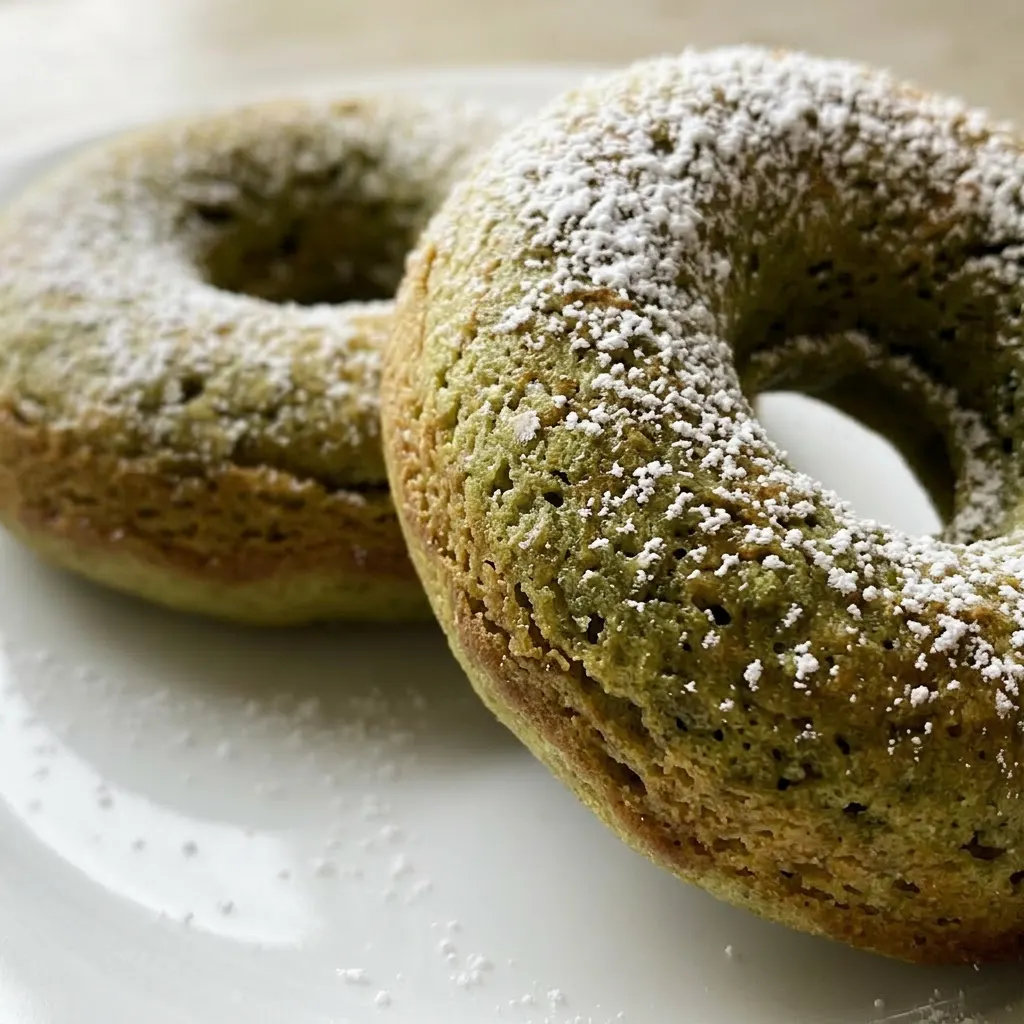
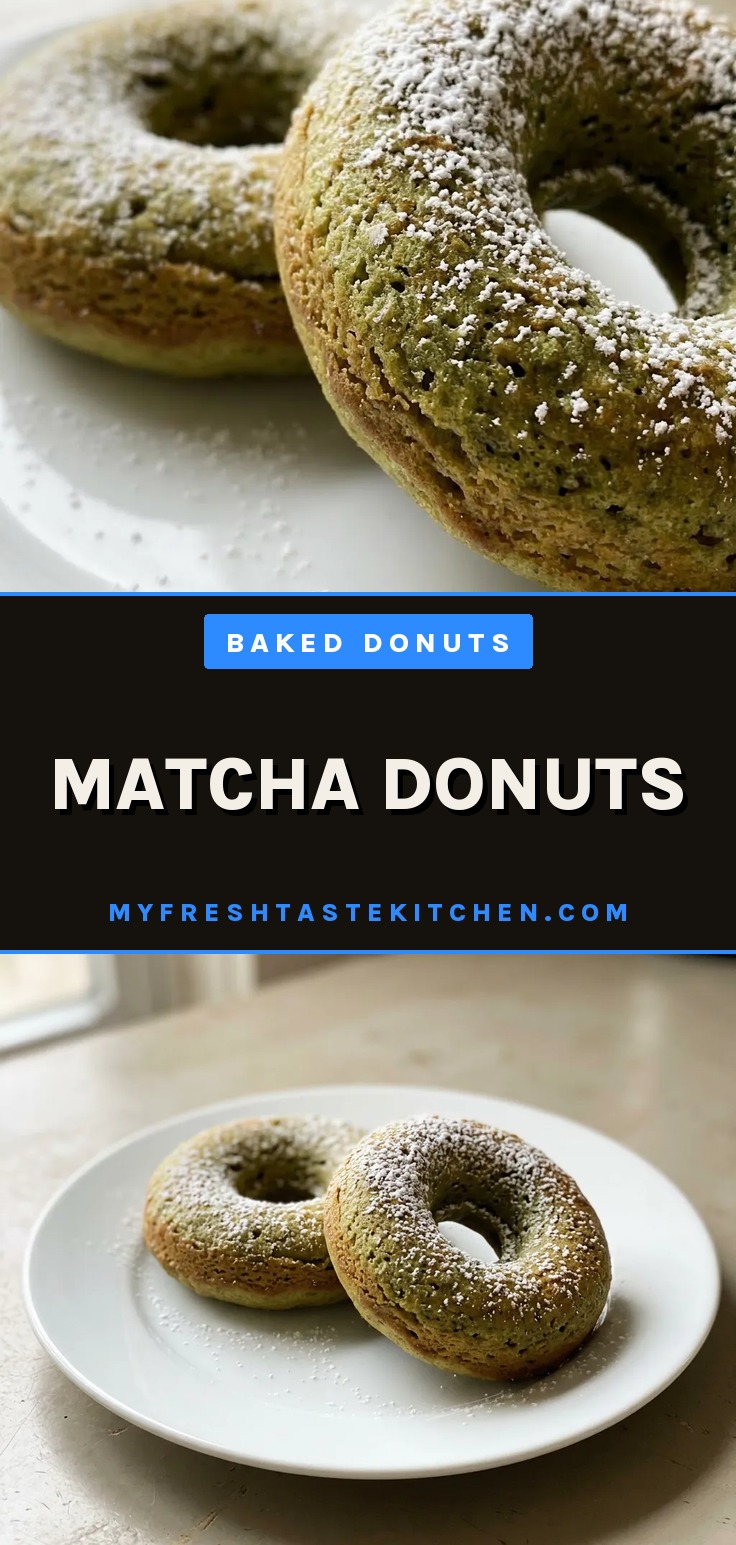
Frying donuts gives them a greasy, crispy shell. Baking does the opposite: a tender, cake-like crumb that’s light and uniform. The batter rises gently in the oven, producing a soft interior without the oil soak.
Matcha’s delicate, grassy flavor survives better when it’s not competing with fryer oil. You get a clean taste, not a heavy one.
Plus, baking is simple: no deep pot, no thermometer, no splatter. Home cooks can pull these off in any kitchen without the mess.
The result is a donut that feels more like a muffin with a hole, but that’s exactly what you want here.
Balancing matcha’s bitterness
Matcha brings an earthy, slightly bitter edge that can be jarring on its own. Sugar counters that directly: the sweetness makes the bitterness read as complexity, not harshness.
Fat from the eggs and oil rounds out the rough corners, adding richness that coats your tongue. The bitterness doesn’t disappear, it lingers after the sugar fades, giving the donut a subtle finish. Sifting the matcha with the flour and sugar beforehand is key: clumps of powder would concentrate bitterness in spots, throwing the balance off.
Even distribution means every bite tastes the same.
Why you need a donut pan
A donut pan does two things a muffin tin can’t: it creates the hole and bakes the batter evenly from both the inner and outer walls. That hole lets heat reach the center, so the donut cooks through without a raw core. Skip the pan, and you’ll get squat discs that brown unevenly.
Greasing thoroughly is critical, these pans have narrow crevices where batter sticks, and a stuck donut tears apart. The result is a clean ring with a golden crust all around, exactly the shape and texture the recipe aims for.
Servings: 12 · Calories: 130 kcal
Matcha: quality and form matter
Matcha powder: Use grade matcha, not ceremonial. It’s less expensive and holds up to baking without turning muddy.
Baking powder: Check your baking powder is fresh. Old powder won’t lift the batter, and you’ll get flat, dense donuts.
One batch came out with green speckles and harsh bitter spots. I realized I had just whisked the matcha in without sifting.
Mixing the batter right
Sift dry ingredients
Whisk flour, sugar, baking powder, salt, and matcha in a bowl. Clumps of matcha will leave bitter pockets, so break them up thoroughly.
Combine wet ingredients
In a separate bowl, whisk milk, eggs, oil, and vanilla until smooth. The mixture should be uniform, no streaks of egg white.
Fold wet into dry
Pour the wet mix into the dry and stir gently with a spatula until just combined. Stop as soon as no dry flour remains, overmixing makes tough donuts.
Fill the pan
Transfer batter to a piping bag (or zip-top bag with corner snipped) and pipe into greased donut cavities, filling each about 2/3 full. Don’t overfill or they’ll lose the hole.
Bake until done
Bake at 350°F for 10 to 12 minutes. The donuts are ready when a toothpick inserted into the thickest part comes out clean, and the edges are lightly golden.
Cool completely
Let donuts rest in the pan for 5 minutes, then transfer to a wire rack. If you try to remove them too early, they’ll stick and tear.
Matcha Donuts (Baked, Easy Recipe)
Ingredients
- 1 1/2 cups all-purpose flour 188 g
- 1/2 cup granulated sugar 100 g
- 1 1/2 tsp baking powder
- 1/4 tsp salt
- 2 tsp matcha powder
- 1/2 cup milk (or plant-based alternative) 120ml
- 2 large eggs
- 1/4 cup vegetable oil 60ml
- 1 tsp vanilla extract
- Powdered sugar for dusting (optional)
Instructions
Preheat Oven and Grease Pan:
Heat oven to 350°F (175°C). Coat a donut pan with grease.Whisk Dry Ingredients Together:
In a big bowl, mix flour, sugar, baking powder, salt, and matcha powder with a whisk.Combine Wet Ingredients:
In another bowl, combine milk, eggs, oil, and vanilla using a whisk.Mix Wet into Dry:
Add the liquid mix to the dry mix and stir until smooth and just blended.Fill Donut Cavities:
Evenly pour the batter into the donut cavities.Bake Until Golden:
Bake for 10-12 minutes, until golden and a toothpick inserted comes out clean.Cool in Pan Then Rack:
Let donuts rest in the pan for several minutes, then move to a wire rack to fully cool.Dust with Powdered Sugar:
After cooling, sprinkle powdered sugar on top if desired.
Storage and Serving
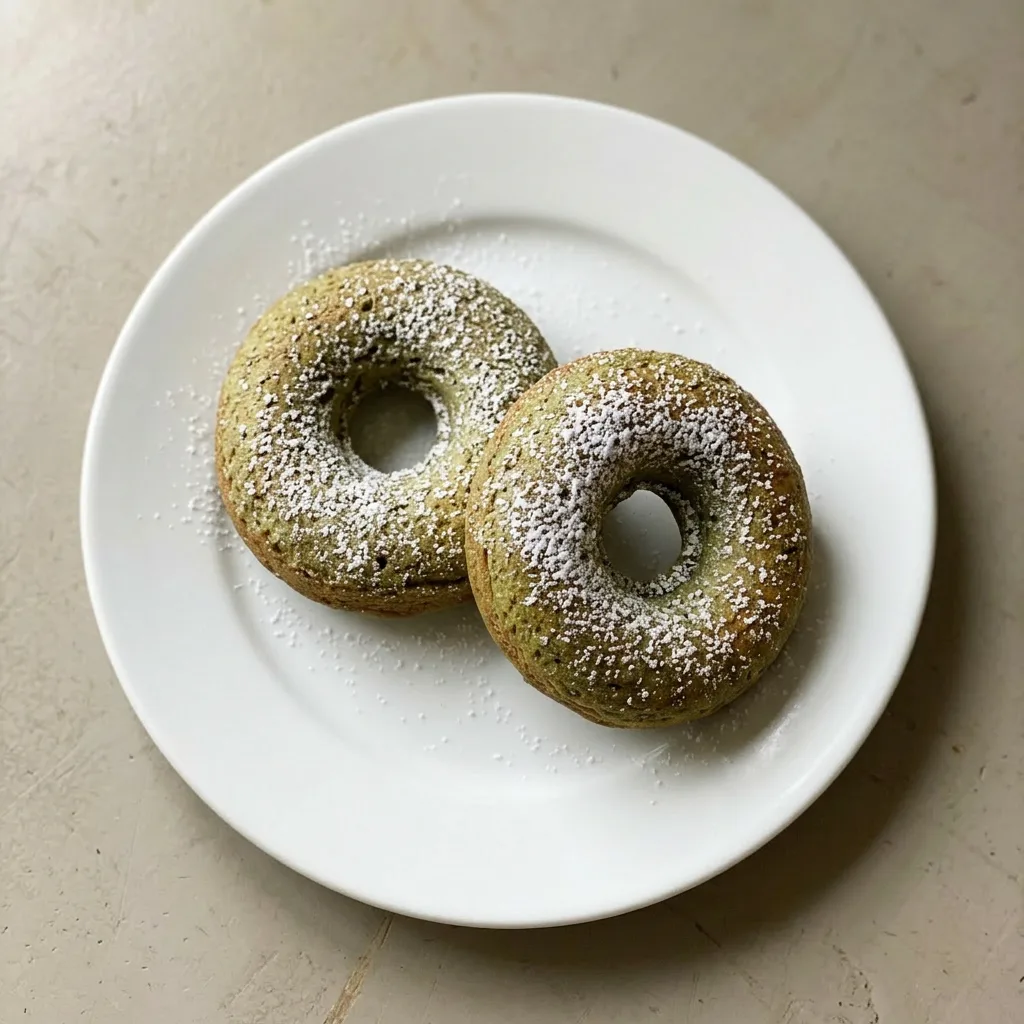
These donuts are best the day you bake them. The crumb is soft and tender, with a light spring.
After a day at room temperature in an airtight container, they soften further, becoming more like a dense cake. For the freshest texture, eat within 24 hours. If you wait longer, the donuts will still be edible but the delicate crumb loses its structure.
You can refrigerate them in a sealed container for up to 4 days, but they’ll firm up. Bring them to room temperature or microwave for 10 seconds to soften slightly. Freezing is not recommended because the texture turns gummy upon thawing.
If you must freeze, wrap individually in plastic wrap and place in a freezer bag for up to 1 month, but expect a denser, moister crumb. Dust with powdered sugar just before serving. If you dust ahead, the sugar dissolves into the surface within an hour, so wait until you’re ready to eat.
Swap flour or sugar, but keep matcha as is
all-purpose flour: gluten-free 1-to-1 baking blend (with xanthan gum). The donuts will be slightly more tender and may brown a bit faster. Check at 10 minutes.
Without xanthan gum, they’ll crumble apart.
granulated sugar: coconut sugar (or another unrefined granulated sweetener). Coconut sugar makes the crumb darker and adds a faint caramel note that competes with matcha. The donuts will be less sweet, taste the batter and add a tablespoon more if needed.
milk: unsweetened almond milk, oat milk, or soy milk. No change in texture.
Oat milk adds a subtle sweetness; almond milk is neutral. Avoid canned coconut milk, it’s too thick and fatty for this batter.
matcha powder: none. Matcha is the whole point.
Swap it, and you lose the color and flavor these cake donuts are named for. Leave it as is.
Tips
- When piping the batter into the donut pan, hold the piping bag vertically and squeeze from the top, not the tip, this gives you better control and prevents air pockets that cause uneven holes.
Frequently Asked Questions
Can I make these donuts ahead of time and store them?
These are best the day you bake them. After a day in an airtight container at room temp, the crumb softens and becomes more like a dense cake. For the freshest texture, eat within 24 hours.
You can refrigerate for up to 4 days, but they’ll firm up; bring to room temp or microwave 10 seconds. Freezing is not recommended because the texture turns gummy upon thawing.
Why did my donuts turn out dense instead of light and fluffy?
Most likely you overmixed the batter after adding the wet ingredients. Stir just until no dry flour remains, overmixing develops gluten and deflates the air bubbles from the baking powder, turning the crumb tough. Also check that your baking powder is fresh; old powder won’t provide enough lift, and you’ll get flat, dense donuts.
How is this baked matcha donut different from a traditional fried donut?
Baking produces a tender, cake-like crumb that’s light and uniform, without the greasy, crispy shell of frying. The matcha flavor comes through cleanly, not competing with fryer oil.
The texture is closer to a muffin with a hole, soft inside with a golden crust all around. No deep pot, no thermometer, no splatter: it’s simpler and the result is a donut that feels like a baked good, not a fried one.