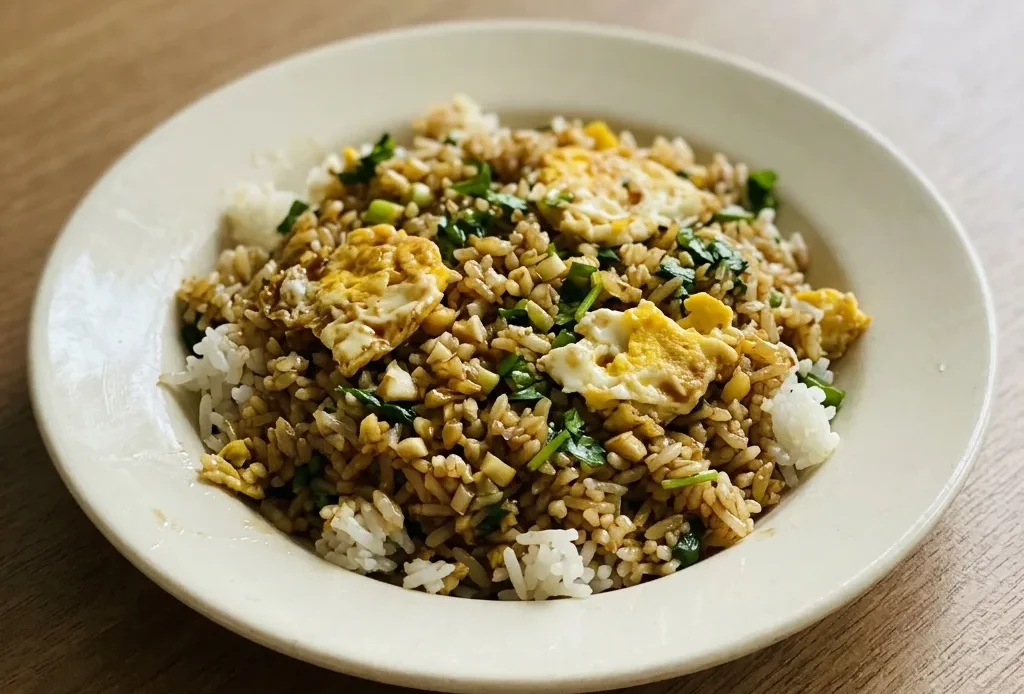
The gimmick, pouring smoking oil over raw aromatics, isn’t a gimmick. It’s the fastest way to get the deep, layered flavor of a slow-simmered sauce without actually simmering anything. The trick is timing: hit the garlic and scallion with oil just at the first wisp of smoke, and you’ll hear a sustained sizzle that releases their fragrance in seconds.
Miss that window and the bowl falls flat. This ban fan simple chinese mixed rice bowl proves that a 5-minute cook can taste like you spent all morning over the stove, but only if you get the oil hot enough to bloom, not burn.
Why does pouring hot oil over aromatics release so much flavor without cooking them longer?
Layering garlic, scallion, and cilantro in a bowl and hitting them with oil just shy of smoking does more in five seconds than a pan can in two minutes. The sudden heat volatilizes the aromatic compounds without giving them time to burn or turn bitter. You hear the sizzle, you smell the punch.
The garlic’s raw edge softens, the scallion sweetens, and cilantro keeps its fresh note. Because the oil is poured, not stirred, the aromatics bloom in place, each layer contributing its own hit. This method is faster and more fragrant because the smoke-point heat hits everything at once.
The result is a heady, layered perfume that infuses the entire bowl.
How does the sauce-to-rice ratio keep the bowl balanced, not soggy?
For one cup of cooked rice, the recipe calls for 1 tablespoon each of oyster sauce and light soy sauce plus ½ teaspoon sugar. That’s enough liquid to season every grain without drowning it.
The sauce is layered under the aromatics so it doesn’t hit the rice directly until you stir. Meanwhile, the hot oil and eggs work as coatings, oil clings to each grain, and the egg adds moisture in a controlled way.
When you mix, the sauce spreads evenly, the fats emulsify, and the rice stays separate, never clumpy or wet. The bowl tastes saucy but feels dry to the touch.
Why cook the eggs in the same pan after pouring the oil?
That same saucepan holds residual oil and the faint aroma of the aromatics you just poured over. Cooking the eggs there picks up those traces, the eggs absorb a whisper of garlic and scallion without needing extra seasoning.
The eggs also serve as the protein that binds the rice and sauce together. When stirred in, their richness coats every grain, linking the savory soy mixture to the fluffy rice. You get a cohesive bowl where each component pulls its weight, not separate bites of egg, rice, and sauce.
The pan does double duty: the flavor lingers from the oil pour, and the eggs become the glue.
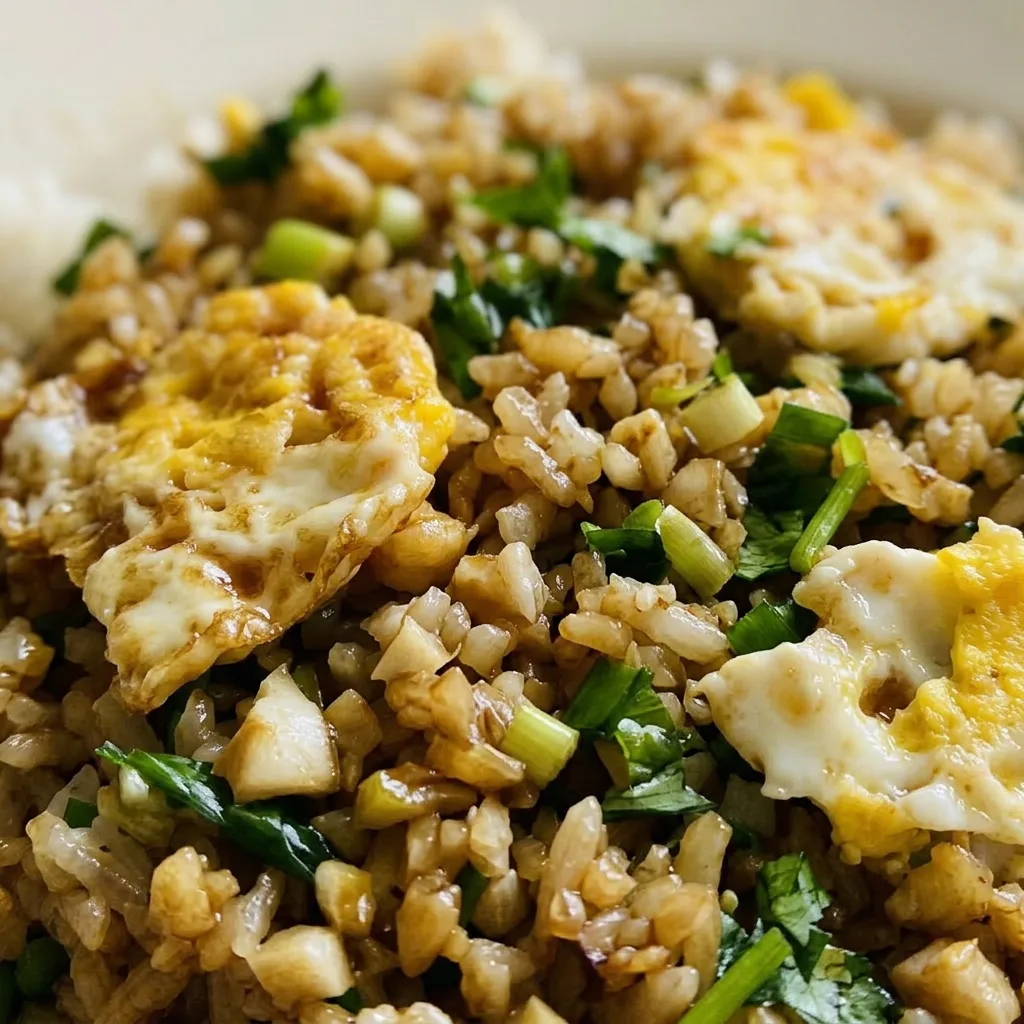
Prep: 10 min · Cook: 5 min · Total: 15 min · Servings: 1 · Calories: 620 kcal
A few things to know about the ingredients
Oyster sauce: Use a thick, dark brand like Lee Kum Kee; thin sauces won’t coat the rice.
Light soy sauce: Go for a naturally brewed one; the flavor is cleaner and less salty.
Garlic: Mince it fresh, not jarred. A heaping tablespoon means a generous pile.
Scallion and cilantro: Both should be fresh, not wilted. Chop them finely so they bloom quickly in hot oil.
Vegetable oil: Use a neutral oil with a high smoke point, like canola or grapeseed.
Cooked rice: Day-old rice works best. It’s drier and stays separate when stirred.
Layer the bowl before the oil pour, not after.
Set up the bowl
Stack oyster sauce, soy, sugar, garlic, scallion, cilantro in that order in a heatproof bowl. This layering lets the hot oil hit each aromatic directly, no stirring needed.
Heat the oil until it shimmers
Warm 2 tablespoons oil in a small saucepan over medium-high. Watch for the first wisp of smoke; that’s your cue. Too soon?
The sizzle is weak. Too late? The aromatics scorch.
Pour and sizzle
Immediately pour the smoking oil over the aromatics. You want a loud, sustained sizzle, that means the oil is hot enough to bloom the garlic and soften scallion without burning. If the sizzle fades fast, your oil wasn’t hot enough.
Cook the eggs in the same pan
Crack both eggs into the still-warm saucepan. The residual oil and faint garlic scent will cling to the eggs.
Cook sunny-side up or over easy, whites set, yolk still runny. The yolk becomes the sauce when stirred.
Assemble and mix
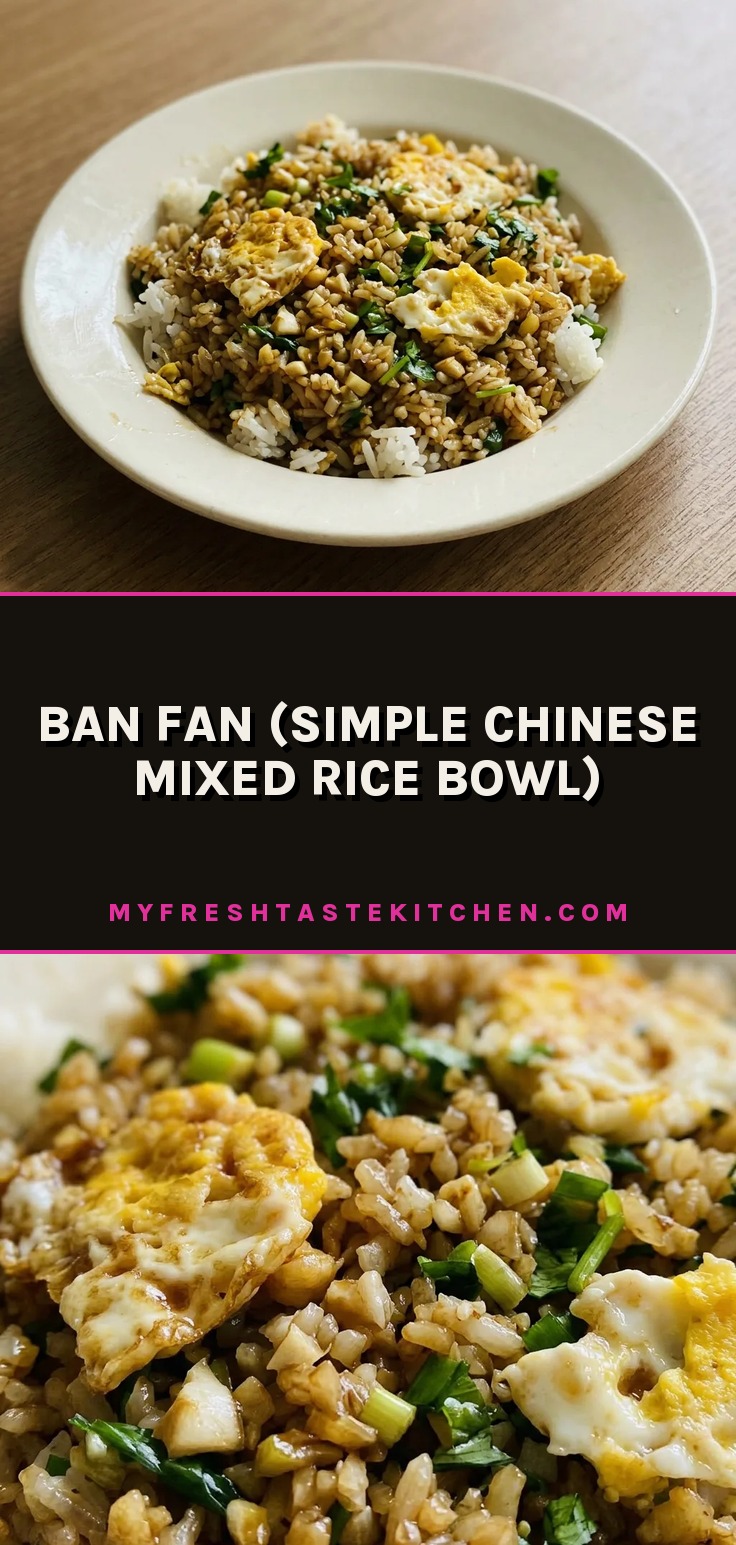
Scoop the hot rice into the bowl, then lay the eggs on top. Stir thoroughly, the oil, sauce, and yolk coat every grain.
The rice should look glossy, not wet. If you see pools of liquid, you didn’t mix enough.
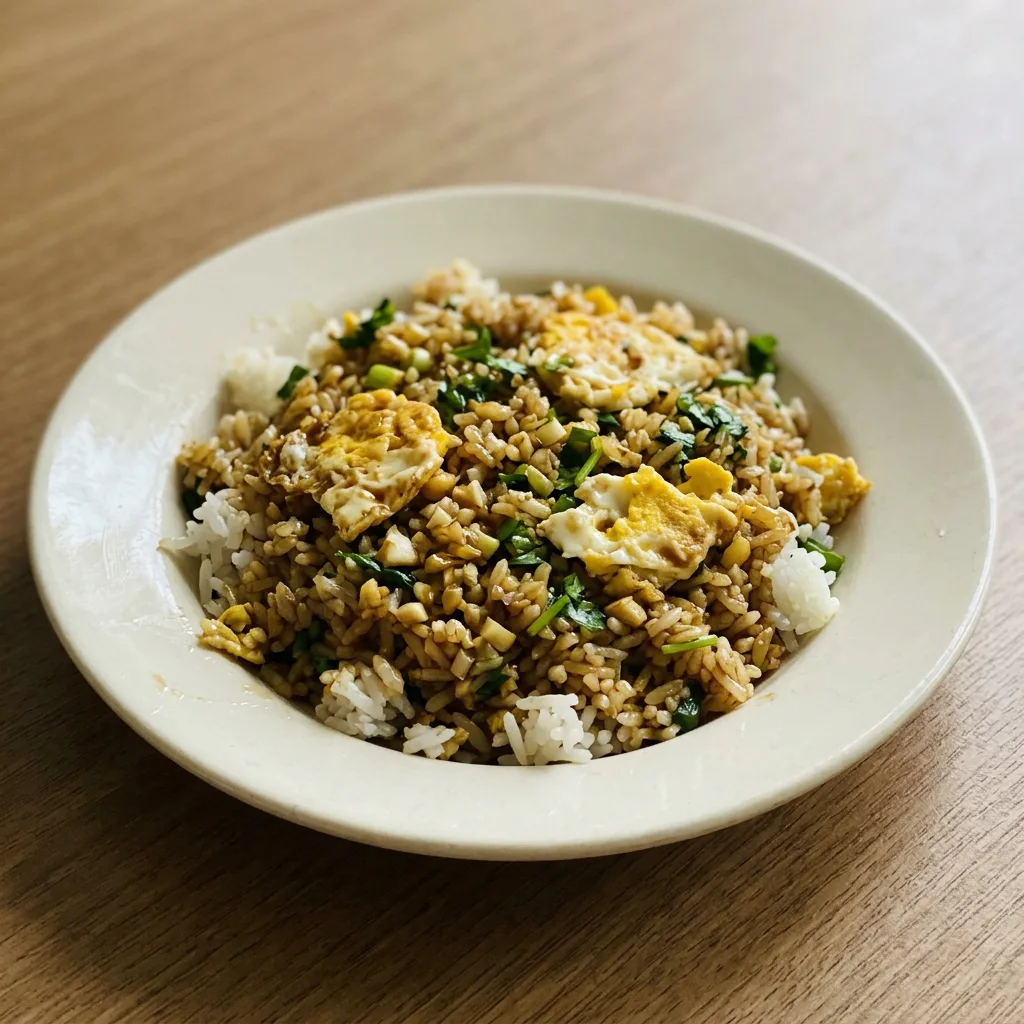
Ban Fan (Simple Chinese Mixed Rice Bowl)
Ingredients
Method
Layer aromatics in bowl:
In a medium heatproof bowl, layer the oyster sauce, light soy sauce, sugar, garlic, scallion, and cilantro in that sequence. For multiple servings, scale the ingredients and set up the corresponding number of bowls.Heat oil until smoking:
In a small saucepan, warm the oil until it begins to smoke. For multiple servings, scale the oil and heat all together.Pour oil over aromatics:
Pour the smoking oil over the aromatics and hear the sizzle.Cook eggs and serve:
In the same saucepan, cook the eggs. Place the hot rice into the bowls, put the eggs on top, stir thoroughly, and serve.
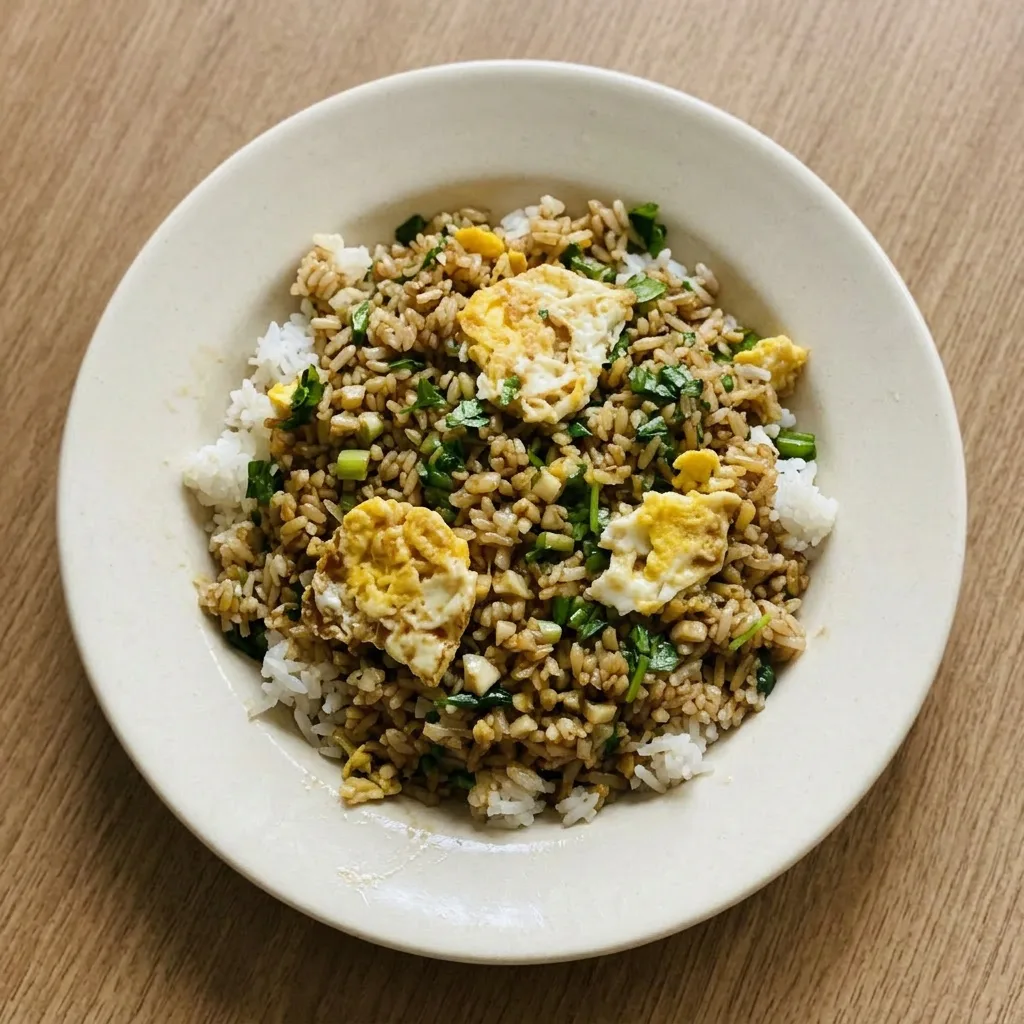
Swap the oyster sauce, keep the oil-pour technique
Oyster sauce: Mushroom stir-fry sauce (vegetarian oyster sauce). Thinner than oyster sauce, so start with the same 1 tablespoon but expect a slightly less clingy coating on the rice. The savory depth stays close.
Eggs: Firm tofu, cubed and pan-fried in the same residual oil until golden. Loses the runny yolk that binds the bowl. The rice will feel drier; compensate by adding an extra teaspoon of oil or a splash of hot water when mixing.
Scallion: Fresh chives, chopped finely. Chives are milder and more delicate; they’ll soften under the hot oil but won’t sweeten the same way. The bowl loses a layer of allium sweetness, but the garlic-cilantro base still carries the aroma.
Storage and Serving
This bowl is best eaten right after mixing, while the rice is hot and the yolk still runny. The sauce and oil coat each grain, and the eggs bind everything together. Within 2 hours, the rice starts absorbing the sauce, turning softer and less distinct.
If you need to store leftovers, transfer the bowl to an airtight container and refrigerate for up to 1 day. The texture will soften further as the rice continues to soak up liquid.
To reheat, add a splash of water and microwave or stir fry until steaming. The water restores moisture and loosens the grains.
Do not freeze the assembled bowl; the eggs and rice both suffer in texture. You can freeze cooked rice separately, then thaw and reheat before assembling fresh.
The aromatics are best added fresh.
Tips
- Use day-old rice that has been refrigerated uncovered for a few hours to let surface moisture evaporate. Freshly cooked rice is still steaming and sticky; when mixed with the oil and sauce, it clumps into a starchy mass instead of staying separate. Day-old grains have a firmer surface that resists absorbing the sauce too quickly, so each grain stays distinct.
- If you only have freshly cooked rice, spread it on a baking sheet and let it cool uncovered for 10 minutes before using. This lets steam escape and firms up the exterior. Then fluff it with a fork to break up clumps before adding to the bowl. The brief rest reduces the risk of a gummy texture.
Frequently Asked Questions
Can I make this ahead of time and reheat it?
You can, but the texture declines fast. Within 2 hours the rice starts absorbing sauce and turns softer.
Refrigerate leftovers up to 1 day; reheat with a splash of water in the microwave or a pan until steaming. The aromatics and runny yolk are best fresh, if you prep ahead, cook rice and sauce separately, then assemble just before eating.
Why does my rice turn out too salty or bland?
Salty usually means you used a heavy hand with the soy sauce or a saltier brand than expected. Try a naturally brewed light soy and measure exactly 1 tablespoon each of oyster sauce and soy for 1 cup rice. Bland happens when the oil pour doesn’t sizzle loud enough, if the oil isn’t hot enough, the garlic and scallion won’t bloom fully, so the flavor stays muted.
Listen for that sustained sizzle.
Is this dish supposed to be served hot or at room temperature?
Serve it hot, right after mixing. The rice should be steaming, the yolk still runny, and the oil-sauce coating glossy. At room temperature the rice stiffens and the yolk sets, losing the cohesive, saucy texture that makes the bowl work.
